
Tar Spot (Maple)
Rhytisma acerinum
About Tar Spot (Maple)
Tar Spot of Maple, caused primarily by the specialized ascomycete fungus *Rhytisma acerinum*, is a common, highly conspicuous foliar disease that targets various species of maple trees (*Acer* spp.). Belonging to the class *Leotiomycetes* under the phylum *Ascomycota*, the fungus creates prominent, raised, shiny black spots on the leaves that resemble drops of liquid tar. Although highly alarming to homeowners due to its dramatic and cosmetic foliar impact, the disease is rarely lethal to healthy mature trees. However, it can cause early leaf drop and reduce vigor in young seedlings.
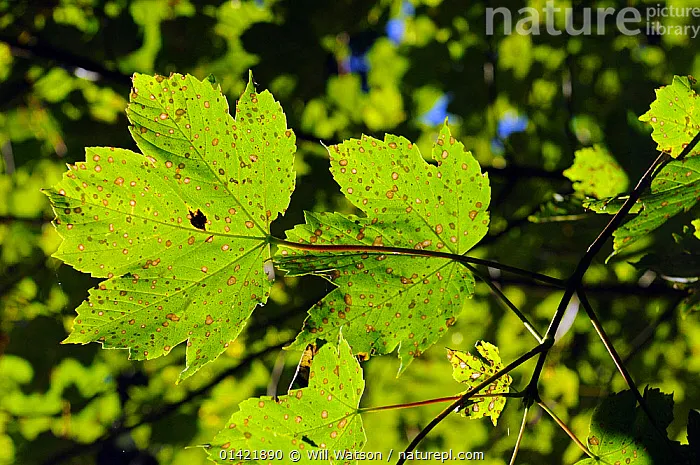
Identifying tar spot involves tracking its seasonal visual progression. In early spring and summer, symptoms appear as small, light green, yellowish, or chlorotic spots (0.5–2 cm) on the upper surface of maple leaves. By late summer and early autumn, these spots develop into raised, thick, jet-black, shiny lesions, which can measure up to 1.5 cm across, often surrounded by a narrow yellow margin. The surface of these black spots (stromata) is flat-to-wavy, resembling spilled asphalt. Affected leaves may turn yellow and drop prematurely, coating the ground in lacy, black-spotted foliage.
Tar spot is highly host-specific to maples, particularly affecting Norway maples, silver maples, and red maples, with ornamental and forest trees being equally susceptible.
| Affected Maple / Plant Species | Severity Rating | Damage Symptoms |
|---|---|---|
| Norway Maple (Acer platanoides) | Extreme (⭐⭐⭐) | Massive black tar lesions, early leaf drop, severe cosmetic blight |
| Silver & Red Maples | High (⭐⭐) | Prominent foliar spots, yellowing rings, minor premature defoliation |
| Sugar & Boxelder Maples | Medium (⭐) | Small black flecks, minor cosmetic spotting |
The fungus overwinters on the ground inside the black stromata of fallen maple leaves. In the wet, cool spring weather, moisture triggers the stromata to split open, releasing microscopic, wind-borne ascospores that float to infect newly emerging maple leaves. Secondary spread does not occur, meaning only one cycle of infection happens per year. Organic management relies almost entirely on strict sanitation: raking and burning, burying, or deep-composting all fallen maple leaves in autumn removes the overwintering spore source. Chemical fungicides are generally discouraged for mature landscape trees since the impact is purely cosmetic, though young nursery saplings can be protected with preventative copper-based sprays in spring. For more complete guides, check our Plant Disease Identifier Hub, or explore similar foliar disease profiles like Black Spot, Powdery Mildew, and Anthracnose.
Taxonomy & Features
- Raised Black Stromata: The characteristic 'tar spots' are raised fungal tissue masses called stromata that protect the fungus through cold winters.
- Single Infection Cycle: Pathogen has only one cycle of infection per year; once spores disperse in spring, no secondary spread occurs during summer.
- Aesthetic Foliar Impact: While causing alarming, lacy, black-spotted leaves, the disease represents a cosmetic issue and rarely harms mature trees.
- Ground-Level Overwintering: The fungus overwinters exclusively on fallen, uncollected maple leaves, splitting open when wet in spring.
- Norway Maple Susceptibility: Norway Maples are highly susceptible, often experiencing severe early defoliation and dense black spots.
- Sanitation Superiority: Complete raking and destruction of fallen leaves in autumn breaks the lifecycle, eliminating the spring spore load.
Seasonal Outbreak Calendar
Outbreak risk and activity timeline for Tar Spot (Maple) based on seasonal climate patterns:
Names in Different Languages
Affected Plant Species
Vegetables & Crops
- None
Flowers & Ornamentals
- None
Fruits & Berries
- None
Prevention & Cure
Natural & Organic Methods
- Autumn Sanitation: Rake and collect all fallen maple leaves immediately in autumn to remove the overwintering spore source.
- Burying/Composting: Deeply bury or hot-compost the gathered leaves; the heat destroys the fungal stromata structures.
- Mulch Cover: Apply a thick layer of organic mulch over any uncollected leaf fragments in spring to trap emerging spores.
- Canopy Pruning: Thin out crowded branches to improve sunlight penetration and air circulation, drying leaves rapidly.
Chemical & Professional Control
- Nursery Sprays: Apply preventative copper-based fungicides or mancozeb to young nursery seedlings in early spring as buds burst.
- Triadimefon Treatments: Spray systemic triadimefon on valued ornamental saplings if cool, wet spring weather persists.
- Fungicide Injection: Treat high-value historic trees with micro-injection fungicides, though rarely economically justified.
Frequently Asked Questions
Will Tar Spot kill my mature maple tree?
No. Tar Spot is primarily a cosmetic or aesthetic disease. Although it makes the foliage look very alarming and can cause premature leaf drop in late summer, healthy, established maple trees easily tolerate the damage without suffering any long-term decline or death.
Why is raking leaves so important for managing Tar Spot?
The Tar Spot fungus cannot survive on active green tree tissue during the winter. It overwinters exclusively in the black 'tar' lesions on the fallen leaves on the ground. Raking and destroying these leaves in autumn completely eliminates the primary spore source for the following spring's infection.
Do I need to spray chemicals to control Tar Spot?
In almost all cases, chemical sprays are not recommended or needed for home landscape trees. Because the disease is cosmetic, spraying mature trees is expensive and chemically unnecessary. Sanitation (raking) is highly effective and completely sufficient for management.
Recommended diagnostics based on crop family and symptoms:
Remedy Disclaimer & Safety Notice
This disease guide is for educational screening purposes only. Pathogen behavior, severity, and host susceptibility can vary dramatically based on seed variety, weather conditions, and regional microclimates. Chemical pesticides and organic treatments are subject to strict regional environmental regulations and registration mandates. Please verify all chemical registrations and review manufacturer safety labels carefully with local certified agronomists or agricultural extension service offices before applying.