
How to Tell if Pears Are Ripe: Pesticide Residue & Ripeness Audit
⚡ Quick 60-Second Pears Dirty Dozen & Wax Verdict
EWG Dirty Dozen #8 Fungicide Load & Artificial Ripening: Pears rank among the top sprayed fruits in grocery stores, testing positive for up to 22 different pesticide residues, notably Diphenylamine and Fludioxonil.
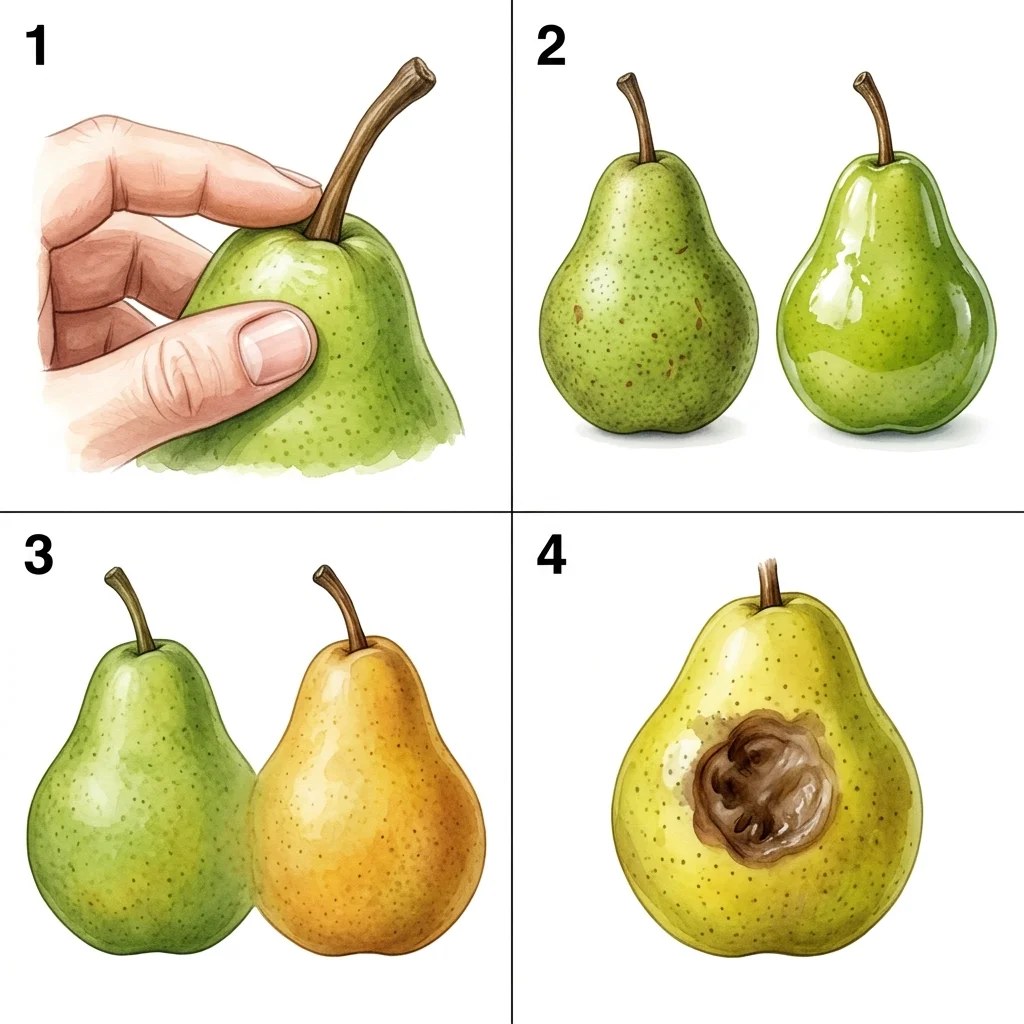
Apply gentle pressure with your thumb to the neck near the stem. If it yields to gentle pressure with sweet aroma, the pear is sweet and ripe. Pears ripen from the inside out; waiting for the belly to soften leads to mealy core rot.
Dissolve 1 tsp baking soda in 2 cups cold water and soak pears for 12–15 minutes, then rinse. Research shows alkaline solutions remove up to 94% of surface fungicides like thiabendazole.
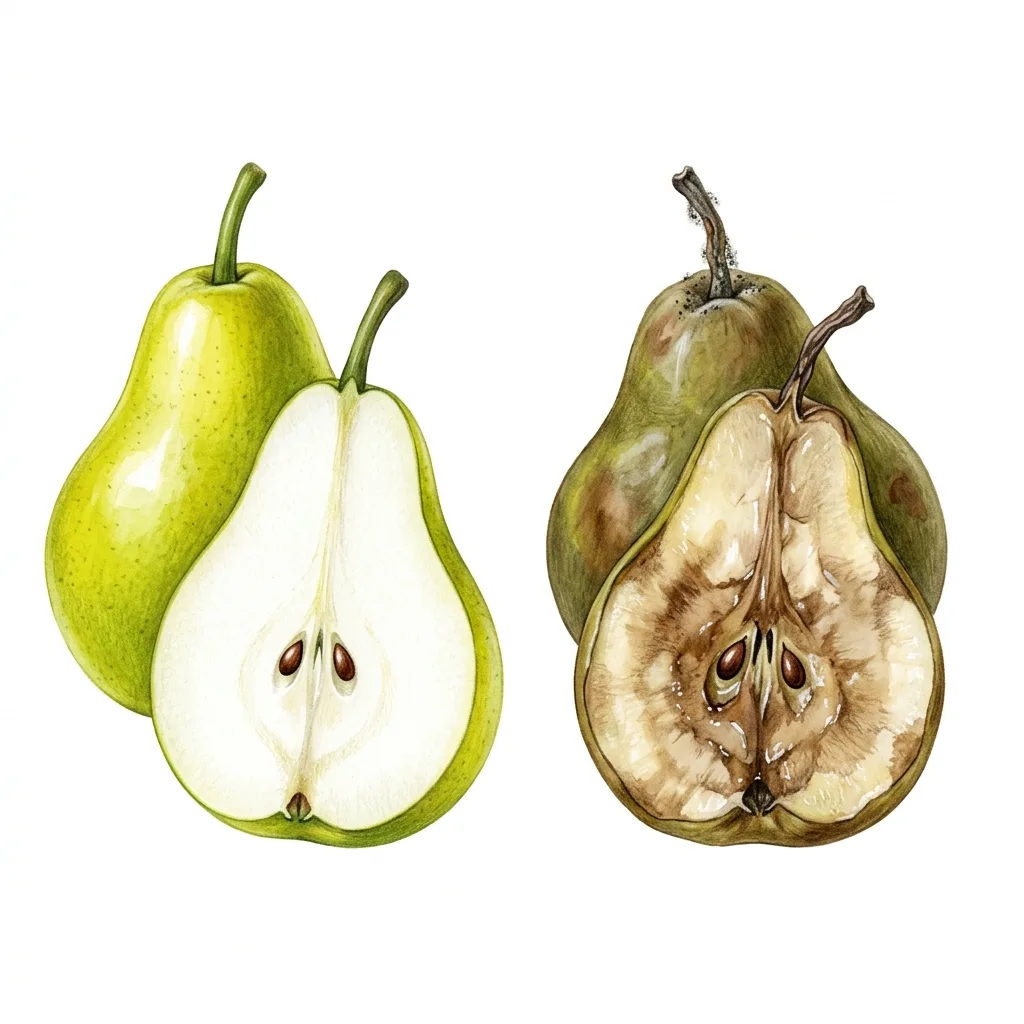
Slice in half lengthwise. Pure healthy pears have crisp white flesh surrounding the seed core. Discard pears displaying brown waterlogged flesh spreading outward from the core (core breakdown).
To learn more about fruit safety, read our guides on Apples and Peaches, or check our Dirty Dozen Pesticide Guide.
Drop Pears photo here to test purity
or click to browse • Supports JPG, PNG, WEBP • Paste with Ctrl+V
Inspection Guide
Click to enlarge
Pear Purity & Ripeness Audit
Pears (peras) are delicious and high in soluble fiber, but conventionally grown pears consistently carry a heavy chemical load. Pears are highly susceptible to pests and fungal diseases, leading growers to apply multiple pesticide and fungicide sprays close to harvest. Furthermore, because pears ripen from the inside out, they are harvested rock-hard and commercially stored in high-nitrogen, cold rooms for months. Before retail, they are often treated with synthetic wax to prevent moisture loss and exposed to ethylene gas to trigger ripening.
1. The 'Check the Neck' Ripeness Test (Pressure Audit):
Because pears ripen from the inside out, by the time the round bell of the pear feels soft, the interior flesh near the core is already mushy and brown. The only reliable way to check ripeness is the 'Check the Neck' test. Apply gentle pressure with your thumb to the narrow neck of the pear near the stem. ✅ If it yields slightly to gentle pressure, the pear is ripe, sweet, and ready to eat. ❌ If it is rock-hard, it is underripe. ❌ If it is mushy, it is overripe and rotting internally.
2. Skin Chemical and Fungicide Audit (Visual & Scent Check):
Examine the skin of the pear. Natural pears have a slightly matte, rustic skin with tiny natural speckles (lenticels). If the pear has a highly reflective, glossy sheen or feels greasy/sticky, it has been coated with synthetic petroleum-derived waxes. Sniff the pear near the stem; if you detect a faint chemical, medicinal, or musty odor, it indicates heavy post-harvest fungicide dip residues (such as thiabendazole, used to prevent storage mold), which remain concentrated on the skin.
3. The Green-to-Yellow Color Shift (Variety Dependent):
For varieties like Bartlett, look for the color shift. A naturally ripe Bartlett pear shifts from bright green to a soft, golden-yellow. If the pear is completely bright green but feels mushy, it was chemically ripened with excessive ethylene gas or harvested so immaturely that it began to decompose before naturally converting starch to sugars.
4. Mechanical Bruising and Discoloration Audit:
Examine the surface for dark brown, sunken, soft spots. Pears are extremely delicate when ripe. Soft brown patches indicate mechanical bruising during transport, which leads to rapid cellular breakdown, bitter tannins, and localized mold growth.
Click to enlarge
Pear Freshness & Bruise Audit
Freshness ensures maximum dietary fiber, potassium, and enzyme levels.
1. Soft, Sunken Bruises:
Avoid pears with dark brown, soft, sunken circular patches. These areas are bruised, oxidized, and taste highly bitter due to concentrated tannins.
2. Core Rot and Mealy Texture:
Cut the pear open. The flesh should be crisp or buttery-smooth and white. If the center around the seeds is brown, mushy, wet, or mealy, the pear has suffered from core breakdown (senescent breakdown) due to advanced age.
3. Stem Condition:
Inspect the stem. A fresh pear has a firm, intact, green or brown stem. A shriveled, easily broken, or moldy stem indicates stale, old storage stock.
Quick Safety Tips
- Perform the 'Check the Neck' test: press the narrow neck near the stem; if it yields slightly, the pear is ripe and safe
- Avoid pears with an unnaturally glossy, sticky, or greasy skin, which reveals synthetic wax coatings that trap pesticides
- Wash conventional pears in a vinegar-water bath (1:3 ratio) and gently scrub the skin to remove surface pesticide residues
- Reject any pears that have a medicinal or chemical smell, which reveals heavy post-harvest fungicide coatings
Primary Chemical Concerns
Health Risks & Impacts
Multilingual Local Names
Regulatory Corner: US FDA / EPA / Codex Stan 299-2010 (Standard for Pears)
Regulation: 21 CFR Part 112 (Produce Safety Rule) & EPA 40 CFR 180.110 Fungicide Tolerances
Legal Limit:Diphenylamine fungicide: Max 10.0 ppm; Fludioxonil: Max 5.0 ppm; Artificial Calcium Carbide ripening: 0.0% (Prohibited under law); Internal breakdown: Max 2.0%
Report Adulteration to US FDA / EPA / Codex Stan 299-2010 (Standard for Pears)