
ಪೀಚ್ ಹಣ್ಣಿನಲ್ಲಿ ಕೀಟನಾಶಕ ಅವಶೇಷಗಳ ಪರೀಕ್ಷೆ: 3 ಸುಲಭ ಮನೆಮದ್ದು ಪರೀಕ್ಷೆಗಳು (ಡರ್ಟಿ ಡಜನ್ #5)
⚡ 60 ಸೆಕೆಂಡುಗಳ ಪೀಚ್ ಹಣ್ಣು ಸುರಕ್ಷತೆ ತೀರ್ಪು
EWG ಡರ್ಟಿ ಡಜನ್ #5 ಕೀಟನಾಶಕ ಅಪಾಯ: ಮಾರುಕಟ್ಟೆಯಲ್ಲಿ ದೊರೆಯುವ ಶೇ. 95 ಕ್ಕೂ ಹೆಚ್ಚು ಪೀಚ್ ಹಣ್ಣುಗಳಲ್ಲಿ ಹಾನಿಕಾರಕ ಕೀಟನಾಶಕಗಳು ಮತ್ತು ಶಿಲೀಂಧ್ರನಾಶಕಗಳ ಅಂಶವಿರುತ್ತದೆ. ಇವುಗಳ ಮೇಲಿರುವ ಕೃತಕ ಮೇಣದ ಲೇಪನವು ಕೊಳೆಯುವಿಕೆಯನ್ನು ಮುಚ್ಚಿಹಾಕುತ್ತದೆ ಮತ್ತು ಕೀಟನಾಶಕಗಳನ್ನು ಸಿಪ್ಪೆಯೊಳಗೆ ಬಂಧಿಸಿಡುತ್ತದೆ.
ಅಡುಗೆ ಸೋಡಾ ಬೆರೆಸಿದ ನೀರಿನಲ್ಲಿ 15 ನಿಮಿಷ ನೆನೆಸಿ ತೊಳೆಯುವುದರಿಂದ ಸಿಪ್ಪೆಯ ಮೇಲಿರುವ ಶೇ. 96 ರಷ್ಟು ಕೀಟನಾಶಕಗಳು ನಿವಾರಣೆಯಾಗುತ್ತವೆ.
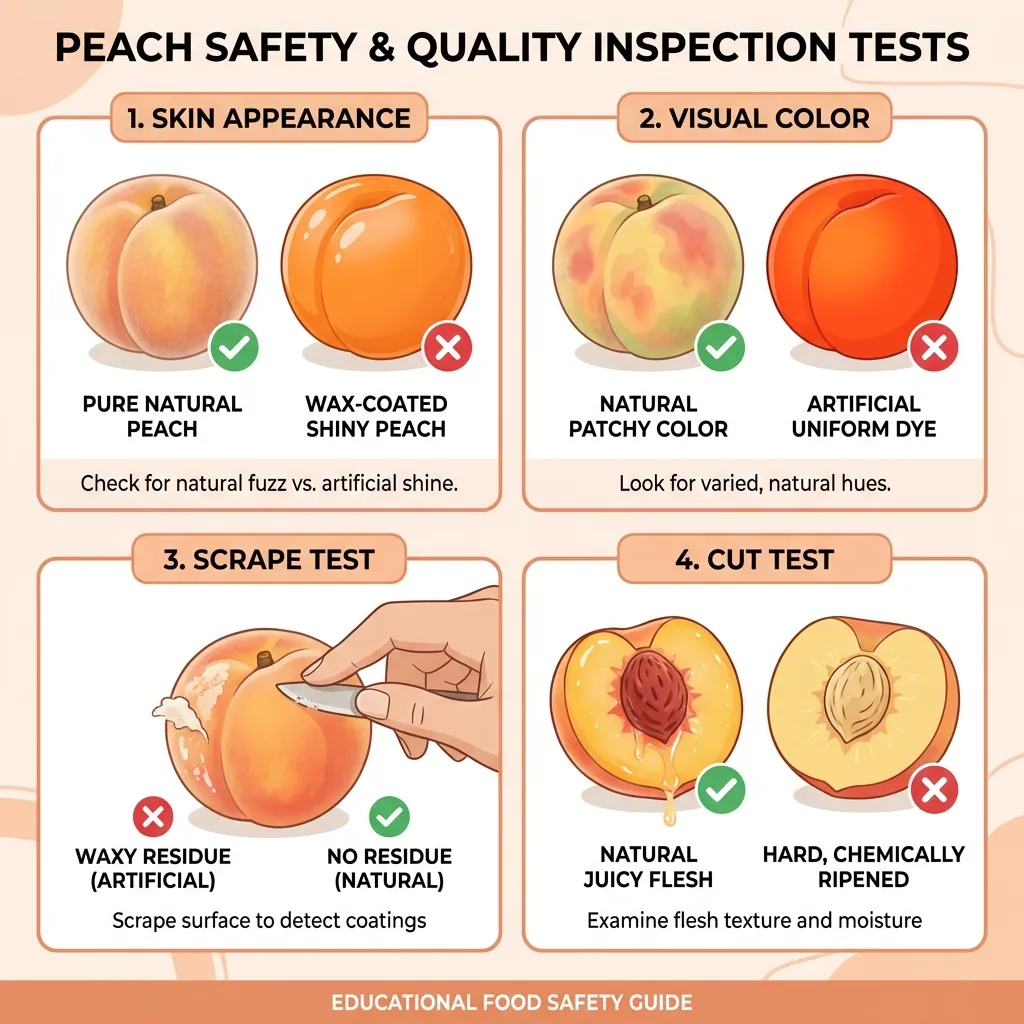
ತಾಜಾ ಪೀಚ್ ಮೃದುವಾದ ನೈಸರ್ಗಿಕ ಕೂದಲಿನಂತಹ ಮೈಮೇಲೆ ಹೊಂದಿರುತ್ತದೆ. ಉಗುರಿನಿಂದ ಕೆರೆದಾಗ ಮೇಣ ಬಂದರೆ ಅದು ರಾಸಾಯನಿಕ ಲೇಪಿತ ಹಣ್ಣು.
ಗಿಡದಲ್ಲೇ ಮಾಗಿದ ಪೀಚ್ ತೊಟ್ಟಿನ ಬಳಿ ಮಧುರವಾದ ಹೂವಿನ ಸುವಾಸನೆ ಬೀರುತ್ತದೆ. ರಾಸಾಯನಿಕವಾಗಿ ಮಾಗಿಸಿದ ಹಣ್ಣು ಸುವಾಸನೆಯಿಲ್ಲದೆ ಸಪ್ಪೆಯಾಗಿರುತ್ತದೆ.
ಇತರ ಹಣ್ಣುಗಳ ಸುರಕ್ಷತೆಗಾಗಿ ನಮ್ಮ ಬಾಳೆಹಣ್ಣು ಮತ್ತು ಮಾವಿನಹಣ್ಣು ಗೈಡ್ ಓದಿ.
Drop ಪೀಚ್ ಹಣ್ಣು / ಆಡು ಹಣ್ಣು (Peach Hannu / Peaches) photo here to test purity
or click to browse • Supports JPG, PNG, WEBP • Paste with Ctrl+V
Inspection Guide
Click to enlarge
ಕೀಟನಾಶಕ ಮುಕ್ತ ತಾಜಾ ಪೀಚ್ ಹಣ್ಣು ಗುರುತಿಸುವಿಕೆ
ಮಾರುಕಟ್ಟೆಯಲ್ಲಿ ಪೀಚ್ ಹಣ್ಣುಗಳನ್ನು ಕೊಳ್ಳುವಾಗ ಗಮನಿಸಬೇಕಾದ ಅಂಶಗಳು:
೧. ಅಡುಗೆ ಸೋಡಾ ನೀರಿನಲ್ಲಿ ತೊಳೆಯಿರಿ:
ಕೇವಲ ನೀರಿನಿಂದ ತೊಳೆದರೆ ಕೀಟನಾಶಕ ಹೋಗುವುದಿಲ್ಲ. 1 ಚಮಚ ಅಡುಗೆ ಸೋಡಾ ಬೆರೆಸಿದ ನೀರಿನಲ್ಲಿ 12-15 ನಿಮಿಷ ನೆನೆಸಿ, ಮೃದುವಾದ ಬ್ರಷ್ ನಿಂದ ಉಜ್ಜಿ ತೊಳೆಯಿರಿ.
೨. ಸಿಪ್ಪೆಯ ಮೇಣದ ಪರೀಕ್ಷೆ:
ನೈಸರ್ಗಿಕ ಪೀಚ್ ಹಣ್ಣಿನ ಮೇಲೆ ಸಣ್ಣ ಕೂದಲುಗಳಿರುತ್ತವೆ. ಮಿತಿಮೀರಿ ಹೊಳೆಯುವ ಹಣ್ಣುಗಳ ಮೇಲೆ ಮೇಣ ಸವರಲಾಗಿರುತ್ತದೆ.
೩. ಮೃದು ಸ್ಪರ್ಶ ಮತ್ತು ಸುವಾಸನೆ:
ತೊಟ್ಟಿನ ಬಳಿ ಹಗುರವಾಗಿ ಒತ್ತಿದಾಗ ಮೃದುವಾಗಿರಬೇಕು ಮತ್ತು ಸಿಹಿ ಸುವಾಸನೆ ಇರಬೇಕು. ಕಲ್ಲಿನಂತೆ ಗಟ್ಟಿಯಾಗಿರುವ ಹಣ್ಣು ಅಪಕ್ವವಾಗಿರುತ್ತದೆ.

Click to enlarge
ಪೀಚ್ ಹಣ್ಣಿನ ತಾಜಾತನ, ಕಂದು ಕೊಳೆತ ಮತ್ತು ಫ್ರಿಡ್ಜ್ ನಷ್ಟ
ಪೀಚ್ ಹಣ್ಣನ್ನು ಸಂರಕ್ಷಿಸುವ ಸರಳ ನಿಯಮಗಳು:
೧. ಕಂದು ಕೊಳೆತ ರೋಗ (Brown Rot):
ಹಣ್ಣಿನ ಮೇಲೆ ಕಂದು ಬಣ್ಣದ ವೃತ್ತಾಕಾರದ ಕಲೆಗಳು ಮತ್ತು ಬೂದು ಬಣ್ಣದ ಬೂಷ್ಟು ಕಂಡುಬಂದರೆ ಅದು 24 ಗಂಟೆಗಳಲ್ಲಿ ಇಡೀ ಹಣ್ಣನ್ನು ಕೊಳೆಸುತ್ತದೆ.
೨. ಫ್ರಿಡ್ಜ್ ನಷ್ಟ (ಮೀಲಿನೆಸ್):
ಅಪಕ್ವ ಪೀಚ್ ಹಣ್ಣನ್ನು 10 ಡಿಗ್ರಿಗಿಂತ ಕಡಿಮೆ ತಣ್ಣನೆಯ ಫ್ರಿಡ್ಜ್ ನಲ್ಲಿಟ್ಟರೆ ಅದು ಮಾಗದೆ ಒಳಗಿನ ತಿರುಳು ಒಣಗಿ ಹತ್ತಿಯಂತಾಗುತ್ತದೆ. ಹಣ್ಣು ಮಾಗಿದ ನಂತರವೇ ಫ್ರಿಡ್ಜ್ ನಲ್ಲಿಡಿ.
೩. ಜಾಗರೂಕತೆಯಿಂದ ಇಡಿ:
ಪೀಚ್ ಹಣ್ಣುಗಳನ್ನು ಒಂದರ ಮೇಲೊಂದು ರಾಶಿ ಹಾಕಬೇಡಿ, ಮೃದುವಾದ ಬಟ್ಟೆಯ ಮೇಲೆ ತೊಟ್ಟು ಕೆಳಗಿರುವಂತೆ ಪ್ರತ್ಯೇಕವಾಗಿ ಇಡಿ.
Quick Safety Tips
- ಮಕ್ಕಳಿಗೆ ಕೊಡುವಾಗ ಪೀಚ್ ಹಣ್ಣಿನ ಸಿಪ್ಪೆಯನ್ನು ಸುಲಿದು ಕೊಡುವುದು ಸುರಕ್ಷಿತ
- ಅಡುಗೆ ಸೋಡಾ ನೀರಿನಲ್ಲಿ ತೊಳೆದ ನಂತರವೇ ಸೇವಿಸಿ
- ಸುವಾಸನೆಯಿಲ್ಲದ ಕಲ್ಲಿನಂತಹ ಗಟ್ಟಿ ಹಣ್ಣುಗಳನ್ನು ಕೊಳ್ಳಬೇಡಿ
- ಬೀಜದ ಒಳಭಾಗದಲ್ಲಿ ಬೂಷ್ಟು ಕಂಡುಬಂದರೆ ಸಂಪೂರ್ಣ ಹಣ್ಣನ್ನು ತಿರಸ್ಕರಿಸಿ
Primary Chemical Concerns
Health Risks & Impacts
Multilingual Local Names
Common Storage Pests
Brown Rot (Monilinia fructicola)
high riskThe most destructive peach post-harvest fungal disease. Circular brown water-soaked spots expand rapidly across the fruit.
Detection
- Circular, tan-brown patches on the skin that spread outward
- Fuzzy grey-white spore tufts erupting on the brown lesion
- Soft, sunken, decaying flesh beneath the patch
- Rapid transmission to any neighboring peaches in the fruit bowl
Prevention
- Store peaches in a single layer without touching
- Inspect daily and remove any fruit showing brown spots immediately
- Store ripe peaches in the refrigerator crisper drawer, not at room temperature
Corrective Action: What to do?
Discard entirely — do not cut away the brown patch and eat the rest, as fungal mycelium and mycotoxins penetrate deep into the flesh.
Peach Twig Borer & Oriental Fruit Moth
medium riskSmall moth caterpillars that bore into the peach flesh near the stem and pit, causing internal browning.
Detection
- Small entry punctures with frass (brown sawdust residue) near the stem cavity
- Internal brown corky tunnels when the peach is sliced
- Larval presence inside the pit cavity
Prevention
- Inspect the stem cavity of every peach before purchasing
- Choose clean, unblemished fruit from verified growers
Corrective Action: What to do?
Discard fruit with visible internal bore tunnels and insect frass.
Regulatory Corner: FSSAI (Food Safety and Standards Authority of India) / US FDA (21 CFR 112) / Codex Stan 299-2010
Regulation: Food Safety and Standards (Contaminants, Toxins and Residues) Regulations 2011, Schedule 2: Stone Fruits MRLs
Legal Limit:Captan: Max 15.0 ppm; Phosmet: Max 10.0 ppm; Fludioxonil post-harvest fungicide: Max 5.0 ppm; Total organophosphate pesticide residue: Within Codex statutory limits; Unapproved artificial colors: 0.0%
Report Adulteration to FSSAI (Food Safety and Standards Authority of India) / US FDA (21 CFR 112) / Codex Stan 299-2010