Pruebas de Pureza y Calidad de las Semillas de Chía: Detectar Aceites Rancios y Semillas Falsas
⚡ Veredicto Rápido de 60 Segundos: Pureza de Chía y Detección de Semillas Falsas
Adulteración con Semillas de Albahaca y Oxidación de Omega-3: La chía auténtica (Salvia hispanica), originaria de Mesoamérica, se adultera frecuentemente con semillas baratas de albahaca silvestre o semillas de malezas. Además, su alto contenido de ácidos grasos poliinsaturados omega-3 (ALA) se oxida rápidamente con el calor y la humedad, generando peróxidos tóxicos con olor rancio a pescado o barniz.
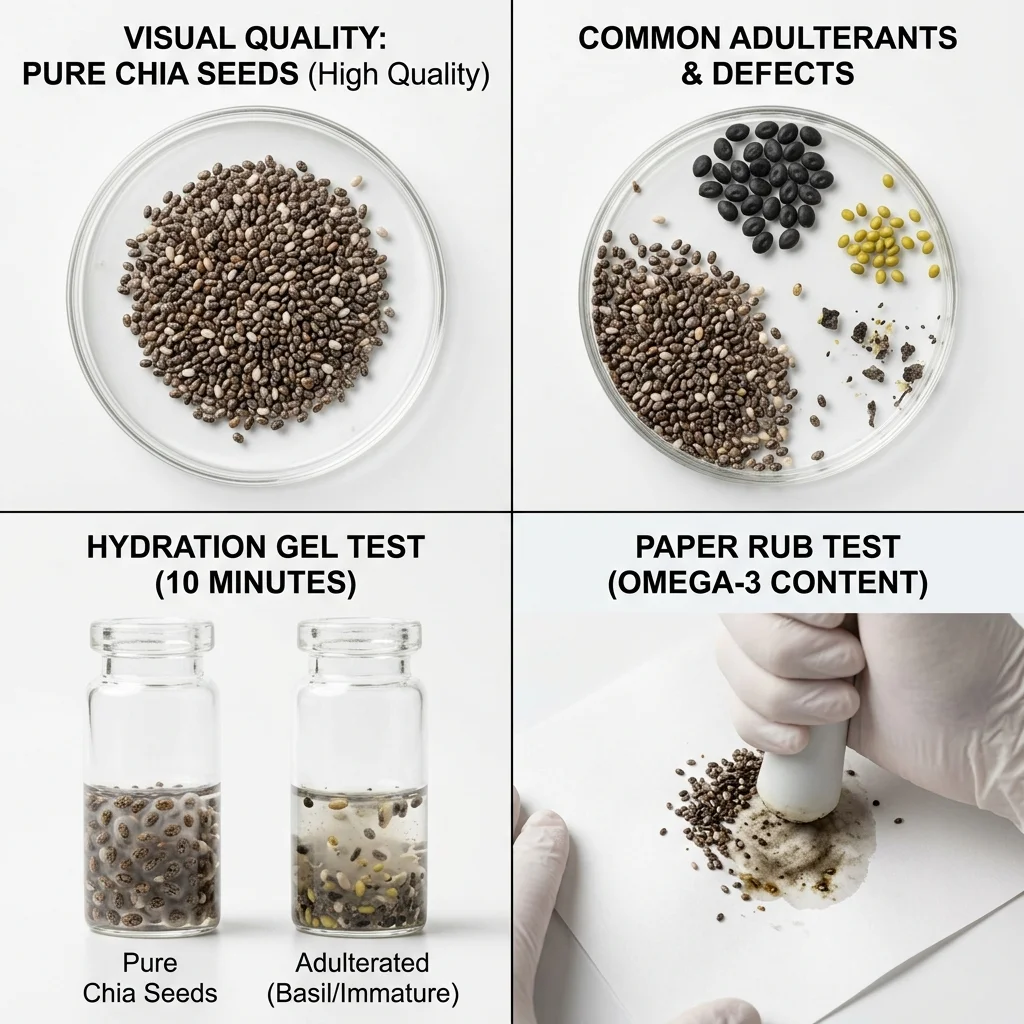
Agregue 1 cdta de semillas en 1/2 vaso de agua. La chía pura tarda entre 10 y 15 minutos en formar un halo de mucílago espeso y traslúcido. Las semillas de albahaca se hinchan de golpe en menos de 60 segundos con un centro negro duro.
Revuelva las semillas en agua y deje reposar. La chía queda suspendida en el gel o flotando. La tierra, arena y polvo mineral descienden de inmediato al fondo del vaso.
Observe las semillas bajo buena luz. La chía pura es ovalada y brillante, con un patrón jaspeado de gris, marrón, blanco y negro. Las semillas completamente negras mate o verdosas indican maleza o inmadurez.
Para explorar más sobre la seguridad de granos y semillas, consulte nuestras guías sobre Maíz (Corn), Garbanzos (Chickpeas) y Semillas de Amapola.
Drop Semillas de Chía (Salvia hispánica / Chía Mexicana) photo here to test purity
or click to browse • Supports JPG, PNG, WEBP • Paste with Ctrl+V
Inspection Guide
Click to enlarge
Auditoría de Pureza, Hidratación de Gel y Rancidez de Chía
Las semillas de chía (Salvia hispanica L.), domesticadas por los aztecas y mayas en el centro y sur de México, constituyen un superalimento milenario rico en fibra soluble y ácido alfa-linolénico (Omega-3 vegetal). No obstante, su elevado precio propicia la mezcla con semillas silvestres económicas, y su delicada matriz lipídica se torna tóxica al oxidarse:
1. Prueba de Gelificación en 10 Minutos (Detección de Albahaca y Malezas):
Vierta una cucharadita de semillas en medio vaso de agua a temperatura ambiente y remueva bien. La chía auténtica posee mucílago hidrofílico que retiene hasta 12 veces su peso en agua de forma progresiva, formando una película gelatinosa clara y uniforme alrededor de cada semilla en 10 a 15 minutos. Si las semillas se inflan al instante en menos de 60 segundos con una membrana translúcida densa y dejan ver un centro negro redondo, se trata de semillas de albahaca (Ocimum basilicum / sabja). Si el agua queda turbia y las semillas no forman gel, son semillas viejas o de llantén.
2. Prueba de Decantación de Polvo y Arena Mineral:
Revuelva enérgicamente la mezcla en un vaso transparente de vidrio y colóquelo sobre un fondo blanco durante 5 minutos. Las semillas de chía quedan suspendidas en el fluido coloidal o suben a la superficie. La arena de río, piedras de molienda o sílice caerán al fondo, formando un sedimento arenoso visible que delata un cribado deficiente.
3. Inspección del Moteado y Madurez del Grano:
Esparza una cucharada de semillas secas sobre una hoja blanca. La chía mexicana de calidad superior presenta semillas de 1.5 a 2 mm, ovaladas, brillantes y con un patrón jaspeado natural de tonalidades gris, café, blanco y negro (el llamado 'moteado de chía'). Rechace lotes con granos aplastados de color negro mate uniforme (semillas de albahaca) o abundantes granos marrones pálidos y verdosos arrugados, los cuales delatan semillas inmaduras cosechadas antes de tiempo sin valor nutricional.
4. Prueba de Rancidez Sensorial y Frotado en Papel:
Al contener casi un 30% de aceites poliinsaturados, la chía expuesta al aire, calor o luz se rancia con facilidad. Huela el envase: la chía fresca posee un suave aroma a nuez o carece de olor. Si desprende un olor punzante a pescado, barniz, cartón mojado o pintura al óleo, los ácidos grasos están descompuestos. Triture 10 semillas sobre papel secante: deben liberar una microgota de aceite limpio; si el polvo está seco y sin grasa, los aceites fueron extraídos previamente.
Click to enlarge
Etapas de Frescura y Preservación de Semillas de Chía
La preservación de los ácidos grasos esenciales omega-3 exige condiciones rigurosas de almacenamiento.
| Fase de Calidad | Aspecto Visual y Aroma | Hidratación en Agua | Veredicto |
|---|---|---|---|
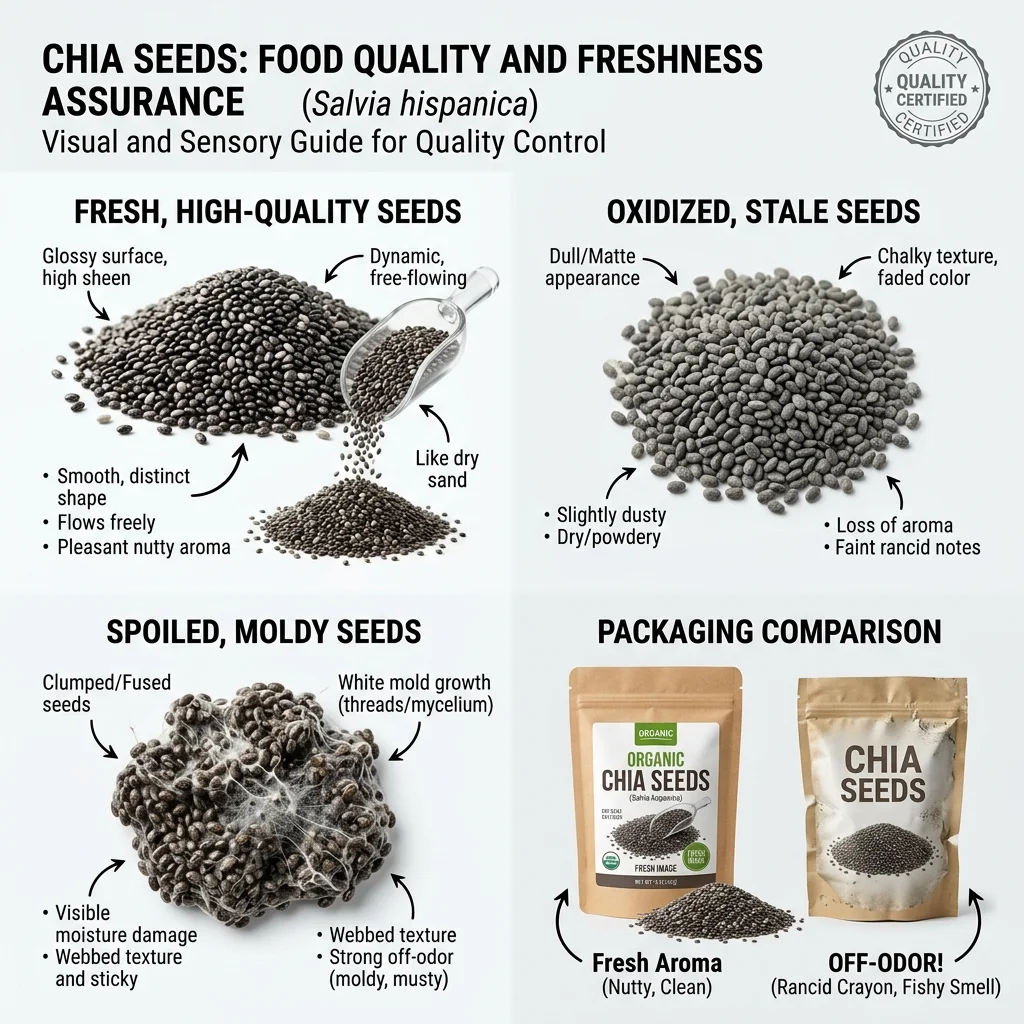
| ✅ Fresca y Óptima | Semillas sueltas y fluidas, brillo natural, moteado gris-café, aroma suave a nuez | Desarrolla mucílago espeso y firme en 10-15 minutos | Segura y Nutritiva |
| ⚠️ Oxidación Inicial | Pérdida de brillo superficial, color pajizo, olor ligeramente apagado | Gelificación lenta (20-25 min), consistencia más líquida | Consumir rápido en batidos |
| ❌ Rancia / Descompuesta | Olor agrio a pescado o pintura, sabor amargo persistente | Gel débil y turbio, olor penetrante al humedecerse | Tóxica (Desechar) |
| ❌ Semilla Adulterada | Semillas redondas negro mate homogéneo (albahaca) o arenilla | Gel instantáneo en 1 min con centro negro | Fraude Comercial (Reclamar) |
Consejo de conservación: La luz solar y las altas temperaturas oxidan los omegas en pocas semanas. Mantenga el empaque sellado al vacío o en frascos opacos.
Quick Safety Tips
- Realice siempre la prueba de inmersión en agua de 10 minutos para descartar semillas de albahaca
- Nunca consuma chía con olor rancio a pescado, pintura o grasa descompuesta
- Descarte empaques con semillas apelmazadas por humedad o con filamentos de moho
- Guarde la chía en frascos de vidrio herméticos en un lugar oscuro y fresco (o en el refrigerador)
Primary Chemical Concerns
Health Risks & Impacts
Multilingual Local Names
Common Storage Pests
Escarabajo de las Farmacias (Stegobium paniceum)
medium riskDiminuto coleóptero marrón que ataca semillas oleaginosas, cereales y harinas empaquetadas.
Detection
- Presencia de pequeños escarabajos pardos de 2-3 mm
- Finísimo polvo blanco en el fondo de la bolsa
- Pequeñas perforaciones en empaques de celofán
Prevention
- Guardar en recipientes herméticos de vidrio o plástico grueso
- Inspeccionar el fondo del empaque al comprar
Corrective Action: What to do?
Desechar el producto infestado y aspirar las alacenas para eliminar larvas.
Polilla de la Fruta Seca (Plodia interpunctella)
high riskPolilla común de grano y semillas cuyas larvas tejen redes sedosas entre las semillas.
Detection
- Hilos de seda y telarañas entre las semillas
- Semillas apelmazadas formando terrones
- Larvas blanquecinas en la parte superior del envase
Prevention
- Conservar en despensas frescas (<18°C)
- Mantener frascos herméticos sellados
Corrective Action: What to do?
Desechar inmediatamente el lote; limpiar la despensa con vinagre diluido.
Escarabajo Dentado de los Granos (Oryzaephilus surinamensis)
medium riskInsecto aplanado y alargado que coloniza semillas almacenadas en ambientes cálidos y húmedos.
Detection
- Escarabajos alargados y oscuros corriendo entre las semillas
- Aumento de temperatura en granos a granel
Prevention
- Comprobar que la humedad de la chía sea menor al 10%
- Evitar comprar en botes abiertos a granel
Corrective Action: What to do?
Desechar semillas contaminadas y guardar nuevos lotes en refrigeración.
Regulatory Corner: Secretaría de Salud / COFEPRIS / Codex Alimentarius / EFSA (Reg. UE 2017/2470)
Regulation: Norma Oficial Mexicana NOM-051-SCFI/SSA1 y Directrices Codex STAN 193
Legal Limit:Pureza mínima: 99.0%; Materia extraña total: máximo 1.0%; Humedad: máximo 10.0%; Índice de peróxidos: máximo 5.0 meq O2/kg de aceite; Aflatoxinas totales: máximo 10 ppb; Salmonella: Ausente en 25g
Report Adulteration to Secretaría de Salud / COFEPRIS / Codex Alimentarius / EFSA (Reg. UE 2017/2470)