Chia Seeds Purity & Quality Tests: Detect Rancid Oils & Basil Fake Seeds
⚡ Quick 60-Second Chia Seeds Purity & Sabja Weed Verdict
Basil Seed (Sabja) Adulteration & Sand/Soil Contamination: Premium chia seeds are adulterated with cheaper wild seeds or basil seeds (sabja), and can contain high sand/grit residues and dangerous Salmonella.
Add 1 tsp of seeds to 1/2 cup of water and stir. Authentic chia takes 10-15 minutes to develop a thick, translucent gel halo around flat, oval mottled seeds. Basil seeds (sabja) swell instantly within 60 seconds with a white jelly ring.
Stir seeds vigorously in a clear glass of water and let stand. Chia seeds remain suspended in their gel network or float. Heavy sand, grit, and inorganic dirt immediately sink to the bottom of the glass.
Examine dry seeds under good light. Pure chia is a mix of mottled black, grey, white, and brown oval seeds. Solid matte-black round seeds indicate sabja adulteration; moldy seed clumps indicate unsafe high moisture.
To learn more about seed and grain safety, read our guides on Corn, Chickpeas, and Poppy Seeds (Khas Khas).
Drop Chia Seeds photo here to test purity
or click to browse • Supports JPG, PNG, WEBP • Paste with Ctrl+V
Inspection Guide
Click to enlarge
Chia Seeds Purity & Gel Hydration Audit
Chia seeds (Salvia hispanica), native to Mexico and Central America, are a globally popular superfood prized for their fiber, protein, and extremely high omega-3 fatty acid content. Due to their premium price, they are frequently adulterated with cheaper seeds (such as wild basil seeds or plantago seeds) or sold when highly oxidized and rancid due to poor packaging and storage.
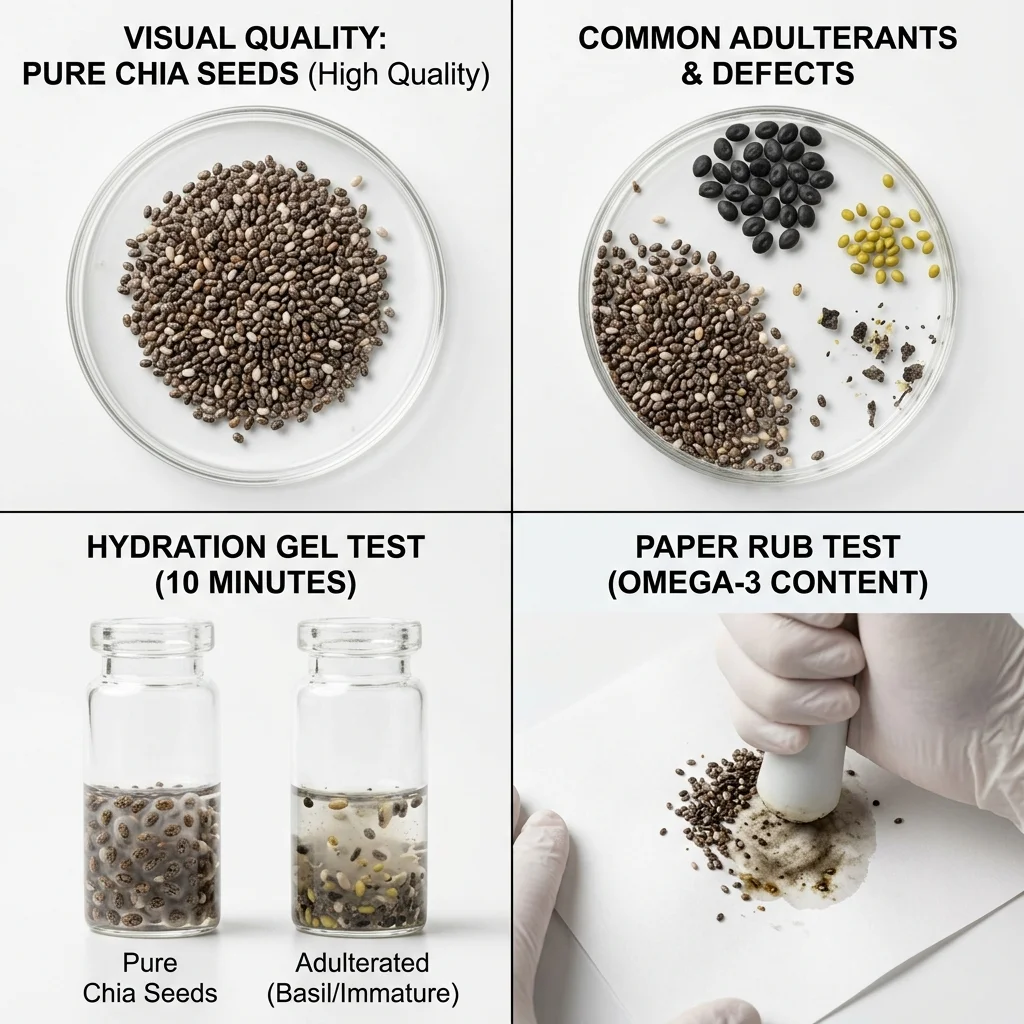
1. The 10-Minute Hydration Gel Test (Purity):
Place a teaspoon of seeds in a glass of cold water. Real chia seeds are highly mucilaginous; they absorb water slowly, swelling to form a distinct, thick, gelatinous outer capsule around each seed in about 10 minutes, making the mixture cohesive and gel-like. Basil seeds swell almost instantly (under 2 minutes) into a larger, lighter gel with a hard black center. Plantago seeds form a weak, cloudy, watery gel.
2. The Color and Shape Audit:
Examine the seeds closely under bright light. Pure chia seeds are small (about 2mm), oval-shaped, with a smooth, glossy coat and a mottled, shiny pattern of black, brown, grey, and white. If the seeds are flat, jet black, and dull, they are likely cheap weed seeds. Solid yellow or green seeds indicate immature, nutrient-deficient crop harvesting.
3. The Rancidity Sniff and Taste Test:
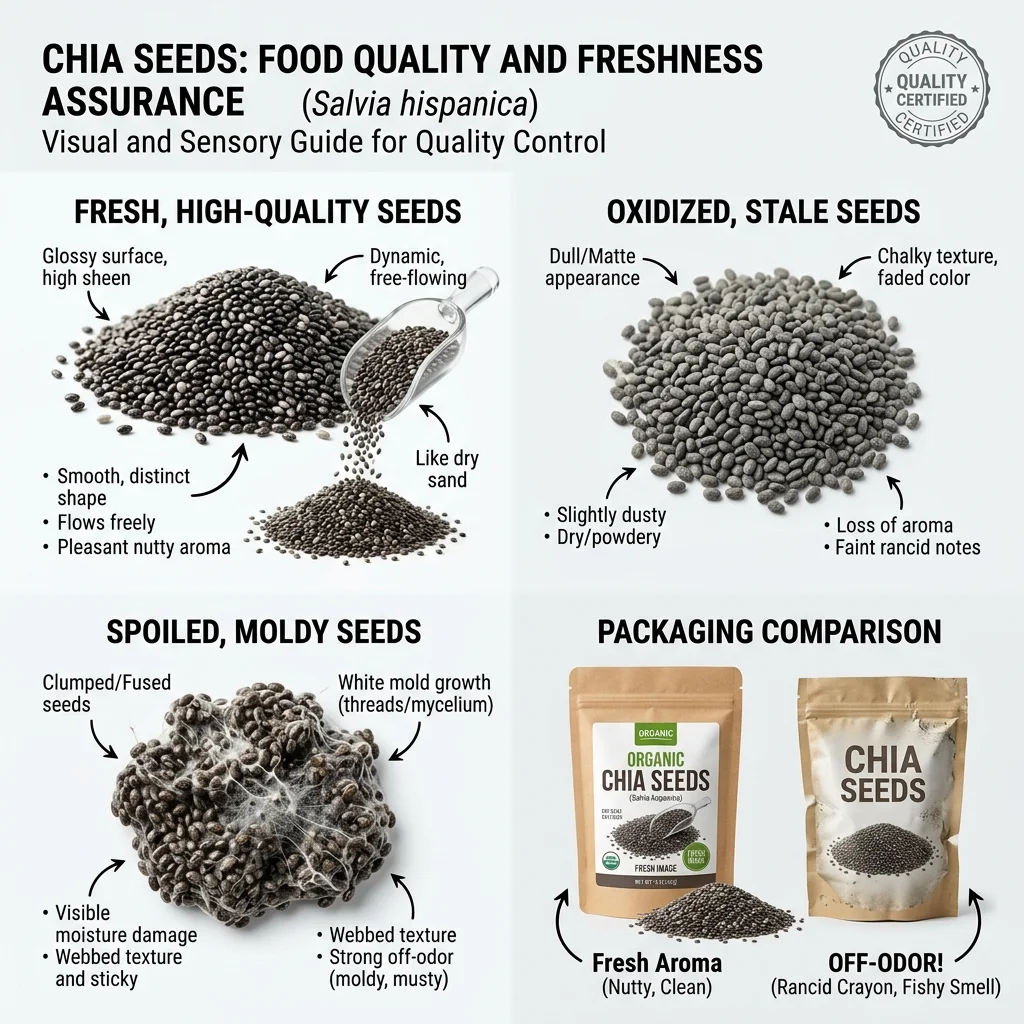
Because chia seeds contain up to 30% polyunsaturated oils (omega-3s), they are highly unstable and oxidize rapidly when exposed to air, light, or warmth. Sniff the bag. Fresh chia has a very mild, clean, slightly nutty aroma or no smell at all. Rancid chia has a sharp, sour, fishy, paint-like, or crayon-like odor and tastes unpleasantly bitter.
4. The Paper Rub (Oil Content) Check:
Crush a small spoonful of seeds between a folded sheet of clean white paper using a heavy spoon. Fresh, oil-rich chia seeds will leave a prominent, clean grease smudge on the paper. If the paper remains dry or only slightly damp, the seeds are old, dehydrated, or have had their valuable oils pre-extracted.
Click to enlarge
Chia Seeds Freshness & Packaging Integrity
Freshness ensures high nutritional value and prevents toxic lipid oxidation.
1. Free-Flowing Test:
Fresh, dry chia seeds should flow freely like dry sand. If they stick together in clumps, feel damp, or show fine webbing threads, it indicates moisture exposure and active fungal mold growth.
2. Surface Gloss:
Fresh seeds have a healthy, reflective sheen. Dull, dusty, or chalky seeds indicate old stock that has lost its nutritional potency.
3. Taste Profiles:
Taste a pinch of seeds. Fresh chia has a mild, pleasant, neutral nutty flavor. Avoid seeds that taste bitter, soapy, or leave an oily, stale film in your mouth.
Quick Safety Tips
- Perform the 10-minute water soak test to check for basil seed adulterants
- Avoid chia seeds with a fishy, cardboard, or paint-like rancid smell
- Ensure the seeds are shiny and mottled rather than dull black or yellow-green
- Store chia seeds in an airtight container in a cool, dark place (or refrigerator) to prevent oxidation
Primary Chemical Concerns
Health Risks & Impacts
Multilingual Local Names
Common Storage Pests
Drugstore Beetle (Stegobium paniceum)
medium riskSmall brown cylindrical beetle that bores into packaged seeds, grains, and dry pantry items.
Detection
- Tiny 2-3 mm reddish-brown beetles crawling in seed jar
- Fine white powdery frass settling at the bottom of the container
- Pin-sized exit holes chewed through plastic packaging
Prevention
- Store in airtight glass or heavy plastic containers
- Inspect bulk packages before purchase
Corrective Action: What to do?
Discard infested batches and vacuum pantry shelves thoroughly.
Indian Meal Moth (Plodia interpunctella)
high riskCommon stored-product pest whose larvae spin dense silk webbing among seeds and grains.
Detection
- Silken webs and threads binding seeds into cohesive clumps
- Small whitish-pink caterpillars crawling near jar rim
- Presence of small coppery-brown moths in storage cabinet
Prevention
- Keep storage environment cool and dry (<18°C / 65°F)
- Seal seed containers tightly
Corrective Action: What to do?
Immediately discard infested packages; wipe down cupboards with diluted vinegar.
Saw-toothed Grain Beetle (Oryzaephilus surinamensis)
medium riskFlattened, dark brown beetle with serrated thorax edges that infests dried seeds in warm storage.
Detection
- Fast-moving slender brown insects scuttling between seeds
- Localized moisture and heat buildup within bulk seed bins
Prevention
- Ensure chia seed moisture is kept below 10%
- Avoid purchasing unsealed bulk-bin seeds
Corrective Action: What to do?
Discard contaminated stock and refrigerate replacement batches.
Regulatory Corner: FSSAI (Food Safety and Standards Authority of India) / Codex Alimentarius / EU Novel Foods (Reg 2017/2470)
Regulation: Food Safety and Standards (Food Products Standards) Regulations 2011, Clause 2.4.38 & EU Novel Food Standards
Legal Limit:Purity: Min 99.0%; Extraneous matter: Max 1.0%; Moisture: Max 10.0%; Peroxide value: Max 5.0 meq O2/kg fat; Total Aflatoxins: Max 10.0 ppb; Salmonella: Absent in 25g; Lead: Max 0.5 ppm
Report Adulteration to FSSAI (Food Safety and Standards Authority of India) / Codex Alimentarius / EU Novel Foods (Reg 2017/2470)