

Wild Geranium
Geranium maculatum
How to Identify Wild Geranium

A detailed guide to identifying Wild Geraniums (Geranium maculatum) by its key features:
- Five-Petalled Saucer Flowers: Flat, lavender-pink flowers with distinct darker veins radiating from the center.
- Deeply Palmately Cut Leaves: Leaves divided into 5 to 7 deeply cut, tooth-tipped lobes.
- Beak-Like Seed Pods: Elongated seed capsules resembling a crane's bill that eject seeds when ripe.
- Knobby Tuberous Rhizomes: Thick underground stems that form low-growing forest groundcover.
Care & Growing Guide
Wild Geranium Care Guide:
- Light: Partial to full shade; tolerates dry shade once established
- Soil: Humus-rich, moist, slightly acidic, well-draining — woodland soil
- Water: Moderate; drought-tolerant once established
- Maintenance: Foliage remains attractive all season; cut back in late fall or early spring
Seasonal Blooming & Hardiness
Seasonal Blooming Calendar:
- Peak Bloom: April–June
- US Range: USDA Zones 3–8; native across eastern and central North America in deciduous woodlands
Bloom Timeline
About Wild Geranium
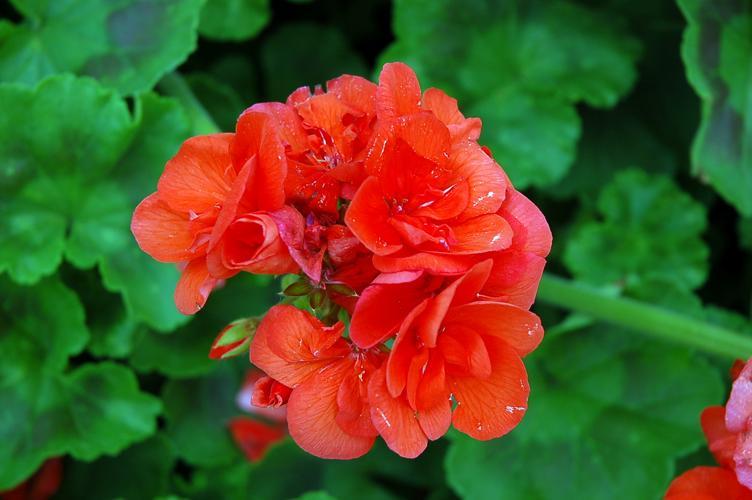
Wild Geranium (Geranium maculatum), also known as Spotted Cranesbill, is one of the most graceful and widely appreciated native wildflowers of eastern North American woodlands, producing clusters of delicate rosy-lavender to pale pink flowers with five rounded petals above a mound of deeply lobed, palm-shaped leaves in spring. A true cranesbill geranium (family Geraniaceae), it is completely distinct from the common 'geraniums' of window boxes and garden centers (Pelargonium spp.), which belong to a different genus and family entirely.
The flowers of Wild Geranium are simple and perfectly proportioned — five rounded, slightly cupped petals of rosy-lavender to lilac-pink, each with delicate, darker veining that serves as nectar guides for pollinators. The ten stamens and central pistil are clearly visible, and the flower's symmetrical, open-faced form is typical of the Geraniaceae family. After fertilization, the plant develops its characteristic fruit — a long, beak-like structure reminiscent of a crane's bill (giving the plant its common name 'Cranesbill'), which spring apart explosively at maturity to fling seeds away from the parent plant.
Wild Geranium thrives in the rich, slightly acidic soils of deciduous woodlands, along shaded woodland paths, and at the edges of forests — exactly the same habitat where Trilliums, Virginia Bluebells, and Wild Blue Phlox thrive. It blooms in April through June, forming long-lasting, reliable clumps that expand slowly over the years without becoming invasive. Unlike spring ephemerals, Wild Geranium retains its attractive, deeply cut foliage throughout the summer, providing consistent textural interest even after blooming has finished.
For the native plant gardener, Wild Geranium is one of the most versatile and reliable of all native shade perennials. It thrives in a wide range of soil conditions (from dry to moderately moist), tolerates more shade than many natives, is deer-resistant, and is completely non-toxic to pets and humans. It is an excellent 'bridge' plant in a woodland garden — blooming after spring ephemerals like Trilliums and Virginia Bluebells have faded, and providing foliage interest through summer until fall-blooming natives take over. See our Flower Identifier for more woodland native flowers.
Floral Formula & Features
Actinomorphic, bisexual; 5 free sepals; 5 free petals; 10 free stamens; 5 fused carpels forming an explosive schizocarp (crane's-bill) with superior ovary
- Scientific Name & Classification: Geranium maculatum (Geraniaceae, tribe Geranieae). A true cranesbill geranium — NOT a Pelargonium. Native across eastern and central North America.
- Identification Markers: Rosy-lavender to pink 5-petaled flowers with darker veined nectar guides. Deeply palmately lobed leaves forming a mound. Long 'crane's bill' seed capsule after flowering. Height 1–2 ft.
- Floral Formula (⊕ ☿ K5 C5 A10 G(5)): Actinomorphic, bisexual, 5 free sepals, 5 free petals, 10 stamens, 5 fused carpels forming a long beaked fruit (schizocarp).
- Growing Requirements: Partial to full shade; moist, humus-rich, slightly acidic, well-draining soil. Tolerates dry shade once established. USDA Zones 3–8. Deer-resistant.
- Cultural Significance: Used medicinally by multiple Native American nations for diarrhea, hemorrhage, and toothache. Name 'Geranium' from Greek 'geranos' (crane) — for the crane's-bill seed pod.
- Safety & Toxicity: NON-TOXIC. Completely safe for cats, dogs, and humans. An excellent choice for family woodland and shade gardens with pets.
- Common Look-alikes: Often confused with cultivated Pelargonium ('garden geranium'), but Wild Geranium has deeply palmately lobed leaves and a symmetrical flower, while Pelargonium has slightly asymmetrical flowers.
- Internal Links: Perfect companion to Trillium and Virginia Bluebells in a spring woodland garden. Explore our Flower Identifier.
Names in Different Languages
Botanical Classification: Wild Geranium belongs to the Geraniaceae family. Learn how to identify its floral symmetry, stamen arrangement, and structural formulas in our Botanical Family Classification Guide.
Toxicity & Safety
Frequently Asked Questions
What is Floral Formula?
A floral formula is a symbolic representation of a flower's structure using letters, numbers, and special symbols. It provides a concise way to describe the arrangement and number of floral parts.
This formula describes the flower's symmetry, sepals, petals, stamens, and carpels in a standardized format.
Formula Sequence
- Bract: Br or Ebr
- Bracteole: Brl or Ebrl
- Symmetry: % (Radial) or ⊕ (Bilateral)
- Sex: ♀ (Female), ♂ (Male), or ⚥ (Bisexual)
- Calyx/Sepal: K<number> (Free or Fused)
- Corolla/Petal: C<number> (Free or Fused)
- Androecium: A<number> (Free or Fused)
- Gynaecium: G<number> (Superior or Inferior Ovary)
Symbol Meanings
- Numbers: Indicate quantity of parts
- Parentheses (): Parts are fused together
- Plus (+): Parts in different whorls
- Underline: Superior ovary position
- Overline: Inferior ovary position
- ∞: Numerous parts (too many to count)
Understanding floral formulas helps botanists quickly identify and classify flowers based on their structural characteristics.
Similar Flowers
Discover flowers that share botanical characteristics
Similar Characteristics
4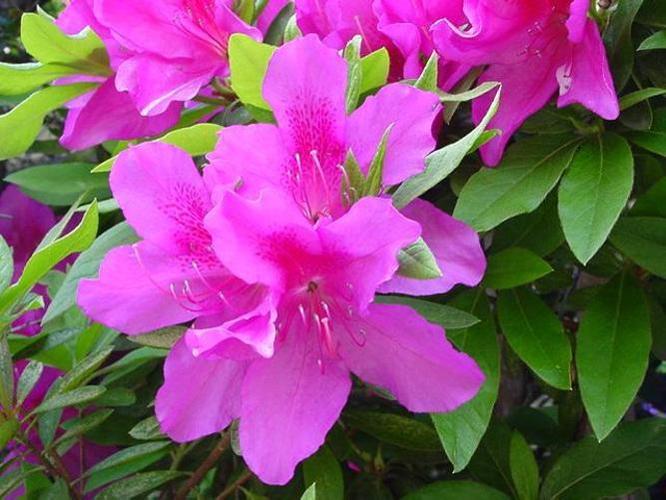
Azalea
Rhododendron (subgenus Tsutsusi)
The Azalea, botanically classified as Rhododendron (specifically under the subgenera Tsutsusi and Pentanthera) and belonging to the family Ericaceae (the heath family), is an exceptionally spectacular, heavy-blooming woody perennial shrub. Native primarily to the cool, damp woodlands, mountain sl...
Bloodroot
Sanguinaria canadensis
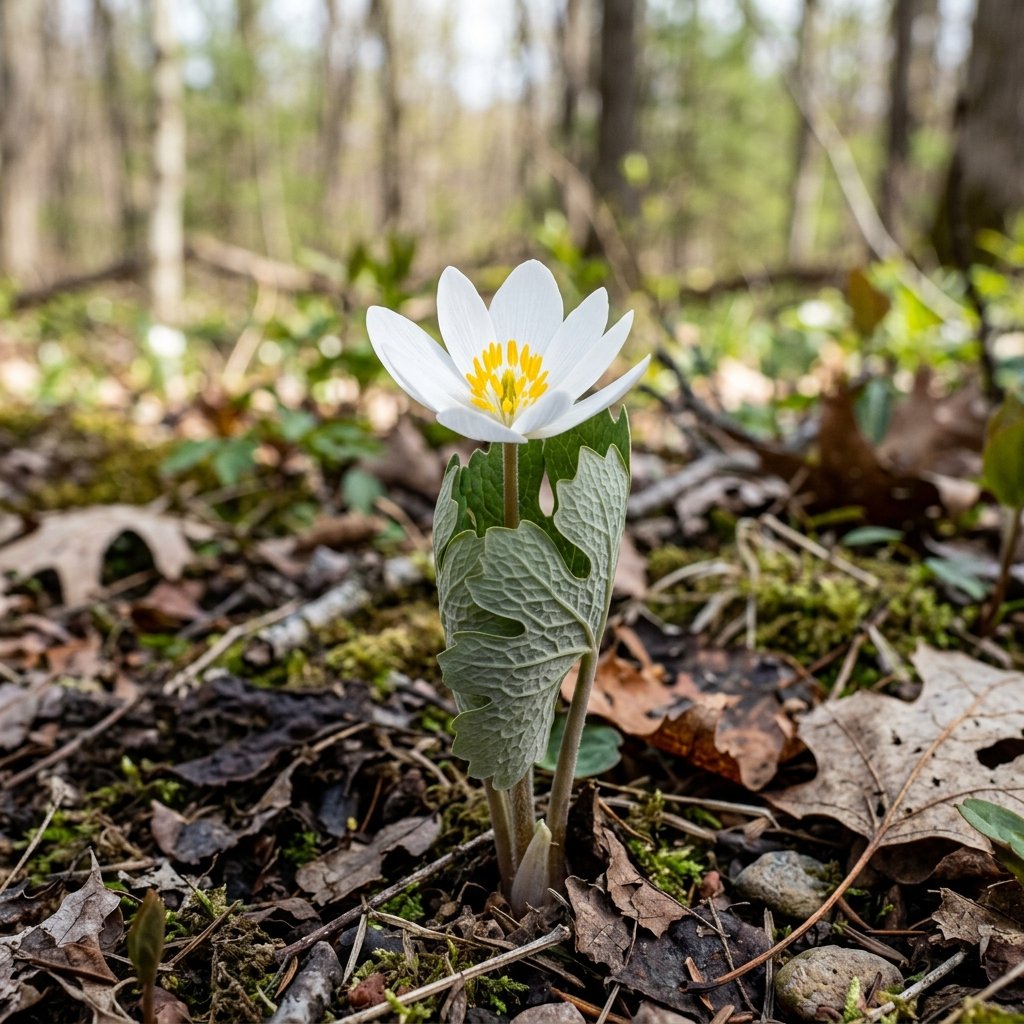
Bloodroot (*Sanguinaria canadensis*) is one of the earliest and most enchanting spring wildflowers of eastern North American forests, producing pure white, star-like flowers with golden yellow centers that emerge in March and April, often pushing up through the last of the winter snow. It is the...
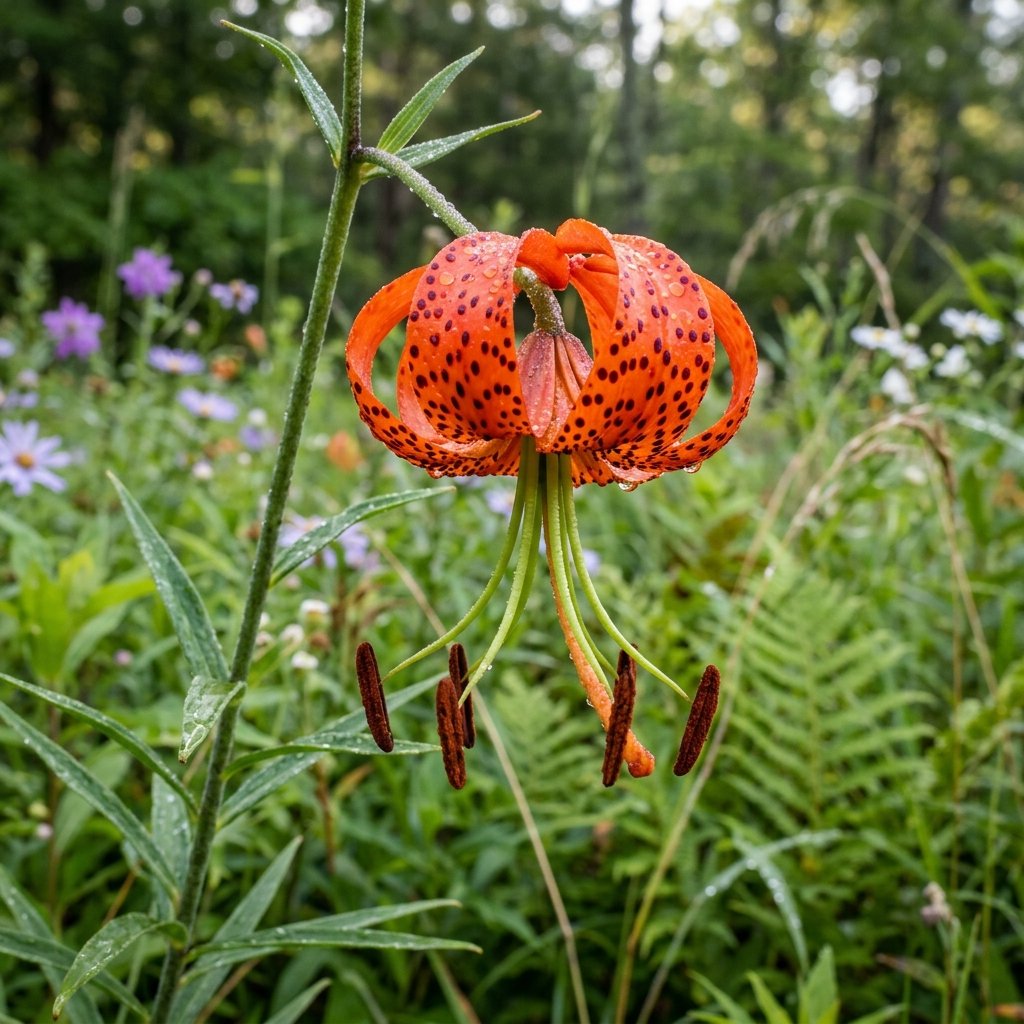
Turk's Cap Lily
Lilium superbum
Turk's Cap Lily (*Lilium superbum*) is the tallest native lily in North America and one of the most spectacular wildflowers of the eastern United States, reaching heights of 4 to 8 feet with multiple nodding, bright orange flowers dramatically spotted with purple-brown and with their petals fully...
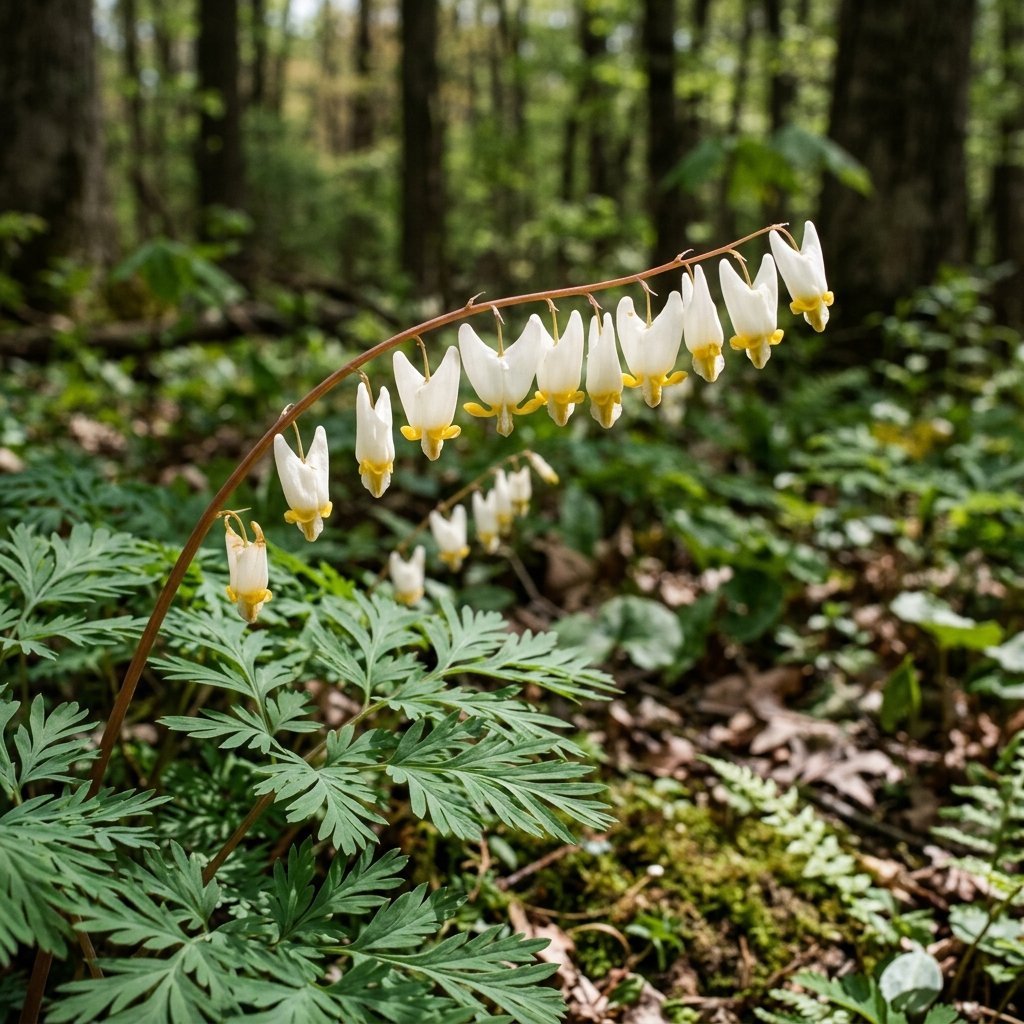
Dutchman's Breeches
Dicentra cucullaria
Dutchman's Breeches (*Dicentra cucullaria*) is one of the most whimsically charming and distinctively shaped wildflowers in the eastern North American spring flora, producing pendulous racemes of pure white flowers shaped precisely like pairs of miniature, upside-down pantaloons or 'breeches' — t...