
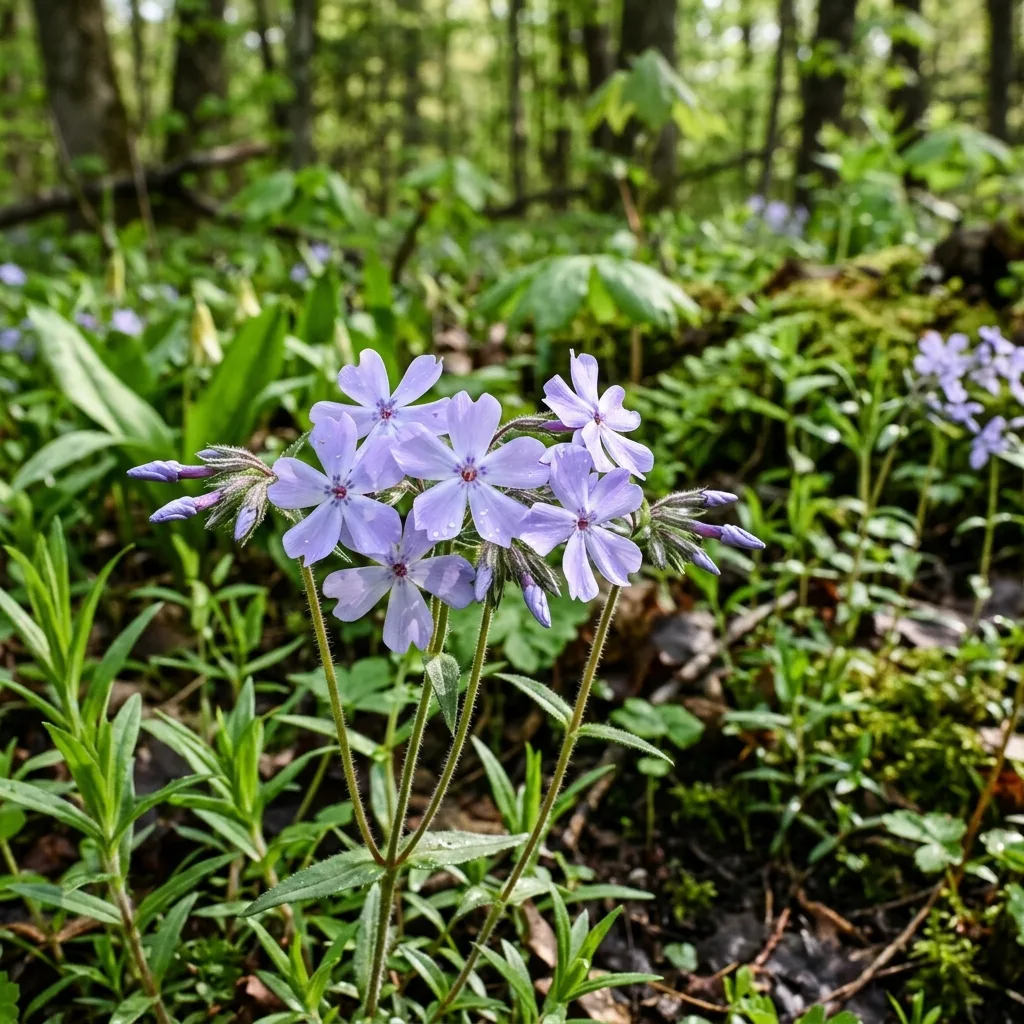
Wild Blue Phlox
Phlox divaricata
How to Identify Wild Blue Phlox
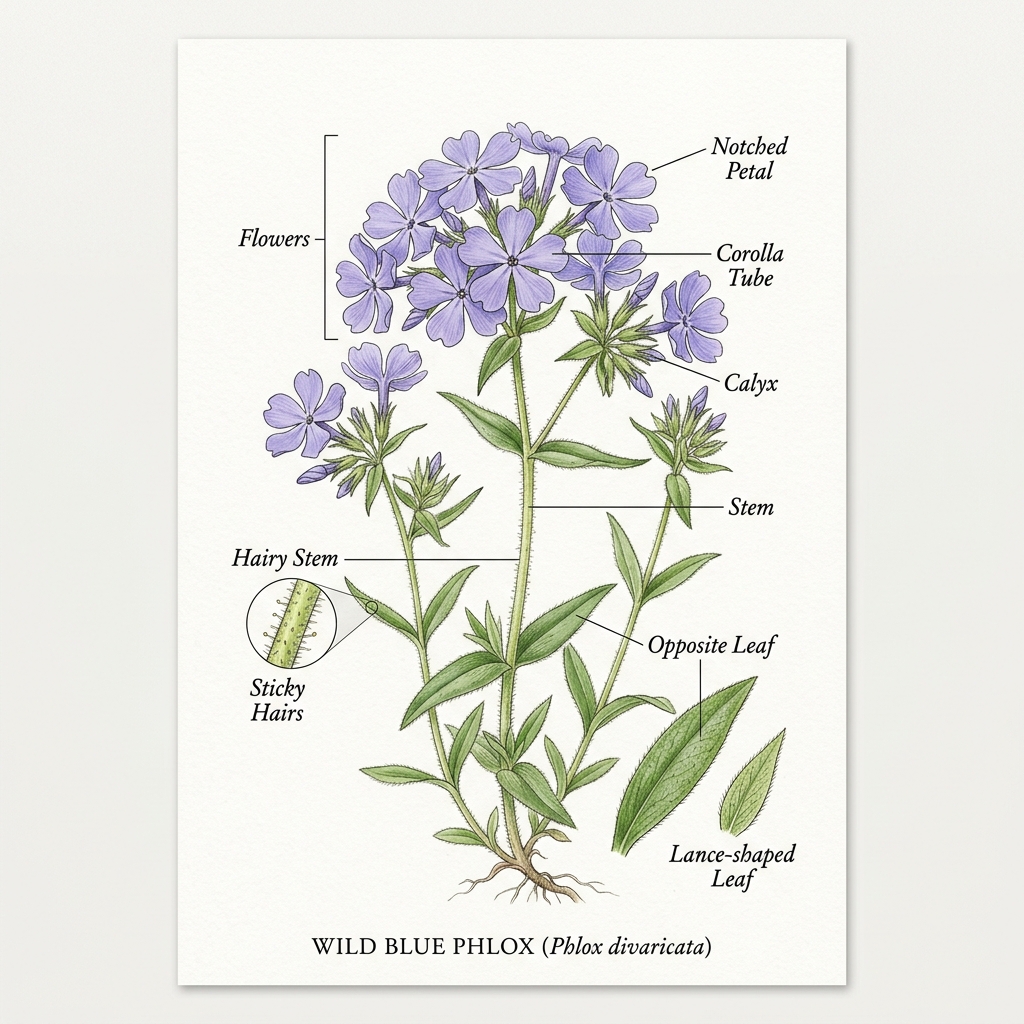
A detailed guide to identifying Wild Blue Phloxes (Phlox divaricata) by its key features:
- Notched Blue-Violet Petals: Loose flat-topped clusters of five-petalled, notched lavender flowers.
- Sticky Opposite Leaves: Small, oval leaves covered in sticky, fine hairs.
- Creeping Mat-Forming Stems: Trailing leafy shoots that root at nodes to form woodland groundcover.
- Fine Fibrous Roots: Prefers rich, deciduous forest soils.
Care & Growing Guide
Wild Blue Phlox Care Guide:
- Light: Partial to full shade; tolerates dry shade once established
- Soil: Moist, humus-rich, slightly acidic woodland soil
- Water: Moderate; tolerates brief drought
- Companion: Plant with Trillium, Virginia Bluebells, and Wild Geranium for a complete spring woodland display
Seasonal Blooming & Hardiness
Seasonal Blooming Calendar:
- Peak Bloom: April–May
- US Range: USDA Zones 3–9; native throughout eastern and central US in deciduous woodlands
- Note: Semi-evergreen foliage provides ground cover interest year-round
Bloom Timeline
About Wild Blue Phlox
Wild Blue Phlox (Phlox divaricata), also widely known as Blue Phlox or Woodland Phlox, is one of the most fragrant and visually graceful native wildflowers of eastern North American woodlands, producing loose, open clusters of pale blue to lavender-blue flowers with a sweet, light perfume in April and May. Belonging to the Polemoniaceae family, it is native to moist, rich deciduous forests and rocky woodland slopes from Quebec to Florida and westward to Nebraska, making it one of the most widely distributed spring woodland wildflowers in North America.
The individual flowers of Wild Blue Phlox are salverform (flat-faced with a long narrow tube), approximately three-quarters of an inch across, with five petals of a delicate, variable lavender-blue to periwinkle color. The petals are often slightly notched at their tips and frequently marked with a slightly darker or paler eye at the center. The clusters are open and airy rather than densely packed, giving the plant a wildflower delicacy that distinguishes it from the bolder garden Phlox cultivars. The sweet fragrance is most pronounced in the evening, when it serves as a beacon for long-tongued pollinators like Sphinx Moths (hawkmoths).
Wild Blue Phlox is among the most shade-tolerant of all spring wildflowers, making it invaluable for the challenging environment of woodland gardens under established deciduous trees. Unlike many spring ephemerals, it retains a low, spreading mat of semi-evergreen foliage throughout most of the year, providing ground-cover interest even when not in bloom. It spreads slowly by stolons (runners) to form pleasant colonies that interweave with other woodland plants. After blooming in spring, the foliage becomes a fine-textured ground cover that complements summer ferns, hostas, and Wild Geraniums.
For the native garden, Wild Blue Phlox is an indispensable companion plant for a woodland or shaded naturalistic garden. It pairs beautifully with Trilliums, Virginia Bluebells, Wild Geranium, and Bloodroot for a complete spring woodland tapestry. It is completely non-toxic to pets and children, making it an excellent choice for family gardens. The cultivar 'Chattahoochee' (with a distinctive purple eye) is particularly popular in native gardens. Plant in groups of 3–5 for a natural colony effect. For more spring wildflowers, explore our Flower Identifier.
Floral Formula & Features
Actinomorphic, bisexual; 5 fused sepals; 5 fused petals forming a long salverform tube; 5 stamens attached within tube; 3 fused carpels with superior ovary
- Scientific Name & Classification: Phlox divaricata (Polemoniaceae). A native woodland Phlox of eastern North America — distinct from the tall, bold garden Phlox (P. paniculata) cultivars.
- Identification Markers: Loose, open clusters of fragrant lavender-blue 5-petaled salverform flowers. Low spreading semi-evergreen mat of opposite, lance-shaped leaves. Height 10–20 in. Blooms April–May.
- Floral Formula (⊕ ☿ K(5) [C(5) A5] G(3)): Actinomorphic, bisexual; 5 fused sepals; 5 fused petals (salverform tube); 5 stamens; 3 fused carpels with superior ovary.
- Growing Requirements: Partial to full shade; moist, humus-rich, slightly acidic soil. Tolerates dry shade once established. USDA Zones 3–9. Spreads slowly by stolons to form colonies.
- Cultural Significance: One of the most fragrant woodland wildflowers in North America, scented for pollinators especially in the evening. Important nectar source for Sphinx Moths (hummingbird moths).
- Safety & Toxicity: NON-TOXIC. Completely safe for cats, dogs, and humans. Excellent for pet-friendly woodland gardens.
- Common Look-alikes: Similar to Creeping Phlox (P. subulata), but Wild Blue Phlox has broader leaves and grows in shade rather than sunny rocky slopes. Also confused with Blue-Eyed Mary (Collinsia verna) at a distance.
- Internal Links: The perfect companion to Trillium and Virginia Bluebells for a complete spring woodland tapestry. Browse our Flower Identifier.
Names in Different Languages
Toxicity & Safety
Frequently Asked Questions
What is Floral Formula?
A floral formula is a symbolic representation of a flower's structure using letters, numbers, and special symbols. It provides a concise way to describe the arrangement and number of floral parts.
This formula describes the flower's symmetry, sepals, petals, stamens, and carpels in a standardized format.
Formula Sequence
- Bract: Br or Ebr
- Bracteole: Brl or Ebrl
- Symmetry: % (Radial) or ⊕ (Bilateral)
- Sex: ♀ (Female), ♂ (Male), or ⚥ (Bisexual)
- Calyx/Sepal: K<number> (Free or Fused)
- Corolla/Petal: C<number> (Free or Fused)
- Androecium: A<number> (Free or Fused)
- Gynaecium: G<number> (Superior or Inferior Ovary)
Symbol Meanings
- Numbers: Indicate quantity of parts
- Parentheses (): Parts are fused together
- Plus (+): Parts in different whorls
- Underline: Superior ovary position
- Overline: Inferior ovary position
- ∞: Numerous parts (too many to count)
Understanding floral formulas helps botanists quickly identify and classify flowers based on their structural characteristics.
Similar Flowers
Discover flowers that share botanical characteristics
Similar Colors
4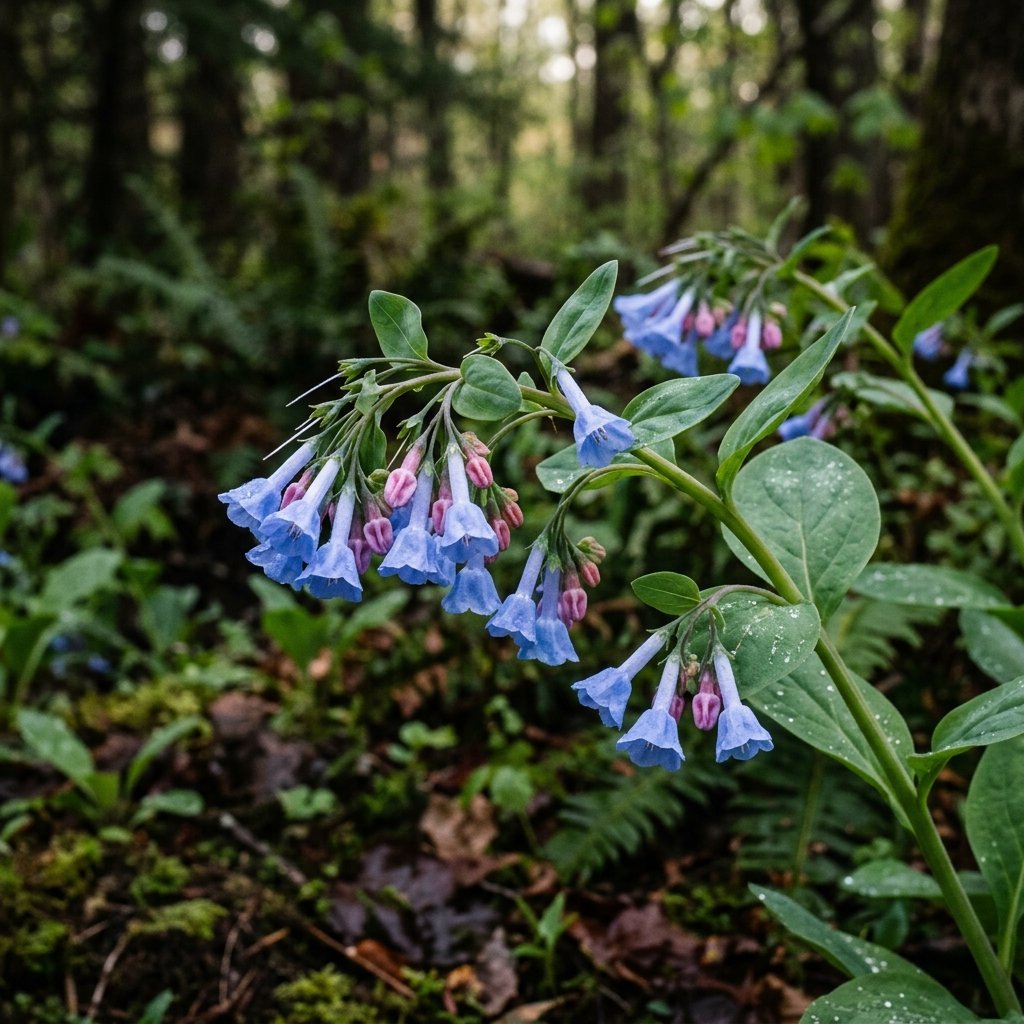
Virginia Bluebells
Mertensia virginica
Virginia Bluebells (*Mertensia virginica*) is among the most enchanting spring wildflowers of eastern North America, producing nodding clusters of sky-blue, trumpet-shaped flowers on arching stems in early spring. A member of the Boraginaceae (borage family), it is native to moist, rich floodplai...
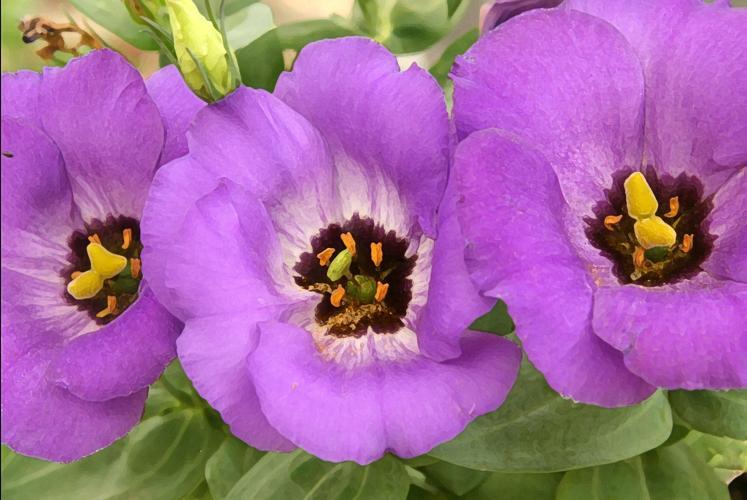
Texas Bluebell (Lisianthus)
Eustoma grandiflorum 'Bolero Deep Blue'
The 'Bolero Deep Blue' is a spectacular cultivar of Eustoma grandiflorum, widely known by its common names: Texas Bluebell, Prairie Gentian, or Lisianthus. Belonging to the Gentianaceae family, this elegant herbaceous annual (or short-lived perennial) is native to the warm, dry prairies and field...
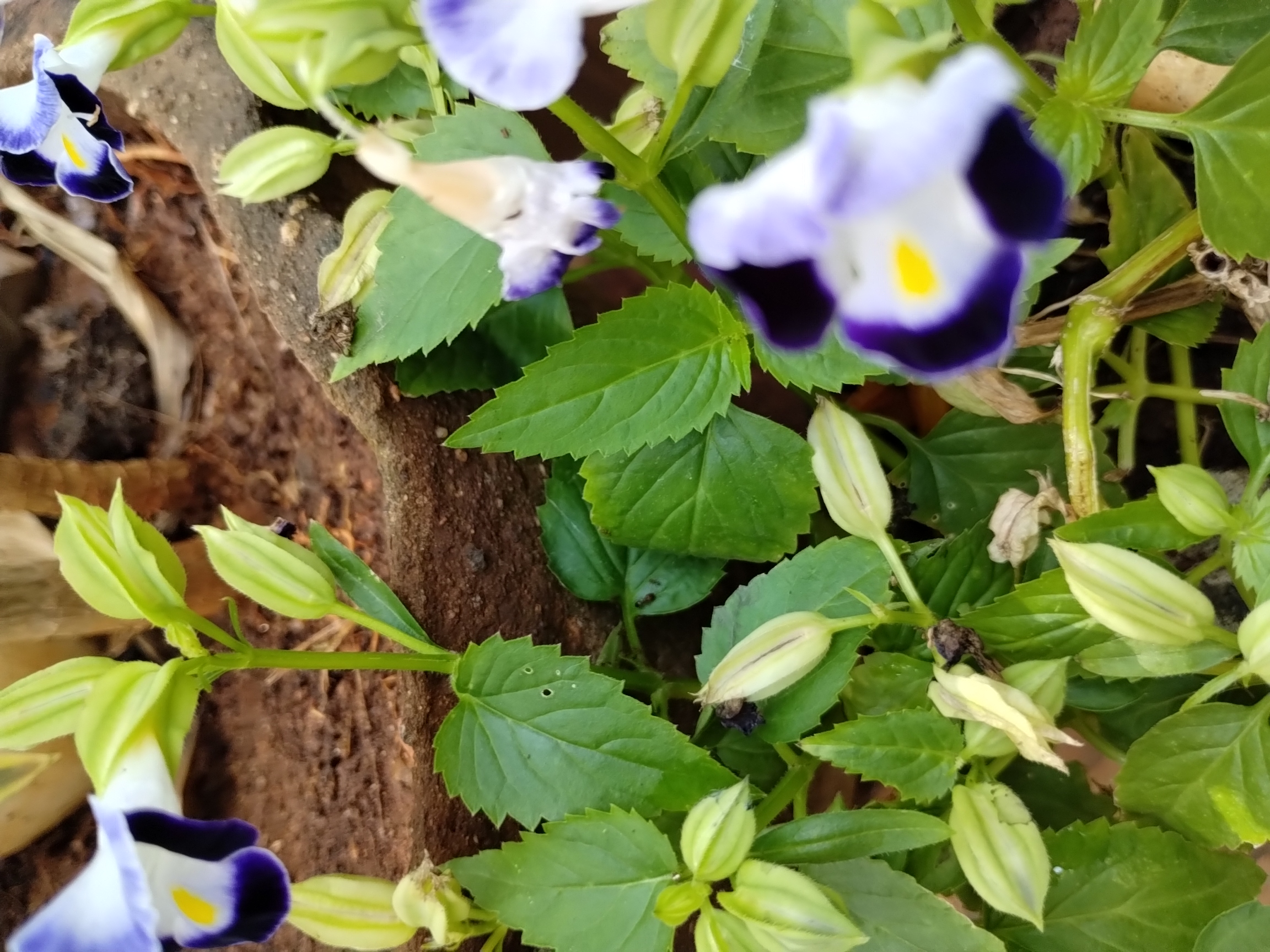
Bluewings
Torenia fournieri
The Wishbone Flower, botanically designated as Torenia fournieri and commonly called Bluewings, is an exceptionally charming, shade-loving tender annual. Belonging to the family Linderniaceae (formerly grouped under Scrophulariaceae), this beautiful plant is native to the moist, shady forest floo...
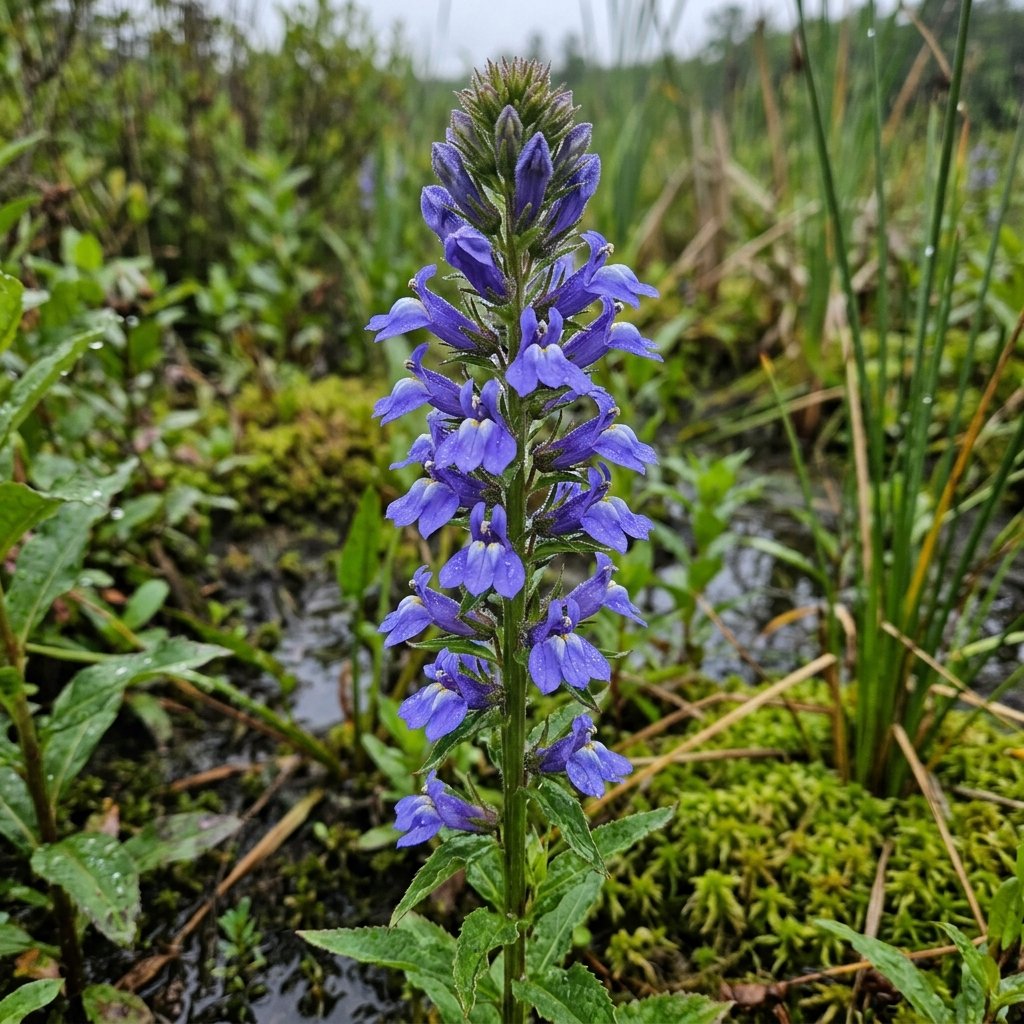
Great Blue Lobelia
Lobelia siphilitica
Great Blue Lobelia (*Lobelia siphilitica*) is a stunning native wildflower of eastern North America, producing tall spikes of vivid blue-violet to true blue flowers from late summer through fall in moist meadows, stream banks, and woodland edges. The blue-flowered counterpart to the scarlet Cardi...
Similar Characteristics
4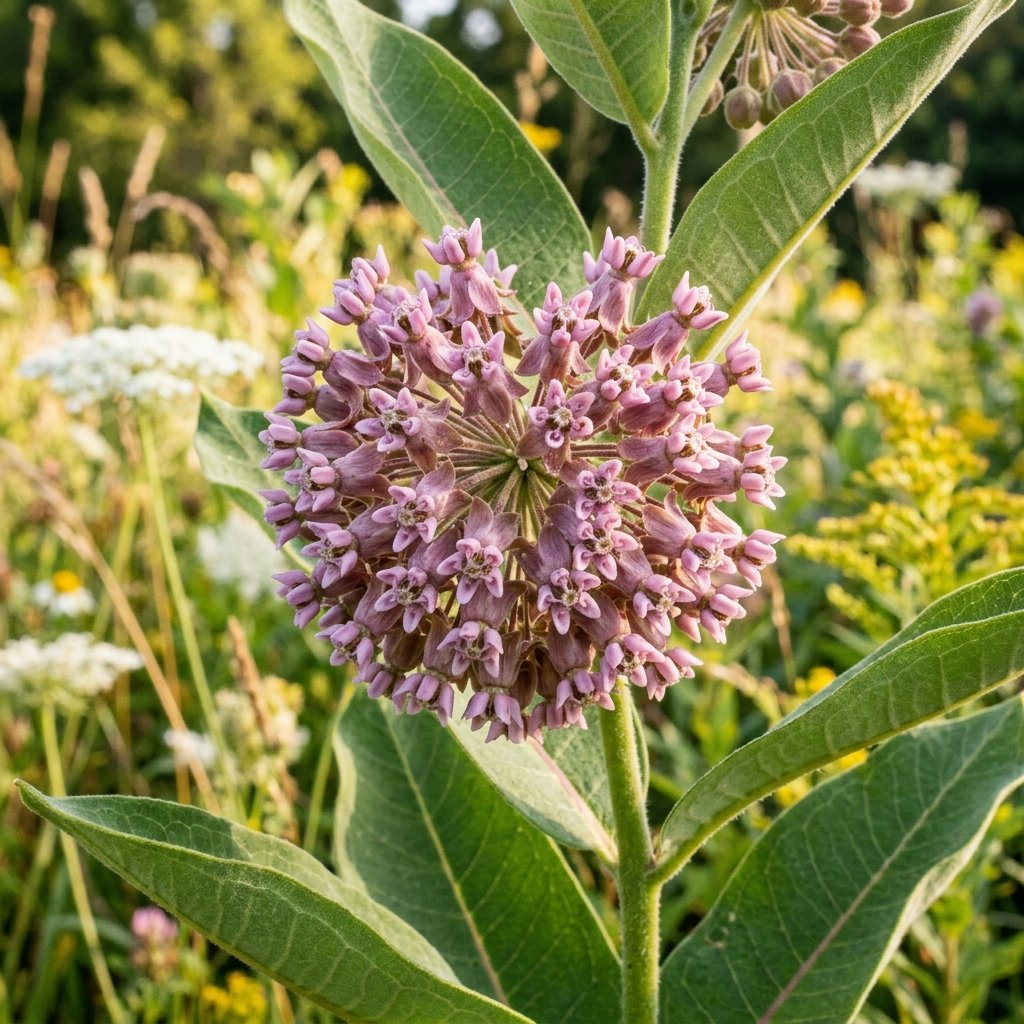
Common Milkweed
Asclepias syriaca
Common Milkweed (*Asclepias syriaca*) is the quintessential wildflower of eastern North American roadsides, meadows, and prairies — a robust, upright perennial producing large, globe-shaped clusters of dusky pink to mauve flowers with an intoxicating sweet fragrance in midsummer, followed by the...
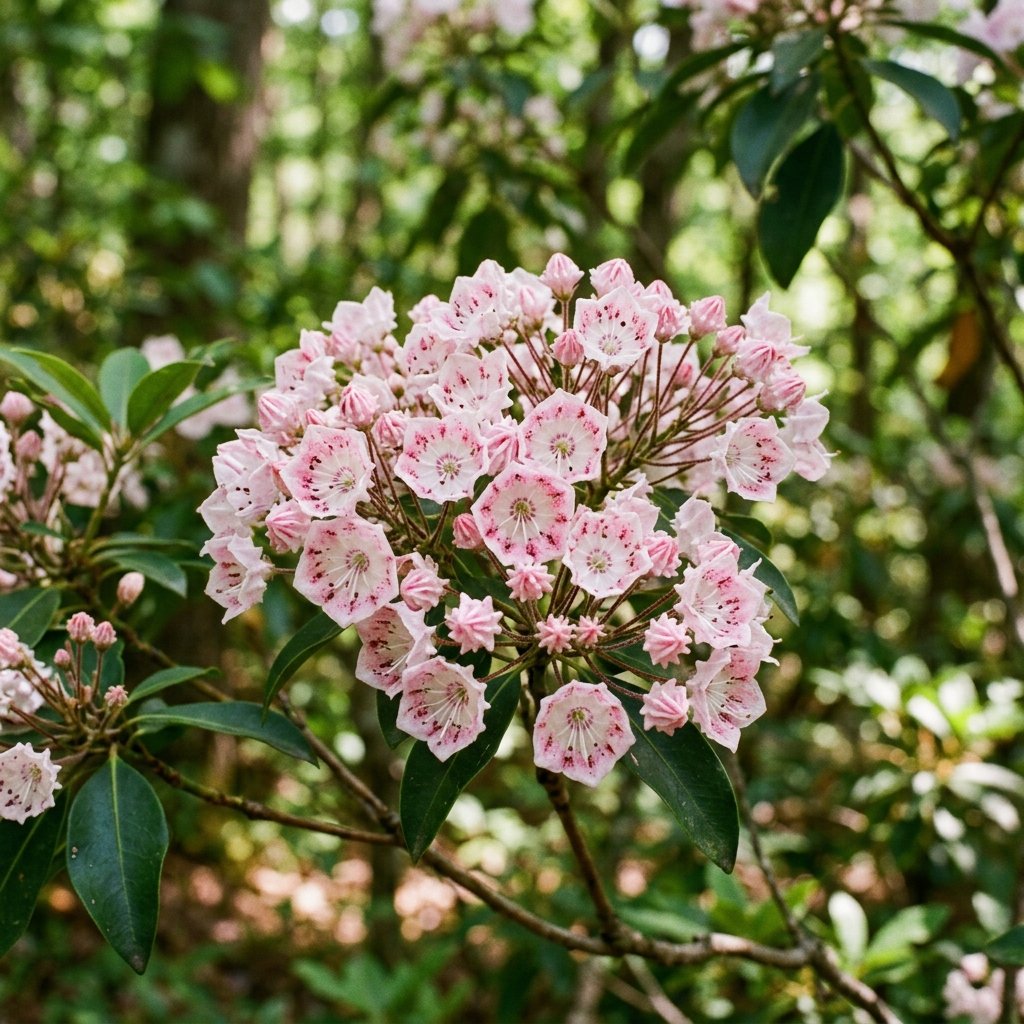
Mountain Laurel
Kalmia latifolia
Mountain Laurel (*Kalmia latifolia*) is one of the most spectacular native flowering shrubs of the eastern United States, producing extraordinary clusters of cup-shaped flowers in shades of white, pink, and deep rose — each blossom decorated with a ring of ten maroon spots and a unique pentagonal...
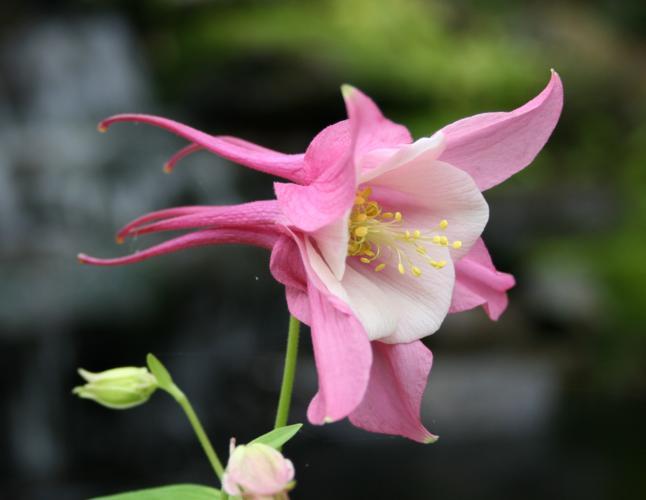
Columbine
Aquilegia
Columbine (Aquilegia), a member of the Ranunculaceae (Buttercup) family, is a gracefully elegant perennial known for its multi-colored, spurred blossoms and delicate, fern-like foliage. Native to the woodlands, meadows, and high-altitude slopes of the Northern Hemisphere—spanning across North Ame...
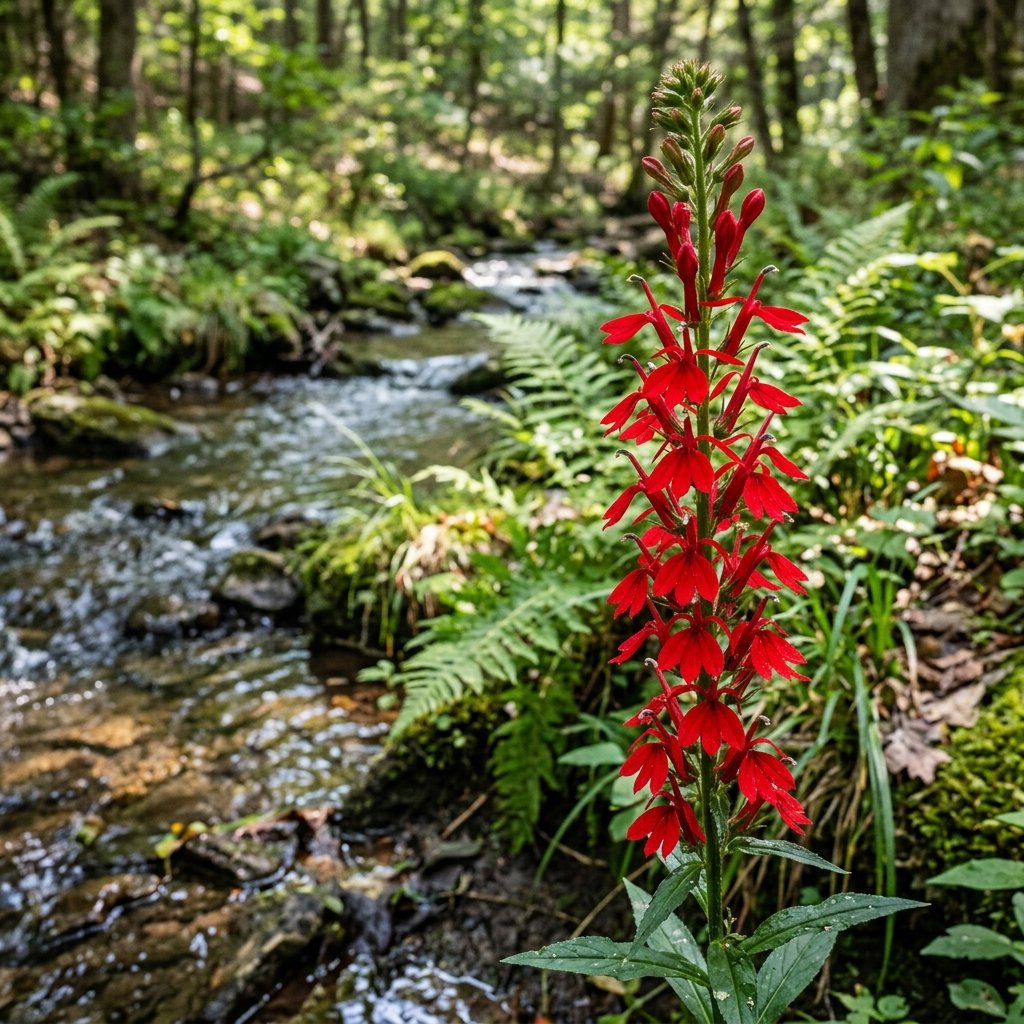
Cardinal Flower
Lobelia cardinalis
Cardinal Flower (*Lobelia cardinalis*) produces one of the most intensely saturated, brilliant scarlet-red flower spikes in all of North American horticulture, a vivid column of color that dominates moist meadows, stream banks, and woodland edges from July through September. Native throughout muc...