
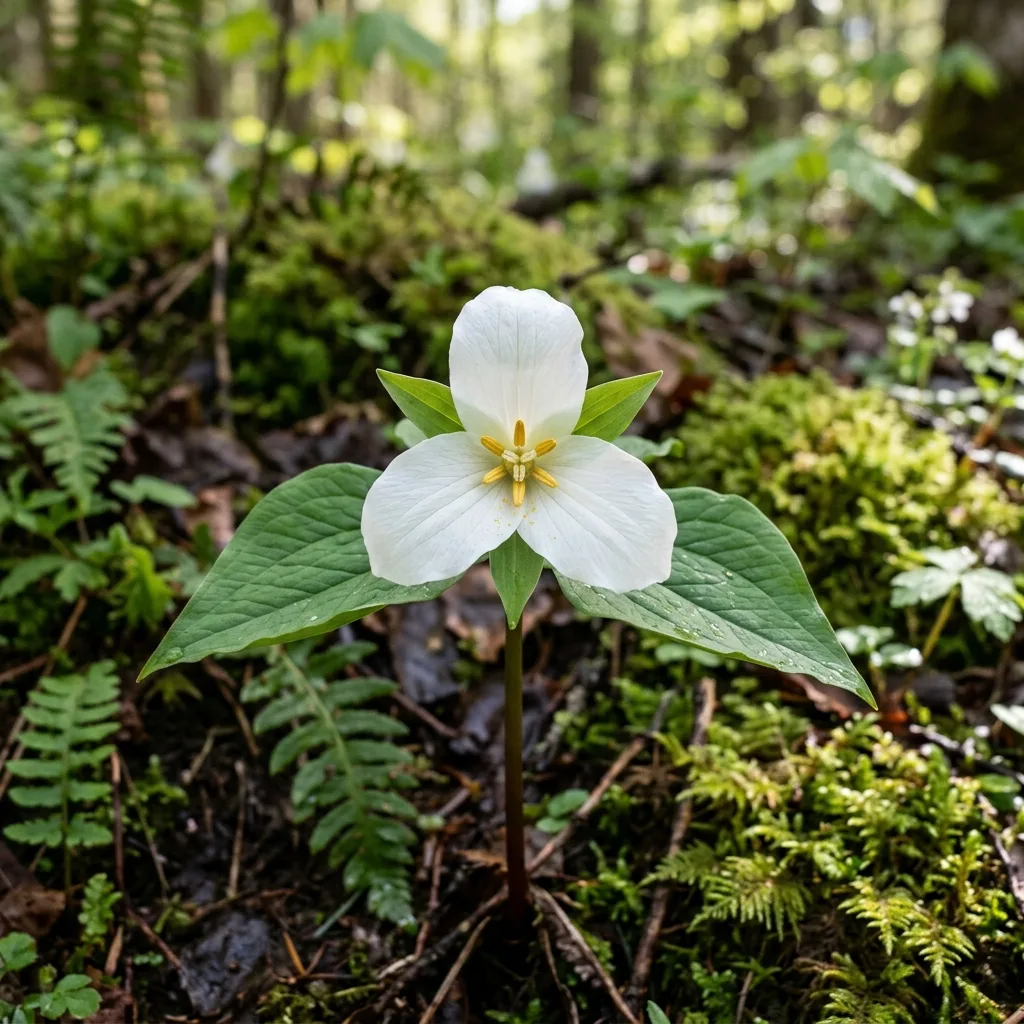
Trillium
Trillium grandiflorum
How to Identify Trillium
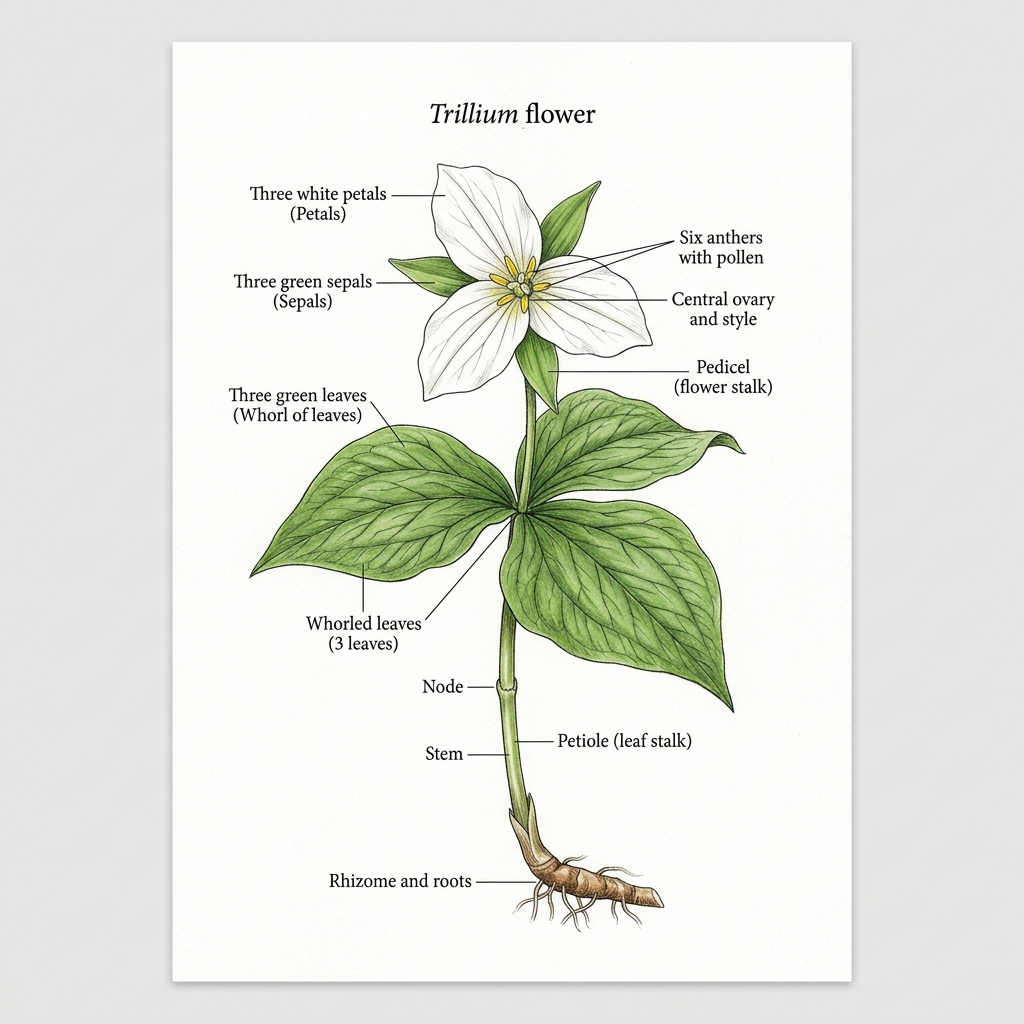
A detailed guide to identifying Trilliums (Trillium grandiflorum) by its key features:
- Three-Leaf Whorl: Three broad, net-veined leaves arranged in a single whorl at the top of the stem.
- Tri-Petalled Bloom: A single, solitary flower with exactly three petals (white, pink, or red).
- Three Green Sepals: Three green, leaf-like sepals alternating directly with the petals.
- Six Yellow Stamens: Six prominent stamens clustered around a central three-lobed pistil.
Care & Growing Guide
Trillium Care Guide:
- Light: Partial to full shade — thrives under deciduous canopy
- Soil: Rich, moist, humus-filled woodland soil; slightly acidic preferred
- Water: Keep consistently moist; does not tolerate drought
- Maintenance: Allow leaves to die back naturally; do not cut foliage. Apply deep leaf mulch each autumn.
Seasonal Blooming & Hardiness
Seasonal Blooming Calendar:
- Peak Bloom: April–May in most of eastern US
- US Range: USDA Zones 4–9; native to eastern US, Great Lakes, Pacific Northwest
- Note: Blooms for 2–3 weeks only in spring; disappears entirely by summer (spring ephemeral)
Bloom Timeline
About Trillium
Trillium is one of the most iconic and beloved wildflowers of North American deciduous forests, instantly recognized by its distinctive three-part symmetry — three leaves, three sepals, and three petals arranged in perfect whorls around a single stout stem. Belonging to the family Melanthiaceae, the genus contains approximately 50 species, distributed across eastern and western North America and parts of Asia. In the eastern United States, the large-flowered Trillium (T. grandiflorum) is the most widespread and celebrated, blooming in April and May in rich, moist woodland soils from Maine to Georgia and westward through the Great Lakes region. It is the official wildflower of Ontario, Canada.
What sets Trillium apart is its extraordinary slowness — a plant grown from seed may take seven to ten years to produce its first bloom. This biological reality makes every Trillium flower a testament to patience and ecological stability. The solitary flower emerges on a stalk directly from the center of a whorl of three broad, net-veined leaves. In T. grandiflorum, the petals are pure, brilliant white, gracefully reflexing as the flower matures, often turning a soft blush pink with age. Other species such as the Red or Purple Trillium (T. erectum) produce dark maroon to deep purple flowers that emit a slight carrion-like odor, attracting flies as pollinators rather than bees.
Ecologically, Trilliums are what botanists call 'myrmecochorous' — their seeds are dispersed by ants, which are attracted to a nutrient-rich appendage called an elaiosome attached to each seed. This intimate ant-plant relationship is responsible for the slow but steady spread of Trillium colonies through woodland floors. Because of their extremely slow reproductive cycle and sensitivity to habitat disturbance, picking a Trillium is illegal in several US states. Uprooting or picking the plant can kill it outright, as it is unable to photosynthesize after losing its leaves, and the loss can prevent reproduction for up to a decade.
For the home gardener, Trilliums can be successfully cultivated in shaded woodland gardens that mimic their natural habitat — rich, moist, humus-rich soil with a deep leaf mulch layer, good drainage, and dappled light filtered through a deciduous tree canopy. They grow well alongside other spring ephemerals such as Virginia Bluebells, Wild Ginger, and Jack-in-the-Pulpit. They are completely non-toxic to pets and humans, and their ethereal presence in a native plant garden is unmatched. Discover more native shade wildflowers in our Flower Identifier and check their safety for pets in our Pet Guard library.
Floral Formula & Features
Actinomorphic, bisexual, 3 free sepals, 3 free petals, 6 free stamens, 3 fused carpels with superior ovary
- Scientific Name & Classification: Trillium spp. (Melanthiaceae). Approximately 50 species native to North America and Asia, recognized by their striking three-part floral symmetry.
- Identification Markers: Three large, broad net-veined leaves in a single whorl. One solitary flower with 3 green sepals and 3 petals (white, pink, red, yellow, or purple depending on species).
- Floral Formula (⊕ ☿ K3 C3 A6 G(3)): Actinomorphic, bisexual, 3 free sepals, 3 free petals, 6 stamens, 3 fused carpels forming a superior ovary.
- Growing Requirements: Deep, moist, humus-rich, well-draining soil. Partial to full shade under deciduous canopy. USDA Zones 4–9. Slow to establish — do not pick or disturb.
- Cultural Significance: Protected by law in many US states (Michigan, New York, Minnesota). State wildflower of Ohio. Symbol of ecological forest health and spring renewal.
- Safety & Toxicity: NON-TOXIC. Safe for cats, dogs, and humans. One of the most ecologically sensitive wildflowers — picking it is illegal in many states.
- Common Look-alikes: Occasionally confused with Wild Ginger (Asarum), but Wild Ginger produces small, inconspicuous reddish-brown flowers hidden beneath leaves, not a showy solitary bloom.
- Internal Links: Pairs beautifully with Virginia Bluebells and Wild Blue Phlox in a woodland native garden. Explore more in our Flower Identifier.
Names in Different Languages
Toxicity & Safety
Frequently Asked Questions
What is Floral Formula?
A floral formula is a symbolic representation of a flower's structure using letters, numbers, and special symbols. It provides a concise way to describe the arrangement and number of floral parts.
This formula describes the flower's symmetry, sepals, petals, stamens, and carpels in a standardized format.
Formula Sequence
- Bract: Br or Ebr
- Bracteole: Brl or Ebrl
- Symmetry: % (Radial) or ⊕ (Bilateral)
- Sex: ♀ (Female), ♂ (Male), or ⚥ (Bisexual)
- Calyx/Sepal: K<number> (Free or Fused)
- Corolla/Petal: C<number> (Free or Fused)
- Androecium: A<number> (Free or Fused)
- Gynaecium: G<number> (Superior or Inferior Ovary)
Symbol Meanings
- Numbers: Indicate quantity of parts
- Parentheses (): Parts are fused together
- Plus (+): Parts in different whorls
- Underline: Superior ovary position
- Overline: Inferior ovary position
- ∞: Numerous parts (too many to count)
Understanding floral formulas helps botanists quickly identify and classify flowers based on their structural characteristics.
Similar Flowers
Discover flowers that share botanical characteristics
Similar Characteristics
4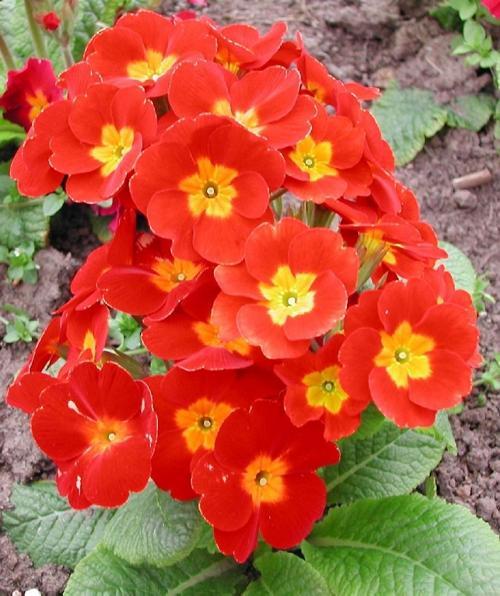
Primula (Common Primrose)
Primula vulgaris
The Primrose, botanically designated as Primula vulgaris and commonly known as the Common Primrose or English Primrose, is an exceptionally charming, early-blooming herbaceous perennial. Belonging to the family Primulaceae (the primrose family), this historic woodland flower is native to the cool...
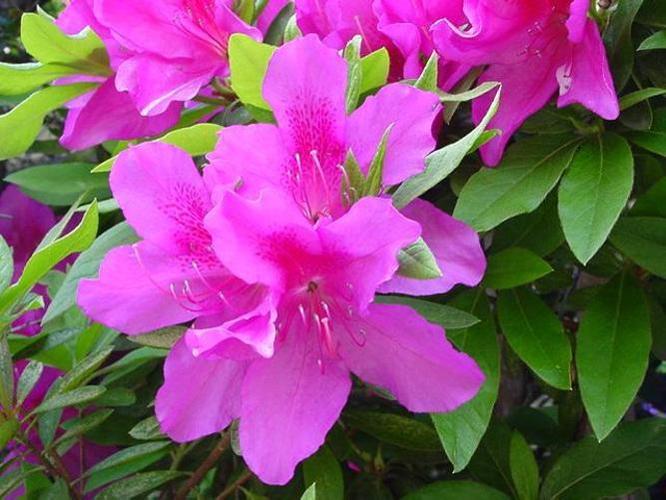
Azalea
Rhododendron (subgenus Tsutsusi)
The Azalea, botanically classified as Rhododendron (specifically under the subgenera Tsutsusi and Pentanthera) and belonging to the family Ericaceae (the heath family), is an exceptionally spectacular, heavy-blooming woody perennial shrub. Native primarily to the cool, damp woodlands, mountain sl...
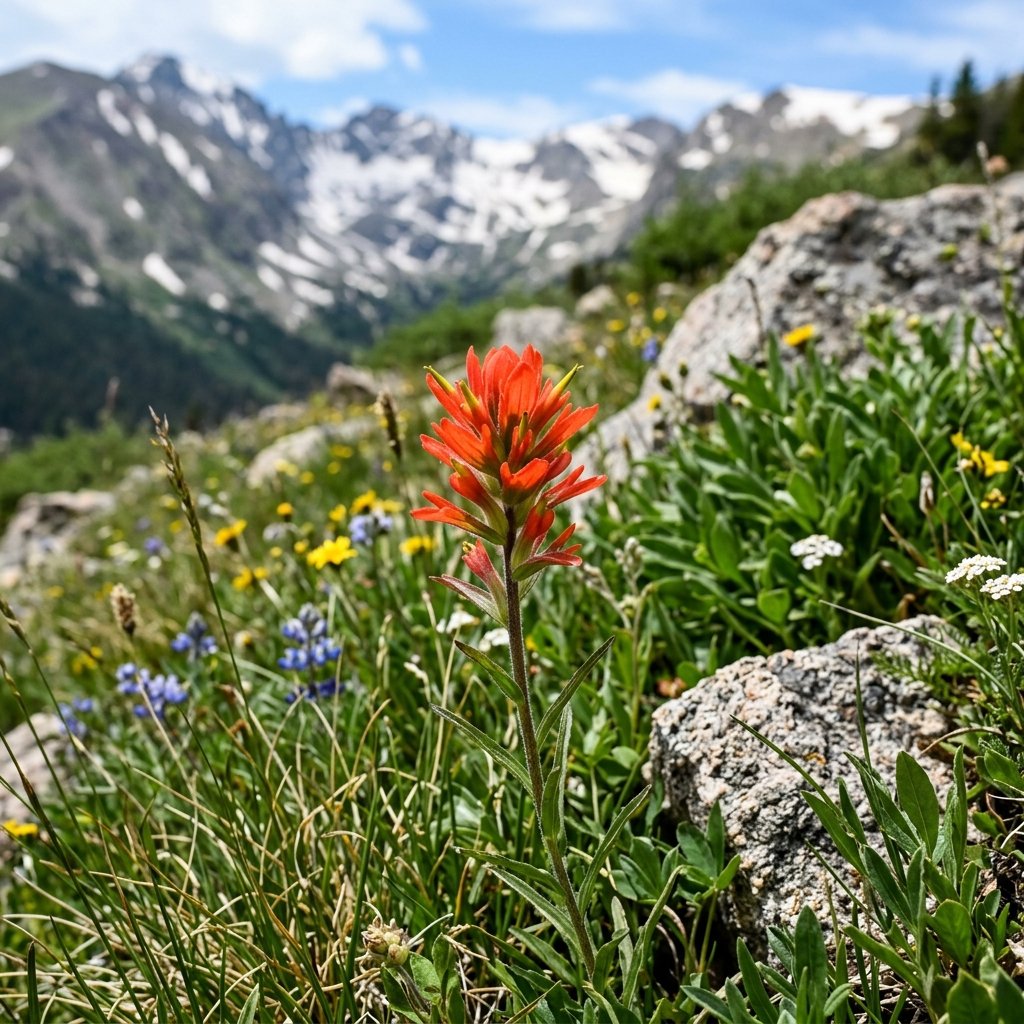
Indian Paintbrush
Castilleja coccinea
Indian Paintbrush (*Castilleja* spp.) is one of the most dramatically beautiful and ecologically fascinating wildflowers of the American West, producing clusters of brilliant red, orange, or yellow bracts that look as though they were dipped in vivid paint. With approximately 200 species native t...
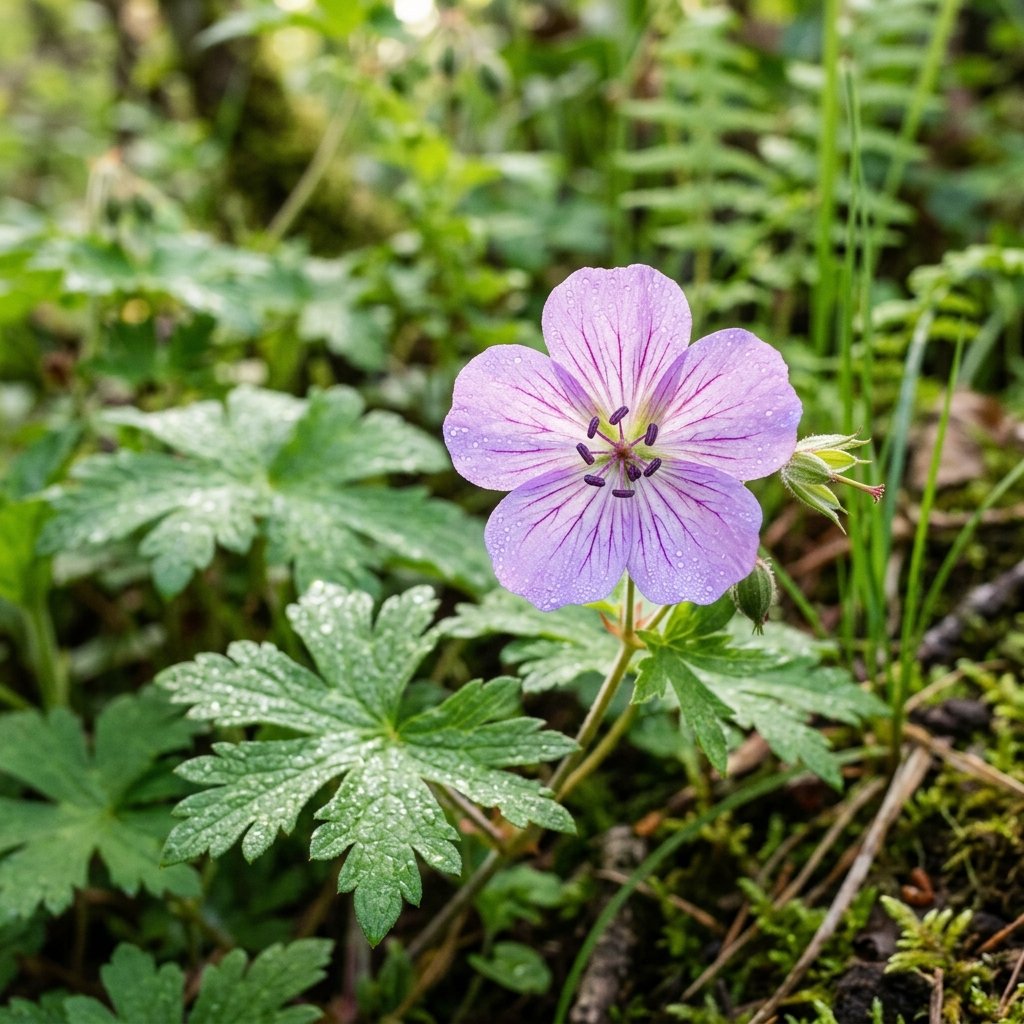
Wild Geranium
Geranium maculatum
Wild Geranium (*Geranium maculatum*), also known as Spotted Cranesbill, is one of the most graceful and widely appreciated native wildflowers of eastern North American woodlands, producing clusters of delicate rosy-lavender to pale pink flowers with five rounded petals above a mound of deeply lob...