
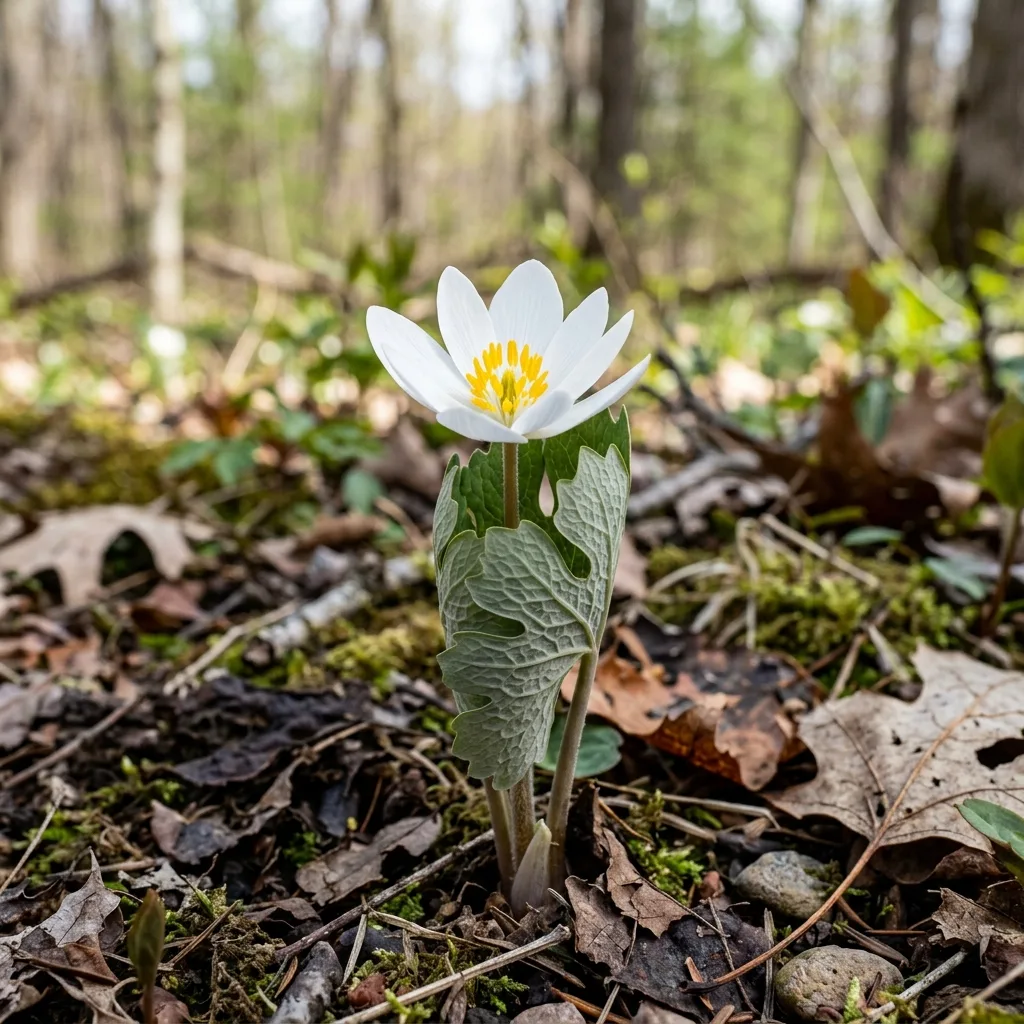
Bloodroot
Sanguinaria canadensis
How to Identify Bloodroot
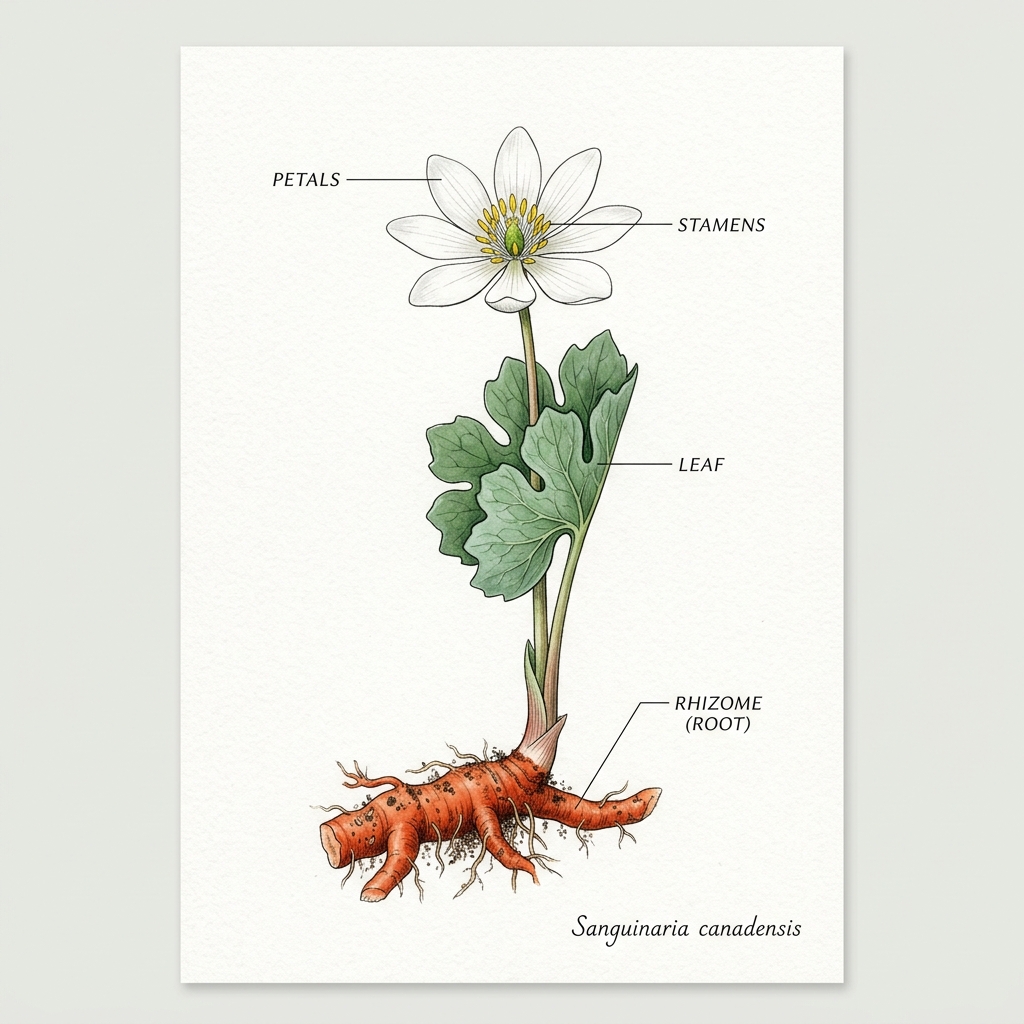
A detailed guide to identifying Bloodroots (Sanguinaria canadensis) by its key features:
- Solitary Waxy White Blooms: Single flowers with 8 to 12 narrow white petals surrounding a bright yellow center.
- Wrapped Lobed Leaf: A single, deeply scalloped leaf that wraps around the flower stem like a collar.
- Vibrant Red Sap: Bright orange-red latex sap that bleeds from the roots and stems when cut.
- Fleshy Underground Tubers: Thick rhizomes that store nutrients for early spring blooming.
Care & Growing Guide
Bloodroot Care Guide:
- Light: Partial to full shade under deciduous canopy
- Soil: Moist, rich, humus-filled, slightly acidic woodland soil
- Water: Moderate moisture during spring; tolerates summer drought when dormant
- Planting: Plant rhizomes horizontally, 1–2 inches deep, in fall
Seasonal Blooming & Hardiness
Seasonal Blooming Calendar:
- Peak Bloom: March–April (among the earliest spring wildflowers)
- US Range: USDA Zones 3–8; native throughout eastern North America in deciduous woodlands
- Note: True spring ephemeral — gone entirely by July
Bloom Timeline
About Bloodroot
Bloodroot (Sanguinaria canadensis) is one of the earliest and most enchanting spring wildflowers of eastern North American forests, producing pure white, star-like flowers with golden yellow centers that emerge in March and April, often pushing up through the last of the winter snow. It is the sole species of the genus Sanguinaria (family Papaveraceae — the poppy family), making it a monospecific genus and one of the most botanically distinctive plants in the eastern US flora. The plant's common name comes from the brilliant orange-red sap found in its roots and stems, which was used extensively by Indigenous peoples as a fabric dye, body paint, and insect repellent.
Each Bloodroot plant produces a single basal leaf — large, deeply lobed, and glaucous blue-green — that wraps itself protectively around the flower stalk as the bud pushes through the soil. As the flower opens, the leaf unfurls alongside it, eventually expanding to 5–9 inches wide with a distinctive scalloped outline. The flower itself is brief but spectacular: 8–12 brilliant white petals surrounding a prominent boss of golden stamens. The petals drop within 1–3 days of opening, especially on windy or warm spring days, making Bloodroot one of the most ephemeral of all spring wildflowers.
Bloodroot is mycorrhizally dependent and ant-dispersed — its seeds bear elaiosomes (nutritious fat bodies) that attract ants, which carry the seeds back to their nests, eat the elaiosome, and discard the intact seed, effectively planting it in a new location. This myrmecochory is the primary mechanism by which Bloodroot colonies slowly expand across a woodland floor over many decades. Large colonies of Bloodroot in old-growth woodland fragments are a sign of ecological continuity — an indication that the forest has remained undisturbed for generations.
All parts of Bloodroot contain the alkaloid sanguinarine and related compounds, which are toxic to humans and animals if ingested and can cause severe skin and tissue irritation on contact. Despite this toxicity (or because of it), the plant has a long history in both Native American medicine and later in patent medicines — its extracts were used in treatments for skin conditions, though this use has been largely abandoned due to toxicity concerns. For the gardener, Bloodroot is best enjoyed for its brief but breathtaking beauty in a woodland setting, planted alongside Trilliums, Virginia Bluebells, and Wild Ginger. Check our Pet Guard library for plant safety information.
Floral Formula & Features
Actinomorphic, bisexual; 2 caducous (quickly falling) sepals; 8–12 free white petals; numerous free stamens; 2 fused carpels with superior ovary
- Scientific Name & Classification: Sanguinaria canadensis (Papaveraceae). The sole species of the genus Sanguinaria — a monospecific genus native exclusively to eastern North America.
- Identification Markers: Single white star-like flower with 8–12 petals and golden stamens. Single large, deeply lobed, blue-green basal leaf. Brilliant orange-red sap in roots and stems. Spring ephemeral — blooms and disappears by June. Height 6–12 in.
- Floral Formula (⊕ ☿ K2 C(8–12) A∞ G(2)): Actinomorphic, bisexual; 2 quickly-falling sepals; 8–12 free white petals; numerous free stamens; 2 fused carpels with superior ovary.
- Growing Requirements: Partial to full shade in moist, humus-rich, slightly acidic woodland soil. Spring ephemeral — goes fully dormant by July. USDA Zones 3–8. Plant in drifts for best effect.
- Cultural Significance: Orange-red root sap used by Indigenous peoples of the eastern US for body paint, fabric dyeing, and insect repellent. The double-flowered cultivar 'Multiplex' is a popular garden ornamental.
- Safety & Toxicity: ⚠️ TOXIC. All parts contain sanguinarine and other alkaloids toxic to humans and animals. Contact with sap can irritate skin. Do not ingest. Keep children and pets away.
- Common Look-alikes: Sometimes confused with Wood Anemone (Anemone quinquefolia) due to similar white spring flowers, but Bloodroot has many more petals (8–12 vs 5) and distinctly lobed single leaves.
- Internal Links: Magnificent in early spring combination with Trillium and Virginia Bluebells. Explore more in our Flower Identifier.
Names in Different Languages
Botanical Classification: Bloodroot belongs to the Papaveraceae family. Learn how to identify its floral symmetry, stamen arrangement, and structural formulas in our Botanical Family Classification Guide.
Toxicity & Safety
Always keep toxic plants out of reach of children and pets. Consult a veterinarian or medical professional immediately if ingestion is suspected.
Pet Safety Guide: For detailed toxicity symptoms, first-aid measures, and safe garden alternatives, see our full Pet Guard Profile for Bloodroot.
Frequently Asked Questions
What is Floral Formula?
A floral formula is a symbolic representation of a flower's structure using letters, numbers, and special symbols. It provides a concise way to describe the arrangement and number of floral parts.
This formula describes the flower's symmetry, sepals, petals, stamens, and carpels in a standardized format.
Formula Sequence
- Bract: Br or Ebr
- Bracteole: Brl or Ebrl
- Symmetry: % (Radial) or ⊕ (Bilateral)
- Sex: ♀ (Female), ♂ (Male), or ⚥ (Bisexual)
- Calyx/Sepal: K<number> (Free or Fused)
- Corolla/Petal: C<number> (Free or Fused)
- Androecium: A<number> (Free or Fused)
- Gynaecium: G<number> (Superior or Inferior Ovary)
Symbol Meanings
- Numbers: Indicate quantity of parts
- Parentheses (): Parts are fused together
- Plus (+): Parts in different whorls
- Underline: Superior ovary position
- Overline: Inferior ovary position
- ∞: Numerous parts (too many to count)
Understanding floral formulas helps botanists quickly identify and classify flowers based on their structural characteristics.
Similar Flowers
Discover flowers that share botanical characteristics
Same Family
4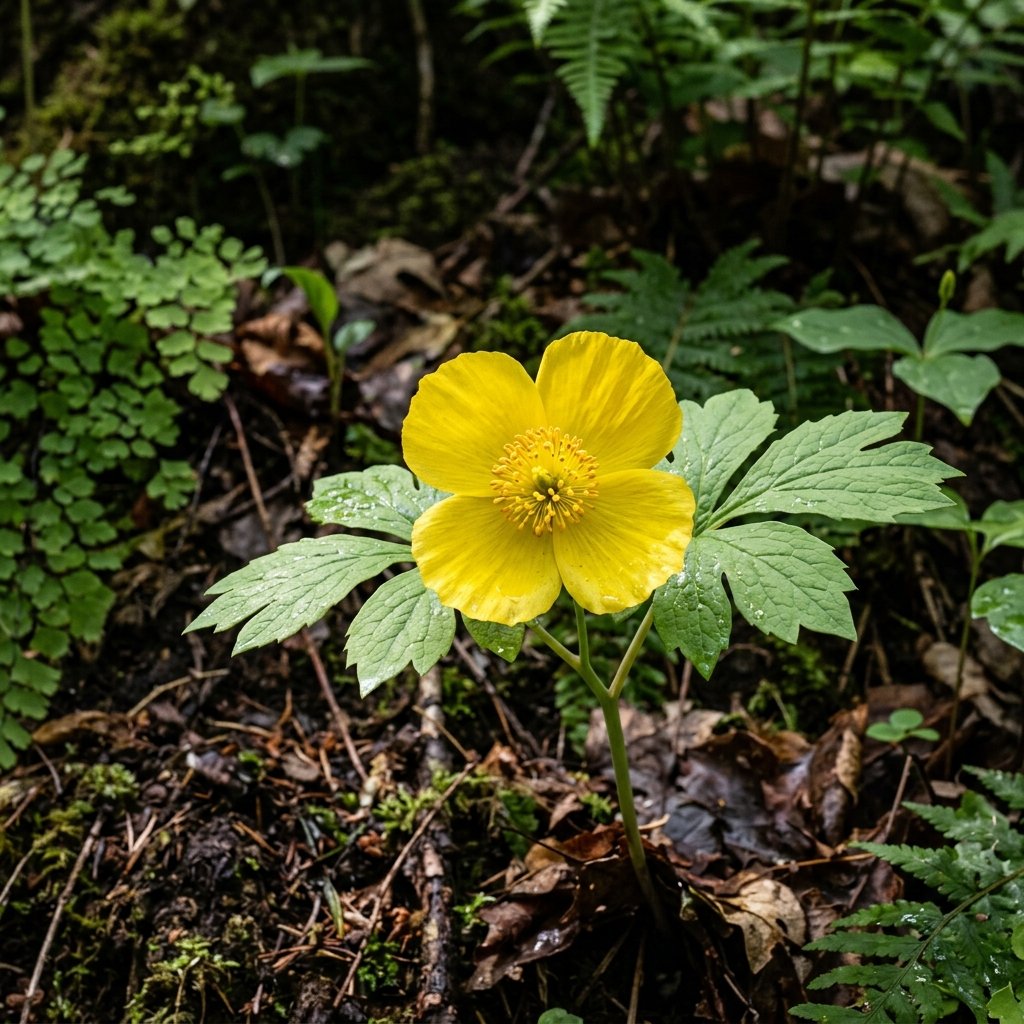
Wood Poppy
Stylophorum diphyllum
Wood Poppy (*Stylophorum diphyllum*), also known as the Celandine Poppy or Yellow Wood Poppy, is one of the showiest and most reliable native wildflowers for the shaded woodland garden, producing large, bright butter-yellow poppy flowers 1.5 to 2 inches across above a rosette of deeply lobed, blu...
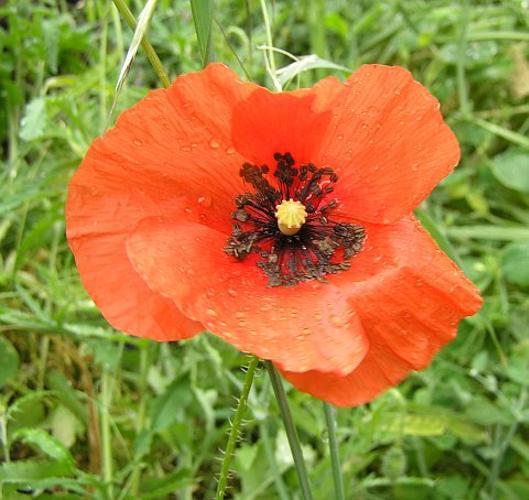
Corn Poppy
Papaver rhoeas
The Corn Poppy, botanically designated as Papaver rhoeas and commonly known as the Field Poppy, Flanders Poppy, or Red Poppy, is an exceptionally iconic, breezy, and resilient annual wildflower. Belonging to the family Papaveraceae (the poppy family, tribe Papavereae), this historically rich plan...
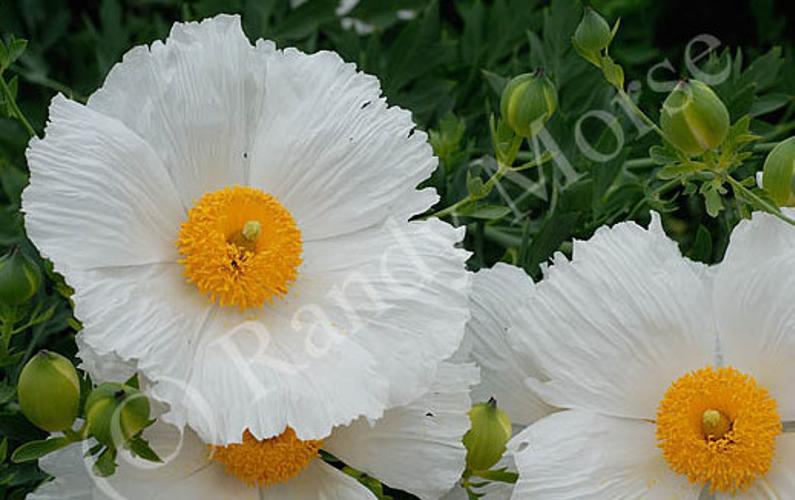
Tree Poppy
Dendromecon rigida
The Tree Poppy, scientifically known as Dendromecon rigida and commonly referred to as the Bush Poppy or California Tree Poppy, is a rare, spectacular evergreen shrub belonging to the Papaveraceae (poppy) family. Endemic to the dry, rocky chaparral slopes and coastal sage scrub of California and...
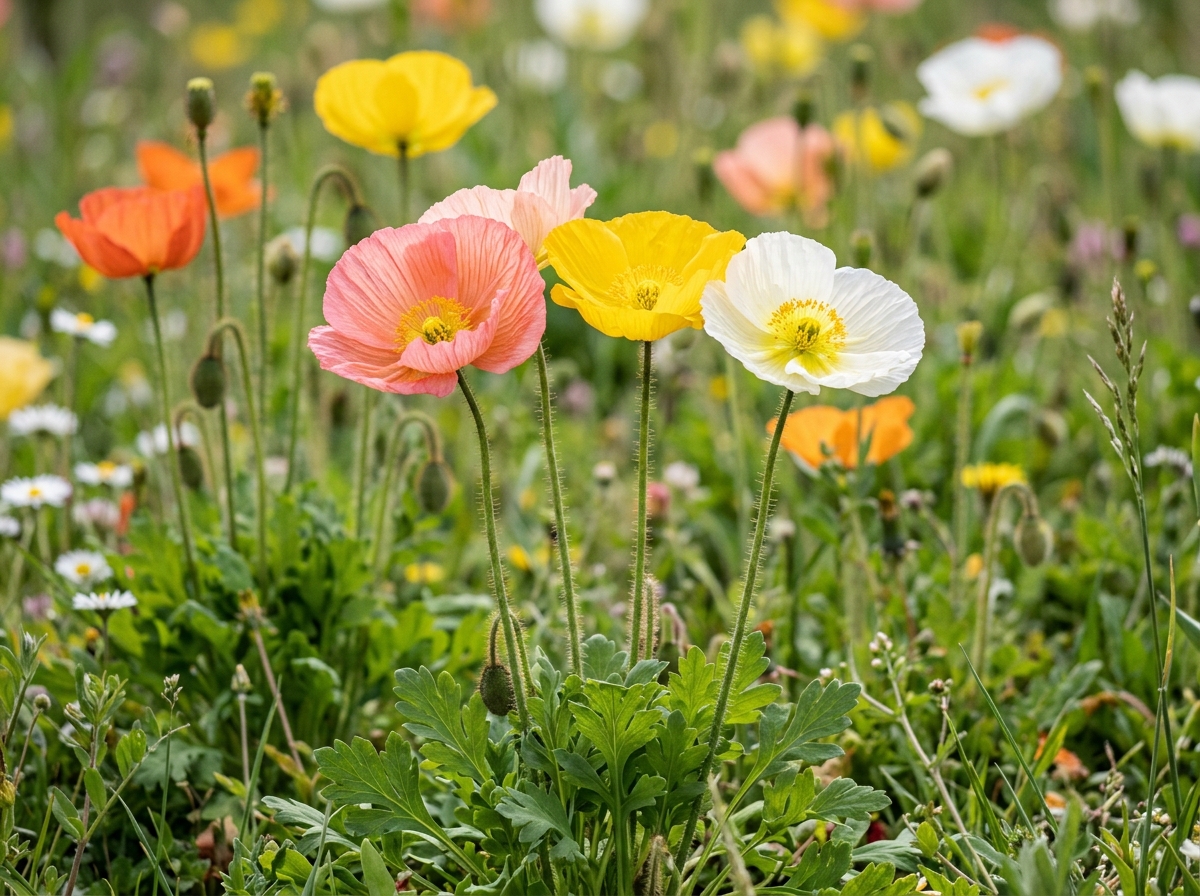
Iceland Poppy
Papaver nudicaule
Iceland Poppy (*Papaver nudicaule*), despite its common name, is native to subpolar regions of Asia and North America rather than Iceland. Beloved for its papery, bowl-shaped blossoms that appear in glowing pastel shades of yellow, orange, salmon, pink, rose, and white, the Iceland Poppy is one o...
Similar Characteristics
4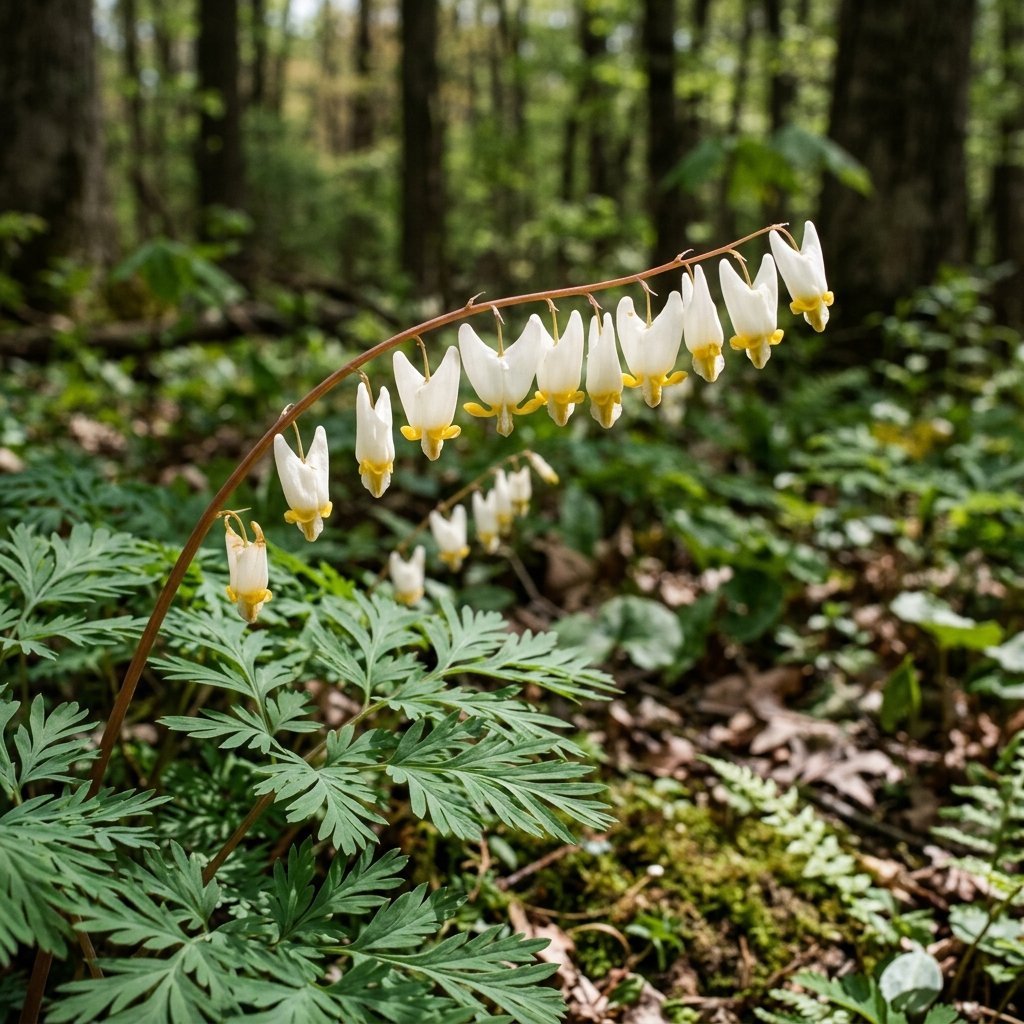
Dutchman's Breeches
Dicentra cucullaria
Dutchman's Breeches (*Dicentra cucullaria*) is one of the most whimsically charming and distinctively shaped wildflowers in the eastern North American spring flora, producing pendulous racemes of pure white flowers shaped precisely like pairs of miniature, upside-down pantaloons or 'breeches' — t...
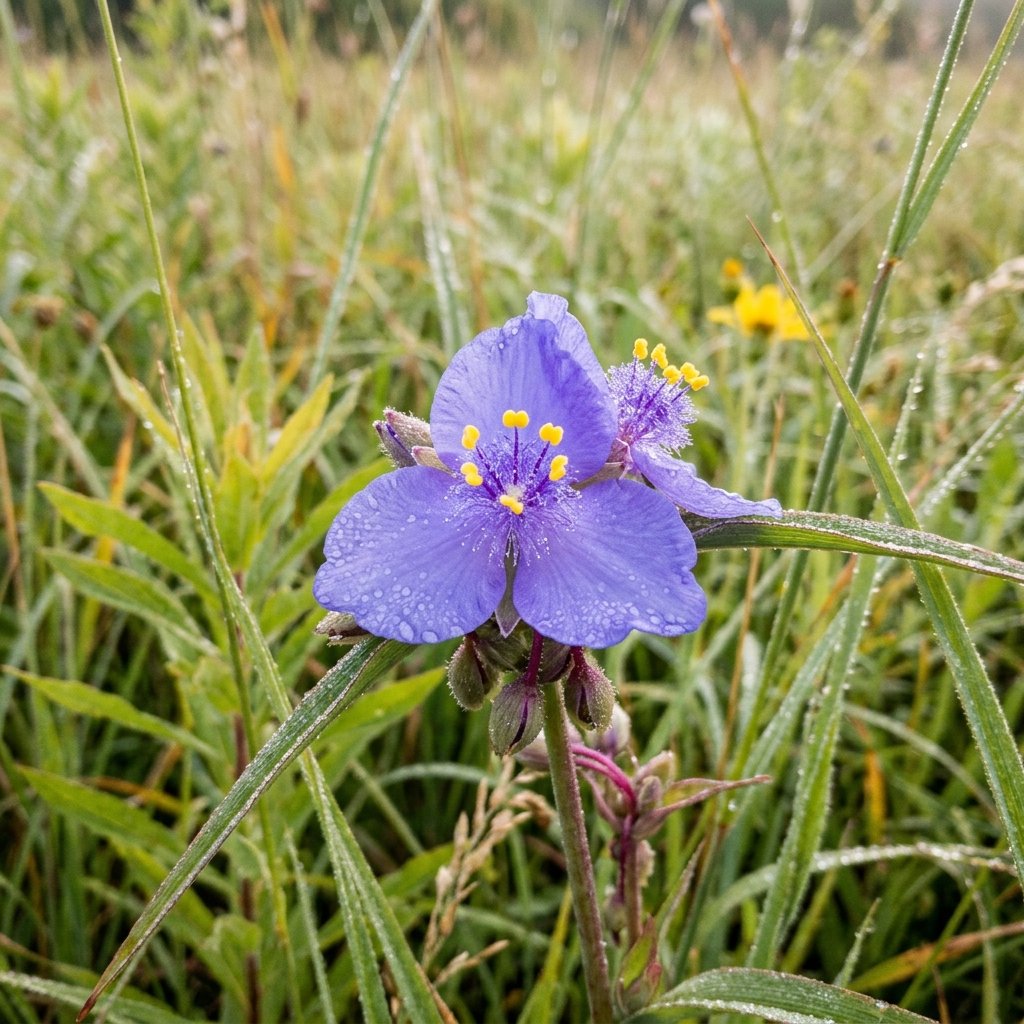
Spiderwort
Tradescantia ohiensis
Spiderwort (*Tradescantia ohiensis* and related species) is a quietly enchanting native wildflower of eastern North America, producing clusters of vivid three-petaled flowers in shades of deep blue-violet, blue, and occasionally white from late spring through summer. Belonging to the Commelinacea...
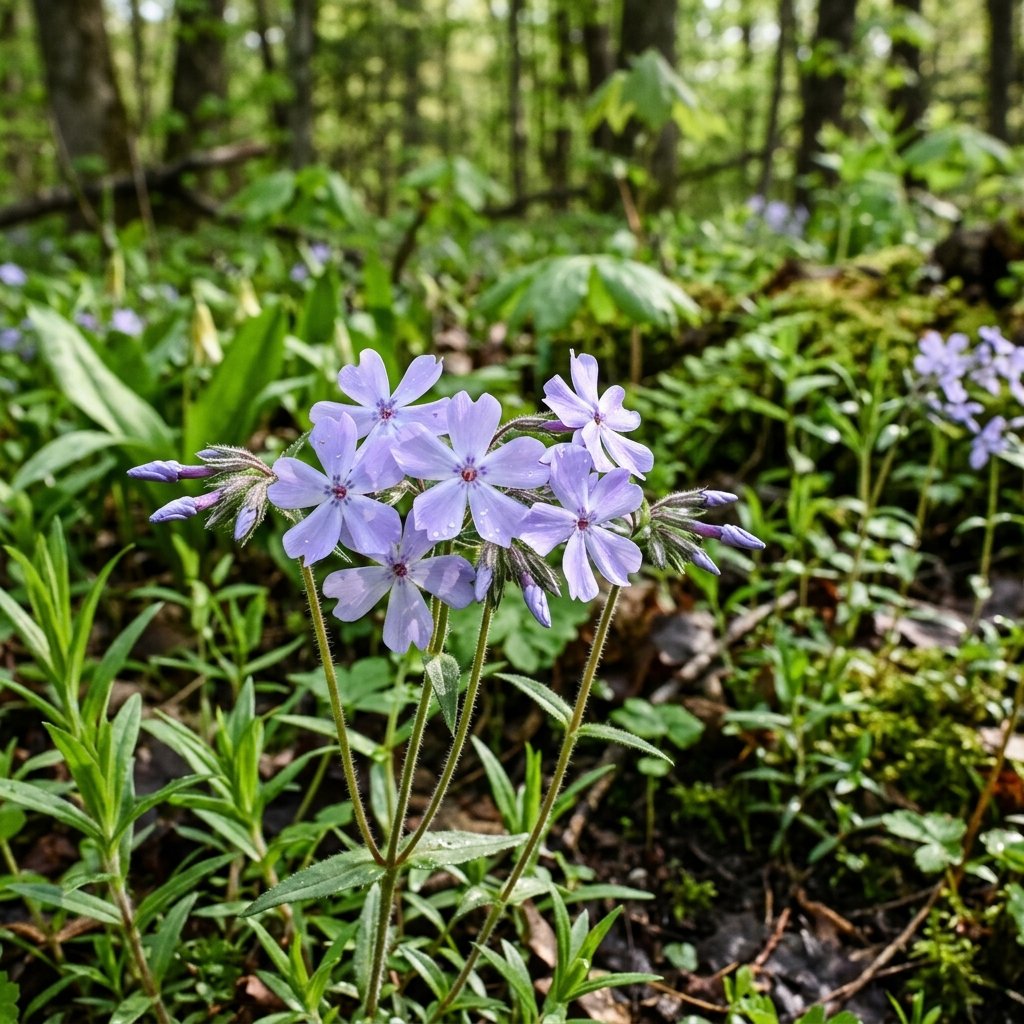
Wild Blue Phlox
Phlox divaricata
Wild Blue Phlox (*Phlox divaricata*), also widely known as Blue Phlox or Woodland Phlox, is one of the most fragrant and visually graceful native wildflowers of eastern North American woodlands, producing loose, open clusters of pale blue to lavender-blue flowers with a sweet, light perfume in Ap...
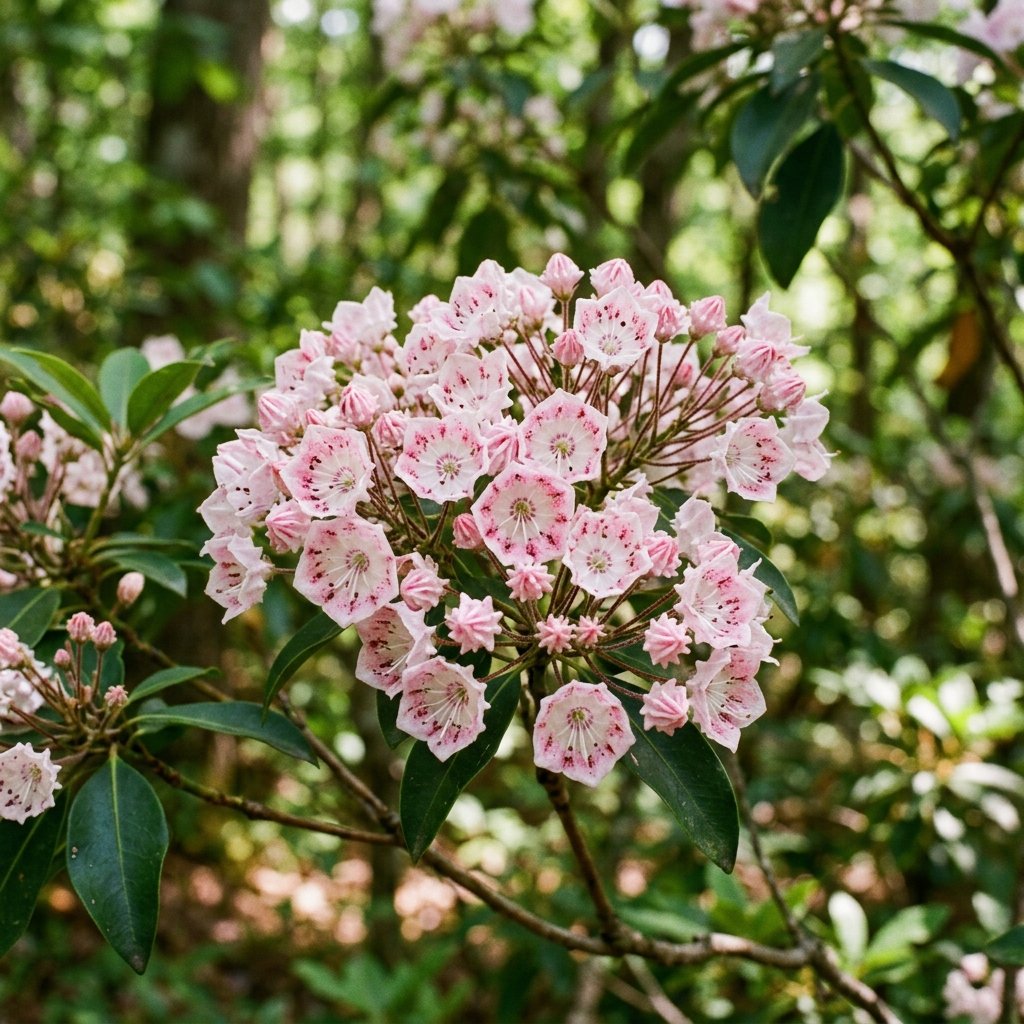
Mountain Laurel
Kalmia latifolia
Mountain Laurel (*Kalmia latifolia*) is one of the most spectacular native flowering shrubs of the eastern United States, producing extraordinary clusters of cup-shaped flowers in shades of white, pink, and deep rose — each blossom decorated with a ring of ten maroon spots and a unique pentagonal...