
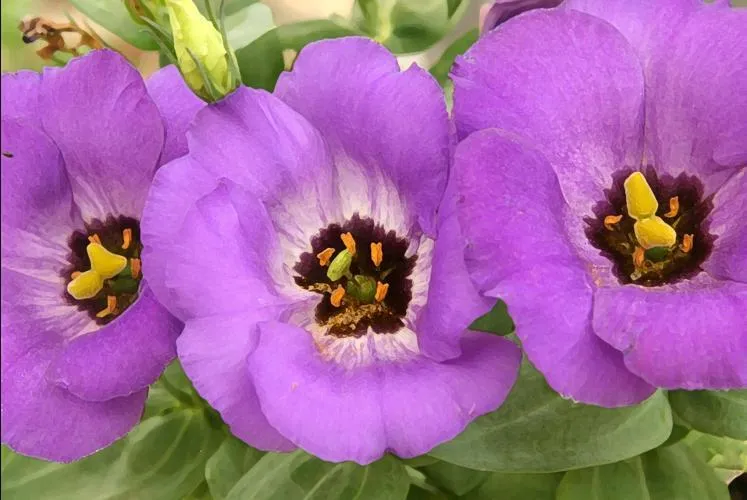
Texas Bluebell (Lisianthus)
Eustoma grandiflorum 'Bolero Deep Blue'
How to Identify Texas Bluebell (Lisianthus)
Care & Growing Guide
Seasonal Blooming & Hardiness
Seasonal Blooming Calendar:
- Peak Bloom: Summer (typically June through September).
- Planting Time: Sow seeds directly outdoors in early spring after the last frost, or transplant nursery starts in late spring.
Bloom Timeline
About Texas Bluebell (Lisianthus)
The 'Bolero Deep Blue' is a spectacular cultivar of Eustoma grandiflorum, widely known by its common names: Texas Bluebell, Prairie Gentian, or Lisianthus. Belonging to the Gentianaceae family, this elegant herbaceous annual (or short-lived perennial) is native to the warm, dry prairies and fields of the Southern United States, Mexico, and northern South America. Despite its rugged origins, it has been heavily cultivated in Japan and Europe to become one of the most highly prized and expensive cut flowers in the global floral industry.
Identification is characterized by its breathtaking, highly refined flowers that are frequently mistaken for premium roses or peonies. The 'Bolero Deep Blue' cultivar produces fully double, deeply ruffled blossoms in a mesmerizing, intense shade of velvety purple-blue. The flowers bloom on long, sturdy, branching stems accompanied by distinctively smooth, fleshy, blue-green (glaucous) ovate leaves that clasp directly to the stem.
The floral formula for Eustoma is ⊕ ⚥ K(5) C(5) A5 G(2). It features a radially symmetrical, bisexual flower. It has a deeply lobed calyx of 5 fused sepals, a bell-shaped corolla of 5 fused petals (though double cultivars like 'Bolero' have heavily mutated extra petal layers), 5 stamens, and a superior ovary comprised of 2 fused carpels.
Growing Lisianthus from seed is notoriously slow and difficult, often requiring 5-6 months just to reach blooming size. They demand a very specific environment: full sun to encourage blooming, but they strongly dislike extreme, searing heat. They require rich, well-draining soil and a consistent watering schedule where the soil is allowed to dry slightly between waterings, as they are highly susceptible to root rot and fungal diseases.
Culturally, the Lisianthus represents appreciation, charisma, and a lifelong bond, making it a staple in high-end wedding bouquets. As a cut flower, it is legendary for its vase life, often lasting up to two or three weeks in water.
A major benefit for indoor arrangements is that the Texas Bluebell is completely NON-TOXIC. It is entirely safe for households with cats, dogs, and children.
It is frequently confused with true roses (Rosa), but Lisianthus lacks any woody, thorny stems. It is also confused with true Bluebells (Campanula), which are entirely unrelated. Compare its ruffled elegance with the Sweet Pea or explore more safe cut flowers in our Flower Identifier.
For more botanical profiles and flower identification features, see our guides on Bluewings and Peacock Flower (Caesalpinia).
Floral Formula & Features
Radially symmetrical, bisexual. 5 fused sepals, 5 fused petals forming a bell shape (heavily doubled in this cultivar), 5 stamens, superior ovary of 2 fused carpels.
- Scientific Name & Classification: Eustoma grandiflorum (Gentianaceae). Commonly known as Lisianthus or Texas Bluebell.
- Identification Markers: Fully double, deeply ruffled velvety purple-blue flowers that closely resemble roses. Fleshy, blue-green leaves.
- Floral Formula (⊕ ⚥ K(5) C(5) A5 G(2)): Radially symmetrical, bell-shaped corolla. 'Double' varieties feature mutated extra petal layers.
- Growing Requirements: Full sun, well-draining soil. Requires consistent watering but is highly prone to root rot if waterlogged. Slow growing from seed.
- Cultural Significance: A premium, luxury cut flower heavily used in the wedding industry due to its elegance and incredibly long vase life.
- Safety & Toxicity: NON-TOXIC. Completely safe for households with dogs, cats, and young children.
- Common Look-alikes: Often mistaken for a thornless Rose or a Peony due to the dense, ruffled petals, but belongs to the Gentian family.
- Internal Links: Compare with another intensely colored, long-lasting cut flower, the Dahlia, or check the Flower Identifier.
Names in Different Languages
Toxicity & Safety
Frequently Asked Questions
What is Floral Formula?
A floral formula is a symbolic representation of a flower's structure using letters, numbers, and special symbols. It provides a concise way to describe the arrangement and number of floral parts.
This formula describes the flower's symmetry, sepals, petals, stamens, and carpels in a standardized format.
Formula Sequence
- Bract: Br or Ebr
- Bracteole: Brl or Ebrl
- Symmetry: % (Radial) or ⊕ (Bilateral)
- Sex: ♀ (Female), ♂ (Male), or ⚥ (Bisexual)
- Calyx/Sepal: K<number> (Free or Fused)
- Corolla/Petal: C<number> (Free or Fused)
- Androecium: A<number> (Free or Fused)
- Gynaecium: G<number> (Superior or Inferior Ovary)
Symbol Meanings
- Numbers: Indicate quantity of parts
- Parentheses (): Parts are fused together
- Plus (+): Parts in different whorls
- Underline: Superior ovary position
- Overline: Inferior ovary position
- ∞: Numerous parts (too many to count)
Understanding floral formulas helps botanists quickly identify and classify flowers based on their structural characteristics.
Similar Flowers
Discover flowers that share botanical characteristics
Similar Colors
4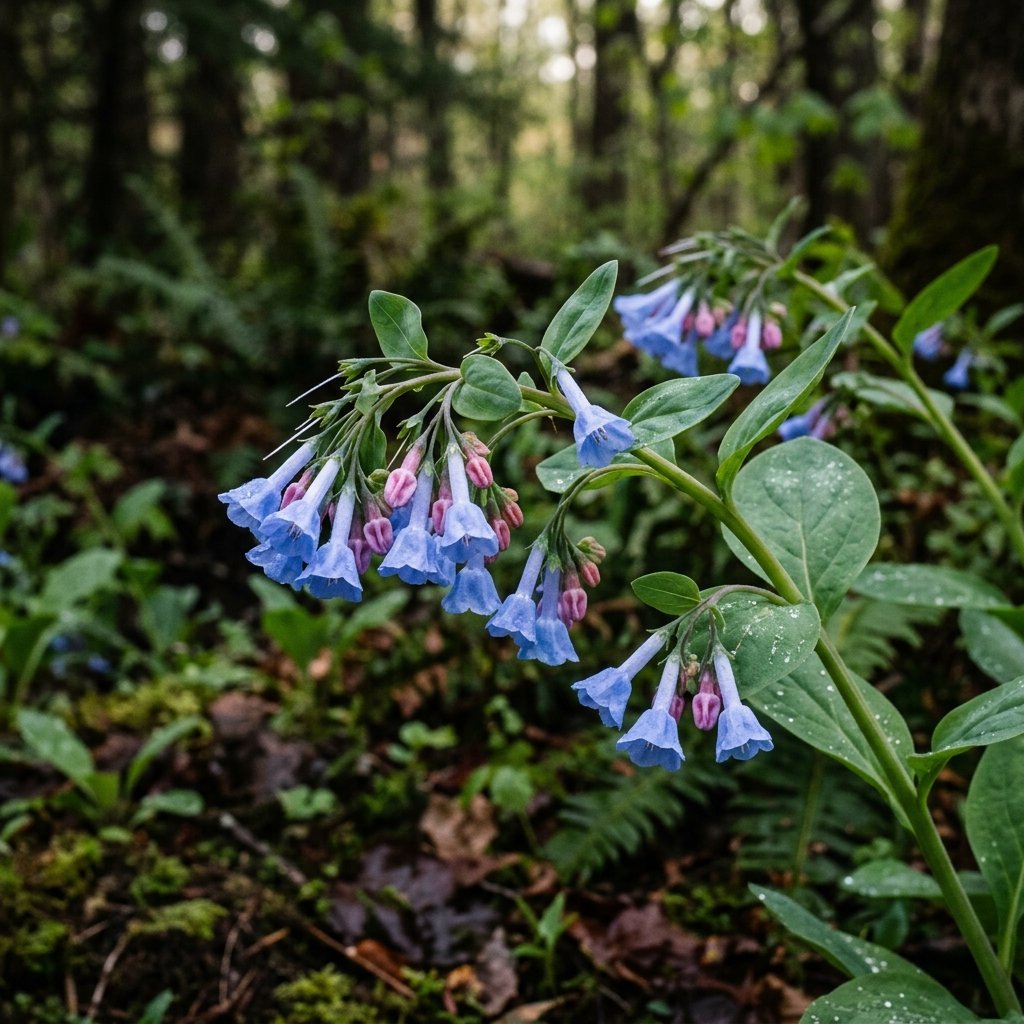
Virginia Bluebells
Mertensia virginica
Virginia Bluebells (*Mertensia virginica*) is among the most enchanting spring wildflowers of eastern North America, producing nodding clusters of sky-blue, trumpet-shaped flowers on arching stems in early spring. A member of the Boraginaceae (borage family), it is native to moist, rich floodplai...
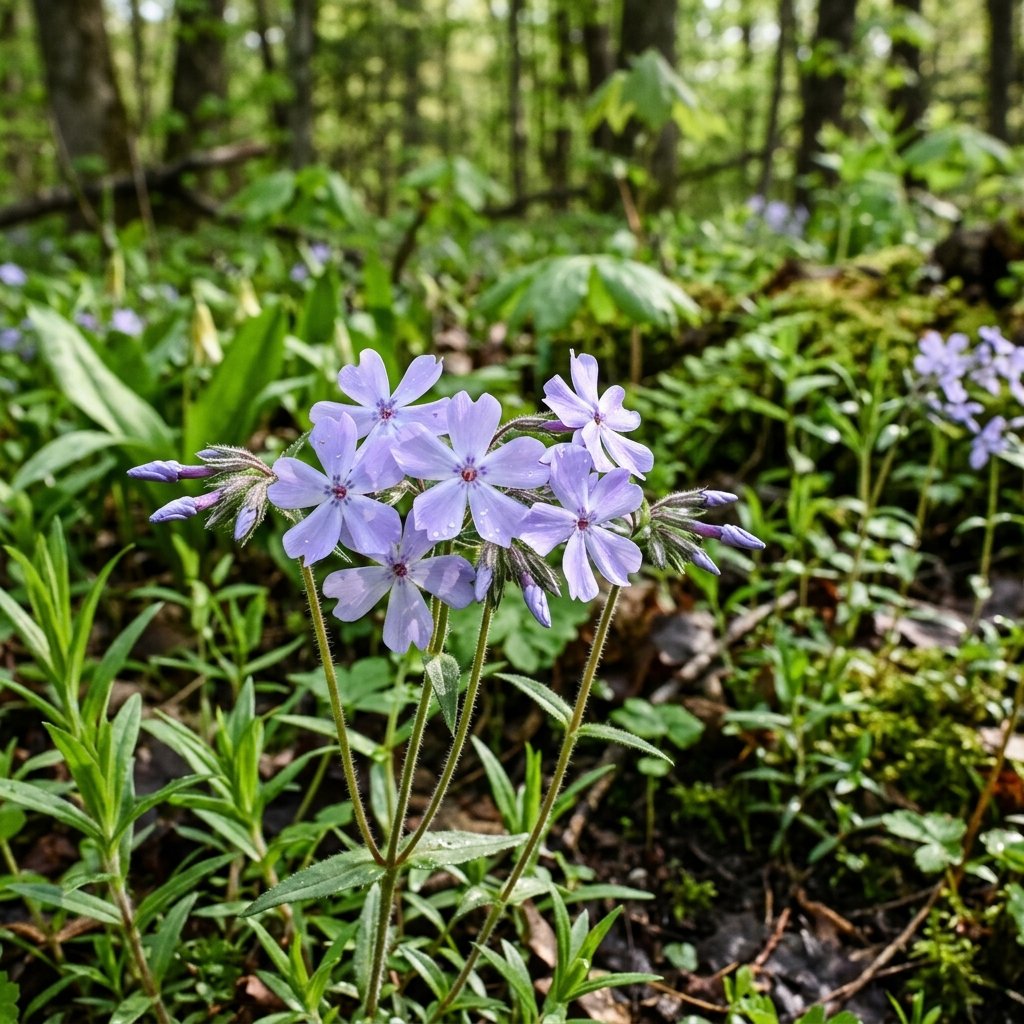
Wild Blue Phlox
Phlox divaricata
Wild Blue Phlox (*Phlox divaricata*), also widely known as Blue Phlox or Woodland Phlox, is one of the most fragrant and visually graceful native wildflowers of eastern North American woodlands, producing loose, open clusters of pale blue to lavender-blue flowers with a sweet, light perfume in Ap...
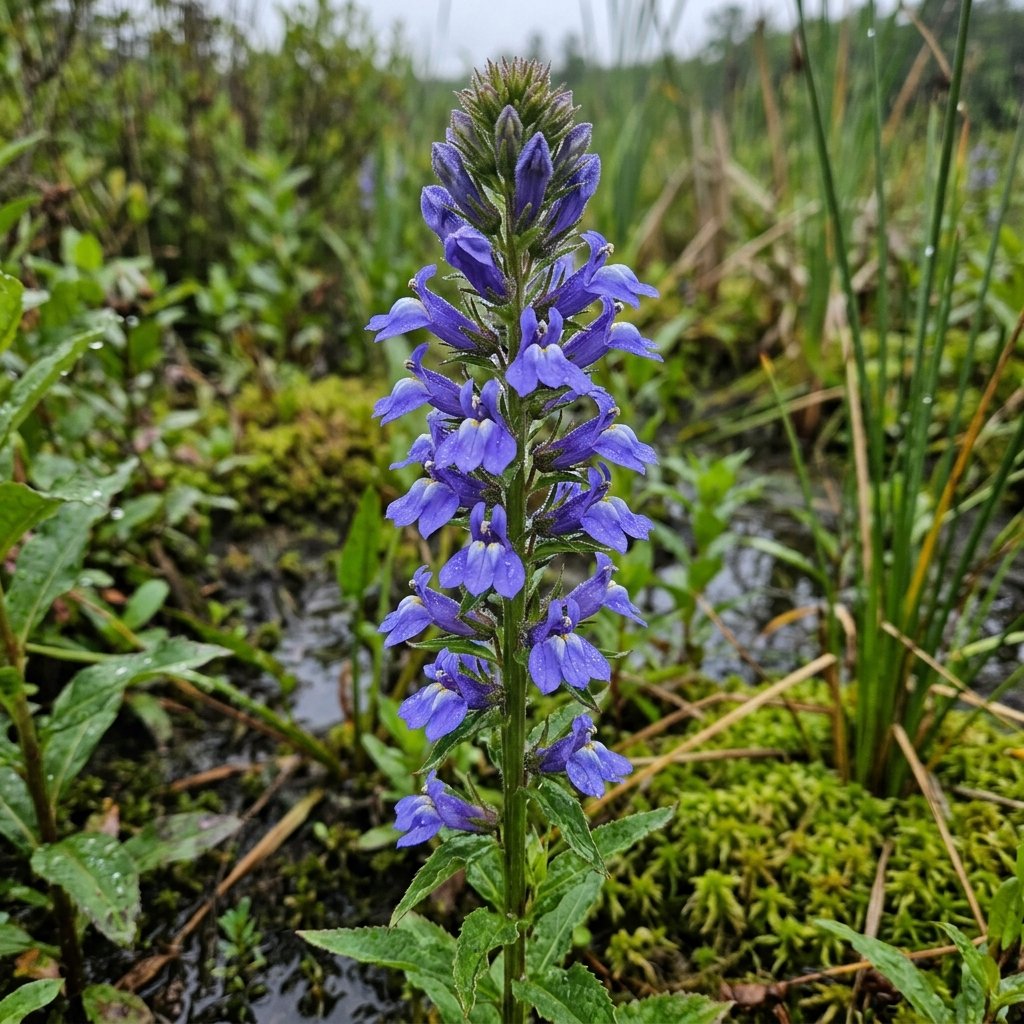
Great Blue Lobelia
Lobelia siphilitica
Great Blue Lobelia (*Lobelia siphilitica*) is a stunning native wildflower of eastern North America, producing tall spikes of vivid blue-violet to true blue flowers from late summer through fall in moist meadows, stream banks, and woodland edges. The blue-flowered counterpart to the scarlet Cardi...
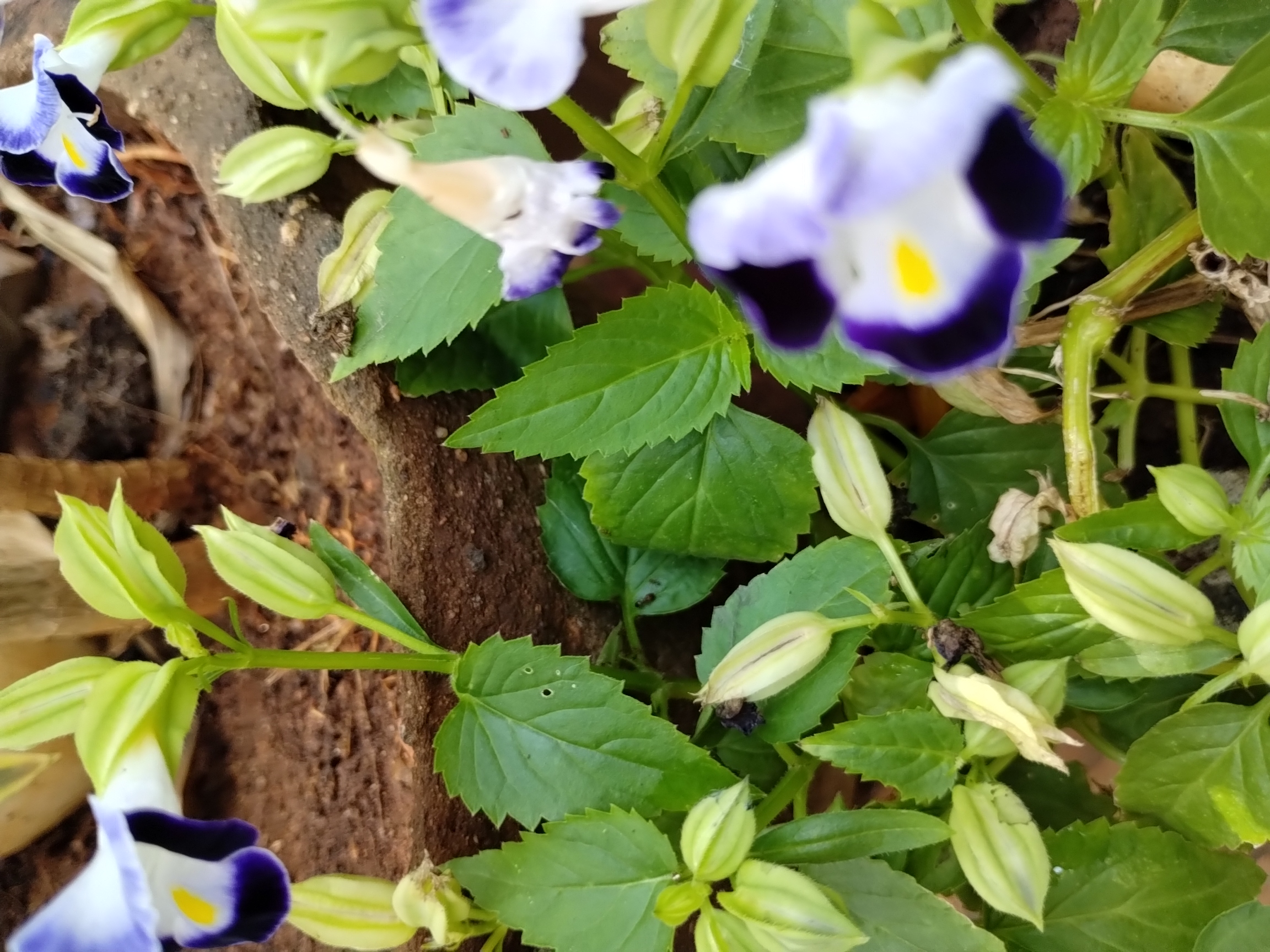
Bluewings
Torenia fournieri
The Wishbone Flower, botanically designated as Torenia fournieri and commonly called Bluewings, is an exceptionally charming, shade-loving tender annual. Belonging to the family Linderniaceae (formerly grouped under Scrophulariaceae), this beautiful plant is native to the moist, shady forest floo...