
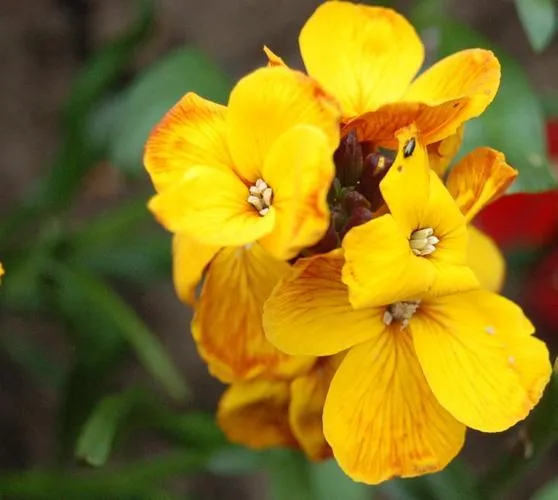
Wallflower
Erysimum cheiri
How to Identify Wallflower
TOXIC TO PETS. Contains cheiranthin (a cardiotonic glycoside) and mustard oils, causing vomiting, drooling, and heart arrhythmia if eaten.
Care & Growing Guide
Seasonal Blooming & Hardiness
Seasonal Blooming Calendar:
- Peak Bloom: Spring to early summer (typically April through June).
- Planting Time: Sow seeds directly outdoors in early spring after the last frost, or transplant nursery starts in late spring.
Bloom Timeline
About Wallflower
The Wallflower, botanically known as Erysimum cheiri (formerly classified as Cheiranthus cheiri), is a charming and historic woody-based biennial or short-lived perennial flower belonging to the Brassicaceae (mustard or cabbage) family. Native to the rocky cliffs, coastal regions, and warm sunny valleys of southern Europe and the Mediterranean basin—particularly Greece—this resilient plant has been cultivated for centuries. It has naturalized widely across temperate regions globally and is deeply cherished by gardeners for its incredibly sweet, honey-like spring scent and vibrant, warm blossoms.
Typically growing in compact, bushy mounds from 6 to 24 inches in height, the Wallflower features erect, branching stems covered in narrow, lance-shaped, deep green foliage. In early spring (April through May), the stem tips erupt in dense, club-shaped clusters of four-petaled, cruciform flowers. Traditionally glowing in rich shades of golden-yellow and bright orange, modern horticultural cultivars have expanded the wallflower's color palette to include deep mahogany red, bronze, soft pink, violet, and deep purple, all releasing a powerful fragrance reminiscent of sweet honey and fresh Parma violets.
The reproductive architecture of the Wallflower is represented by the cruciferous floral formula EBr ⊕ ☿ K4 C4 A2+4 G(2). This formula indicates that the flowers are ebracteate (lacking bracts), radially symmetrical (actinomorphic), and bisexual. The calyx features 4 free sepals, and the corolla has 4 free, clawed petals arranged in a distinctive cross shape. The androecium consists of 6 stamens in a tetradynamous structure (2 shorter outer stamens and 4 longer inner stamens), which surrounds a superior, syncarpous ovary formed of 2 fused carpels that matures into a long, slender seed pod (silique).
Horticulturally, Wallflowers are exceptionally tough, drought-tolerant, and low-maintenance plants. True to their common name, they thrive in the dry, narrow crevices of old brickwork, stone walls, and rocky slopes where other plants struggle. They require full sun to light, dappled shade and demand exceptionally sharp drainage; they prefer alkaline or lime-rich soils of low to moderate fertility. Rich, clayey, or waterlogged soils are highly detrimental, causing rapid root rot. Wallflowers are cold-hardy across USDA zones 6 through 9.
The genus name Erysimum comes from the Greek word 'eryomai', meaning 'to help' or 'to cure,' referencing the plant's ancient medicinal applications. Famed in Sanskrit as Kalanjani (कलंजनी) and in Hindi as Wallflower (वाल फ़्लावर) or Bhitti Pushp (भित्ति पुष्प), the plant carries rich cultural history. In Victorian flower language, the wallflower was a powerful symbol of fidelity in adversity. It represented constant, unyielding affection that survives trials, a metaphor inspired by its ability to cling and bloom beautifully upon cold, decaying stone ruins.
For pet owners and veterinarians, the Wallflower represents a serious toxic concern. The plant is classified as TOXIC TO PETS, including dogs, cats, and horses. Erysimum cheiri contains cardiotonic glycosides (specifically cheiranthin) and highly irritating mustard oil compounds. If ingested, it can cause severe clinical symptoms such as intense vomiting, bloody diarrhea, excessive drooling, lethargy, and in severe cases, dangerous heart arrhythmias or elevated heart rates. (Note: Since there is no existing pet-guard page in our database for this species, we do NOT include a pet-guard link here; simply keep pets away from rock gardens containing these plants.)
Wallflower is occasionally confused with Dame's Rocket (Hesperis matronalis) or wild mustards. It is easily distinguished by its woody base, intensely sweet violet-like scent, and narrow, non-toothed leaves. It makes an outstanding choice for cottage borders, rock gardens, and raised beds; we recommend pairing it with other classic, non-toxic spring-bloomers like Dianthus / Sweet William or colorful Phlox to create a tapestry of fragrance. To learn more about designing with historic crucifers, browse our Flower Identifier.
Floral Formula & Features
Ebracteate (no bracts), Actinomorphic (radially symmetrical), bisexual, 4 free sepals in cross formation, 4 free petals in cross formation, 6 stamens (4 long + 2 short, tetradynamous), 2 fused carpels with superior ovary typical of Brassicaceae
- Scientific Name & Classification: Erysimum cheiri (Brassicaceae). Historically known as Cheiranthus cheiri and Gillyflower.
- Identification Markers: Compact woody-based mounds, lance-shaped leaves, and cross-shaped 4-petaled flowers in yellow, orange, and bronze with intense honey-violet scent.
- Floral Formula (EBr ⊕ ☿ K4 C4 A2+4 G(2)): Cruciform, bisexual flowers with 4 sepals, 4 clawed petals, 6 tetradynamous stamens, and superior ovary.
- Growing Requirements: Full sun, poor to moderate alkaline soil, and outstandingly sharp drainage. Thrives in dry stone wall cracks (Zones 6-9).
- Cultural Significance: Famed as a symbol of fidelity in adversity. Ancient medicinal herb whose Greek name 'eryomai' means to help or cure.
- Safety & Toxicity: TOXIC TO PETS. Contains cheiranthin (a cardiotonic glycoside) and mustard oils, causing vomiting, drooling, and heart arrhythmia if eaten.
- Common Look-alikes: Confused with Dame's Rocket, but distinguished by its woody base, non-toothed leaves, and earlier spring bloom window.
- Internal Links: Excellent spring companion in dry raised beds beside sweet-scented Dianthus-Sweet William or trailing Phlox; explore more in our Flower Identifier.
Names in Different Languages
Botanical Classification: Wallflower belongs to the Brassicaceae family. Learn how to identify its floral symmetry, stamen arrangement, and structural formulas in our Botanical Family Classification Guide.
Toxicity & Safety
Always keep toxic plants out of reach of children and pets. Consult a veterinarian or medical professional immediately if ingestion is suspected.
Frequently Asked Questions
What is Floral Formula?
A floral formula is a symbolic representation of a flower's structure using letters, numbers, and special symbols. It provides a concise way to describe the arrangement and number of floral parts.
This formula describes the flower's symmetry, sepals, petals, stamens, and carpels in a standardized format.
Formula Sequence
- Bract: Br or Ebr
- Bracteole: Brl or Ebrl
- Symmetry: % (Radial) or ⊕ (Bilateral)
- Sex: ♀ (Female), ♂ (Male), or ⚥ (Bisexual)
- Calyx/Sepal: K<number> (Free or Fused)
- Corolla/Petal: C<number> (Free or Fused)
- Androecium: A<number> (Free or Fused)
- Gynaecium: G<number> (Superior or Inferior Ovary)
Symbol Meanings
- Numbers: Indicate quantity of parts
- Parentheses (): Parts are fused together
- Plus (+): Parts in different whorls
- Underline: Superior ovary position
- Overline: Inferior ovary position
- ∞: Numerous parts (too many to count)
Understanding floral formulas helps botanists quickly identify and classify flowers based on their structural characteristics.
Similar Flowers
Discover flowers that share botanical characteristics
Similar Characteristics
4
Globe Amaranth (Gomphrena)
Gomphrena globosa
The Globe Amaranth, botanically designated as Gomphrena globosa and belonging to the family Amaranthaceae (the amaranth family), is an exceptionally tough, durable, and drought-tolerant tropical annual. Native to the sunny, warm, and highly humid forest edges, fields, and coastal plains of Centra...
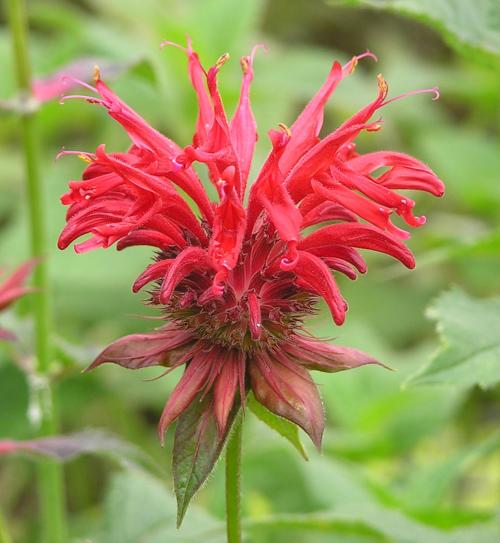
Beebalm
Monarda didyma, Monarda fistulosa
Bee Balm, botanically classified under the genus Monarda within the family Lamiaceae (the mint family), is a spectacular and highly aromatic clump-forming herbaceous perennial. Native to the rich floodplains, moist meadows, woodland margins, and stream banks of eastern North America—ranging from...
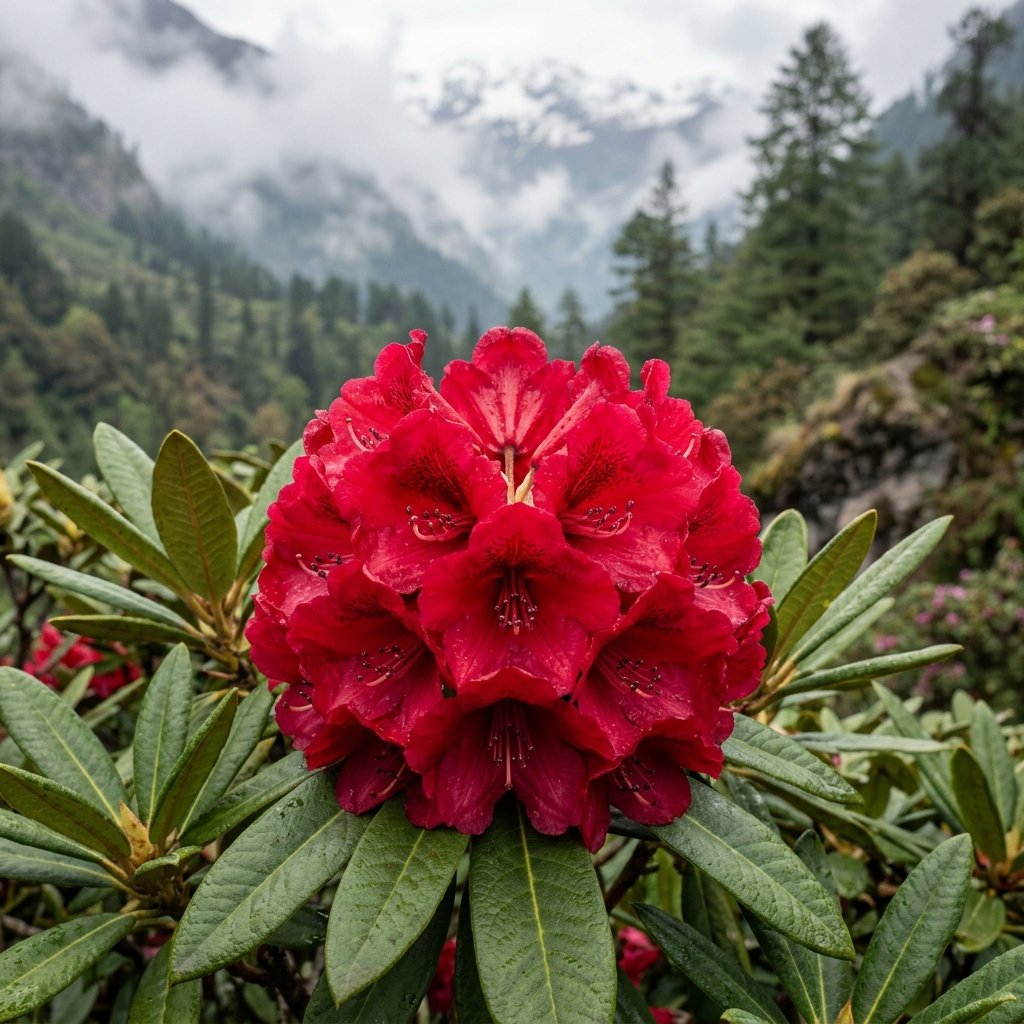
Rhododendron (Burans)
Rhododendron arboreum
Rhododendron, botanically classified within the grand genus *Rhododendron* (exemplified by the majestic tree species *Rhododendron arboreum*) and celebrated across the Himalayas as Burans or the Rose Tree, is an exceptionally magnificent, woody evergreen flowering tree or large shrub. Belonging t...
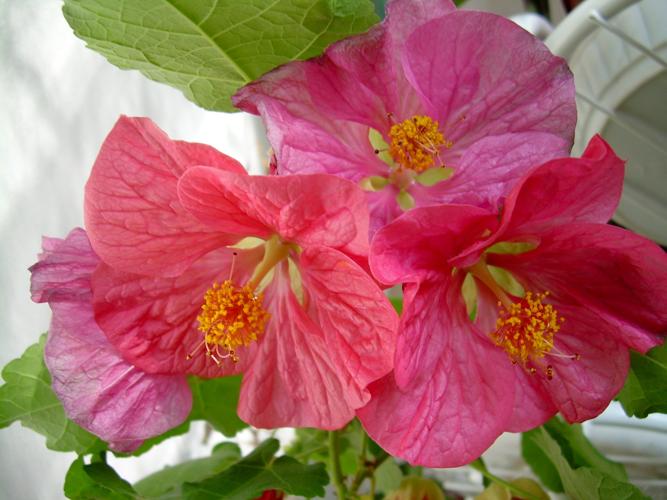
Mallow
Malva sylvestris
The Mallow, botanically designated as Malva sylvestris and commonly known as Common Mallow, High Mallow, Tall Mallow, or Cheeseweed, is an exceptionally versatile, hardy, and resilient biennial to short-lived perennial herb. Belonging to the family Malvaceae (the mallow family), this ancient plan...