
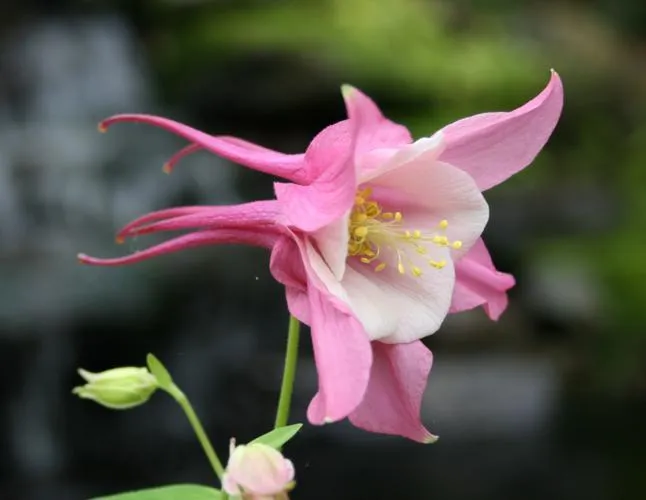
Columbine
Aquilegia
How to Identify Columbine
Care & Growing Guide
Growing Conditions: Thrives in partial shade (USDA zones 3-9) with moist, well-draining soil; highly attractive to hummingbirds.
Seasonal Blooming & Hardiness
Seasonal Blooming Calendar:
- Peak Bloom: Summer (typically June through September).
- Planting Time: Sow seeds directly outdoors in early spring after the last frost, or transplant nursery starts in late spring.
Bloom Timeline
About Columbine
Columbine (Aquilegia), a member of the Ranunculaceae (Buttercup) family, is a gracefully elegant perennial known for its multi-colored, spurred blossoms and delicate, fern-like foliage. Native to the woodlands, meadows, and high-altitude slopes of the Northern Hemisphere—spanning across North America, Europe, and Asia—this hardy plant is a favorite of hummingbirds and butterflies alike. The name "Aquilegia" is derived from the Latin word for eagle (aquila), referring to the flower's five distinct spurs that resemble an eagle's claws, while the common name "Columbine" comes from the Latin for dove (columba), as the inverted flower looks like a cluster of five doves huddled together.
Identifying Columbine is a fascinating botanical journey. The flowers are typically bicolored, featuring a complex structure of five petal-like sepals and five true petals, each extending backward into a long, nectar-rich spur. The leaves are compound and deeply lobed, usually a soft blue-green color, providing an airy, lightweight appearance to the garden bed. Depending on the species and hybrid, Columbines can range from dwarf varieties barely 6 inches tall to majestic specimens reaching 3 feet in height. They are short-lived perennials but compensate by self-seeding prolifically, often creating beautiful, naturalized colonies over several seasons.
Growing conditions for Columbine are relatively versatile, though they thrive best in dappled shade and well-draining, moist soil. They are extremely cold-hardy, suited for USDA zones 3-9, making them a staple in northern gardens. In hotter climates, they require protection from the afternoon sun to prevent the delicate foliage from scorch. One common identification feature to watch for is the "serpentine" white lines on the leaves—a hallmark of the Columbine leaf miner larvae, which, while visually distracting, rarely compromises the overall health of the plant.
Safety is a key consideration for gardens shared with pets. Like many plants in the buttercup family, Columbine contains ranunculin, a compound that releases protoanemonin when the plant is crushed or chewed. This acts as a localized irritant to the mouth and gastrointestinal tract of cats and dogs. While it is not considered highly lethal like Lilies, it can cause significant drooling, nausea, and vomiting if ingested in quantity. For a complete breakdown of symptoms and first-aid steps, please refer to our Pet Guard safety profile for Columbine.
Culturally, the Columbine holds diverse meanings. It is the state flower of Colorado (the Rocky Mountain Columbine), symbolizing the rugged beauty of the American West. In some historical European traditions, it was associated with "folly" due to its resemblance to a jester's cap, while in others, it represented the "seven gifts of the Holy Spirit." Regardless of its symbolic past, the modern Columbine remains a "proven to convert" favorite for gardeners seeking to add a touch of woodland magic and ecological value to their landscapes.
Floral Formula & Features
Ebracteate, actinomorphic (radially symmetrical), bisexual, 5 free petal-like sepals, 5 free petals with prominent nectar spurs, numerous free stamens (30-50), and 5 free carpels with superior ovaries.
Scientific Classification: Aquilegia spp. within the family Ranunculaceae, native across the Northern Hemisphere.
Petal Structure: Features 5 petal-like sepals and 5 spurred petals; spurs function as specialized nectar reservoirs for long-tongued pollinators.
Foliage Detail: Biternate or triternate blue-green leaves with a delicate, fern-like texture and scalloped edges.
Floral Formula: ⊕ K5 C5 A∞ G5 — indicating radial symmetry, 5 free sepals, 5 free petals, and numerous stamens.
Growing Conditions: Thrives in partial shade (USDA zones 3-9) with moist, well-draining soil; highly attractive to hummingbirds.
Toxicity Awareness: Contains ranunculin irritants; toxic to cats and dogs if ingested. View Pet Guard Profile
Common Look-alikes: Sometimes confused with Larkspur (Delphinium), which grows in dense spikes rather than individual spurred blooms.
Names in Different Languages
Botanical Classification: Columbine belongs to the Ranunculaceae family. Learn how to identify its floral symmetry, stamen arrangement, and structural formulas in our Botanical Family Classification Guide.
Toxicity & Safety
Always keep toxic plants out of reach of children and pets. Consult a veterinarian or medical professional immediately if ingestion is suspected.
Pet Safety Guide: For detailed toxicity symptoms, first-aid measures, and safe garden alternatives, see our full Pet Guard Profile for Columbine.
Frequently Asked Questions
What is Floral Formula?
A floral formula is a symbolic representation of a flower's structure using letters, numbers, and special symbols. It provides a concise way to describe the arrangement and number of floral parts.
This formula describes the flower's symmetry, sepals, petals, stamens, and carpels in a standardized format.
Formula Sequence
- Bract: Br or Ebr
- Bracteole: Brl or Ebrl
- Symmetry: % (Radial) or ⊕ (Bilateral)
- Sex: ♀ (Female), ♂ (Male), or ⚥ (Bisexual)
- Calyx/Sepal: K<number> (Free or Fused)
- Corolla/Petal: C<number> (Free or Fused)
- Androecium: A<number> (Free or Fused)
- Gynaecium: G<number> (Superior or Inferior Ovary)
Symbol Meanings
- Numbers: Indicate quantity of parts
- Parentheses (): Parts are fused together
- Plus (+): Parts in different whorls
- Underline: Superior ovary position
- Overline: Inferior ovary position
- ∞: Numerous parts (too many to count)
Understanding floral formulas helps botanists quickly identify and classify flowers based on their structural characteristics.
Similar Flowers
Discover flowers that share botanical characteristics
Same Family
4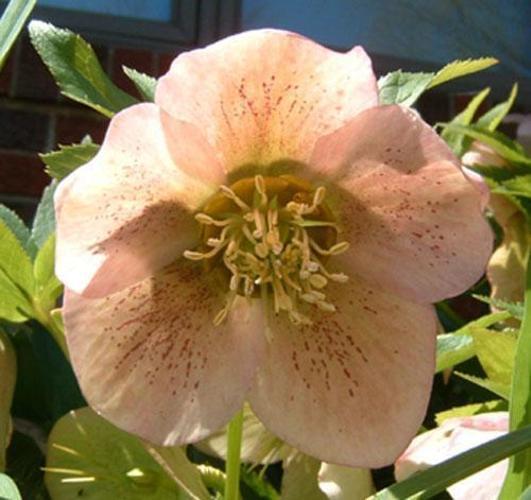
Hellebore (Lenten Rose)
Helleborus orientalis
Hellebores, widely known as the Lenten Rose, Christmas Rose, or Oracle Flower, are enchanting, evergreen perennials belonging to the Ranunculaceae (Buttercup) family. Native primarily to the mountainous and woodland regions of Europe and the Balkans, these remarkable plants are highly prized by g...
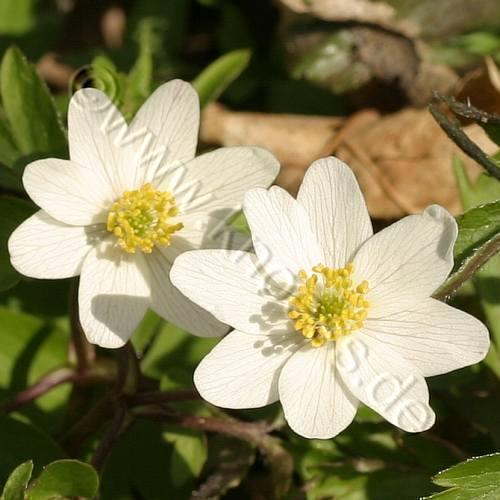
Windflower
Anemone
Windflower, botanically classified under the extensive genus Anemone within the Ranunculaceae (buttercup) family, comprises a spectacular and diverse group of herbaceous perennials beloved for their elegant, swaying blooms. Distributed throughout the temperate and cold regions of the Northern Hem...
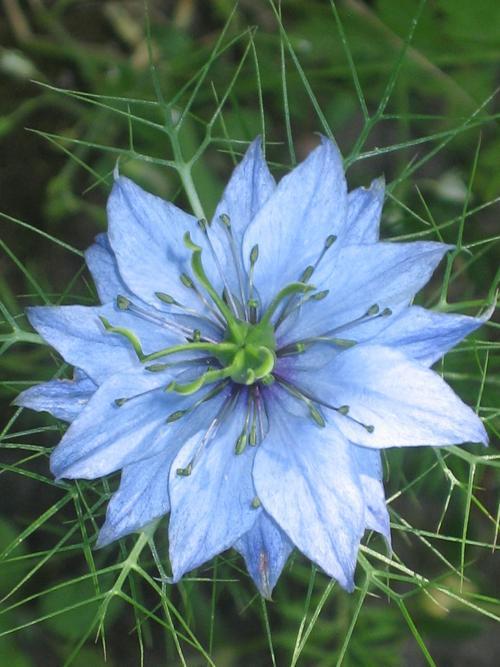
Love in a mist
Nigella damascena
The Love-in-a-mist, botanically designated as Nigella damascena and belonging to the family Ranunculaceae (the buttercup family), is a beloved, old-fashioned hardy annual flower. Native to the sunny hills, open meadows, and coastal fields of southern Europe, North Africa, and southwestern Asia—es...
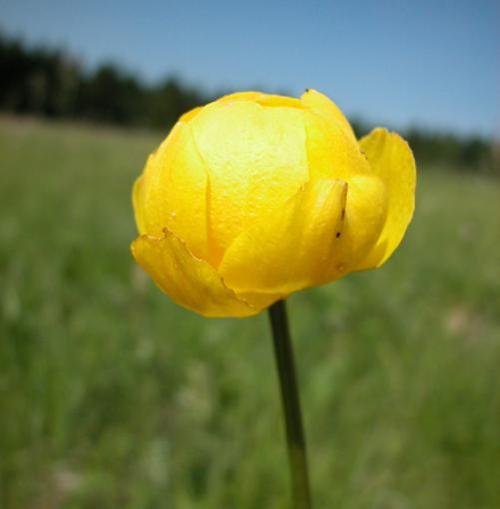
Globe flower
Trollius
The Globe Flower, botanically classified as Trollius and most famous as Trollius europaeus, is a whimsical, moisture-loving herbaceous perennial belonging to the Ranunculaceae (buttercup) family. Native to the cool temperate, alpine, and sub-boreal zones of Europe, northern Asia, and North Americ...
Similar Characteristics
4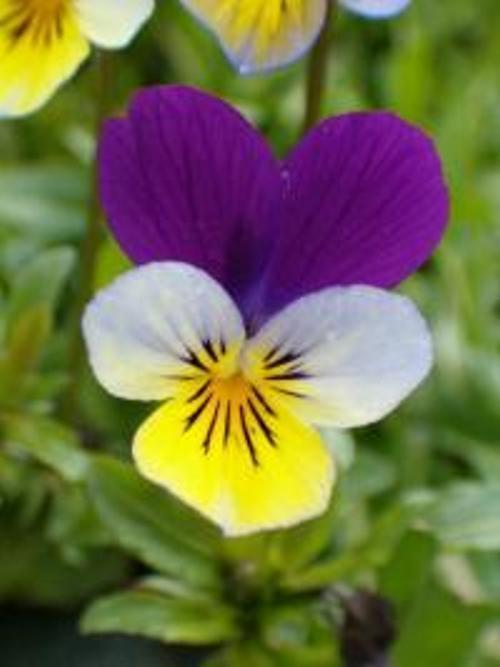
Wild Pansy
Viola tricolor
The Wild Pansy, scientifically known as Viola tricolor and popularly referred to as Johnny Jump Up or Heartsease, is an endearing European wildflower belonging to the Violaceae family. Native to Europe and temperate regions of Asia, this resilient little bloom has captured human hearts for centur...
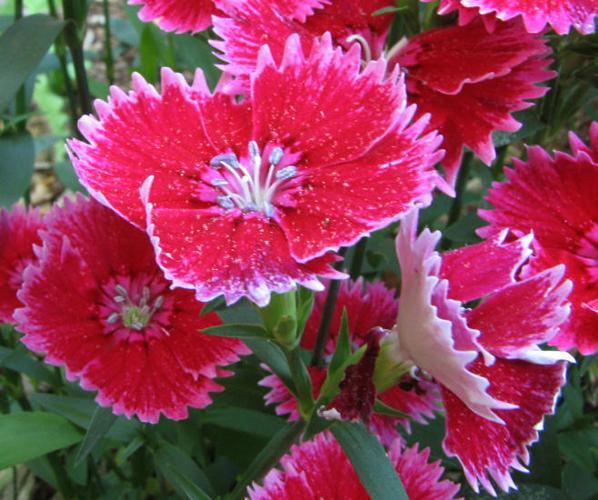
Sweet William (Dianthus barbatus)
Dianthus
Dianthus barbatus, universally cherished as Sweet William, is a charming, fragrant cottage garden biennial or short-lived perennial belonging to the Caryophyllaceae (pink or carnation) family. Native to the mountainous meadows, rocky slopes, and light woodlands of southern and southeastern Europe...
Love in a mist
Nigella damascena
The Love-in-a-mist, botanically designated as Nigella damascena and belonging to the family Ranunculaceae (the buttercup family), is a beloved, old-fashioned hardy annual flower. Native to the sunny hills, open meadows, and coastal fields of southern Europe, North Africa, and southwestern Asia—es...
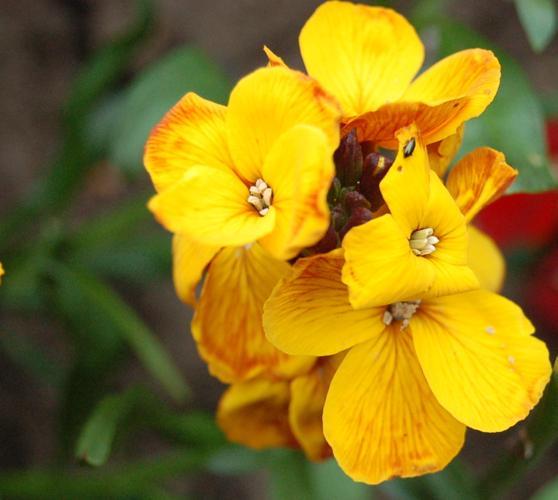
Wallflower
Erysimum cheiri
The Wallflower, botanically known as Erysimum cheiri (formerly classified as Cheiranthus cheiri), is a charming and historic woody-based biennial or short-lived perennial flower belonging to the Brassicaceae (mustard or cabbage) family. Native to the rocky cliffs, coastal regions, and warm sunny...