
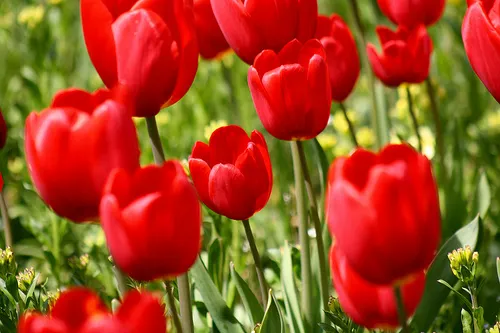
Tulip
Tulipa
How to Identify Tulip
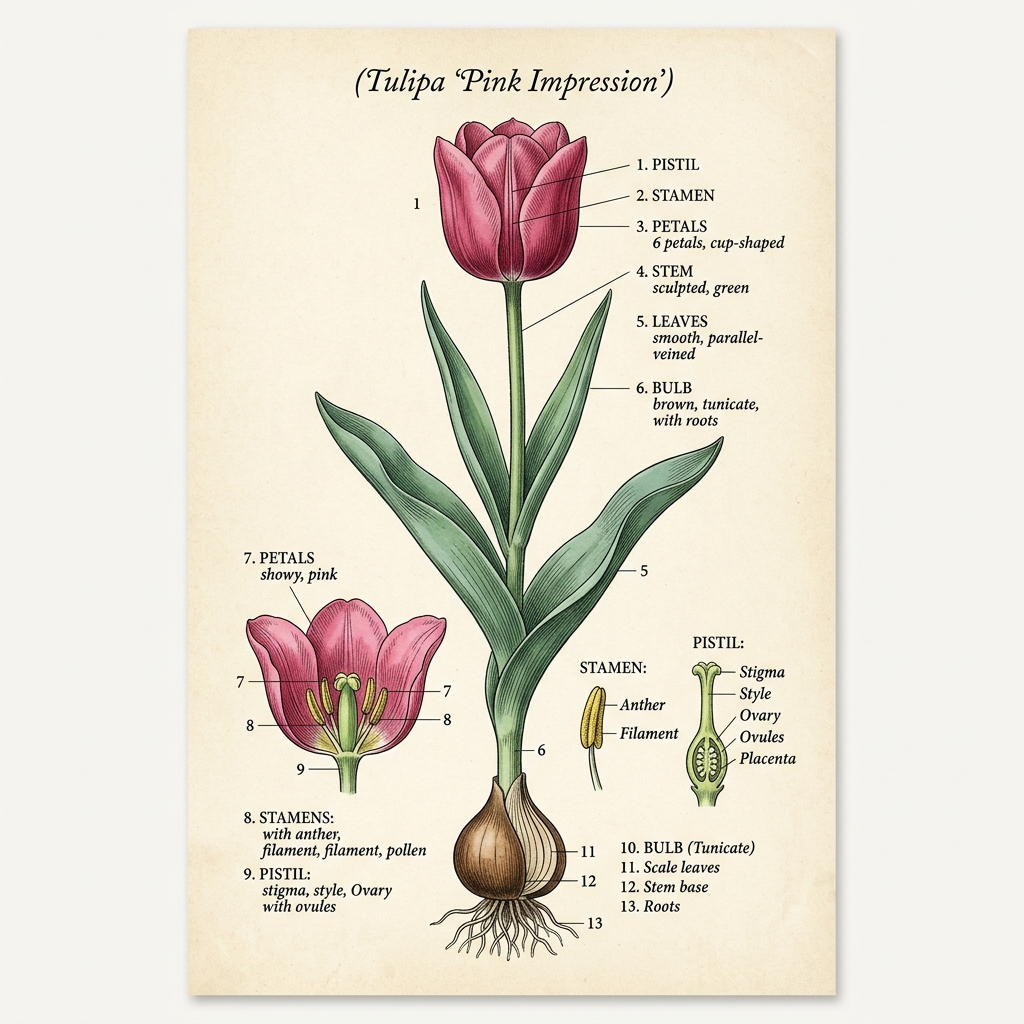
A detailed guide to identifying Tulips (Tulipa) by its key features:
- Erect Cup-Shaped Blooms: Large, symmetrical cup-, bowl-, or goblet-shaped flowers composed of 3 petals and 3 sepals (appearing as 6 tepals).
- Glaucous, Fleshy Leaves: Broad, fleshy, blue-grey-green leaves with smooth margins that clasp directly around the stem.
- Single Leafless Flower Stems: A smooth, upright, hollow stem that typically bears exactly one flower per bulb (with rare branching exceptions).
- Underground Tunicated Bulb: Grows from a teardrop-shaped bulb covered in a papery brown protective skin (tunic).
Types & Sub-types of Tulips
Tulips are classified and distinguished into several horticulturally recognized groups based on bloom time, petal shape, and flower form:
- By Blooming Period (Spring Calendar):
- Early-Season Tulips: Bloom in early spring (e.g., Emperor tulips, Single Early). Distinguish by their low heights and frost tolerance.
- Mid-Season Tulips: Bloom in mid-spring (e.g., Darwin Hybrids, Triumph). Distinguish by their giant, classic egg-shaped cups and tall stems.
- Late-Season Tulips: Bloom in late spring (e.g., Parrot, Double Late). Distinguish by complex petal structures.
- By Petal Shape & Flower Form:
- Single Tulips: Classic simple cups containing exactly 6 tepals.
- Double Tulips (Peony-Flowered): Heavily layered blossoms containing multiple rings of petals, mimicking peonies.
- Fringed Tulips: Petals display crystal-like fringed edges that resemble frost. Distinguish by the fine, needle-like projections on margins.
- Lily-Flowered Tulips: Slender blooms with pointed, flared petals that arch outwards, resembling a lily.
- Parrot Tulips: Feathery, deeply curled, ruffled, and multi-colored petals with a highly dramatic look.
Care & Growing Guide
Seasonal Blooming & Hardiness
Seasonal Blooming Calendar:
- Peak Bloom: Spring to early summer (typically April through June).
- Planting Time: Sow seeds directly outdoors in early spring after the last frost, or transplant nursery starts in late spring.
Bloom Timeline
About Tulip
The Tulip, botanically designated under the genus Tulipa and belonging to the family Liliaceae (the lily family, tribe Lilieae), is an exceptionally iconic, globally celebrated spring-blooming bulbous herbaceous perennial. Native to the dry, mountainous heights, rocky slopes, and sweeping grasslands of Central Asia—particularly within Iran, Afghanistan, Kazakhstan, and the Pamir and Tien Shan mountain ranges—tulips were highly cultivated and revered in the Ottoman Empire before their historic introduction to western Europe in the late 16th century.
Standing 6 to 24 inches (15 to 60 cm) tall depending on the cultivar, this classic plant features thick, smooth, glaucous blue-green leaves with a waxy coating that clasp the sturdy, upright stems. In spring (typically March through May), it produces single, elegant, and erect cup-shaped or star-shaped solitary flowers measuring 2 to 4 inches (5 to 10 cm) across. With thousands of cultivars classified into 15 distinct horticultural groups, tulips showcase nearly every color of the spectrum, excluding only true sky blue.
The flower forms range from simple single cups to complex double (peony-flowered), fringed, parrot, and lily-flowered types. The radially symmetrical reproductive morphology of Tulipa is represented by the family-specific floral formula EBr ⊕ ⚿ P3+3 A3+3 G(3). This formula states that the flowers are ebracteate (lacking bracts), actinomorphic, and bisexual. Uniquely, the perianth consists of 6 free, fleshy tepals arranged in two whorls of 3, where the outer 3 sepals and inner 3 petals look identical. The androecium contains 6 free stamens, and the gynoecium contains 3 fused carpels forming a superior ovary topped by a sessile stigma.
For successful cultivation, Tulips require a distinct cold dormancy period (vernalization) of 12 to 16 weeks at temperatures consistently below 45°F (7°C) to develop robust roots and buds. They thrive in full, direct spring sunlight with neutral to slightly acidic, fertile, and exceptionally sharp-draining soils; wet, waterlogged winter soils will rapidly cause the bulbs to rot. Bulbs are planted in the autumn, roughly 4 to 6 inches (10 to 15 cm) deep and 6 to 8 weeks before the first hard ground freeze. Cold-hardy in USDA zones 3 through 8.
The common name 'Tulip' is derived from the Turkish word tülbend, meaning turban, directly celebrating the flower's resemblance to a traditional folded turban. Famed in Sanskrit as Kanda Pushpam (कन्द पुष्पम्) and in Hindi as Tyūlip (ट्यूलिप) or Gule Lala (गुले लाला), the tulip famously triggered the historic 'Tulip Mania' (1634-1637) in the Dutch Golden Age—the world's first recorded speculative economic bubble, where single premium bulbs fetched prices exceeding those of luxury canal-side homes. Today, the Netherlands remains the world's premier exporter.
For pet owners and veterinarians, the Tulip demands high caution. All parts of the Tulipa plant—especially the highly concentrated basal bulb—contain tuliposide A and B. These allergenic lactones are highly toxic to dogs, cats, and horses. Ingestion triggers severe gastrointestinal irritation (intense salivation, drooling, vomiting, and diarrhea), depression, and in severe cases, respiratory distress and heart arrhythmias. For comprehensive safety guidelines and pet guard warnings, visit our specific Pet Guard Tulip page.
Tulips are occasionally confused with wild crocuses or summer tulips. They are easily distinguished because true tulips produce massive, waxy cup-shaped perianths on tall upright stems and wide glaucous foliage, whereas crocuses are much smaller. They are spectacular for spring borders alongside Fritillaria or Primrose-primula. To explore more spring-flowering bulbs, browse our Flower Identifier.
Floral Formula & Features
Ebracteate, radially symmetrical, bisexual, 6 free tepals in 2 whorls of 3, 6 free stamens in 2 whorls of 3, 3 fused carpels with superior ovary
- Scientific Name & Classification: Tulipa (Liliaceae). Globally famed as Darwin Tulip, Lily-Flowered Tulip, Triumph Tulip, and Parrot Tulip.
- Identification Markers: Upright stems, waxy glaucous blue-green leaves, and 2-4 inch erect cup-shaped flowers in red, yellow, pink, or purple with 6 identical tepals.
- Floral Formula (EBr ⊕ ⚿ P3+3 A3+3 G(3)): Radially symmetrical, bisexual flowers with 6 free tepals in two whorls of 3, 6 stamens in two whorls of 3, and 3 fused carpels with superior ovary.
- Growing Requirements: Full direct sun (6+ hours daily); neutral, sandy, exceptionally sharp-draining soils. Bulbs require a 12-16 week winter chilling period (Zones 3-8).
- Cultural Significance: Turkish turban name origin. Famed in Sanskrit as 'Kanda Pushpam.' Triggered the historic Dutch 'Tulip Mania' speculative bubble in the 1630s.
- Safety & Toxicity: HIGHLY TOXIC. Bulbs contain high concentrations of tuliposide A and B, which cause severe vomiting, hypersalivation, and respiratory distress in cats and dogs.
- Common Look-alikes: Confused with wild Crocus or Siam Tulip, but easily distinguished by its massive erect waxy cups, wide glaucous clasping leaves, and tall upright flower stems.
- Internal Links: Creates a beautiful, classic spring display when planted in large sweeps alongside other cold-hardy garden gems like Fritillaria or Primrose-primula; find more in our Flower Identifier.
- Internal Links: Compare key differences in our Tulip vs Daffodil comparison, or try our instant Flower Identifier.
Names in Different Languages
Cultural Etiquette & Gifting: Planning to gift or decorate with Tulip? Discover its symbolic meanings, festival traditions, and crucial cultural faux pas across 20+ countries in our comprehensive Global Flower Etiquette Guide.
Botanical Classification: Tulip belongs to the Liliaceae family. Learn how to identify its floral symmetry, stamen arrangement, and structural formulas in our Botanical Family Classification Guide.
Toxicity & Safety
Always keep toxic plants out of reach of children and pets. Consult a veterinarian or medical professional immediately if ingestion is suspected.
Pet Safety Guide: For detailed toxicity symptoms, first-aid measures, and safe garden alternatives, see our full Pet Guard Profile for Tulip.
Frequently Asked Questions
What is Floral Formula?
A floral formula is a symbolic representation of a flower's structure using letters, numbers, and special symbols. It provides a concise way to describe the arrangement and number of floral parts.
This formula describes the flower's symmetry, sepals, petals, stamens, and carpels in a standardized format.
Formula Sequence
- Bract: Br or Ebr
- Bracteole: Brl or Ebrl
- Symmetry: % (Radial) or ⊕ (Bilateral)
- Sex: ♀ (Female), ♂ (Male), or ⚥ (Bisexual)
- Calyx/Sepal: K<number> (Free or Fused)
- Corolla/Petal: C<number> (Free or Fused)
- Androecium: A<number> (Free or Fused)
- Gynaecium: G<number> (Superior or Inferior Ovary)
Symbol Meanings
- Numbers: Indicate quantity of parts
- Parentheses (): Parts are fused together
- Plus (+): Parts in different whorls
- Underline: Superior ovary position
- Overline: Inferior ovary position
- ∞: Numerous parts (too many to count)
Understanding floral formulas helps botanists quickly identify and classify flowers based on their structural characteristics.
Similar Flowers
Discover flowers that share botanical characteristics
Same Family
4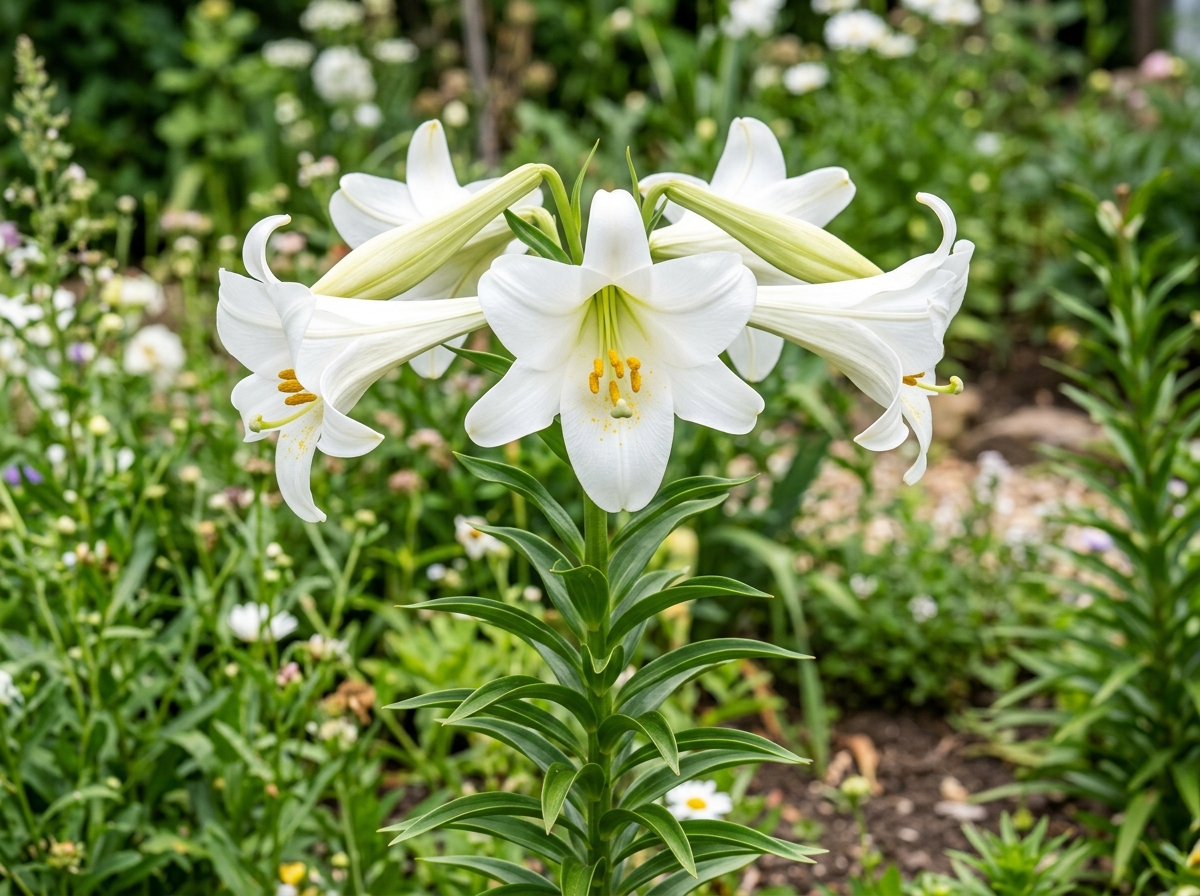
Easter Lily
Lilium longiflorum
Easter Lily (*Lilium longiflorum*), native to the Ryukyu Islands of Japan, is a classic trumpet-shaped white lily famed for its elegant pure white blooms and intense sweet fragrance. It is traditionally forced into bloom in spring for Easter celebrations and spring floral displays. Historically,...
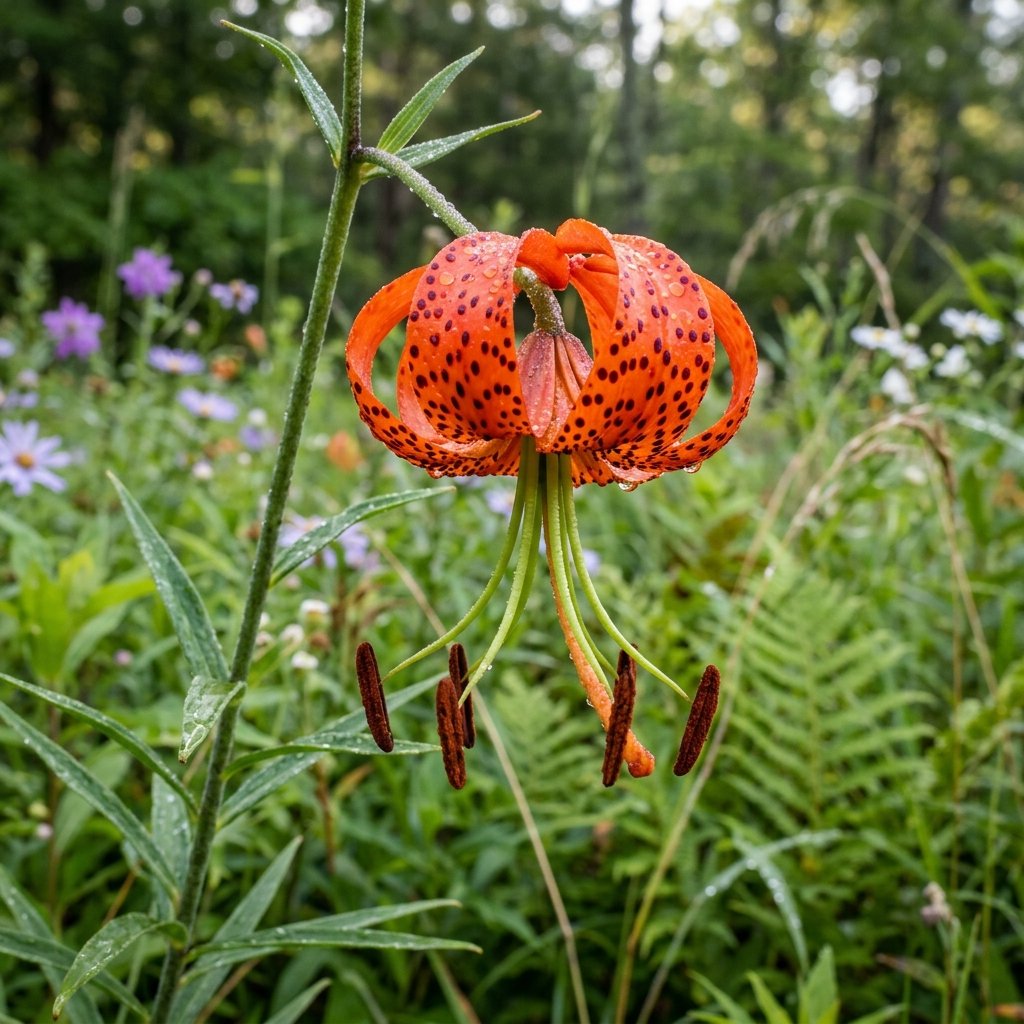
Turk's Cap Lily
Lilium superbum
Turk's Cap Lily (*Lilium superbum*) is the tallest native lily in North America and one of the most spectacular wildflowers of the eastern United States, reaching heights of 4 to 8 feet with multiple nodding, bright orange flowers dramatically spotted with purple-brown and with their petals fully...
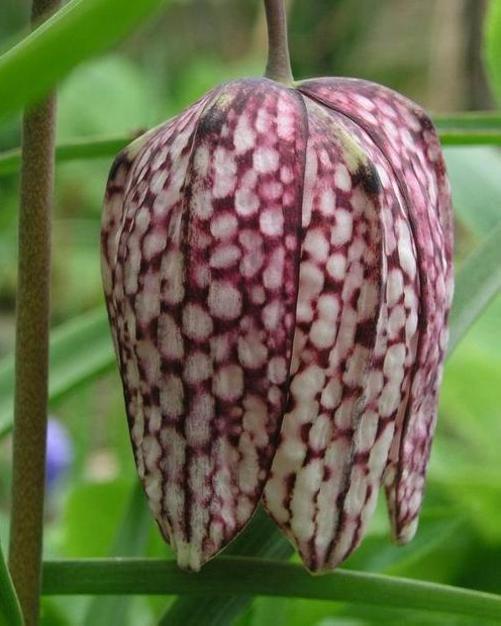
Fritillaria
Fritillaria
The Fritillaria, botanically designated as Fritillaria within the Liliaceae (lily) family, is an extraordinarily elegant and exotic genus of spring-flowering bulbous perennials. Native to the temperate latitudes of the Northern Hemisphere—spanning the grassy floodplains of Europe, the Mediterrane...
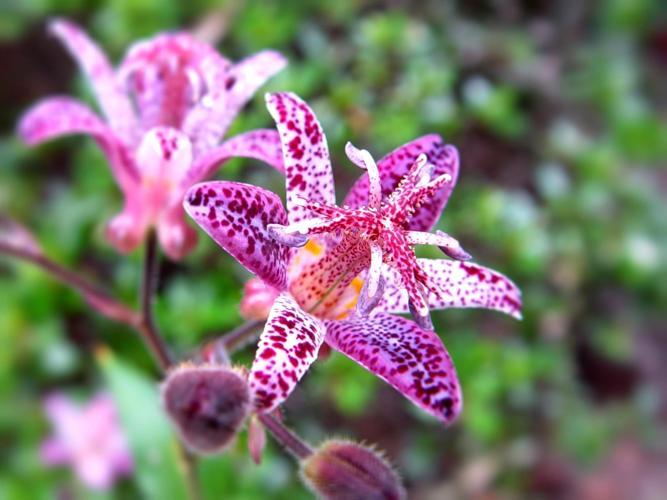
Toad Lily
Tricyrtis
The Toad Lily, botanically classified under the genus Tricyrtis and belonging to the family Liliaceae (the lily family, tribe Lilieae), is an exceptionally exotic, shade-loving perennial. Native to the damp forest understories, shaded mountain valleys, and rocky stream banks of eastern Asia—with...
Similar Characteristics
4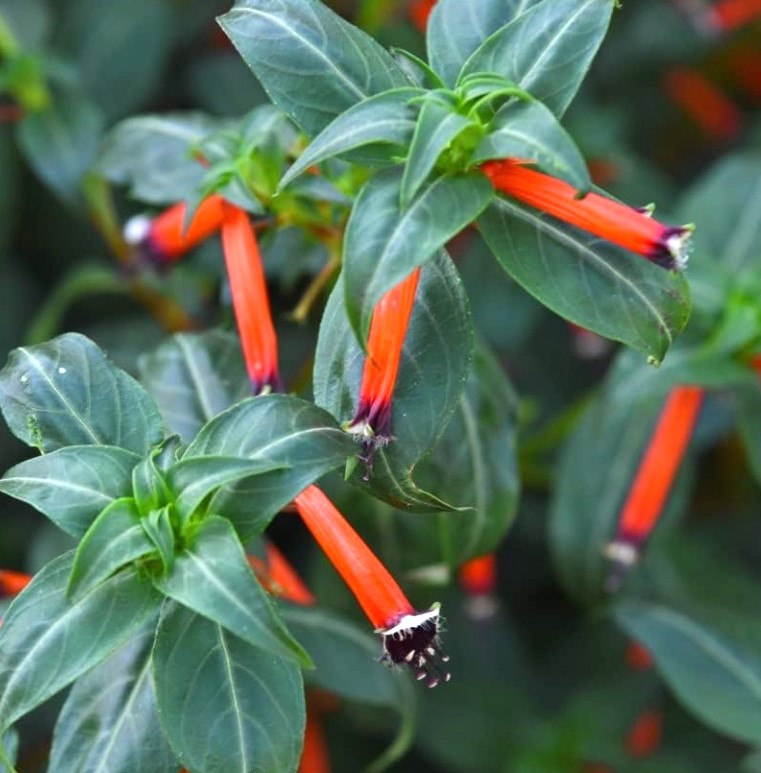
Cuphea Cigar
Cuphea ignea
The Cigar Flower, botanically known as Cuphea ignea and often referred to as the Firecracker Plant or Mexican Cigar Plant, is a charming, continuous-blooming tender evergreen subshrub belonging to the Lythraceae family. Native to the warm, rocky, sun-drenched hillsides and open valleys of Mexico...
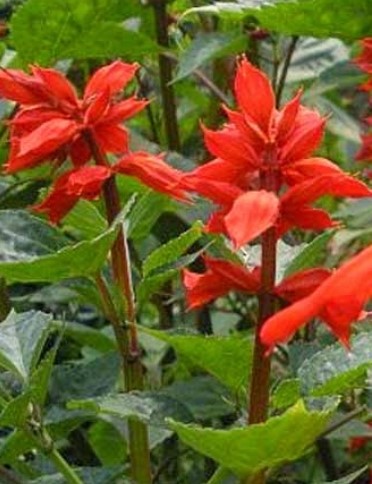
Salvia
Salvia
Salvia, botanically classified under the genus Salvia and commonly known as Sage, is an exceptionally diverse, versatile, and highly valuable plant genus. Belonging to the family Lamiaceae (the mint family, tribe Mentheae), this massive genus comprises nearly 1,000 distinct species distributed ac...
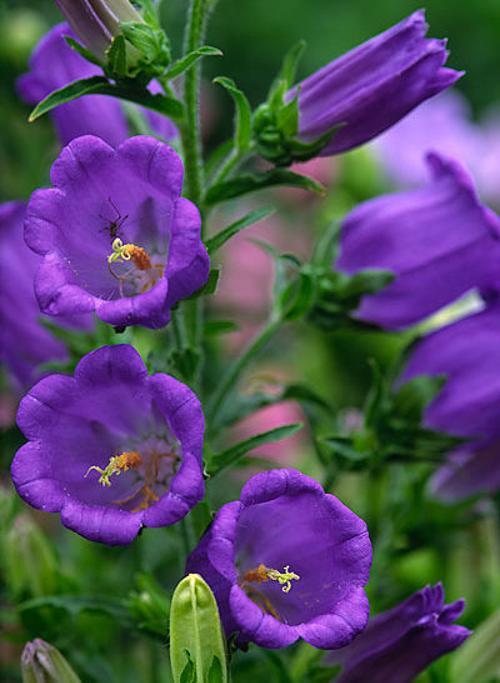
Canterbury bells
Campanula medium
Campanula medium, commonly known as Canterbury Bells, is a quintessential cottage garden biennial that brings a sense of Victorian elegance and whimsical charm to any landscape. Belonging to the Campanulaceae family, this species is native to the sun-drenched hills of Southern Europe, particularl...
Fritillaria
Fritillaria
The Fritillaria, botanically designated as Fritillaria within the Liliaceae (lily) family, is an extraordinarily elegant and exotic genus of spring-flowering bulbous perennials. Native to the temperate latitudes of the Northern Hemisphere—spanning the grassy floodplains of Europe, the Mediterrane...