
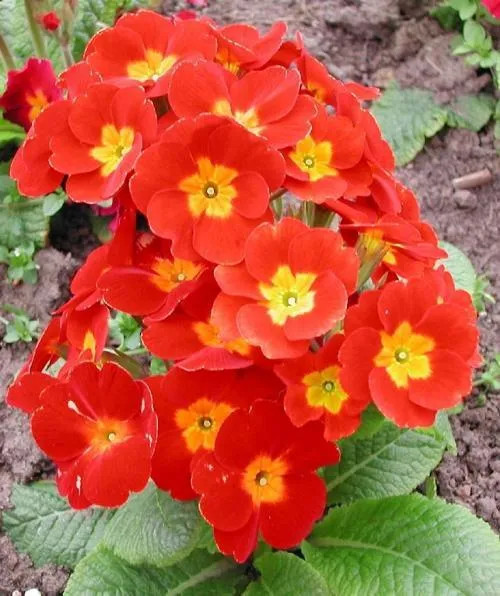
Primula (Common Primrose)
Primula vulgaris
How to Identify Primula (Common Primrose)
NON-TOXIC. 100% safe for cats, dogs, and horses. Contact with some specific exotic Primula species (like Primula obconica) can cause mild contact skin irritation (primin dermatitis).
Care & Growing Guide
Seasonal Blooming & Hardiness
Seasonal Blooming Calendar:
- Peak Bloom: Spring to early summer (typically April through June).
- Planting Time: Sow seeds directly outdoors in early spring after the last frost, or transplant nursery starts in late spring.
Bloom Timeline
About Primula (Common Primrose)
The Primrose, botanically designated as Primula vulgaris and commonly known as the Common Primrose or English Primrose, is an exceptionally charming, early-blooming herbaceous perennial. Belonging to the family Primulaceae (the primrose family), this historic woodland flower is native to the cool, moist deciduous woodlands, hedgerows, grassy banks, and alpine meadows of western, southern, and central Europe—ranging from Great Britain down to the Mediterranean and eastward to the Caucasus and Himalayas.
This low-growing, compact perennial typically stands 4 to 8 inches (10 to 20 cm) tall and forms dense, spreading basal rosettes of tongue-shaped, heavily wrinkled, and spoon-shaped dark green leaves with finely hairy undersides. It is celebrated globally as one of the earliest heralds of spring, blooming from late winter to mid-spring (February through May). It produces delicate, cup-shaped blossoms sitting closely to the leaves on short, hairy stalks.
Individual flowers measure 1 to 1.5 inches across, featuring 5 deeply notched petals forming a flat, open face. The wild ancestral type displays a highly elegant pale yellow or cream shade with a contrasting deep golden-yellow central eye. Modern horticultural breeding has produced hundreds of cultivars in a dazzling rainbow spectrum of electric blues, deep purples, ruby reds, rose pinks, and pure whites. The sweet, subtle fragrance of the flowers attracts early-season honeybees and bumblebees.
The reproductive morphology of Primula vulgaris is summarized by the family-specific floral formula EBr ⊕ ⚥ K(5) C(5) A5 G(5). This formula states that the flowers are ebracteate (lacking bracts), radially symmetrical (actinomorphic), and bisexual. The calyx is composed of 5 fused, angular sepals forming a tubular sheath, and the corolla has 5 fused petals forming a salverform tube. The androecium contains 5 stamens fused directly to the inside of the corolla tube, while the gynoecium contains 5 fused carpels with a superior ovary. The genus is famous for heterostyly (pin and thrum forms) to encourage cross-pollination.
The genus name Primula is derived from the ancient Latin word 'primus,' meaning first, directly celebrating its status as one of the earliest spring flowers to open. Famed in Sanskrit as Purodha Pushpam (पुरोध पुष्पम्) and in Hindi as Basanti Gulab (बसंती गुलाब) or Primula, it is sacred to the Norse goddess Freya in European mythology, symbolizing early youth, renewal, and young love. Both the blossoms and young leaves are edible, historically used to decorate cakes and salads.
For pet owners and veterinarians, the Common Primrose represents an exceptionally safe, low-risk, and pet-safe spring choice. Primula vulgaris is classified as completely NON-TOXIC to cats, dogs, and horses by major global animal safety databases, including the ASPCA. If a curious pet nibbles on the foliage or pale yellow flowers, there is absolutely no danger of toxic chemical poisoning. However, gardeners should note that contact with the foliage of certain Primula species (particularly Primula obconica) can cause a mild contact skin rash in sensitive humans and pets due to the allergen primin. For more safety tips, visit our general Pet Guard page.
Common Primrose is occasionally confused with wild cowslips (Primula veris). It is easily distinguished because true Primrose flowers sit close to the basal leaves on individual short stalks, whereas cowslip flowers hang in nodding, one-sided clusters atop tall unbranched flower stems. It is a premier selection for shade gardens and containers; we recommend pairing it alongside Wallflower-erysimum. To explore more early-season woodland perennials, browse our Flower Identifier.
Floral Formula & Features
Ebracteate, radially symmetrical (actinomorphic), bisexual, 5 fused sepals forming tube, 5 fused petals forming salverform corolla with tube and flat spreading lobes, 5 stamens attached to corolla tube, 5 fused carpels with superior ovary. Heterostylous (pin and thrum forms)
- Scientific Name & Classification: Primula vulgaris (Primulaceae). Globally famed as Common Primrose, English Primrose, and Stemless Primrose.
- Identification Markers: Low-growing basal rosettes of wrinkled spoon-shaped leaves, and pale yellow 1-1.5 inch flat-faced flowers with a golden-yellow eye, sitting close to the foliage on short stalks.
- Floral Formula (EBr ⊕ ⚥ K(5) C(5) A5 G(5)): Radially symmetrical, bisexual flowers with 5 fused sepals, 5 fused petals forming a long tube, 5 stamens, and superior ovary. Displays heterostyly.
- Growing Requirements: Partial to deep shade ( morning sun tolerated); cool, consistently moist, humus-rich, well-draining soils. Highly cold-hardy (Zones 4-8).
- Cultural Significance: Name comes from Latin 'primus' (first). Sacred to Norse goddess Freya; symbolizes young love and early youth. Flowers and leaves are completely edible.
- Safety & Toxicity: NON-TOXIC. 100% safe for cats, dogs, and horses. Contact with some specific exotic Primula species (like Primula obconica) can cause mild contact skin irritation (primin dermatitis).
- Common Look-alikes: Confused with wild Cowslips (Primula veris), but easily distinguished by its single stemless flowers nesting directly on the foliage rosette rather than hanging in nodding stalks.
- Internal Links: Softens woodland gardens and pathways beautifully when planted in sweeps alongside other cool-season favorites like Wallflower-erysimum; find more in our Flower Identifier.
Names in Different Languages
Toxicity & Safety
Frequently Asked Questions
What is Floral Formula?
A floral formula is a symbolic representation of a flower's structure using letters, numbers, and special symbols. It provides a concise way to describe the arrangement and number of floral parts.
This formula describes the flower's symmetry, sepals, petals, stamens, and carpels in a standardized format.
Formula Sequence
- Bract: Br or Ebr
- Bracteole: Brl or Ebrl
- Symmetry: % (Radial) or ⊕ (Bilateral)
- Sex: ♀ (Female), ♂ (Male), or ⚥ (Bisexual)
- Calyx/Sepal: K<number> (Free or Fused)
- Corolla/Petal: C<number> (Free or Fused)
- Androecium: A<number> (Free or Fused)
- Gynaecium: G<number> (Superior or Inferior Ovary)
Symbol Meanings
- Numbers: Indicate quantity of parts
- Parentheses (): Parts are fused together
- Plus (+): Parts in different whorls
- Underline: Superior ovary position
- Overline: Inferior ovary position
- ∞: Numerous parts (too many to count)
Understanding floral formulas helps botanists quickly identify and classify flowers based on their structural characteristics.
Similar Flowers
Discover flowers that share botanical characteristics
Similar Characteristics
4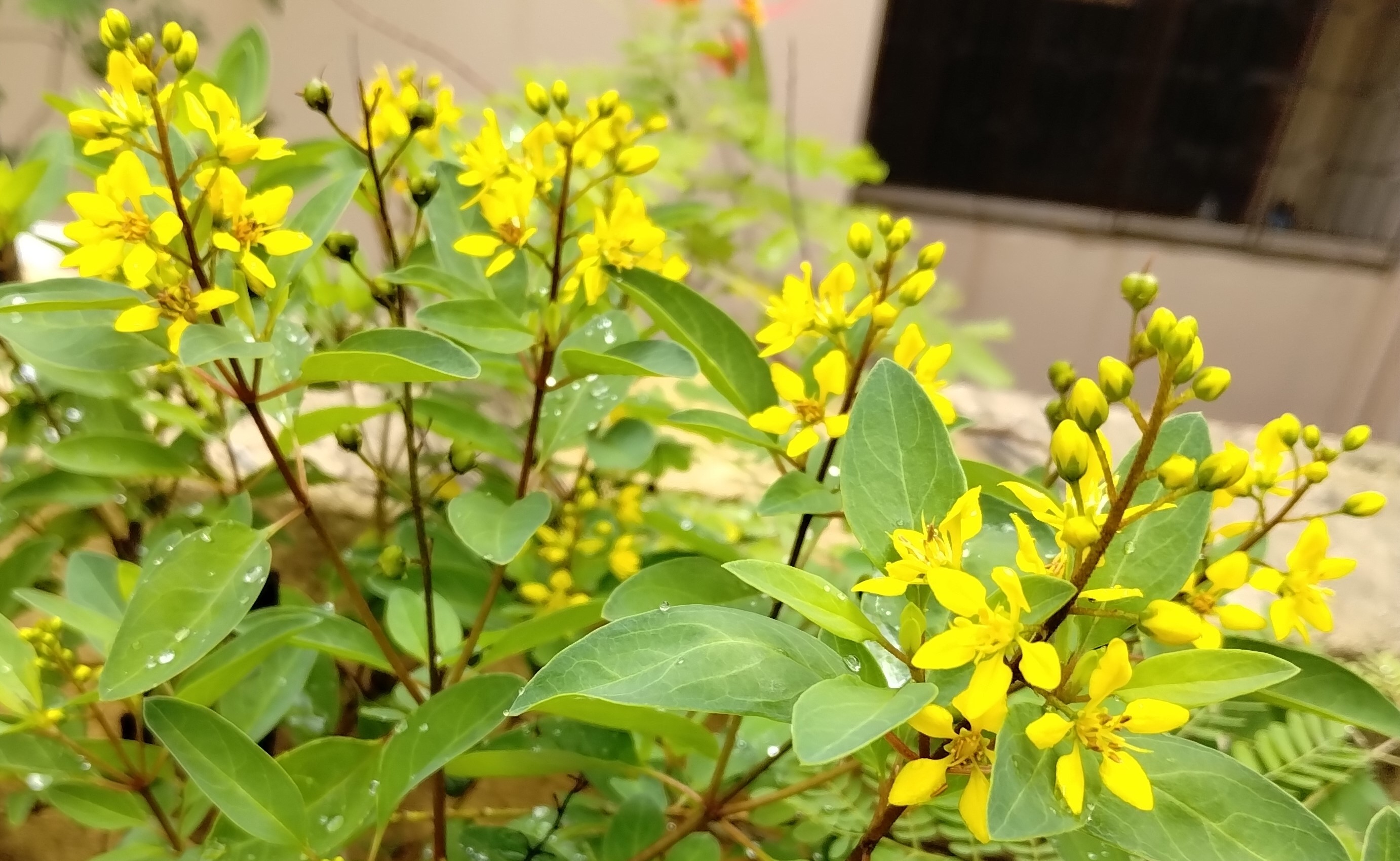
Golden Thryallis
Galphimia gracilis
The Golden Thryallis, botanically designated as *Galphimia gracilis* (previously confused with *Thryallis glauca*, commonly known as Gold Shower, Rain-of-Gold, or Slender Goldshower), is an exceptionally cheerful, fast-growing tropical evergreen shrub. Belonging to the family Malpighiaceae (the a...
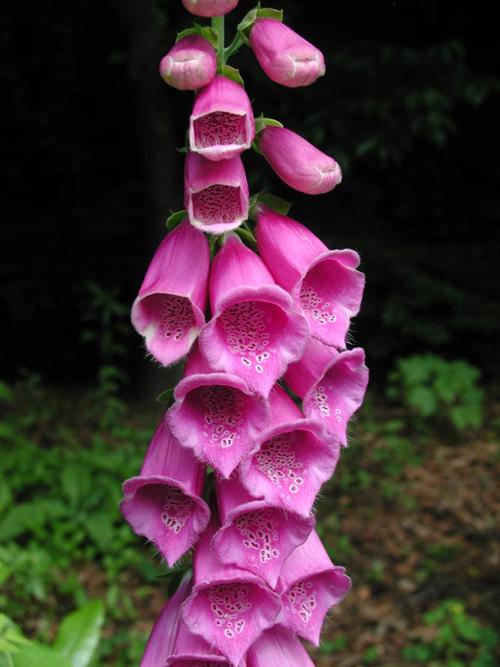
Foxglove
Digitalis purpurea
Digitalis purpurea, commonly known as Foxglove, is a majestic and iconic biennial plant belonging to the Plantaginaceae family. Native to the cool, temperate woodlands, hedgerows, and mountainous clearings of western and southwestern Europe, this striking species has naturalized throughout North...
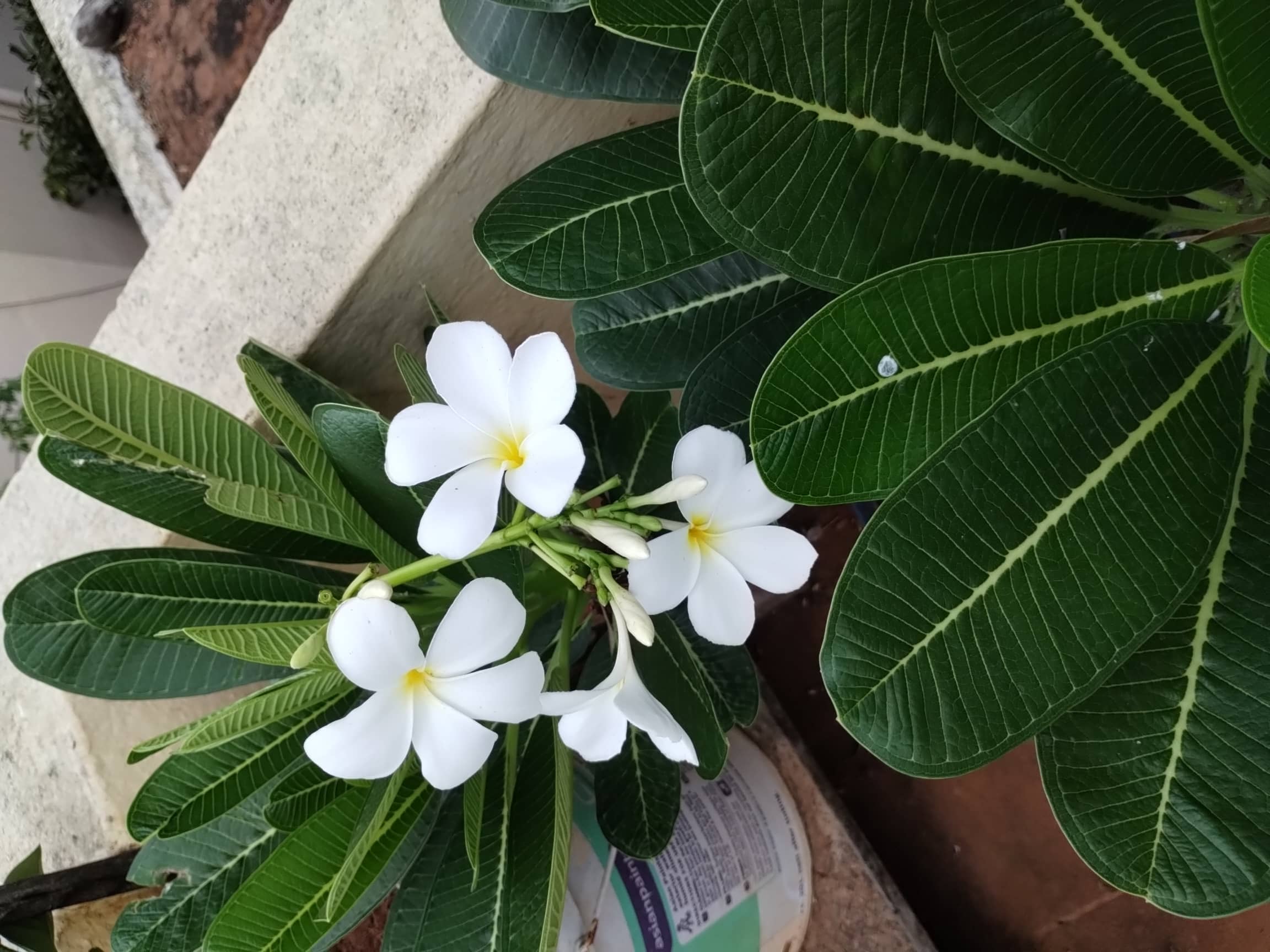
Plumeria
Plumeria Rubra
Plumeria, universally known as the Frangipani, is a genus of deciduous shrubs and small trees that serve as the quintessential symbol of tropical paradise. Belonging to the Apocynaceae (Dogbane) family, these plants are native to Mexico, Central America, and the Caribbean, but they have been embr...
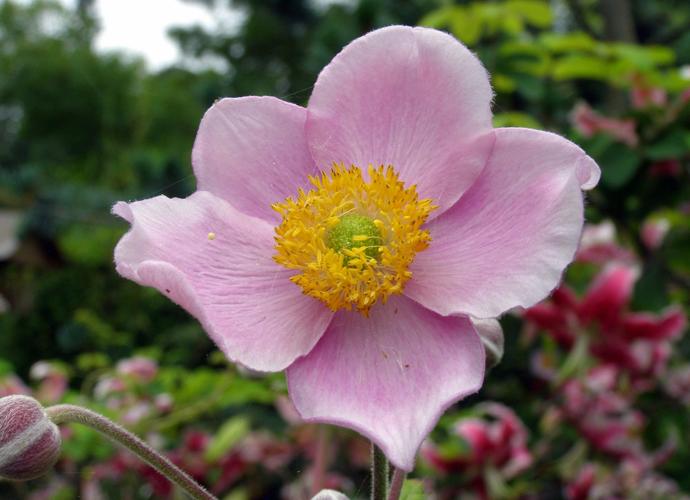
Japanese anemone
Anemone hupehensis, Anemone hybrida
The Japanese Anemone, botanically classified as Anemone hupehensis (and recently reclassified under the genus Eriocapitella), is an exceptionally graceful, late-blooming herbaceous perennial belonging to the Ranunculaceae (buttercup) family. Despite its common name, this elegant species is native...