
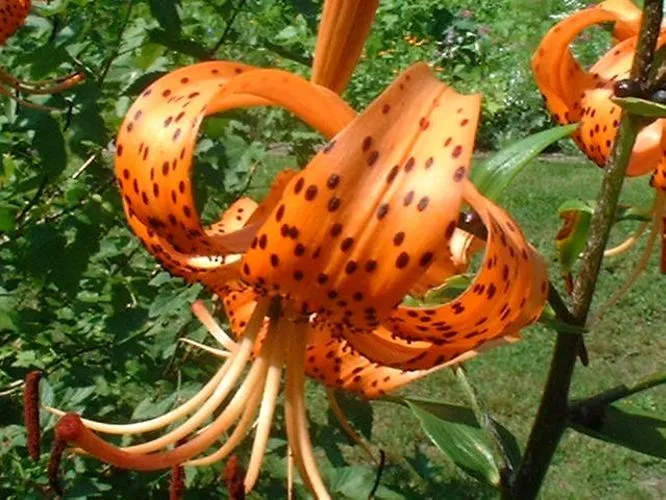
Tiger Lily
Lilium lancifolium
How to Identify Tiger Lily
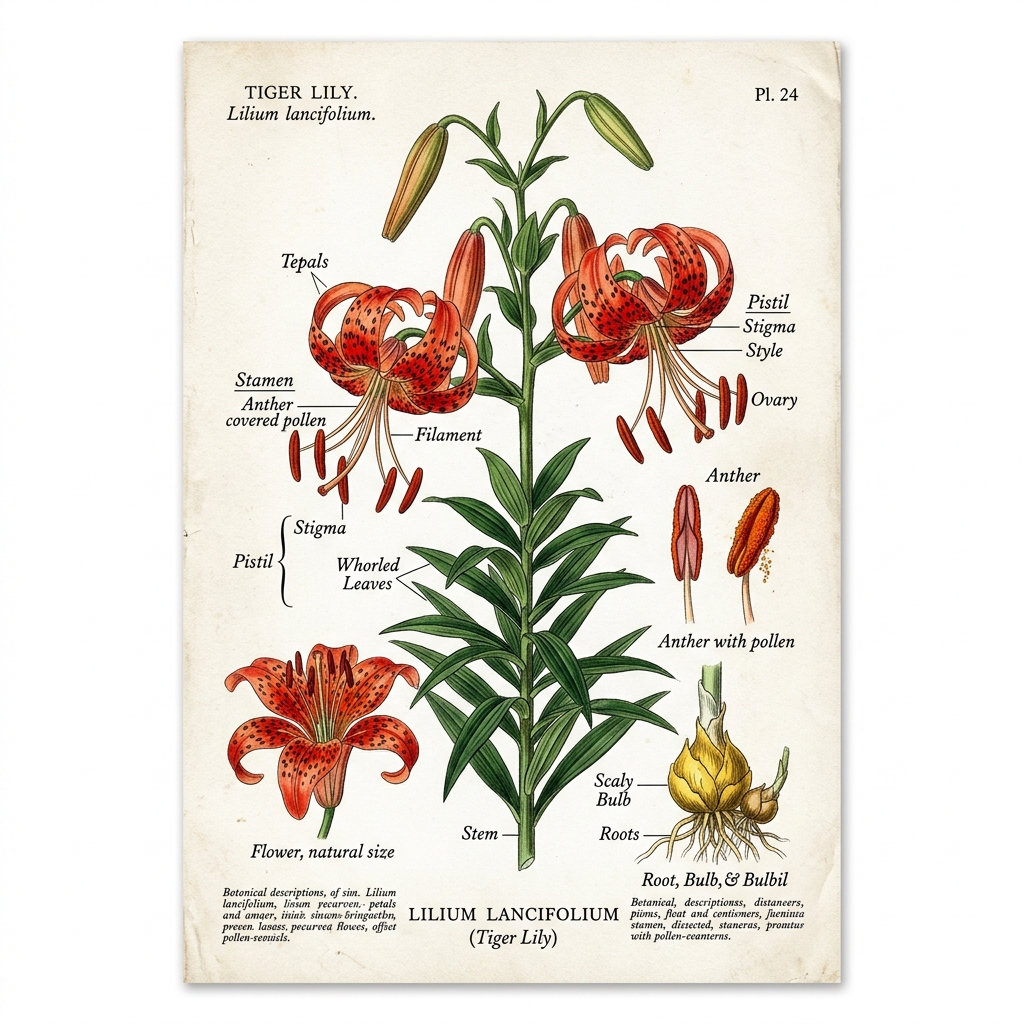
A detailed guide to identifying Tiger Lilies (Lilium lancifolium) by its key features:
- Recurved Orange Petals: Large, nodding, downward-facing orange blossoms with petals that curve backward toward the stem.
- Black/Purple Spots: Distinctive dark purple or black spots scattered across the inner surface of the orange petals.
- Protruding Stamens: Six long, dramatic stamens extending outward from the center, capped with heavy, staining reddish-brown pollen.
- Stem Bulbils: Small, shiny black onion-like bulbils growing in the leaf axils (where the leaves meet the stem), used for propagation.
Types & Sub-types of Tiger Lilies
Tiger lilies belong to the genus Lilium and are classified and distinguished based on petal curvature, color mutations, and hybrid groups:
- By Species & Native Origin:
- True Tiger Lily (Lilium lancifolium/tigrinum): The classic triploid species native to East Asia, sterile, propagating solely via stem bulbils.
- Wild Tiger Lily / Michigan Lily (Lilium michiganense): Native to North American wet meadows, similar recurved orange spots but lacks stem bulbils.
- By Color Mutations:
- Classic Orange: The dominant, standard wild color form.
- Yellow Tiger Lily (Lilium lancifolium var. flaviflorum): A rare, naturally occurring yellow-petaled mutation with dark spots.
- By Hybridization (Tiger Lily Derivatives):
- Asiatic Hybrids (Tiger Parentage): Cultivated hybrids bred for upright facing blooms, diverse color ranges (red, pink, white), and reduced pollen staining while retaining the spotted patterns.
Care & Growing Guide
Seasonal Blooming & Hardiness
Seasonal Blooming Calendar:
- Peak Bloom: Summer (typically June through September).
- Planting Time: Sow seeds directly outdoors in early spring after the last frost, or transplant nursery starts in late spring.
Bloom Timeline
About Tiger Lily
The Tiger Lily (Lilium lancifolium), a standout member of the Liliaceae family, is one of the most recognizable and striking lilies in the world. Native to the temperate regions of Eastern Asia, including China, Japan, and Korea, this herbaceous perennial has captivated gardeners for centuries with its towering stems and flamboyant, downward-facing blooms. The plant's name derives from the distinctive dark purple-to-black spots that adorn its brilliant orange petals, creating a pattern reminiscent of a tiger's coat.
Structurally, the Tiger Lily is a marvel of botanical symmetry. Each flower features six gracefully recurved tepals (three petals and three sepals that are virtually identical) that curl dramatically backward to form a 'Turk's cap' shape. This arrangement prominently displays the long, elegant stamens and anthers, which are heavily laden with rust-colored pollen. A unique characteristic of this species is the production of small, black, bead-like bulbils in the axils of its lance-shaped leaves. These aerial bulblets eventually drop to the ground and grow into new plants, allowing for easy naturalization.
In terms of cultivation, the Tiger Lily is remarkably hardy and resilient, thriving in USDA zones 3 through 9. It prefers full sun but can tolerate partial shade, provided it has well-draining soil rich in organic matter. Unlike many more delicate lily hybrids, Lilium lancifolium is notably resistant to many common lily viruses, making it a reliable choice for perennial borders and cottage gardens. Its height, often reaching between 3 to 6 feet, makes it an excellent backdrop plant that provides late-summer vertical interest.
Cultural significance and utility also define the Tiger Lily's history. In many East Asian cultures, particularly China, the bulbs are valued as a nutritious food source, often boiled or steamed for their slightly sweet, starchy flavor. They also hold a place in traditional medicine for their perceived cooling properties.
Today, the Tiger Lily remains a symbol of wealth, pride, and prosperity. Its ability to thrive with minimal intervention and its spectacular, spotted blooms continue to make it a favorite for those looking to add a touch of wild, exotic beauty to their landscape. ⚠️ Pet Safety Notice: True lilies (Lilium spp.) are exceptionally toxic and lethal to domestic cats, causing acute kidney failure from pollen or leaf ingestion. For full medical toxicity details, symptoms, and emergency vet first aid, read our dedicated Lily Pet Toxicity & Safety Guide.
For more botanical profiles and flower identification features, see our guides on Spiked Shaded Ginger and AngelWing Jasmine (Star Jasmine).
Floral Formula & Features
Ebracteate (no bracts), Actinomorphic (radially symmetrical), bisexual, 6 free tepals in 2 whorls of 3 (perianth), 6 free stamens in 2 whorls of 3, 3 fused carpels with superior ovary
- Scientific Name & Geography: Lilium lancifolium belongs to the Liliaceae family. It is native to Eastern Asia, particularly China, Japan, and Korea, where it grows in meadows and on rocky slopes.
- Identification Features: Features a tall stem (3-6 ft) with lanceolate leaves. Flowers have 6 recurved orange tepals with dark spots. Look for black bulbils (aerial bulblets) in the leaf axils.
- Floral Formula (EBr ⊕ ⚥ P3+3 A3+3 G(3)): Radially symmetrical, bisexual flowers with 6 tepals in two whorls, 6 stamens, and a superior ovary with three fused carpels.
- Growing Conditions: Extremely hardy (USDA zones 3-9). Prefers full sun to partial shade and well-draining, slightly acidic soil. Requires moderate, consistent watering during the growing season.
- Cultural Significance & Names: Bulbs are edible and used in Asian cuisine and medicine. Known as 'Oniyuri' in Japan and 'Giglio tigrato' in Italy. Symbols of prosperity and wealth.
- Internal Links: Compare key differences in our Orchid vs Lily comparison, or try our instant Flower Identifier.
Names in Different Languages
Botanical Classification: Tiger Lily belongs to the Liliaceae family. Learn how to identify its floral symmetry, stamen arrangement, and structural formulas in our Botanical Family Classification Guide.
Toxicity & Safety
Always keep toxic plants out of reach of children and pets. Consult a veterinarian or medical professional immediately if ingestion is suspected.
Pet Safety Guide: For detailed toxicity symptoms, first-aid measures, and safe garden alternatives, see our full Pet Guard Profile for Tiger Lily.
Frequently Asked Questions
What is Floral Formula?
A floral formula is a symbolic representation of a flower's structure using letters, numbers, and special symbols. It provides a concise way to describe the arrangement and number of floral parts.
This formula describes the flower's symmetry, sepals, petals, stamens, and carpels in a standardized format.
Formula Sequence
- Bract: Br or Ebr
- Bracteole: Brl or Ebrl
- Symmetry: % (Radial) or ⊕ (Bilateral)
- Sex: ♀ (Female), ♂ (Male), or ⚥ (Bisexual)
- Calyx/Sepal: K<number> (Free or Fused)
- Corolla/Petal: C<number> (Free or Fused)
- Androecium: A<number> (Free or Fused)
- Gynaecium: G<number> (Superior or Inferior Ovary)
Symbol Meanings
- Numbers: Indicate quantity of parts
- Parentheses (): Parts are fused together
- Plus (+): Parts in different whorls
- Underline: Superior ovary position
- Overline: Inferior ovary position
- ∞: Numerous parts (too many to count)
Understanding floral formulas helps botanists quickly identify and classify flowers based on their structural characteristics.
Similar Flowers
Discover flowers that share botanical characteristics
Same Genus
2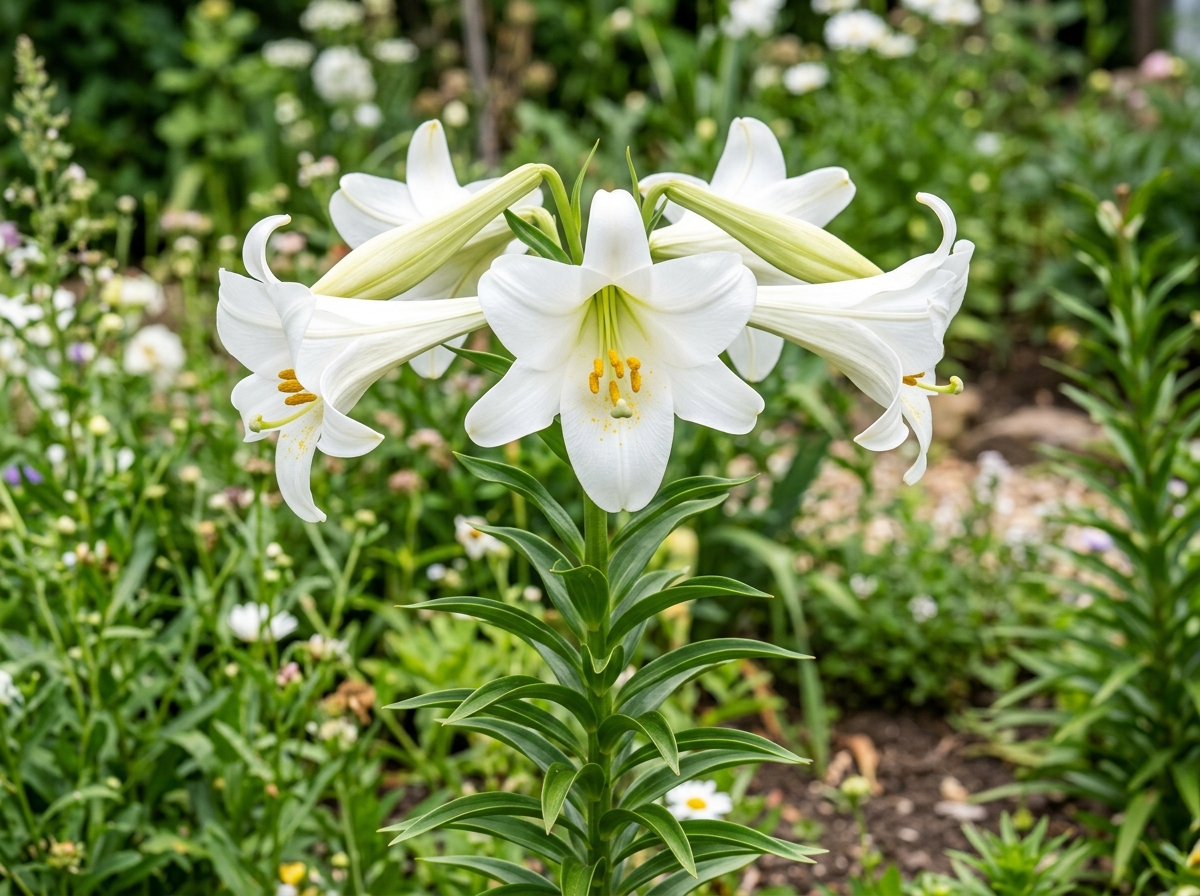
Easter Lily
Lilium longiflorum
Easter Lily (*Lilium longiflorum*), native to the Ryukyu Islands of Japan, is a classic trumpet-shaped white lily famed for its elegant pure white blooms and intense sweet fragrance. It is traditionally forced into bloom in spring for Easter celebrations and spring floral displays. Historically,...
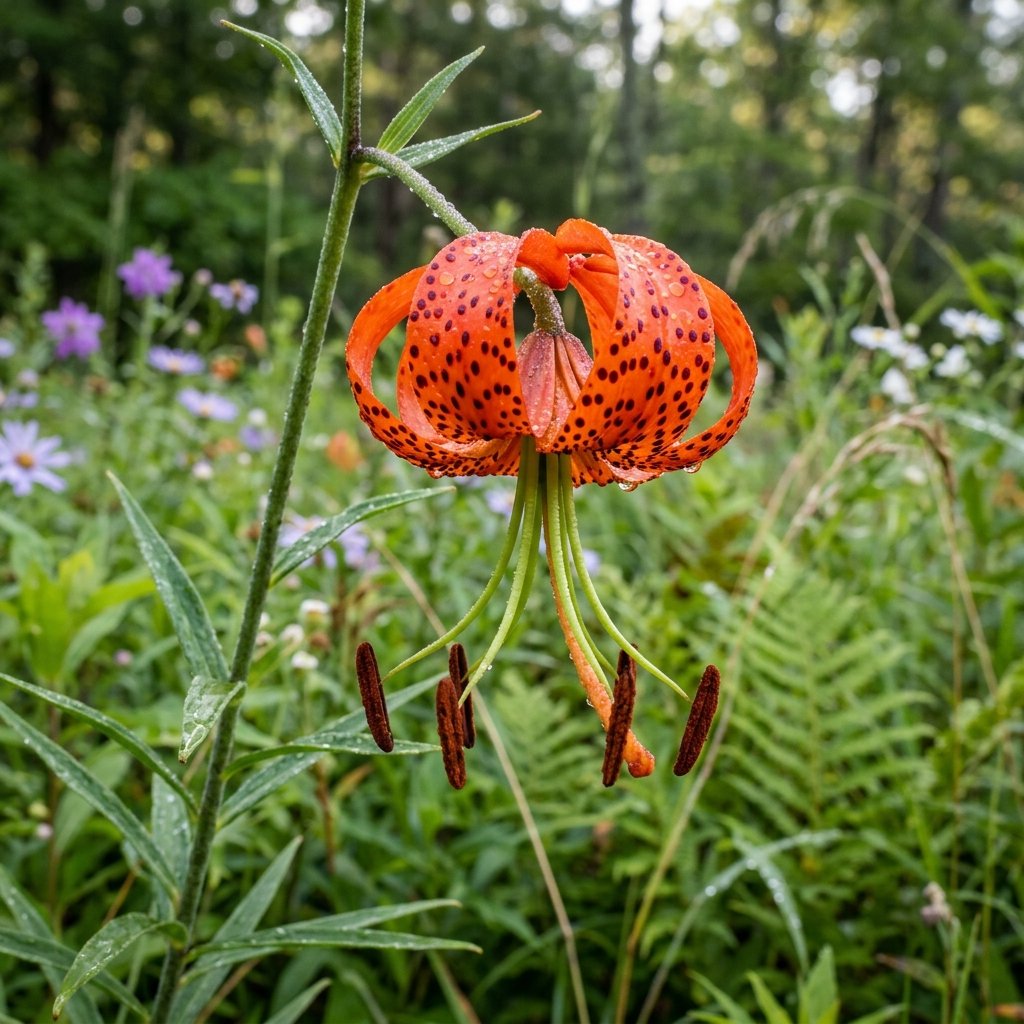
Turk's Cap Lily
Lilium superbum
Turk's Cap Lily (*Lilium superbum*) is the tallest native lily in North America and one of the most spectacular wildflowers of the eastern United States, reaching heights of 4 to 8 feet with multiple nodding, bright orange flowers dramatically spotted with purple-brown and with their petals fully...
Same Family
4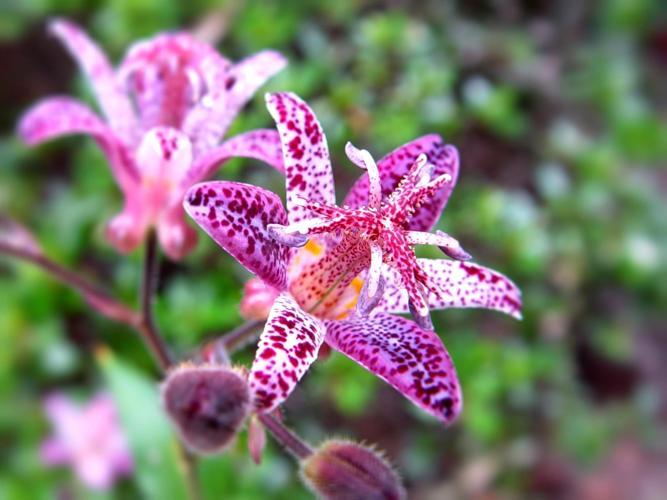
Toad Lily
Tricyrtis
The Toad Lily, botanically classified under the genus Tricyrtis and belonging to the family Liliaceae (the lily family, tribe Lilieae), is an exceptionally exotic, shade-loving perennial. Native to the damp forest understories, shaded mountain valleys, and rocky stream banks of eastern Asia—with...
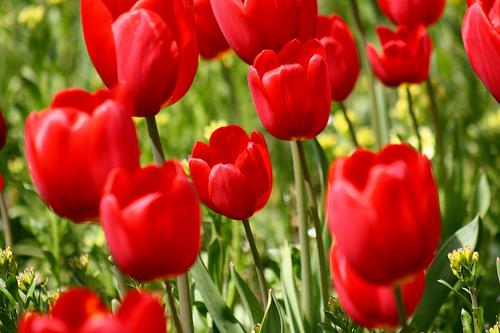
Tulip
Tulipa
The Tulip, botanically designated under the genus Tulipa and belonging to the family Liliaceae (the lily family, tribe Lilieae), is an exceptionally iconic, globally celebrated spring-blooming bulbous herbaceous perennial. Native to the dry, mountainous heights, rocky slopes, and sweeping grassla...
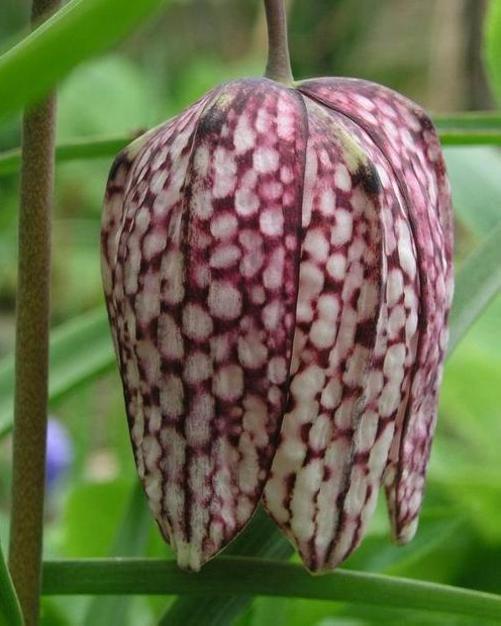
Fritillaria
Fritillaria
The Fritillaria, botanically designated as Fritillaria within the Liliaceae (lily) family, is an extraordinarily elegant and exotic genus of spring-flowering bulbous perennials. Native to the temperate latitudes of the Northern Hemisphere—spanning the grassy floodplains of Europe, the Mediterrane...
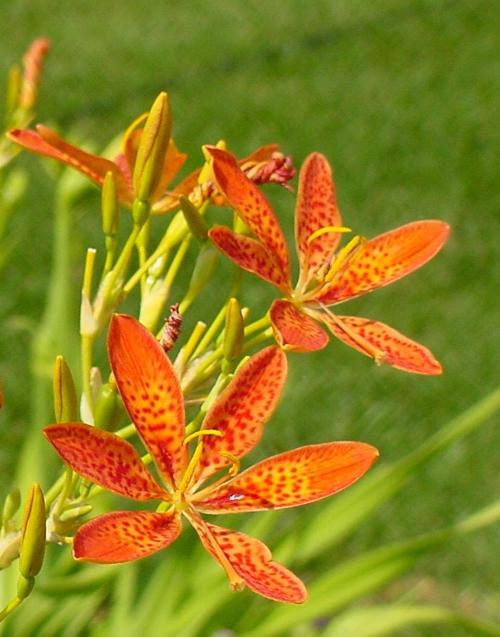
Leopard Lily
Iris domestica (syn. Belamcanda chinensis)
The Leopard Lily, botanically designated as *Iris domestica* (previously classified as *Belamcanda chinensis*, and commonly known as the Blackberry Lily or Leopard Flower), is an exceptionally distinct, highly ornamental perennial. Belonging to the family Iridaceae (the iris family, tribe Irideae...
Similar Characteristics
4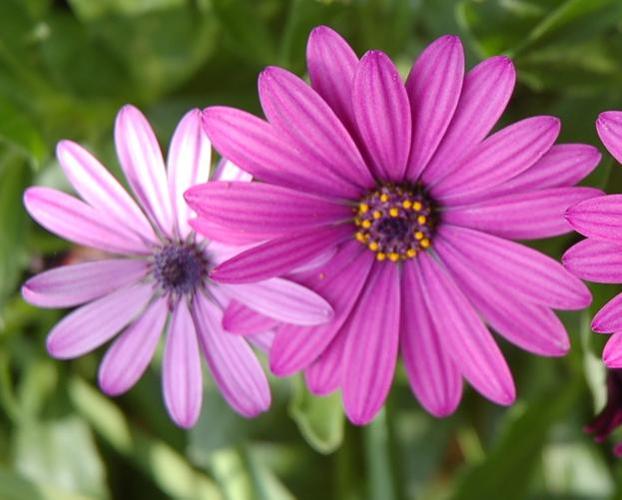
African Daisy (Osteospermum)
Dimorphotheca ecklonis
Osteospermum, commonly known as the African Daisy or Cape Daisy, is a genus of flowering plants that represents the sheer brilliance of the South African floral kingdom. Belonging to the Calenduleae tribe within the massive Asteraceae family, these daisies are celebrated for their sophisticated,...
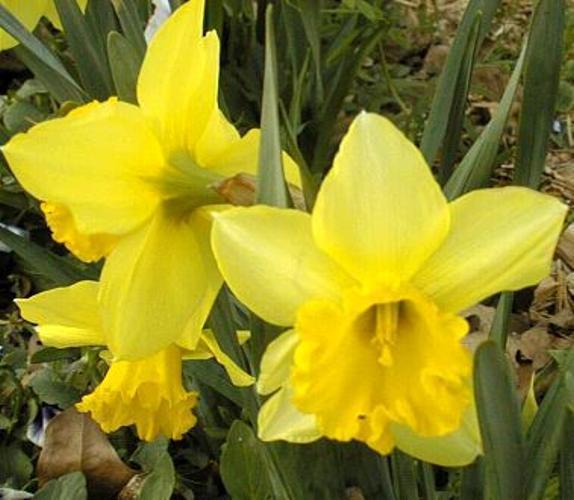
Daffodil
Narcissus pseudonarcissus
The Daffodil, botanically classified under the genus Narcissus and most famously represented by Narcissus pseudonarcissus (the wild daffodil), is a cheerful, spring-flowering bulbous perennial belonging to the Amaryllidaceae (amaryllis) family. Native to the damp meadows, light deciduous woodland...
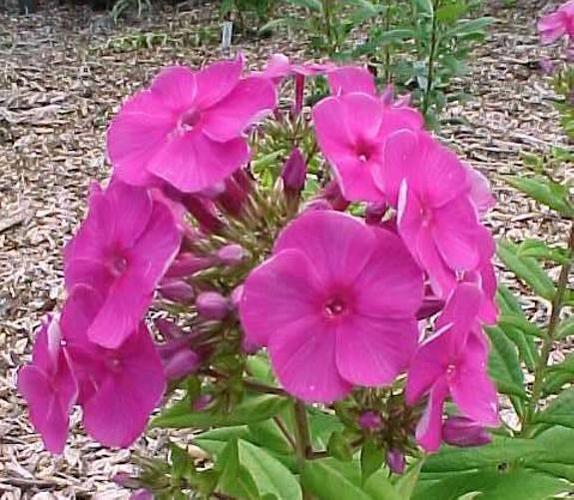
Phlox
Phlox paniculata
The genus Phlox, a cornerstone of the North American garden, encompasses a diverse array of species ranging from low-growing ground covers to towering, stately perennials. Derived from the Greek word for 'flame,' the name perfectly captures the vibrant, fiery intensity of their clustered blossoms...
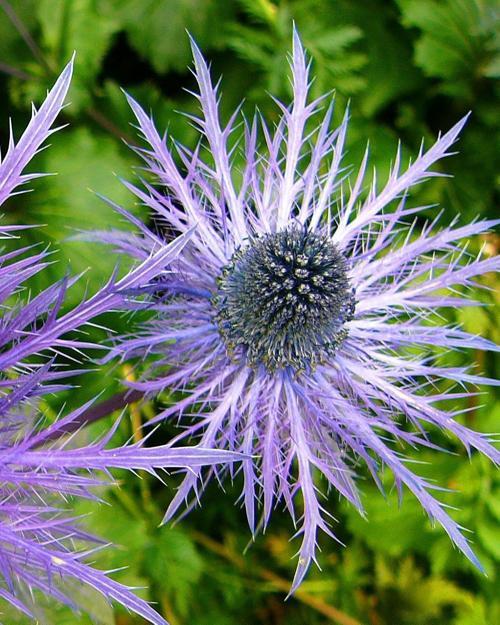
Alpine Sea Holly
Eryngium alpinum
The Alpine Sea Holly, botanically known as *Eryngium alpinum* and widely celebrated as the 'Queen of the Alps,' is an extraordinarily striking, architectural herbaceous perennial. Belonging to the family Apiaceae (the carrot or parsley family, tribe Saniculeae), this alpine masterpiece is native...