
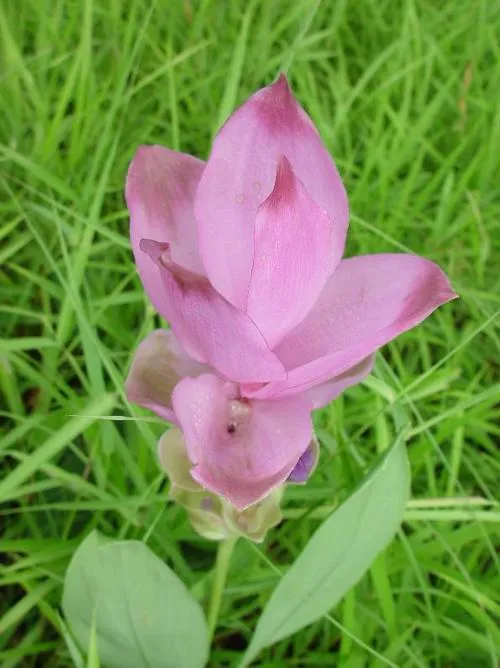
Siam Tulip
Curcuma alismatifolia
How to Identify Siam Tulip
Care & Growing Guide
Seasonal Blooming & Hardiness
Seasonal Blooming Calendar:
- Peak Bloom: Spring to early summer (typically April through June).
- Planting Time: Sow seeds directly outdoors in early spring after the last frost, or transplant nursery starts in late spring.
Bloom Timeline
About Siam Tulip
Despite its extremely misleading common name, the Siam Tulip (Curcuma alismatifolia) is not a tulip at all. It is actually a stunning, tropical herbaceous perennial belonging to the Zingiberaceae (Ginger) family. Native to the monsoon forests of northern Thailand, Laos, and Cambodia, it has surged in global popularity as both an exotic, long-lasting cut flower and an elegant indoor container plant.
Identification of the Siam Tulip centers around its spectacular inflorescence. What appear to be large, waxy, vibrant pink or purple 'petals' pointing toward the sky are actually highly modified leaves known as bracts. The true flowers are quite small, delicate, and often yellow or white, hiding inconspicuously between the lower, greener bracts. The plant grows from an underground rhizome, producing stiff, upright, lance-shaped leaves that bear a strong resemblance to standard tulip foliage, which is where the misnomer originated.
The floral formula for Curcuma is % ⚥ K(3) C(3) A1 G(3). It represents a bilaterally symmetrical, bisexual flower. The perianth consists of 3 fused sepals and a tubular corolla of 3 fused petals. The defining feature of the ginger family is the severe reduction in fertile stamens; it possesses only 1 fertile stamen, while the other stamens are heavily modified into petal-like staminodes. It has an inferior ovary of 3 fused carpels.
Growing the Siam Tulip successfully requires mimicking its tropical monsoon habitat. It demands a warm, highly humid environment and very bright, indirect sunlight. If grown outdoors, it thrives in USDA zones 8-11. It requires rich, well-draining soil that is kept consistently moist during its active summer growing season. In the winter, the plant enters a natural dormancy, dying back completely to its rhizome, at which point watering must be drastically reduced to prevent rot.
Culturally, it is heavily cultivated in its native Thailand, particularly in the Chaiyaphum province, where massive fields of blooming Siam Tulips draw thousands of tourists every summer during the rainy season.
Importantly for home gardeners, the Siam Tulip is NON-TOXIC. Like many culinary and ornamental gingers, it is completely safe to cultivate around dogs, cats, and curious children.
It is sometimes confused with standard spring-blooming Tulips (Tulipa genus) due to the name and leaf shape. However, true tulips are bulbous plants that require winter freezes and bloom in early spring, while the Siam Tulip is a heat-loving ginger rhizome that blooms strictly in the summer. Explore more tropical wonders in our Flower Identifier.
For more botanical profiles and flower identification features, see our guides on Ruby Lipped Cattleya and Silverbush.
Floral Formula & Features
Bilaterally symmetrical, bisexual. 3 fused sepals, 3 fused petals. Only 1 fertile stamen; other stamens are modified into petal-like staminodes. Inferior ovary.
- Scientific Name & Classification: Curcuma alismatifolia (Zingiberaceae). A tropical ginger, completely unrelated to true tulips.
- Identification Markers: Stiff, upright tulip-like leaves. Produces a tall spike topped with large, waxy, pink or purple bracts. The true flowers are tiny and hidden.
- Floral Formula (% ⚥ K(3) C(3) A1 G(3)): Bilaterally symmetrical. Features a tubular corolla and only 1 fertile stamen (typical of the ginger family).
- Growing Requirements: Bright indirect sunlight, high humidity, and consistent moisture during the summer. Goes completely dormant in the winter.
- Cultural Significance: A major tourist attraction in Thailand during the monsoon season. Highly prized globally as an exotic, long-lasting cut flower.
- Safety & Toxicity: NON-TOXIC. Completely safe for households with pets and children.
- Common Look-alikes: Named after the true Tulip due to leaf similarity, but true tulips grow from bulbs in cold climates, whereas Siam Tulips are tropical rhizomes.
- Internal Links: Compare with another ginger family member, the Spiked Shaded Ginger, or explore the Flower Identifier.
Names in Different Languages
Botanical Classification: Siam Tulip belongs to the Zingiberaceae family. Learn how to identify its floral symmetry, stamen arrangement, and structural formulas in our Botanical Family Classification Guide.
Toxicity & Safety
Frequently Asked Questions
What is Floral Formula?
A floral formula is a symbolic representation of a flower's structure using letters, numbers, and special symbols. It provides a concise way to describe the arrangement and number of floral parts.
This formula describes the flower's symmetry, sepals, petals, stamens, and carpels in a standardized format.
Formula Sequence
- Bract: Br or Ebr
- Bracteole: Brl or Ebrl
- Symmetry: % (Radial) or ⊕ (Bilateral)
- Sex: ♀ (Female), ♂ (Male), or ⚥ (Bisexual)
- Calyx/Sepal: K<number> (Free or Fused)
- Corolla/Petal: C<number> (Free or Fused)
- Androecium: A<number> (Free or Fused)
- Gynaecium: G<number> (Superior or Inferior Ovary)
Symbol Meanings
- Numbers: Indicate quantity of parts
- Parentheses (): Parts are fused together
- Plus (+): Parts in different whorls
- Underline: Superior ovary position
- Overline: Inferior ovary position
- ∞: Numerous parts (too many to count)
Understanding floral formulas helps botanists quickly identify and classify flowers based on their structural characteristics.
Similar Flowers
Discover flowers that share botanical characteristics
Same Family
2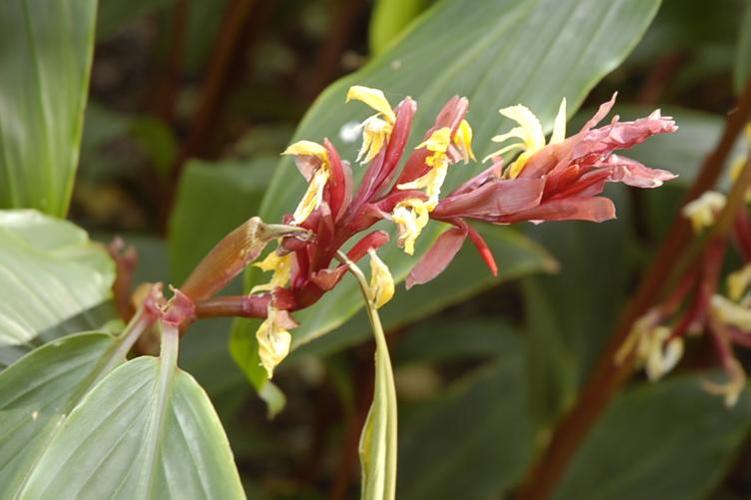
Spiked Shaded Ginger
Cautleya spicata
Cautleya spicata, often referred to as the Spiked Shaded Ginger, is a remarkably resilient, rhizomatous perennial belonging to the Zingiberaceae (Ginger) family. Unlike the vast majority of tropical gingers that demand sweltering lowland heat, this unique species is native to the high-altitude, c...
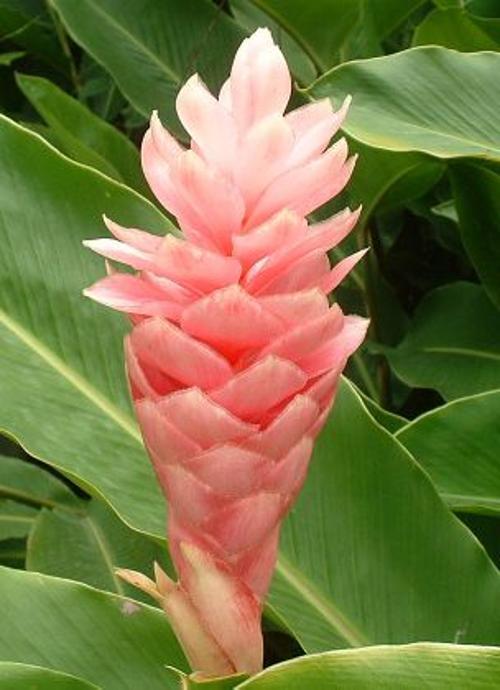
Red Ginger (Ostrich Plume)
Alpinia purpurata
The Red Ginger, botanically classified as Alpinia purpurata and commonly known as the Ostrich Plume, Tahitian Ginger, or Jungle King, is an exceptionally spectacular, exotic tropical rhizomatous perennial. Belonging to the family Zingiberaceae (the ginger family, tribe Alpinieae), this high-impac...
Similar Characteristics
4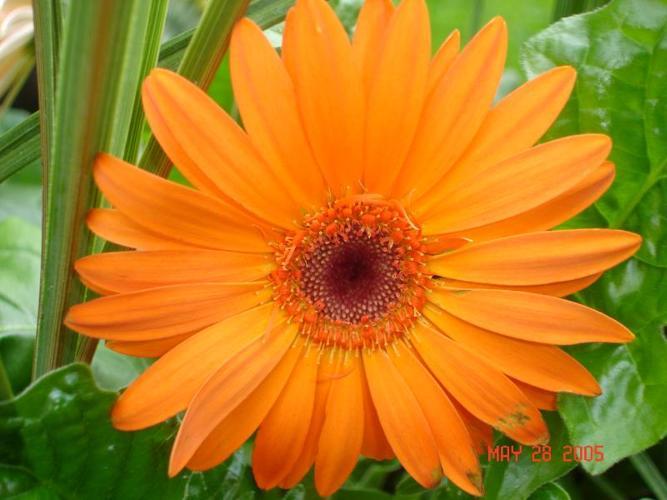
Barberton Daisy
Gerbera jamesonii
The Barberton Daisy, botanically known as Gerbera jamesonii and widely cherished as the Gerbera Daisy or Transvaal Daisy, is an exceptionally cheerful and colorful herbaceous perennial in the Asteraceae (sunflower) family. Native to the rich, subtropical valleys and grassy slopes of South Africa'...
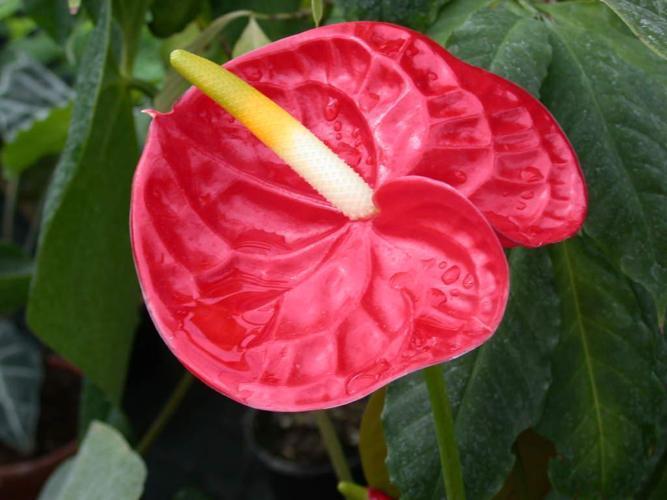
Anthurium
Anthurium andraeanum
The Anthurium, botanically designated as Anthurium andraeanum and commonly known as the Flamingo Flower, Tailflower, or Painter's Palette, is a spectacular tropical evergreen perennial. Belonging to the family Araceae (the arum or aroid family), this extraordinary plant is native to the wet, humi...
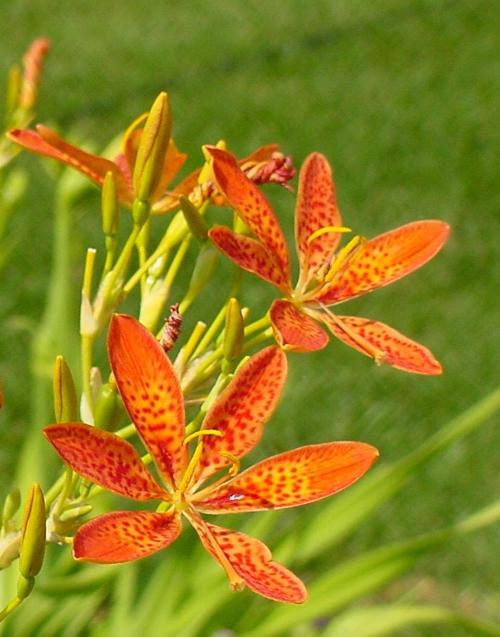
Leopard Lily
Iris domestica (syn. Belamcanda chinensis)
The Leopard Lily, botanically designated as *Iris domestica* (previously classified as *Belamcanda chinensis*, and commonly known as the Blackberry Lily or Leopard Flower), is an exceptionally distinct, highly ornamental perennial. Belonging to the family Iridaceae (the iris family, tribe Irideae...
Red Ginger (Ostrich Plume)
Alpinia purpurata
The Red Ginger, botanically classified as Alpinia purpurata and commonly known as the Ostrich Plume, Tahitian Ginger, or Jungle King, is an exceptionally spectacular, exotic tropical rhizomatous perennial. Belonging to the family Zingiberaceae (the ginger family, tribe Alpinieae), this high-impac...