Juhi Jasmine
Jasminum auriculatum
How to Identify Juhi Jasmine
Care & Growing Guide
Seasonal Blooming & Hardiness
Seasonal Blooming Calendar:
- Peak Bloom: Summer (typically June through September).
- Planting Time: Sow seeds directly outdoors in early spring after the last frost, or transplant nursery starts in late spring.
Bloom Timeline
About Juhi Jasmine
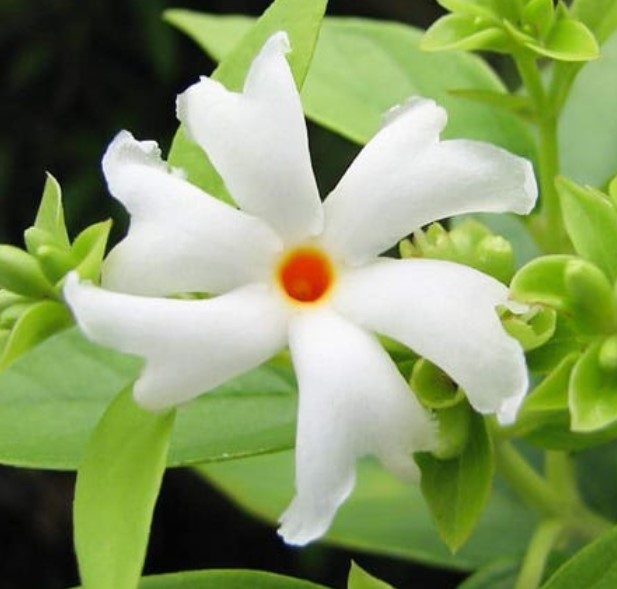
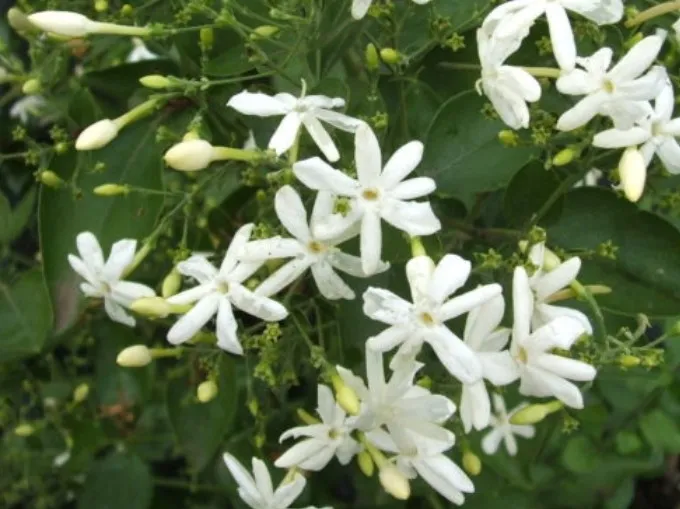
Jasminum auriculatum, affectionately known as Juhi Jasmine or Mulla, is a highly aromatic, scrambling evergreen shrub or woody vine belonging to the Oleaceae (Olive) family. Native primarily to the Indian subcontinent and parts of Southeast Asia, it is globally celebrated not for the sheer size of its flowers, but for their intensely sweet, heavy fragrance that aggressively and beautifully perfumes the warm, humid evening air.
Identification of Juhi is defined by its tiny, star-shaped, brilliant white flowers that grow in dense, branching clusters (botanically known as cymes). The flowers are tubular at the base before spreading into 5 to 8 distinct, sharply pointed lobes. The foliage consists of simple, ovate, dark green leaves. Unlike many climbing jasmines, Juhi tends to have a more bushy, scrambling habit unless it is specifically trained onto a trellis or fence.
The floral formula is ⊕ ⚥ K(5-8) C(5-8) A2 G(2). It features a radially symmetrical, bisexual flower. It has a fused calyx with 5-8 small lobes, a tubular corolla with 5-8 spreading lobes, and a superior ovary made of 2 fused carpels. A defining botanical characteristic of the Oleaceae family—and this jasmine—is the severe reduction of stamens to only 2.
Growing Juhi Jasmine requires mimicking its tropical origins. It demands intense, full sun (at least 6-8 hours daily) and high heat to bloom prolifically. It requires rich, well-draining soil and regular, deep watering during its active growing season. It is highly frost-sensitive; it can be grown outdoors year-round only in USDA zones 9-11 and must be brought indoors or heavily protected in colder regions.
Culturally, Juhi is deeply entrenched in Indian tradition and Ayurveda. The highly fragrant flowers are utilized extensively in the global perfume industry for essential oils. Regionally, the fresh blooms are painstakingly woven into intricate, fragrant garlands (gajras) worn in hair by women during weddings, festivals, and religious ceremonies.
Importantly for home gardeners, Juhi Jasmine is completely NON-TOXIC. It is safe to plant around dogs, cats, and horses. (Note: True jasmines in the Jasminum genus are safe, unlike the highly poisonous 'Carolina Jasmine' or 'Night-Blooming Jasmine', which belong to completely different botanical families and share only the name).
Visually, it is very similar to the Arabian Jasmine (Jasminum sambac). However, Juhi flowers are generally much smaller, more pointedly star-shaped, and the plant has a bushier, less aggressive vining habit. Contrast its intense, sweet fragrance with the visually striking but scentless Moon Orchid or explore our Flower Identifier.
Floral Formula & Features
Radially symmetrical, bisexual. Fused calyx, tubular corolla with 5-8 lobes. Highly reduced androecium featuring only 2 stamens. Superior ovary with 2 fused carpels.
- Scientific Name & Classification: Jasminum auriculatum (Oleaceae). Commonly known as Juhi or Mullai.
- Identification Markers: Tiny, star-shaped white flowers in dense clusters. Flowers are tubular at the base with 5-8 pointed lobes. Intensely sweet fragrance.
- Floral Formula (⊕ ⚥ K(5-8) C(5-8) A2 G(2)): Radially symmetrical, tubular corolla. Distinctive feature is having only 2 stamens, typical of the Oleaceae family.
- Growing Requirements: Thrives in extreme heat and full sun. Requires rich, well-draining soil and regular watering. Frost sensitive (USDA zones 9-11).
- Cultural Significance: Deeply embedded in Indian culture. Used for making traditional garlands (gajras) and highly prized in the perfume industry.
- Safety & Toxicity: NON-TOXIC. True jasmines are completely safe for dogs and cats.
- Common Look-alikes: Often confused with Arabian Jasmine (Jasminum sambac), but Juhi has smaller, more distinctly star-shaped flowers and a bushier habit.
- Internal Links: Contrast its heavy scent with the beautiful but scentless Moon Orchid or explore the Flower Identifier.
Names in Different Languages
Botanical Classification: Juhi Jasmine belongs to the Oleaceae family. Learn how to identify its floral symmetry, stamen arrangement, and structural formulas in our Botanical Family Classification Guide.
Toxicity & Safety
Frequently Asked Questions
What is Floral Formula?
A floral formula is a symbolic representation of a flower's structure using letters, numbers, and special symbols. It provides a concise way to describe the arrangement and number of floral parts.
This formula describes the flower's symmetry, sepals, petals, stamens, and carpels in a standardized format.
Formula Sequence
- Bract: Br or Ebr
- Bracteole: Brl or Ebrl
- Symmetry: % (Radial) or ⊕ (Bilateral)
- Sex: ♀ (Female), ♂ (Male), or ⚥ (Bisexual)
- Calyx/Sepal: K<number> (Free or Fused)
- Corolla/Petal: C<number> (Free or Fused)
- Androecium: A<number> (Free or Fused)
- Gynaecium: G<number> (Superior or Inferior Ovary)
Symbol Meanings
- Numbers: Indicate quantity of parts
- Parentheses (): Parts are fused together
- Plus (+): Parts in different whorls
- Underline: Superior ovary position
- Overline: Inferior ovary position
- ∞: Numerous parts (too many to count)
Understanding floral formulas helps botanists quickly identify and classify flowers based on their structural characteristics.
Similar Flowers
Discover flowers that share botanical characteristics
Same Genus
4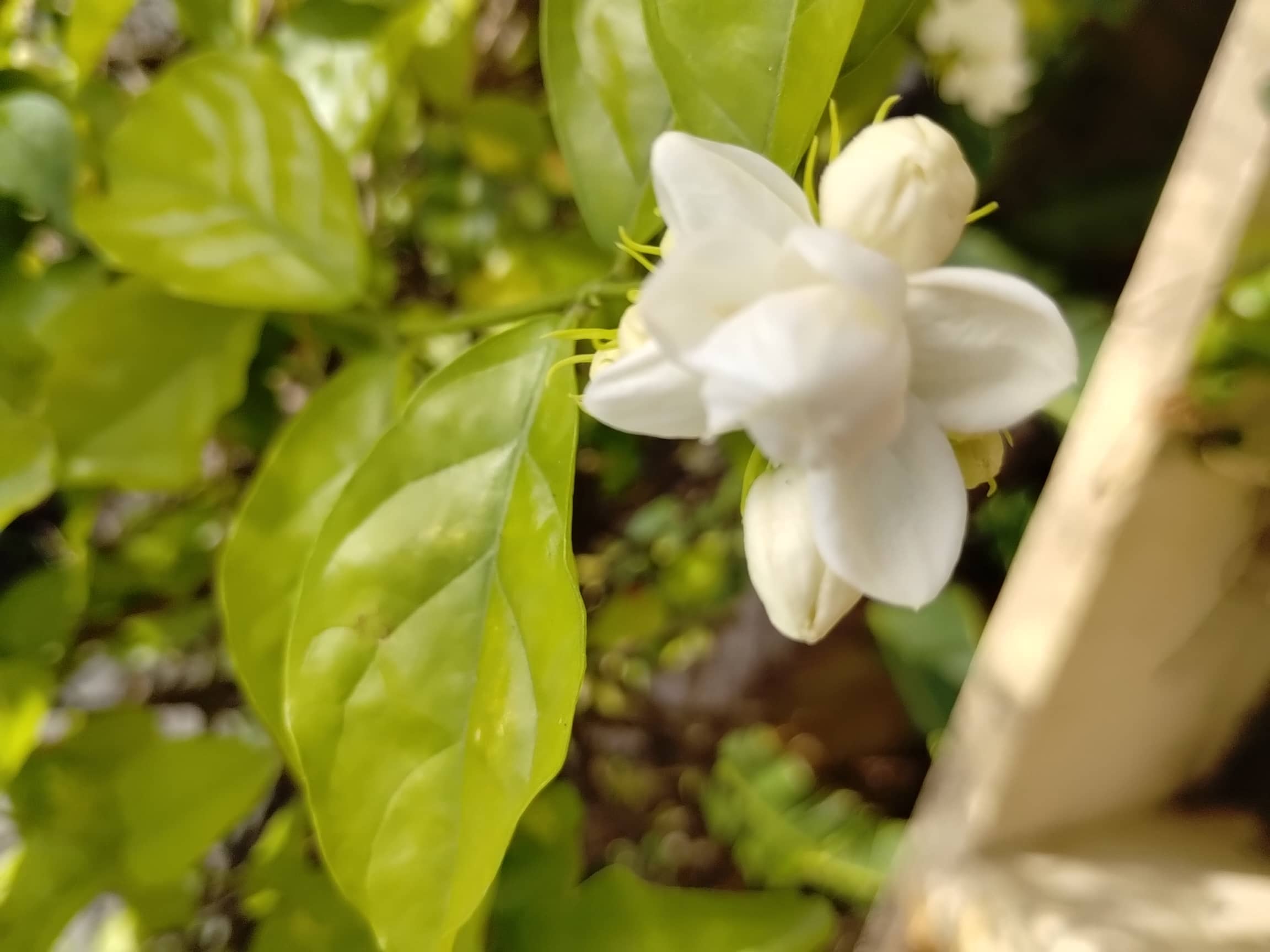
Arabian jasmine
Jasminum sambac
The Arabian Jasmine, botanically named Jasminum sambac and belonging to the Oleaceae (olive) family, is an exceptionally celebrated evergreen climbing shrub. Native to the warm, tropical valleys and humid plains of the Indian subcontinent and Southeast Asia, this legendary plant has been cultivat...
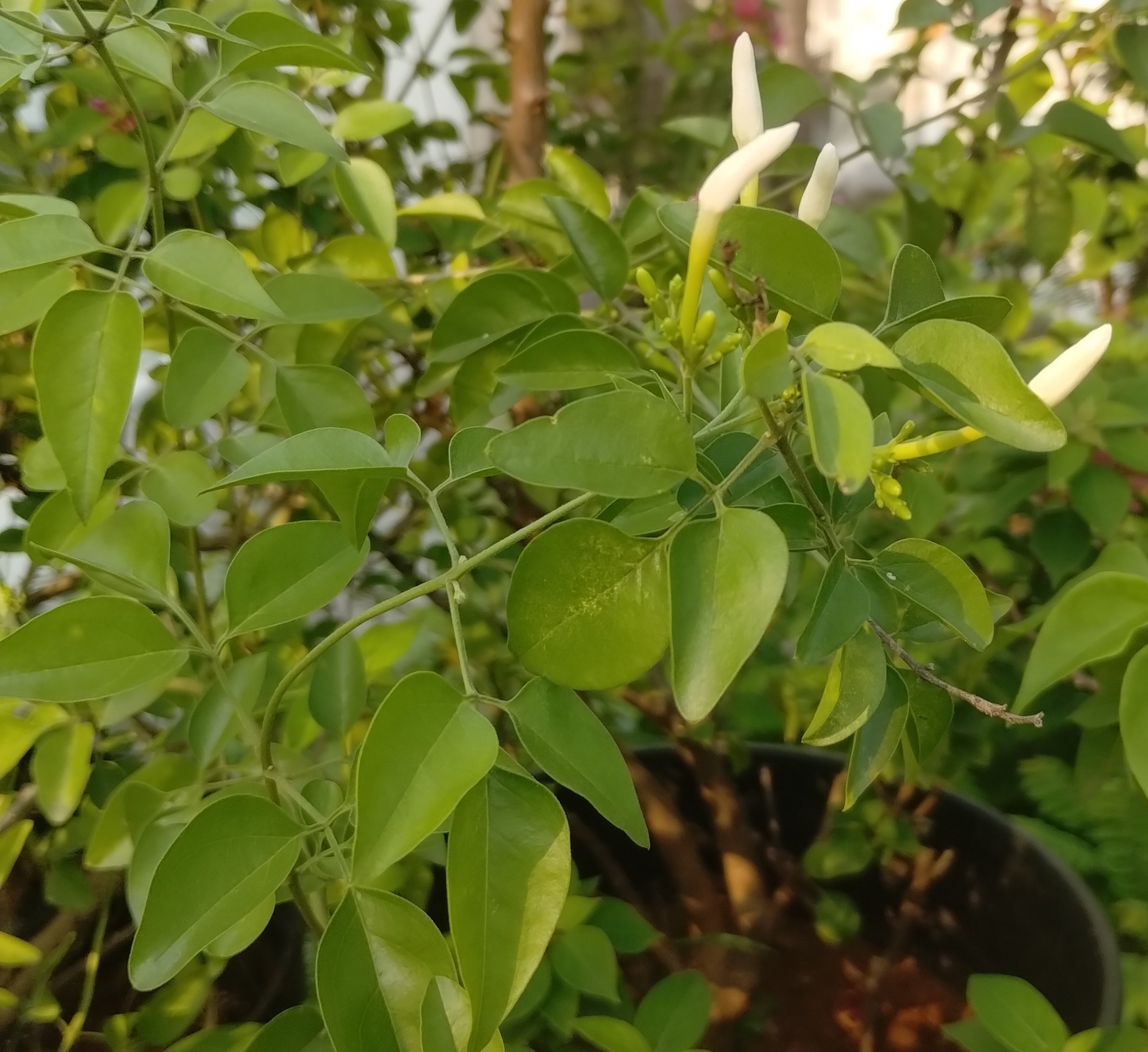
River Jasmine (Fluminense)
Jasminum fluminense
Jasminum fluminense, commonly known as the River Jasmine or Brazilian Jasmine—and widely known across South Asia as Nitya Malli or Nithya Malligai (meaning 'ever-blooming jasmine')—is a vigorous and aromatic evergreen climber that embodies the lush, tropical essence of South America. Native to th...
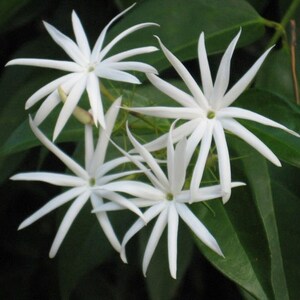
AngelWing Jasmine (Star Jasmine)
Jasminum laurifolium, Jasminum nitidum
The Angelwing Jasmine, botanically classified as Jasminum nitidum (and often associated with Jasminum laurifolium), is an exceptionally beautiful and intensely fragrant evergreen sprawling shrub. Native to the warm, tropical lowlands, coastal woodlands, and river valleys of the Indian Subcontinen...
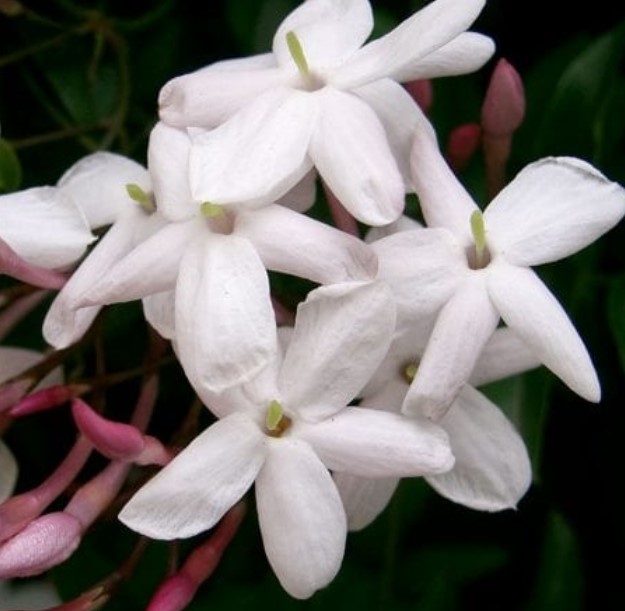
Spanish Jasmine (Royal Jasmine)
Jasminum grandiflorum
Spanish Jasmine, botanically classified as Jasminum grandiflorum and widely known as Royal Jasmine, Catalan Jasmine, or Scented Jasmine, is an exceptionally fragrant semi-evergreen woody vine belonging to the Oleaceae (olive) family. Believed to have originated in the high valleys of the Himalaya...