
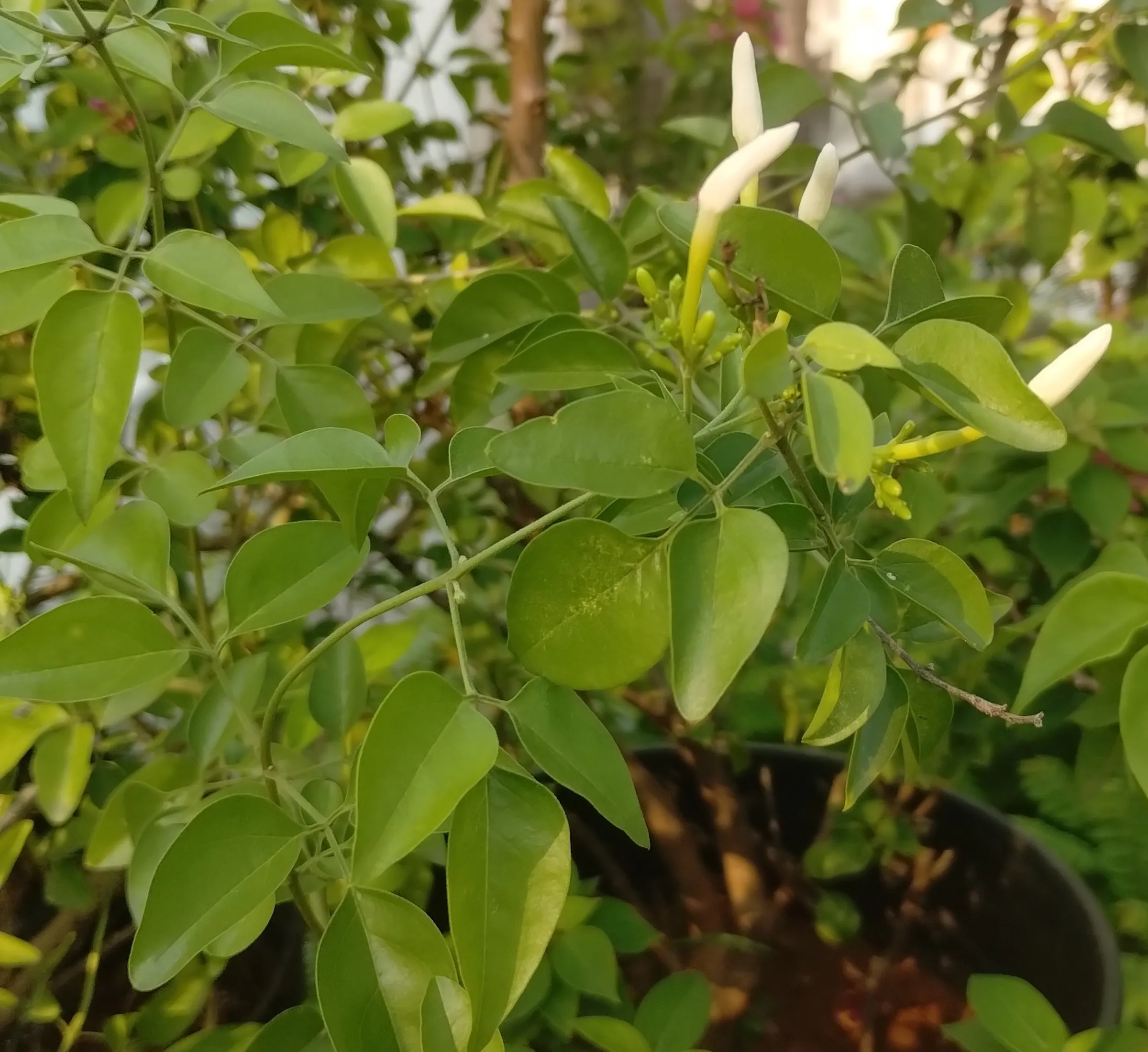
River Jasmine (Fluminense)
Jasminum fluminense
How to Identify River Jasmine (Fluminense)
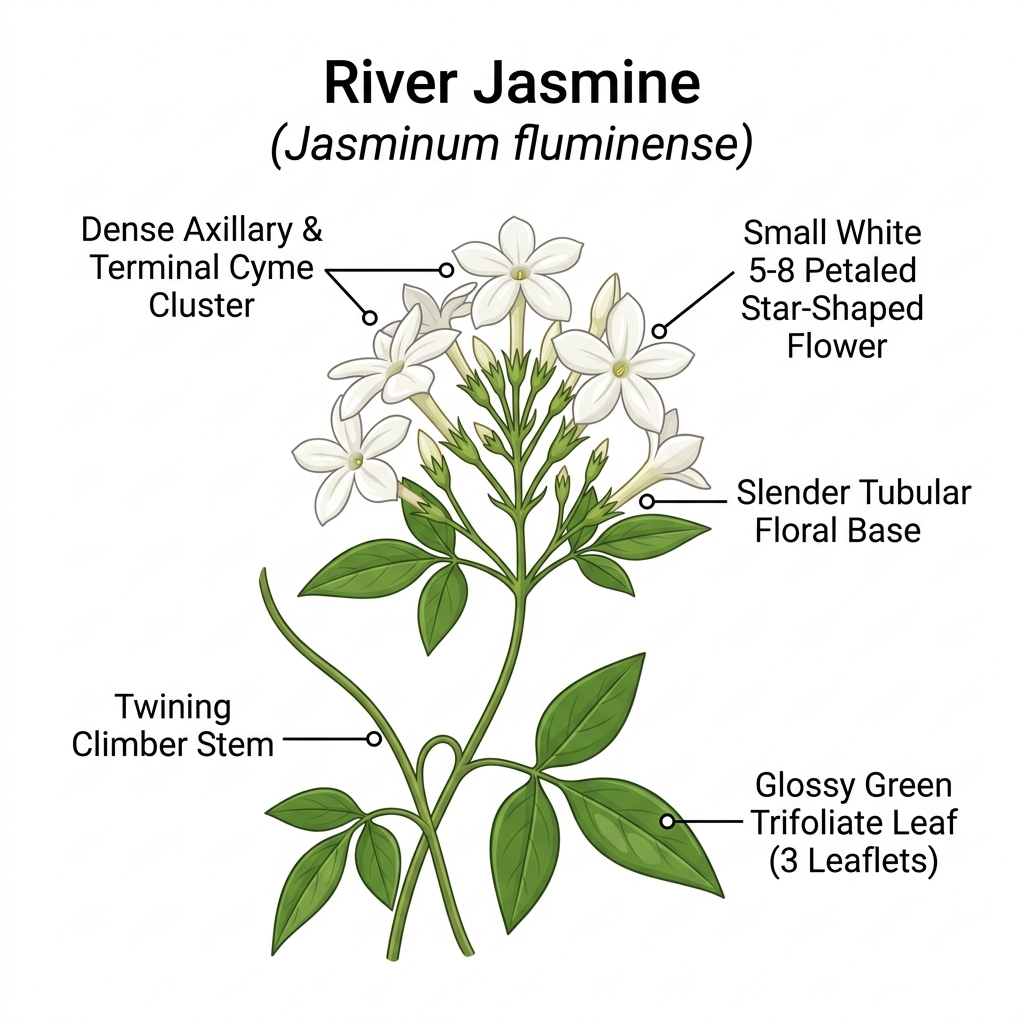
NON-TOXIC. 100% safe for cats, dogs, and horses, making them a worry-free choice for arbors and garden fences.
A detailed guide to identifying River Jasmine (Jasminum fluminense) by key botanical features:
- Star-Shaped White Flowers: Crystalline white blossoms measuring 0.5–0.75 inches across with 5 to 8 narrow, spreading petals.
- Intense Evening Fragrance: Sweet, intoxicating perfume that peaks significantly after sunset to attract nocturnal hawkmoths.
- Trifoliate Glossy Foliage: Deep green leaves divided into 3 distinct leaflets (trifoliate), distinguishing it from single-leaved jasmines.
- Twining Vigorous Vine: Fast-growing scrambling stems capable of climbing up to 20 feet on arbors or spreading as a dense ground cover.
Types & Sub-types of Jasmine Vines
Jasminum species are categorized into distinct groups based on foliage structure, growth habit, and geographic origin:
- By Leaf Arrangement & Morphology:
- Trifoliate Jasmines (Jasminum fluminense): Leaves divided into 3 distinct leaflets growing along flexible twining stems.
- Simple-Leaved Jasmines (Jasminum sambac / Arabian Jasmine): Oval, unlobed single leaves with prominent veins.
- Pinnate-Leaved Jasmines (Jasminum officinale / Common Jasmine): Compound leaves featuring 5–9 small pinnate leaflets.
- By Flower Form & Bloom Habit:
- Single-Petaled Star Varieties: Simple star-shaped flowers with open tubular bases optimized for moth proboscises.
- Double-Petaled Rosette Varieties: Cultivars like 'Grand Duke of Tuscany' featuring dense, rose-like double blooms.
- By Growth Habit & Use:
- Climbing / Scrambling Vines: Vigorous twiners that require vertical support structures or trellises.
- Shrubby / Bush Jasmines: Compact, arching shrubs suitable for low garden hedges or container pots.
Care & Growing Guide
River Jasmine Care & Growing Guide:
- Light: Full direct sun to partial shade (USDA Zones 9–11) for maximum bloom production.
- Soil: Rich, moist, well-draining soil (pH 6.0–7.0).
- Watering: Water regularly during active summer growth; keep soil evenly moist.
- Pruning: Prune heavily after main bloom cycle to manage vigorous growth and encourage new flowering wood.
Seasonal Blooming & Hardiness
Seasonal Blooming Calendar:
- Peak Bloom: Year-round / Continuous blooming in warm frost-free tropical climates (USDA Zones 10–11); Late Spring through Late Autumn (May through November) in subtropical zones.
- Planting Time: Best planted in early spring to early summer for rapid vine establishment.
Bloom Timeline
About River Jasmine (Fluminense)
Jasminum fluminense, commonly known as the River Jasmine or Brazilian Jasmine—and widely known across South Asia as Nitya Malli or Nithya Malligai (meaning 'ever-blooming jasmine')—is a vigorous and aromatic evergreen climber that embodies the lush, tropical essence of South America. Native to the riverbanks and moist forest edges of southeastern Brazil—particularly the state of Rio de Janeiro (from which the name fluminense, meaning 'of the river,' is derived)—this vine is celebrated for its unstoppable year-round growth and the intoxicating perfume of its blossoms. It belongs to the Oleaceae, or Olive family, a group renowned for producing some of the world's most fragrant and culturally significant flowering plants.
The beauty of the River Jasmine lies in its profuse displays of delicate, star-shaped flowers. Each bloom is relatively small, measuring about half an inch to three-quarters of an inch across, with 5 to 8 narrow, crystalline white petals that radiate from a slender floral tube. These flowers are born in dense, showy clusters (cymes) at the tips of the branches and in the leaf axils. While they are beautiful by day, they are true creatures of the night; their fragrance intensifies significantly after sunset to attract nocturnal pollinators, especially sphinx moths, who are drawn to the pale color and sweet scent.
As a climber, Jasminum fluminense is exceptionally vigorous, capable of scaling trellises, arbors, and even tall trees with its twining, scrambling stems. If left without vertical support, it will readily transform into a dense, sprawling ground cover, creating a thick mat of glossy, deep green foliage. The leaves are trifoliate, meaning they are divided into three distinct leaflets, which gives the vine an airy, light-filtered texture. This rapid growth habit makes it an excellent choice for quickly covering unsightly fences or providing privacy screens in tropical and subtropical gardens.
In the garden, River Jasmine is prized for its resilience and adaptability. It thrives in full sun, which encourages the most prolific blooming, but is remarkably shade-tolerant, making it a versatile option for various landscape niches. It prefers moist, well-draining soil and regular watering, especially during the peak of summer, but can tolerate short periods of drought once established. However, gardeners should be aware of its vigorous nature; in some regions, such as parts of Florida, Australia, and Hawaii, it is considered an invasive species because it can escape cultivation and smother native vegetation.
Despite its aggressive tendencies in certain climates, the River Jasmine remains a favorite for its unparalleled fragrance and ease of care. It is a non-toxic species, making it a safe choice for households with pets and children. It responds well to heavy pruning, which is often necessary to keep its enthusiastic growth in check and to encourage a fresh flush of fragrant blooms. Whether you are seeking a fragrant nocturnal garden highlight or a fast-growing screen, the River Jasmine offers a timeless combination of sensory delight and functional utility.
From a safety standpoint, families with dogs and cats can enjoy River Jasmine with complete peace of mind. Jasminum fluminense is classified as completely NON-TOXIC to domestic animals by leading veterinary toxicology databases. This makes it an incredibly safe alternative to toxic night-blooming ornamentals like Star Jasmine (which has mild skin irritants) or Jessamine species. Pets can safely run beneath the trellises or sniff fallen white blossoms without any toxic risk. To design a completely pet-safe fragrant backyard layout, please refer to our Pet Guard catalog.
River Jasmine is occasionally confused with other white star-shaped vines, such as Arabian Jasmine (Jasminum sambac) or Confederate Star Jasmine (Trachelospermum jasminoides). It is easily distinguished from Arabian Jasmine by its trifoliate leaves (Sambac has simple, unlobed leaves) and from Confederate Star Jasmine because true Jasmine has exactly 2 stamens and a superior ovary. It makes a beautiful vertical display; we suggest pairing it with other fragrant favorites like Arabian Jasmine or climbing Trumpet Vine. For more climbing options, browse our Flower Identifier.
Floral Formula & Features
Radially symmetrical, bisexual, 4-5 fused sepals forming small calyx, 5-7 fused petals forming tubular base with spreading lobes, 2 stamens, 2 fused carpels with superior ovary typical of Oleaceae
- Scientific Name & Classification: Jasminum fluminense (Oleaceae). Known as River Jasmine, Brazilian Jasmine, and Nitya Malli / Nithya Malligai.
- Identification Markers: Features small, white, star-shaped flowers (5-8 petals) in dense clusters. Leaves are trifoliate and glossy green. The vine has a twining habit and can grow up to 20 feet.
- Floral Formula (⊕ ⚥ K(4-5) [C(5-7) A2] G(2)): Radially symmetrical, bisexual flowers with a small fused calyx, a tubular corolla with spreading lobes, 2 stamens, and a 2-carpellate superior ovary.
- Growing Requirements: Thrives in full sun to partial shade (USDA Zones 9-11). Prefers moist, well-draining soil. Requires regular pruning to manage its vigorous growth and prevent invasiveness.
- Cultural Significance: Symbolizes purity, night-time beauty, and continuous blooming. Highly valued in perfumery and as an ornamental for its intense evening fragrance.
- Safety & Toxicity: NON-TOXIC. 100% safe for cats, dogs, and horses, making them a worry-free choice for arbors and garden fences.
- Common Look-alikes: Confused with Arabian Jasmine and Star Jasmine, but easily distinguished by its trifoliate leaves and specific riverine Brazilian origin.
- Internal Links: Excellent vertical companion planted alongside Arabian Jasmine or vigorous Trumpet Vine; browse more fragrant options in our Flower Identifier.
Names in Different Languages
Botanical Classification: River Jasmine (Fluminense) belongs to the Oleaceae family. Learn how to identify its floral symmetry, stamen arrangement, and structural formulas in our Botanical Family Classification Guide.
Toxicity & Safety
Frequently Asked Questions
Jasminum fluminense (Oleaceae). Known as River Jasmine, Brazilian Jasmine, and Nitya Malli / Nithya Malligai.
NON-TOXIC. 100% safe for cats, dogs, and horses, making them a worry-free choice for arbors and garden fences.
What is Floral Formula?
A floral formula is a symbolic representation of a flower's structure using letters, numbers, and special symbols. It provides a concise way to describe the arrangement and number of floral parts.
This formula describes the flower's symmetry, sepals, petals, stamens, and carpels in a standardized format.
Formula Sequence
- Bract: Br or Ebr
- Bracteole: Brl or Ebrl
- Symmetry: % (Radial) or ⊕ (Bilateral)
- Sex: ♀ (Female), ♂ (Male), or ⚥ (Bisexual)
- Calyx/Sepal: K<number> (Free or Fused)
- Corolla/Petal: C<number> (Free or Fused)
- Androecium: A<number> (Free or Fused)
- Gynaecium: G<number> (Superior or Inferior Ovary)
Symbol Meanings
- Numbers: Indicate quantity of parts
- Parentheses (): Parts are fused together
- Plus (+): Parts in different whorls
- Underline: Superior ovary position
- Overline: Inferior ovary position
- ∞: Numerous parts (too many to count)
Understanding floral formulas helps botanists quickly identify and classify flowers based on their structural characteristics.
Similar Flowers
Discover flowers that share botanical characteristics
Same Genus
4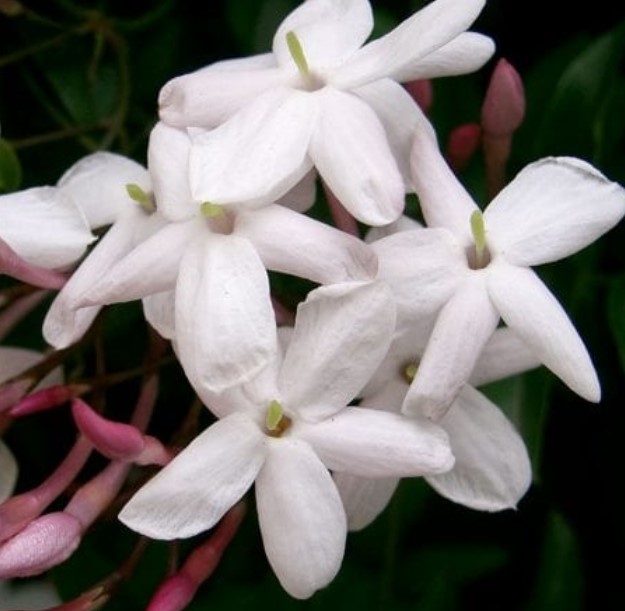
Spanish Jasmine (Royal Jasmine)
Jasminum grandiflorum
Spanish Jasmine, botanically classified as Jasminum grandiflorum and widely known as Royal Jasmine, Catalan Jasmine, or Scented Jasmine, is an exceptionally fragrant semi-evergreen woody vine belonging to the Oleaceae (olive) family. Believed to have originated in the high valleys of the Himalaya...
AngelWing Jasmine (Star Jasmine)
Jasminum laurifolium, Jasminum nitidum
The Angelwing Jasmine, botanically classified as Jasminum nitidum (and often associated with Jasminum laurifolium), is an exceptionally beautiful and intensely fragrant evergreen sprawling shrub. Native to the warm, tropical lowlands, coastal woodlands, and river valleys of the Indian Subcontinen...
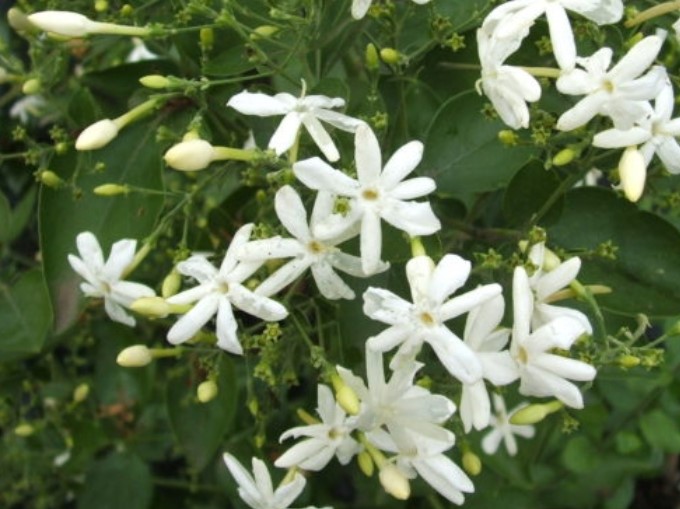
Juhi Jasmine
Jasminum auriculatum
Jasminum auriculatum, affectionately known as Juhi Jasmine or Mulla, is a highly aromatic, scrambling evergreen shrub or woody vine belonging to the Oleaceae (Olive) family. Native primarily to the Indian subcontinent and parts of Southeast Asia, it is globally celebrated not for the sheer size o...
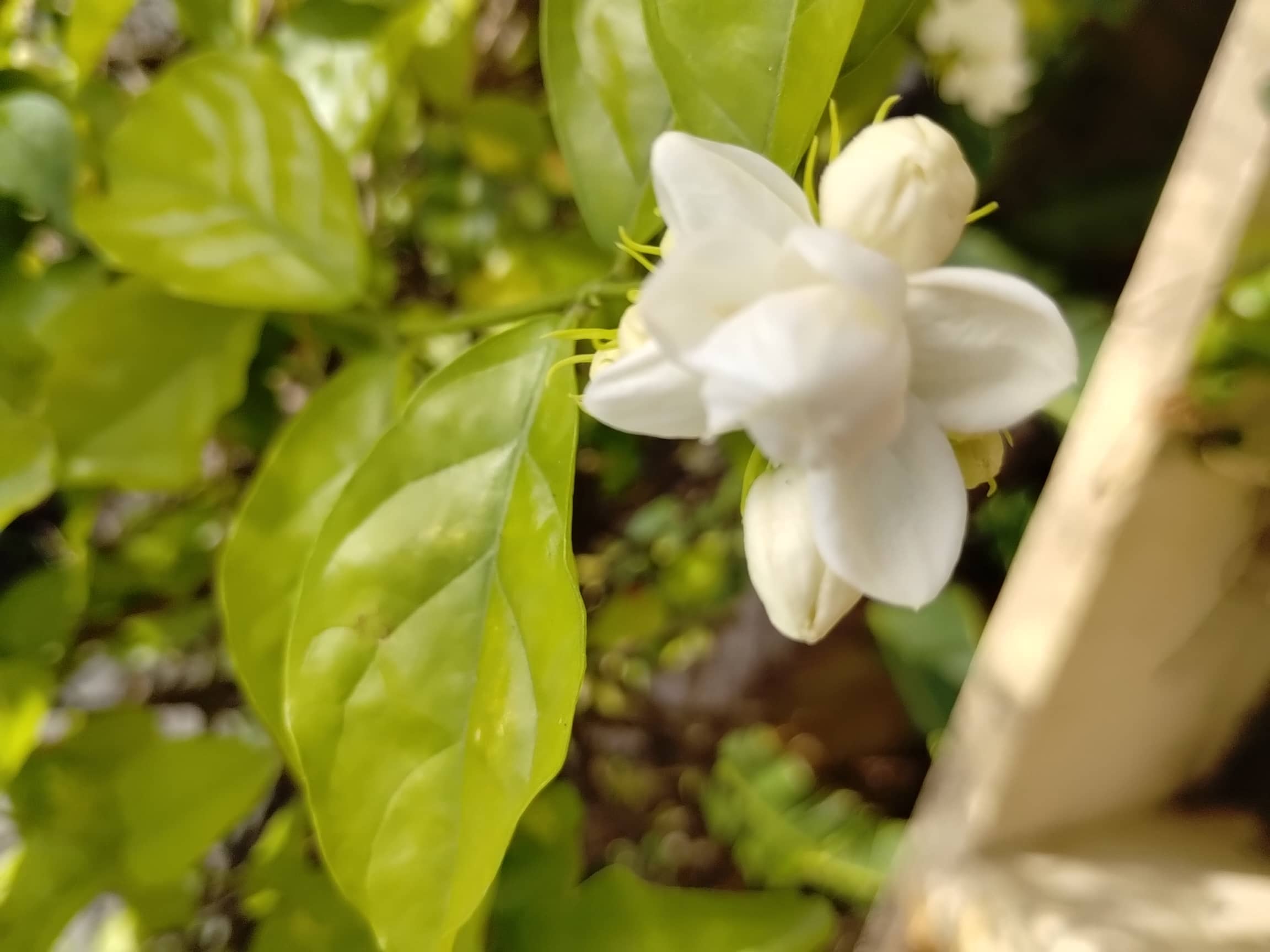
Arabian jasmine
Jasminum sambac
The Arabian Jasmine, botanically named Jasminum sambac and belonging to the Oleaceae (olive) family, is an exceptionally celebrated evergreen climbing shrub. Native to the warm, tropical valleys and humid plains of the Indian subcontinent and Southeast Asia, this legendary plant has been cultivat...
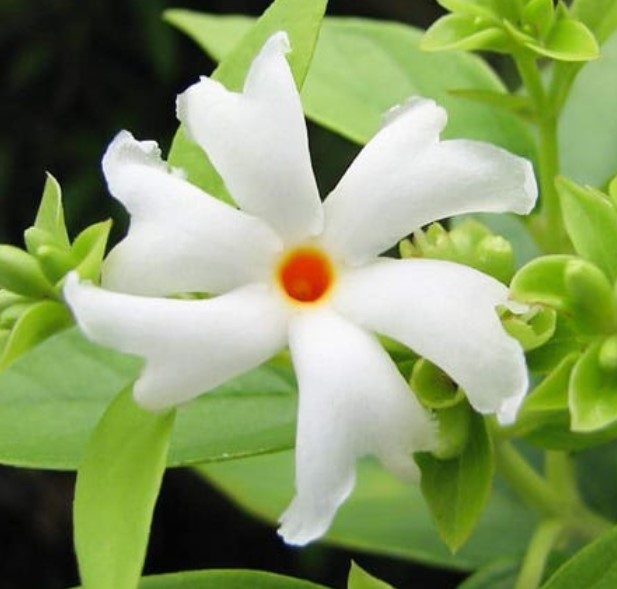
Similar Characteristics
4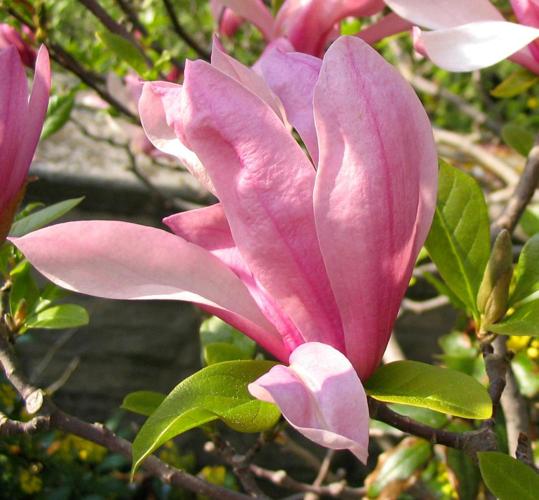
Magnolia
Magnolia
The Magnolia genus, the namesake of the **Magnoliaceae** family, represents one of the most ancient and majestic lineages of flowering plants on Earth. Fossil records indicate that Magnolias have existed for over 95 million years, flourishing long before the evolution of bees. This prehistoric or...
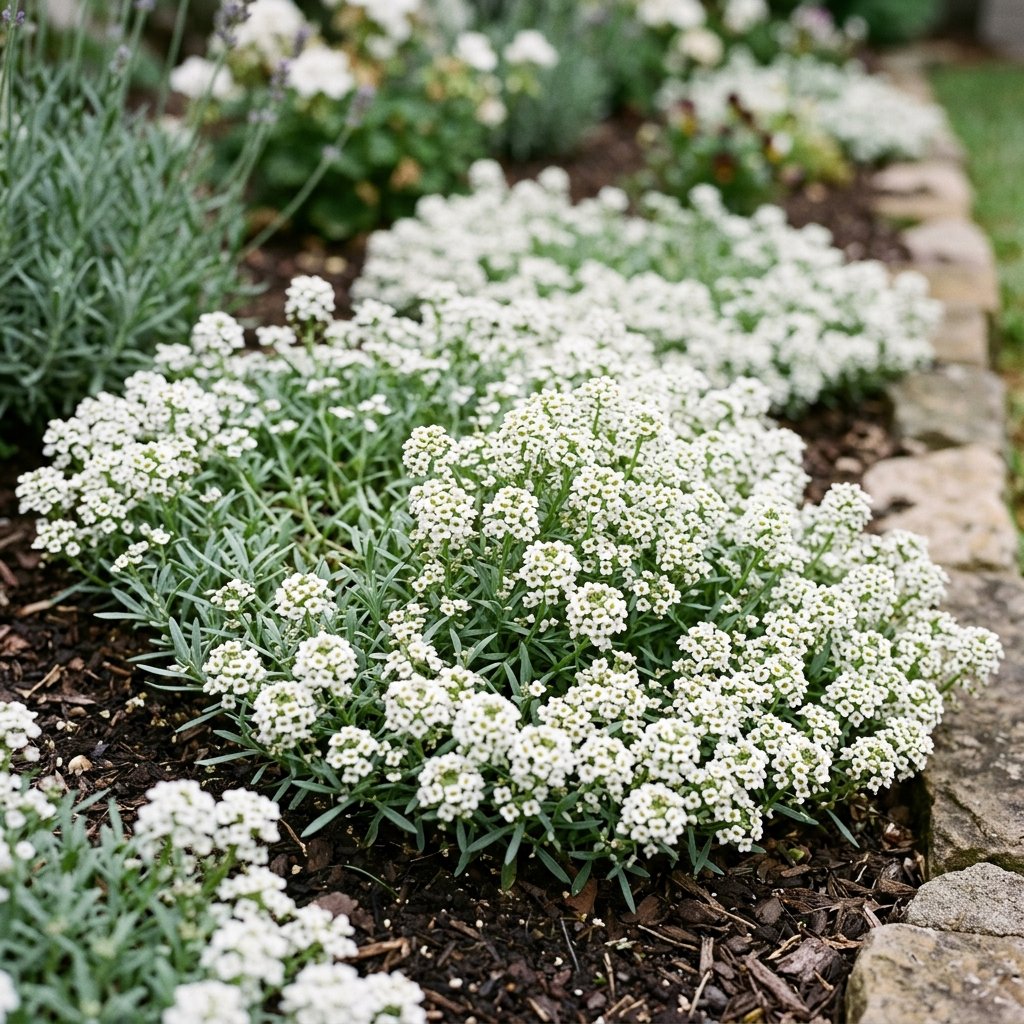
Sweet Alyssum
Lobularia maritima
Sweet Alyssum, scientifically known as Lobularia maritima and belonging to the mustard family Brassicaceae, is a highly popular, low-growing herbaceous annual or short-lived perennial. Native to the Mediterranean region, Macaronesia, and the Canary Islands, Sweet Alyssum is cherished by gardeners...
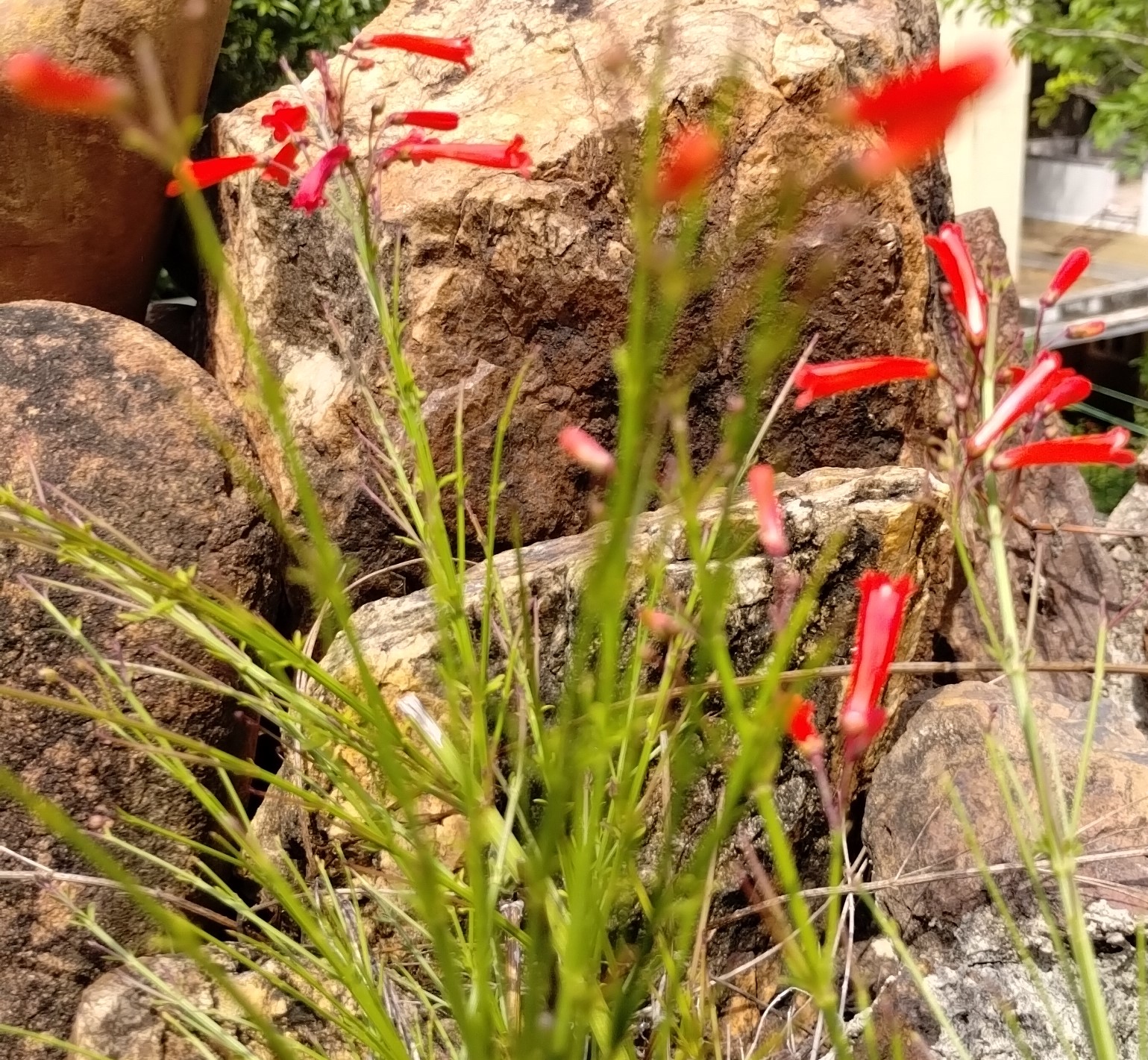
Russelia (Coral Fountain)
Russelia equisetiformis
Russelia, botanically designated as Russelia equisetiformis and popularly celebrated as the Coral Fountain or Firecracker Plant, is a spectacular, weeping tropical subshrub belonging to the Plantaginaceae (plantain) family. Native to the warm, sun-drenched woodlands and dry limestone rocky cliffs...
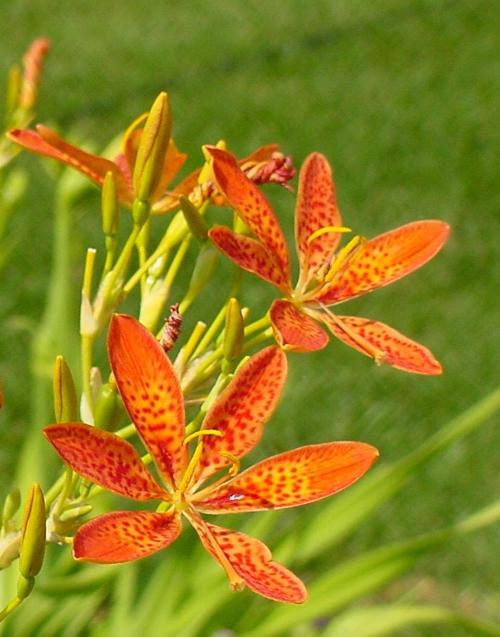
Leopard Lily
Iris domestica (syn. Belamcanda chinensis)
The Leopard Lily, botanically designated as *Iris domestica* (previously classified as *Belamcanda chinensis*, and commonly known as the Blackberry Lily or Leopard Flower), is an exceptionally distinct, highly ornamental perennial. Belonging to the family Iridaceae (the iris family, tribe Irideae...