
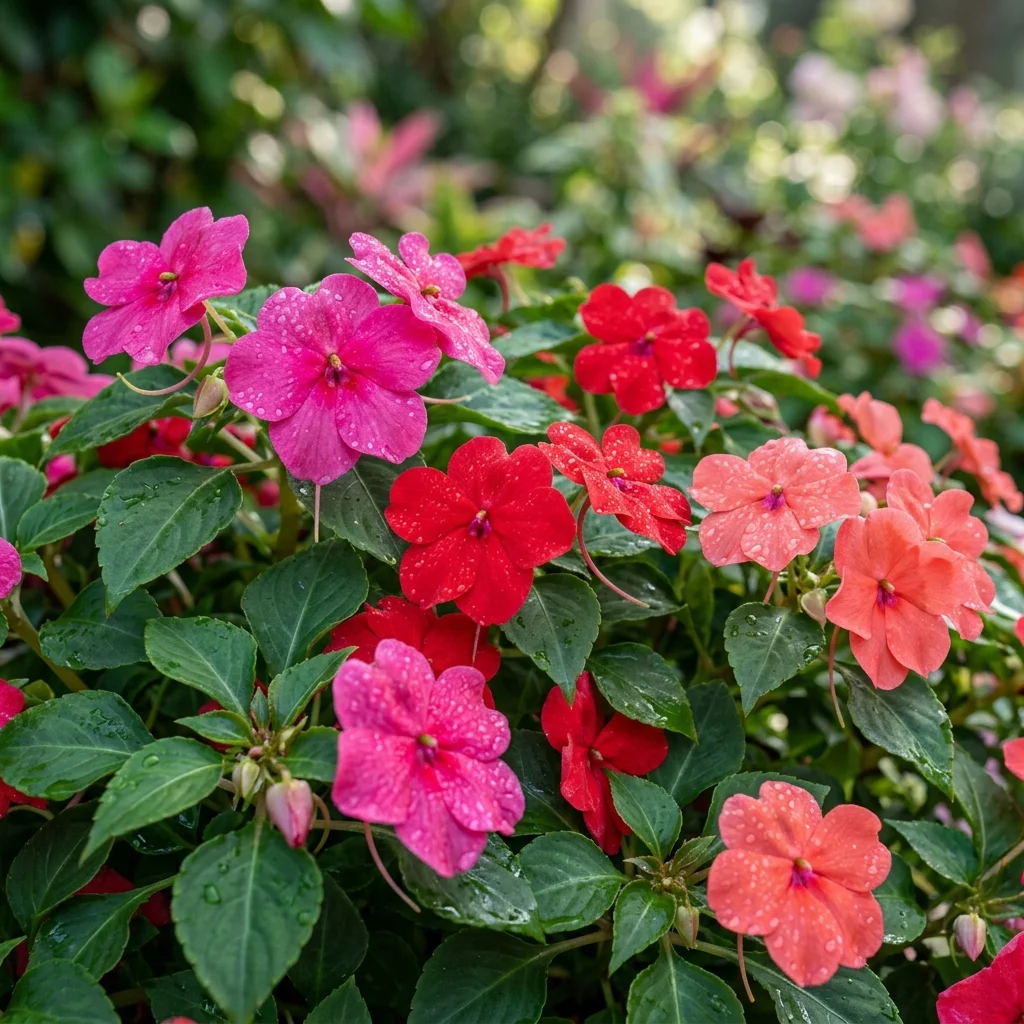
Impatiens Walleriana
Impatiens walleriana
How to Identify Impatiens Walleriana
NON-TOXIC. 100% pet-safe for cats, dogs, and horses. Certified safe by the ASPCA, providing colorful peace of mind for shade beds, patios, and window boxes.
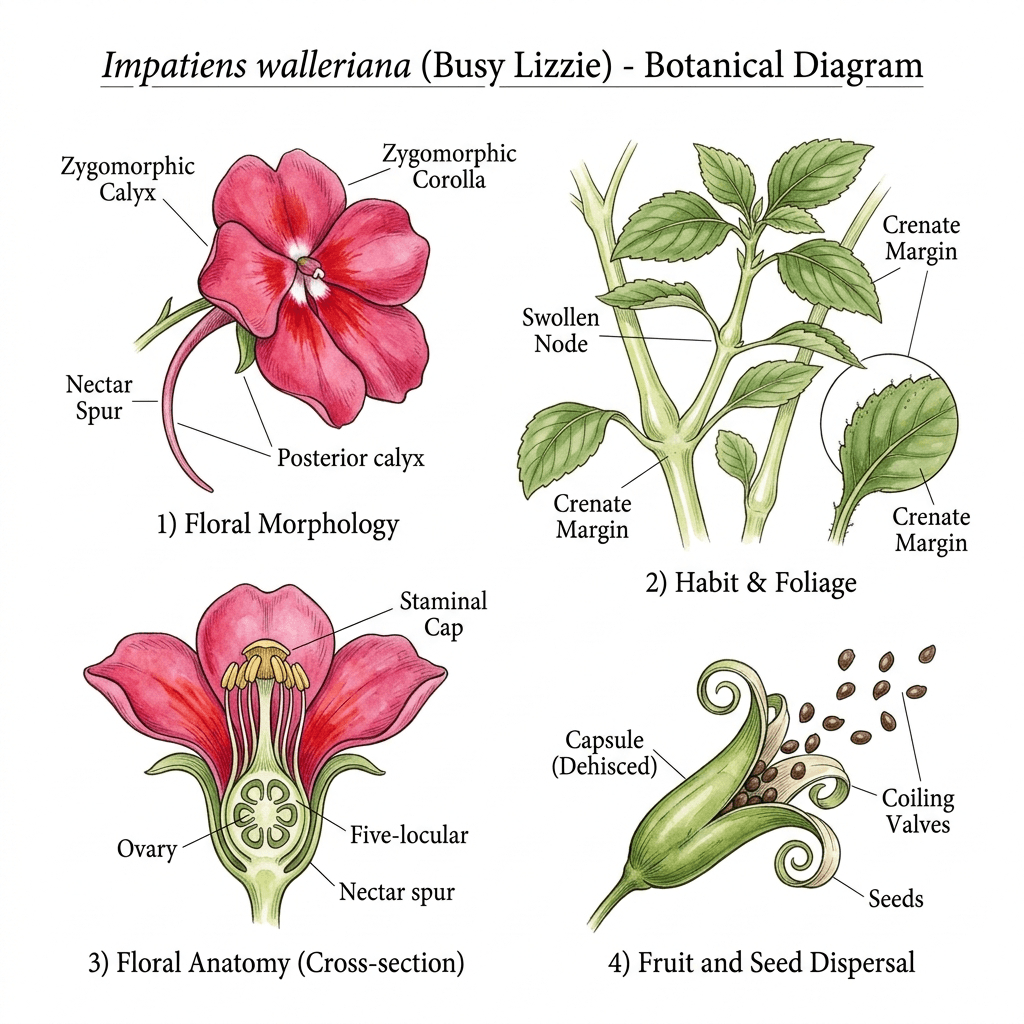
A detailed botanical guide to identifying Impatiens Walleriana (Busy Lizzie / Sultana) by its key structural characteristics:
- Five-Lobed Zygomorphic Flowers: Flat, open-faced blossoms (1 to 2 inches wide) with 5 vibrant petals; the large upper petal is notched, and the lateral petals are fused in pairs to create a broad landing surface.
- Slender Posterior Nectar Spur: A prominent, curved green-to-pinkish tubular spur (1 to 1.5 inches long) projecting from behind the calyx, containing sweet nectar for long-tongued pollinators.
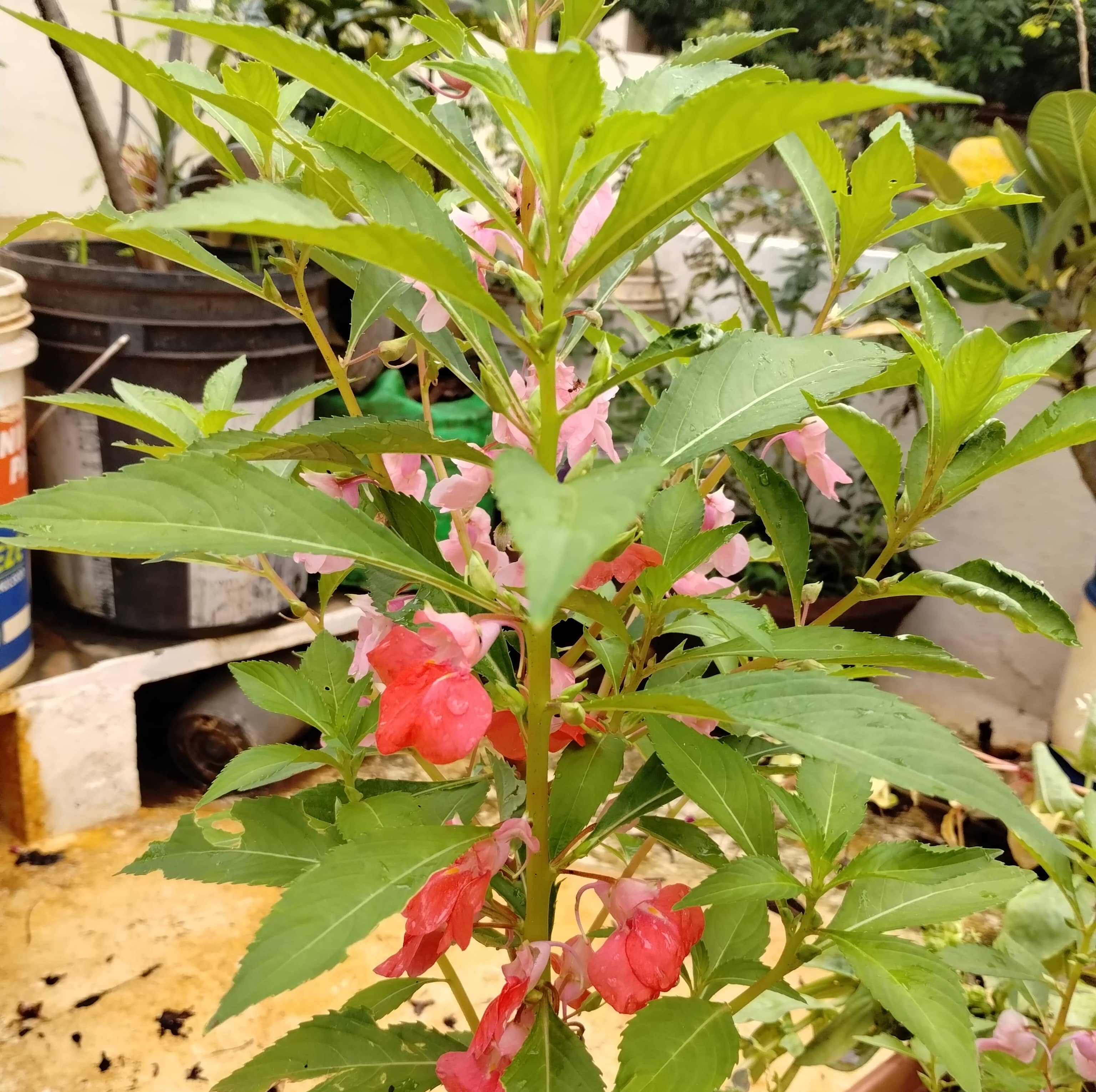
- Translucent Succulent Stems: Brittle, pale green to reddish watery stems with swollen, jointed nodes that break cleanly with a crisp snap.
- Crenate Aromatic Foliage: Alternate, ovate-to-elliptic leaves with rounded crenations along the margins, each dip tipped with a tiny glandular hair or bristle.
- Explosively Dehiscent Capsule: Ribbed, spindle-shaped green seed capsules that abruptly rupture and curl into spiral ribbons when touched, firing ripe seeds up to 15 feet.
Botanical Forms & Regional Variations
- By Petal Form & Color Scheme:
- Single Flowered Series: Flat open-faced blooms in solid shades of scarlet, rose-pink, salmon, violet, and pure white with prominent central eyes.
- Double Flowered (Rose-Bud) Cultivars: Multi-layered, ruffled blossoms that closely resemble miniature roses or camellias.
- By Foliage Pigmentation:
- Emerald Green Foliage: Bright green leaf blades providing high contrast against neon-colored petals.
- Bronze-Burgundy Foliage: Deep chocolate and bronze-tinted leaves that offer rich background coloration in shady woodland garden beds.
Care & Growing Guide
Impatiens Walleriana (Busy Lizzie) Care & Growing Guide:
- Light: Partial shade to filtered dappled shade (2 to 4 hours of gentle morning sun is ideal). Protect from intense midday and afternoon direct sunlight, which scorches petals and foliage.
- Soil: Rich, loamy, humus-rich soil amended with compost. Requires consistent moisture retention combined with sharp drainage (pH 6.0 to 6.8).
- Watering: Water regularly to maintain evenly moist soil. Never allow the root zone to dry out completely, as succulent stems will collapse; avoid waterlogged conditions to prevent root rot.
- Propagation & Care: Extremely easy to propagate from softwood stem cuttings rooted in water or moist potting mix. Pinch young stem tips in early spring to stimulate bushy, compact branching.
Seasonal Blooming & Hardiness
Seasonal Blooming Calendar (Warm Temperate & Subtropical Zones):
- Peak Bloom: Late spring through entire summer and mid-autumn (May through October in temperate zones; year-round in frost-free tropical zones 10-11).
- Sowing & Planting: Sow seeds indoors 8 to 10 weeks before the last spring frost date; transplant outside once nighttime temperatures consistently exceed 50°F (10°C).
- Life Cycle: Tender perennial grown widely as a vigorous, heavy-blooming summer shade annual.
Bloom Timeline
About Impatiens Walleriana
Impatiens Walleriana, botanically classified as Impatiens walleriana and universally celebrated across the gardening world as Busy Lizzie, Sultana, or Patient Lucy, is an exceptionally popular, prolific, and shade-tolerant herbaceous perennial commonly cultivated as an annual. Belonging to the touch-me-not family Balsaminaceae, this cheerful, ever-blooming botanical is native to eastern Africa, spanning the moist mountain forests, riverbanks, and shaded coastal margins of Kenya, Tanzania, and Mozambique.
The plant typically grows 6 to 24 inches (15 to 60 cm) tall and forms a lush, mounding canopy spreading 1 to 2 feet wide. It is characterized by thick, succulent, and semi-translucent pale green or reddish stems that have swollen nodes and break with a crisp snap when bent. Its alternate, broad ovate-to-elliptic leaves measure 1.5 to 4 inches long, featuring softly crenate margins with tiny glandular bristles nestled between the rounded serrations. The glossy leaf surfaces range from vibrant medium emerald green to deep bronze-tinted green.
Impatiens Walleriana is globally renowned for its nonstop floral display from late spring through the first autumn frost. The flat, five-lobed zygomorphic blossoms measure 1 to 2 inches across and emerge in a dazzling spectrum of colors, including vibrant scarlet, carmine-pink, salmon, coral, pure white, lavender, and bi-color bicolors with contrasting central eyes. A defining botanical feature is the elongated, slender, curved nectar spur extending 1 to 1.5 inches backwards from the modified sepal behind the flower.
The zygomorphic reproductive morphology of Impatiens walleriana is represented by the family-specific floral formula ↑ K3 C5 A(5) G(5). This formula denotes that the flower is bilaterally symmetrical (zygomorphic) and bisexual. The calyx consists of 3 distinct sepals, with the two upper sepals small and greenish, while the large lower sepal is brightly petaloid and drawn backward into a hollow, nectar-bearing spur. The corolla features 5 petals, where the lateral and lower petals are fused in pairs to create a broad landing surface. The 5 stamens have filaments fused into a protective hood or cap covering the superior 5-locular ovary.
A legendary marvel of Impatiens walleriana is its rapid mechanical seed dispersal mechanism, which earned the genus its Latin name Impatiens (meaning 'impatient'). When the plump, ribbed, cylindrical green seed capsules reach full maturity, the slightest physical touch or brush of wind triggers an explosive ballistic release. The pod walls suddenly split and coil inward like tiny elastic springs, catapulting ripe dark brown seeds up to 10 to 15 feet away from the parent plant.
For pet owners and veterinarians, Impatiens Walleriana represents an exceptionally safe, worry-free, and pet-friendly ornamental plant. Impatiens walleriana is certified completely NON-TOXIC to cats, dogs, and horses by major veterinary toxicological authorities, including the ASPCA. It contains no hazardous cardioactive glycosides, neurotoxins, or insoluble calcium oxalates. To discover more safe shade ornamentals, visit our general Pet Guard catalog.
Impatiens Walleriana is occasionally confused with New Guinea Impatiens (Impatiens hawkeri) or its close relative Balsam (Impatiens balsamina). It is easily distinguished by its soft, flatter, rounded flower heads and succulent translucent stems, whereas New Guinea types have thicker, coarser, dark bronze leaves with larger single blooms, and Garden Balsam carries cup-shaped blooms nestled directly along upright leafy stems. In shady borders, it pairs splendidly with Begonia, Cyclamen, Columbine, and Petunia. To discover more shade favorites, browse our Flower Identifier.
For additional botanical identification profiles and comparative gardening studies, explore our detailed guides on Balsam (Rose Balsam), Begonia, and Petunia.
Floral Formula & Features
Zygomorphic (bilaterally symmetrical), bisexual, calyx of 3 sepals with lower sepal modified into a nectar spur, corolla of 5 petals with lateral petals fused in pairs, 5 stamens with anthers fused into a cap over the ovary, 5-locular superior ovary with parietal/axile placentation, explosive dehiscence capsule fruit
- Scientific Name & Classification: Impatiens walleriana (Balsaminaceae). Famed worldwide as Busy Lizzie, Sultana, Patient Lucy, and Touch-me-not.
- Identification Markers: Translucent succulent stems with swollen nodes, crenate ovate leaves, flat 5-lobed flowers with long curved posterior nectar spurs, and explosive coiling seed pods.
- Floral Formula (↑ K3 C5 A(5) G(5)): Zygomorphic, bisexual flowers with 3 sepals (lower sepal spurred), 5 petals (lateral petals fused in pairs), 5 stamens fused into an anther cap, and a 5-locular superior ovary.
- Growing Requirements: Partial shade to deep filtered shade (prefers 2 to 4 hours morning sun or dappled light); rich, moist, well-draining organic soil; consistent soil moisture without waterlogging (Zones 10-11 as perennial; annual elsewhere).
- Cultural Significance: Famed as 'Busy Lizzie' for its ceaseless flowering habit and 'Touch-me-not' for its explosively sensitive seed capsules that delight children and gardeners alike.
- Safety & Toxicity: NON-TOXIC. 100% pet-safe for cats, dogs, and horses. Certified safe by the ASPCA, providing colorful peace of mind for shade beds, patios, and window boxes.
- Common Look-alikes: Distinguished from New Guinea Impatiens by its softer, more branching habit and rounded petals, and from Garden Balsam by its terminal and axillary flat-faced sprays.
- Internal Links: Creates a vibrant, shaded tapestry when planted alongside Begonia, Cyclamen, Columbine, and Petunia; explore hundreds of species in our Flower Identifier.
Names in Different Languages
Toxicity & Safety
Frequently Asked Questions
What is Floral Formula?
A floral formula is a symbolic representation of a flower's structure using letters, numbers, and special symbols. It provides a concise way to describe the arrangement and number of floral parts.
This formula describes the flower's symmetry, sepals, petals, stamens, and carpels in a standardized format.
Formula Sequence
- Bract: Br or Ebr
- Bracteole: Brl or Ebrl
- Symmetry: % (Radial) or ⊕ (Bilateral)
- Sex: ♀ (Female), ♂ (Male), or ⚥ (Bisexual)
- Calyx/Sepal: K<number> (Free or Fused)
- Corolla/Petal: C<number> (Free or Fused)
- Androecium: A<number> (Free or Fused)
- Gynaecium: G<number> (Superior or Inferior Ovary)
Symbol Meanings
- Numbers: Indicate quantity of parts
- Parentheses (): Parts are fused together
- Plus (+): Parts in different whorls
- Underline: Superior ovary position
- Overline: Inferior ovary position
- ∞: Numerous parts (too many to count)
Understanding floral formulas helps botanists quickly identify and classify flowers based on their structural characteristics.
Similar Flowers
Discover flowers that share botanical characteristics
Similar Characteristics
4
Mallow
Malva sylvestris
The Mallow, botanically designated as Malva sylvestris and commonly known as Common Mallow, High Mallow, Tall Mallow, or Cheeseweed, is an exceptionally versatile, hardy, and resilient biennial to short-lived perennial herb. Belonging to the family Malvaceae (the mallow family), this ancient plan...
Primrose (Cowslip)
Primula veris
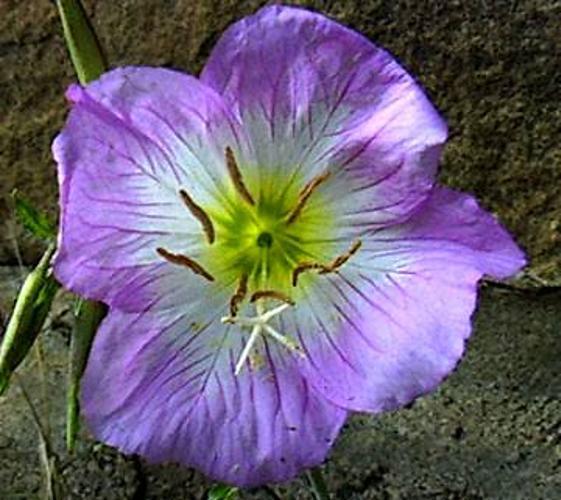
Cheerful spring wildflower with clusters of nodding yellow flowers on tall stems above rosettes of wrinkled leaves. One of first flowers to bloom in spring, earning name from Latin 'prima rosa' (first rose). Sweet honey scent attracts early bees. Used in herbal medicine for centuries. Popular in...
Hibiscus
Hibiscus rosa-sinensis
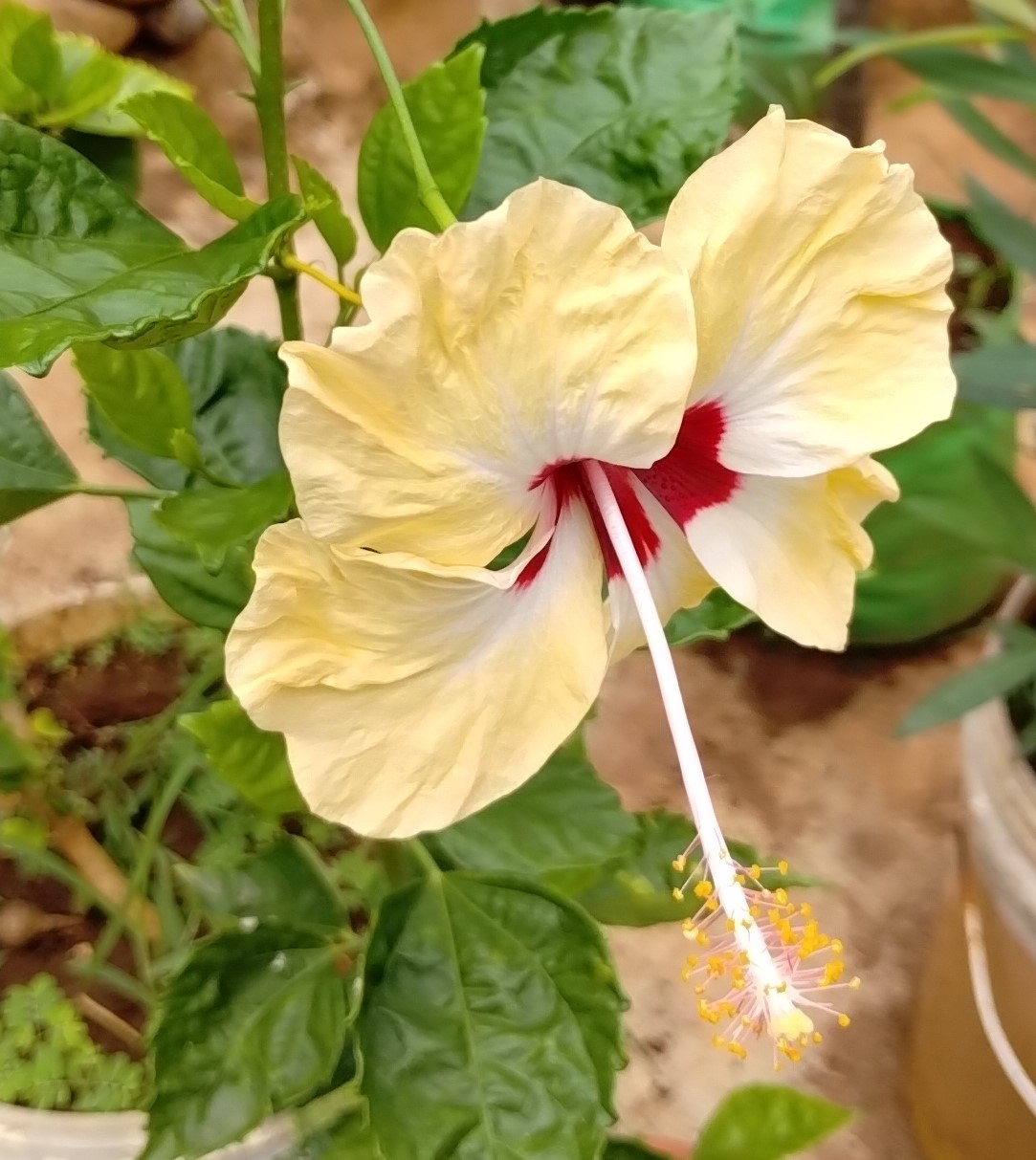
The Hibiscus, botanically classified as Hibiscus rosa-sinensis and popularly known as the Chinese Hibiscus, China Rose, or Shoe Flower, is a spectacular evergreen flowering shrub belonging to the Malvaceae (mallow) family. Believed to have originated in the warm, humid tropical regions of East As...
Mexican Petunia
Ruellia simplex
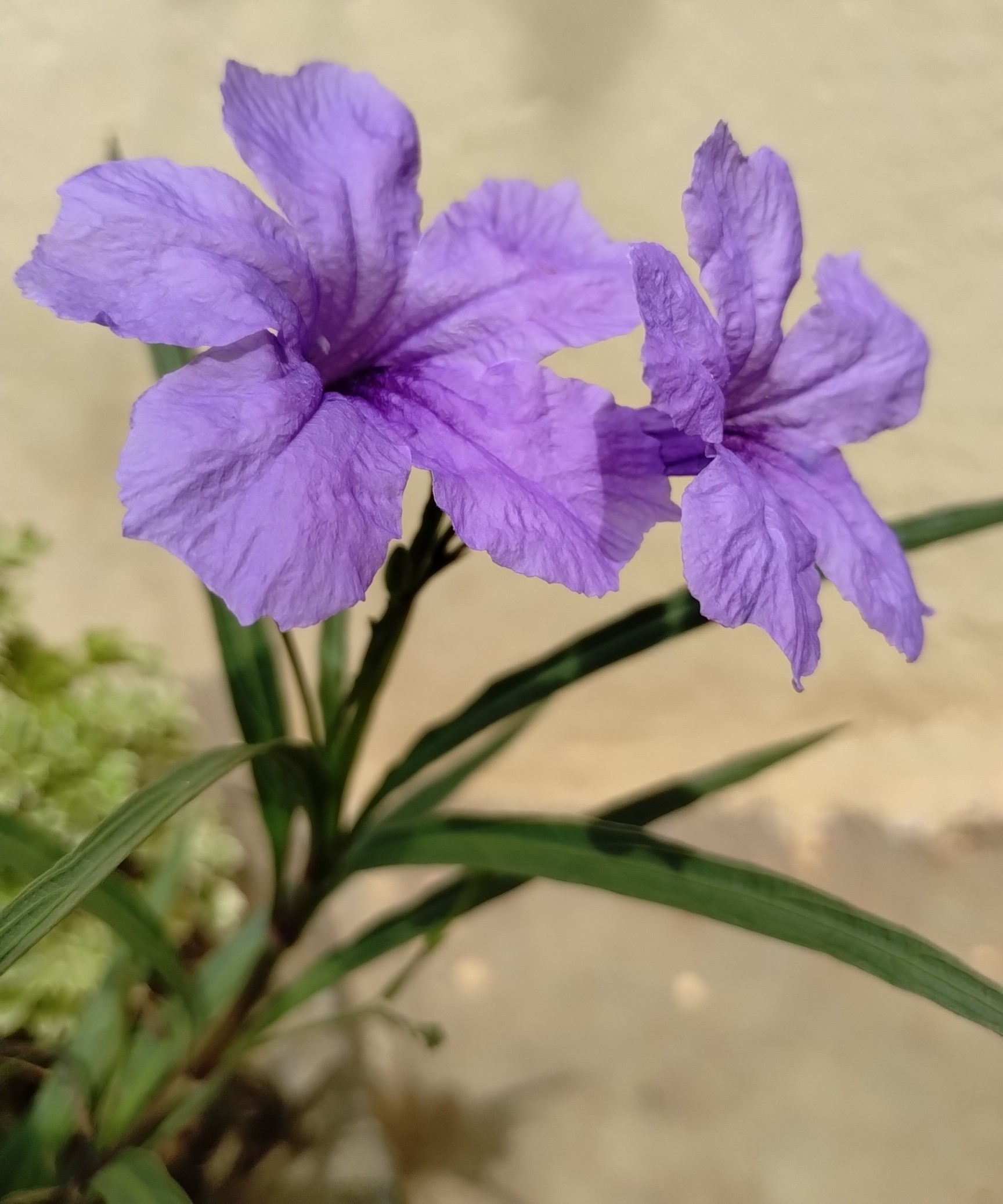
The Mexican Petunia, botanically classified as Ruellia simplex (and historically referred to as Ruellia brittoniana), is an exceptionally vigorous, upright herbaceous perennial belonging to the Acanthaceae (acanthus) family. Native to the warm, moisture-rich woodlands, riverbanks, and wet meadows...