
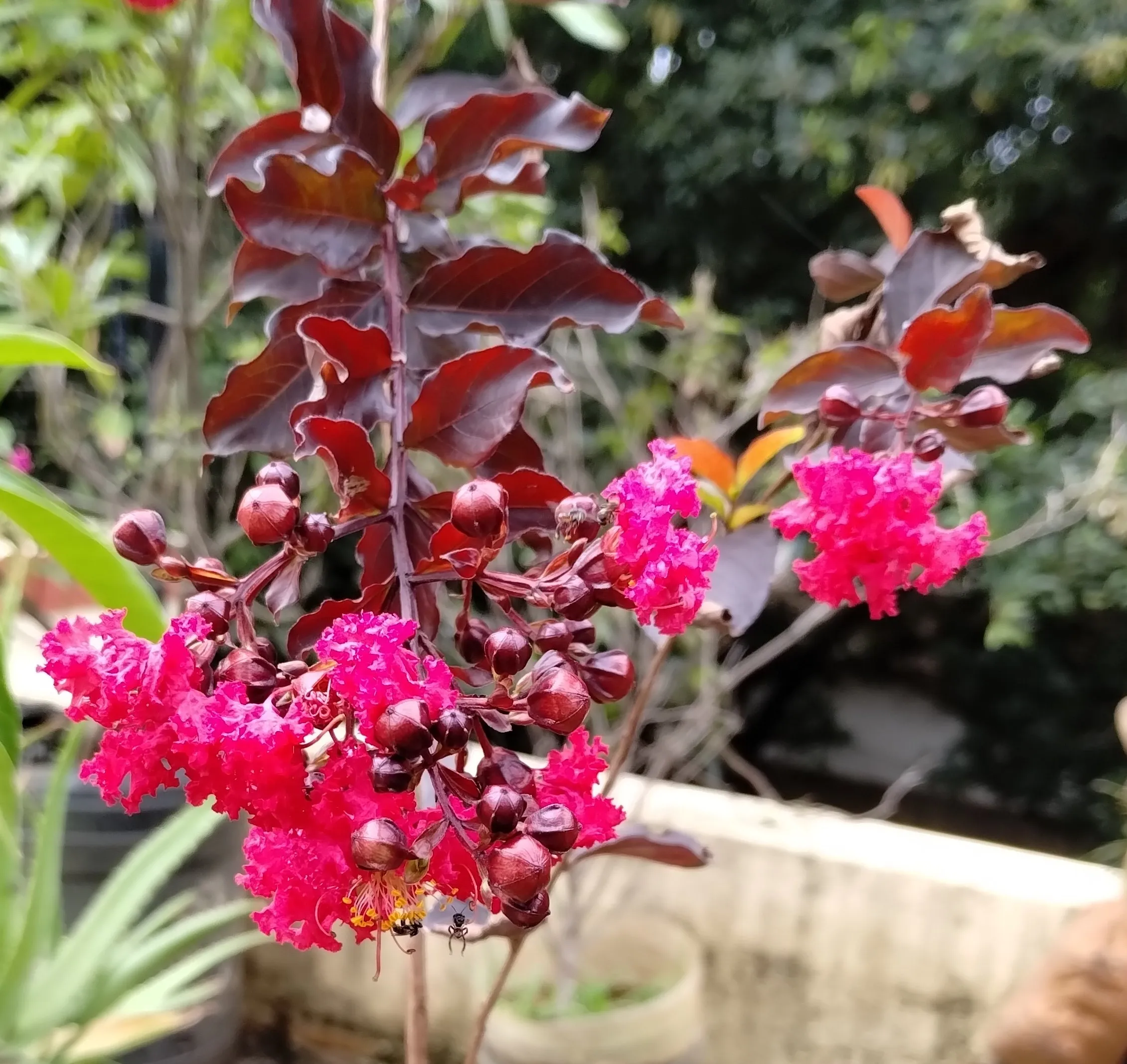
Crepe Myrtle
Lagerstroemia indica
How to Identify Crepe Myrtle
NON-TOXIC. Classified as 100% pet-safe for cats, dogs, and horses, making it an excellent alternative to toxic summer shrubs.
Care & Growing Guide
Seasonal Blooming & Hardiness
Seasonal Blooming Calendar:
- Peak Bloom: Spring to early summer (typically April through June).
- Planting Time: Sow seeds directly outdoors in early spring after the last frost, or transplant nursery starts in late spring.
Bloom Timeline
About Crepe Myrtle
The Crepe Myrtle, scientifically known as Lagerstroemia indica and affectionately called Furush on the Indian subcontinent, is a majestic deciduous shrub or small multi-trunked tree in the Lythraceae family. Native to a vast expanse of Asia—including India, China, Southeast Asia, Japan, and Korea—this highly ornamental woody plant is famed for its spectacular, paper-like summer blooms and exceptionally beautiful peeling bark. It has become a premier choice for urban parkways, street plantings, and residential landscapes across warm-temperate and subtropical regions worldwide, particularly in the southern United States.
Reaching mature heights of 15 to 25 feet for standard varieties, the Crepe Myrtle forms a graceful, vase-shaped architectural silhouette. It features smooth, exfoliating bark that peels in thin, translucent sheets to reveal a mottled, trunk-surface mosaic of cinnamon-orange, soft gray, cream, and pinkish-brown tones. The leaves are opposite, oblong-oval, emerging with a rich bronze-red tint, maturing to glossy deep green, and turning brilliant fiery shades of yellow, orange, and red in autumn. Its flowers appear in large, dense, terminal spikes (panicles) measuring 6 to 12 inches.
The reproductive structure of the Crepe Myrtle is represented by the formula EBr ⊕ ☿ K(4-6) C4-6 A∞ G(4-6). This indicates that the flower is ebracteate, radially symmetrical (actinomorphic), and bisexual. It features a calyx of 4 to 6 fused sepals forming a rigid, bell-shaped calyx tube, and a corolla of 4 to 6 free, clawed petals with intensely ruffled, crinkled margins resembling delicate crepe paper. The androecium consists of numerous (infinity) stamens of unequal length inserted on the calyx tube, surrounding a syncarpous gynoecium of 4 to 6 fused carpels with a superior ovary.
Lagerstroemia indica is exceptionally heat-tolerant and thrives in full, intense, direct sunlight, requiring at least 6 hours of direct daily exposure to bloom profusely. It is highly adaptable to a wide range of soil types—preferring fertile, moist, slightly acidic, well-draining loamy soils but showing remarkable tolerance for clay, sand, and alkaline soils once established. It possesses exceptional drought tolerance and performs beautifully in USDA hardiness zones 6 through 10, though young trees require protection from severe winter freezes.
The genus name Lagerstroemia honors Magnus von Lagerström, a 18th-century Swedish merchant and director of the Swedish East India Company who introduced these plants to European botanists. The common name Crepe Myrtle references the crinkled petals that feel like delicate crepe paper, combined with leaves resembling true Myrtles. In regional languages, it is known as सावनी in Hindi and பூமருது (Poomaruthu) in Tamil. Culturally, it is celebrated as a symbol of feminine beauty, longevity, and high status.
For pet owners, the Crepe Myrtle is an exceptional and highly recommended landscape choice. Unlike many summer-blooming shrubs, Lagerstroemia indica is classified as completely NON-TOXIC to cats, dogs, and horses by major veterinary toxicology groups. Pets can safely lounge beneath its shade, play with falling petals, or sniff the trunks without any risk of chemical toxicity or irritation. To find more high-impact, pet-friendly ornamental trees for your yard, please refer to our Pet Guard safety directory.
Crepe Myrtle is occasionally confused with Garden Lilac (Syringa vulgaris) due to its dense panicles of pink and purple flowers. However, it is easily distinguished because it blooms in mid-to-late summer (Lilacs bloom in early spring), has intensely crinkled, clawed petals, and features highly ornamental peeling bark. It pairs perfectly in sunny borders with other heat-tolerant summer favorites; we suggest pairing it with Four O'Clock or Gazania. To learn about identifying other woody ornamental trees, browse our Flower Identifier.
For more botanical profiles and flower identification features, see our guides on Zephyr Lily and Moss Rose (Portulaca).
Floral Formula & Features
Ebracteate (no bracts), Actinomorphic (radially symmetrical), bisexual, 4-6 fused sepals forming tube, 4-6 free clawed petals, numerous stamens inserted on calyx tube, 4-6 fused carpels with superior ovary
- Scientific Name & Classification: Lagerstroemia indica (Lythraceae). Commonly known as Crepe Myrtle, Crape Myrtle, and Furush.
- Identification Markers: Multi-stemmed upright habit with smooth cinnamon exfoliating bark. Large terminal panicles of flowers with intensely ruffled, crinkled crepe-paper petals.
- Floral Formula (EBr ⊕ ☿ K(4-6) C4-6 A∞ G(4-6)): Radially symmetrical, bisexual flowers with 4-6 clawed ruffled petals, numerous stamens, and superior ovary.
- Growing Requirements: Full sun (6+ hours); thrives in hot, humid climates and well-draining acidic loam. Highly drought-tolerant once established (Zones 6-10).
- Cultural Significance: Named after Swedish merchant Magnus von Lagerström. Famed on the Indian subcontinent as 'Sawani' and 'Furush.' Symbol of longevity and beauty.
- Safety & Toxicity: NON-TOXIC. Classified as 100% pet-safe for cats, dogs, and horses, making it an excellent alternative to toxic summer shrubs.
- Common Look-alikes: Confused with Spring Lilac, but distinguished by summer blooming, crinkled clawed petals, and striking mottled bark.
- Internal Links: Stunning structural focal tree paired with Four O'Clock or Gazania; explore other woody flowering species in our Flower Identifier.
Names in Different Languages
Toxicity & Safety
Frequently Asked Questions
What is Floral Formula?
A floral formula is a symbolic representation of a flower's structure using letters, numbers, and special symbols. It provides a concise way to describe the arrangement and number of floral parts.
This formula describes the flower's symmetry, sepals, petals, stamens, and carpels in a standardized format.
Formula Sequence
- Bract: Br or Ebr
- Bracteole: Brl or Ebrl
- Symmetry: % (Radial) or ⊕ (Bilateral)
- Sex: ♀ (Female), ♂ (Male), or ⚥ (Bisexual)
- Calyx/Sepal: K<number> (Free or Fused)
- Corolla/Petal: C<number> (Free or Fused)
- Androecium: A<number> (Free or Fused)
- Gynaecium: G<number> (Superior or Inferior Ovary)
Symbol Meanings
- Numbers: Indicate quantity of parts
- Parentheses (): Parts are fused together
- Plus (+): Parts in different whorls
- Underline: Superior ovary position
- Overline: Inferior ovary position
- ∞: Numerous parts (too many to count)
Understanding floral formulas helps botanists quickly identify and classify flowers based on their structural characteristics.
Similar Flowers
Discover flowers that share botanical characteristics
Similar Characteristics
4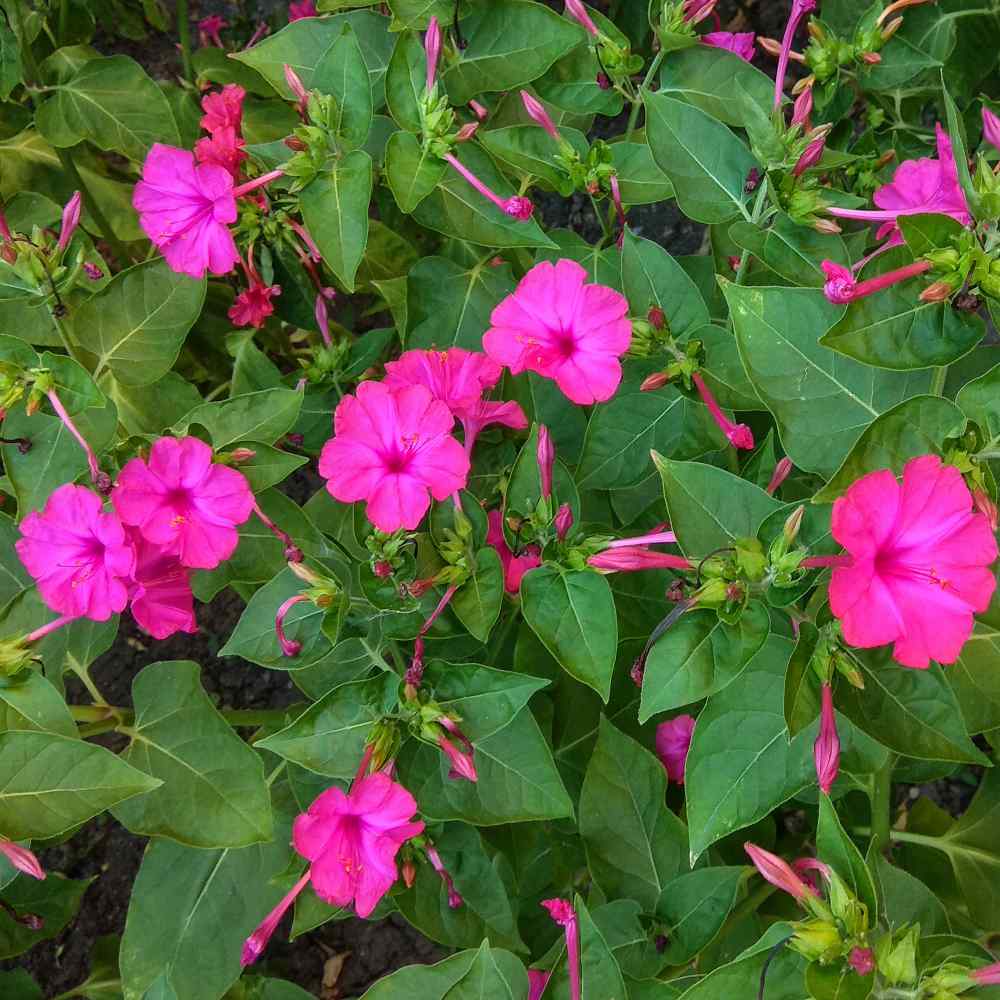
Four o'clock
Mirabilis jalapa
The Four o'clock, scientifically named Mirabilis jalapa and known as the Marvel of Peru or Beauty of the Night, is a highly popular, bushy perennial belonging to the Nyctaginaceae (four o'clock) family. Native to the tropical regions of South America, particularly the Andes of Peru, it was introd...
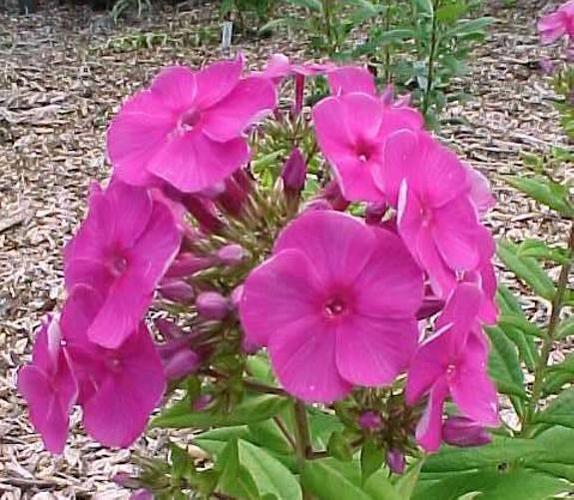
Phlox
Phlox paniculata
The genus Phlox, a cornerstone of the North American garden, encompasses a diverse array of species ranging from low-growing ground covers to towering, stately perennials. Derived from the Greek word for 'flame,' the name perfectly captures the vibrant, fiery intensity of their clustered blossoms...
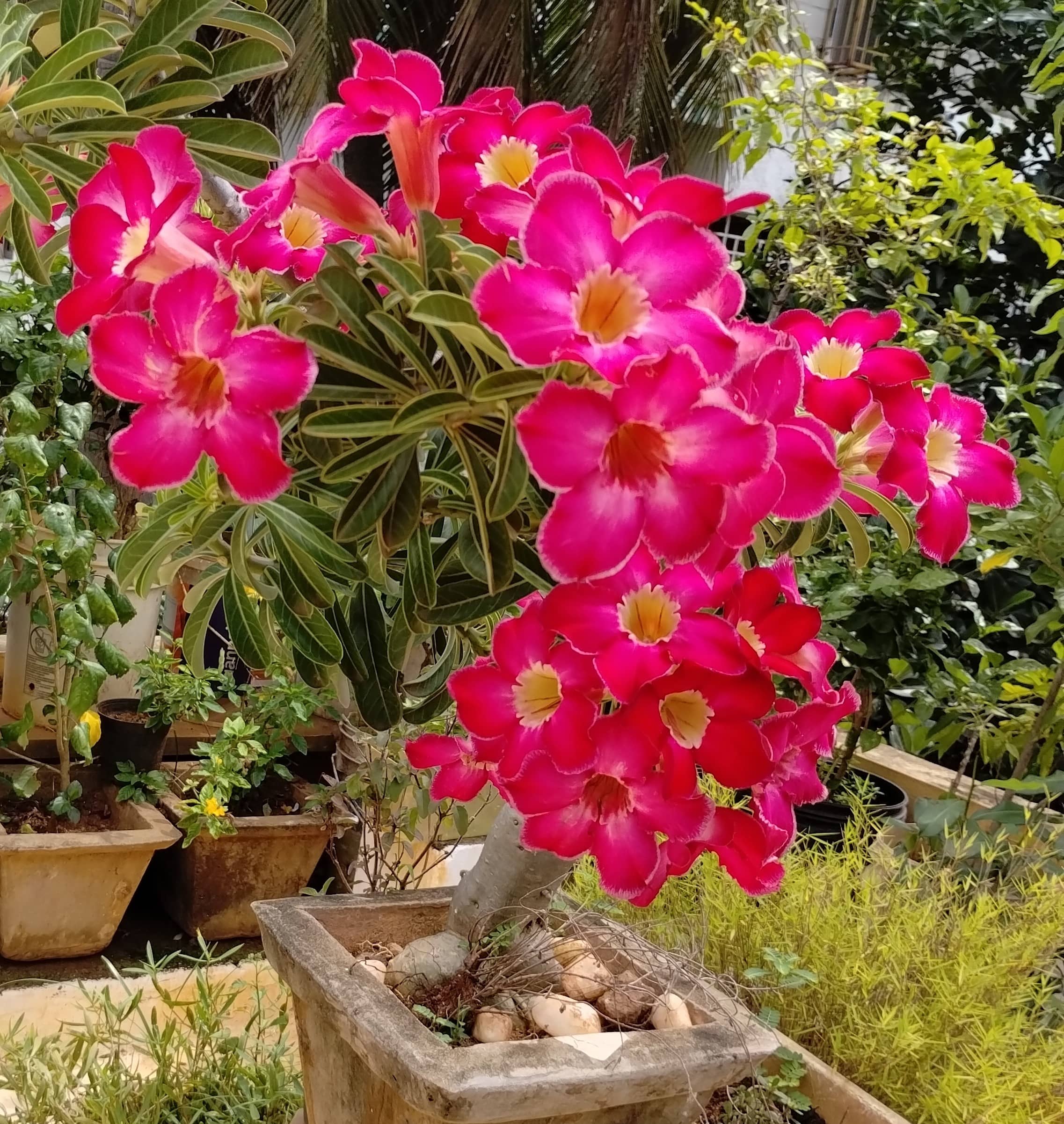
Desert Rose
Adenium obesum
The Desert Rose (Adenium obesum), a member of the Apocynaceae (Dogbane) family, is one of the most sculptural and striking succulent shrubs in the botanical world. Native to the arid regions of sub-Saharan Africa and the Arabian Peninsula, this plant has developed extraordinary adaptations to sur...
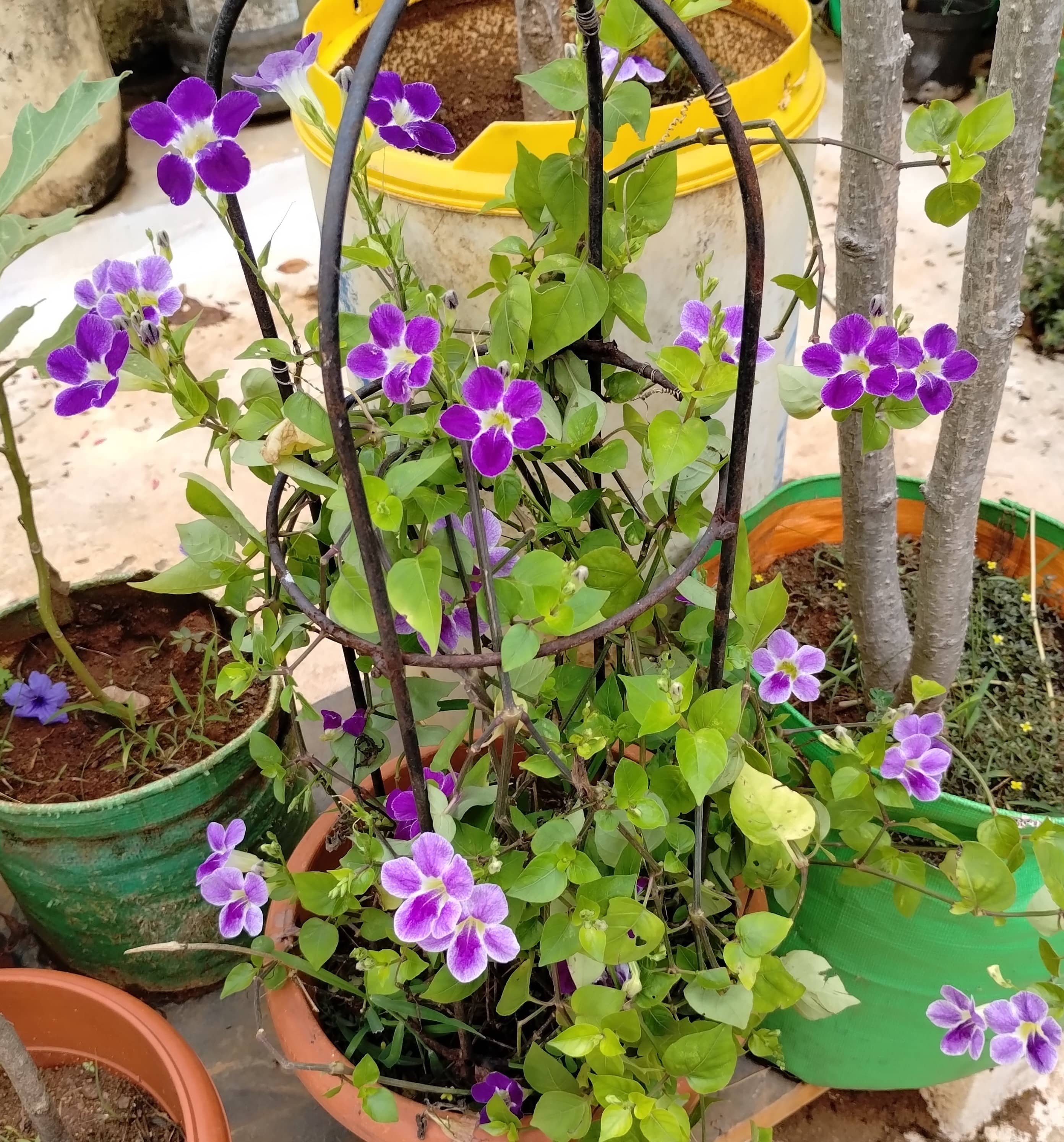
Thunbergia (King's Mantle)
Thunbergia erecta
Thunbergia erecta, popularly known as the "King's Mantle" or "Bush Clock Vine," is a sophisticated and regal tropical shrub that brings a touch of aristocratic elegance to any garden. A member of the Acanthaceae family, this evergreen species is native to the coastal regions of western Africa, fr...