
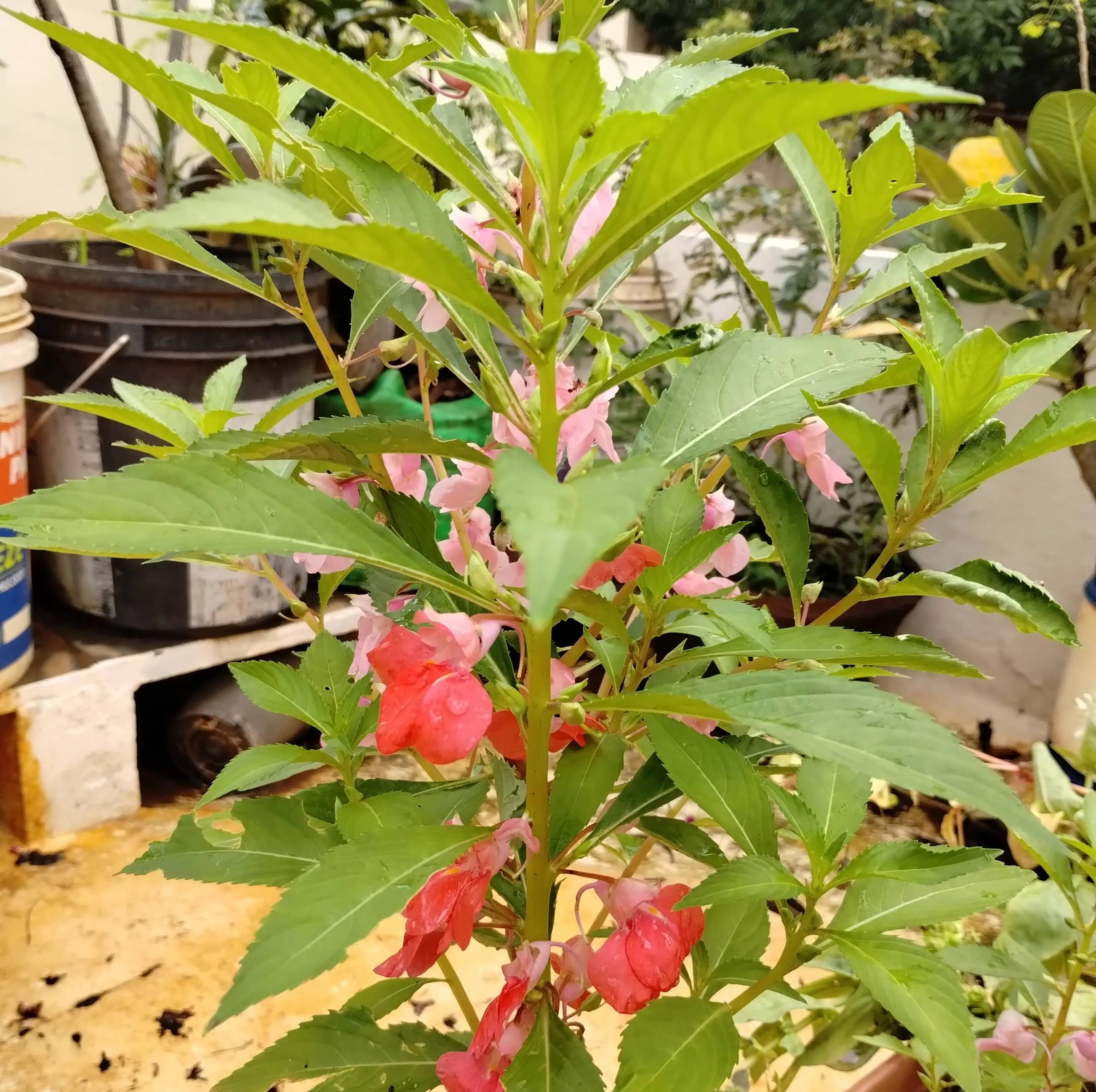
Balsam (Rose Balsam)
Impatiens balsamina
How to Identify Balsam (Rose Balsam)
Care & Growing Guide
Seasonal Blooming & Hardiness
Seasonal Blooming Calendar:
- Peak Bloom: Summer (typically June through September).
- Planting Time: Sow seeds directly outdoors in early spring after the last frost, or transplant nursery starts in late spring.
Bloom Timeline
About Balsam (Rose Balsam)
Balsam (Impatiens balsamina), commonly referred to as Rose Balsam or Touch-me-not, is a charming, old-fashioned annual belonging to the Balsaminaceae family. Native to South Asia and Southeast Asia, it has been a beloved staple in Victorian cottage gardens for over a century. It is highly valued for its ability to produce vibrant, continuous color throughout the sweltering summer months, particularly in shaded areas where many other blooming annuals struggle to survive.
Identification of Balsam is distinct due to its growth habit. The plant produces thick, fleshy, almost translucent pale-green stems that grow rigidly upright, reaching 1 to 2.5 feet tall. The lance-shaped, sharply toothed leaves are arranged spirally. The cup-shaped, intensely colored flowers (ranging from pink, red, and purple to white) do not grow on long stalks; instead, they nestle tightly into the leaf axils directly against the main stem, resembling miniature camellias or roses.
The floral formula is % ⚥ K3 C5 A(5) G(5). It features a highly irregular (strongly zygomorphic), bisexual flower. It has 3 sepals (with the lower sepal forming a prominent, nectar-bearing spur), 5 petals, 5 stamens that are fused together around the stigma, and a superior ovary of 5 fused carpels.
Balsam is famous for its unique seed dispersal mechanism, giving it the nickname 'Touch-me-not'. As the fuzzy, green seed pods mature, they become highly turgid. The slightest touch, breeze, or raindrop will cause the pod to explode violently, catapulting its seeds several feet away. Because of this, Balsam aggressively self-seeds and will return to the garden year after year.
Growing Balsam requires mimicking a moist forest edge. It thrives in partial shade to dappled sunlight; intense, direct afternoon sun will quickly scorch the leaves and wilt the fleshy stems. It demands rich, consistently moist, well-draining soil. It is highly frost-sensitive and will die immediately upon the first freeze.
Regarding toxicity, Balsam is technically NON-TOXIC to humans and pets, making it generally safe for gardens. However, it is important to note that the plant contains high levels of soluble calcium oxalates. While a dog or cat chewing on a leaf will not be poisoned, consuming large quantities of the foliage can cause gastrointestinal upset or contribute to kidney stones over time in livestock.
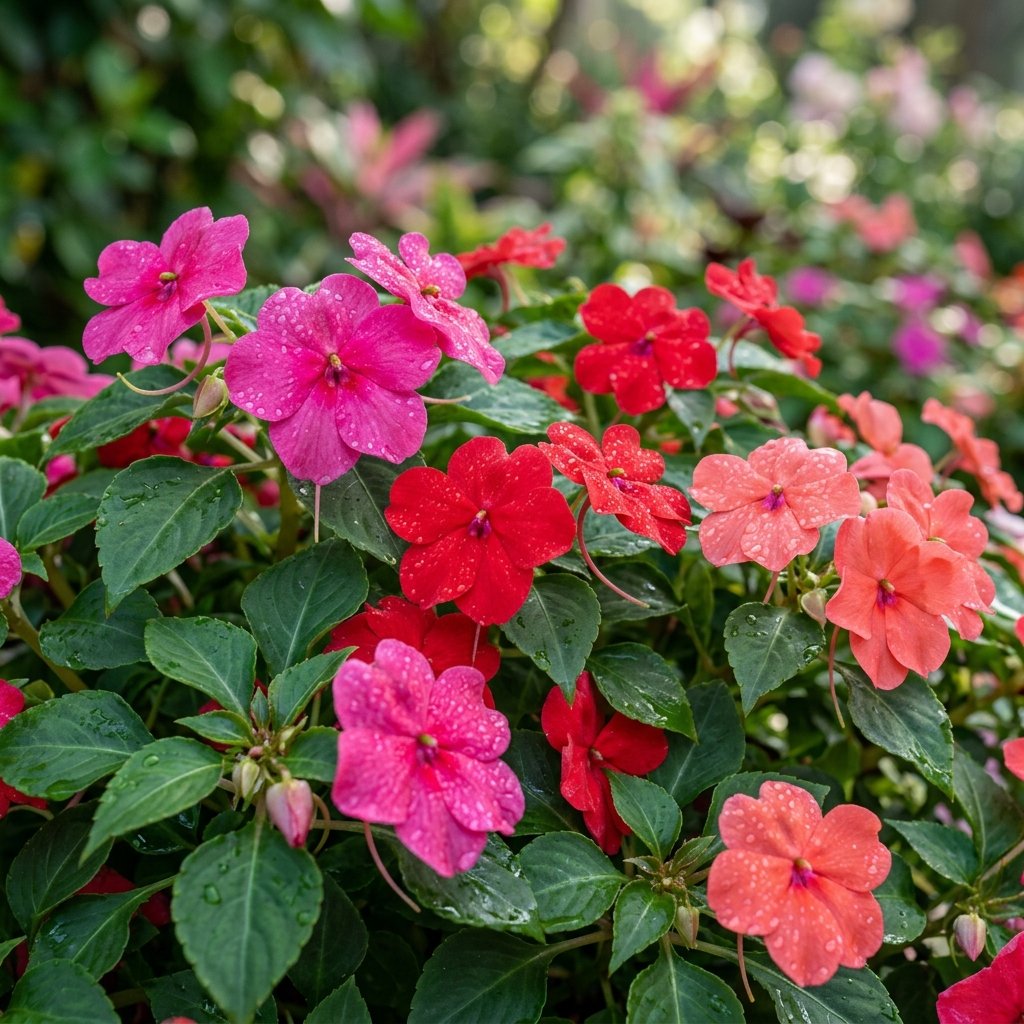
It is closely related to the common garden Impatiens (Impatiens walleriana), but Balsam grows tall and upright with flowers clinging to the stem, whereas standard Impatiens form low, spreading mounds with flowers on the outer canopy. Explore more shade lovers in our Flower Identifier.
Floral Formula & Features
Strongly zygomorphic, bisexual. 3 sepals (lower sepal forms a nectar spur), 5 petals, 5 stamens fused around the stigma, 5 fused carpels. Ovary superior.
- Scientific Name & Classification: Impatiens balsamina (Balsaminaceae). Commonly known as Rose Balsam or Touch-me-not.
- Identification Markers: Upright, thick, fleshy stems. Cup-shaped, rose-like flowers nestle tightly against the stem in the leaf axils.
- Floral Formula (% ⚥ K3 C5 A(5) G(5)): Highly irregular flower. Features a prominent nectar spur on the lower sepal and 5 fused stamens.
- Growing Requirements: Thrives in partial shade. Requires rich, consistently moist, well-draining soil. Frost-sensitive annual.
- Cultural Significance: A classic Victorian cottage garden plant, famous for its explosive seed pods that aggressively self-sow.
- Safety & Toxicity: NON-TOXIC. Safe for pets, but contains calcium oxalates which can cause mild stomach upset if eaten in large quantities.
- Common Look-alikes: Related to common bedding Impatiens, but Balsam grows vertically on a central stalk rather than in a spreading mound.
- Internal Links: Compare its shade tolerance with the Hellebore or explore the Flower Identifier.
Names in Different Languages
Toxicity & Safety
Always keep toxic plants out of reach of children and pets. Consult a veterinarian or medical professional immediately if ingestion is suspected.
Frequently Asked Questions
What is Floral Formula?
A floral formula is a symbolic representation of a flower's structure using letters, numbers, and special symbols. It provides a concise way to describe the arrangement and number of floral parts.
This formula describes the flower's symmetry, sepals, petals, stamens, and carpels in a standardized format.
Formula Sequence
- Bract: Br or Ebr
- Bracteole: Brl or Ebrl
- Symmetry: % (Radial) or ⊕ (Bilateral)
- Sex: ♀ (Female), ♂ (Male), or ⚥ (Bisexual)
- Calyx/Sepal: K<number> (Free or Fused)
- Corolla/Petal: C<number> (Free or Fused)
- Androecium: A<number> (Free or Fused)
- Gynaecium: G<number> (Superior or Inferior Ovary)
Symbol Meanings
- Numbers: Indicate quantity of parts
- Parentheses (): Parts are fused together
- Plus (+): Parts in different whorls
- Underline: Superior ovary position
- Overline: Inferior ovary position
- ∞: Numerous parts (too many to count)
Understanding floral formulas helps botanists quickly identify and classify flowers based on their structural characteristics.
Similar Flowers
Discover flowers that share botanical characteristics
Similar Characteristics
4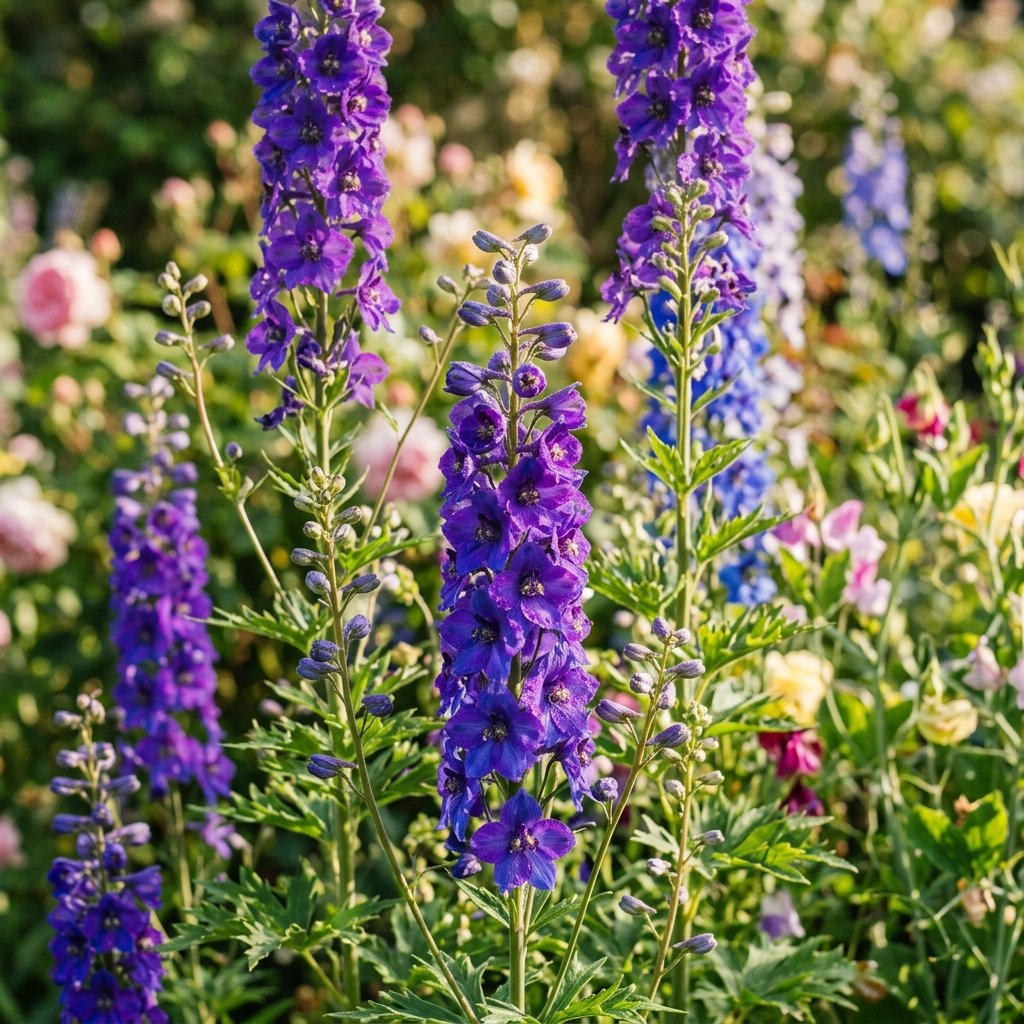
Larkspur
Delphinium
Larkspur, belonging to the genus Delphinium within the buttercup family Ranunculaceae, is a group of highly popular annual and perennial flowering plants famous for their towering, vertical flower spikes. Native throughout the Northern Hemisphere and high-altitude tropical mountains of Africa, la...
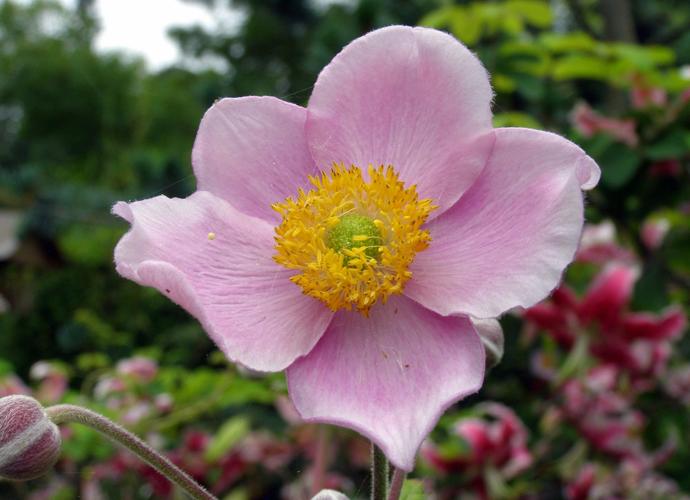
Japanese anemone
Anemone hupehensis, Anemone hybrida
The Japanese Anemone, botanically classified as Anemone hupehensis (and recently reclassified under the genus Eriocapitella), is an exceptionally graceful, late-blooming herbaceous perennial belonging to the Ranunculaceae (buttercup) family. Despite its common name, this elegant species is native...
Primrose (Cowslip)
Primula veris
Cheerful spring wildflower with clusters of nodding yellow flowers on tall stems above rosettes of wrinkled leaves. One of first flowers to bloom in spring, earning name from Latin 'prima rosa' (first rose). Sweet honey scent attracts early bees. Used in herbal medicine for centuries. Popular in...
Windflower
Anemone
Windflower, botanically classified under the extensive genus Anemone within the Ranunculaceae (buttercup) family, comprises a spectacular and diverse group of herbaceous perennials beloved for their elegant, swaying blooms. Distributed throughout the temperate and cold regions of the Northern Hem...