The Architecture of Angiosperms: Why Botanical Families Matter
There are more than 350,000 recognized species of flowering plants (angiosperms) on planet Earth. For amateur gardeners, florists, naturalists, and even agriculturalists, trying to memorize every individual flower species by sight is an impossible, overwhelming task.
Fortunately, nature did not invent every flower from scratch. Evolution works through deep structural patterns. Flowering plants radiate outwards in evolutionary branches known as botanical families (taxonomic rank: Familia). Once you understand the underlying architectural logic, symmetry, petal arrangements, and reproductive machinery that define a botanical family, you can immediately identify almost any blossom you encounter in a garden, wild meadow, or greenhouse—even if you have never laid eyes on that specific species before.
When the BioLens AI flower recognition engine processes an image, it evaluates these exact morphological principles: floral symmetry, petal fusion, stamen counts, pistil architecture, leaf venation, and stem anatomy. By mastering the core diagnostic blueprints presented in this guide, you will transform how you perceive flowers: no longer as random splashes of color, but as elegant, mathematical blueprints of evolutionary science.
How to Read a Floral Formula: The Universal Botanical Blueprint
Botanists communicate flower structures using a compact, globally standardized shorthand known as a Floral Formula. A floral formula describes the four concentric whorls of a flower from the outside inward:
- Symmetry Symbol:
- `⊕` (Actinomorphic): Radial symmetry. The flower can be divided into identical mirroring halves along multiple planes, like a pie or bicycle wheel (e.g., Rose, Buttercup, Lily).
- `%` or `↓` (Zygomorphic): Bilateral symmetry. The flower can be divided into mirroring halves along only a single vertical plane, creating a distinct "face" with upper and lower lips (e.g., Orchids, Snapdragon, Sweet Pea).
- Sexuality Symbol:
- `☿` or `⚥` (Bisexual / Hermaphrodite): Possessing both male stamens and female carpels.
- `♂` (Staminate / Male) or `♀` (Pistillate / Female): Unisexual flowers.
- K (Calyx / Sepals):
- The outermost protective green whorl. `K5` indicates 5 separate free sepals; `K(5)` indicates 5 sepals fused into a calyx tube.
- C (Corolla / Petals):
- The showy, pollinator-attracting whorl. `C5` indicates 5 free petals (polypetalous); `C(5)` indicates 5 fused petals forming a bell, funnel, or trumpet (gamopetalous).
- P (Perianth / Tepals):
- Used when sepals and petals look indistinguishable in color and shape (common in monocots like lilies and tulips). `P3+3` indicates 6 tepals arranged in two concentric rings of 3.
- A (Androecium / Stamens):
- The male pollen-bearing organs. `A5` = 5 stamens; `A2+4` = 6 stamens (4 long + 2 short); `A∞` = numerous (often 20 to 100+) stamens. When stamens are fused to the inside of the petal tube, they are bracketed together: `[C(5) A5]`.
- G or G̅ (Gynoecium / Pistil / Carpels):
- The female seed-bearing chamber. `G(3)` indicates 3 fused carpels.
- Superior Ovary (`G` with underline): The ovary sits perched above the attachment point of the petals and sepals (e.g., Petunia, Tulip, Rose).
- Inferior Ovary (`G̅` with overline): The ovary is buried beneath the floral attachment point, protected within the stem tissue (e.g., Daffodil, Sunflower, Orchids).
The Master Field Key: 5 Rapid Steps to Place Any Mystery Bloom
When you encounter an unknown blossom in the field, follow this 5-step rapid diagnostic elimination sequence to narrow down its family within seconds:
- Step 1: Check Floral Symmetry
- Is it Bilateral (%) with a clear upper/lower orientation? Jump directly to bilateral families: Orchidaceae, Fabaceae, Lamiaceae, Plantaginaceae, Zingiberaceae, or Acanthaceae.
- Is it Radial (⊕) with rotational symmetry like a star or saucer? Proceed to Step 2.
- Step 2: Count the Floral Parts (The Monocot vs. Eudicot Divide)
- Are petals, sepals, and stamens arranged in multiples of 3 (3, 6, 9) with parallel-veined leaves? You have a Monocot: Liliaceae, Iridaceae, Amaryllidaceae, Orchidaceae, Araceae, Zingiberaceae, or Asparagaceae.
- Are floral parts arranged in multiples of 4 or 5 (4, 5, 8, 10, or numerous) with netted/branched leaf veins? You have a Eudicot: Rosaceae, Asteraceae, Malvaceae, Solanaceae, Ranunculaceae, Brassicaceae, etc.
- Step 3: Check Petal Fusion
- Are petals completely separate down to the base? (Polypetalous: Rosaceae, Ranunculaceae, Brassicaceae, Caryophyllaceae, Papaveraceae).
- Are petals fused into a tube, bell, saucer, or funnel? (Gamopetalous: Solanaceae, Convolvulaceae, Campanulaceae, Apocynaceae, Rubiaceae, Oleaceae).
- Step 4: Count the Stamens & Examine Anthers
- Numerous (20+ stamens): Rosaceae (has hypanthium), Ranunculaceae (separate carpels, no hypanthium), Papaveraceae (caducous sepals), Malvaceae (stamens fused into a central column tube).
- Exactly 2 stamens: Oleaceae (Jasmine family, hidden in corolla tube).
- Exactly 3 stamens: Iridaceae (Iris family, monocot with inferior ovary).
- 4 stamens in unequal pairs (didynamous): Lamiaceae (square stem) or Plantaginaceae (round stem).
- 6 stamens with 4 long and 2 short (tetradynamous): Brassicaceae (Mustard family, 4 cross petals).
- 10 stamens (9 fused + 1 free): Fabaceae (Pea family).
- Step 5: Inspect Stem, Sap, and Vegetative Structures
- Square Stem + Aromatic Scent: Conclusively Lamiaceae (Mint family).
- Milky White Latex Sap: Conclusively Apocynaceae (Dogbane) or Euphorbiaceae (Spurge) or Papaveraceae (Poppy).
- Swollen Stem Nodes ("Knees"): Conclusively Caryophyllaceae (Carnation family).
- Spadix Spike + Waxy Spathe Hood: Conclusively Araceae (Aroid family).
Field Identification Case Studies: How to Place a Mystery Flower into its Family
To master botanical identification, theoretical rules must be applied to real specimens. Here are three concrete, real-world case studies demonstrating how a botanist methodically inspects, dissects, and categorizes a mystery bloom.
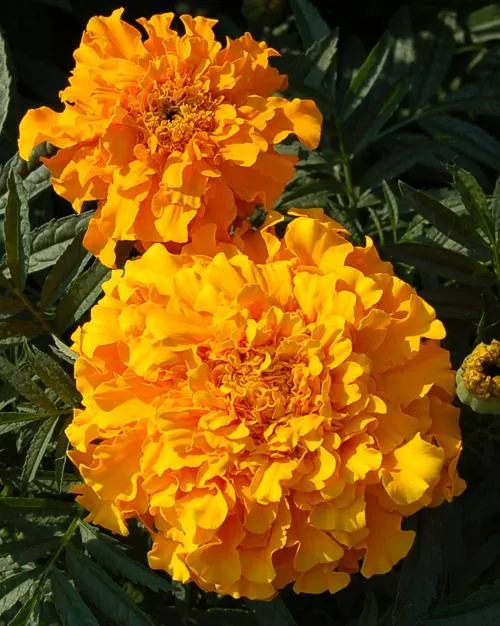
Case Study 1: The Deceptive Yellow Blossom — Classifying Marigold & Calendula into Asteraceae
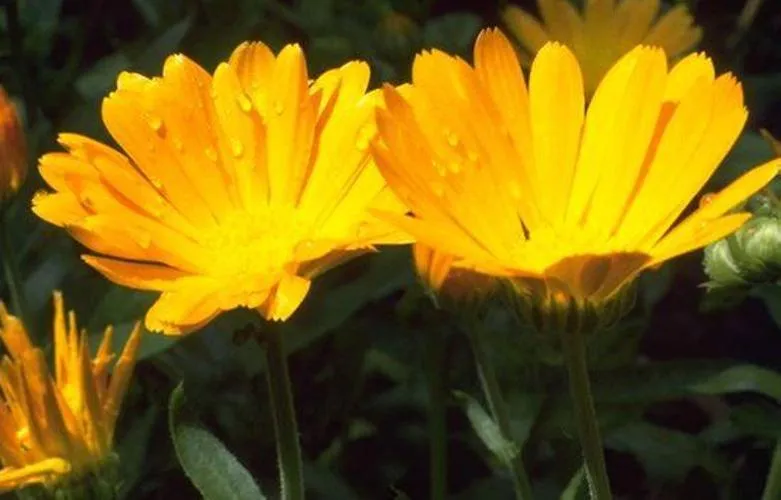
The Field Scenario: You find a vibrant golden-orange blossom blooming in a backyard border. At casual glance, it appears to be a single flower with fifty or more overlapping petals surrounding a darker center.
Step-by-Step Diagnostic Elimination:
- The Visual Examination: Examine the specimen image above. Look closely at the transition between the outer perimeter and the center. Notice that the broad, flat outer "petals" have a very different shape and surface texture compared to the tightly packed, dome-like center.
- The Dissection: Using a thumbnail or pocket knife, slice the flower head vertically right through the center.
- The Discovery: You immediately discover an astonishing optical illusion. This is not a single flower at all. It is a massive communal flower head (capitulum) composed of dozens of separate, independent miniature florets crowded onto a shared fleshy platform (receptacle).
- Floret Morphology:
- The outer "petals" are actually Ray Florets—complete individual female or sterile flowers whose corollas have fused into a flat, elongated strap.
- The dark central "eye" is packed with over a hundred miniature Disc Florets—tiny, perfect bisexual flowers with 5 miniature triangular petal teeth forming a golden tube.
- Anther & Ovary Check: Under a magnifying hand lens, you observe that the 5 stamens inside each disc floret are fused by their anthers into a protective cylinder around the style (syngenesious anthers). Beneath each tiny floret sits a solitary inferior ovary that will ripen into a seed crowned by bristly hairs (pappus).
- The Diagnostic Verdict: Fused composite head + syngenesious anthers + inferior ovary + involucral bracts = Asteraceae (The Composite Family)!
- Signature Related Species: Sunflower, African Daisy, Barberton Daisy, Zinnia, Chrysanthemum.
- Comparison Tool: Compare variations in composite structures with our Marigold vs. Calendula Comparison.
Case Study 2: The Scented White Imposter — Placing True Jasmines (Spanish Jasmine & Arabian Jasmine) into Oleaceae
The Field Scenario: A gardener hands you a shrub with deeply fragrant, waxy white blossoms and asks for verification. Gardeners casually call many unrelated plants "Jasmine" (such as Star Jasmine, Cape Jasmine, and Night-blooming Jasmine). How do you scientifically prove this is a true Jasmine?
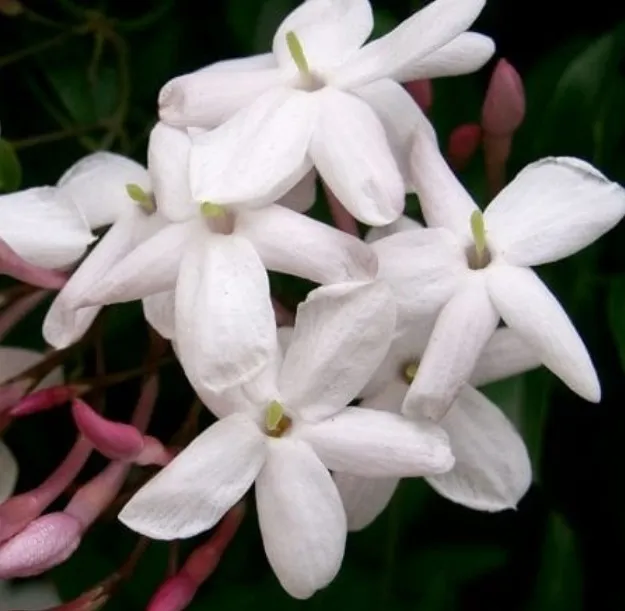
Step-by-Step Diagnostic Elimination:
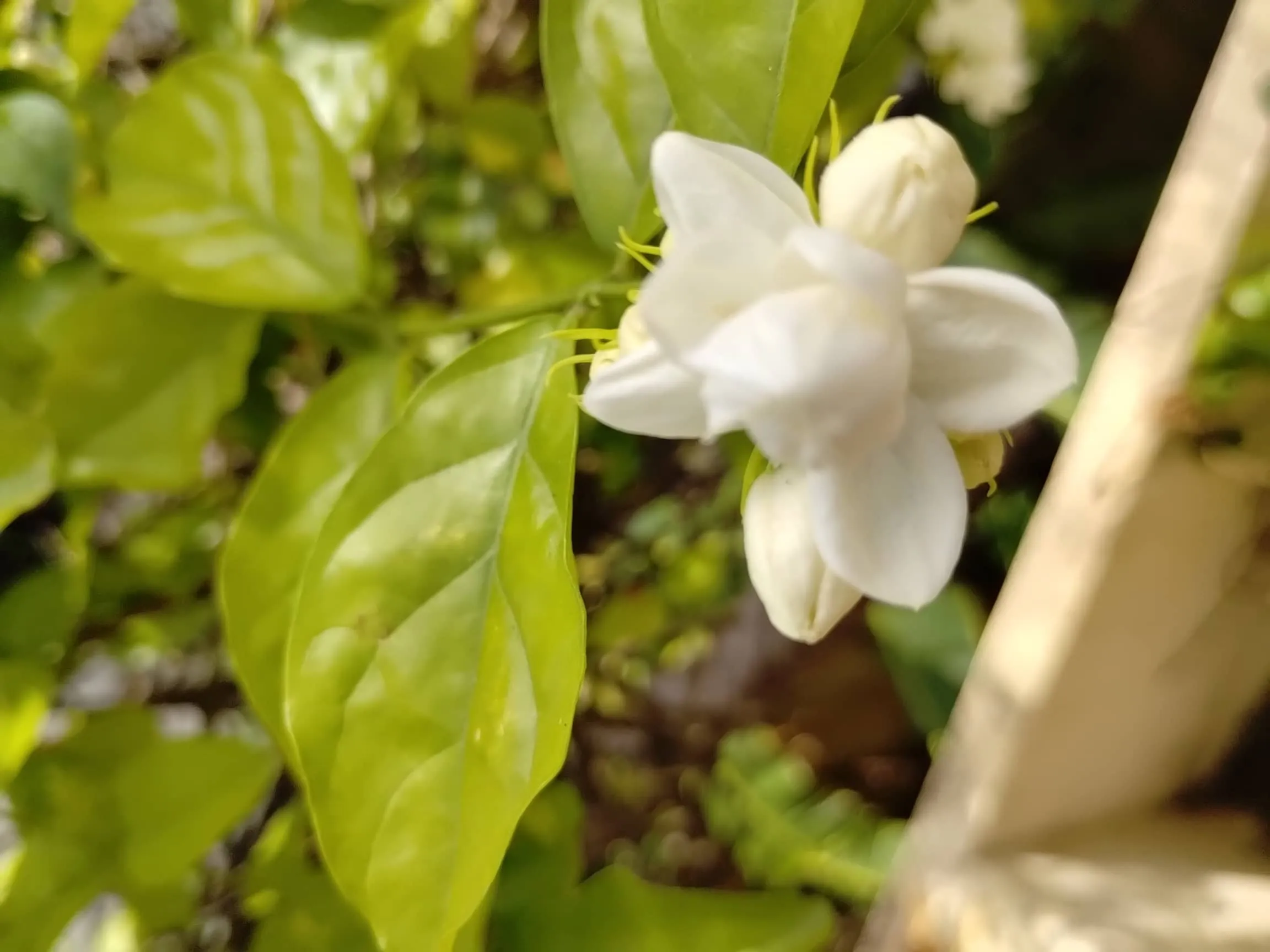
- The Visual Examination: Examine the specimen image above. Notice the slender tubular green base flaring into starry, snow-white petal lobes, accompanied by deep-green opposite leaves arranged along the woody stems.
- The Sap Test (Rule Out Apocynaceae): Snap a leaf petiole. The sap is clear and watery. If it had bled a sticky, milky white latex, it would have been Pinwheel / Crape Jasmine or Plumeria, belonging to the toxic Dogbane family (Apocynaceae).
- The Node & Stipule Test (Rule Out Rubiaceae): Examine the leaf nodes along the woody stem. Leaves are arranged in opposite pairs, but there are no interpetiolar stipules (small leafy flaps bridging the stem between opposite leaf stalks). If interpetiolar stipules were present, it would be a Gardenia (Rubiaceae).
- The Throat Slit (The Definitive Oleaceae Test): Gently slit open the slender green corolla tube of the bloom. Look inside the throat. You find strictly 2 stamens with short filaments glued directly to the inner wall of the petal tube, hugging a two-lobed stigma above a superior ovary.
- The Diagnostic Verdict: Clear sap + opposite simple leaves + salverform corolla + exactly 2 stamens = Oleaceae (The Olive & Jasmine Family)!
- Signature Related Species: Night Jasmine / Parijat, Spanish Jasmine, Star Jasmine, Juhi Jasmine.
- Comparison Tool: Explore critical differences using our Jasmine vs. Gardenia Comparison.
Case Study 3: The Regal Spring Monocots — Distinguishing True Lilies (Easter Lily), Daffodils & Irises (Yellow Iris)
The Field Scenario: You are looking at a magnificent spring garden with three different showy monocot blooms with parallel-veined foliage: a white Lily, a yellow Daffodil, and an Iris. All three have colorful petal-like segments. How do you distinguish their respective botanical families?
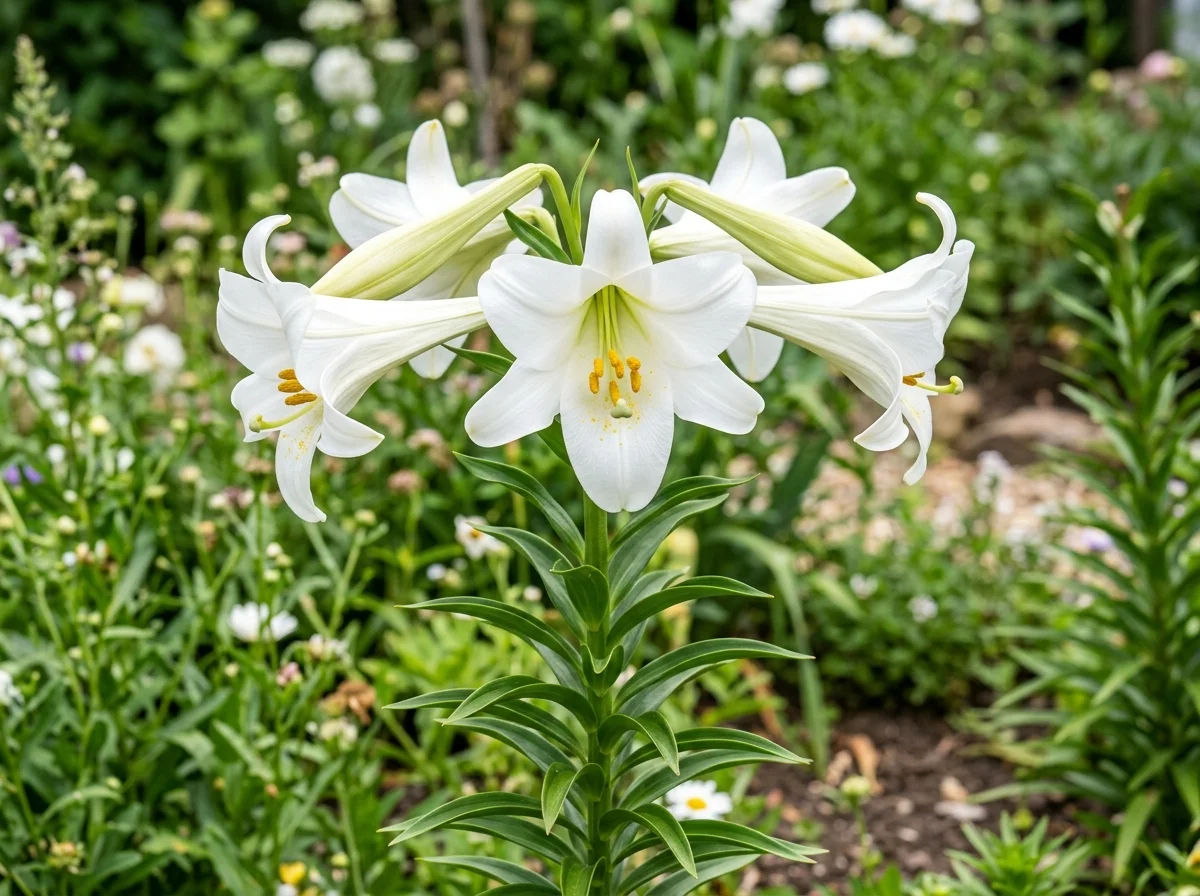
Step-by-Step Diagnostic Elimination:
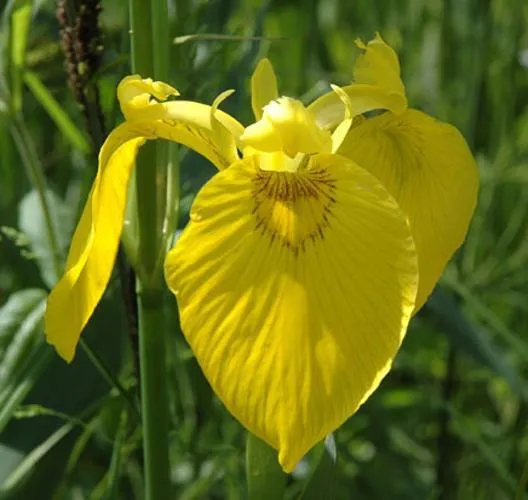
- Test 1: Check the Stamens & Foliage (The Iris Test):
- Look at the Iris specimen below. Notice the flat, sword-shaped leaves arranged in a tight overlapping fan (equitant leaves).
- Peer inside the bloom: you count strictly 3 stamens, positioned beneath three wide, arching, petal-like style arms.
- Verdict: Conclusively Iridaceae (The Iris Family)! Signature species: Bearded Iris, Yellow Iris, Gladiolus.
- Test 2: Check the Ovary Position (True Lily vs. Daffodil):
- Both the Lily and Daffodil have 6 stamens and 6 colorful segments (tepals).
- In the Easter Lily (shown in the first image above), examine the center of the giant trumpet. You see 6 massive filaments tipped with heavy, pollen-laden brown anthers. The long green style emerges directly from a swollen 3-chambered green ovary that sits inside the blossom, perched cleanly above where the petals attach. This is a superior ovary. The plant emerges from a true scaly bulb.
- Verdict: Conclusively Liliaceae (The True Lily Family)! Signature species: Tulip, Tiger Lily, Easter Lily.
- In the Daffodil, look behind the flower head. There is a prominent swollen green knob on the stem beneath the petals. The petals attach on top of this seed chamber, making it an inferior ovary. Furthermore, the petals are modified with an extraordinary central trumpet cup (corona).
- Verdict: Conclusively Amaryllidaceae (The Amaryllis & Daffodil Family)! Signature species: Daffodil, Amaryllis.
- Comparison Tool: Study these distinctions in our Tulip vs. Daffodil Comparison and Calla Lily vs. Easter Lily Comparison.
The Comprehensive 30-Family Botanical Compendium
Here is our master encyclopedic breakdown of the 30 most vital, widely cultivated, and ecologically significant botanical families represented across the 200+ species in the BioLens database:
1. Asteraceae (The Composites & Sunflowers)
The largest and most evolutionarily advanced eudicot family on Earth, containing over 32,000 species.- Structural Blueprint: What looks like a single flower is actually an inflorescence head (capitulum) composed of hundreds of tiny florets surrounded by protective green involucral bracts.
- Floral Formula: Ray floret: `% ♀ or ⚥ K0-pappus C(3-5) A0 G̅(2)`; Disc floret: `⊕ ⚥ K0-pappus C(5) A(5) G̅(2)`.
- Field Identification Shortcut: Look for the "Eye"—a flat or conical central disk of tubular florets encircled by strap-like ray petals, with anthers fused into a tube around the style.
- Popular BioLens Flowers: Sunflower, Marigold, Daisy, African Daisy, Barberton Daisy, Black-eyed Susan, Calendula, Chrysanthemum, Aster, Zinnia, Artichoke Flower.
- Comparison Guide: Learn more with Marigold vs. Calendula.
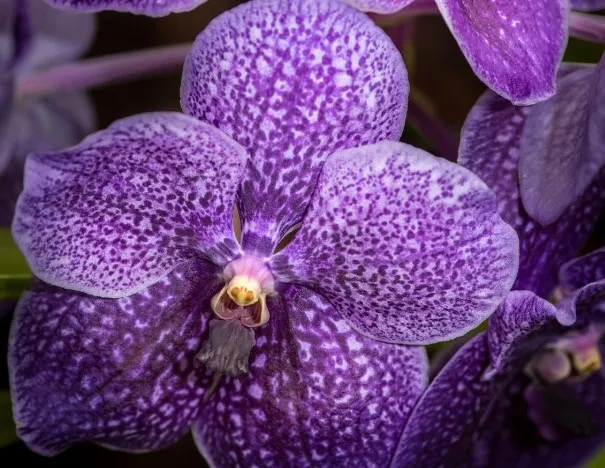
2. Orchidaceae (The Orchids)
The largest monocot family, celebrated for complex bilateral symmetry, deceptive pollination traps, and microscopic dust seeds.- Structural Blueprint: 3 sepals and 3 petals, where the median petal is dramatically modified into an elaborate landing platform called the Lip (Labellum). The male stamens and female style are fused into a single central structure called the Column (Gynostemium), with pollen packaged into waxy masses called Pollinia.
- Floral Formula: `% ⚥ K3 C2+1(lip) A1-2 G̅(3)`.
- Field Identification Shortcut: Find the Lip—one petal is completely distinct in color, fringe, pouch, or spur from all other petals, and pollen cannot be dusted off because it is locked in solid sticky pollinia.
- Popular BioLens Flowers: Vanda Orchid, Dendrobium Orchid, Moon Orchid, Cattleya Orchid, Boat Orchid (Cymbidium), Moth Orchid, Silver Slipper Orchid, Fox Tail Orchid.
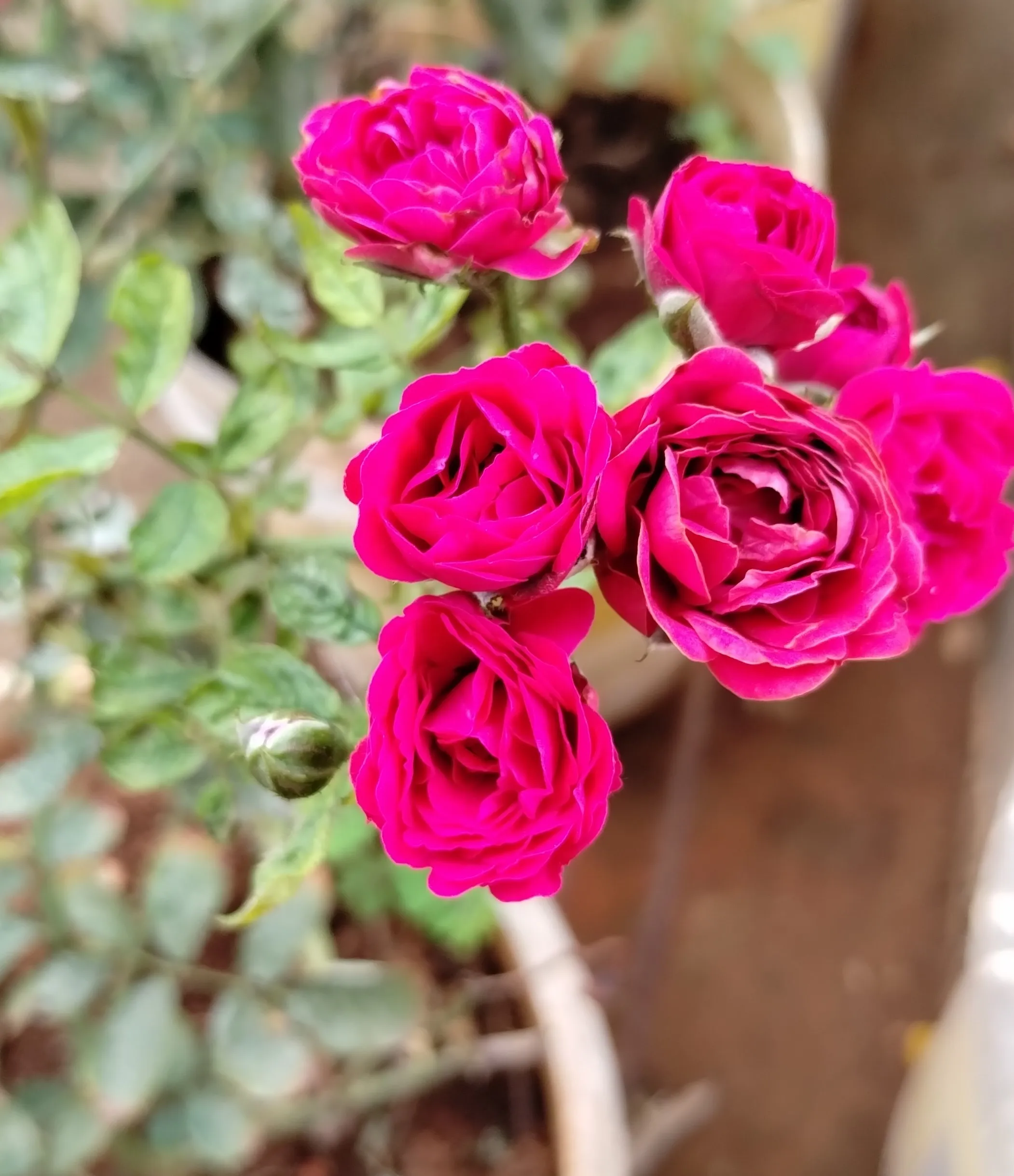
3. Rosaceae (The Roses & Stone Fruits)
The definitive classic garden family, also responsible for apples, pears, peaches, almonds, cherries, and strawberries.- Structural Blueprint: Actinomorphic (radial) flowers typically with 5 sepals, 5 petals, and a distinctive floral cup called a Hypanthium formed by the fusion of the floral bases, bearing numerous stamens (typically 20+).
- Floral Formula: `⊕ ⚥ K5 C5 A∞ G1-∞` (ovary superior to inferior).
- Field Identification Shortcut: Count petals in wild or single varieties: always multiples of 5, with a "fuzzy" pincushion center of 20+ stamens arising from a nectar-secreting rim (hypanthium).
- Popular BioLens Flowers: Rose.
- Comparison Guide: Compare structure with Rose vs. Peony.
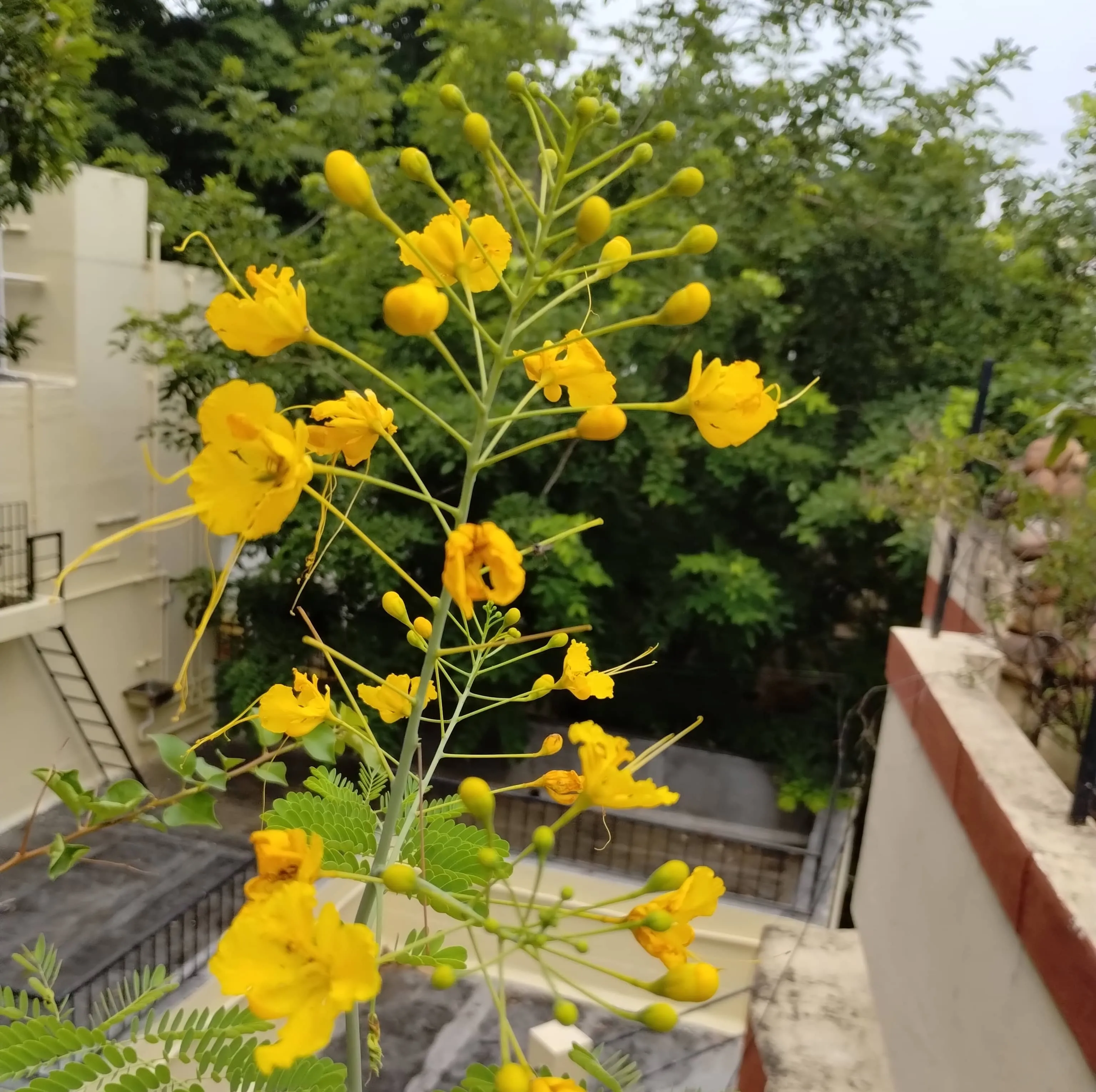
4. Fabaceae (The Legumes, Peas & Beans)
The third-largest plant family, famous for nitrogen-fixing root nodules, edible seed pods, and butterfly-like blossoms.- Structural Blueprint: The sub-family Papilionoideae displays a unique bilateral "butterfly" flower with 5 distinct petals: 1 large upright upper petal (the Banner / Standard), 2 lateral spreading petals (the Wings), and 2 fused bottom petals (the Keel) that conceal 10 stamens (usually 9 fused into a sheath + 1 free stamen).
- Floral Formula: `% ⚥ K(5) C1+2+(2) A(9)+1 G1`.
- Field Identification Shortcut: Look for the Banner-Wings-Keel flower architecture followed by a developing pea-like seed pod (legume) with a single row of seeds attached along one seam.
- Popular BioLens Flowers: Sweet Pea, Butterfly Pea (Aparajita), Peacock Flower, Tanner's Cassia (Avaram).
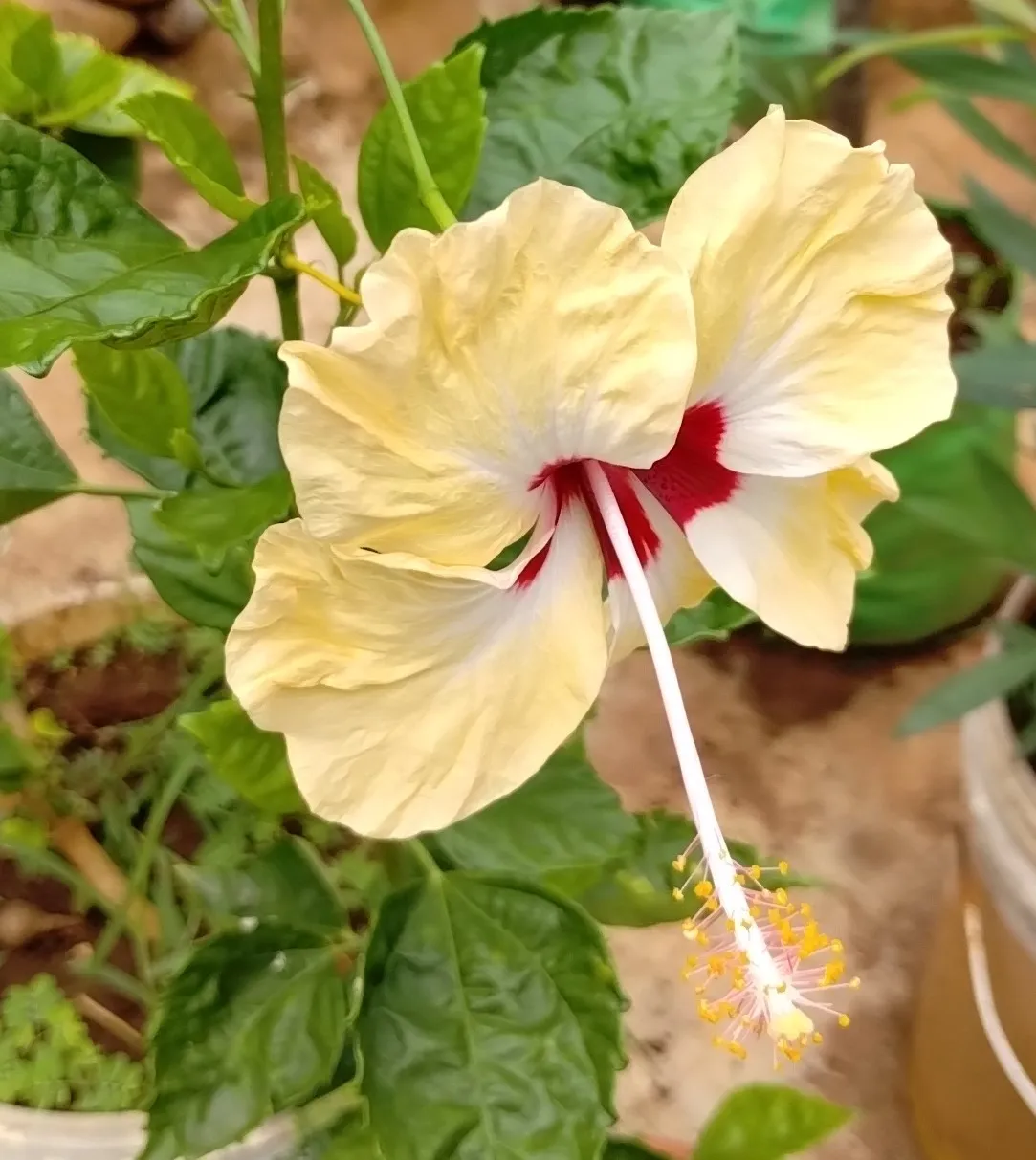
5. Malvaceae (The Mallows, Hibiscus & Cotton)
Known for fibrous bark, mucilaginous sap, and remarkable reproductive columns that ensure heavy pollen transfer.- Structural Blueprint: 5 free petals overlapping in bud (convolute), surrounded by a primary calyx of 5 sepals and an extra outer ring of small green bracts called the Epicalyx. The hallmark of the family is the monadelphous staminal column: filaments of numerous stamens are fused together into a long, hollow tube encasing the style.
- Floral Formula: `⊕ ⚥ K(5)+epicalyx C5 A(∞) G(5-∞)`.
- Field Identification Shortcut: Look for the dramatic, long central column projecting out from the flower throat, heavily encrusted with yellow pollen grains and topped by 5 velvet-like stigmatic knobs.
- Popular BioLens Flowers: Hibiscus, Hollyhock, Mallow, Tree Mallow, Swamp Rose Mallow.
- Comparison Guide: Explore family variations with Mallow vs. Hibiscus and Bougainvillea vs. Hibiscus.
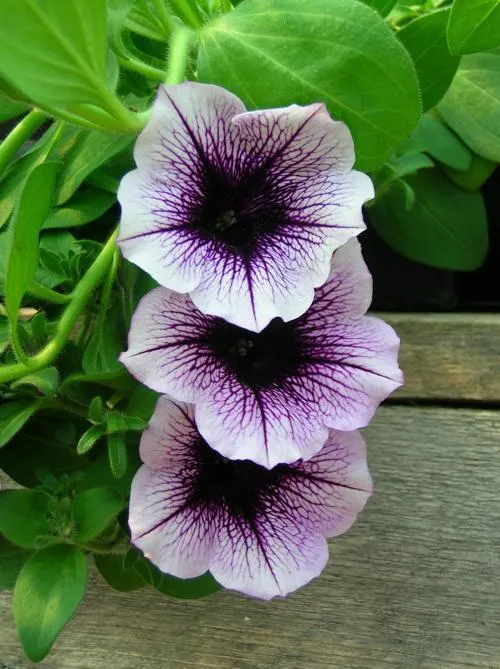
6. Solanaceae (The Nightshades & Petunias)
A botanically vital and chemically potent family producing potatoes, tomatoes, peppers, and eggplants alongside deadly alkaloid-rich herbs.- Structural Blueprint: 5 petals fused into a wheel-shaped (rotate), bell-shaped, or funnel-shaped corolla that is folded like an accordion (plicate) in bud; 5 stamens inserted on the petal tube (epipetalous); fruit is a fleshy berry or a capsule.
- Floral Formula: `⊕ ⚥ K(5) [C(5) A5] G(2)`.
- Field Identification Shortcut: Notice 5 fused petals with subtle radiating star crease lines, 5 stamens often leaning tightly against each other in the throat, and alternate leaves with a pungent foliage smell.
- Popular BioLens Flowers: Petunia, Thorn Apple (Datura).
- Comparison Guide: Distinguish funnel forms with our Petunia vs. Geranium Comparison.
7. Lamiaceae (The Mints & Sages)
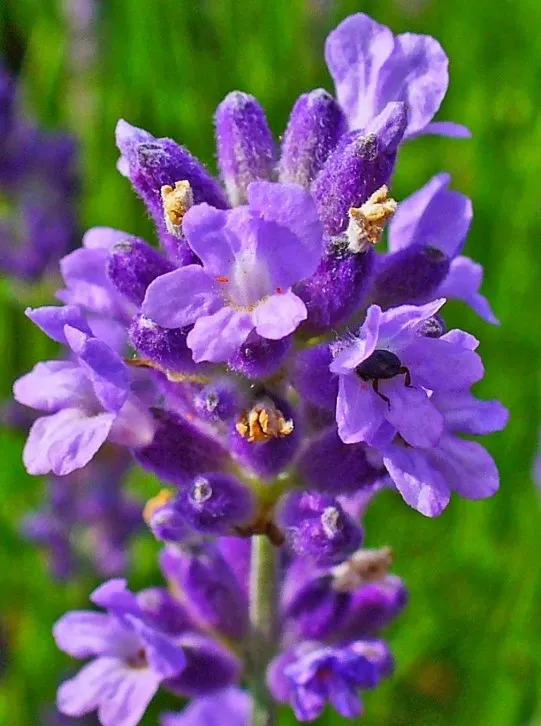
The primary herb garden family, celebrated worldwide for square stems, opposite foliage, and essential aromatic oils.- Structural Blueprint: Distinctly 4-angled (square) stems; opposite decussate leaves rich in glandular hairs; bilateral, two-lipped (bilabiate) flowers where the upper lip forms a protective hood over the style and stamens, and the lower lip serves as a wide insect landing deck; 4 stamens arranged in pairs of unequal length (didynamous).
- Floral Formula: `% ⚥ K(5) [C(5) A2+2] G(2)` (deeply 4-lobed ovary producing 4 nutlets).
- Field Identification Shortcut: Roll the stem between your thumb and index finger. If the stem is distinctly square and rubbing the leaves releases a minty, herbal scent, it is unquestionably Lamiaceae.
- Popular BioLens Flowers: Lavender, Beebalm (Monarda), Leucas Aspera (Thumba), Cat's Whiskers.
- Comparison Guide: See differences in Lavender vs. Salvia.
8. Apocynaceae (The Dogbanes, Plumeria & Milkweeds)
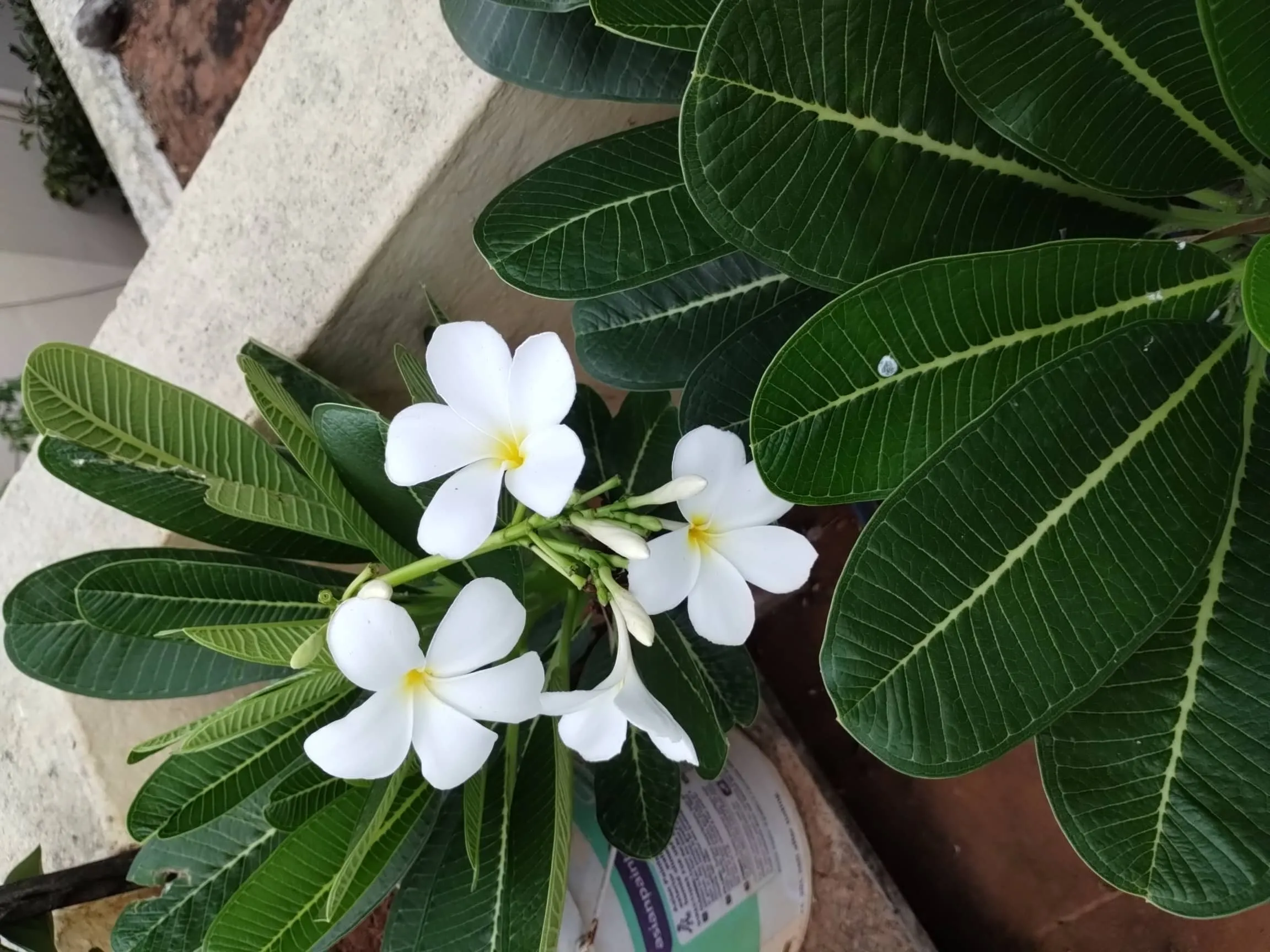
A major tropical family characterized by intense fragrances, propeller-like flower geometry, and dangerous cardiac toxins.- Structural Blueprint: Milky white latex sap; 5 petals fused at base with lobes overlapping in a twisted, windmill or propeller fashion (contorted aestivation); stamens and stigma often fused into a complex central structure (gynostegium); fruit is a pair of long, horn-like follicles.
- Floral Formula: `⊕ ⚥ K(5) [C(5) A5] G(2)` (superior to semi-inferior ovary).
- Field Identification Shortcut: Snap a leaf or stem: if sticky milky white sap oozes immediately and petals twist like a pinwheel, it is Apocynaceae. Caution: All parts are highly toxic if ingested!
- Popular BioLens Flowers: Plumeria (Frangipani), Desert Rose (Adenium), Oleander (Rosebay), Allamanda (Golden Trumpet), Madagascar Periwinkle (Vinca Rosea), Pinwheel (Crape Jasmine).
9. Oleaceae (The Olives, Jasmines & Lilacs)
Famous for sweet nocturnal fragrances, opposite leaves, and a uniquely reduced floral architecture.- Structural Blueprint: Woody trees, shrubs, or climbing lianas with opposite leaves; 4 (rarely more) fused petals forming a slender tubular corolla; strictly 2 stamens inserted on opposite sides of the corolla tube; superior 2-chambered ovary.
- Floral Formula: `⊕ ⚥ K(4) [C(4) A2] G(2)`.
- Field Identification Shortcut: Look into the narrow corolla throat: if you count exactly 2 stamens clinging to the inner tube walls accompanied by an intoxicating sweet scent, you have found a true Oleaceae.
- Popular BioLens Flowers: Arabian Jasmine (Mogra), Night Jasmine / Parijat, Spanish Jasmine, Star Jasmine (AngelWing), Juhi Jasmine, River Jasmine.
- Comparison Guide: Master distinctions with our Jasmine vs. Gardenia Comparison.
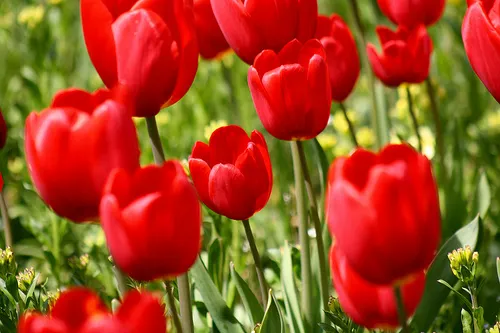
10. Liliaceae (The True Lilies & Tulips)
The quintessential monocot family, showcasing strict 3-part symmetry and subterranean bulbs.- Structural Blueprint: Monocots arising from scaly bulbs; leaves with parallel venation; flowers with 6 identical showy tepals arranged in two concentric whorls of 3 (3 sepals + 3 petals); 6 stamens in two rings; superior 3-chambered ovary that sits perched inside the flower cup.
- Floral Formula: `⊕ ⚥ P3+3 A3+3 G(3)`.
- Field Identification Shortcut: Count 6 tepals and 6 stamens with a swollen green ovary situated above the base of the petals. (Crucial distinction: True Lilies have superior ovaries, unlike Amaryllis which has inferior ovaries).
- Popular BioLens Flowers: Tulip, Tiger Lily, Easter Lily, Turk's Cap Lily, Toad Lily, Fritillaria.
- Comparison Guide: Compare forms in Calla Lily vs. Easter Lily and Lily vs. Lotus.
11. Iridaceae (The Irises, Gladioli & Crocuses)
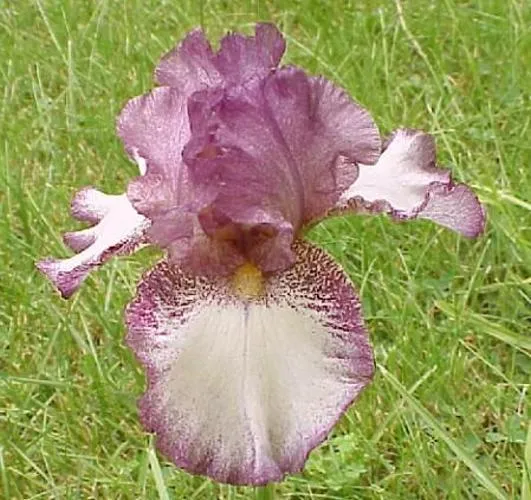
Renowned for dramatic bilateral or radial blooms, sword-like fans of foliage, and economically precious saffron threads.- Structural Blueprint: Monocots with equitant leaves (flattened vertically and overlapping like a folding hand fan); 6 tepals in two distinct series (in Iris, 3 upright "standards" and 3 downward-arching "falls"); strictly 3 stamens; inferior ovary; style often divided into 3 broad, petal-like arms.
- Floral Formula: `⊕ or % ⚥ P3+3 A3 G̅(3)`.
- Field Identification Shortcut: Check the stamen count! While lilies and daffodils have 6 stamens, irises and gladioli have only 3 stamens, and their leaves always form a flat, two-dimensional fan.
- Popular BioLens Flowers: Bearded Iris, Yellow Iris, Gladiolus (Sword Lily), Spring Crocus (Saffron), Leopard Lily (Belamcanda).
12. Amaryllidaceae (The Amaryllis & Daffodils)
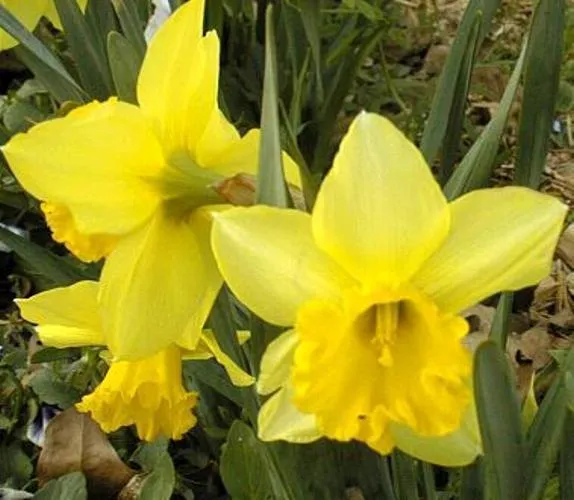
Bulbous monocots characterized by umbel-like blooms, trumpet crowns, and inferior ovaries.- Structural Blueprint: Arising from tunicate bulbs; flowers born atop a hollow, leafless stem (scape), subtended by one or more papery spathe bracts; 6 tepals; 6 stamens; inferior 3-chambered ovary located beneath the petal attachment point; often features an extra trumpet or cup-like outgrowth called a Corona.
- Floral Formula: `⊕ or % ⚥ P3+3 A3+3 G̅(3)`.
- Field Identification Shortcut: Look beneath the petals for a swollen green seed capsule (inferior ovary), and check whether the flower emerges from a dry, papery sheath.
- Popular BioLens Flowers: Daffodil (Narcissus), Amaryllis (Hippeastrum), Red Spider Lily (Cape Flower), Zephyr Lily (Rain Lily).
- Comparison Guide: Master monocot traits in Tulip vs. Daffodil.
13. Ranunculaceae (The Buttercups & Crowfoots)
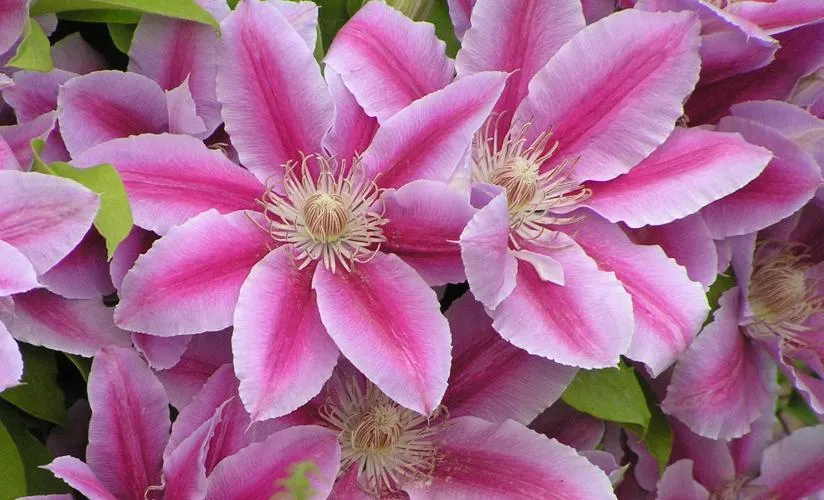
An ancient eudicot lineage displaying primitive, spiral floral anatomy and blistering alkaloid saps.- Structural Blueprint: Undifferentiated perianth (often relying on showy petaloid sepals rather than true petals); numerous stamens and separate, unfused carpels (apocarpous gynoecium) arranged in an evolutionary spiral on a conical receptacle; fruit is a cluster of dry achenes or split pods (follicles).
- Floral Formula: `⊕ or % ⚥ K3-∞ C0-∞ A∞ G∞`.
- Field Identification Shortcut: Look into the flower center for dozens of separate, spiral stamens surrounding a cluster of miniature green seed-heads, lacking any fusion between parts.
- Popular BioLens Flowers: Clematis, Columbine (Aquilegia), Larkspur (Delphinium), Monkshood (Aconitum), Meadow Buttercup, Hellebore (Lenten Rose), Globe Flower, Japanese Anemone (Windflower), Love-in-a-Mist (Nigella).
- Comparison Guide: Explore climbing vines in Passion Flower vs. Clematis.
14. Papaveraceae (The Poppies)
Celebrated for tissue-paper-thin petals, fleeting sepals, and salt-shaker seed capsules.- Structural Blueprint: 2 (rarely 3) sepals that completely drop off (caducous) the exact instant the flower opens; 4 to 6 delicate, crinkled petals packed tightly in bud; numerous stamens; milky, white, or orange latex sap; superior ovary topped by a flat, star-rayed stigmatic disc.
- Floral Formula: `⊕ ⚥ K2 C4-6 A∞ G(2-∞)`.
- Field Identification Shortcut: Watch an opening bud: as the crumpled, vibrant petals expand, the two green outer sepals pop off and fall away. The resulting seed head resembles a miniature pepper shaker with tiny holes under a flat lid.
- Popular BioLens Flowers: California Poppy, Corn Poppy (Field Poppy), Iceland Poppy, Wood Poppy, Tree Poppy, Bloodroot.
- Comparison Guide: Explore regional poppy varieties in our California Poppy vs. Iceland Poppy Comparison.
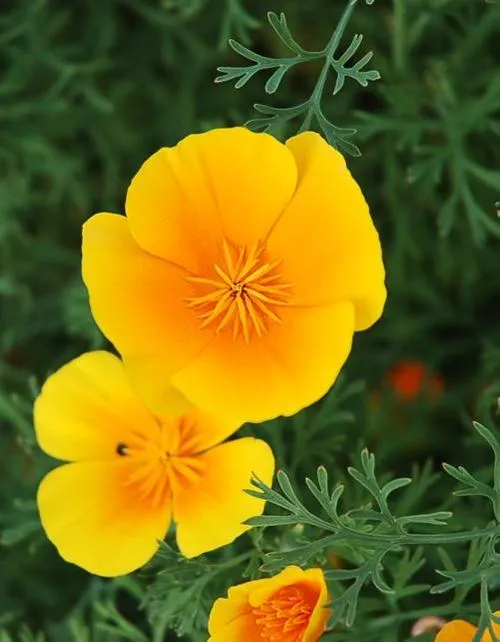
15. Araceae (The Aroids, Anthuriums & Calla Lilies)
Tropical jungle giants characterized by bizarre fleshy spikes and heart-shaped foliage.- Structural Blueprint: Highly modified inflorescence consisting of a dense, fleshy finger-like spike of microscopic florets called the Spadix, enveloped and protected by a large, colorful, waxy modified leaf called the Spathe. Flowers are minute, often unisexual (male above, female below).
- Floral Formula: `⊕ ⚥ or ♂♀ P0 or (4-6) A4-8 G(2-3)`.
- Field Identification Shortcut: Look for the signature "finger in a blanket"—a cylindrical spadix column emerging from the base of a single large, waxy, curved spathe hood.
- Popular BioLens Flowers: Anthurium, Calla Lily (Arum Lily).
- Comparison Guide: Clarify common misnomers with Calla Lily vs. Easter Lily.
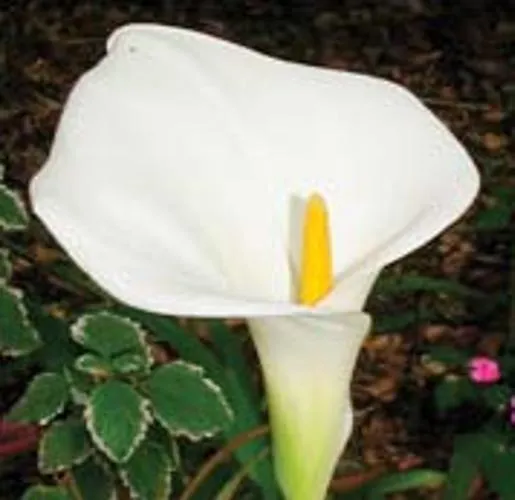
16. Acanthaceae (The Acanthus & Firecracker Flowers)
A tropical and subtropical family famed for showy overlapping bracts and explosive seed dispersal.- Structural Blueprint: Opposite simple leaves; flowers arranged in dense terminal spikes subtended by large, overlapping green or colored bracts; corolla is 2-lipped or 5-lobed salverform; fruit is an explosive 2-valved capsule with specialized hook-like stalks called Jaculators (Retinacula) that fling seeds away upon wetting.
- Floral Formula: `% ⚥ K(4-5) [C(5) A2-4] G(2)`.
- Field Identification Shortcut: Flowers emerge from cone-like stacks of overlapping bracts. Mature dried seed pods audibly "snap" and launch seeds across the soil when misted with rain.
- Popular BioLens Flowers: Firecracker Flower (Crossandra), December Flower (Barleria), Mexican Petunia (Ruellia), Pseuderanthemum.
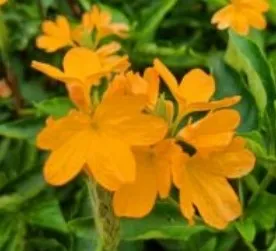
17. Campanulaceae (The Bellflowers & Lobelias)
Eudicots characterized by bell-shaped corollas and an ingenious pollen-plunger mechanism.- Structural Blueprint: 5 petals fused into a bell, star, or tubular cup; 5 stamens whose anthers shed pollen directly onto the outside of the developing style before the flower opens (secondary pollen presentation); as the style elongates, it sweeps the pollen out like a chimney brush for visiting bees.
- Floral Formula: `⊕ or % ⚥ K5 [C(5) A5] G̅(2-5)` (inferior ovary).
- Field Identification Shortcut: A bell-shaped corolla with an inferior ovary where the central style acts like a furry piston coated in pollen before its stigmatic lobes peel open.
- Popular BioLens Flowers: Canterbury Bells, Balloon Flower (Platycodon), Cardinal Flower (Lobelia), Great Blue Lobelia.
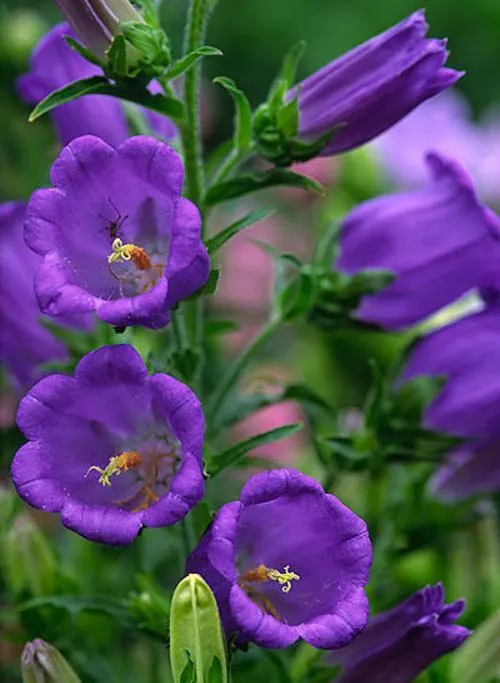
18. Rubiaceae (The Madders, Coffee & Gardenias)
The fourth-largest plant family, globally celebrated for coffee, quinine, and intoxicating garden gardenias.- Structural Blueprint: Opposite or whorled leaves with unmistakable interpetiolar stipules (small flaps connecting opposite leaf bases across the stem); 4 to 5 fused petals with an inferior ovary; intense, heavy evening floral aromas designed for night-flying hawkmoths.
- Floral Formula: `⊕ ⚥ K(4-5) [C(4-5) A4-5] G̅(2)`.
- Field Identification Shortcut: Look at the stem junction between two opposite leaves: you will find a small leaf-like bridge or ridge (interpetiolar stipule) linking the two petioles.
- Popular BioLens Flowers: Gardenia, Ixora (Jungle Flame), Mussaenda.
- Comparison Guide: Master gardenia traits in Jasmine vs. Gardenia.
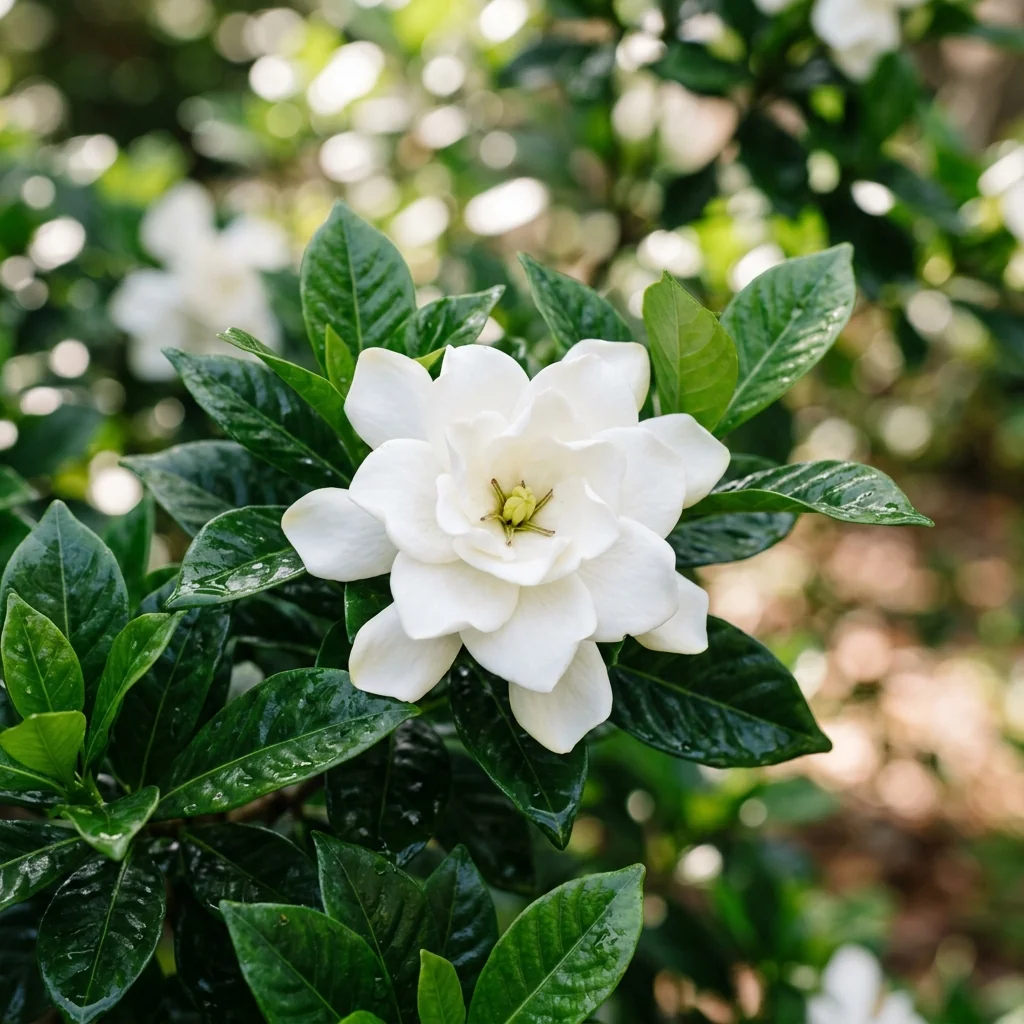
19. Plantaginaceae (The Snapdragons & Foxgloves)
Bilateral eudicots displaying two-lipped personate corollas and cardiac glycosides.- Structural Blueprint: Bilateral symmetry; 5 fused petals forming a closed or open 2-lipped tube; 4 stamens paired in two lengths (didynamous); persistent style on a 2-chambered capsule.
- Floral Formula: `% ⚥ K(5) [C(5) A2+2] G(2)`.
- Field Identification Shortcut: Pinch the sides of a Snapdragon bloom: the upper and lower jaws pop open like a dragon's mouth, exposing the paired stamens tucked under the roof.
- Popular BioLens Flowers: Snapdragon (Antirrhinum), Foxglove (Digitalis), Coral Fountain (Russelia).
- Comparison Guide: Explore differences with our Snapdragon vs. Foxglove Comparison.
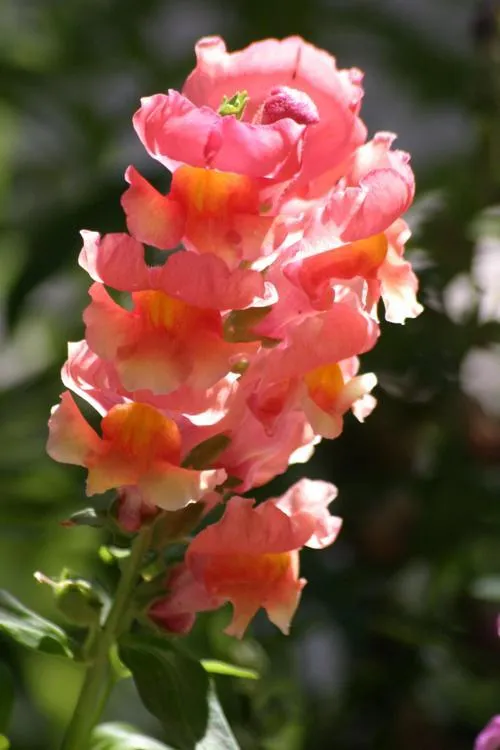
20. Convolvulaceae (The Morning Glories & Bindweeds)
Vigorous twining climbers whose funnel blooms open to greet the rising sun.- Structural Blueprint: Twining climbing stems without tendrils; alternate leaves; corolla is a fused, pleated funnel (infundibuliform) or saucer with 5 distinct radial bands (midpetaline bands); bud twists tightly into a spiral cone before opening at dawn and collapsing by noon.
- Floral Formula: `⊕ ⚥ K5 [C(5) A5] G(2)`.
- Field Identification Shortcut: Look for a morning-only funnel blossom showing 5 star-like crease lines, emerging from a clockwise-twining vine.
- Popular BioLens Flowers: Morning Glory (Ipomoea), Moonflower (Ipomoea alba), Silverbush (Convolvulus).
- Comparison Guide: Compare vine species in Morning Glory vs. Bindweed.
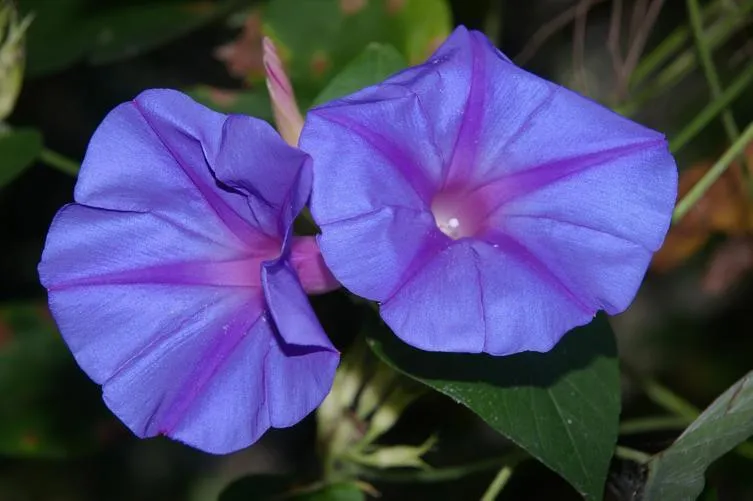
21. Zingiberaceae (The Ginger Family)
Aromatic tropical monocots where showy false petals are actually modified sterile stamens.- Structural Blueprint: Spicy, aromatic rhizomes; pseudostems formed by rolled leaf sheaths; bizarre bilateral flowers where what looks like petals are actually enlarged sterile stamens (staminodes) fused into an elaborate Lip (Labellum); only 1 single fertile stamen remains, which cradles the style.
- Floral Formula: `% ⚥ K(3) [C(3) A1+staminodes] G̅(3)`.
- Field Identification Shortcut: Crush a leaf: if an unmistakable spicy ginger/cardamom scent is released and the blooms emerge from cone-like waxy bracts with only 1 fertile stamen, it is Zingiberaceae.
- Popular BioLens Flowers: Red Ginger (Ostrich Plume), Siam Tulip (Curcuma), Spiked Shaded Ginger.
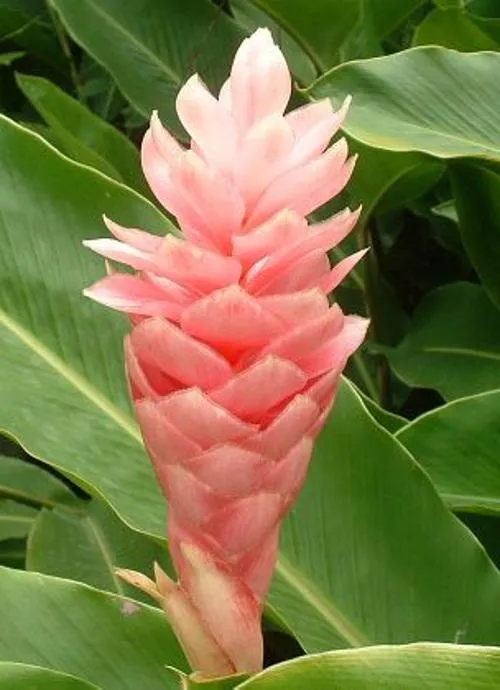
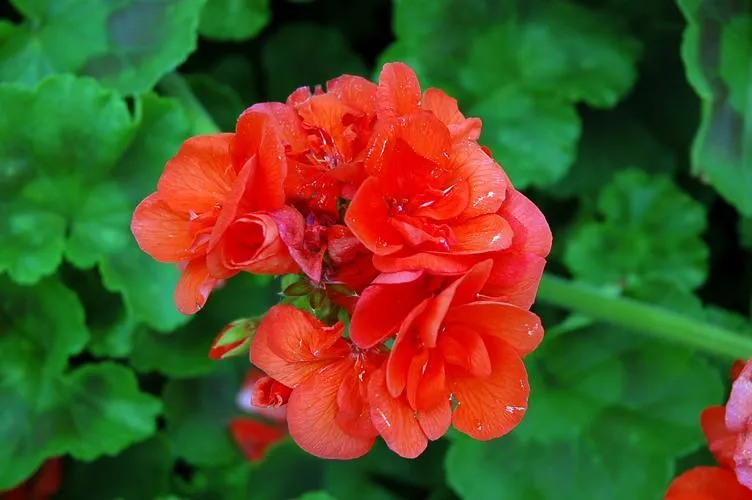
22. Geraniaceae (The Geraniums & Cranesbills)
Hardy garden favorites famous for aromatic foliage, 5-parted blooms, and spring-loaded fruit columns.- Structural Blueprint: Glandular, strongly scented leaves that are palmately lobed; 5 sepals and 5 free petals; 10 stamens; fruit is a distinctive elongated schizocarp resembling the long bill of a crane or stork, which curls elastically into a spiral spring to catapult seeds when ripe.
- Floral Formula: `⊕ or % ⚥ K5 C5 A5-10 G(5)`.
- Field Identification Shortcut: When petals drop, look for a long, pointed needle or "stork's bill" projecting upward from the center of the seed head.
- Popular BioLens Flowers: Geranium (Cranesbill), Pelargonium (Zonal Geranium), Wild Geranium.
- Comparison Guide: Compare traits in Petunia vs. Geranium.
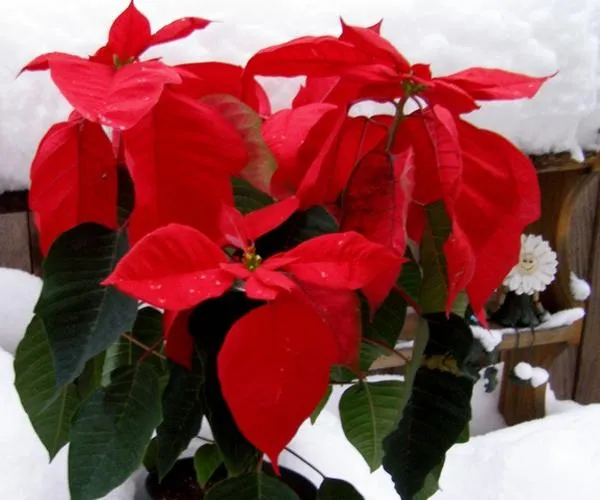
23. Euphorbiaceae (The Spurges, Poinsettias & Castor)
Masters of camouflage that replace true petals with brightly painted leaves and specialized false flowers.- Structural Blueprint: Milky, irritating latex sap; true flowers are microscopic and unisexual, lacking petals, assembled into a bizarre cup-like false flower called a Cyathium; the showy "petals" seen in garden favorites are actually modified, brightly pigmented foliage leaves called Bracts.
- Floral Formula: `Cyathium: ♀ solitary central pistil G(3) surrounded by ♂ flowers (each reduced to a single stamen A1)`.
- Field Identification Shortcut: The colorful "petals" have leaf venation and stem texture; the actual flowers are tiny yellow or green cups in the very center bearing glistening nectar glands.
- Popular BioLens Flowers: Poinsettia, Crown of Thorns, Spicy Jatropha.
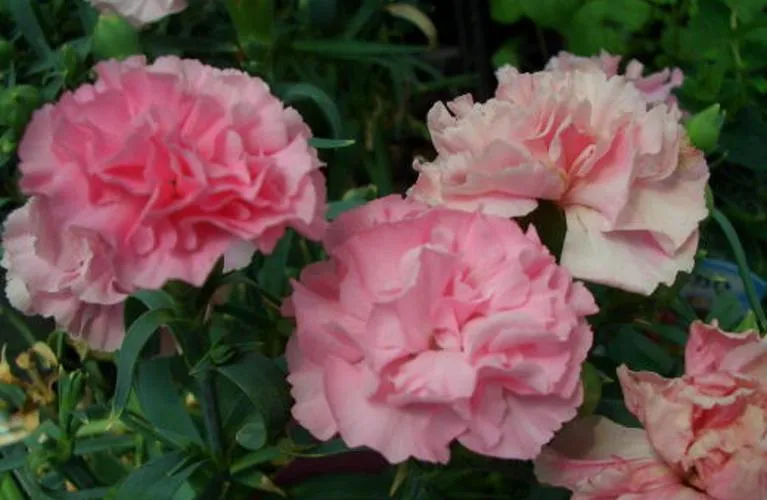
24. Caryophyllaceae (The Pinks & Carnations)
A cosmopolitan family renowned for swollen stem joints, opposite foliage, and jagged petal edges.- Structural Blueprint: Swollen stem nodes ("knots" or "knees"); leaves opposite, simple, and connected across the stem; petals distinctly divided into a narrow lower stem (claw) and an expanded horizontal blade (limb) that is deeply fringed, notched, or jagged as if cut by pinking shears.
- Floral Formula: `⊕ ⚥ K(5) C5 A5+5 G(2-5)`.
- Field Identification Shortcut: Run your fingers along the stem: feel the hard, swollen nodes at each leaf pair, and inspect the petals for jagged, fringed margins.
- Popular BioLens Flowers: Carnation, Sweet William.
- Comparison Guide: Compare carnations with roses in our Carnation vs. Rose Comparison.
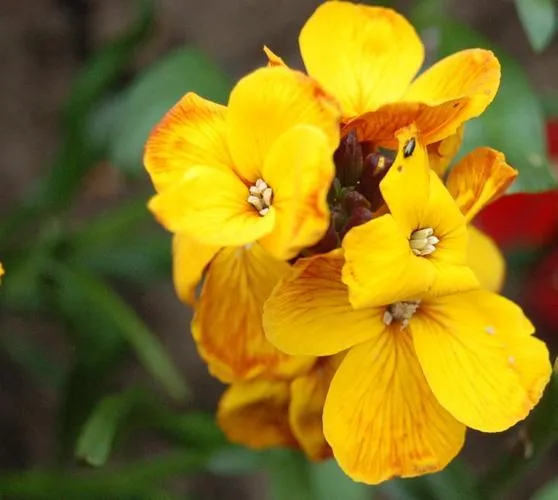
25. Brassicaceae / Cruciferae (The Mustards & Wallflowers)
The edible crucifer family (cabbage, kale, broccoli, mustard) featuring cross-shaped flowers and pungent glucosinolates.- Structural Blueprint: 4 sepals and 4 free petals arranged diagonally in the shape of a cross (cruciform); tetradynamous stamens (6 stamens total: 4 long inner stamens + 2 short outer stamens); fruit is a 2-valved dry pod called a silique or silicle.
- Floral Formula: `⊕ ⚥ K4 C4 A2+4 G(2)`.
- Field Identification Shortcut: Count 4 petals arranged in a perfect `+` cross, paired with 4 tall stamens and 2 short stamens.
- Popular BioLens Flowers: Wallflower (Erysimum), Sweet Alyssum.
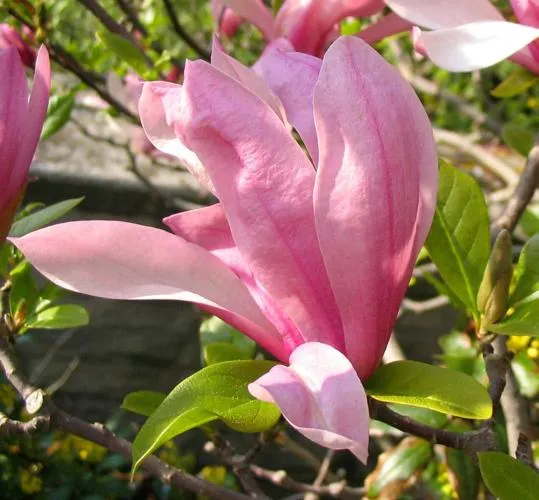
26. Magnoliaceae (The Magnolias — Ancient Basal Lineage)
Living fossils dating back over 100 million years, flowering before bees existed and designed to withstand clumsy beetle pollination.- Structural Blueprint: Undifferentiated perianth of leathery Tepals arranged in multiple whorls; cone-like, elongated floral axis (receptacle) bearing numerous spirally arranged stamens and separate, unfused carpels; leaves alternate and leathery with encircling stipule scars.
- Floral Formula: `⊕ ⚥ P6-18 A∞ G∞`.
- Field Identification Shortcut: Look for a tough, woody central cone surrounded by thick, leathery tepals emitting an intoxicating citrus or spicy aroma designed for beetles.
- Popular BioLens Flowers: Magnolia.
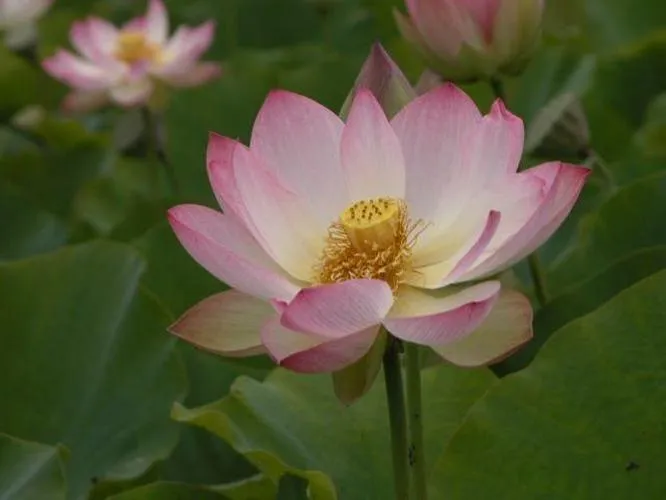
27. Nelumbonaceae (The Sacred Lotus)
Aquatic giants featuring self-cleaning leaves, thermoregulating blossoms, and iconic showerhead seed receptacles.- Structural Blueprint: Large, round peltate leaves (stem attaches to center of leaf blade) held high above the water on stiff, prickly petioles; flower held above water; numerous spirally arranged petals and stamens surrounding a large, spongy, flat-topped, inverted cone-shaped receptacle (showerhead) containing embedded individual nutlets.
- Floral Formula: `⊕ ⚥ P∞ A∞ G∞`.
- Field Identification Shortcut: Leaves and flowers stand proudly above the water line on rigid stems, and the seedpod looks like a perforated showerhead. (Distinction: Water Lilies float flat on the water).
- Popular BioLens Flowers: Sacred Lotus.
- Comparison Guide: Master aquatic botany in our Lily vs. Lotus Comparison.
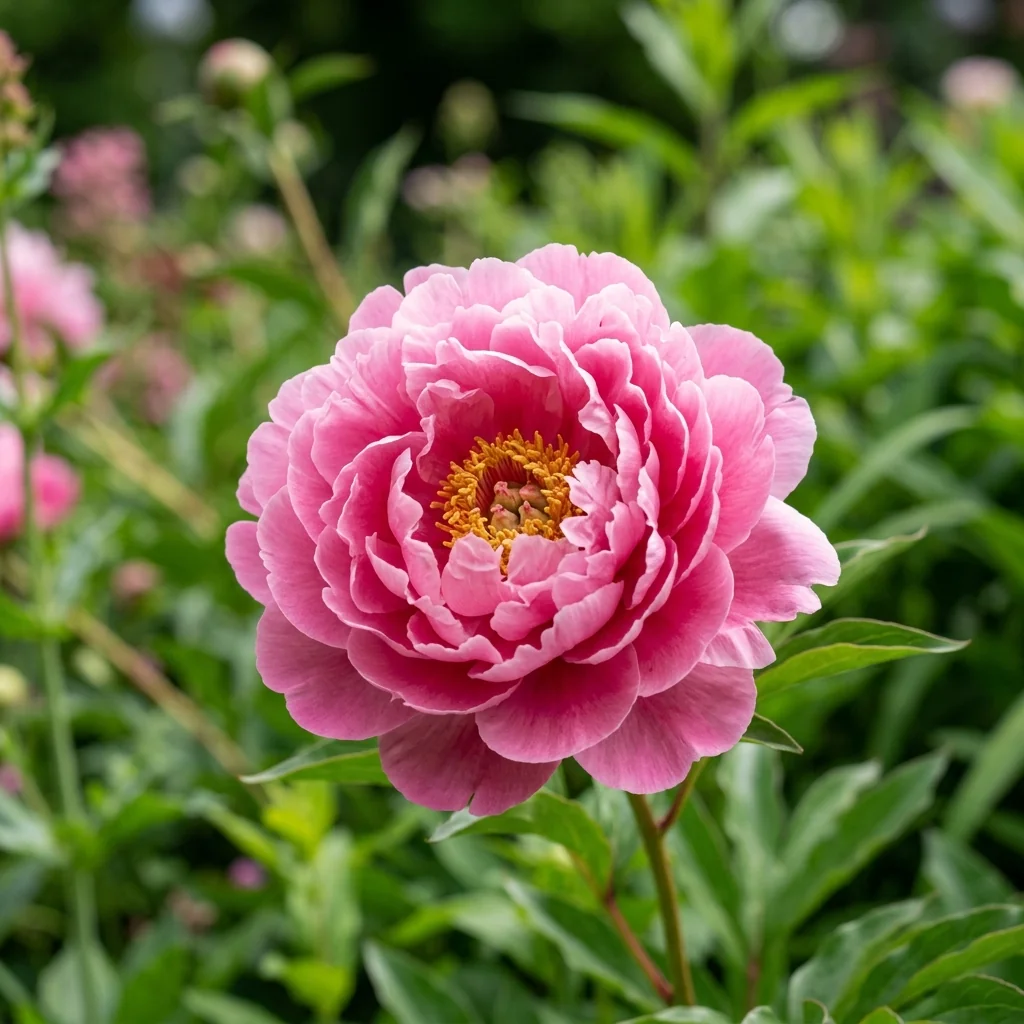
28. Paeoniaceae (The Peonies)
Majestic perennial sub-shrubs bearing immense, luxurious blossoms with fleshy nectar discs.- Structural Blueprint: Massive solitary flowers; 5 persistent green sepals; 5 to 10 broad, textured petals (massively multiplied into dozens of ruffled petals in cultivated garden double forms); numerous stamens surrounding a prominent, fleshy, lobed glandular disc that secretes nectar to attract protective ants; 2 to 5 large, leathery carpels.
- Floral Formula: `⊕ ⚥ K5 C5-10 A∞ G2-5`.
- Field Identification Shortcut: Huge, ruffled, multi-petaled blooms emerging from glossy, deeply lobed foliage, with ants crawling over the buds feeding on the sugary nectar disc.
- Popular BioLens Flowers: Peony.
- Comparison Guide: Compare garden icons in Rose vs. Peony and Hydrangea vs. Peony.
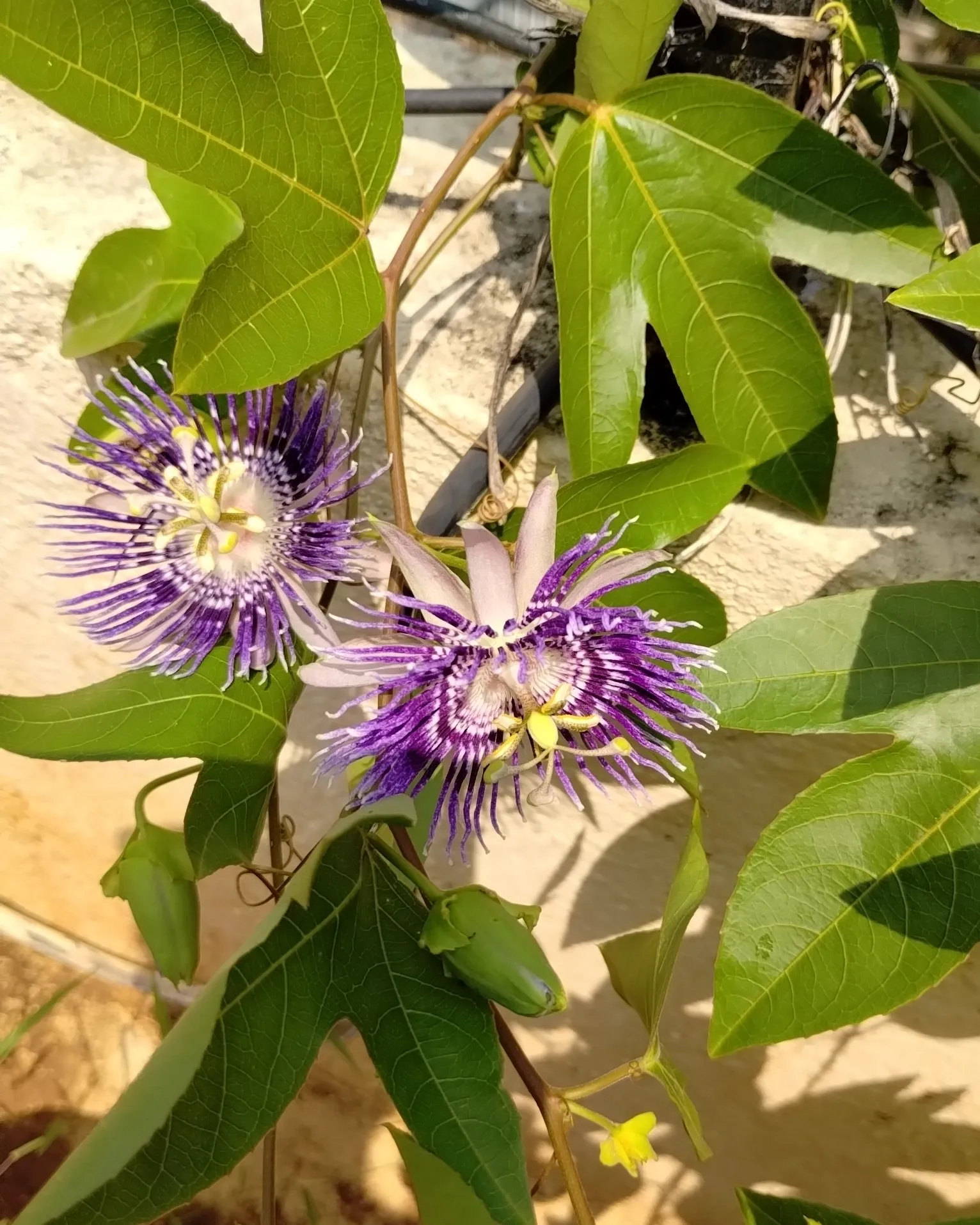
29. Passifloraceae (The Passion Flowers)
The most geometrically intricate flowers on Earth, displaying multi-tiered filaments and elevated reproductive organs.- Structural Blueprint: 5 sepals and 5 petals, overlaid by a breathtaking fringed wheel of colorful thread-like filaments called the Corona; reproductive organs elevated high above the petals on a specialized joint stalk called the Androgynophore, bearing 5 drooping stamens and 3 prominent radiating, hammer-headed stigmas.
- Floral Formula: `⊕ ⚥ K5 C5 Corona A5 G(3)`.
- Field Identification Shortcut: The multi-layered thread-like corona topped by an elevated central crane bearing 5 stamens and 3 radiating horns is completely unmistakable anywhere on Earth.
- Popular BioLens Flowers: Passion Flower.
- Comparison Guide: Study climbing anatomy in Passion Flower vs. Clematis.
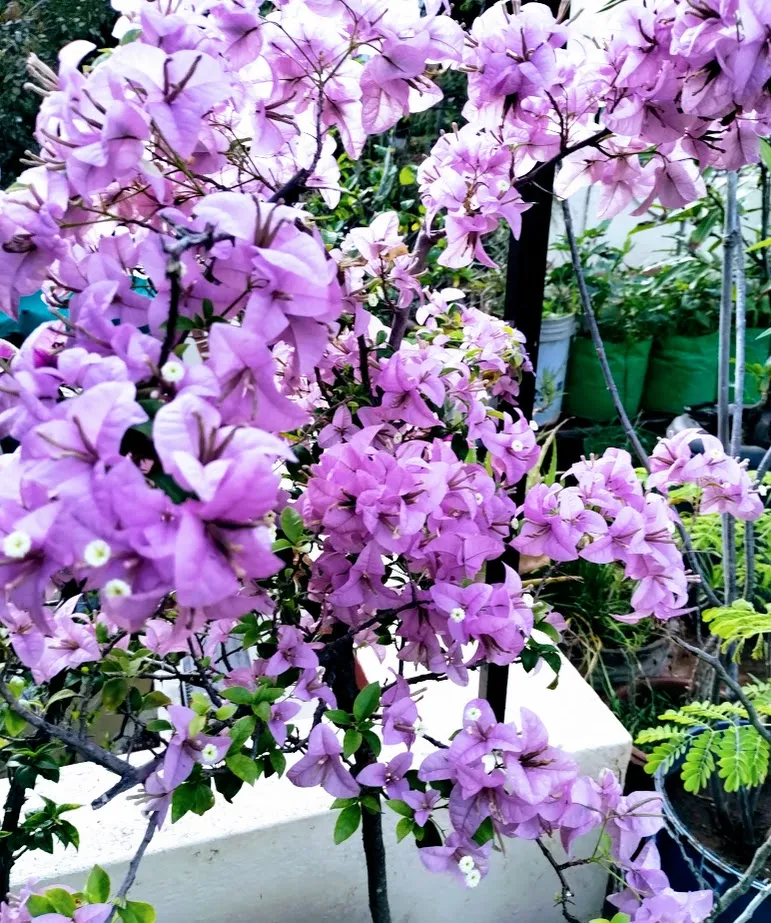
30. Nyctaginaceae (The Four O'Clocks & Bougainvilleas)
Showy tropical bloomers where vibrant "petals" are actually paper-thin leaves, and blooms open late in the day.- Structural Blueprint: Flowers lack true petals entirely; the showy, brilliant colors come from either a tubular petal-like calyx (petaloid perianth) or 3 to 5 paper-thin, brightly pigmented modified leaves (bracts) that cradle small, tubular, cream-colored true flowers. Blooms typically open in late afternoon and night (nocturnal/crepuscular).
- Floral Formula: `⊕ ⚥ P(5) A5-10 G1`.
- Field Identification Shortcut: If the vibrant "petals" feel dry, crisp, and paper-thin like parchment, and surround tiny inconspicuous trumpet flowers, it is Nyctaginaceae.
- Popular BioLens Flowers: Bougainvillea, Four O'Clock (Marvel of Peru).
- Comparison Guide: Contrast bracts with Bougainvillea vs. Hibiscus.
Botanical Imposters: Why Common Names Deceive Us
Common flower names evolved historically through poetic association rather than scientific taxonomy. This creates immense confusion among gardeners. Here is the botanical reality behind four famous groups of "doppelgängers":
1. The "Lily" Imposters
True Lilies belong strictly to Liliaceae (genera Lilium and Tulipa). Almost every other famous plant with "Lily" in its common name belongs to an entirely unrelated botanical family:- Calla Lily & Peace Lily: Belong to Araceae (Aroid family), along with Philodendrons and Monsteras. They produce spathes and spadices, not lily petals.
- Water Lily: Belongs to Nymphaeaceae, an ancient basal angiosperm family dating back over 120 million years.
- Daylily (Hemerocallis): Belongs to Asphodelaceae, bearing fleeting single-day blooms and fibrous roots rather than true lily bulbs.
- Rain Lily / Zephyr Lily: Belongs to Amaryllidaceae, featuring inferior ovaries and corona filaments.
- Canna Lily: Belongs to Cannaceae, featuring asymmetric tropical blooms with showy petal-like staminodes.
2. The "Rose" Misnomers
True Roses belong strictly to Rosaceae, possessing a hypanthium, 5-parted symmetry, and 20+ stamens:- Desert Rose (Adenium): Belongs to Apocynaceae (Dogbane family). It is a succulent shrub oozing toxic milky sap.
- Moss Rose (Portulaca): Belongs to Portulacaceae, a low-growing succulent with 5 notched petals and mucilaginous stems.
- Lenten Rose & Christmas Rose (Helleborus): Belong to Ranunculaceae (Buttercup family), possessing multiple separate carpels and toxic protoanemonin sap.
- Rose of Sharon / Swamp Rose Mallow: Belongs to Malvaceae, bearing a prominent central staminal column.
3. The "Jasmine" Deceptions
True Jasmines belong strictly to Oleaceae (genus Jasminum), with exactly 2 stamens inside a slender tube:- Star Jasmine (Trachelospermum): Belongs to Apocynaceae, featuring milky sap and 5 pinwheel petals.
- Night-blooming Jasmine (Cestrum nocturnum): Belongs to Solanaceae (Nightshade family), bearing toxic berries rich in solanine.
- Cape Jasmine: Actually Gardenia, belonging to Rubiaceae, characterized by opposite leaves with interpetiolar stipules.
Pollinator Syndromes: How Insects & Birds Sculpted Flower Families
The astonishing diversity of botanical families is the direct result of 150 million years of co-evolution between flowers and their animal pollinators:
- Bee Flowers (Melittophily): Bilateral landing strips, blue/yellow pigments, ultraviolet nectar guides, sweet daytime scents (e.g., Fabaceae, Lamiaceae, Orchidaceae).
- Hawkmoth Flowers (Sphingophily): Ghostly white or pale cream blossoms, long narrow corolla tubes, intense sweet nocturnal linalool perfumes released after dusk (e.g., Oleaceae, Convolvulaceae, Rubiaceae).
- Butterfly Flowers (Psychophily): Bright red, orange, and pink flat-topped floral platforms that allow butterflies to walk while sipping from deep, narrow nectar wells (e.g., Asteraceae, Caryophyllaceae).
- Bird Flowers (Ornithophily): Vivid scarlet, orange, or fuchsia colors, scentless (birds have minimal sense of smell), abundant dilute nectar, with long exerted stamens that brush pollen across the forehead of hovering hummingbirds and sunbirds (e.g., Malvaceae, Campanulaceae, Strelitziaceae).
- Beetle Flowers (Cantharophily): Ancient, large, open, flat or bowl-shaped flowers, dull white or brown, emitting heavy fruity or spicy fermented aromas, with protected ovaries to survive chewing beetles (e.g., Magnoliaceae, Nelumbonaceae).
- Buzz-Pollinated Flowers: Anthers with tiny terminal pores that tightly trap pollen until a bumblebee grabs the flower and vibrates its flight muscles at 400 Hz (e.g., Solanaceae).
Botanical Toxicity Alerts: Safety Across Plant Families
Identifying botanical families is not merely an academic exercise—it is an indispensable safety skill for pet owners, parents, and foragers:
[!WARNING]
Feline Nephrotoxicity Warning: All true lilies (Liliaceae: Easter Lily, Tiger Lily, Stargazer Lily) are catastrophically toxic to cats. Ingesting even a single pollen grain or drinking water from a vase will trigger acute, fatal kidney failure within 48 to 72 hours. In contrast, Calla Lilies and Peace Lilies (Araceae) contain insoluble calcium oxalate crystals that cause oral burning and drooling, but not kidney shutdown.
> Learn more in our dedicated Toxic Garden Plants for Cats Guide and BioLens Pet Guard.
[!CAUTION]
Cardiac Glycoside Alert: The entire Dogbane family (Apocynaceae: Oleander, Desert Rose, Allamanda) contains lethal concentrations of cardiac glycosides (oleandrin, nerioside) capable of stopping human and animal hearts. Foxgloves (Plantaginaceae) contain digitoxin and digoxin, which disrupt sodium-potassium pumps. Never prune or burn these plants without protective gloves!
Master Botanical Comparison Matrix: 30 Families at a Glance
| Botanical Family | Common Name | Symmetry | Perianth / Petals | Stamen Organization | Ovary Position | Diagnostic Field Signature | Key BioLens Species |
|---|---|---|---|---|---|---|---|
| Asteraceae | Sunflower / Composite | ⊕ & % | Capitulum of ray + disc florets | 5 (syngenesious) | Inferior | Composite head + pappus hairs | Sunflower, Marigold |
| Orchidaceae | Orchid Family | % | 3 sepals + 3 petals with Lip | 1–2 (pollinia) | Inferior | Lip petal + fused column | Vanda Orchid |
| Rosaceae | Rose Family | ⊕ | 5 free petals + hypanthium cup | ∞ (20+) | Superior/Inferior | Hypanthium cup + 20+ stamens | Rose |
| Fabaceae | Pea / Legume Family | % | Banner, 2 wings, fused keel | 10 (9+1 or 10) | Superior | Butterfly flower + pea pod | Sweet Pea |
| Malvaceae | Mallow / Hibiscus | ⊕ | 5 petals + epicalyx outer ring | ∞ (monadelphous) | Superior | Central staminal column tube | Hibiscus |
| Solanaceae | Nightshade Family | ⊕ | 5 fused petals (funnel/wheel) | 5 (epipetalous) | Superior | Plicate bell/funnel + berries | Petunia |
| Lamiaceae | Mint / Sage Family | % | Bilabiate (2-lipped) corolla | 4 (didynamous) | Superior | Square stems + aromatic leaves | Lavender |
| Apocynaceae | Dogbane / Milkweed | ⊕ | 5 contorted petals (pinwheel) | 5 (fused) | Superior | Milky latex sap + pinwheel buds | Plumeria |
| Oleaceae | Olive / Jasmine | ⊕ | 4 fused petals + slender tube | 2 only | Superior | Exactly 2 stamens + sweet scent | Arabian Jasmine |
| Liliaceae | True Lily & Tulip | ⊕ | 6 identical tepals (3+3) | 6 (3+3) | Superior | 6 tepals + superior bulb ovary | Tulip |
| Iridaceae | Iris & Gladiolus | ⊕ or % | 6 tepals in 2 series | 3 only | Inferior | 3 stamens + sword fan leaves | Bearded Iris |
| Amaryllidaceae | Amaryllis & Daffodil | ⊕ or % | 6 tepals + trumpet corona | 6 | Inferior | Corona cup + inferior ovary | Daffodil |
| Ranunculaceae | Buttercup / Crowfoot | ⊕ or % | Spiral petals/petaloid sepals | ∞ (spiral) | Superior | Spiral stamens + separate pods | Clematis |
| Papaveraceae | Poppy Family | ⊕ | 4–6 tissue-paper petals | ∞ | Superior | 2 caducous sepals + shaker pod | California Poppy |
| Araceae | Aroid Family | ⊕ | Tiny florets on spadix spike | 4–8 | Superior | Spathe hood + spadix finger | Anthurium |
| Acanthaceae | Acanthus / Firecracker | % | Bilabiate or 5-lobed salverform | 2–4 | Superior | Cone bracts + explosive pods | Firecracker |
| Campanulaceae | Bellflower Family | ⊕ or % | 5 fused petals (bell/star) | 5 | Inferior | Bell cup + style pollen plunger | Canterbury Bells |
| Rubiaceae | Madder & Gardenia | ⊕ | 4–5 fused petals | 4–5 | Inferior | Interpetiolar stem stipules | Gardenia |
| Plantaginaceae | Snapdragon Family | % | Bilabiate 2-lipped tube | 4 (didynamous) | Superior | Dragon mouth + paired stamens | Snapdragon |
| Convolvulaceae | Morning Glory Family | ⊕ | 5 pleated petals (funnel) | 5 | Superior | Morning funnel + spiral bud | Morning Glory |
| Zingiberaceae | Ginger Family | % | Showy lip of fused staminodes | 1 fertile | Inferior | Spicy rhizome + 1 single stamen | Red Ginger |
| Geraniaceae | Geranium Family | ⊕ or % | 5 free petals | 5–10 | Superior | Beaked fruit + scented leaves | Geranium |
| Euphorbiaceae | Spurge / Poinsettia | ⊕ | Microscopic flowers in Cyathium | 1 (per ♂ flower) | Superior | Colored bract leaves + latex | Poinsettia |
| Caryophyllaceae | Carnation / Pink | ⊕ | 5 clawed petals with jagged limb | 10 (5+5) | Superior | Swollen stem nodes + cut edges | Carnation |
| Brassicaceae | Mustard / Cabbage | ⊕ | 4 petals in cross shape (+) | 6 (4+2) | Superior | Cruciform cross + 4+2 stamens | Wallflower |
| Magnoliaceae | Magnolia Family | ⊕ | 6–18 spiral tepals | ∞ (spiral) | Superior | Cone-like woody receptacle | Magnolia |
| Nelumbonaceae | Sacred Lotus | ⊕ | Multi-whorled petals & sepals | ∞ | Superior | Showerhead seedpod above water | Sacred Lotus |
| Paeoniaceae | Peony Family | ⊕ | 5–10 broad ruffled petals | ∞ | Superior | Massive bloom + fleshy ant disc | Peony |
| Passifloraceae | Passion Flower Family | ⊕ | 5 petals + 5 sepals + corona | 5 (on stalk) | Superior | Thread corona + androgynophore | Passion Flower |
| Nyctaginaceae | Four O'Clock Family | ⊕ | 0 petals; 3–5 colored bracts | 5–10 | Superior | Paper-thin bracts + night bloom | Bougainvillea |
Interactive Botanical Profiles
Dive deeper into specific diagnostic anatomy, floral formulas, and high-resolution dissection photography across signature species:
Identify Any Flower Instantly with AI
Ready to put your botanical knowledge into practice? Upload any mystery flower, leaf, or seedpod into the BioLens AI Botanical Engine for instant species identification, family classification, and comprehensive care guidance:
Identify Any Flower Instantly
Snap or upload any bloom from your morning walk, temple garden, or floriculture nursery. Get accurate botanical names, growing requirements, and vernacular translations across Indian and international languages with 98%+ precision.