
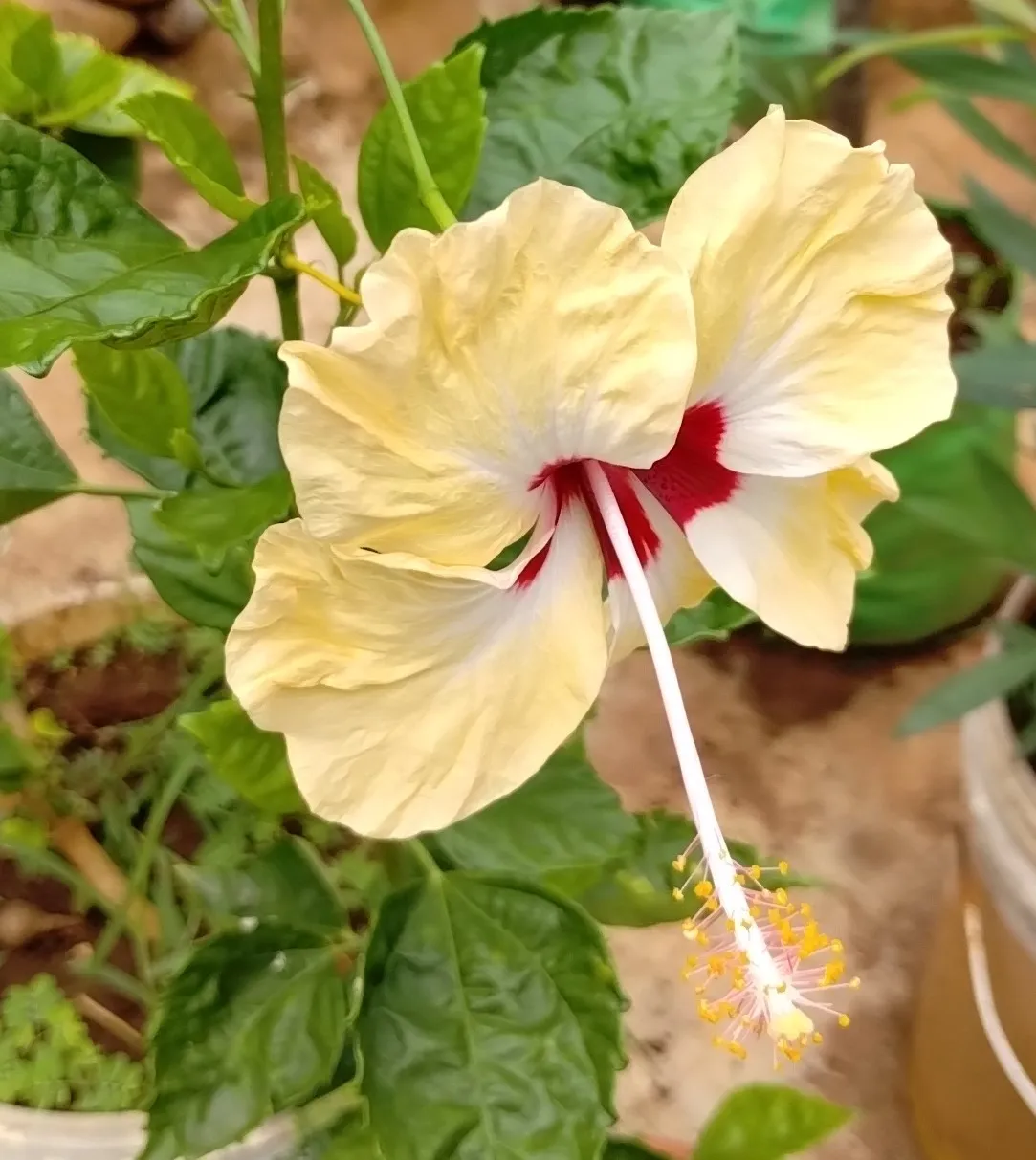
Hibiscus
Hibiscus rosa-sinensis
How to Identify Hibiscus
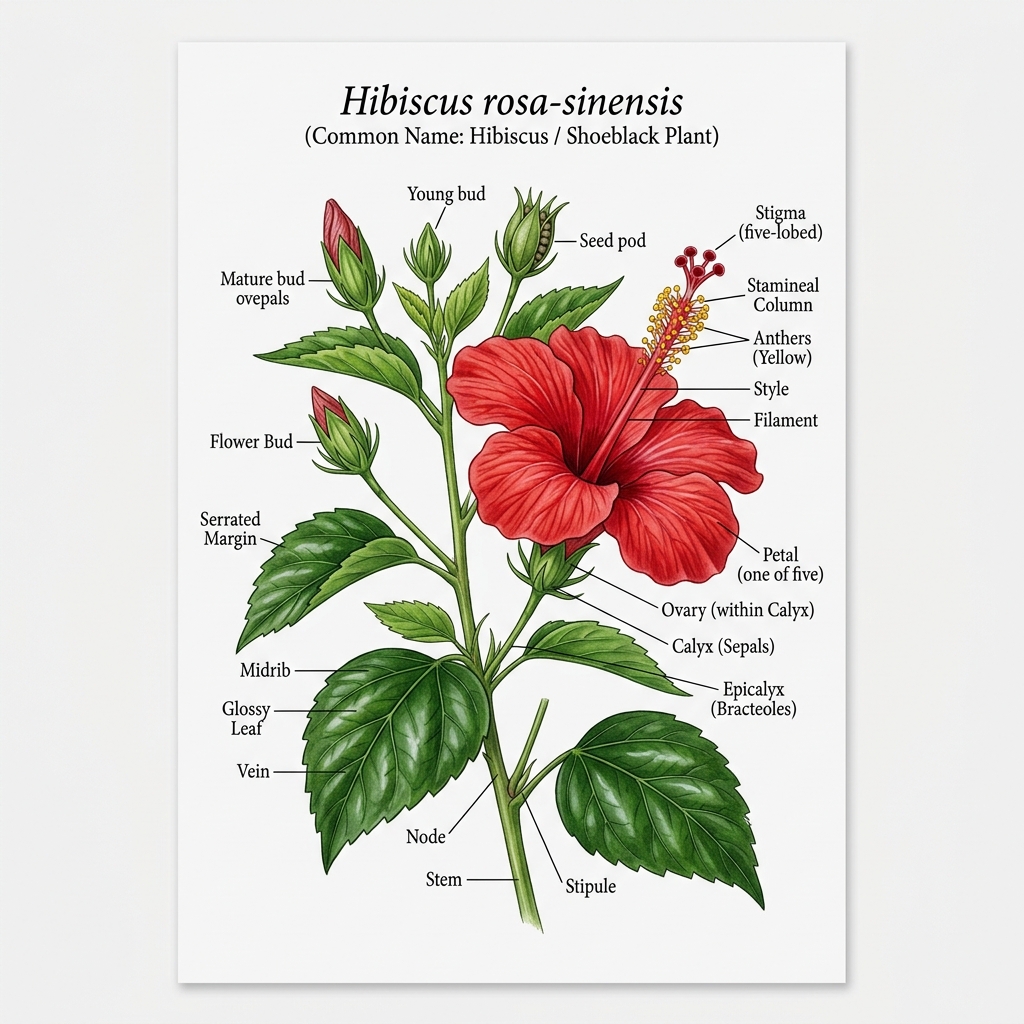
How to identify Hibiscus (Hibiscus rosa-sinensis):
- Large Trumpet Flowers: Spectacular, showy blossoms measuring 3 to 10 inches across with a distinct funnel shape.
- Prominent Staminal Column: A long, conspicuous central tube projecting out from the center of the petals, bearing fused yellow-dusted stamens and a lobed stigma at the tip.
- Five Spreading Petals: Most classic single varieties feature 5 large, paper-thin, spreading petals (though double-flowered cultivars have multiple overlapping layers).
- Glossy Serrated Leaves: Alternate, dark green, ovate leaves with distinct saw-toothed (serrated) edges.
Types & Sub-types of Hibiscus
Hibiscus species are divided into two main categories based on growth habit and hardiness:
- Tropical Hibiscus (Hibiscus rosa-sinensis): Characterized by glossy, deep green leaves and vibrant neon flowers (red, orange, yellow, pink). Grow as evergreen shrubs in frost-free regions.
- Hardy Hibiscus (e.g., Hibiscus moscheutos): Characterized by larger, dull green heart-shaped leaves and dinner-plate sized flowers (up to 12 inches across) in shades of white, pink, and red. They die back to the ground in winter and re-emerge in spring.
Care & Growing Guide
Hibiscus Care & Growing Guide:
- Light: Full direct sun (at least 6-8 hours daily) for maximum flower production. Indoors, place near a bright south-facing window.
- Soil: Rich, moist, organically active soil with excellent drainage. Slightly acidic pH (6.0 to 6.5) is preferred.
- Watering: Keep soil consistently moist but never waterlogged. Provide regular water during hot summer stretches; decrease watering in winter.
- Fertilizer: Heavy feeders requiring high-potassium, low-phosphorus fertilizer applied weekly during the active spring/summer blooming season.
Seasonal Blooming & Hardiness
Seasonal Blooming Calendar (US Hardiness Zones 9-11 outdoors; Zones 4-8 indoors):
- Tropical Varieties: Bloom continuously year-round in frost-free Zones 9-11. In cooler climates (Zones 4-8), they must be brought indoors before night temperatures drop below 50°F (10°C), blooming primarily from late spring to mid-autumn.
- Hardy Varieties: Grow outdoors year-round in Zones 4-9, blooming from mid-summer to first frost.
Bloom Timeline
About Hibiscus
The Hibiscus, botanically classified as Hibiscus rosa-sinensis and popularly known as the Chinese Hibiscus, China Rose, or Shoe Flower, is a spectacular evergreen flowering shrub belonging to the Malvaceae (mallow) family. Believed to have originated in the warm, humid tropical regions of East Asia—particularly southern China and Southeast Asia—this glorious plant has been cultivated for centuries across the globe. Celebrated for its colossal, trumpet-shaped flowers and glossy, deep-green foliage, the hibiscus stands as a universal emblem of exotic tropical beauty and is a mainstay in luxury gardens worldwide.
Growing as an upright, multi-stemmed woody shrub that reaches 4 to 10 feet in height and spreads up to 6 feet wide, Hibiscus rosa-sinensis features dark green, ovate leaves with sharply serrated margins that provide a lush backdrop. Rising from the leaf axils are enormous, solitary trumpet-shaped flowers measuring 4 to 8 inches across. Each blossom features 5 broad, overlapping papery petals that surround an extraordinary, long central staminal column. The flowers come in a dazzling spectrum of colors—including brilliant scarlet red, sunny yellow, bright orange, coral pink, and pure white.
The reproductive architecture of the Chinese Hibiscus is highly specialized and represented by the botanical formula Br ⊕ ⚥ K(5) C5 A(∞) G(5). This formula indicates that the flower is bracteate, possessing an epicalyx of 5 to 8 narrow green bracts beneath the true calyx. The flower is radially symmetrical (actinomorphic) and bisexual. It features 5 fused sepals and 5 free petals. The androecium consists of numerous (infinity) stamens whose filaments are fused to form a prominent, yellow-anthered tube that completely surrounds the style of a 5-carpellate superior ovary.
Hibiscus rosa-sinensis is a warm-climate enthusiast that thrives in equatorial, tropical, and subtropical landscapes. It requires full, direct, intense sunlight, needing 6 to 8 hours of daily exposure to fuel its relentless, year-round blooming cycle. It demands fertile, rich, organic-rich soils with excellent moisture-holding capacity but absolute sharp drainage; heavy, waterlogged soils will rapidly cause root rot and bud drop. In colder temperate regions, it is extensively cultivated as a premium container plant that must be moved indoors before winter in USDA zones 9 through 11.
The genus name Hibiscus is derived from 'hibiskos,' an ancient Greek term used by Dioscorides to describe the wild marshmallow plant, while rosa-sinensis literally translates to 'rose of China.' Culturally, it holds massive national prestige: it is the national flower of Malaysia (where it is known as Bunga Raya) and South Korea, and the state flower of Hawaii. Famed on the Indian subcontinent as गुड़हल (Gudhal) in Hindi and செம்பருத்தி (Sembaruthi) in Tamil, its crushed petals were historically used in India to polish shoes, earning it the moniker Shoe Flower.
For pet-loving families, the Chinese Hibiscus is an outstandingly safe and delightful landscape selection. Hibiscus rosa-sinensis is classified as completely NON-TOXIC to cats, dogs, and horses by leading global veterinary toxicology databases, including the ASPCA (note: other species like Hibiscus syriacus can have mild digestive warnings, but true Chinese Hibiscus is safe). Its soft, broad petals pose no chemical threat if explored or accidentally chewed by playful household pets. To explore more safe, high-impact tropical ornamentals, please browse our Pet Guard catalog.
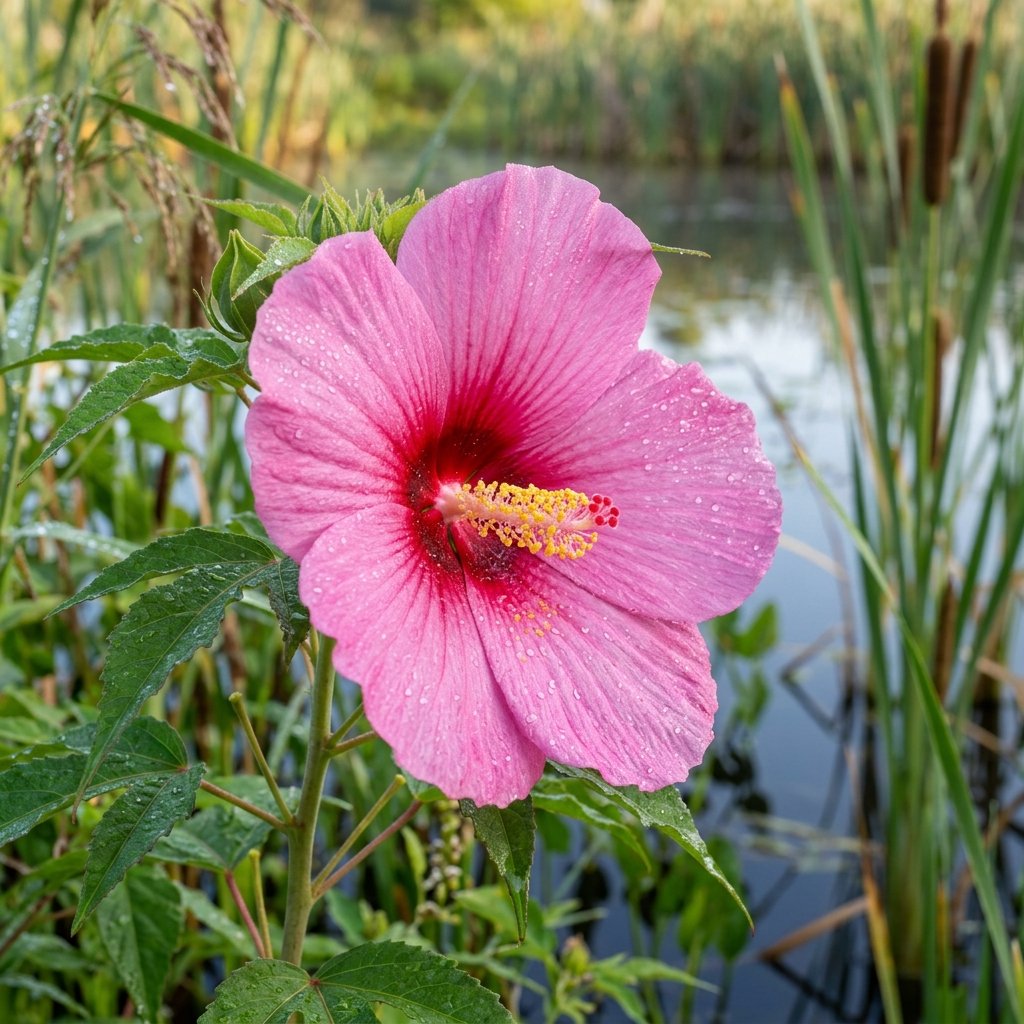
Hibiscus is occasionally confused with other members of the mallow family, such as Rose of Sharon (Hibiscus syriacus) or Hollyhocks (Alcea). It is easily distinguished from Rose of Sharon because Hibiscus rosa-sinensis is a strictly tropical, evergreen shrub with a highly protruding, long staminal column, whereas Rose of Sharon is a cold-hardy, deciduous shrub with a much shorter central column. It pairs beautifully in borders beside other sun-lovers; we suggest planting it near climbing Trumpet Vine or upright Tecoma. Discover more tropical Malvaceae in our Flower Identifier. Explore related species in our botanical profile for Russelia Coral Fountain and the giant native wild Swamp Rose Mallow.
Floral Formula & Features
Bracteate (epicalyx present), actinomorphic, bisexual, 5 fused sepals forming calyx, 5 free petals, numerous stamens fused into a prominent staminal tube, 5 fused carpels with superior ovary
- Scientific Name & Classification: Hibiscus rosa-sinensis (Malvaceae). Known widely as Chinese Hibiscus, China Rose, Shoe Flower, and Gudhal.
- Identification Markers: Upright woody evergreen shrub with glossy, serrated dark-green leaves. Massive trumpet-shaped flowers with a long, highly prominent staminal column.
- Floral Formula (Br ⊕ ⚥ K(5) C5 A(∞) G(5)): Actinomorphic, bisexual flowers featuring a distinct green epicalyx, 5 free petals, and numerous stamens fused into a central tube.
- Growing Requirements: Full, hot sun (6-8 hours); requires highly fertile, organic-rich, and moist but sharply draining soil. Highly frost-sensitive (Zones 9-11).
- Cultural Significance: National flower of Malaysia and state flower of Hawaii. Symbolizes delicate beauty, exotic passion, and sunny splendor across tropical cultures.
- Safety & Toxicity: NON-TOXIC. 100% safe for cats, dogs, and horses, making them a premier, worry-free tropical shrub choice for family gardens.
- Common Look-alikes: Confused with hardy Rose of Sharon, but distinguished by its tropical evergreen habit, larger flowers, and dramatically elongated reproductive column.
- Internal Links: Create a gorgeous tropical background paired with climbing Trumpet Vine or yellow Tecoma; find more bold varieties in our Flower Identifier.
- Internal Links: Compare key differences in our Bougainvillea vs Hibiscus and Mallow vs Hibiscus comparisons, browse the Sitemap, or try our instant Flower Identifier.
Names in Different Languages
Tip: Need to buy or identify flowers in regional markets? Check our complete South Indian Flower Names Guide mapping 30+ flowers across Tamil, Telugu, Hindi, Kannada, and Malayalam.
Botanical Classification: Hibiscus belongs to the Malvaceae family. Learn how to identify its floral symmetry, stamen arrangement, and structural formulas in our Botanical Family Classification Guide.
Toxicity & Safety
Pet Safety Guide: For detailed toxicity symptoms, first-aid measures, and safe garden alternatives, see our full Pet Guard Profile for Hibiscus.
Frequently Asked Questions
What is Floral Formula?
A floral formula is a symbolic representation of a flower's structure using letters, numbers, and special symbols. It provides a concise way to describe the arrangement and number of floral parts.
This formula describes the flower's symmetry, sepals, petals, stamens, and carpels in a standardized format.
Formula Sequence
- Bract: Br or Ebr
- Bracteole: Brl or Ebrl
- Symmetry: % (Radial) or ⊕ (Bilateral)
- Sex: ♀ (Female), ♂ (Male), or ⚥ (Bisexual)
- Calyx/Sepal: K<number> (Free or Fused)
- Corolla/Petal: C<number> (Free or Fused)
- Androecium: A<number> (Free or Fused)
- Gynaecium: G<number> (Superior or Inferior Ovary)
Symbol Meanings
- Numbers: Indicate quantity of parts
- Parentheses (): Parts are fused together
- Plus (+): Parts in different whorls
- Underline: Superior ovary position
- Overline: Inferior ovary position
- ∞: Numerous parts (too many to count)
Understanding floral formulas helps botanists quickly identify and classify flowers based on their structural characteristics.
Similar Flowers
Discover flowers that share botanical characteristics
Same Family
3
Mallow
Malva sylvestris
The Mallow, botanically designated as Malva sylvestris and commonly known as Common Mallow, High Mallow, Tall Mallow, or Cheeseweed, is an exceptionally versatile, hardy, and resilient biennial to short-lived perennial herb. Belonging to the family Malvaceae (the mallow family), this ancient plan...
Tree Mallow
Malva arborea
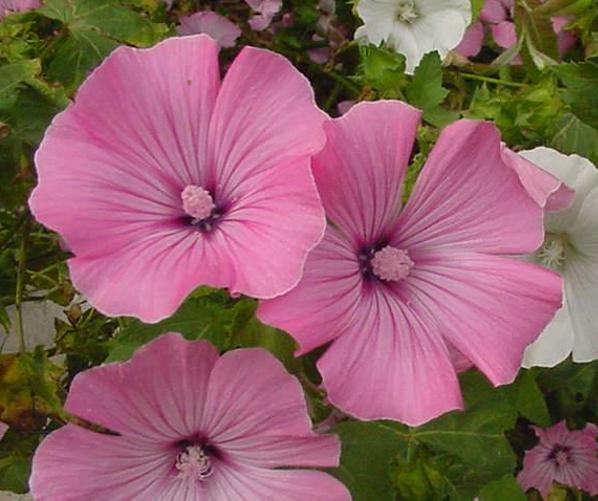
The Tree Mallow, botanically classified as Malva arborea (and previously known as Lavatera arborea), is a robust, fast-growing biennial or short-lived perennial shrub belonging to the Malvaceae (mallow) family. Native to the Mediterranean basin and the rugged, salt-swept coastal cliffs of Western...
Hollyhock
Alcea rosea
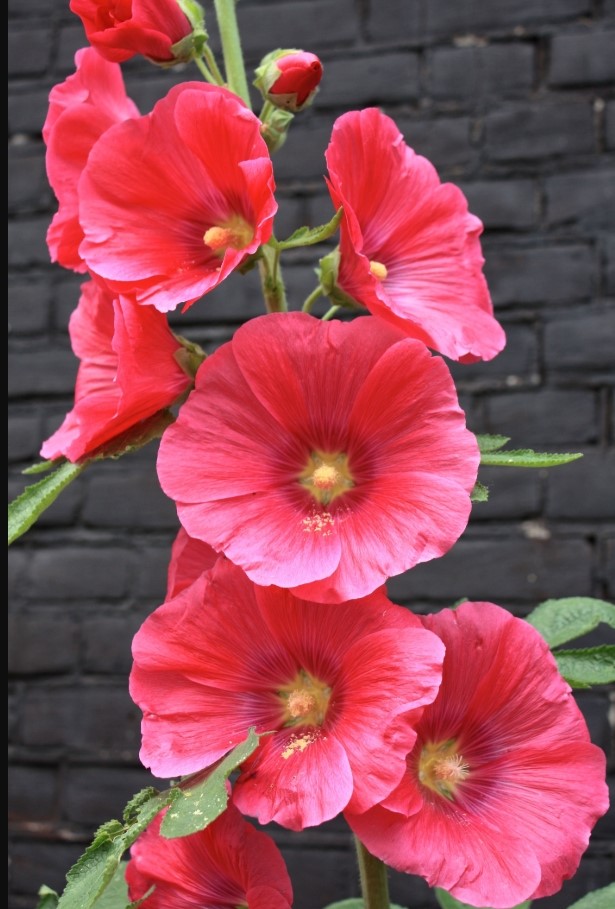
The Hollyhock, botanically designated as Alcea rosea and belonging to the family Malvaceae (the mallow or hibiscus family), is a majestic, towering, and deeply romantic cottage garden classic. Native to the warm, temperate meadows, rocky slopes, and open woodlands of Turkey and southwestern Asia,...
Similar Characteristics
4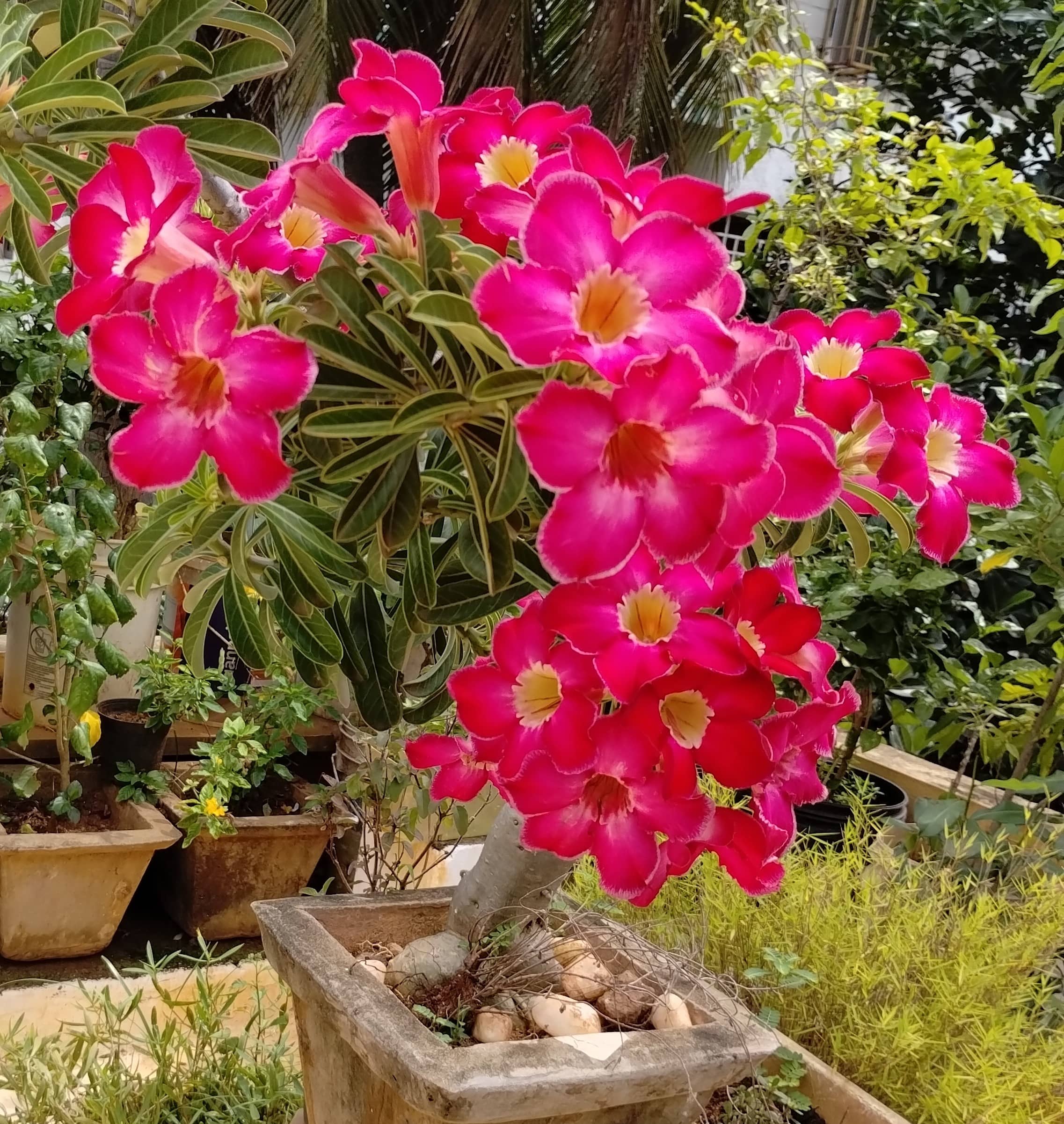
Desert Rose
Adenium obesum
The Desert Rose (Adenium obesum), a member of the Apocynaceae (Dogbane) family, is one of the most sculptural and striking succulent shrubs in the botanical world. Native to the arid regions of sub-Saharan Africa and the Arabian Peninsula, this plant has developed extraordinary adaptations to sur...
Orange Dahlia
Dahlia × hortensis
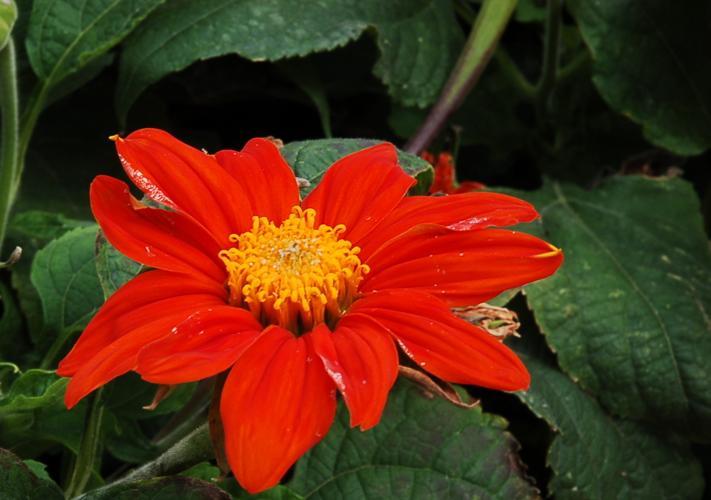
The Orange Dahlia, botanically designated under the genus *Dahlia* (particularly hybrids of *Dahlia pinnata*), is an exceptionally spectacular, highly vibrant tuberous perennial. Belonging to the family Asteraceae (the daisy or sunflower family, tribe Coreopsideae), this high-color classic is nat...
Mallow
Malva sylvestris
The Mallow, botanically designated as Malva sylvestris and commonly known as Common Mallow, High Mallow, Tall Mallow, or Cheeseweed, is an exceptionally versatile, hardy, and resilient biennial to short-lived perennial herb. Belonging to the family Malvaceae (the mallow family), this ancient plan...
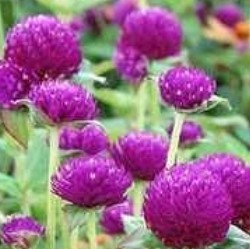
Globe Amaranth (Gomphrena)
Gomphrena globosa
The Globe Amaranth, botanically designated as Gomphrena globosa and belonging to the family Amaranthaceae (the amaranth family), is an exceptionally tough, durable, and drought-tolerant tropical annual. Native to the sunny, warm, and highly humid forest edges, fields, and coastal plains of Centra...