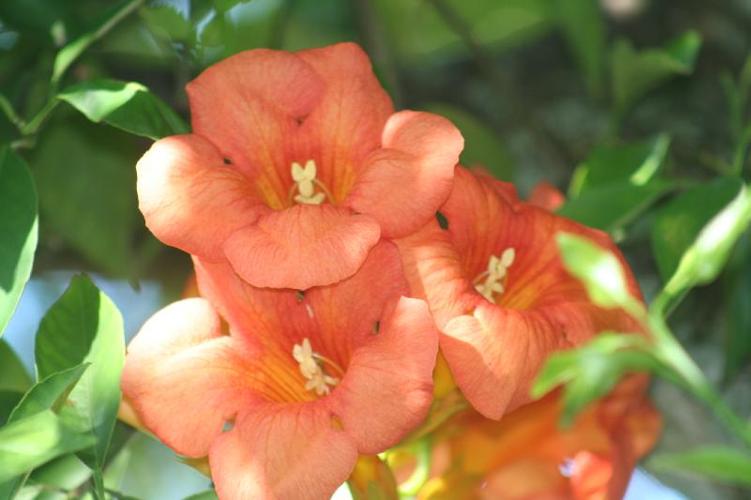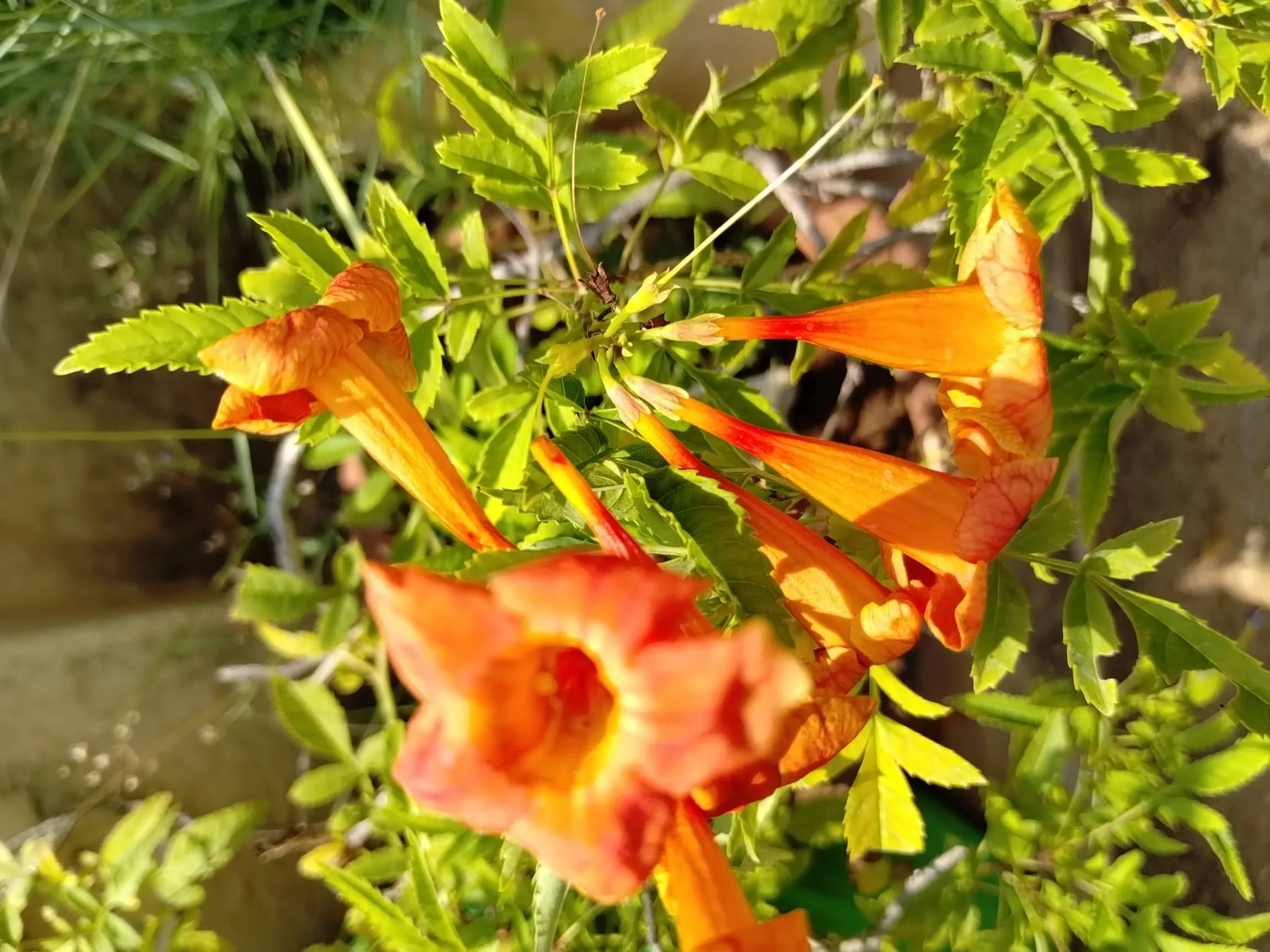
Tecoma
Tecoma stans
How to Identify Tecoma
NON-TOXIC. Classified as 100% safe for cats, dogs, and horses, making them a premium choice for high-impact front yards.
Care & Growing Guide
Seasonal Blooming & Hardiness
Seasonal Blooming Calendar:
- Peak Bloom: Late winter to early spring.
- Planting Time: Sow seeds directly outdoors in early spring after the last frost, or transplant nursery starts in late spring.
Bloom Timeline
About Tecoma
The Trumpet Bush, botanically classified as Tecoma stans and widely known as Yellow Bells, Yellow Elder, or Esperanza, is a fast-growing, highly ornamental evergreen shrub or small tree in the Bignoniaceae (trumpet vine) family. Native to the warm tropical and subtropical regions of the Americas—spanning from the southern tip of the United States through Mexico and the West Indies down to northern Argentina—this species is celebrated for its spectacular, honey-scented yellow blooms. It stands as a premier choice for warm climates, prized for its exceptional heat-tolerance and continuous flowering.
Growing as a multi-stemmed upright shrub or training into a small specimen tree, Tecoma stans easily reaches heights of 10 to 20 feet under optimal conditions, though dwarf potted cultivars remain compact at 3 to 5 feet. It features opposite, pinnately compound leaves consisting of 3 to 9 sharply serrated, lance-shaped, bright green leaflets. Rising in heavy clusters at the branch tips are showy, trumpet-shaped, tubular flowers measuring 1.5 to 2 inches in length. These blossoms are predominantly brilliant canary-yellow with subtle reddish lines inside the throat.
The reproductive morphology of this genus is represented by the floral formula % ⚥ K(5) C(5) A4 G(2). This formula indicates that the flower is bilaterally symmetrical (zygomorphic) and bisexual. It features a calyx of 5 fused sepals forming a small, five-toothed cup, and a tubular corolla composed of 5 fused petals that flare into 5 spreading lobes. The androecium contains 4 fertile stamens of two different lengths (didynamous) attached directly to the corolla tube, surrounding a syncarpous gynoecium of 2 fused carpels with a superior ovary.
Tecoma stans is exceptionally tough and drought-tolerant once established, thriving in hot, arid conditions where other ornamentals wilt. It requires full, intense, direct sunlight, needing at least 6 hours of direct daily exposure to produce its massive, year-round flush of blooms. It is highly adaptable to sandy, rocky, dry, and alkaline soils, provided there is sharp, excellent drainage. It performs beautifully in USDA hardiness zones 9 through 11, and can sprout back from the roots if damaged by brief winter frosts.
The genus name Tecoma is derived from the Mexican Nahuatl word 'tecomaxochitl,' which was historically used by indigenous populations to describe tubular, cup-shaped flowers. In 1934, it was officially declared the national flower of the United States Virgin Islands, where it is affectionately known as 'Ginger Thomas.' Famed on the Indian subcontinent as Chandaprabha in Bengali and Pila Kaner or Peeliya in Hindi, the plant is a profound cultural symbol of hope, sunny optimism, and resilient strength.
For families with pets, the Trumpet Bush is an outstanding landscape selection. Tecoma stans is classified as completely NON-TOXIC to cats, dogs, and horses by major veterinary toxicology databases. Although the leaves contain active, beneficial alkaloids like tecomine, they are entirely safe and pose no chemical risk of poisoning if explored or chewed by curious domestic animals. To find more high-performance, pet-safe tropical shrubs and small trees for your garden, please explore our Pet Guard catalog.
Trumpet Bush is occasionally confused with Yellow Oleander (Cascabela thevetia) or trumpet vines. It is easily distinguished because Tecoma stans has compound, sharply serrated leaves and flat, paper-like winged seed pods, whereas Yellow Oleander has simple, narrow linear leaves, highly lethal white sap, and thick, triangular seed pods. It pairs beautifully in dry landscapes with other sun-lovers; we suggest planting it beside Cigar Flower or Trumpet Vine. Discover more Bignoniaceae choices in our Flower Identifier.
Floral Formula & Features
Bilateral symmetry, Bisexual, 5 fused sepals, 5 fused petals, 4 free staments and 2 fused carpels with superior ovary
- Scientific Name & Classification: Tecoma stans (Bignoniaceae). Famed widely as Yellow Bells, Yellow Trumpetbush, Yellow Elder, and Esperanza.
- Identification Markers: Upright woody shrub with pinnately compound serrated leaflets. Dense, showy clusters (racemes) of brilliant canary-yellow, trumpet-shaped flowers.
- Floral Formula (% ⚥ K(5) C(5) A4 G(2)): Bilaterally symmetrical, bisexual flowers featuring 5 fused sepals, 5 fused petals, 4 stamens, and 2-carpellate superior ovary.
- Growing Requirements: Full sun (6+ hours); thrives in hot, dry, sandy, or rocky soils with excellent drainage. Exceptionally drought and heat-tolerant (Zones 9-11).
- Cultural Significance: Official flower of the US Virgin Islands; name derived from Nahuatl 'tecomaxochitl.' Symbol of sunny optimism and hopeful strength.
- Safety & Toxicity: NON-TOXIC. Classified as 100% safe for cats, dogs, and horses, making them a premium choice for high-impact front yards.
- Common Look-alikes: Confused with highly lethal Yellow Oleander, but distinguished by serrated compound leaves and flat papery seed pods rather than simple narrow leaves and triangular fruit.
- Internal Links: Beautiful sunny backdrop paired with climbing Trumpet Vine or vibrant Cigar Flower; explore more woody species in our Flower Identifier.
Names in Different Languages
Toxicity & Safety
Frequently Asked Questions
What is Floral Formula?
A floral formula is a symbolic representation of a flower's structure using letters, numbers, and special symbols. It provides a concise way to describe the arrangement and number of floral parts.
This formula describes the flower's symmetry, sepals, petals, stamens, and carpels in a standardized format.
Formula Sequence
- Bract: Br or Ebr
- Bracteole: Brl or Ebrl
- Symmetry: % (Radial) or ⊕ (Bilateral)
- Sex: ♀ (Female), ♂ (Male), or ⚥ (Bisexual)
- Calyx/Sepal: K<number> (Free or Fused)
- Corolla/Petal: C<number> (Free or Fused)
- Androecium: A<number> (Free or Fused)
- Gynaecium: G<number> (Superior or Inferior Ovary)
Symbol Meanings
- Numbers: Indicate quantity of parts
- Parentheses (): Parts are fused together
- Plus (+): Parts in different whorls
- Underline: Superior ovary position
- Overline: Inferior ovary position
- ∞: Numerous parts (too many to count)
Understanding floral formulas helps botanists quickly identify and classify flowers based on their structural characteristics.
Similar Flowers
Discover flowers that share botanical characteristics