
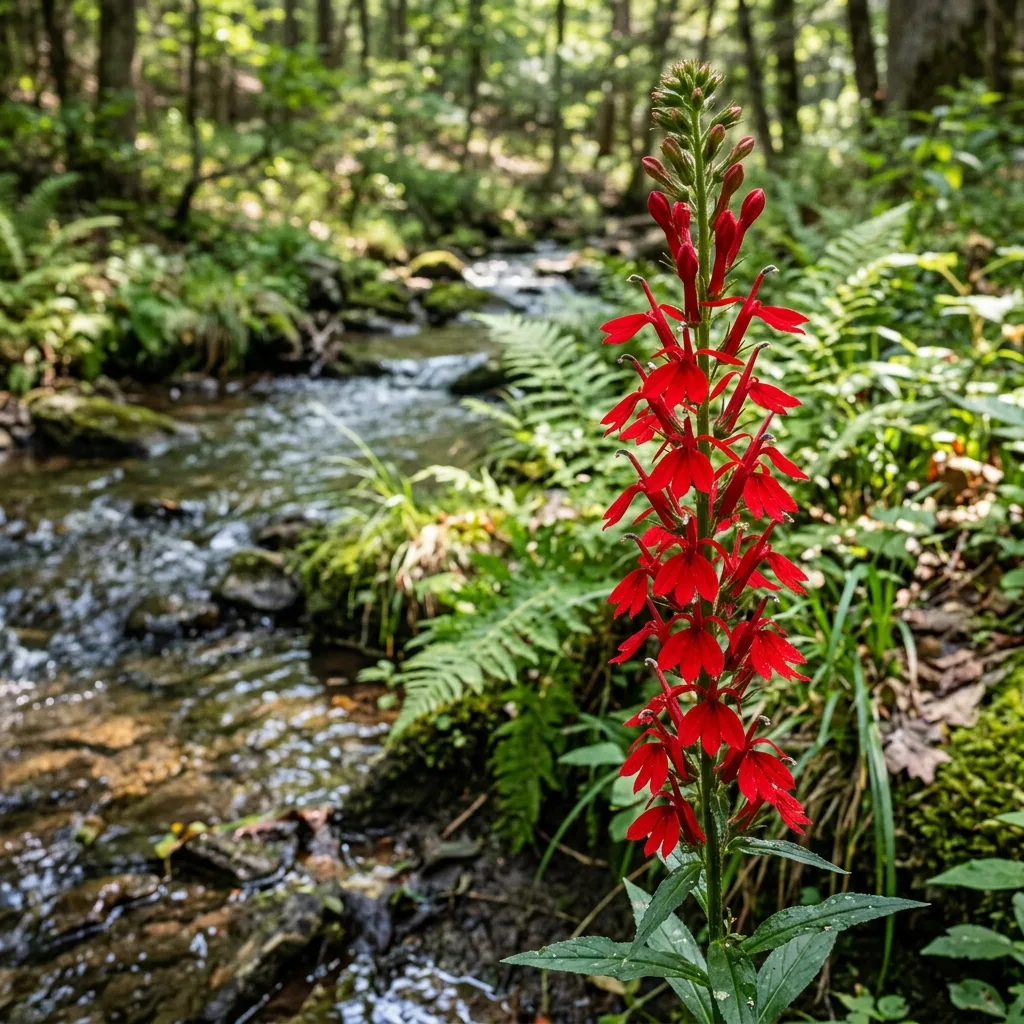
Cardinal Flower
Lobelia cardinalis
How to Identify Cardinal Flower
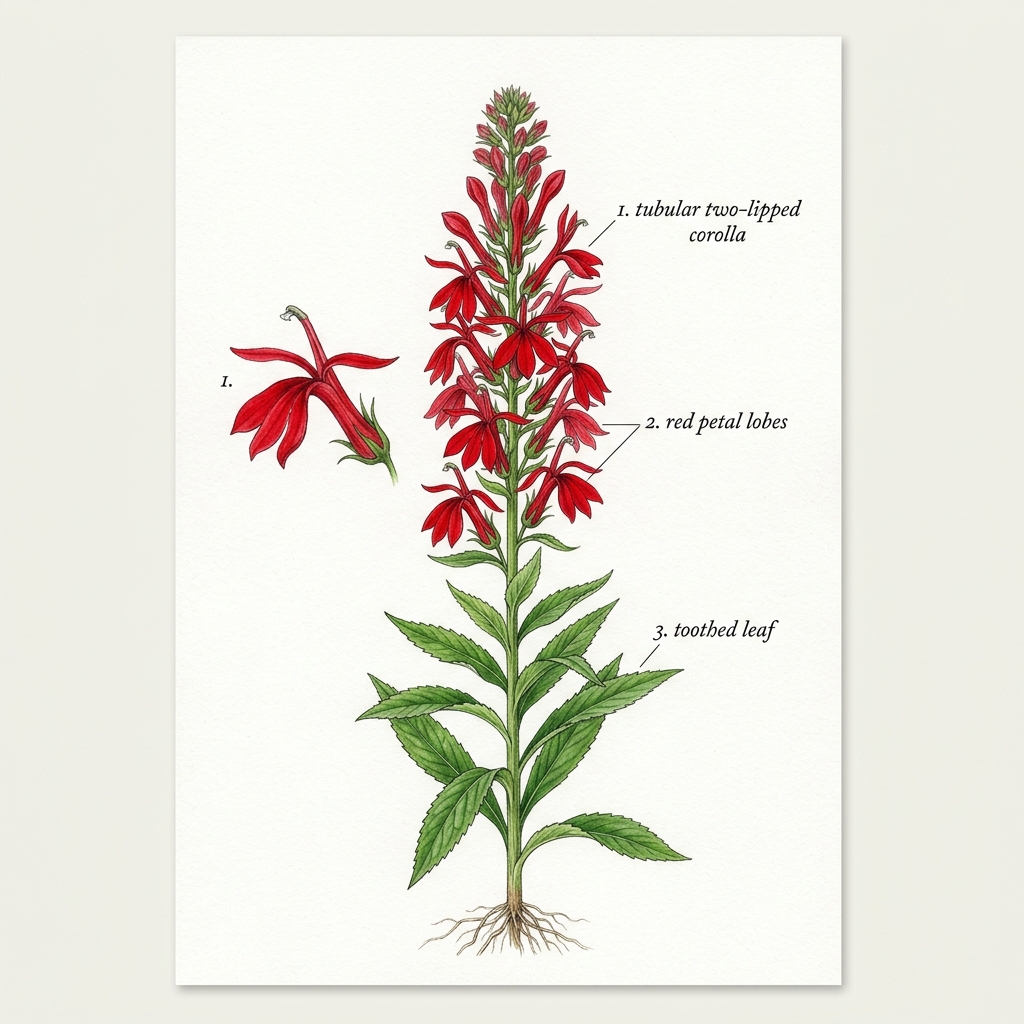
A detailed guide to identifying Cardinal Flowers (Lobelia cardinalis) by its key features:
- Fiery Scarlet Spikes: Tall, unbranched racemes of intense, tubular red flowers.
- Two-Lipped Corolla: Distinctive split petals with three lower flaring lobes and two upper erect lobes.
- Serrated Alternate Leaves: Toothed, lanceolate leaves often tinged with dark bronze or red.
- Moisture-Loving Growth: Grows in damp, marshy areas and stream banks.
Care & Growing Guide
Cardinal Flower Care Guide:
- Light: Full sun to partial shade
- Soil: Consistently moist to wet, humus-rich soil; excellent for rain gardens and stream edges
- Water: Never allow to dry out — constant moisture is essential
- Maintenance: Allow some seed to set for self-seeding colonies; divide every 2–3 years
Seasonal Blooming & Hardiness
Seasonal Blooming Calendar:
- Peak Bloom: July–September
- US Range: USDA Zones 3–9; native throughout eastern and central US, wetland edges and stream banks
Bloom Timeline
About Cardinal Flower
Cardinal Flower (Lobelia cardinalis) produces one of the most intensely saturated, brilliant scarlet-red flower spikes in all of North American horticulture, a vivid column of color that dominates moist meadows, stream banks, and woodland edges from July through September. Native throughout much of the eastern and central United States and southward into Central America, it belongs to the Campanulaceae family and is among the most important hummingbird-pollinated wildflowers in North America, its long, tubular flowers perfectly sized and colored to attract Ruby-Throated Hummingbirds.
The individual flowers of Cardinal Flower are architecturally complex: each has five petals fused into a two-lipped tube, with the upper lip divided into two narrow lobes and the lower lip split into three broader lobes that form a landing platform. Rising prominently through the upper lip is the fused staminal column, bearing a distinctive tuft of white or blue-gray pollen. The flowers are arranged densely along tall, unbranched spikes that can reach 2 to 4 feet in height, providing a long, narrow 'tube' perfectly designed for the probing bill of a hummingbird rather than the body shape of a bee.
Ecologically, Cardinal Flower has co-evolved so specifically with the Ruby-Throated Hummingbird that bees and most other insects are largely unable to access its nectar, which is hidden at the base of a very long floral tube. This co-evolutionary specialization means the plant is almost entirely dependent on hummingbirds for pollination. In gardens sited along streams, ponds, or in consistently moist areas, Cardinal Flower naturalizes into breathtaking colonies that attract hummingbirds throughout the late summer season. The intense red color is a reliable signal to hummingbirds, which can see red wavelengths particularly well.
For gardeners, Cardinal Flower thrives in consistently moist to wet soil in full sun to partial shade — conditions found naturally along stream banks, pond edges, and rain gardens. It is a short-lived perennial (2–3 years) but self-seeds prolifically when happy, creating a self-sustaining colony. Deadheading prevents seed production and shortens the plant's garden life; for best naturalization, allow some seed to set. The plant is toxic if ingested in significant quantities, so keep children and pets from chewing on it. For more hummingbird-magnet natives, explore our Flower Identifier.
Floral Formula & Features
Zygomorphic, bisexual; 5 fused sepals; 5 fused petals (two-lipped); 5 stamens fused into staminal column; 2 fused carpels with inferior ovary
- Scientific Name & Classification: Lobelia cardinalis (Campanulaceae, subfamily Lobelioideae). The tallest and most brilliantly colored of North America's native Lobelia species.
- Identification Markers: Brilliant scarlet-red tubular flowers densely arranged on tall spikes 2–4 ft. Two-lipped corolla with a protruding white/gray staminal column. Alternate, lance-shaped toothed leaves. Blooms July–September.
- Floral Formula (↑ ☿ K(5) [C(5) A(5)] G̅(2)): Zygomorphic, bisexual, 5 fused sepals, 5 fused petals (two-lipped), 5 stamens fused into a staminal column, 2 fused carpels with inferior ovary.
- Growing Requirements: Full sun to partial shade; consistently moist to wet, humus-rich soil. Excellent for rain gardens, stream banks, and pond edges. USDA Zones 3–9. Short-lived perennial — allow to self-seed.
- Cultural Significance: Primary hummingbird-pollinated wildflower of eastern North America. Used medicinally by multiple Native American tribes (Cherokee, Iroquois). Named after the brilliant red vestments of a Roman Catholic Cardinal.
- Safety & Toxicity: ⚠️ TOXIC. Cardinal Flower contains lobeline alkaloids toxic to humans, dogs, and cats if ingested in significant quantities. Do not consume. Keep children and pets from eating foliage or seeds.
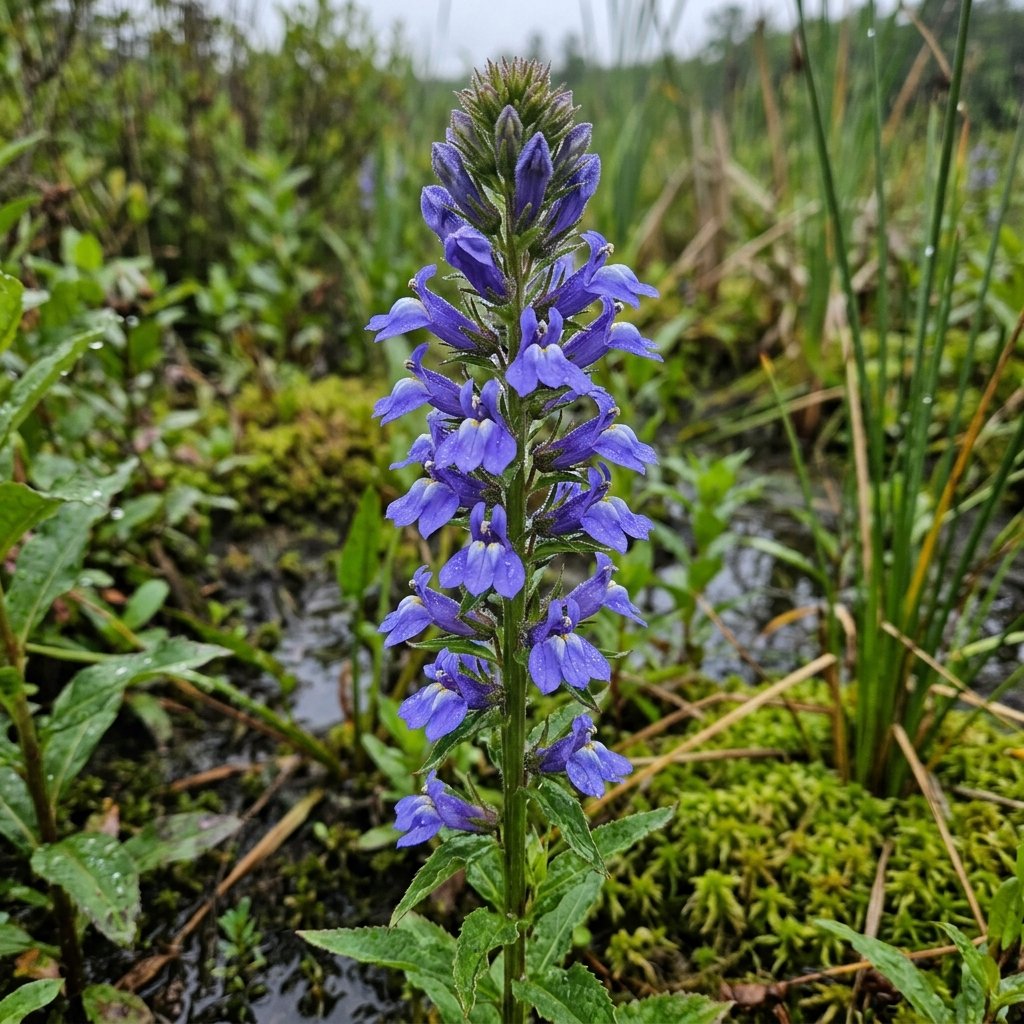
- Common Look-alikes: Closely related to Great Blue Lobelia (L. siphilitica), which produces blue (not red) flower spikes. Also confused with Salvia (Salvia splendens) in garden settings.
- Internal Links: Plant with Great Blue Lobelia for a stunning red-and-blue native or giant native Swamp Rose Mallow for a stunning wetland garden. Explore our Flower Identifier.
Names in Different Languages
Botanical Classification: Cardinal Flower belongs to the Campanulaceae family. Learn how to identify its floral symmetry, stamen arrangement, and structural formulas in our Botanical Family Classification Guide.
Toxicity & Safety
Always keep toxic plants out of reach of children and pets. Consult a veterinarian or medical professional immediately if ingestion is suspected.
Pet Safety Guide: For detailed toxicity symptoms, first-aid measures, and safe garden alternatives, see our full Pet Guard Profile for Cardinal Flower.
Frequently Asked Questions
What is Floral Formula?
A floral formula is a symbolic representation of a flower's structure using letters, numbers, and special symbols. It provides a concise way to describe the arrangement and number of floral parts.
This formula describes the flower's symmetry, sepals, petals, stamens, and carpels in a standardized format.
Formula Sequence
- Bract: Br or Ebr
- Bracteole: Brl or Ebrl
- Symmetry: % (Radial) or ⊕ (Bilateral)
- Sex: ♀ (Female), ♂ (Male), or ⚥ (Bisexual)
- Calyx/Sepal: K<number> (Free or Fused)
- Corolla/Petal: C<number> (Free or Fused)
- Androecium: A<number> (Free or Fused)
- Gynaecium: G<number> (Superior or Inferior Ovary)
Symbol Meanings
- Numbers: Indicate quantity of parts
- Parentheses (): Parts are fused together
- Plus (+): Parts in different whorls
- Underline: Superior ovary position
- Overline: Inferior ovary position
- ∞: Numerous parts (too many to count)
Understanding floral formulas helps botanists quickly identify and classify flowers based on their structural characteristics.
Similar Flowers
Discover flowers that share botanical characteristics
Same Family
2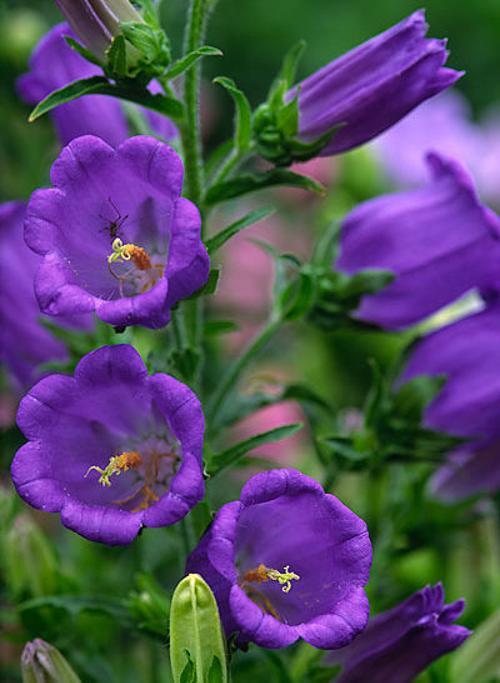
Canterbury bells
Campanula medium
Campanula medium, commonly known as Canterbury Bells, is a quintessential cottage garden biennial that brings a sense of Victorian elegance and whimsical charm to any landscape. Belonging to the Campanulaceae family, this species is native to the sun-drenched hills of Southern Europe, particularl...
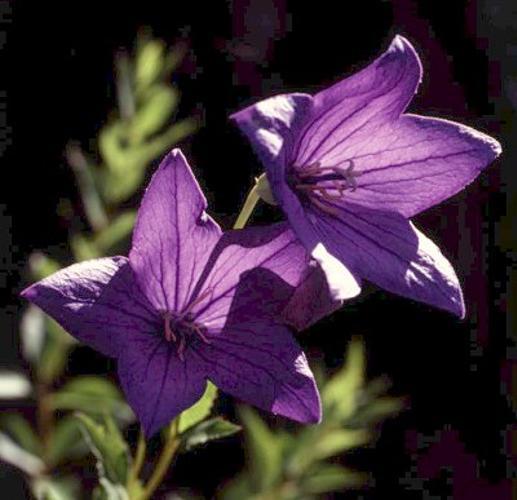
Balloon
Platycodon grandiflorus
The Balloon Flower, scientifically known as Platycodon grandiflorus and commonly called the Chinese Bellflower or Japanese Bellflower, is an exceptionally charming herbaceous perennial belonging to the Campanulaceae (bellflower) family. Native to the grassy slopes, meadows, and forest margins of...
Similar Characteristics
4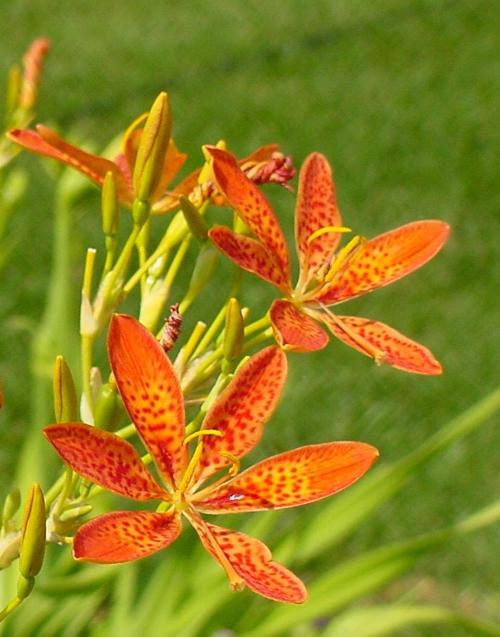
Leopard Lily
Iris domestica (syn. Belamcanda chinensis)
The Leopard Lily, botanically designated as *Iris domestica* (previously classified as *Belamcanda chinensis*, and commonly known as the Blackberry Lily or Leopard Flower), is an exceptionally distinct, highly ornamental perennial. Belonging to the family Iridaceae (the iris family, tribe Irideae...
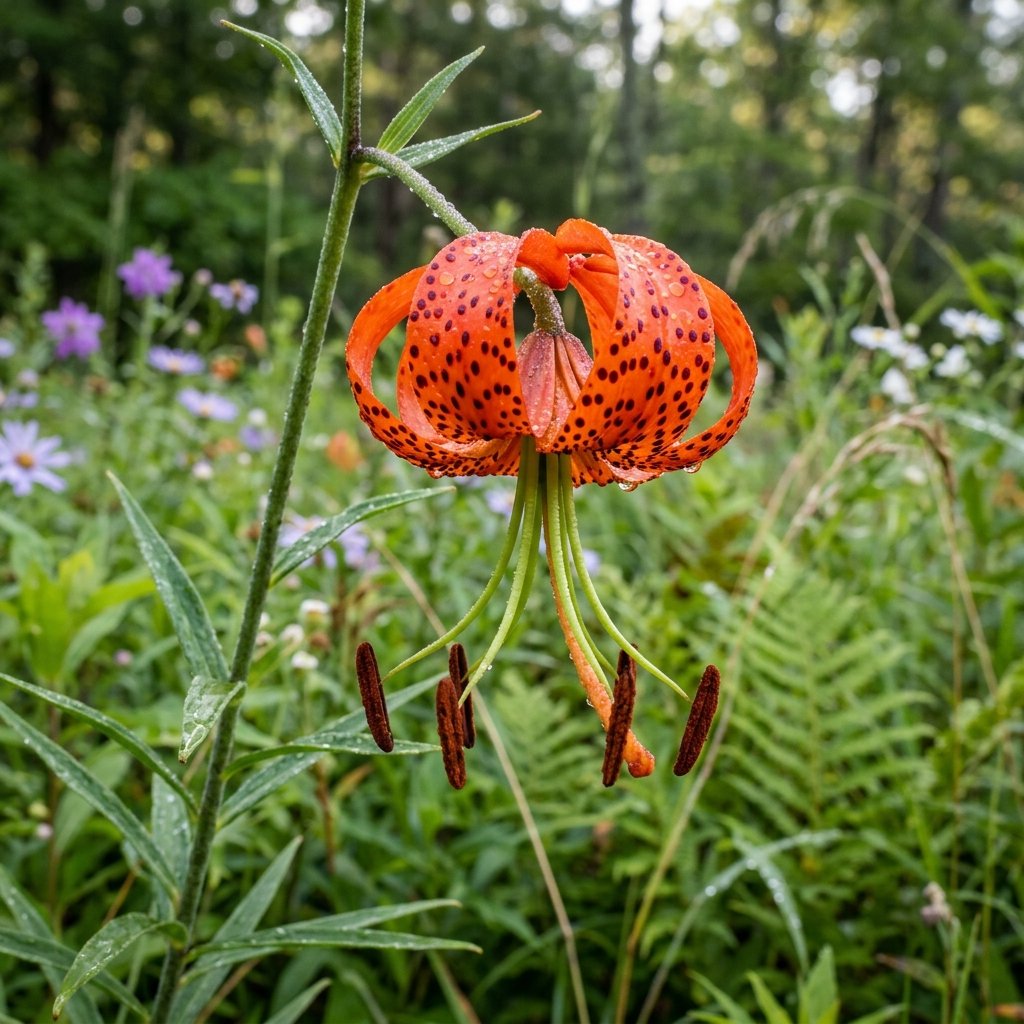
Turk's Cap Lily
Lilium superbum
Turk's Cap Lily (*Lilium superbum*) is the tallest native lily in North America and one of the most spectacular wildflowers of the eastern United States, reaching heights of 4 to 8 feet with multiple nodding, bright orange flowers dramatically spotted with purple-brown and with their petals fully...
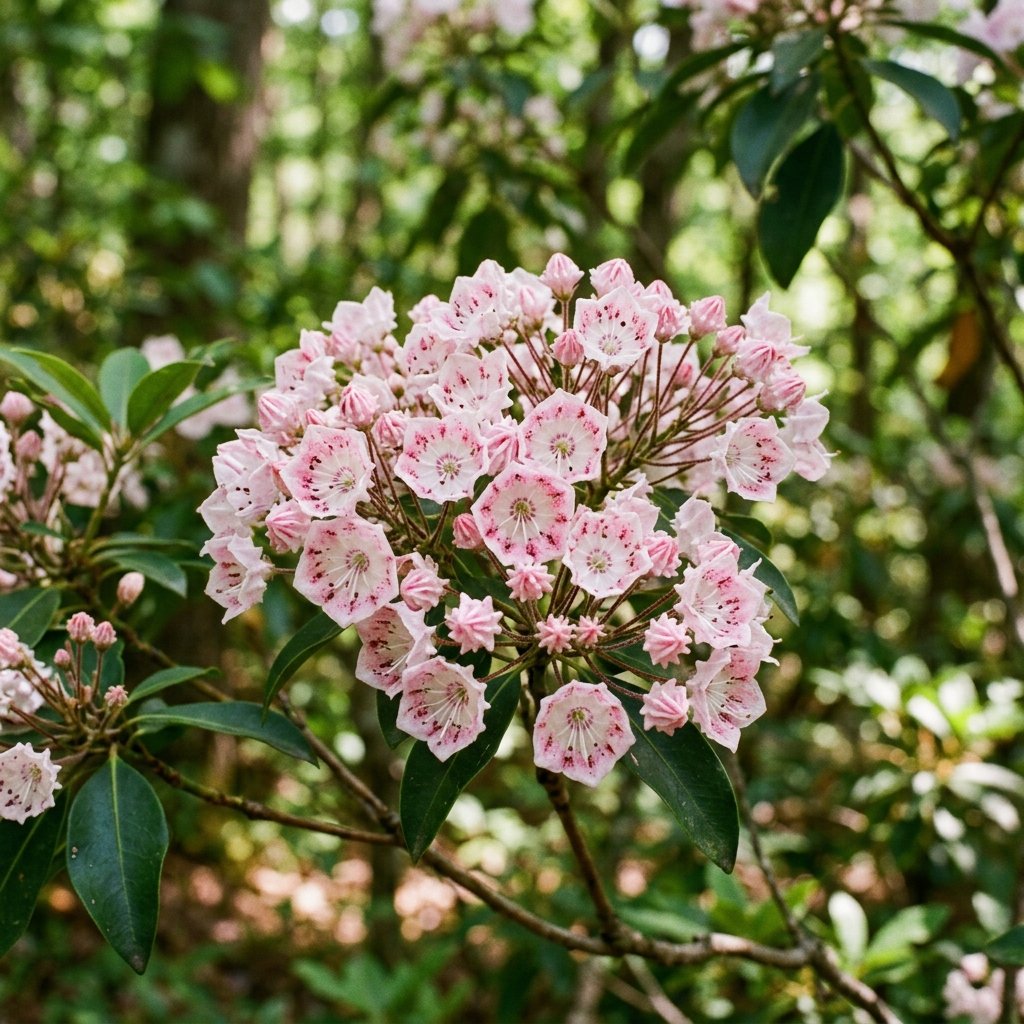
Mountain Laurel
Kalmia latifolia
Mountain Laurel (*Kalmia latifolia*) is one of the most spectacular native flowering shrubs of the eastern United States, producing extraordinary clusters of cup-shaped flowers in shades of white, pink, and deep rose — each blossom decorated with a ring of ten maroon spots and a unique pentagonal...
Beebalm
Monarda didyma, Monarda fistulosa
Bee Balm, botanically classified under the genus Monarda within the family Lamiaceae (the mint family), is a spectacular and highly aromatic clump-forming herbaceous perennial. Native to the rich floodplains, moist meadows, woodland margins, and stream banks of eastern North America—ranging from...