
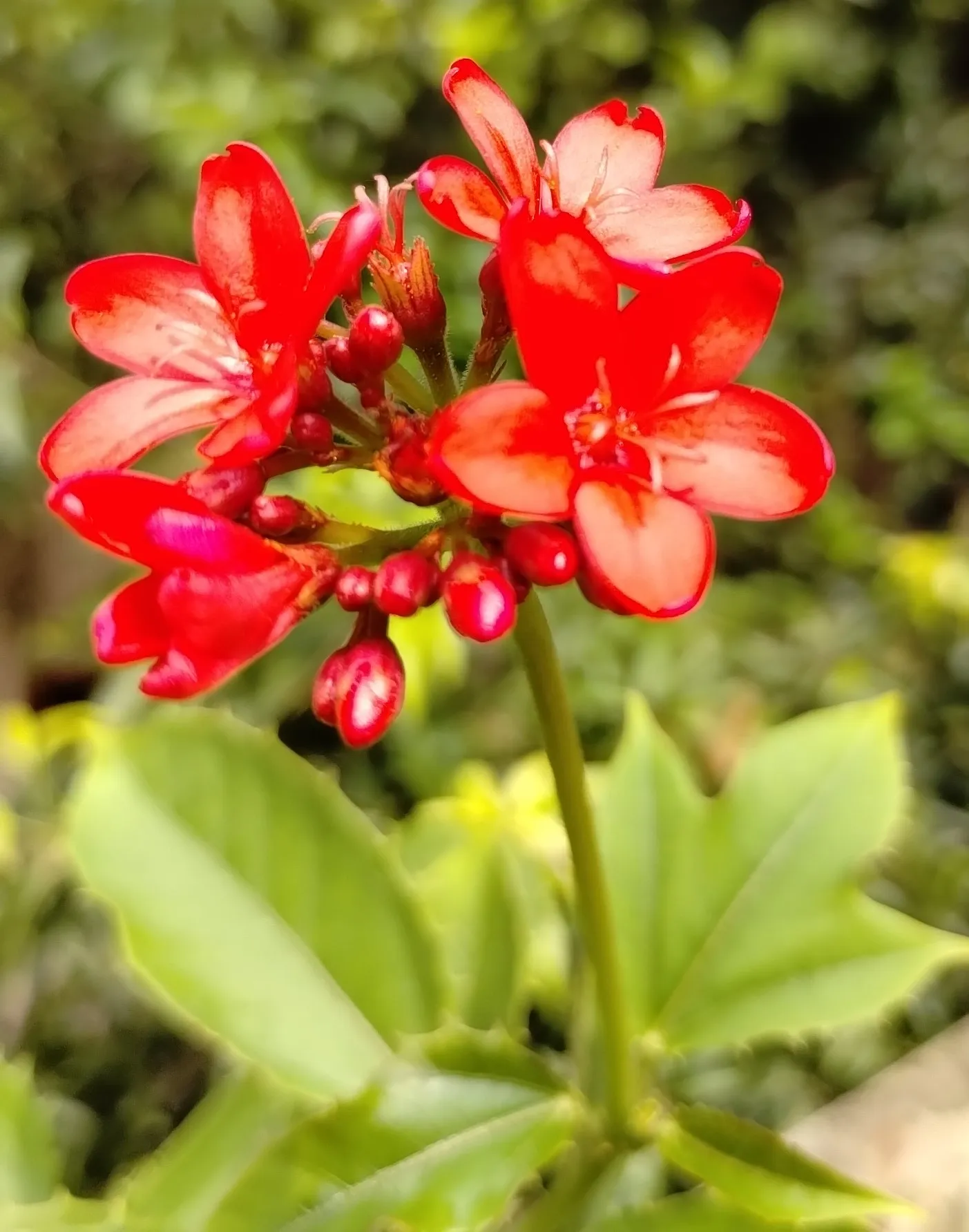
Jatropha (Spicy Jatropha)
Jatropha integerrima
How to Identify Jatropha (Spicy Jatropha)
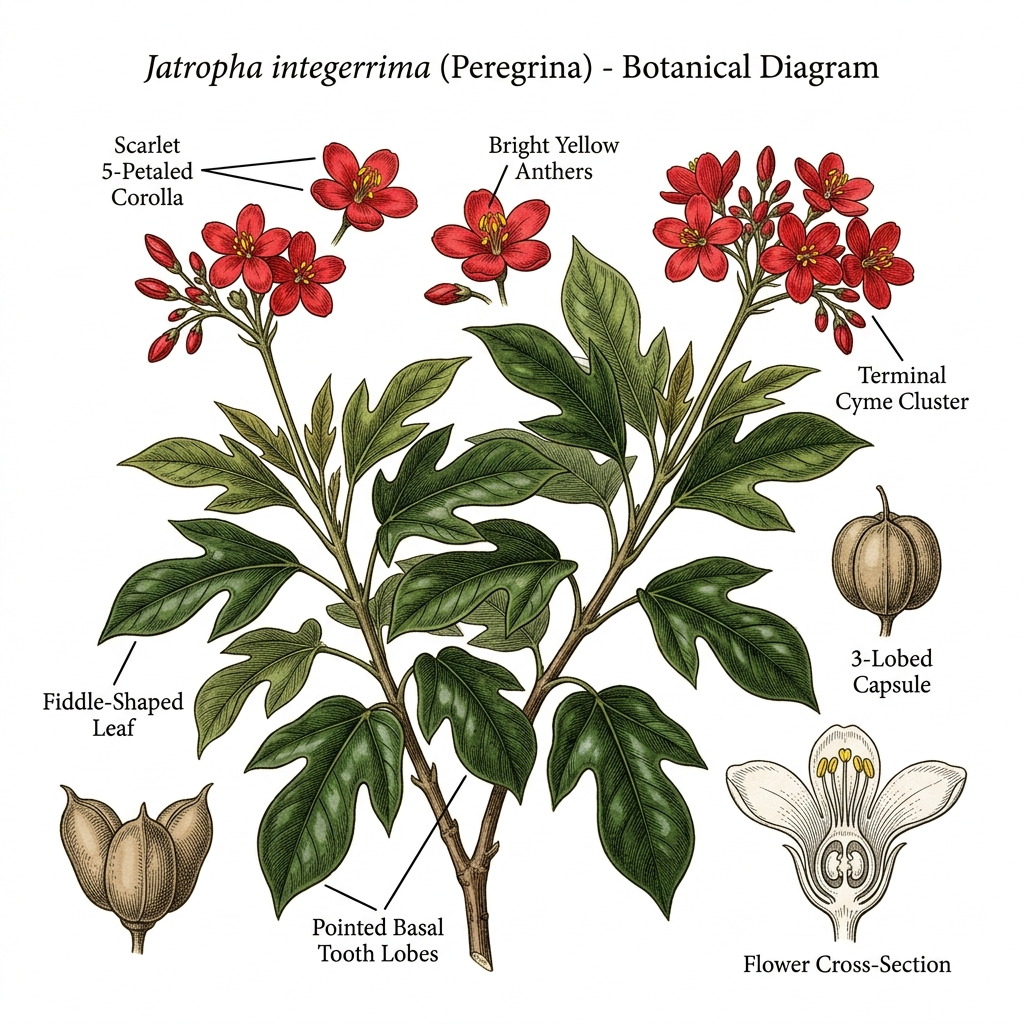
A detailed guide to identifying Spicy Jatropha (Jatropha integerrima / Peregrina) by its key botanical features:
- Vivid Scarlet Star Flowers: Brilliant scarlet, crimson, or vermilion-red 5-petaled flowers (about 1 inch across) clustered in rounded terminal cymes, adorned with bright golden-yellow stamens in the center.
- Polymorphic / Fiddle-Shaped Foliage: Highly variable, glossy dark-green leaves that range from ovate and elliptic to a distinct violin or fiddle shape with pointed tooth-like lobes near the leaf base.
- Continuous Year-Round Blooms: Exceptional evergreen blooming habit that produces flowers virtually 365 days a year in frost-free tropical and subtropical zones.
- Multi-Stemmed Woody Habit: Upright evergreen shrub or small specimen tree reaching 6 to 12 feet tall, easily pruned into an attractive single-trunk patio standard.
- 3-Lobed Capsule Fruit: Rounded, 3-chambered green seed capsules that turn brown and split explosively when mature to expel 3 toxic, oil-rich seeds.
Varieties & Forms of Jatropha integerrima
- By Flower Coloration:
- 'Compacta' (Scarlet Peregrina): The popular intense scarlet-red cultivar with dense branching, heavy flower flushes, and a compact height (5-6 feet).
- 'Rosea' / Pink Peregrina: A lovely pastel-pink flowered selection bearing soft rose-hued petals with golden-yellow centers.
- By Leaf Shape Variation:
- Fiddle-Leaf Form (var. hastata): Characterized by deeply indented violin-waisted leaf margins with pointed basal lobes.
- Entire-Leaf Form (var. integerrima): Characterized by smooth-margined, unlobed elliptic-ovate leaves.
Care & Growing Guide
Spicy Jatropha (Peregrina) Care & Growing Guide:
- Light: Full direct sun (at least 6 hours daily). Full sunshine promotes maximum scarlet bloom production and tight, bushy foliage.
- Soil: Average, well-draining sandy loam or garden soil with a neutral to slightly acidic pH (6.0 to 7.0). Tolerates poor or rocky soils if drainage is excellent.
- Watering: Water moderately when young; once established, Jatropha is exceptionally drought- and heat-tolerant. Allow the soil surface to dry between waterings.
- Pruning & Training: Prune in late winter or early spring to shape the canopy, remove cold-damaged twigs, and encourage fresh flower-bearing shoots. Wear gloves as all plant parts exude toxic sap.
Seasonal Blooming & Hardiness
Seasonal Blooming Calendar (US Hardiness Zones 10-11 / Tropical Landscapes):
- Peak Bloom: Blooms nearly continuously year-round; floral displays peak during the warm summer and autumn months (May through November).
- Planting Time: Plant container nursery specimens outdoors in mid-to-late spring after all threat of frost is gone and soils are thoroughly warm.
- Cold Sensitivity: Frost-sensitive (Zones 10-11). Foliage experiences damage below 40°F (4°C) and stems die back during freezing weather, but well-rooted plants frequently re-sprout from the base in spring.
Bloom Timeline
About Jatropha (Spicy Jatropha)
Jatropha, specifically Jatropha integerrima (commonly known as Spicy Jatropha or Peregrina), is a stunning, ever-blooming evergreen shrub or small tree belonging to the Euphorbiaceae family. Native to Cuba and the West Indies, it is widely celebrated in tropical and subtropical landscaping for its brilliant, year-round floral displays. These vibrant flowers act as an absolute magnet for hummingbirds and butterfly species, particularly the large swallowtails.
Identification of this plant is straightforward. It features striking, star-shaped flowers characterized by 5 vivid scarlet-red or coral-pink petals. These flowers bloom in continuous clusters (cymes) held high above the foliage on long stalks. The leaves are glossy, dark green, and highly variable in shape—even on the exact same plant. You will often find perfectly oval leaves alongside deeply lobed or unique fiddle-shaped leaves. Like its relatives, the stems release a milky or clear sap when broken.
The floral formula for Jatropha reflects its monoecious nature (bearing separate male and female flowers on the same plant). ⊕ ♂ K5 C5 A10 G0 / ⊕ ♀ K5 C5 A0 G(3). Both male and female flowers are radially symmetrical. Male flowers have 5 sepals, 5 petals, and 10 stamens. Female flowers have 5 sepals, 5 petals, and a superior ovary comprised of 3 fused carpels. They lack the specialized cyathium structure seen in Euphorbias.
Growing Jatropha requires full sun, though it can tolerate dappled shade in extremely hot climates. It is highly adaptable to various soil types, provided they are very well-draining. It is extremely heat and drought-tolerant once established, making it a favorite for xeriscaping. It can be grown as a dense bush or trained as a small, umbrella-like tree reaching 10-15 feet in USDA zones 10-11.
Culturally, it is used extensively as a low-maintenance, high-impact ornamental in frost-free regions. Additionally, other species within the Jatropha genus (such as J. curcas) have gained massive global attention and agricultural research as a highly promising source of sustainable biodiesel fuel.
Warning: Jatropha is HIGHLY TOXIC. All parts of the plant, especially the seeds, contain highly dangerous toxalbumins (like curcin) and potent purgative oils. Ingestion can cause severe, life-threatening gastrointestinal distress, vomiting, and dehydration in humans, dogs, and cats. The sap can also cause contact dermatitis upon skin exposure.
It is sometimes confused with Oleander or Plumeria due to its continuous tropical blooming habit, but Jatropha's distinctively varied leaf shapes and specific star-shaped red flowers easily set it apart. Compare its structure with its cousin, the Crown of Thorns, or explore more in the Flower Identifier.
For more botanical profiles and flower identification features, see our guides on Golden Thryallis and King Protea.
Floral Formula & Features
Separate male and female flowers. Radially symmetrical, 5 sepals, 5 petals. Male has 10 stamens. Female has a superior ovary of 3 fused carpels.
- Scientific Name & Classification: Jatropha integerrima (Euphorbiaceae). Commonly known as Spicy Jatropha or Peregrina.
- Identification Markers: Star-shaped, bright red 5-petaled flowers blooming year-round. Leaves are glossy green and highly variable in shape (oval to fiddle-shaped).
- Floral Formula (Monoecious: ⊕ ♂ K5 C5 A10 / ⊕ ♀ K5 C5 G(3)): Separate male and female flowers. Radially symmetrical with 5 free petals and sepals.
- Growing Requirements: Full sun, well-draining soil. Highly drought and heat tolerant. USDA zones 10-11. Can be trained as a bush or small tree.
- Cultural Significance: Prized ornamental for attracting butterflies. The broader Jatropha genus is heavily researched globally for biofuel production.
- Safety & Toxicity: HIGHLY TOXIC. Seeds and sap contain curcin (a toxalbumin) and purgative oils. Ingestion causes severe illness in pets and humans.
- Common Look-alikes: Might be confused at a distance with Oleander, but Jatropha features distinct, varied foliage and unique star-shaped blooms.
- Internal Links: Compare with another toxic Euphorbiaceae, the Crown of Thorns, or explore the Flower Identifier.
Names in Different Languages
Botanical Classification: Jatropha (Spicy Jatropha) belongs to the Euphorbiaceae family. Learn how to identify its floral symmetry, stamen arrangement, and structural formulas in our Botanical Family Classification Guide.
Toxicity & Safety
Always keep toxic plants out of reach of children and pets. Consult a veterinarian or medical professional immediately if ingestion is suspected.
Frequently Asked Questions
What is Floral Formula?
A floral formula is a symbolic representation of a flower's structure using letters, numbers, and special symbols. It provides a concise way to describe the arrangement and number of floral parts.
This formula describes the flower's symmetry, sepals, petals, stamens, and carpels in a standardized format.
Formula Sequence
- Bract: Br or Ebr
- Bracteole: Brl or Ebrl
- Symmetry: % (Radial) or ⊕ (Bilateral)
- Sex: ♀ (Female), ♂ (Male), or ⚥ (Bisexual)
- Calyx/Sepal: K<number> (Free or Fused)
- Corolla/Petal: C<number> (Free or Fused)
- Androecium: A<number> (Free or Fused)
- Gynaecium: G<number> (Superior or Inferior Ovary)
Symbol Meanings
- Numbers: Indicate quantity of parts
- Parentheses (): Parts are fused together
- Plus (+): Parts in different whorls
- Underline: Superior ovary position
- Overline: Inferior ovary position
- ∞: Numerous parts (too many to count)
Understanding floral formulas helps botanists quickly identify and classify flowers based on their structural characteristics.
Similar Flowers
Discover flowers that share botanical characteristics
Same Family
3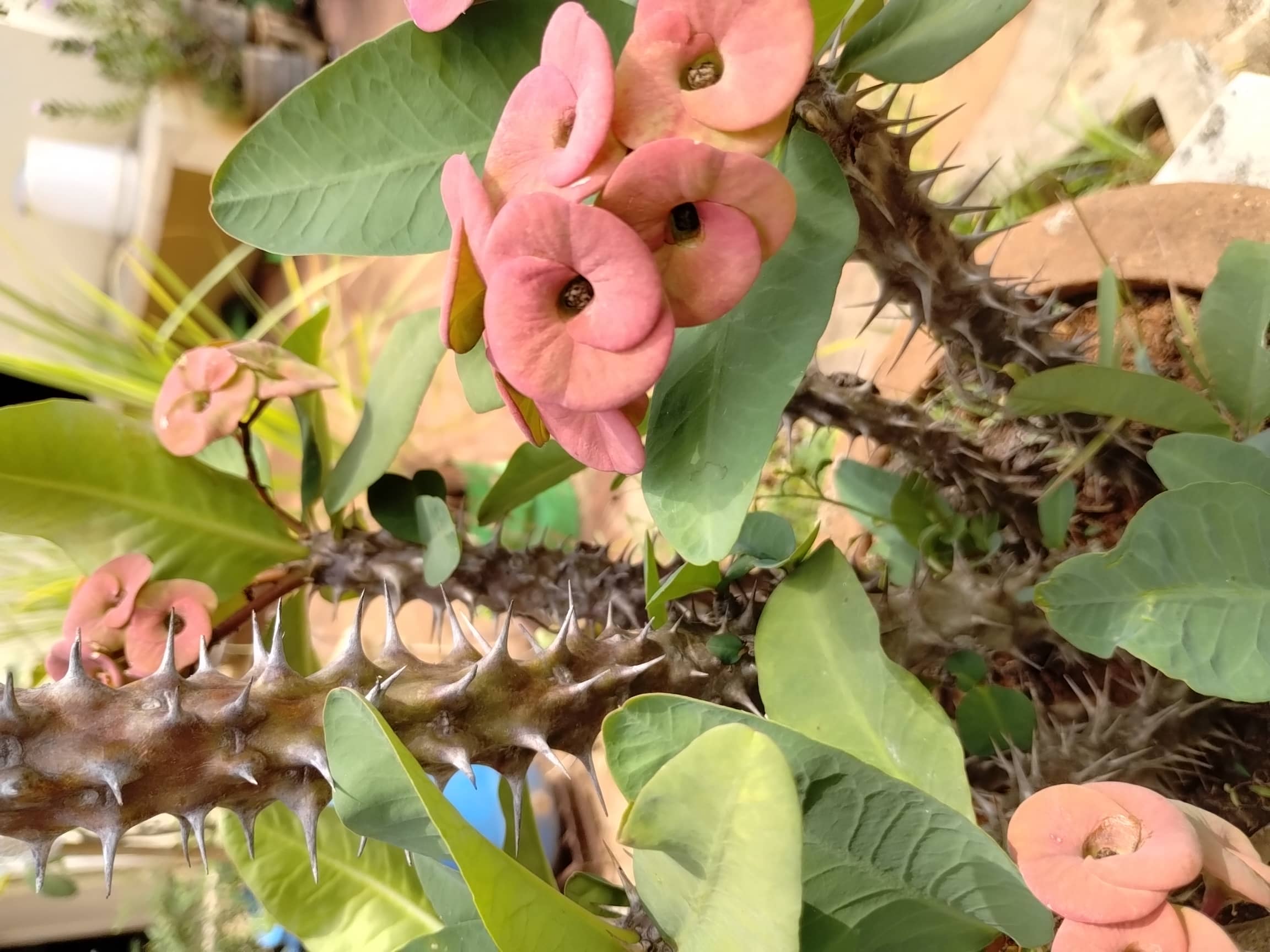
Crown of Thorns
Euphorbia milii
The Crown of Thorns (Euphorbia milii) is an incredibly resilient, woody, succulent shrub native to Madagascar. Belonging to the vast Euphorbiaceae family, it has become a globally popular houseplant and tropical landscape staple. Its common name stems from the deeply entrenched legend that it was...

Poinsettia
Euphorbia pulcherrima
The Poinsettia (Euphorbia pulcherrima) is a commercially monumental, widely recognized shrub belonging to the Euphorbiaceae family. Native to the tropical deciduous forests of western Mexico, it grows wild as a tall, lanky shrub reaching up to 10 feet in height. Today, through intense cultivation...
Plumeria
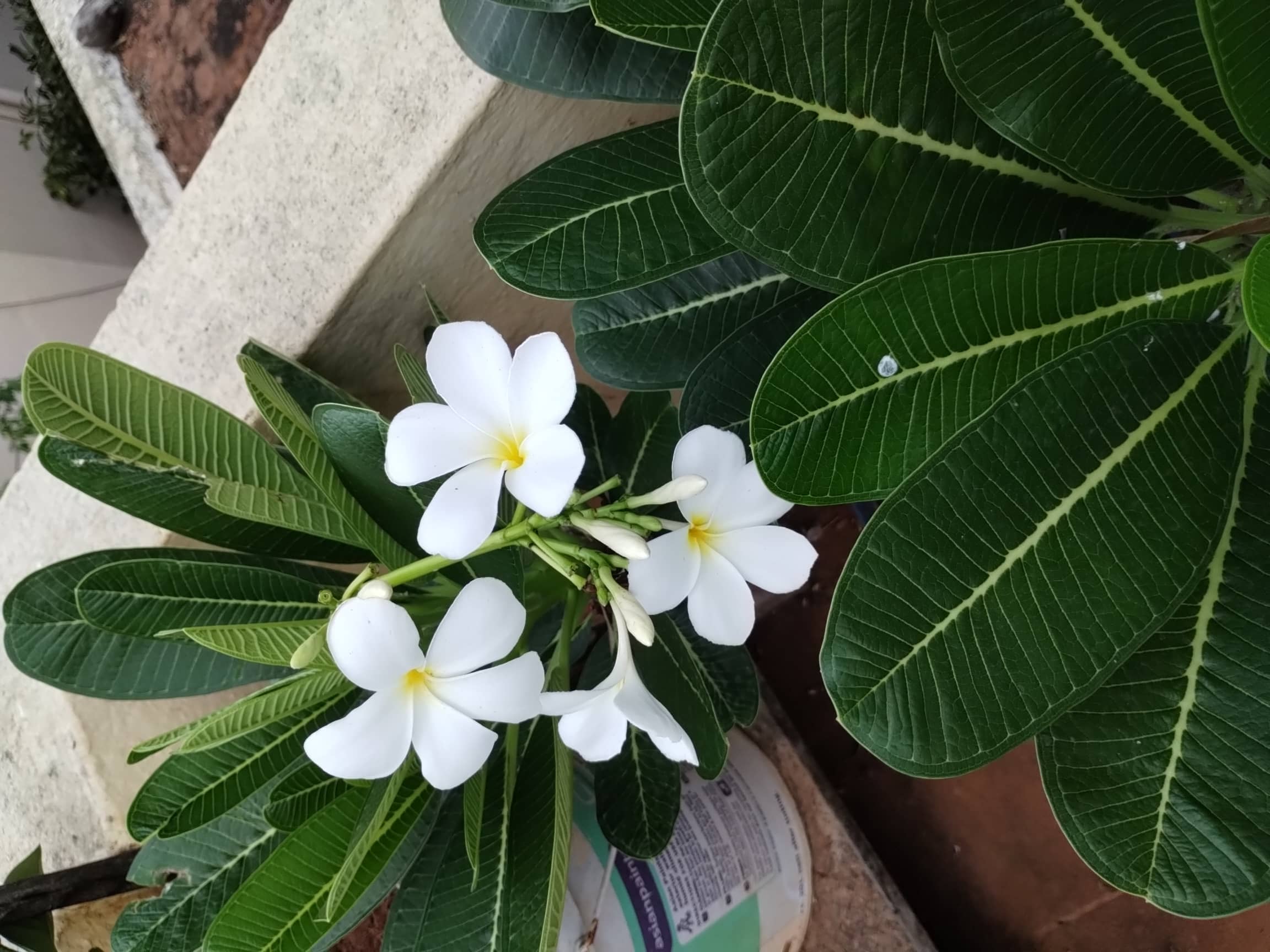
Plumeria Rubra
Plumeria, universally known as the Frangipani, is a genus of deciduous shrubs and small trees that serve as the quintessential symbol of tropical paradise. Belonging to the Apocynaceae (Dogbane) family, these plants are native to Mexico, Central America, and the Caribbean, but they have been embr...
Similar Characteristics
4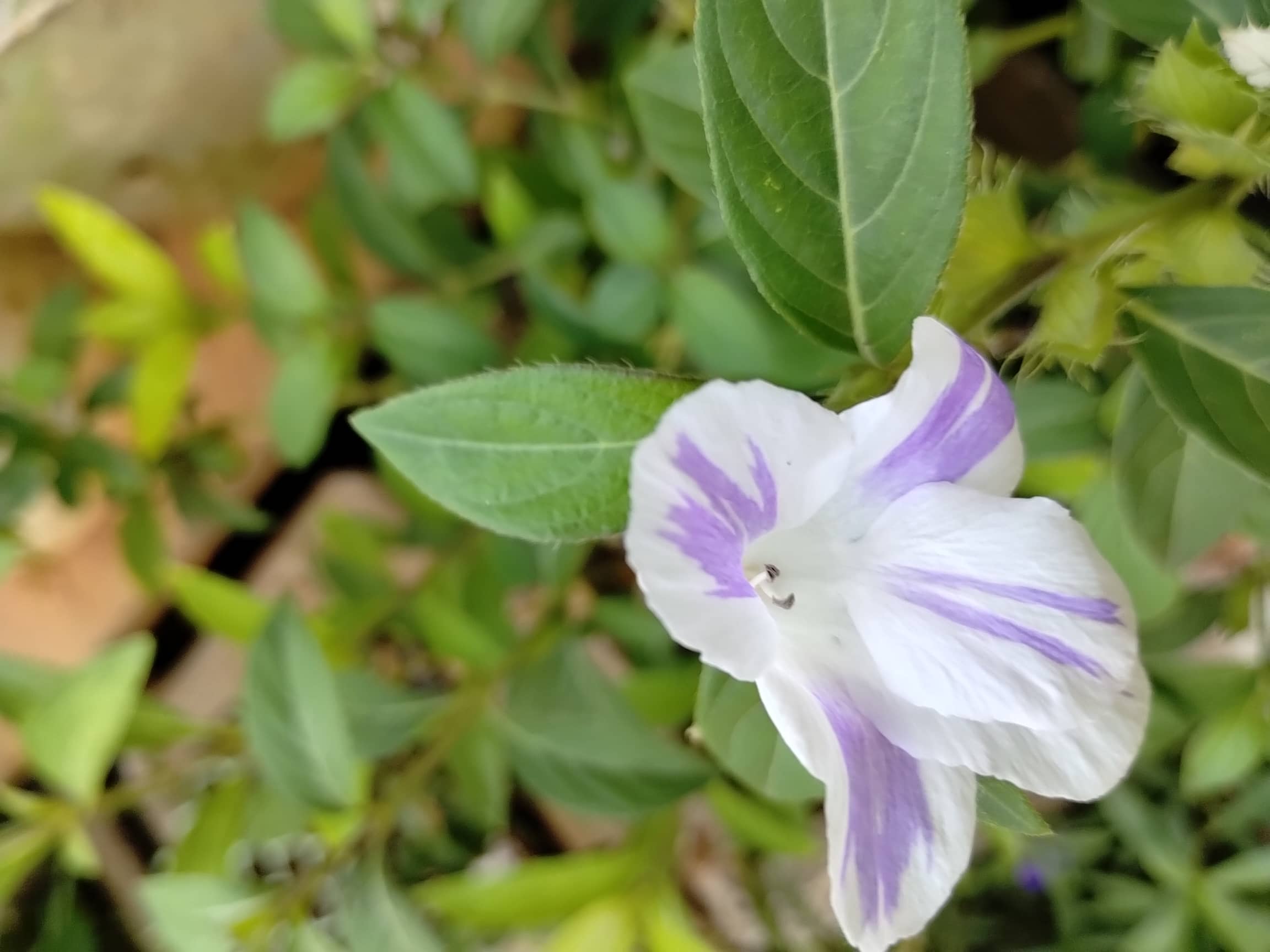
December
Barleria Cristata, Barleria prionitis
The December Flower, botanically classified under the genus Barleria within the family Acanthaceae (the acanthus family), is a highly attractive, fast-growing evergreen tropical shrub. Native to the sunny forest edges, dry riverbanks, and open scrublands of tropical Asia—spanning India, Myanmar,...
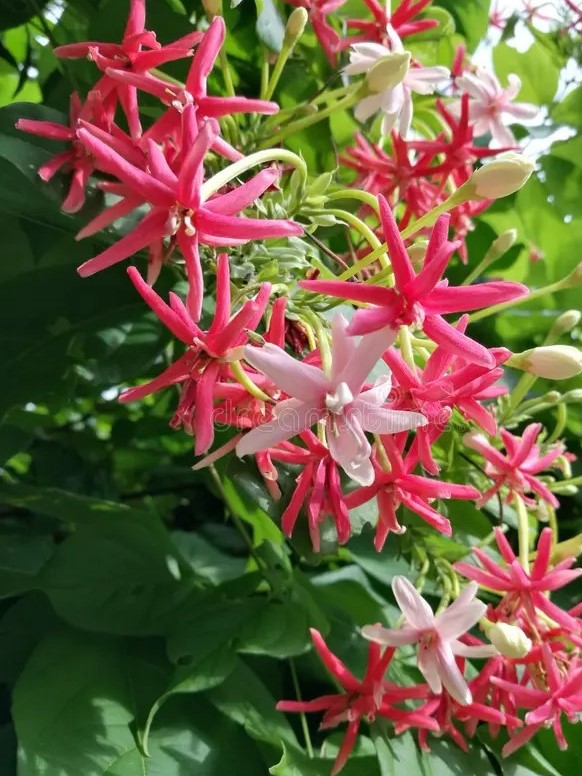
Rangoon creeper
Combretum indicum
Rangoon Creeper, botanically classified as Combretum indicum (historically known as Quisqualis indica), is an enchanting, woody climbing vine belonging to the Combretaceae (combretum) family. Native to the warm, moist tropical forests and riverbanks of South Asia, Southeast Asia, and the Pacific...
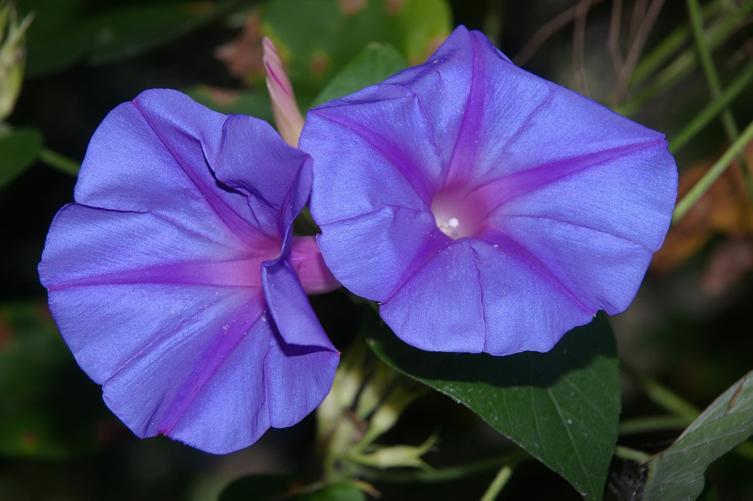
Morning Glory
Ipomoea tricolor
The Morning Glory, botanically designated as Ipomoea tricolor (and including the closely related *Ipomoea purpurea*), is an exceptionally vigorous, fast-growing climbing annual vine. Belonging to the family Convolvulaceae (the bindweed or morning glory family, tribe Ipomoeeae), this classic garde...
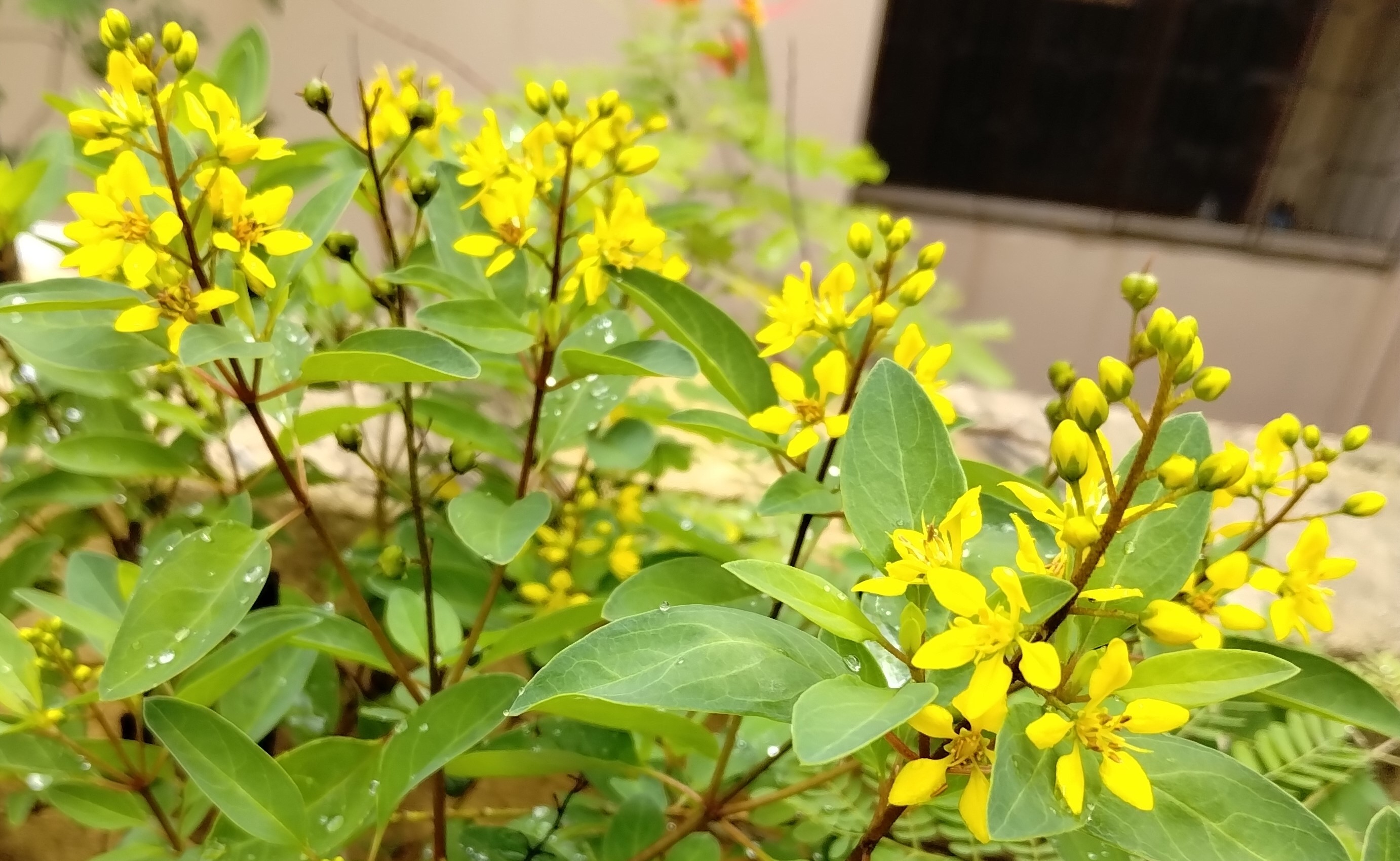
Golden Thryallis
Galphimia gracilis
The Golden Thryallis, botanically designated as *Galphimia gracilis* (previously confused with *Thryallis glauca*, commonly known as Gold Shower, Rain-of-Gold, or Slender Goldshower), is an exceptionally cheerful, fast-growing tropical evergreen shrub. Belonging to the family Malpighiaceae (the a...