
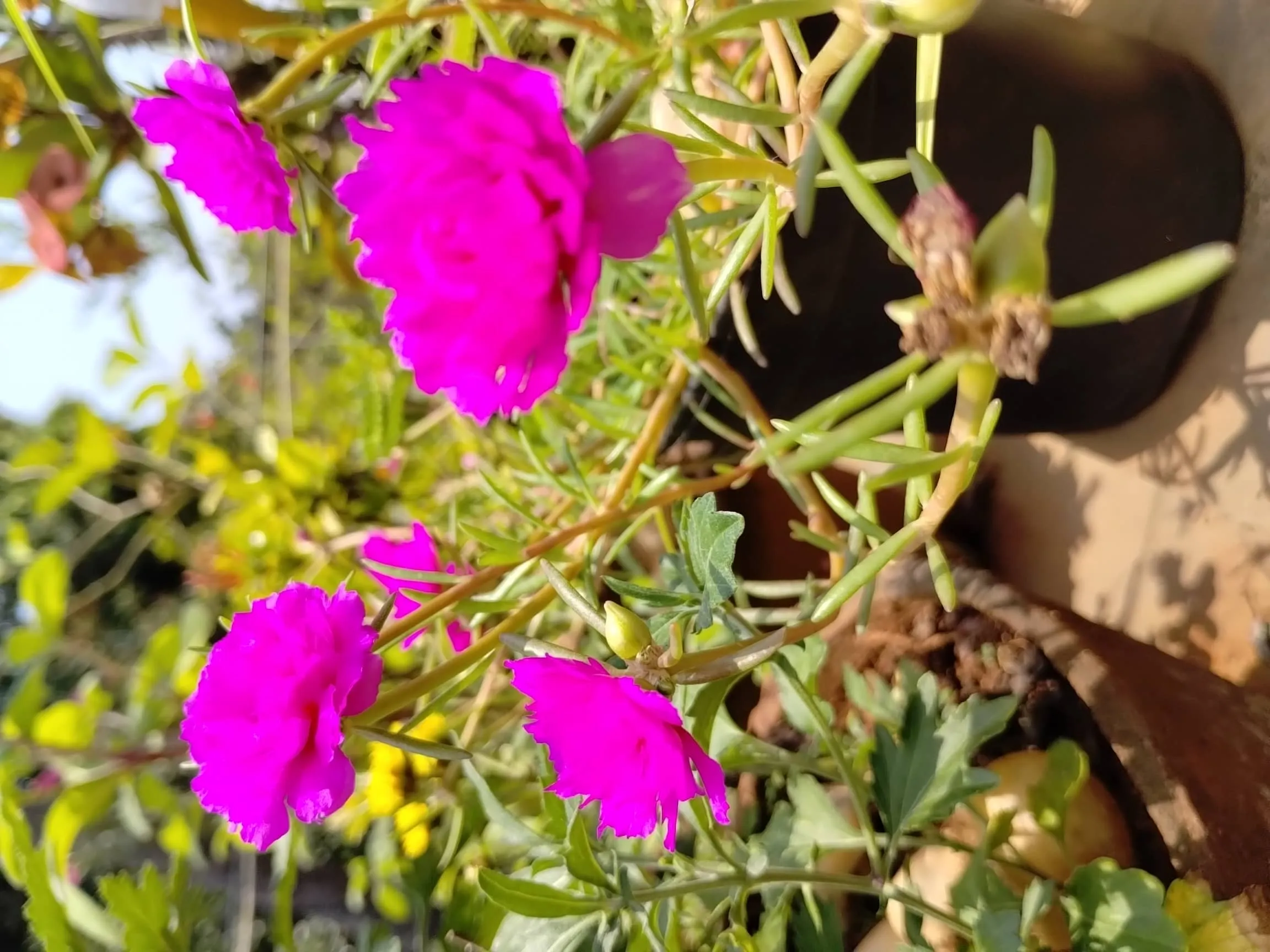
Moss Rose (Portulaca)
Portulaca grandiflora
How to Identify Moss Rose (Portulaca)
Care & Growing Guide
Seasonal Blooming & Hardiness
Seasonal Blooming Calendar:
- Peak Bloom: Summer (typically June through September).
- Planting Time: Sow seeds directly outdoors in early spring after the last frost, or transplant nursery starts in late spring.
Bloom Timeline
About Moss Rose (Portulaca)
Portulaca grandiflora, universally known as the Moss Rose, is a brilliantly colored, low-growing trailing annual belonging to the Portulacaceae family. Native to the hot, arid plains of Argentina, southern Brazil, and Uruguay, it is renowned globally as the ultimate survivalist plant for the summer garden. It thrives in environments where almost all other ornamental flowers would wither and die: intense, searing heat, prolonged drought, and poor, rocky soil.
Identification is defined by its unique succulent nature. The plant forms a dense, sprawling mat of reddish, creeping stems covered in fleshy, needle-like, cylindrical green leaves designed to store water. The flowers are stunning, resembling miniature, ruffled wild roses with fragile, crepe-paper-like petals. They bloom in a blindingly bright neon spectrum of magenta, yellow, orange, pink, and white. A fascinating quirk of Portulaca is that the flowers are phototropic—they open fully only in bright, direct sunlight and tightly close their petals at night or on cloudy days.
The floral formula is ⊕ ⚥ K2 C5 A∞ G(3-8). It features a radially symmetrical, bisexual flower. It has only 2 sepals (a defining characteristic of the Portulacaceae family), typically 5 petals (though double varieties have many more), numerous stamens, and a semi-inferior ovary composed of 3 to 8 fused carpels that eventually forms a small capsule packed with tiny, iridescent seeds.
Growing Portulaca requires almost complete neglect. It demands absolutely full, baking sun. It must be planted in sandy, highly porous, well-draining soil; rich, heavy, soggy soil will instantly cause fatal root and stem rot. Once established, it requires very little watering, surviving entirely on the water stored in its succulent leaves. It is perfect for hot concrete planters, rock gardens, and trailing out of hanging baskets.
Culturally, it is prized as a low-maintenance, high-impact landscape groundcover. In many tropical regions, it easily self-seeds and acts as a short-lived perennial.
WARNING: Portulaca is TOXIC to pets. The fleshy leaves and stems contain high levels of soluble calcium oxalates. If a dog, cat, or horse ingests the plant, it can cause severe drooling, tremors, and kidney failure in large amounts. Keep trailing hanging baskets out of reach of curious pets.
It is sometimes confused with Ice Plants (Delosperma), which share a similar succulent trailing habit and neon flowers but belong to a different family and have angular, not cylindrical, leaves. Contrast this intense sun-lover with the shade-loving Balsam or explore more groundcovers in the Flower Identifier.
For more botanical profiles and flower identification features, see our guides on Crepe Myrtle and Pseuderanthemum.
Floral Formula & Features
Radially symmetrical, bisexual. Has only 2 sepals (characteristic of the family), 5 free petals (often doubled in cultivation), numerous stamens, and a semi-inferior ovary of 3-8 fused carpels.
- Scientific Name & Classification: Portulaca grandiflora (Portulacaceae). Commonly known as Moss Rose.
- Identification Markers: Trailing, reddish stems with fleshy, cylindrical, needle-like succulent leaves. Bright, ruffled, crepe-paper-like flowers.
- Floral Formula (⊕ ⚥ K2 C5 A∞ G(3-8)): Radially symmetrical. Notably features only 2 sepals, 5 petals, and numerous stamens.
- Growing Requirements: Demands intense, baking full sun and poor, sandy, well-draining soil. Extremely drought and heat tolerant. Highly prone to rot if overwatered.
- Cultural Significance: Prized globally as an indestructible, low-maintenance trailing plant for hanging baskets and hot, concrete planters.
- Safety & Toxicity: TOXIC to pets. Contains soluble calcium oxalates that can cause kidney failure, tremors, and severe drooling in dogs, cats, and horses.
- Common Look-alikes: Often confused with Ice Plants (Delosperma), which are also trailing succulents but have triangular/angular leaves rather than cylindrical.
- Internal Links: Compare its intense heat tolerance with the shade-demanding Spiked Shaded Ginger or browse the Flower Identifier.
Names in Different Languages
Toxicity & Safety
Always keep toxic plants out of reach of children and pets. Consult a veterinarian or medical professional immediately if ingestion is suspected.
Frequently Asked Questions
What is Floral Formula?
A floral formula is a symbolic representation of a flower's structure using letters, numbers, and special symbols. It provides a concise way to describe the arrangement and number of floral parts.
This formula describes the flower's symmetry, sepals, petals, stamens, and carpels in a standardized format.
Formula Sequence
- Bract: Br or Ebr
- Bracteole: Brl or Ebrl
- Symmetry: % (Radial) or ⊕ (Bilateral)
- Sex: ♀ (Female), ♂ (Male), or ⚥ (Bisexual)
- Calyx/Sepal: K<number> (Free or Fused)
- Corolla/Petal: C<number> (Free or Fused)
- Androecium: A<number> (Free or Fused)
- Gynaecium: G<number> (Superior or Inferior Ovary)
Symbol Meanings
- Numbers: Indicate quantity of parts
- Parentheses (): Parts are fused together
- Plus (+): Parts in different whorls
- Underline: Superior ovary position
- Overline: Inferior ovary position
- ∞: Numerous parts (too many to count)
Understanding floral formulas helps botanists quickly identify and classify flowers based on their structural characteristics.
Similar Flowers
Discover flowers that share botanical characteristics
Similar Characteristics
4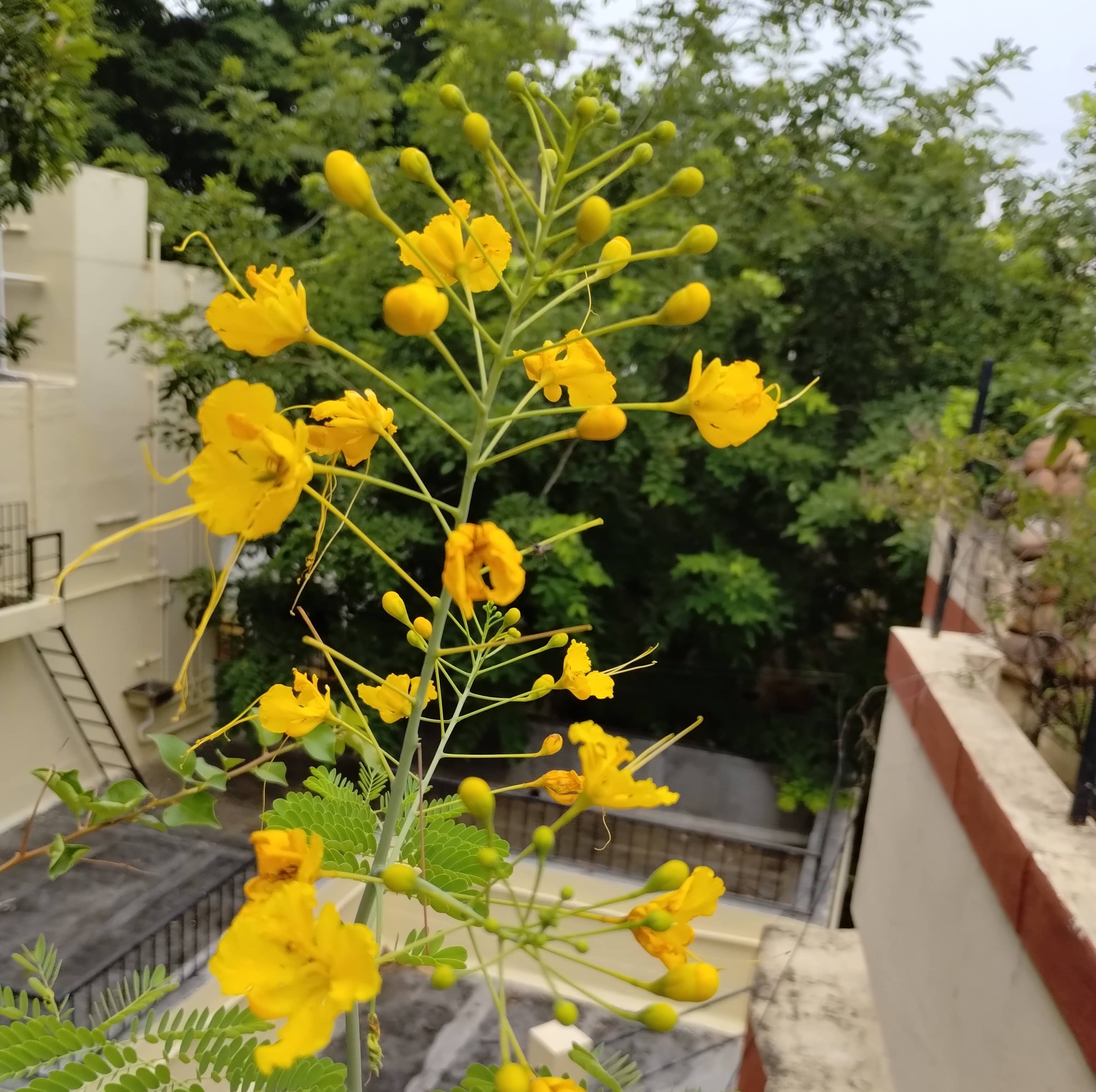
Peacock Flower (Caesalpinia)
Caesalpinia pulcherrima
Caesalpinia pulcherrima, famously known as the "Peacock Flower," "Pride of Barbados," or "Red Bird of Paradise," is a breathtakingly vibrant tropical shrub that embodies the fiery spirit of the Caribbean. A member of the Fabaceae (Legume) family, this species is celebrated for its flamboyant, ter...
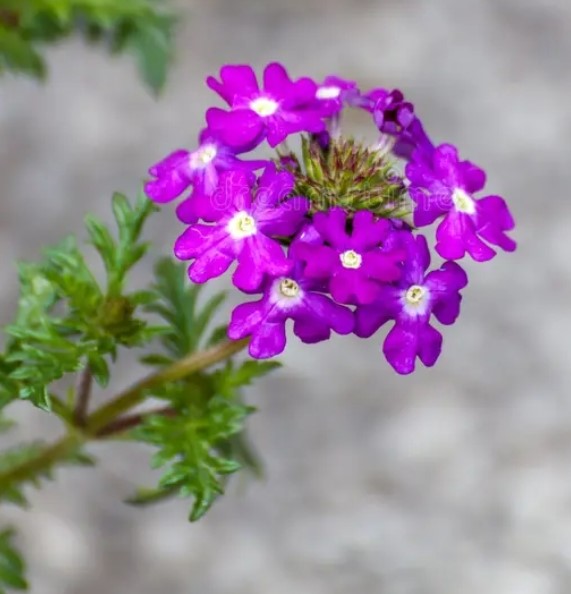
Verbena
Verbena
The Verbena, botanically classified under the genus Verbena and belonging to the family Verbenaceae (the verbena or vervain family), is an exceptionally tough, colorful, and resilient perennial (often cultivated as a warm-season annual in cooler temperate zones). Native primarily to the sunny gra...
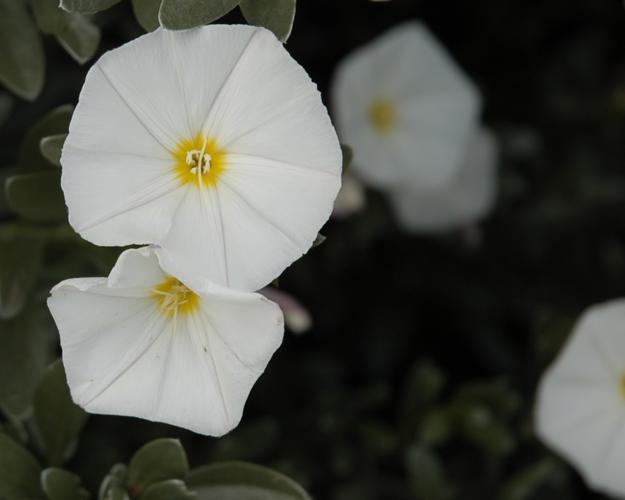
Silverbush
Convolvulus cneorum
The Silverbush, botanically classified as Convolvulus cneorum and widely referred to as the Silvery Bindweed or Bush Morning Glory, is an exceptionally elegant, compact evergreen shrub belonging to the Convolvulaceae (morning glory) family. Unlike its sprawling, climbing vine cousins, this specie...
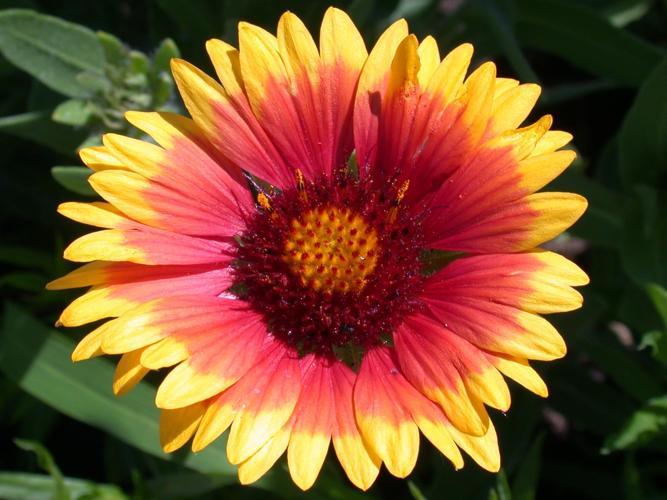
Gaillardia
Gaillardia
Gaillardia, botanically classified within the genus Gaillardia in the Asteraceae (sunflower) family and popularly known as the Blanket Flower or Indian Blanket, is a group of exceptionally cheerful, sun-loving annuals and short-lived perennials. Native to the dry prairies, sandy plains, and pine...