
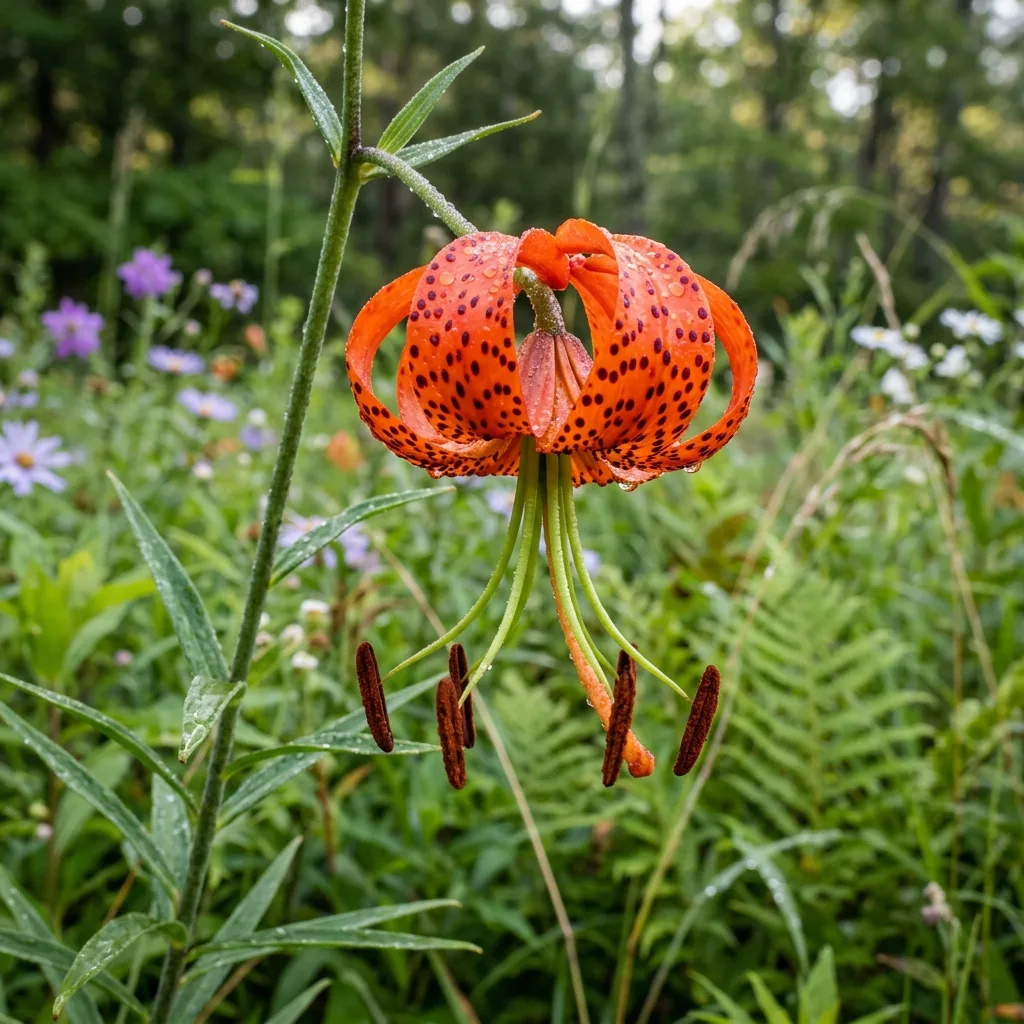
Turk's Cap Lily
Lilium superbum
How to Identify Turk's Cap Lily
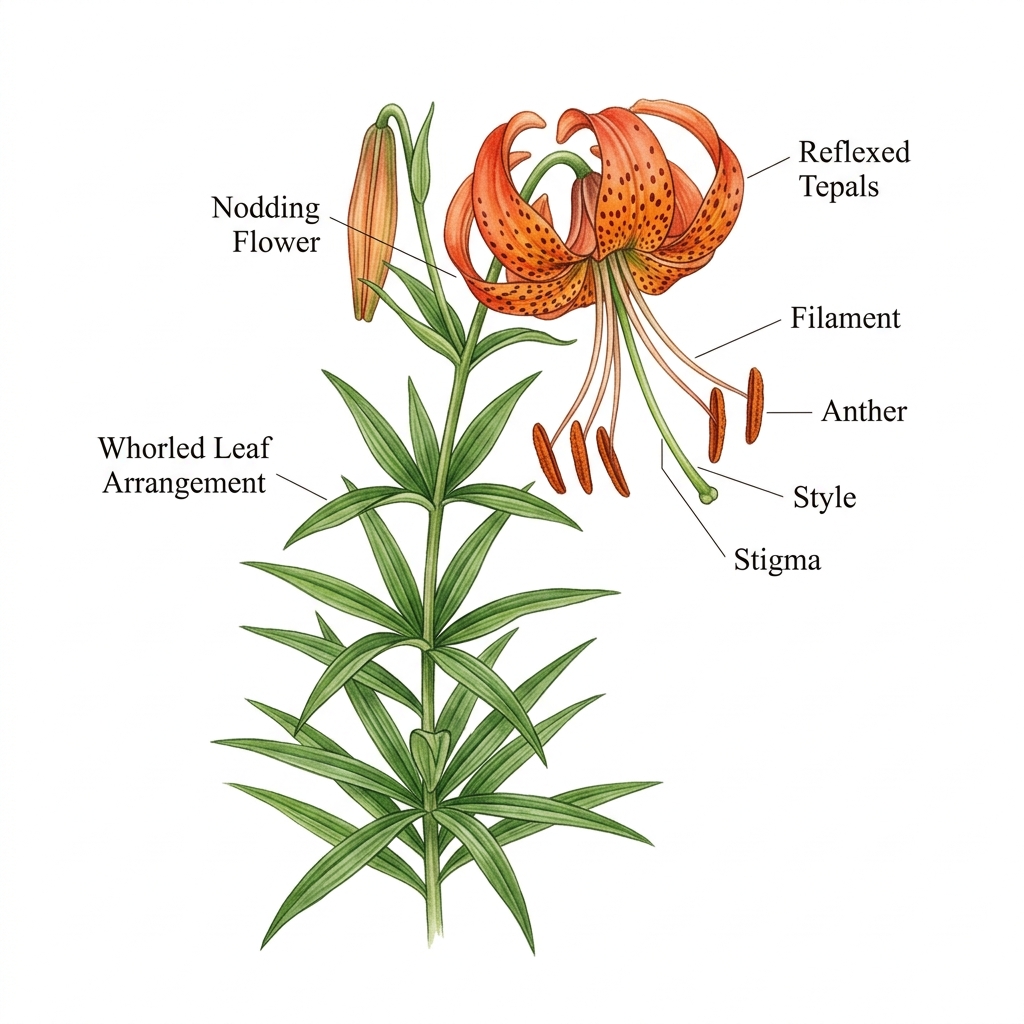
A detailed guide to identifying Turk's Cap Lilies (Lilium superbum) by its key features:
- Reflexed Orange Turban: Large nodding flowers with petals completely curved backwards to expose stamens.
- Heavily Spotted Throats: Golden-orange petals covered in prominent brown spots with a green central star.
- Whorled Lanceolate Leaves: Long, narrow leaves arranged in neat circles (whorls) along a tall stem.
- Towering Stem Height: Strong, upright stems that can reach 4 to 8 feet in height.
Care & Growing Guide
Turk's Cap Lily Care Guide:
- Light: Full sun to light shade
- Soil: Consistently moist, humus-rich, slightly acidic — stream edges and rain gardens ideal
- Planting: Plant scaly bulbs 4–6 inches deep in fall
- Staking: May need staking at full height in exposed, windy locations
Seasonal Blooming & Hardiness
Seasonal Blooming Calendar:
- Peak Bloom: July–August
- US Range: USDA Zones 4–9; native to eastern US moist meadows, stream banks, and open woodlands
Bloom Timeline
About Turk's Cap Lily
Turk's Cap Lily (Lilium superbum) is the tallest native lily in North America and one of the most spectacular wildflowers of the eastern United States, reaching heights of 4 to 8 feet with multiple nodding, bright orange flowers dramatically spotted with purple-brown and with their petals fully reflexed backward into the shape of a turban or 'Turk's Cap' that gives the plant its evocative common name. Native to the moist meadows, stream edges, and open woodlands of the eastern US from Massachusetts to Florida and westward to Missouri, it has been described by botanists as one of the showiest wildflowers in all of North America.
Each individual flower of Turk's Cap Lily is a masterpiece of botanical engineering. The six orange tepals (three petals and three identical sepals) curl sharply backward, revealing long, projecting stamens tipped with rust-orange pollen. The green star-shaped nectary at the center of the flower is a unique characteristic of this species and is clearly visible when looking up into the nodding bloom. A single plant can carry 10, 20, or even 40 flowers at once on a tall, unbranched stem clothed in whorls of lance-shaped leaves.
Ecologically, Turk's Cap Lily is a hummingbird magnet — its nodding, reflexed shape and vivid orange color are perfectly suited to Ruby-Throated Hummingbirds hovering beneath the pendant flowers to feed, inadvertently picking up pollen on their foreheads. Giant Swallowtail and Spicebush Swallowtail butterflies also visit the flowers. In the natural landscape, large colonies of Turk's Cap Lily blooming along a stream edge or in a moist meadow in July are an unforgettable spectacle, towering above the surrounding vegetation like floral skyscrapers.
For the garden, Turk's Cap Lily thrives in consistently moist soil in full sun to light shade, making it ideal for rain gardens, stream banks, and moist meadow plantings. It grows from scaly bulbs, is completely deer-resistant (deer avoid all native Lilium), and naturalizes reliably when happy. Unlike Asiatic lilies that can harbor the Lily Mosaic Virus, native Lilium are generally more robust in their native range. While harmless to dogs and humans, Turk's Cap Lily — like all true lilies — is fatally toxic to cats and should never be planted in households with indoor-outdoor cats. See our Pet Guard for details.
Floral Formula & Features
Actinomorphic, bisexual; 6 free reflexed tepals (3+3 identical); 6 free stamens; 3 fused carpels with superior ovary
- Scientific Name & Classification: Lilium superbum (Liliaceae, tribe Lilieae). The tallest native lily in North America, native to eastern US moist meadows and stream banks.
- Identification Markers: 4–8 ft tall stem bearing multiple nodding orange flowers with purple-brown spots and fully reflexed (backward-curled) tepals. Whorled lance-shaped leaves. Green star-shaped nectary at flower center. Blooms July–August.
- Floral Formula (⊕ ☿ P(6) A6 G(3)): Actinomorphic, bisexual; 6 identical reflexed tepals (3 petals + 3 sepals); 6 free stamens; 3 fused carpels with superior ovary.
- Growing Requirements: Full sun to light shade; consistently moist, humus-rich, slightly acidic soil. Excellent for rain gardens and stream banks. USDA Zones 4–9. Deer-resistant. FATAL to cats.
- Cultural Significance: Considered one of the showiest native wildflowers in North America. Colonies along Appalachian stream edges in July are iconic wildlife spectacles.
- Safety & Toxicity: ⚠️ FATAL TO CATS — even small amounts cause irreversible kidney failure. Safe for dogs and humans. Do not grow in households with cats.
- Common Look-alikes: Often confused with Tiger Lily (Lilium lancifolium — an Asian species). Turk's Cap Lily is distinguished by its green star-shaped nectary at the flower center, whorled leaves, and taller stature.
- Internal Links: Spectacular alongside Cardinal Flower and Swamp Rose Mallow in a moist native planting. Check Pet Guard for cat safety.
Names in Different Languages
Botanical Classification: Turk's Cap Lily belongs to the Liliaceae family. Learn how to identify its floral symmetry, stamen arrangement, and structural formulas in our Botanical Family Classification Guide.
Toxicity & Safety
Always keep toxic plants out of reach of children and pets. Consult a veterinarian or medical professional immediately if ingestion is suspected.
Pet Safety Guide: For detailed toxicity symptoms, first-aid measures, and safe garden alternatives, see our full Pet Guard Profile for Turk's Cap Lily.
Frequently Asked Questions
What is Floral Formula?
A floral formula is a symbolic representation of a flower's structure using letters, numbers, and special symbols. It provides a concise way to describe the arrangement and number of floral parts.
This formula describes the flower's symmetry, sepals, petals, stamens, and carpels in a standardized format.
Formula Sequence
- Bract: Br or Ebr
- Bracteole: Brl or Ebrl
- Symmetry: % (Radial) or ⊕ (Bilateral)
- Sex: ♀ (Female), ♂ (Male), or ⚥ (Bisexual)
- Calyx/Sepal: K<number> (Free or Fused)
- Corolla/Petal: C<number> (Free or Fused)
- Androecium: A<number> (Free or Fused)
- Gynaecium: G<number> (Superior or Inferior Ovary)
Symbol Meanings
- Numbers: Indicate quantity of parts
- Parentheses (): Parts are fused together
- Plus (+): Parts in different whorls
- Underline: Superior ovary position
- Overline: Inferior ovary position
- ∞: Numerous parts (too many to count)
Understanding floral formulas helps botanists quickly identify and classify flowers based on their structural characteristics.
Similar Flowers
Discover flowers that share botanical characteristics
Same Genus
2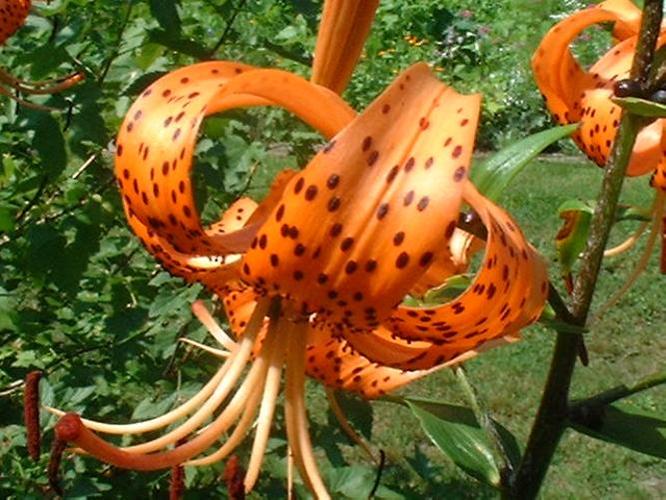
Tiger Lily
Lilium lancifolium
The Tiger Lily (Lilium lancifolium), a standout member of the Liliaceae family, is one of the most recognizable and striking lilies in the world. Native to the temperate regions of Eastern Asia, including China, Japan, and Korea, this herbaceous perennial has captivated gardeners for centuries wi...
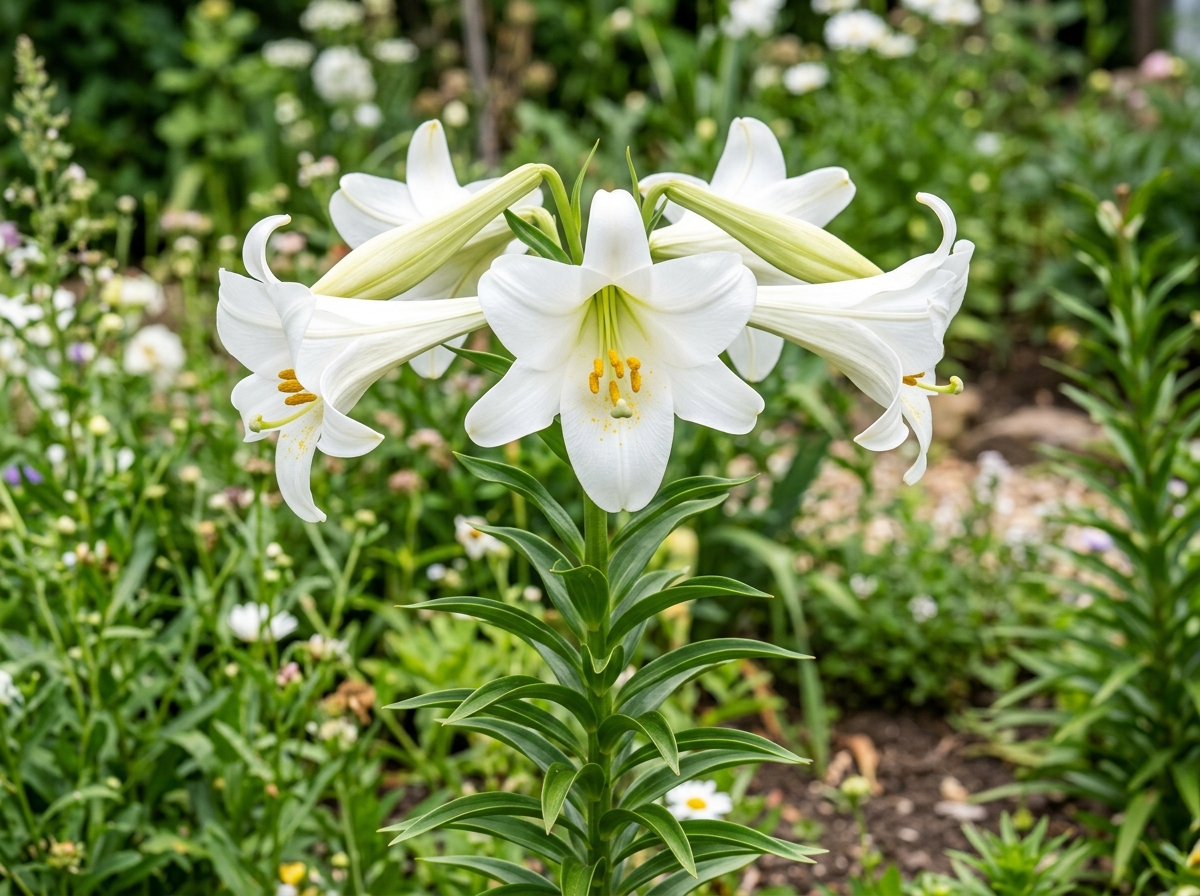
Easter Lily
Lilium longiflorum
Easter Lily (*Lilium longiflorum*), native to the Ryukyu Islands of Japan, is a classic trumpet-shaped white lily famed for its elegant pure white blooms and intense sweet fragrance. It is traditionally forced into bloom in spring for Easter celebrations and spring floral displays. Historically,...
Same Family
4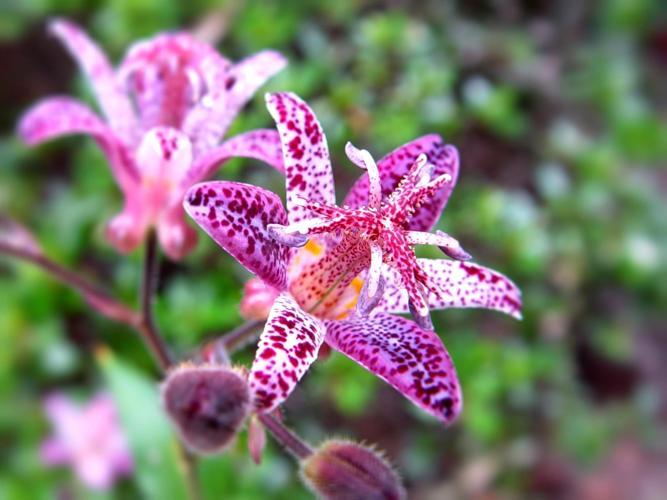
Toad Lily
Tricyrtis
The Toad Lily, botanically classified under the genus Tricyrtis and belonging to the family Liliaceae (the lily family, tribe Lilieae), is an exceptionally exotic, shade-loving perennial. Native to the damp forest understories, shaded mountain valleys, and rocky stream banks of eastern Asia—with...
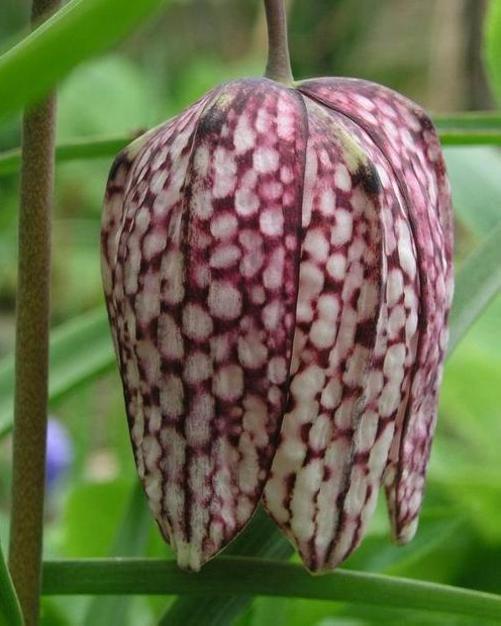
Fritillaria
Fritillaria
The Fritillaria, botanically designated as Fritillaria within the Liliaceae (lily) family, is an extraordinarily elegant and exotic genus of spring-flowering bulbous perennials. Native to the temperate latitudes of the Northern Hemisphere—spanning the grassy floodplains of Europe, the Mediterrane...
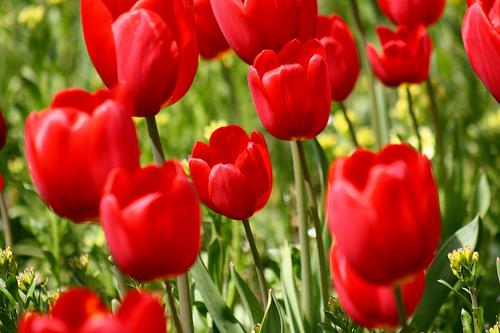
Tulip
Tulipa
The Tulip, botanically designated under the genus Tulipa and belonging to the family Liliaceae (the lily family, tribe Lilieae), is an exceptionally iconic, globally celebrated spring-blooming bulbous herbaceous perennial. Native to the dry, mountainous heights, rocky slopes, and sweeping grassla...
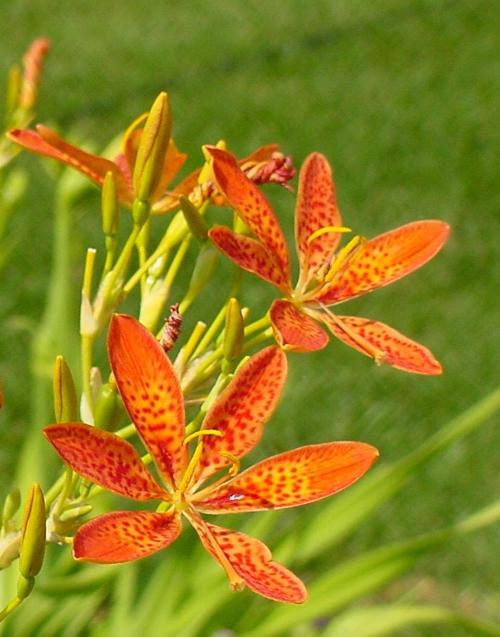
Leopard Lily
Iris domestica (syn. Belamcanda chinensis)
The Leopard Lily, botanically designated as *Iris domestica* (previously classified as *Belamcanda chinensis*, and commonly known as the Blackberry Lily or Leopard Flower), is an exceptionally distinct, highly ornamental perennial. Belonging to the family Iridaceae (the iris family, tribe Irideae...
Similar Characteristics
4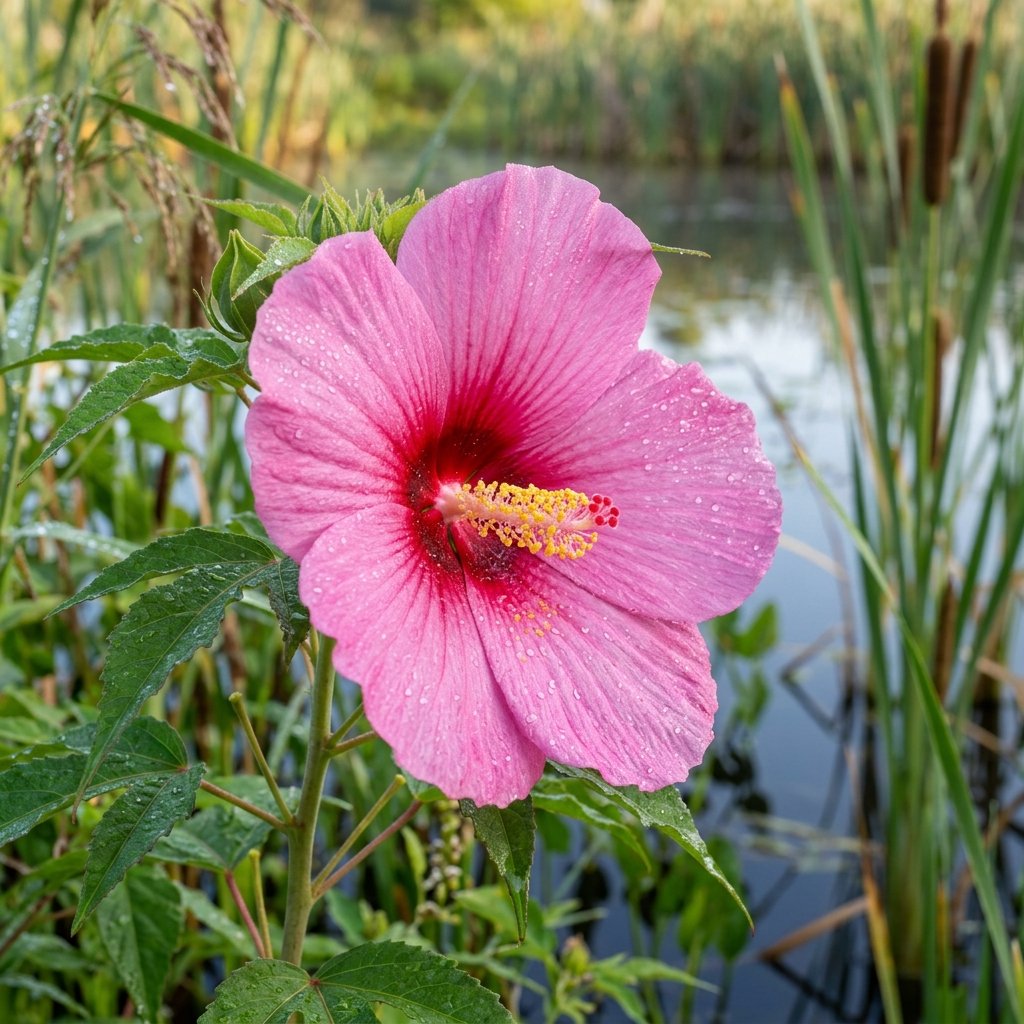
Swamp Rose Mallow
Hibiscus moscheutos
Swamp Rose Mallow (*Hibiscus moscheutos*) produces some of the largest flowers of any hardy perennial wildflower in North America — dinner-plate-sized blooms reaching 6 to 12 inches in diameter — in shades of white, pink, and rose, typically adorned with a dramatic deep crimson or rose-pink centr...
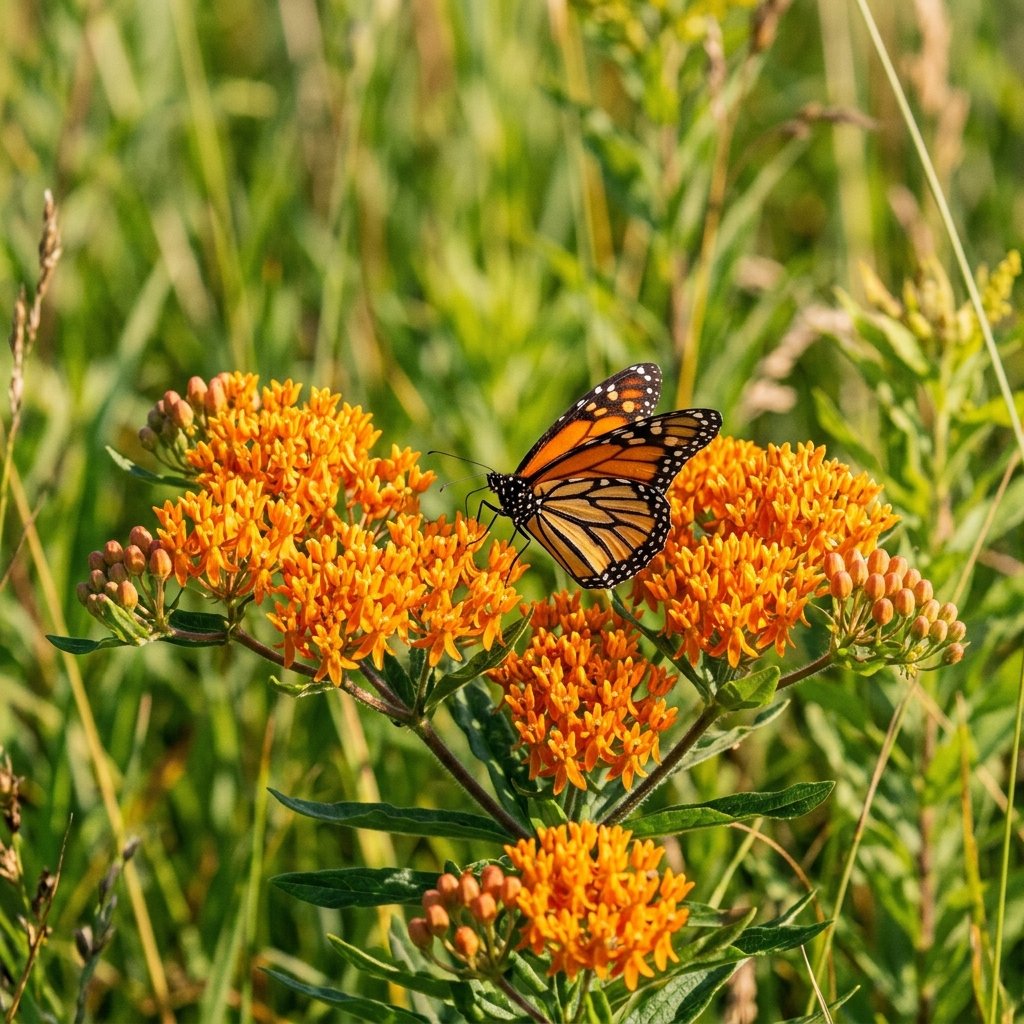
Butterfly Weed
Asclepias tuberosa
Butterfly Weed (*Asclepias tuberosa*) is arguably the most vivid and ecologically vital native wildflower of the American prairie and meadow, blazing in brilliant shades of fiery orange and golden-yellow in midsummer and serving as one of the most important nectar and host plants for the endanger...
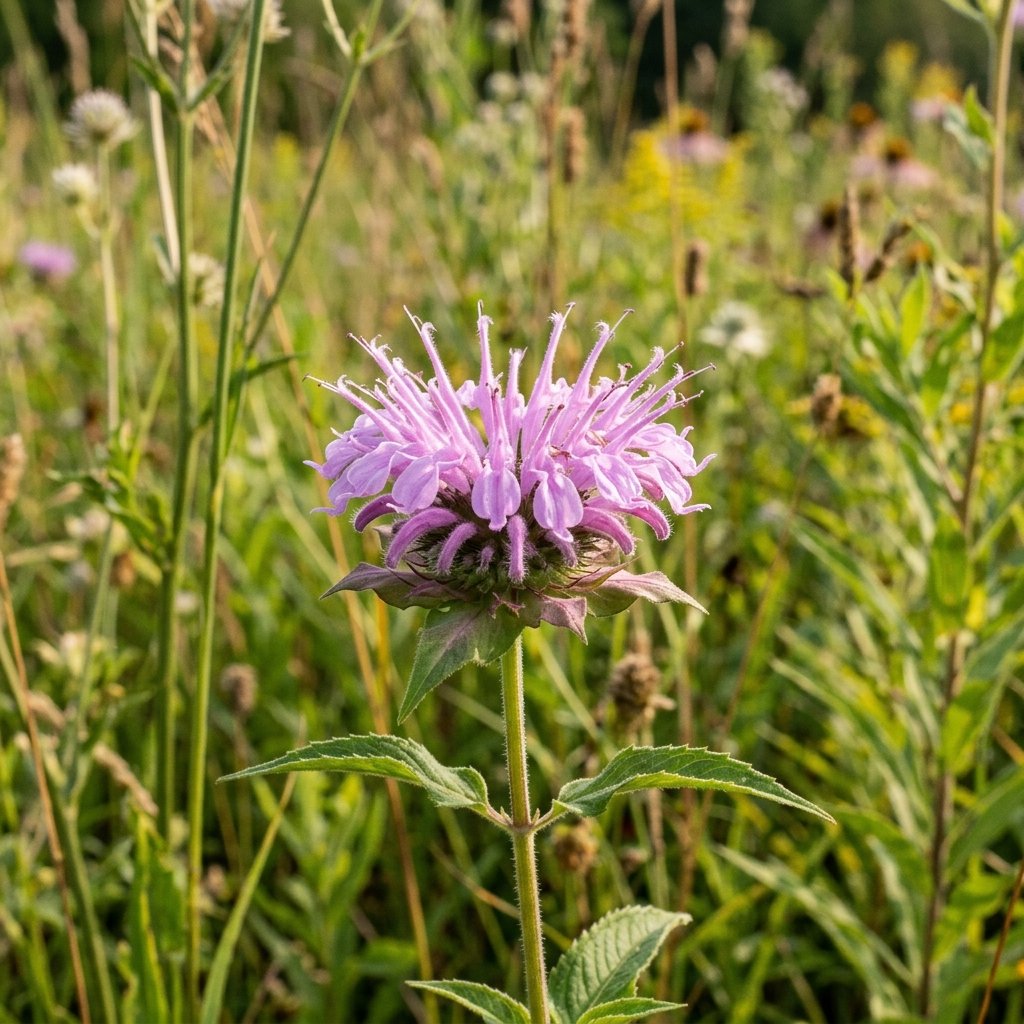
Wild Bergamot
Monarda fistulosa
Wild Bergamot (*Monarda fistulosa*) is one of the most important and widely distributed native wildflowers and medicinal herbs of North America, producing shaggy, globe-shaped heads of tubular lavender to pale pink flowers on sturdy, square stems throughout summer. A member of the mint family (La...
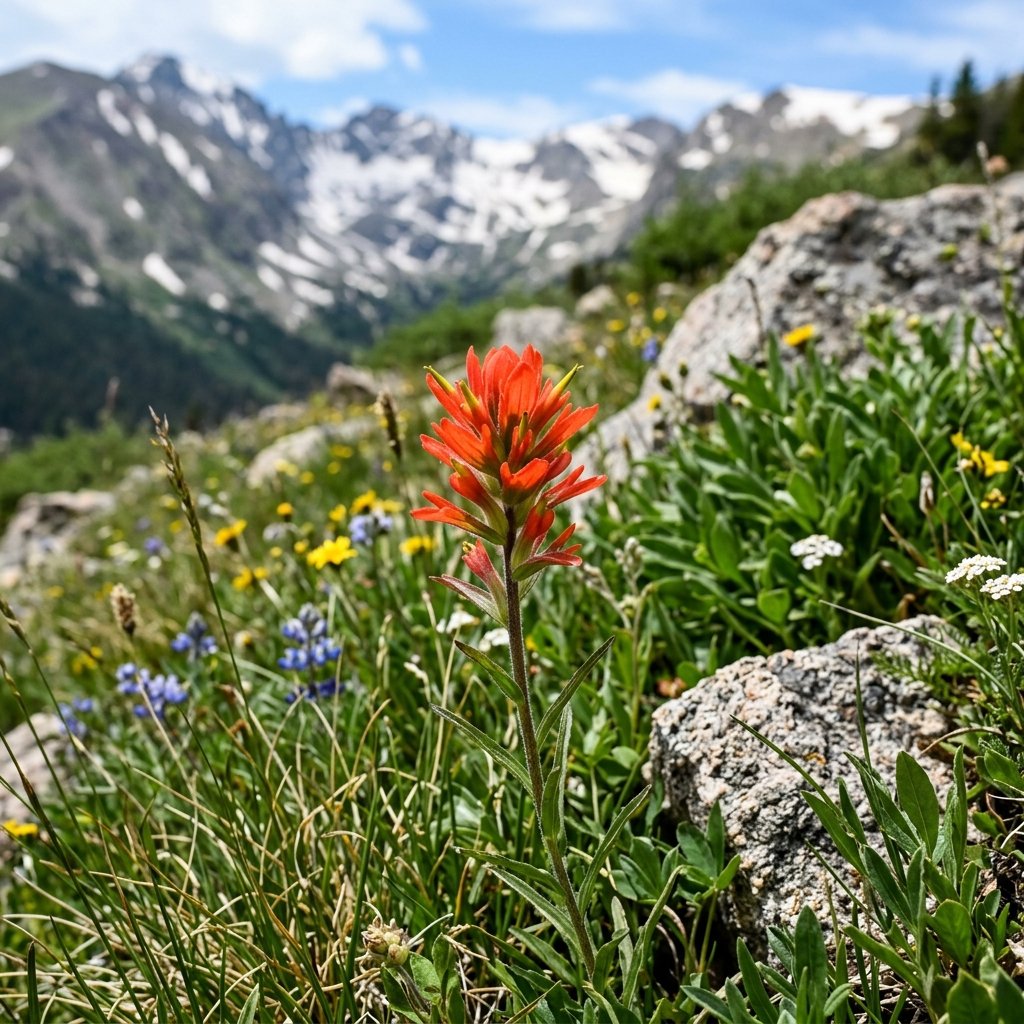
Indian Paintbrush
Castilleja coccinea
Indian Paintbrush (*Castilleja* spp.) is one of the most dramatically beautiful and ecologically fascinating wildflowers of the American West, producing clusters of brilliant red, orange, or yellow bracts that look as though they were dipped in vivid paint. With approximately 200 species native t...