
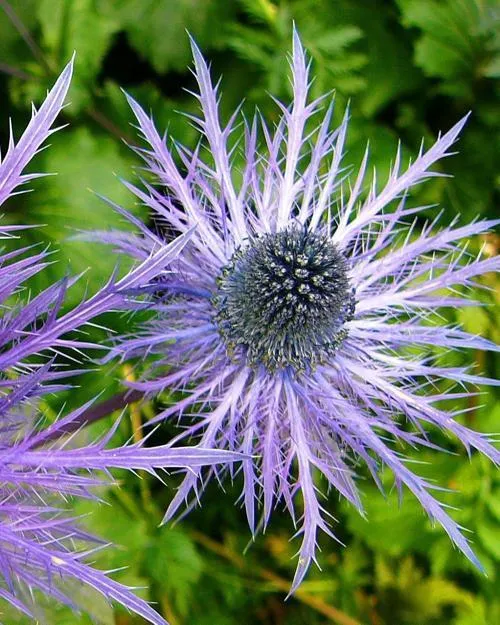
Alpine Sea Holly
Eryngium alpinum
How to Identify Alpine Sea Holly
Care & Growing Guide
Seasonal Blooming & Hardiness
Seasonal Blooming Calendar:
- Peak Bloom: Herbaceous perennial that blooms in summer (June-August). Flowers retain color when dried, making them popular for arrangements
- Planting Time: Plant container-grown starts in early spring or autumn.
Bloom Timeline
About Alpine Sea Holly
The Alpine Sea Holly, botanically known as Eryngium alpinum and widely celebrated as the 'Queen of the Alps,' is an extraordinarily striking, architectural herbaceous perennial. Belonging to the family Apiaceae (the carrot or parsley family, tribe Saniculeae), this alpine masterpiece is native to the upper mountain meadows, tall herb grasslands, and rocky slopes of the European Alps, thriving across Switzerland, Austria, France, Italy, Slovenia, and Croatia at elevations between 1,500 and 2,500 meters.
Standing 1 to 2.5 feet (30 to 80 cm) tall, this clump-forming perennial is famous for its unique composite-looking, thistle-like appearance. It features heart-shaped, basal leaves on long stalks that are soft and dark green, while the upper stem leaves are stiff, spiny, and deeply lobed. During the peak of summer (June through August), it produces highly distinctive, cylindrical to cone-shaped flower heads (umbels) composed of hundreds of tiny, tightly packed blue-purple flowers.
These intense blue flower cones are dramatically encircled by a regal, lace-like collar of 10 to 20 highly divided, spiny bracts that exhibit a glowing, metallic steel-blue, violet, or silvery-blue sheen. The radially symmetrical reproductive morphology is summarized by the family formula EBr ⊕ ☿ K5 C5 A5 G̅(2). This formula states that the flowers are ebracteate, actinomorphic, and bisexual. The calyx contains 5 rigid sepals, and the corolla has 5 free blue petals. The androecium contains 5 free stamens, and the gynoecium contains 2 fused carpels forming an inferior ovary.
Highly prized by rock gardeners and florists, Alpine Sea Holly requires full, direct mountain sunlight (at least 6 hours daily) and sharp, exceptionally well-draining, rocky, or sandy calcareous soils. It develops a deep, robust taproot that provides excellent drought tolerance once established, but makes the plant highly resentful of transplanting. It is extremely cold-hardy down to -20°C and thrives in USDA zones 4 through 8, though it struggles in high summer heat and humidity.
The genus name Eryngium stems from the Greek word eryngion, referring to its classical herbal use in treating digestive disorders. Famed in Sanskrit as Harikusa (हरीकुसा) and in German as Alpen-Mannstreu, it represents structural resilience, defense, and timeless beauty. Because of over-collection for dried flower arrangements, it is a protected species in several alpine regions. For safety guidance on mountain plants, browse our general Pet Guard page. It is easily distinguished from true thistles by its soft basal leaves.
Alpine Sea Holly looks spectacular in dry borders beside Primrose-primula or Columbine. To explore more robust mountain perennials, browse our Flower Identifier.
For more botanical profiles and flower identification features, see our guides on Zinnia and Masterwort.
Floral Formula & Features
Ebracteate (no bracts), Actinomorphic (radially symmetrical), bisexual, 5 free sepals, 5 free petals, 5 free stamens, 2 fused carpels with inferior ovary
- The genus name 'Eryngium' derives from Greek, possibly meaning 'to belch' due to its traditional use for digestive ailments. Called 'Queen of the Alps' for its majestic appearance
- Distinctive cone-shaped flower heads (umbels) with tiny blue-purple flowers surrounded by large, spiny, silvery-blue bracts that resemble a collar
- Herbaceous perennial that blooms in summer (June-August). Flowers retain color when dried, making them popular for arrangements
- Grows to 1-2.5 feet (30-80 cm) in height. Lifespan of 3-5 years. Propagated by seed or root division in spring
- Native to European Alps, found in mountainous regions of Switzerland, Austria, France, Italy, Croatia, and Slovenia at elevations of 1,500-2,500 meters
- Thrives in full sun requiring 6+ hours of direct sunlight. Drought-tolerant, prefers well-drained, rocky or sandy soil. Cold-hardy to -20°C
- Attracts bees and butterflies. Deer-resistant due to spiny foliage. Protected species in some Alpine regions due to over-collection
Names in Different Languages
Toxicity & Safety
Frequently Asked Questions
What is Floral Formula?
A floral formula is a symbolic representation of a flower's structure using letters, numbers, and special symbols. It provides a concise way to describe the arrangement and number of floral parts.
This formula describes the flower's symmetry, sepals, petals, stamens, and carpels in a standardized format.
Formula Sequence
- Bract: Br or Ebr
- Bracteole: Brl or Ebrl
- Symmetry: % (Radial) or ⊕ (Bilateral)
- Sex: ♀ (Female), ♂ (Male), or ⚥ (Bisexual)
- Calyx/Sepal: K<number> (Free or Fused)
- Corolla/Petal: C<number> (Free or Fused)
- Androecium: A<number> (Free or Fused)
- Gynaecium: G<number> (Superior or Inferior Ovary)
Symbol Meanings
- Numbers: Indicate quantity of parts
- Parentheses (): Parts are fused together
- Plus (+): Parts in different whorls
- Underline: Superior ovary position
- Overline: Inferior ovary position
- ∞: Numerous parts (too many to count)
Understanding floral formulas helps botanists quickly identify and classify flowers based on their structural characteristics.
Similar Flowers
Discover flowers that share botanical characteristics
Similar Characteristics
4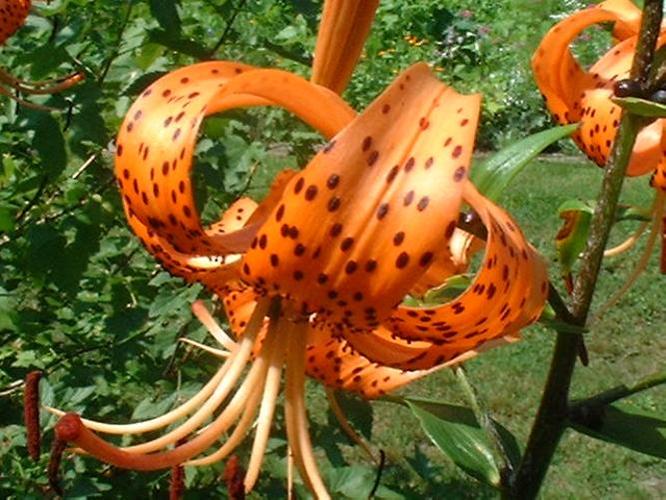
Tiger Lily
Lilium lancifolium
The Tiger Lily (Lilium lancifolium), a standout member of the Liliaceae family, is one of the most recognizable and striking lilies in the world. Native to the temperate regions of Eastern Asia, including China, Japan, and Korea, this herbaceous perennial has captivated gardeners for centuries wi...
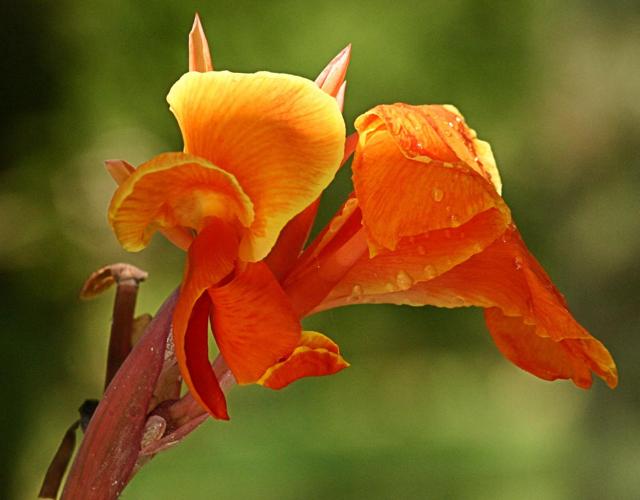
Canna lily
Canna indica
Canna indica, commonly known as the Canna Lily, is a bold and flamboyant tropical perennial that brings a dramatic, exotic flair to temperate and tropical gardens alike. Despite its common name, it is not a true lily but rather the sole genus in the Cannaceae family, closely related to gingers an...
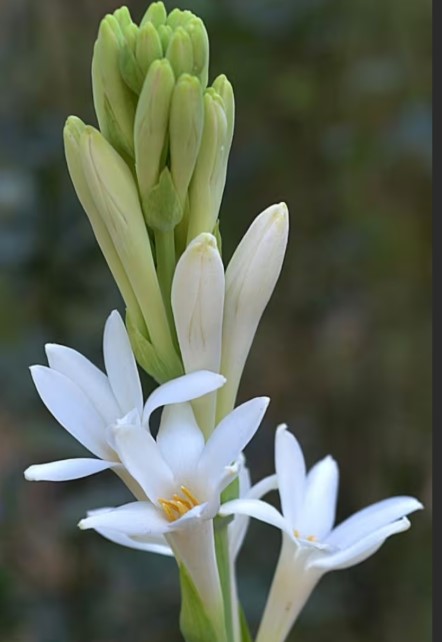
Tuberose Rajinigandha
Polianthes tuberosa
The Tuberose, botanically designated as Polianthes tuberosa (and recently reclassified as Agave amica) and universally celebrated in southern Asia as Rajnigandha, is an exceptionally exquisite, tuberous perennial. Belonging to the family Asparagaceae (the asparagus family, subfamily Agavoideae),...
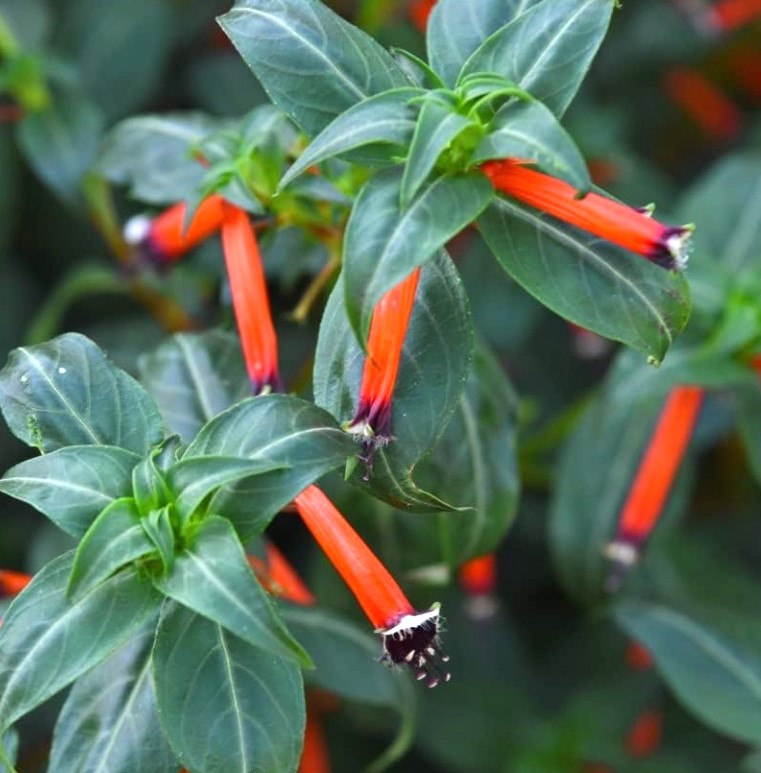
Cuphea Cigar
Cuphea ignea
The Cigar Flower, botanically known as Cuphea ignea and often referred to as the Firecracker Plant or Mexican Cigar Plant, is a charming, continuous-blooming tender evergreen subshrub belonging to the Lythraceae family. Native to the warm, rocky, sun-drenched hillsides and open valleys of Mexico...