Master Classification of Garden Enemies
Every garden pest and plant pathogen has a specific method of attack. To save your plants, you must look beyond the generic label of "disease" and classify the threat by its biological behavior and feeding mechanism. Classification allows you to choose targeted remedies (like systemic insecticides for borers, contact sprays for suckers, or specific fungicides for spore-spreaders) rather than spraying broad-spectrum chemical controls that destroy beneficial garden insects.
For a side-by-side comparison on telling pathogens apart from simple watering issues or nutrient starvation, read our Symptom Diagnosis Guide.
This guide divides the 100 most common plant threats in the BioLens database into seven core categories, detailing their damage patterns, high-risk host plants, and diagnostic traits.
Master Garden Threat Classification Table
Use this reference table to quickly identify your garden's primary enemy class and find detailed care dossiers:
| Threat Category | Primary Attack Mode | Key Symptoms | Key Database Links |
|---|---|---|---|
| 1. The Borers & Tunnelers | Larvae feed inside stems, stalks, or fruit. | Stem holes, sawdust frass, sudden head collapse, hollowed-out fruit. | Stem Borer, Squash Vine Borer, Corn Borer |
| 2. The Sap Suckers | Piercing mouthparts drain nutrient sap. | Leaf curl, yellowing, stickiness, sooty mold, stunting. | Aphids, Whitefly, Thrips |
| 3. The Leaf Miners | Larvae feed between epidermal leaf layers. | Winding white, yellow, or brown serpentine trails on leaves. | Leaf Miner |
| 4. The Chewers & Defoliators | Physical consumption of leaf and root tissue. | Jagged holes, severed stems, skeletonized leaves. | Armyworm, Cutworm, Hornworm |
| 5. Fungal Pathogens | Spore-based microscopic tissue colonization. | Fuzzy powdery spots, rust spots, leaf spots, black spot, damping off. | Powdery Mildew, Anthracnose, Black Spot |
| 6. Bacterial Pathogens | Cell-level tissue wilts and oozing cankers. | Water-soaked dark spots, stem cankers, wood galls. | Bacterial Canker, Bacterial Wilt |
| 7. Other Pathogens & Invaders | Systemic viral infections & microscopic soil worms. | Mosaic yellow mottling, root galls, leaf distortion. | Mosaic Virus, Root-Knot Nematode |
Detailed Category Breakdowns & Species Index
1. The Borers & Tunnelers (Internal Saboteurs)
Internal borers are insect larvae that tunnel directly inside stems, stalks, trunks, or fruit cores. Because they feed from the inside, they are shielded from contact insecticides. By the time visual symptoms appear, they have often severed the plant's vascular bundles (xylem and phloem), causing sudden wilting or collapse.- High-Risk Plants: Squash, corn, tomatoes, stone fruits, apple trees, cane berries.
- Damage Pattern: Small exit holes near the base of stems or fruits, sawdust-like frass (excrement) accumulation, and sudden wilting of top growth.
Species Index:
- Stem Borer: Common stalk tunneler in field crops and vegetables.
- Squash Vine Borer: Infests cucurbits; causes sudden collapse of squash and zucchini vines.
- Corn Borer: Tunnels through ears and stalks of sweet corn.
- Peach Twig Borer: Destroys shoot tips and tunnels fruits in stone fruit orchards.
- Codling Moth & Oriental Fruit Moth: Fruit-tunnelers that leave wormy cores in apples, pears, and peaches.
- Pink Bollworm & Cotton Bollworm: Destructive seed and boll-tunnelers.
- Plum Curculio & Apple Maggot: Fruit-fly and weevil larvae tunneling through orchard yields.
- Cabbage Maggot, Onion Maggot, & Carrot Rust Fly: Subterranean larvae that tunnel through root structures.
2. The Sap Suckers (Vitality Drainers)
Equipped with sharp, straw-like stylets, sap-sucking pests puncture plant cells to drain phloem sap. This weakens the plant's structural pressure, stunts growth, and causes leaf yellowing. Many suckers excrete a sticky, sugar-rich waste called honeydew, which attracts ants and serves as the breeding ground for black sooty mold.- High-Risk Plants: Citrus trees, roses, cucumbers, tomatoes, legumes, ornamental flowers.
- Damage Pattern: Leaf curling, stippled or mottled yellow spots, sticky leaf coating, and secondary black mold.
Species Index:
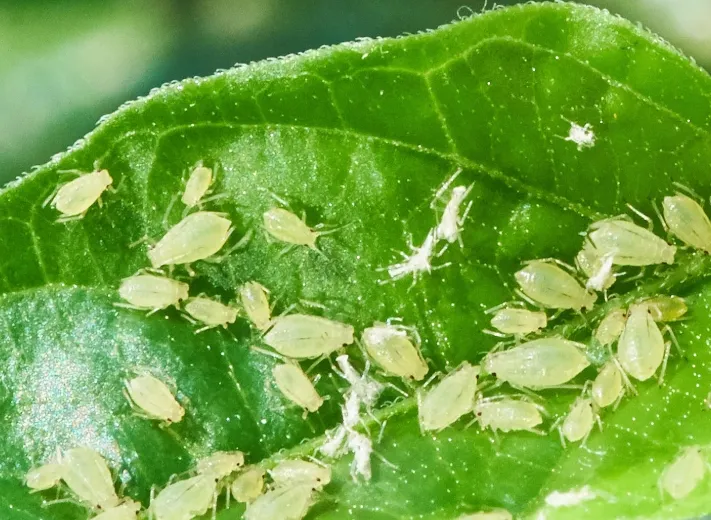
- Aphids: Highly reproductive colonies draining leaves and tender shoots.
- Whitefly: Cloud-like colonies under leaves that spread plant viruses.
- Thrips: Tiny fringe-winged pests causing silvery scars and distorted buds.
- Mealybugs & Mango Mealybug: Cottony white clusters gathering in joints and stems.
- Spider Mites, Citrus Red Mite, & Citrus Bud Mite: Microscopic arachnids spinning fine webs and causing dry leaf stippling.
- Scale Insects & San Jose Scale: Hard, shell-like bumps encrusting woody branches.
- Leafhoppers & Mango Hopper: Fast-moving wedge-shaped bugs causing "hopperburn."
- Stink Bugs: Large shield bugs causing cloudy spots on developing tomatoes and fruits.
- Asian Citrus Psyllid & Psyllid: Vector pests that inject toxin while feeding.
- Lace Bugs & Brown Planthopper: Specific foliage and stalk drainers.
- Spotted Lanternfly: Large invasive planthopper causing severe honeydew weeping.
3. The Leaf Miners (Leaf Navigators)
Leaf miners are the tiny larvae of specific flies, beetles, or moths. They enter the leaf tissue directly, living and feeding in the safe layer between the leaf's upper and lower epidermis. They eat the green mesophyll, leaving transparent serpentine lines or blotches.- High-Risk Plants: Spinach, Swiss chard, beets, citrus leaves, columbines, boxwoods.
- Damage Pattern: Sinuous white or yellow trails across leaves, brown papery blister spots, and premature leaf drop.
Species Index:
- Leaf Miner: The classic path maker whose trails reduce photosynthetic surface.
4. The Chewers & Defoliators (Foliage Consumers)
Cutters, chewers, and defoliators are the physical consumers of garden plants. Equipped with strong mandibles, they bite out sections of leaves, stems, flowers, or roots. Their damage is highly visible and can skeletonize a plant overnight.- High-Risk Plants: Brassicas (cabbage, kale), tomatoes, leafy greens, root vegetables.
- Damage Pattern: Jagged holes in leaves, skeletonized leaf veins, severed seedling stalks, or chewed-up root tubers.
Species Index:
- Armyworm: Highly destructive caterpillar hordes that march through foliage.
- Cutworm: Soil-dwelling caterpillars that cut young seedlings at the soil line.
- Tomato Hornworm: Giant green caterpillars capable of defoliating a tomato plant in days.
- Cabbage Worm & Diamondback Moth: Specialist caterpillars skeletonizing brassicas.
- Sawfly: Wasp larvae that mimic caterpillars and strip rose leaves.
- Grasshoppers: Fast chewers eating leaves, stems, and flower petals.
- Japanese Beetle: Metallic beetles skeletonizing leaves of roses, grapes, and beans.
- Asparagus Beetle, Flea Beetle, Colorado Potato Beetle, Mexican Bean Beetle, & Cucumber Beetle: Specialized beetles skeletonizing crops.
- Bagworm: Caterpillars creating protective silk-and-needle cocoons on conifers.
- Bean Weevil & Ash Weevil: Snout beetles chewing notches in leaves and boring seeds.
- Wireworm & White Grub: Subterranean beetle larvae that feed on grass roots and potato tubers.
- Snails & Slugs: Night-feeding mollusks leaving large holes and shiny slime trails.
5. Fungal Pathogens (Microscopic Tissue Colonizers)
Fungi make up the majority of plant diseases. They reproduce via microscopic spores spread by wind, water splashes, or contaminated tools. Fungal pathogens feed on host tissue, blocking photosynthesis, collapsing cell structures, and causing rots or spots.- High-Risk Plants: Roses, tomatoes, squash, stone fruits, apples, grapes.
- Damage Pattern: Powdery white patches, dark circular leaf spots, orange/yellow pustules, fruit rotting, and seedlings falling over at the base.
Species Index:
- Powdery Mildew: Fuzzy white superficial coating common in dry, warm climates.
- Downy Mildew & Grape Downy Mildew: Yellow fuzzy spots on leaf undersides, favored by cool, wet weather.
- Anthracnose: Dark, sunken spots on leaves and fruit cores.
- Black Spot: Fungal spots on rose leaves surrounded by yellow halos.
- Rust Disease, Stem Rust, Yellow Rust, & Cedar-Apple Rust: Powdery orange-brown spore pustules.
- Early Blight & Late Blight: Rapid stem rot and leaf decay in potatoes and tomatoes.
- Fusarium Wilt & Verticillium Wilt: Soil-borne fungi clogging water channels, causing one-sided yellowing and wilting.
- Root Rot & Damping Off: Water-logged soil mold killing roots and collapsing seedlings.
- Botrytis Mold: Gray, fuzzy mold rotting ripening fruit and flowers.
- Apple Scab & Brown Rot: Orchard decays affecting fruit skins and flesh.
- Cercospora Leaf Spot & Septoria Leaf Spot: Small circular spots with dark margins.
- Peach Leaf Curl: Red, distorted, puckered leaf growth on peach trees.
- Rice Blast & Tikka Disease: Leaf lesions on staple grain and legume crops.
- White Mold: Cottony white mycelium rotting vegetable stalks.
- Sooty Mold: Superficial black coating feeding on honeydew.
- Black Rot (Grape) & Red Rot (Sugarcane): Plant sugar rots.
- Tar Spot: Flat, raised black spots resembling tar on maple leaves.
- Loose Smut & Ergot: Fungal spikes replacing grains with toxic black structures.
6. Bacterial Pathogens & Wilt Creators
Bacteria are single-celled pathogens that enter plants through microscopic wounds or natural openings (stomata). They spread rapidly within vascular tissues, causing water-soaked leaf spots, dry cankers on bark, oozing sap, or sudden bacterial wilting.- High-Risk Plants: Stone fruits, tomatoes, peppers, rice, apple trees.
- Damage Pattern: Water-soaked spots with yellow halos, dark cankers bleeding amber sap, and sudden systemic wilting.
Species Index:
- Bacterial Canker & Citrus Canker: Sunken, scab-like cankers on twigs, branches, and fruits.
- Bacterial Leaf Blight: Water-soaked stripes turning yellow-brown on rice leaves.
- Bacterial Speck & Bacterial Spot: Small, dark lesions on tomato and pepper skins.
- Bacterial Wilt: Systemic bacterial clog causing immediate collapse of tomatoes and melons.
- Crown Gall: Tumor-like woody growths at the root crown or stem joints.
- Fire Blight: Bacterial disease causing shoots to look scorched or burnt.
7. Other Pathogens (Viral, Nematodes, & Parasitic Threats)
This group includes systemic viral invaders, microscopic parasitic worms, and complex cellular organisms that do not fit into the other categories.- High-Risk Plants: Tomatoes, squash, citrus trees, root crops.
- Damage Pattern: Mosaic yellow mottling, deformed foliage, stunted roots with bumpy nodules.
Species Index:
- Mosaic Virus: Systemic virus causing yellow mottling, leaf distortion, and stunted fruits.
- Root-Knot Nematode: Microscopic soil worms causing bumpy galls on roots, preventing nutrient intake.
- Citrus Greening: A destructive phloem-limited bacterial disease spread by citrus psyllids, making fruit bitter and green.
- Clubroot: A soil protist causing roots of cabbage and broccoli to swell and decay.
- Dutch Elm Disease & Sudden Oak Death: Complex oomycete and beetle-spread vascular pathogens destroying hardwood forests.
Identify & Diagnose Instantly with BioLens AI
If you suspect your garden is under attack but are unsure of the category or threat name, take a photo of the symptoms and run it through our AI scanner. The model will identify the insect pest or pathogen, determine its classification, and suggest targeted remedies immediately.
Identify & Protect with BioLens AI
Plant Disease & Pest Identifier
Snap or upload a clear photo of infected leaves, stems, or crop panicles to receive an instant AI disease diagnosis, severity score, and organic treatment recommendations.