
How to Test Mixed Berries for Dyes, Pesticides & Mold
⚡ Quick 60-Second Mixed Berries Purity & Mold Verdict
Synthetic Coal-Tar Dyes & Concealed Fungal Mycotoxins: Soft berries (strawberries, blackberries, raspberries) are prone to post-harvest dye baths (Erythrosine/Brilliant Blue) to disguise unripe fruit and hidden systemic mold spores (Botrytis cinerea).
Roll 3-4 berries gently on a white paper towel. Pure berries release reddish-purple juice that turns deep bluish-green when dabbed with baking soda. Synthetic coal-tar dyes stay permanently neon pink or bright red.
Submerge berries in warm water. If pink or purple clouds diffuse instantly into the water within 30 seconds before any fruit degradation, synthetic surface dyes are present.
Inspect the underside of the green calyx and inter-drupelet crevices under bright light. Any white fuzz, grey velvety powder, or mushy brown collars indicates invasive mycotoxin-producing mold.
For crop-specific safety tests and detailed guides, please read our dedicated articles on Strawberries and Blueberries.
Drop Mixed Berries photo here to test purity
or click to browse • Supports JPG, PNG, WEBP • Paste with Ctrl+V
Inspection Guide
Click to enlarge
Mixed Berries Purity & Quality Audit
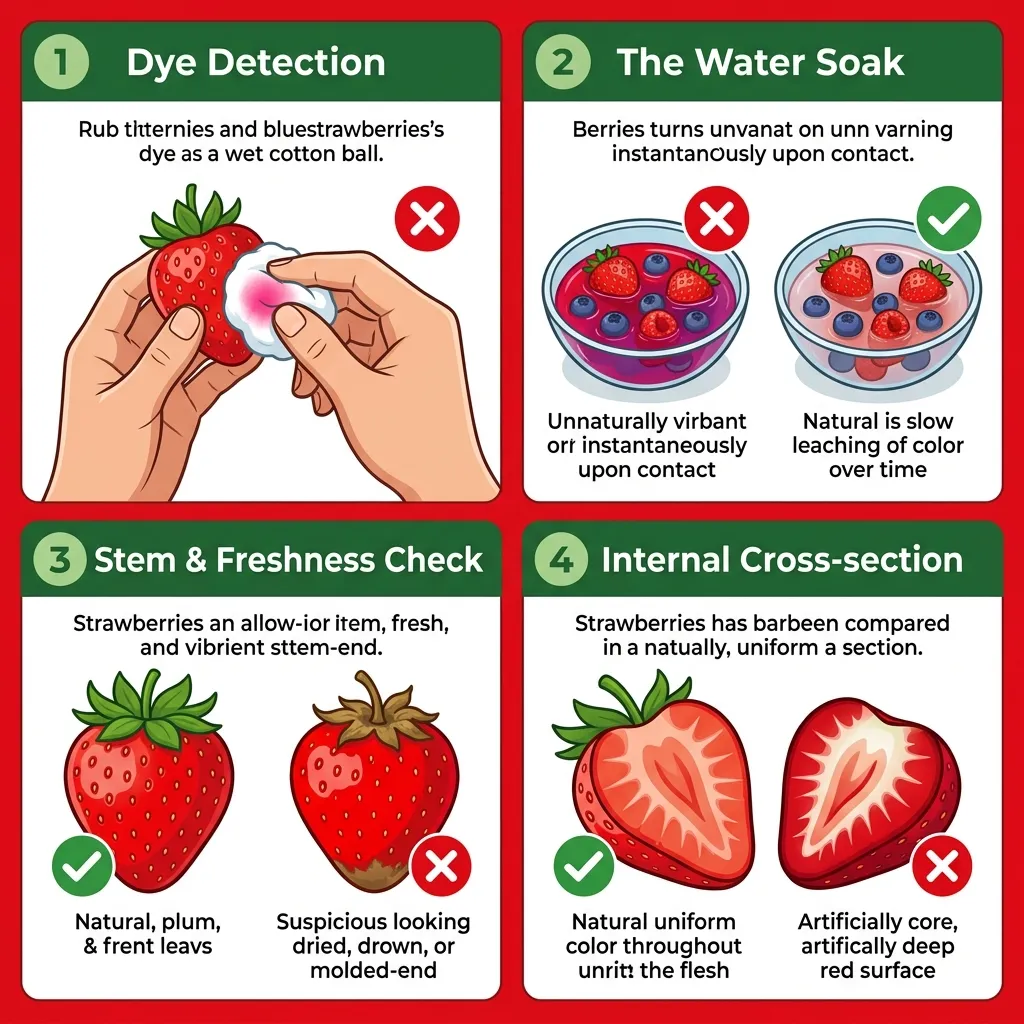
Berries are highly perishable, making them primary targets for artificial dye treatments to simulate ripeness and fungicide washes to prevent rot during transit. Use these simple tests to check their quality.
1. The Cotton Rub Test (Dye Detection):
Rub a dry white cotton ball or paper towel gently on the surface of the berry skin. ✅ Natural berries have pigments locked in their skin cells and will not bleed unless crushed. ❌ A bright pink, red, or blue stain left on the cotton from light rubbing indicates cosmetic dye treatments sprayed on the fruit.
2. The Water Soak Test (Color Bleed):
Drop a handful of berries into a glass of warm water and let them sit for 10 minutes. ✅ Natural anthocyanin pigments leach very slowly. ❌ Water that turns vibrant red, pink, or blue immediately indicates artificial coloring.
3. The Stem and Fuzz Check (Mold Detection):
Look closely at the area around the stem and the bottom of the container. ✅ Fresh, clean berries are dry and firm. ❌ Any fine white, grey, or blue fuzzy patches indicate Botrytis (Gray Mold). Because mold spores spread rapidly through soft berry flesh, if one berry is moldy, inspect the surrounding ones carefully and discard any in direct contact.
4. The Scent and Texture Check:
✅ Fresh berries have a sweet, floral, and natural aroma. ❌ A chemical, laboratory-like odor or a complete lack of scent suggests heavy preservative treatments. Discard mushy, leaking, or fermenting fruit.
Quick Safety Tips
- Perform the paper towel or cotton rub test to detect cosmetic food dyes
- Never consume berries with visible fuzzy mold - mycotoxins spread quickly in soft flesh
- Choose firm berries with a strong, natural, sweet aroma
- Soak berries in a vinegar-water solution (1 part vinegar to 3 parts water) for 5 minutes, then rinse, to remove surface residues and spores
Primary Chemical Concerns
Health Risks & Impacts
Multilingual Local Names
Common Storage Pests
Fruit Flies (Drosophila)
low riskSmall flies attracted to the high sugar content of ripening berries.
Detection
- Small hovering insects around the package
- Soft, leaking fruit
Prevention
- Refrigerate immediately
- Wash and dry before storing
Corrective Action: What to do?
Discard leaking or moldy fruit; wash the remaining berries in vinegar-water.
Regulatory Corner: US FDA (21 CFR 172.510 / Compliance Policy Guides Sec. 570.425) / FSSAI (Food Products Standards) Reg. 2.3.1
Regulation: FDA Compliance Policy Guides Sec. 570.425 (Berries) & FSSAI (Food Products Standards) Regulations 2011
Legal Limit:Synthetic artificial colorants: Prohibited on raw whole berries (0.0 ppm); Patulin mycotoxin: Max 50 ppb; Boscalid fungicide MRL: Max 5.0 ppm; Fludioxonil MRL: Max 3.0 ppm
Report Adulteration to US FDA (21 CFR 172.510 / Compliance Policy Guides Sec. 570.425) / FSSAI (Food Products Standards) Reg. 2.3.1