Pruebas de Pureza y Calidad del Jarabe de Agave: Detectar Jarabe de Maíz Falso y Adulteraciones
Detecte la adulteración del jarabe de maíz con alto contenido de fructosa (JMAF) y verifique la calidad del jarabe de agave orgánico mediante pruebas de viscosidad y solubilidad.
Para obtener más información sobre la seguridad de los edulcorantes líquidos, lea nuestras guías sobre Miel y Jarabe de arce.
Drop Sirope de agave photo here to test purity
or click to browse • Supports JPG, PNG, WEBP • Paste with Ctrl+V
Inspection Guide
Click to enlarge
Auditoría de pureza y viscosidad del jarabe de agave
El jarabe de agave (néctar de agave), originario de México, se comercializa ampliamente como un edulcorante orgánico de primera calidad y de bajo índice glucémico. Debido a su alto costo de producción, es un blanco frecuente de fraude alimentario, a menudo adulterado con jarabe de maíz con alto contenido de fructosa (JMAF) o jarabe de azúcar de caña barato. Muchos jarabes comerciales están muy cortados o no contienen ninguna savia de agave, lo que los hace peligrosos para los consumidores que dependen de sus propiedades de bajo índice glucémico.
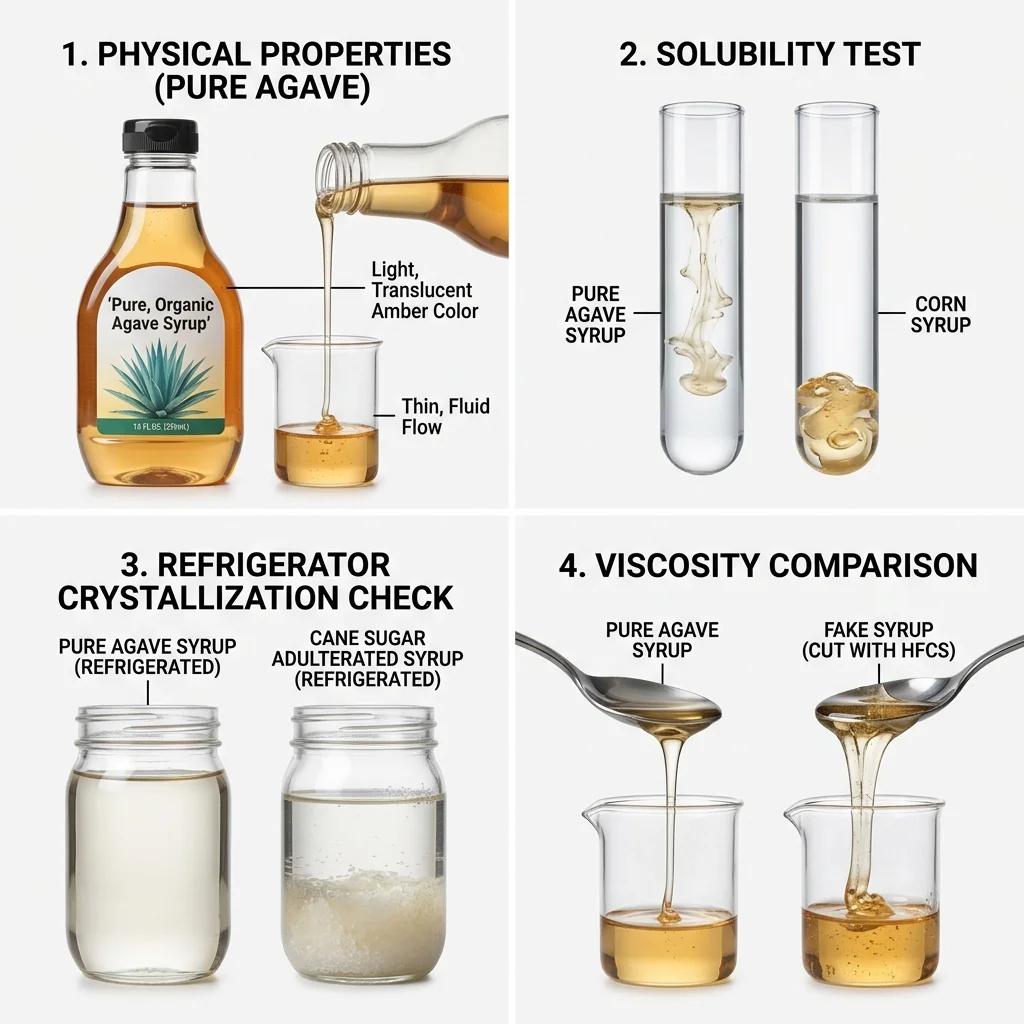
1. La prueba de viscosidad y flujo a temperatura ambiente:
A temperatura ambiente (20 °C / 68 °F), el jarabe de agave puro tiene una viscosidad fluida única, relativamente fina. Fluye mucho más rápido que la miel y no se siente excesivamente pegajoso. El almíbar adulterado cortado con jarabe de maíz es espeso, muy pegajoso y deja una capa espesa y pegajosa en la cuchara que no se desliza limpiamente.
2. La prueba de solubilidad en agua (pureza):
Echa una cucharada de sirope de agave en un vaso de agua fría sin revolver. El jarabe de agave puro es muy soluble y cohesivo; comenzará a disolverse y dispersarse lentamente en agua fría, formando estelas suaves, onduladas y transparentes a medida que cae. El jarabe falso elaborado con jarabe de maíz o azúcar de caña se hundirá como una masa pesada, sólida y pegajosa directamente en el fondo y permanecerá aglomerado, negándose a dispersarse sin una agitación vigorosa.
3. La Auditoría de Sabor y Aroma:
El jarabe de agave puro tiene un dulzor limpio, suave y neutro con un matiz muy sutil, delicado, parecido a una planta o a una hierba. Casi no tiene olor. Si el almíbar tiene un aroma dulce y denso a caramelo, melaza o vainilla artificial, o tiene un sabor soso y empalagosamente dulce a azúcar y agua, está adulterado con azúcar de caña o se ha sobrecalentado y quemado durante el procesamiento comercial, destruyendo sus prebióticos naturales.
4. Verificación de cristalización del refrigerador:
Coloca una pequeña muestra de sirope de agave en el refrigerador o congelador durante 3 horas. El jarabe de agave puro tiene un punto de congelación muy bajo debido a su alta concentración de fructosa; permanecerá claro y líquido, espesándose sólo ligeramente. Los almíbares adulterados con azúcar de caña o de remolacha comenzarán a formar cristales de azúcar arenosos en el fondo o en los lados del recipiente.
Click to enlarge
Auditoría de frescura y claridad del jarabe de agave
La frescura garantiza la integridad orgánica cruda y previene la fermentación bacteriana.
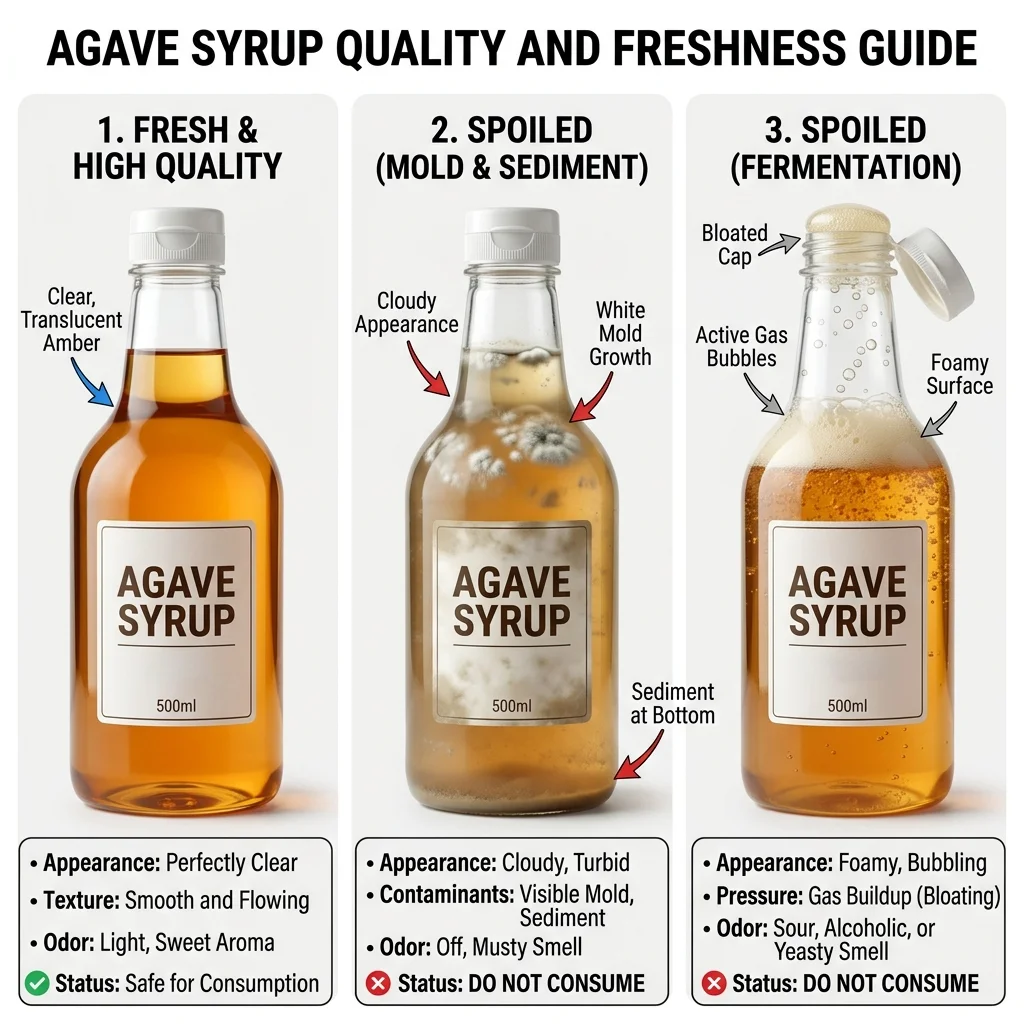
1. Claridad translúcida:
El jarabe de agave puro es perfectamente transparente y translúcido, y varía del ámbar claro al ámbar oscuro. Cualquier turbidez, sedimento o partículas flotantes indican contaminación bacteriana o crecimiento de moho.
2. Olor de fermentación:
Huele la botella. Un olor agrio, a levadura o a alcohol fermentado indica que las levaduras silvestres han contaminado los azúcares y el almíbar se ha echado a perder.
3. Condición del contenedor:
Evite las botellas que estén hinchadas, abultadas o que liberen gas al abrirlas, lo que indica una fermentación activa en su interior.
Quick Safety Tips
- Realice la prueba de solubilidad en agua fría: el agave puro debe dispersarse ligeramente y no formar una masa pegajosa y rebelde.
- Evite los jarabes que se sienten excesivamente espesos, pegajosos y se comportan como jarabe de maíz espeso a temperatura ambiente.
- Asegúrese de que el almíbar tenga un dulzor limpio y neutro sin fuertes aromas de caramelo o vainilla.
- Refrigere una muestra para comprobar si hay cristalización arenosa, lo que indica adulteración del azúcar de caña.
Primary Chemical Concerns
Health Risks & Impacts
Multilingual Local Names
Regulatory Corner: Mexican Official Standard (NOM-002-SAGARPA/SE-2015) / US FDA (21 CFR 168.180)
Regulation: Norma Oficial Mexicana NOM-002-SAGARPA/SE-2015 & US FDA Food Identity Guidelines
Legal Limit:Fructose content: Min 70.0%; Glucose: Max 20.0%; Sucrose: Max 2.0%; Carbon-13 isotope delta ratio: Must fall within -11.0‰ to -13.5‰ (Zero added C4 cane/corn syrups); Hydroxymethylfurfural (HMF): Max 50 mg/kg
Report Adulteration to Mexican Official Standard (NOM-002-SAGARPA/SE-2015) / US FDA (21 CFR 168.180)