
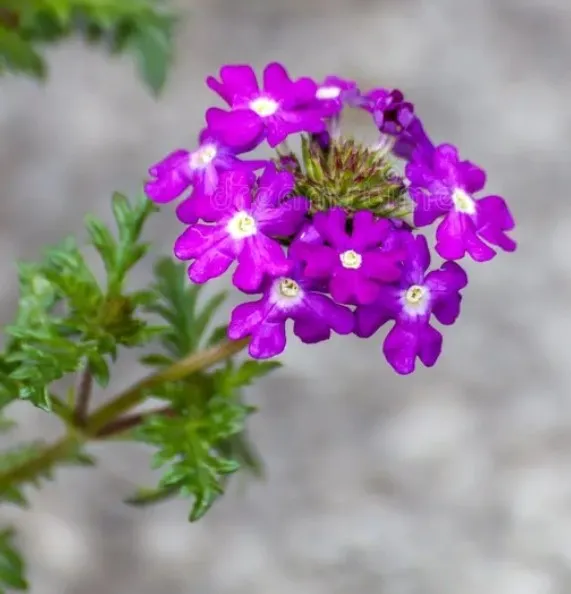
Verbena
Verbena
How to Identify Verbena
NON-TOXIC. 100% safe for cats, dogs, and horses. Provides a resilient, low-maintenance, and pet-safe flowering groundcover.
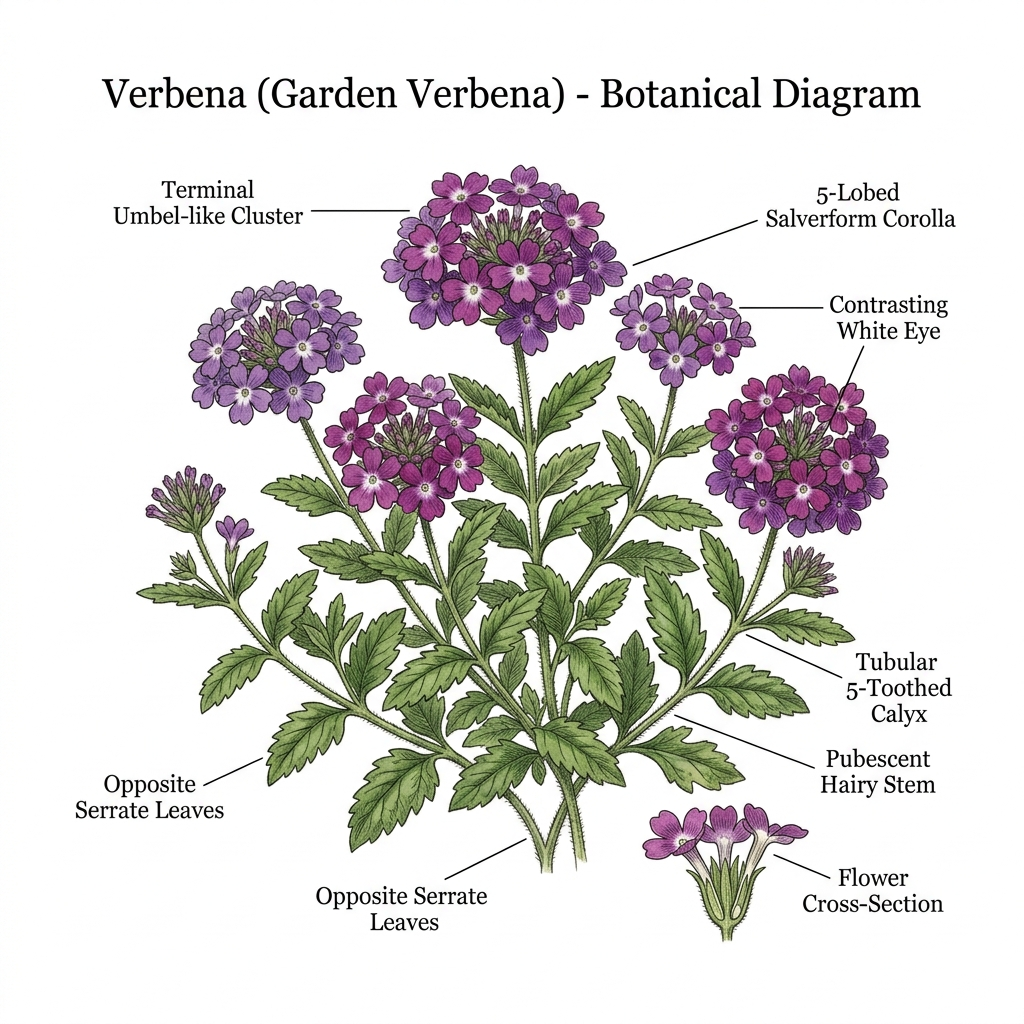
A detailed guide to identifying Verbena (Verbena spp. / Garden Verbena) by its key botanical features:
- Flat-Topped Terminal Cymes: Dense, rounded umbrella-like clusters (corymbose cymes) packed with dozens of small, vibrantly colored florets that open progressively from the outer rim inward.
- 5-Lobed Salverform Florets: Individual florets feature a slender cylindrical tube expanding into 5 flat, notched (emarginate) petal lobes, often centered with a contrasting white or pale cream eye.
- Rough Opposite Serrated Foliage: Deep green, oblong-to-lanceolate leaves with coarse, irregularly serrated margins and a distinctly sandpaper-like, hairy (hispid) texture.
- Sprawling Square Stems: Four-sided, grooved, stiffly pubescent stems that form low spreading mats or upright branching mounds, frequently rooting where lower nodes touch moist soil.
- Tubular 5-Toothed Calyx: Slender, ribbed calyx tube tightly enclosing the ovary and developing into 4 oblong nutlets (schizocarp).
Horticultural Types & Varieties of Verbena
- By Botanical Species & Form:
- Garden Hybrid Verbena (Glandularia × hybrida): Prolific bedding plants producing large, vibrant flower heads in purple, red, pink, white, and bi-colored patterns.
- Purpletop Vervain (Verbena bonariensis): Tall, slender, see-through architectural perennial standing 3 to 6 feet tall with airy clusters of violet-purple florets.
- Tuberous / Rigid Vervain (Verbena rigida): Tough, rhizomatous, heat-loving groundcover (1 to 2 feet tall) with intense magenta-violet flower spikes.
- By Growth Habit:
- Trailing Series (e.g., 'Superbena', 'Tapien'): Fast-spreading, cascade-style cultivars perfect for hanging baskets, window boxes, and sunny rock walls.
- Upright / Mounding Series: Compact, rounded garden bedding cultivars (8 to 12 inches tall) designed for borders and container centerpieces.
Care & Growing Guide
Verbena Care & Growing Guide:
- Light: Full direct sunlight (at least 6 to 8 hours daily). Maximum sunshine is crucial for tight foliage and continuous heavy flower flushes.
- Soil: Average, moderately fertile, highly well-draining sandy or gravelly loam with a neutral to slightly acidic pH (6.0 to 7.0). Excellent drainage is mandatory to prevent root rot.
- Watering: Moderate water needs. Water regularly while establishing; once mature, verbenas are remarkably drought-tolerant. Allow the top 2 inches of soil to dry between waterings.
- Deadheading & Pruning: Shear back by one-third in mid-summer if bloom production slows or stems become leggy; this stimulates vigorous fresh branching and a heavy autumn bloom display.
Seasonal Blooming & Hardiness
Seasonal Blooming Calendar (US Hardiness Zones 7-11 as perennial; Zones 3-6 as annual):
- Peak Bloom: Late spring through autumn until the first hard frost (typically May through November in temperate zones; year-round in frost-free climates).
- Planting Time: Transplant nursery starts outdoors in mid-spring after all danger of frost has passed, or sow seeds indoors 10-12 weeks before last frost.
- Heat Tolerance: Exceptionally heat- and drought-tolerant; thrives through intense midsummer heatwaves when many other bedding flowers fade.
Bloom Timeline
About Verbena
The Verbena, botanically classified under the genus Verbena and belonging to the family Verbenaceae (the verbena or vervain family), is an exceptionally tough, colorful, and resilient perennial (often cultivated as a warm-season annual in cooler temperate zones). Native primarily to the sunny grasslands, open prairies, and warm scrublands of the Americas—ranging from North American meadows down to the dry plains of South America, with a few species native to coastal Europe and Asia—this genus is celebrated worldwide for its heavy, continuous blooming and high heat tolerance.
This versatile plant displays two primary growth habits: either trailing, creeping groundcovers that form low carpets standing 6 to 12 inches tall with a spread of 18 to 36 inches, or upright clump-forming shrubs that reach 1 to 4 feet in height. It features opposite, deep green, oblong-to-lance-shaped leaves with highly serrated margins and rough, hairy surfaces. From late spring through late autumn (May until the first hard winter frost), it blooms continuously, producing dense, rounded, flat-topped flower clusters (umbels) measuring 2 to 3 inches across.
Each flower cluster is composed of dozens of small, tubular, 5-petaled blossoms in brilliant shades of violet-purple, royal blue, rose-pink, scarlet-red, and pure white. Many modern hybrid cultivars showcase a striking 'starburst' or bicolor effect, featuring a contrasting white or yellow central eye. Individual blossoms are highly rich in nectar, blooming sequentially from the outer edges of the cluster inward. The spent flowers are semi-self-cleaning, though a light mid-summer shear rapidly stimulates a massive fresh wave of dense autumn blooms.
The reproductive morphology of individual flowers is represented by the zygomorphic floral formula % ⚥ K(5) [C(5) A4] G(2). This formula states that the flowers are bilaterally symmetrical (zygomorphic) and bisexual. The calyx consists of 5 fused sepals forming a narrow, protective tubular sheath, and the corolla has 5 fused petals that flare open into a flat-faced, salverform arrangement. The androecium contains 4 didynamous stamens fused to the inside of the corolla tube, while the gynoecium contains 2 fused carpels with a superior ovary.
The genus name Verbena is derived from the ancient Latin word used to designate sacred leaves, branches, or wreaths (such as laurel, olive, or myrtle) used by Roman priests during solemn religious treaties and altar sacrifices. Famed in Europe as Vervain and used in traditional herbal medicine for centuries to treat anxiety and sleep disorders, it was believed in medieval folklore to ward off dark curses, lightning, and evil spirits. Famed in Sanskrit as Pavitrapushpam (पवित्रपुष्पम्) and in Hindi as Varbina (वर्बीना), it is a classic symbol of sacred protection.
For pet owners and veterinarians, Verbena represents an exceptionally safe, low-risk, and pet-friendly choice. Verbena species (including common garden hybrids) are classified as completely NON-TOXIC to cats, dogs, and horses by major global animal safety databases, including the ASPCA. If a curious pet runs through the trailing carpet or nibbles on the rough foliage or sweet blooms, there is absolutely no danger of toxic poisoning. To discover more safe groundcovers and bedding plants for active, pet-friendly yards, visit our general Pet Guard page.
Verbena is occasionally confused with Lantana or Lemon Verbena (Aloysia citrodora). It is easily distinguished because true Verbena has elongated, deeply serrated leaves and lacks the strong pungent scent or highly toxic triterpene acids of Lantana. It makes an outstanding selection for hanging baskets, sunny borders, and dry rock walls; we recommend pairing it beside other heat-tolerant companions like Marigold or Gaillardia. To explore more sun-loving, long-blooming groundcovers, browse our Flower Identifier.
Floral Formula & Features
Bilaterally symmetrical, bisexual, 5 fused sepals forming calyx, 5 fused petals forming salverform (flat-faced) corolla, 4 stamens (didynamous), 2 fused carpels with superior ovary typical of Verbenaceae
- Scientific Name & Classification: Verbena (Verbenaceae). Commonly known as Vervain, Garden Verbena, and Trailing Verbena.
- Identification Markers: Trailing or upright growth, rough hairy opposite leaves with serrated margins, and dense 2-3 inch flat-topped clusters of 5-petaled flowers.
- Floral Formula (% ⚥ K(5) [C(5) A4] G(2)): Bilaterally symmetrical, bisexual flowers with 5 fused sepals, 5 fused petals, 4 epipetalous stamens, and superior ovary.
- Growing Requirements: Full direct sun (6-8 hours daily); dry-to-medium, sandy-loam, exceptionally well-draining soils. Outstanding heat and drought tolerance (Zones 7-11).
- Cultural Significance: Roman sacred name 'Verbena' refers to holy altar boughs. Historic Vervain folklore includes warding off evil spirits and dark curses.
- Safety & Toxicity: NON-TOXIC. 100% safe for cats, dogs, and horses. Provides a resilient, low-maintenance, and pet-safe flowering groundcover.
- Common Look-alikes: Confused with Lantana, but distinguished by its deeply serrated non-aromatic foliage and complete lack of toxicity to pets.
- Internal Links: Creates a stunning trailing curtain over sunny retaining walls when planted alongside other durable favorites like Marigold or Gaillardia; find more in our Flower Identifier.
Names in Different Languages
Toxicity & Safety
Frequently Asked Questions
What is Floral Formula?
A floral formula is a symbolic representation of a flower's structure using letters, numbers, and special symbols. It provides a concise way to describe the arrangement and number of floral parts.
This formula describes the flower's symmetry, sepals, petals, stamens, and carpels in a standardized format.
Formula Sequence
- Bract: Br or Ebr
- Bracteole: Brl or Ebrl
- Symmetry: % (Radial) or ⊕ (Bilateral)
- Sex: ♀ (Female), ♂ (Male), or ⚥ (Bisexual)
- Calyx/Sepal: K<number> (Free or Fused)
- Corolla/Petal: C<number> (Free or Fused)
- Androecium: A<number> (Free or Fused)
- Gynaecium: G<number> (Superior or Inferior Ovary)
Symbol Meanings
- Numbers: Indicate quantity of parts
- Parentheses (): Parts are fused together
- Plus (+): Parts in different whorls
- Underline: Superior ovary position
- Overline: Inferior ovary position
- ∞: Numerous parts (too many to count)
Understanding floral formulas helps botanists quickly identify and classify flowers based on their structural characteristics.
Similar Flowers
Discover flowers that share botanical characteristics
Same Family
2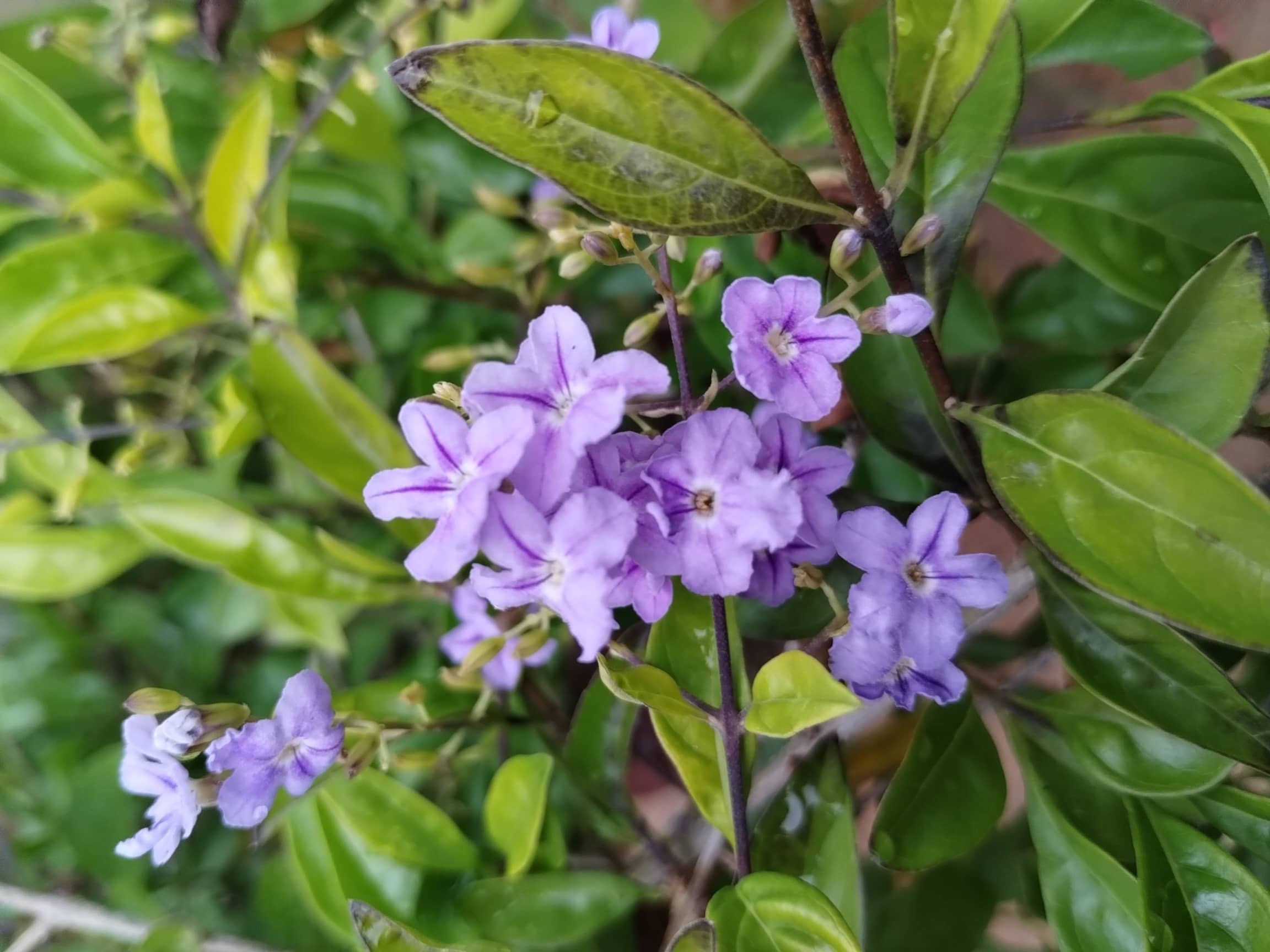
Golden Dewdrop (Duranta)
Duranta erecta
Duranta erecta, commonly known as Golden Dewdrop, Pigeon Berry, or Skyflower, is a sprawling, fast-growing evergreen shrub belonging to the Verbenaceae family. Native to the Americas from Mexico and the Caribbean down to South America, it has been widely introduced across tropical and subtropical...
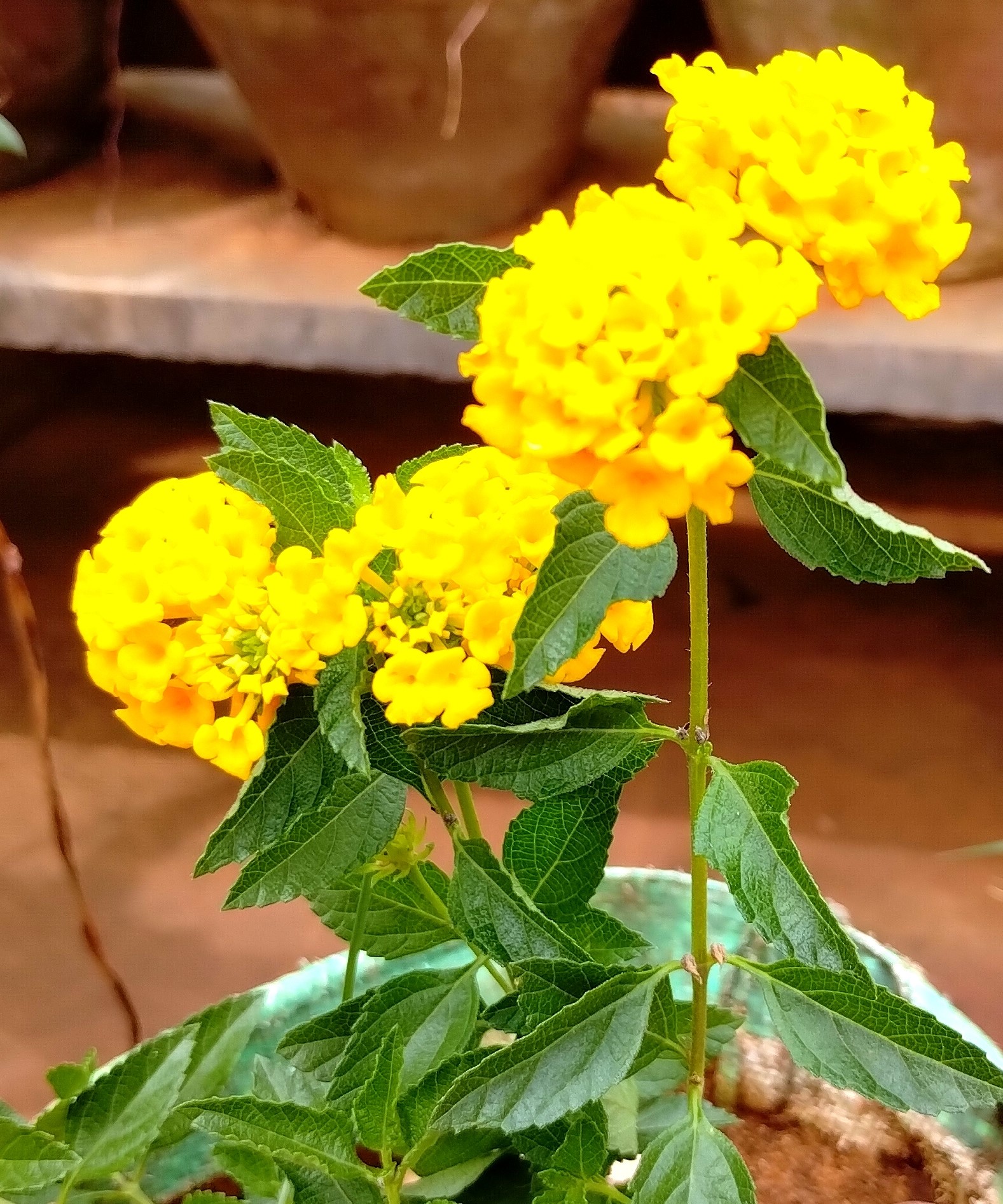
Lantana Camara
Lantana camara
Lantana camara, a celebrated member of the Verbenaceae (verbena) family, is a robust, highly adaptable flowering evergreen shrub native to the American tropics (Central and South America). Introduced across the globe as a vibrant ornamental, it has naturalized in over 60 countries. Renowned for i...
Similar Characteristics
4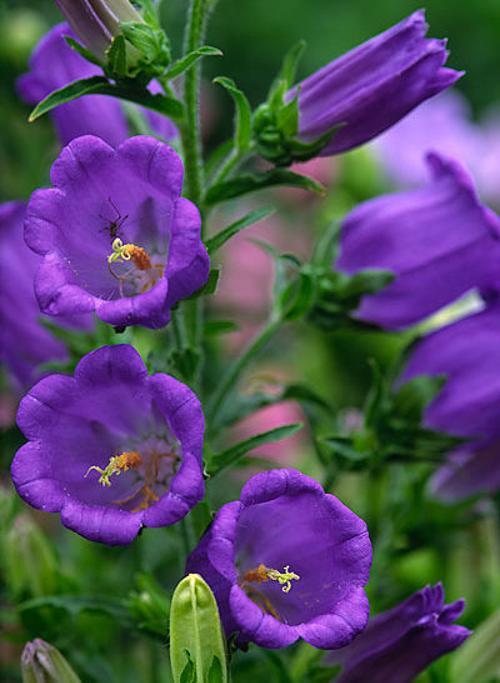
Canterbury bells
Campanula medium
Campanula medium, commonly known as Canterbury Bells, is a quintessential cottage garden biennial that brings a sense of Victorian elegance and whimsical charm to any landscape. Belonging to the Campanulaceae family, this species is native to the sun-drenched hills of Southern Europe, particularl...
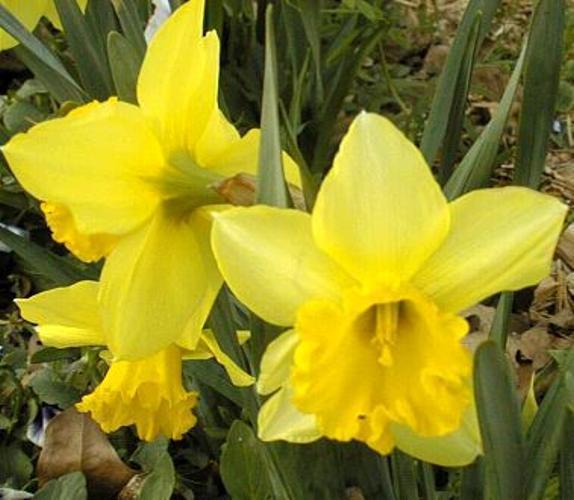
Daffodil
Narcissus pseudonarcissus
The Daffodil, botanically classified under the genus Narcissus and most famously represented by Narcissus pseudonarcissus (the wild daffodil), is a cheerful, spring-flowering bulbous perennial belonging to the Amaryllidaceae (amaryllis) family. Native to the damp meadows, light deciduous woodland...
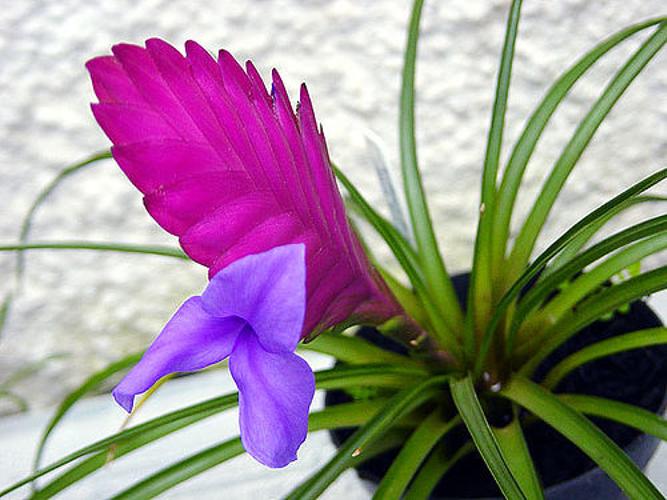
Ball Moss
Tillandsia recurvata
Ball Moss, botanically known as Tillandsia recurvata, is a highly adapted, rootless epiphytic perennial belonging to the Bromeliaceae (pineapple) family. Native to the warm, humid regions of the southern United States (particularly Texas, Florida, and Louisiana), Mexico, Central America, and nort...
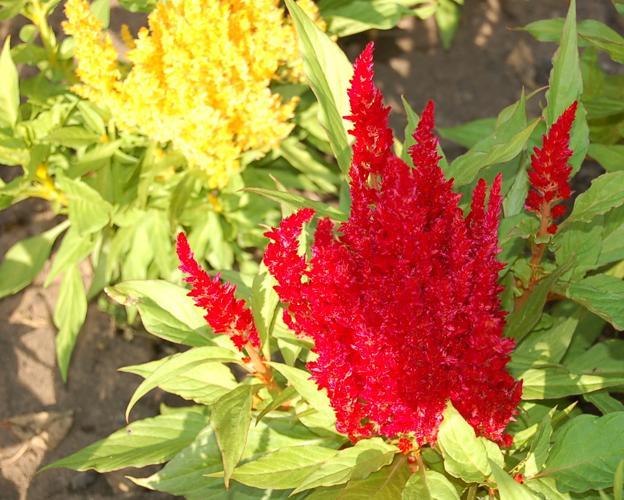
Celosia
Celosia argentea
The Prince of Wales Feather, botanically classified as Celosia argentea (synonymous with Celosia plumosa and closely allied with the genus Amaranthus), is a highly dramatic and visually spectacular ornamental herbaceous annual belonging to the Amaranthaceae (amaranth) family. Native to the warm,...