
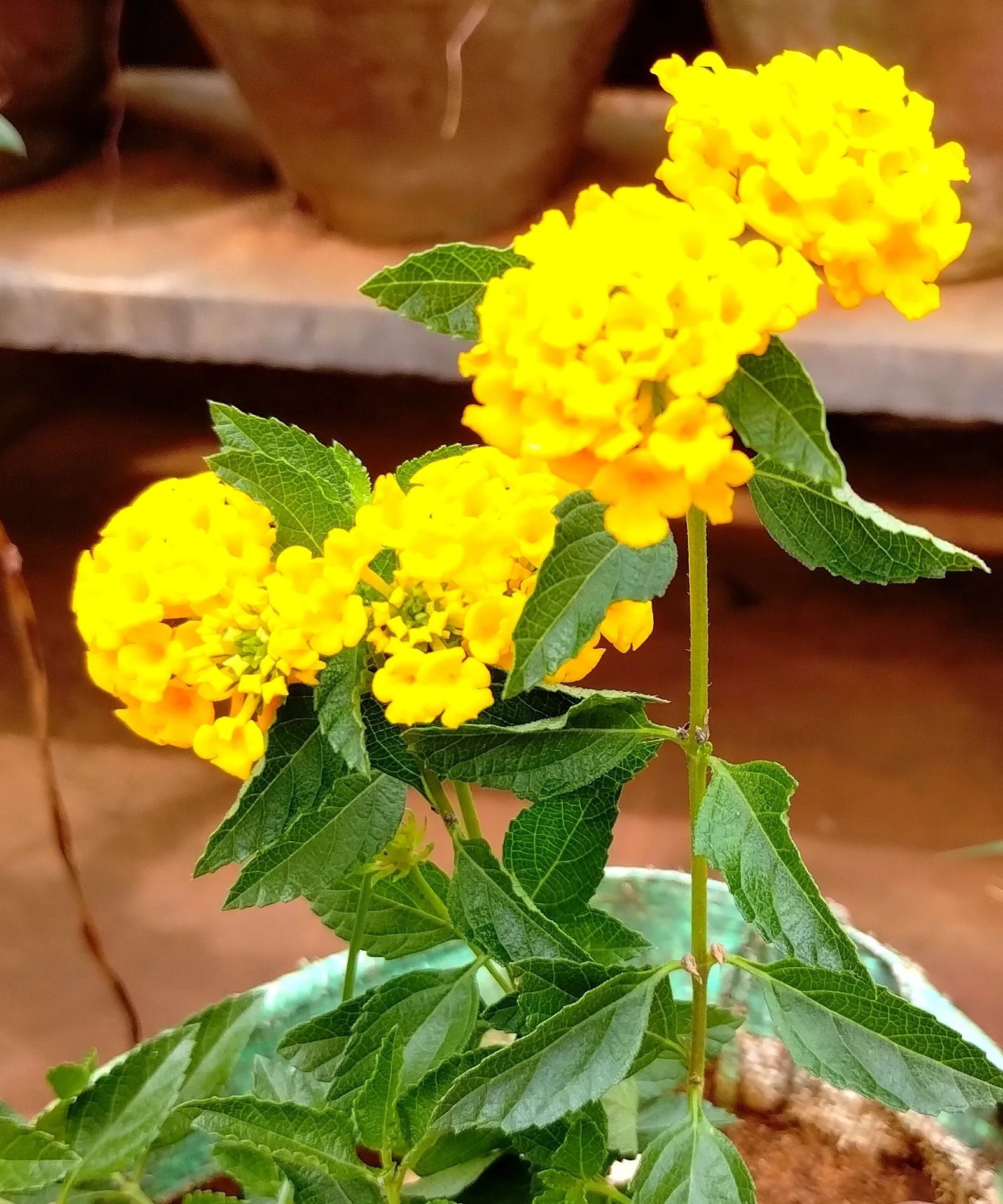
Lantana Camara
Lantana camara
How to Identify Lantana Camara
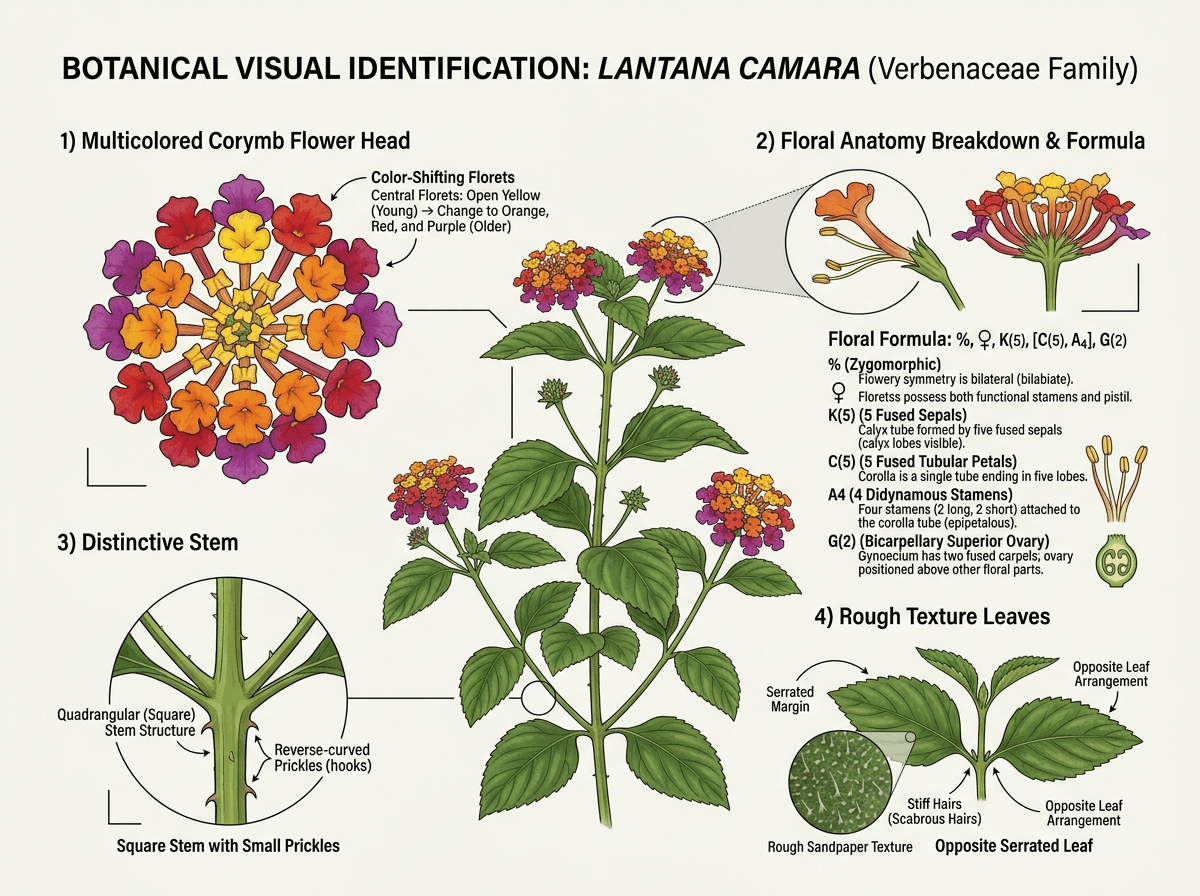
How to identify Lantana Camara (Lantana camara):
- Multicolored Corymb Flower Heads: Dense, flat-topped umbel-like clusters (corymbs) with 20–40 tiny tubular florets that undergo a striking post-pollination color transformation—opening bright yellow/pink and aging to orange, scarlet red, and purple.
- Floral Formula (Br % ⚥ K(5) C(5) A4 G(2)): Bilaterally symmetrical (zygomorphic) bisexual flowers with 5 fused sepals, 5 fused tubular petals, 4 didynamous epipetalous stamens (2 long, 2 short), and a 2-carpellate superior ovary.
- Square, Prickly Stems: Stiff, 4-angled (quadrangular) woody stems covered with small, downward-hooked recurved prickles.
- Rough, Sandpaper-Textured Aromatic Leaves: Ovate, deeply veined opposite leaves with serrated margins and rough scabrous hairs that emit a strong, pungent sage-like herbal scent when crushed.
Types & Sub-types of Lantana
Lantana species and cultivars are classified by growth habit, cold tolerance, and flower color:
- Trailing Lantana (Lantana montevidensis): Low-growing groundcover (8–12 inches tall) with solid lavender-purple or white flowers; non-invasive and excellent for hanging baskets and rockeries.
- Shrub Verbena (Lantana camara Hybrids): Upright woody shrubs (3–6 feet tall) bearing multicolored tricolor flower heads (Spanish Flag, Dallas Red, Irene, Bandana series).
- Hardy Cold-Tolerant Cultivars (Miss Huff, Mozelle): Proven winter-hardy varieties surviving down to USDA Zone 7, dying back in winter and re-emerging rapidly in spring.
Care & Growing Guide
Lantana Camara Care & Growing Guide:
- Light: Full direct sunlight (at least 6 to 8 hours daily) is essential for abundant flowering and rich color shifting.
- Soil: Highly adaptable to sandy, rocky, or clay soils provided they are well-draining. Prefers neutral to slightly acidic pH (6.0–7.0).
- Watering: Extremely drought-tolerant once established. Water deeply once a week during extreme summer heat; avoid soggy overwatering.
- Pruning: Prune heavily in early spring to remove woody leggy growth and stimulate dense, floriferous new branches.
Seasonal Blooming & Hardiness
Seasonal Blooming Calendar (USDA Hardiness Zones 8-11 outdoors; Zones 4-7 as annual):
- Peak Bloom: Late spring through late autumn (May to November) in warm temperate zones; blooms year-round in frost-free subtropical and tropical climates.
- Planting Time: Transplant nursery starts in late spring once soil has warmed to at least 65°F (18°C).
Bloom Timeline
About Lantana Camara
Lantana camara, a celebrated member of the Verbenaceae (verbena) family, is a robust, highly adaptable flowering evergreen shrub native to the American tropics (Central and South America). Introduced across the globe as a vibrant ornamental, it has naturalized in over 60 countries. Renowned for its extraordinary color-shifting floral displays and rugged environmental tolerance, Lantana camara is one of the most widely studied botanical species for its unique inflorescence, specialized floral formula, and high pollinator attraction.
The most iconic identification feature of Lantana camara is its dense, flat-topped umbel-like corymb inflorescence. Each flower head carries 20 to 40 tiny, salverform florets that undergo a striking post-pollination color transformation. Newly opened flowers at the center of the cluster begin as bright yellow or pink (signaling rich nectar rewards to pollinators), and gradually shift into deep orange, fiery red, and purple as they age. This creates the famous multicolored 'Spanish Flag' pattern across a single flower head.
The exact botanical floral formula for Lantana camara is Br % ⚥ K(5) C(5) A4 G(2). This denotes a bracteate (Br), bilaterally symmetrical or zygomorphic (%) bisexual (⚥) flower. The calyx K(5) consists of 5 small, fused sepals forming a truncate or lightly toothed tube. The corolla C(5) features 5 fused petals forming a slender, curved cylindrical tube that expands into 4 to 5 unequal spreading lobes. The androecium A4 features 4 stamens inserted in two pairs of unequal lengths (didynamous) epipetalously within the corolla tube, while the gynoecium G(2) consists of a bicarpellary, 2-locular superior ovary.
Beyond its floral anatomy, Lantana camara is identified by its distinctive vegetative characteristics: its stems are stiffly 4-angled (quadrangular) and often armed with small, recurved prickles. Its opposite, ovate leaves are dark green, deeply veined, and possess a rough, sandpaper-like (scabrous) texture with saw-toothed margins. When crushed or brushed against, the foliage releases a strong, pungent herbal aroma rich in essential oils that repels herbivores.
Horticulturally, Lantana is legendary for its indestructible nature. It demands full, intense sunlight (6 to 8 hours daily) to fuel continuous blooming and exhibits supreme heat, drought, and salt-spray tolerance across USDA hardiness zones 8 through 11. It thrives in poor, rocky, well-draining soils with minimal water requirements.
Despite its beauty, Lantana camara carries a critical safety warning: all parts of the plant, especially the leaves and unripe green berries, contain toxic triterpenoids known as lantadene A and lantadene B. Ingestion causes severe hepatotoxicity (liver damage), photosensitization, and gastrointestinal distress in dogs, cats, cattle, and horses.
Lantana is often compared to garden Verbena, but is easily distinguished by its woody, prickly square stems and pungent rough leaves. It pairs spectacularly in sunny borders with Duranta Erecta, Hibiscus, Pelargonium, and Butterfly Pea. Explore more botanical profiles in our Flower Identifier.
Floral Formula & Features
Bracteate (Br), zygomorphic / bilaterally symmetrical (%), bisexual (⚥), 5 fused sepals forming a tubular calyx K(5), 5 fused petals forming a salverform corolla C(5), 4 didynamous epipetalous stamens A4, 2 fused carpels with superior ovary G(2)
- Scientific Name & Classification: Lantana camara (Verbenaceae). Popularly known as Spanish Flag, Wild Sage, Raymuniya, and Kongini.
- Identification Markers: Flat-topped corymb clusters of color-shifting florets (yellow to red/purple), 4-angled prickly stems, and rough, pungent opposite ovate leaves.
- Floral Formula (Br % ⚥ K(5) C(5) A4 G(2)): Zygomorphic (%), bisexual (⚥), 5 fused sepals K(5), 5 fused tubular petals C(5), 4 didynamous epipetalous stamens A4, and a 2-carpellate superior ovary G(2).
- Floral Anatomy & Color Shifting: Florets open yellow (high nectar) and turn red/purple post-pollination, directing butterflies to unfertilized flowers.
- Growing Requirements: Full sun (6-8 hours daily); exceptional heat and drought tolerance; hardy in USDA zones 8-11 in sharp-draining soil.
- Safety & Toxicity: TOXIC TO PETS & LIVESTOCK. Contains lantadene A and B triterpenoids in foliage and green berries; causes liver failure and photosensitization.
- Common Look-alikes: Verbena has soft herbaceous stems without prickles; Duranta erecta has cascading sky-blue racemes.
- Internal Links: Explore companion plants in our Flower Identifier and pair with Duranta Erecta or Hibiscus.
Names in Different Languages
Toxicity & Safety
Always keep toxic plants out of reach of children and pets. Consult a veterinarian or medical professional immediately if ingestion is suspected.
Frequently Asked Questions
What is Floral Formula?
A floral formula is a symbolic representation of a flower's structure using letters, numbers, and special symbols. It provides a concise way to describe the arrangement and number of floral parts.
This formula describes the flower's symmetry, sepals, petals, stamens, and carpels in a standardized format.
Formula Sequence
- Bract: Br or Ebr
- Bracteole: Brl or Ebrl
- Symmetry: % (Radial) or ⊕ (Bilateral)
- Sex: ♀ (Female), ♂ (Male), or ⚥ (Bisexual)
- Calyx/Sepal: K<number> (Free or Fused)
- Corolla/Petal: C<number> (Free or Fused)
- Androecium: A<number> (Free or Fused)
- Gynaecium: G<number> (Superior or Inferior Ovary)
Symbol Meanings
- Numbers: Indicate quantity of parts
- Parentheses (): Parts are fused together
- Plus (+): Parts in different whorls
- Underline: Superior ovary position
- Overline: Inferior ovary position
- ∞: Numerous parts (too many to count)
Understanding floral formulas helps botanists quickly identify and classify flowers based on their structural characteristics.
Similar Flowers
Discover flowers that share botanical characteristics
Same Family
2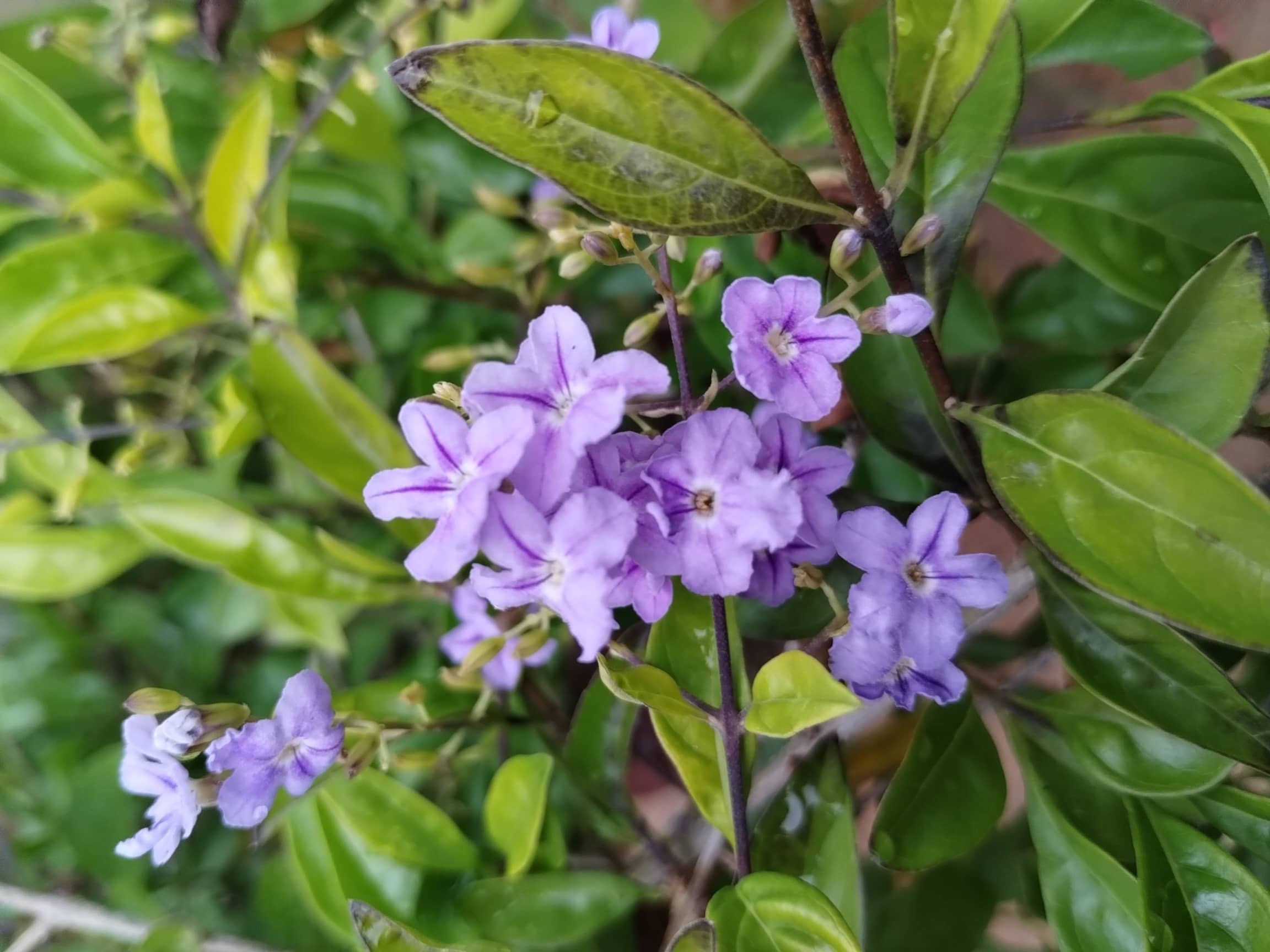
Golden Dewdrop (Duranta)
Duranta erecta
Duranta erecta, commonly known as Golden Dewdrop, Pigeon Berry, or Skyflower, is a sprawling, fast-growing evergreen shrub belonging to the Verbenaceae family. Native to the Americas from Mexico and the Caribbean down to South America, it has been widely introduced across tropical and subtropical...
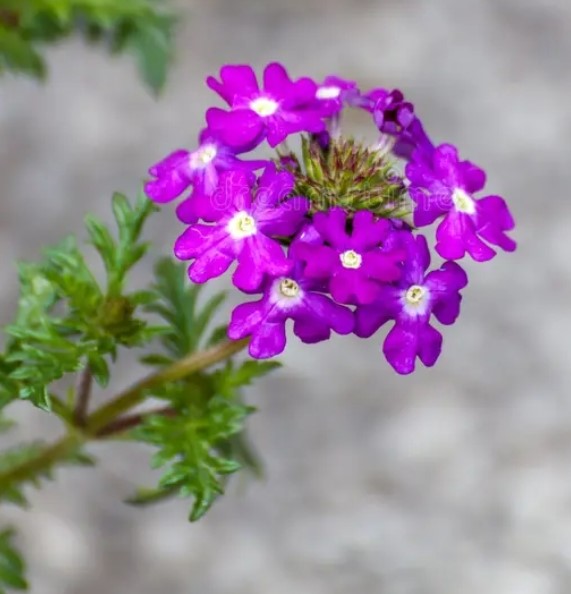
Verbena
Verbena
The Verbena, botanically classified under the genus Verbena and belonging to the family Verbenaceae (the verbena or vervain family), is an exceptionally tough, colorful, and resilient perennial (often cultivated as a warm-season annual in cooler temperate zones). Native primarily to the sunny gra...