
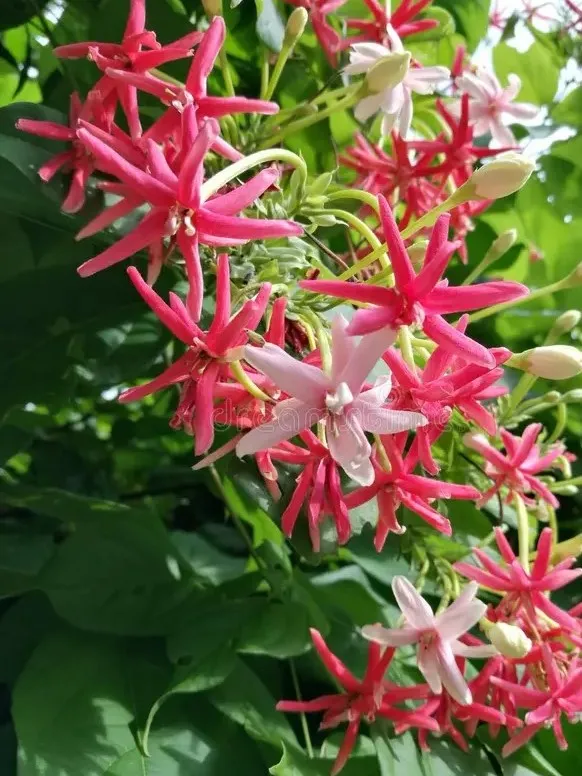
Rangoon creeper
Combretum indicum
How to Identify Rangoon creeper
NON-TOXIC. Safe for cats, dogs, and horses, making it an excellent, highly fragrant canopy selection for pet-safe arbors.
Care & Growing Guide
Seasonal Blooming & Hardiness
Seasonal Blooming Calendar:
- Peak Bloom: Spring to early summer (typically April through June).
- Planting Time: Sow seeds directly outdoors in early spring after the last frost, or transplant nursery starts in late spring.
Bloom Timeline
About Rangoon creeper
Rangoon Creeper, botanically classified as Combretum indicum (historically known as Quisqualis indica), is an enchanting, woody climbing vine belonging to the Combretaceae (combretum) family. Native to the warm, moist tropical forests and riverbanks of South Asia, Southeast Asia, and the Pacific Islands, this highly vigorous vine is world-famous for its unique, color-changing blossoms. It is a prized horticultural masterpiece in tropical landscapes, famed for displaying white, pink, and deep crimson-red flowers simultaneously on the same plant.
As a vigorous deciduous liana, Combretum indicum climbs rapidly by means of twining green stems that mature into woody trunks, reaching lengths of 15 to 25 feet. The leaves are large, opposite, elliptic-oval, and measure 2 to 7 inches in length with a smooth, glossy dark-green texture. Throughout spring, summer, and autumn, the vine produces spectacular drooping clusters (cymes) of highly fragrant, long-tubed flowers. Each flower begins as a pink-tinged bud, opens as a pure white star, turns rose-pink by mid-day, and matures to deep crimson-red by nightfall.
The reproductive morphology of this color-changing flower is represented by the botanical floral formula ⊕ ⚥ K(5) C(5) A10 G̅(1). This formula indicates that the flower is radially symmetrical (actinomorphic) and bisexual. The calyx is modified into a remarkably long, slender green tube composed of 5 fused sepals, while the corolla features 5 fused petals with free spreading lobes. The androecium contains 10 fertile stamens arranged in two distinct whorls of 5 inside the tube, surrounding a single carpel with an inferior ovary.
Horticulturally, Rangoon Creeper is a fast-growing, highly vigorous vine that performs best in full, hot sun, which promotes the heaviest, most intensely scented floral display. It thrives in fertile, moist, organic-rich loamy soils with excellent drainage, requiring consistent watering during its active summer growing season. Once established, it can easily climb over massive arbors and pergolas, tolerating brief periods of drought. It requires winter frost protection, thriving reliably in USDA hardiness zones 9 through 12.
The genus name Quisqualis is a fascinating linguistic combination of the Latin words 'quis' (who/what) and 'qualis' (what kind), translating to 'What kind is it?'—a name given by Dutch botanist Georg Rumphius to express his sheer amazement at the plant's unpredictable growth habit. Famed on the Indian subcontinent as Madhumalati (मधुमालती) in Hindi and Irangun Malli (இரங்கூன் மல்லி) in Tamil, its sweet, evening-scented fragrance has inspired centuries of romantic South Asian classical poetry and folklore.
For pet-owning households, the Rangoon Creeper is a safe, chemical-free, and exceptionally beautiful landscape selection. Combretum indicum is classified as NON-TOXIC to cats, dogs, and horses by leading veterinary toxicology databases, including the ASPCA. While the seeds have historically been used in traditional folk medicine as an anthelmintic (dewormer) due to mild organic compounds, chewing on the foliage or star flowers poses no systemic toxicity risk. For more pet-friendly vines, visit our Pet Guard catalog.
Rangoon Creeper is occasionally confused with wild Honeysuckle or Clematis. It is easily distinguished from true Honeysuckle because Combretum indicum flowers feature a dramatic, 2-inch long calyx tube and change colors from white to dark crimson, whereas honeysuckles are smaller, non-changing yellow-orange flowers. It forms a spectacular vertical display when grown on a sturdy arbor beside colorful Trumpet Vine or yellow Tecoma. Discover more climbing species in our Flower Identifier.
For more botanical profiles and flower identification features, see our guides on Pseuderanthemum and Russelia.
Floral Formula & Features
Actinomorphic, bisexual, 5 fused sepals forming a long green tube, 5 fused petals, 10 stamens, 1 carpel with inferior ovary typical of Combretaceae
- Scientific Name & Classification: Combretum indicum (Combretaceae). Universally known as Rangoon Creeper, Madhumalti, and Burma Creeper.
- Identification Markers: Twining woody stems with glossy elliptic leaves. Drooping clusters of long-tubed star flowers that change from white to pink to crimson-red.
- Floral Formula (⊕ ⚥ K(5) C(5) A10 G̅(1)): Radially symmetrical, bisexual flowers with 5 fused petals, 10 stamens in two whorls, and an inferior ovary.
- Growing Requirements: Full sun to partial shade; requires fertile, consistently moist, well-drained loamy soil and a very sturdy climbing trellis (Zones 9-12).
- Cultural Significance: Genus name means 'What kind is it?' in Latin, reflecting its unique color-transforming habits. Highly celebrated in classical Indian poetry.
- Safety & Toxicity: NON-TOXIC. Safe for cats, dogs, and horses, making it an excellent, highly fragrant canopy selection for pet-safe arbors.
- Common Look-alikes: Confused with Chinese Honeysuckle, but distinguished by the dramatic daily color transitions of the blooms and much longer calyx tubes.
- Internal Links: Creates a stunning tropical overhead canopy when paired with climbing Trumpet Vine or yellow Tecoma; find more in our Flower Identifier.
Names in Different Languages
Toxicity & Safety
Frequently Asked Questions
What is Floral Formula?
A floral formula is a symbolic representation of a flower's structure using letters, numbers, and special symbols. It provides a concise way to describe the arrangement and number of floral parts.
This formula describes the flower's symmetry, sepals, petals, stamens, and carpels in a standardized format.
Formula Sequence
- Bract: Br or Ebr
- Bracteole: Brl or Ebrl
- Symmetry: % (Radial) or ⊕ (Bilateral)
- Sex: ♀ (Female), ♂ (Male), or ⚥ (Bisexual)
- Calyx/Sepal: K<number> (Free or Fused)
- Corolla/Petal: C<number> (Free or Fused)
- Androecium: A<number> (Free or Fused)
- Gynaecium: G<number> (Superior or Inferior Ovary)
Symbol Meanings
- Numbers: Indicate quantity of parts
- Parentheses (): Parts are fused together
- Plus (+): Parts in different whorls
- Underline: Superior ovary position
- Overline: Inferior ovary position
- ∞: Numerous parts (too many to count)
Understanding floral formulas helps botanists quickly identify and classify flowers based on their structural characteristics.
Similar Flowers
Discover flowers that share botanical characteristics
Similar Characteristics
4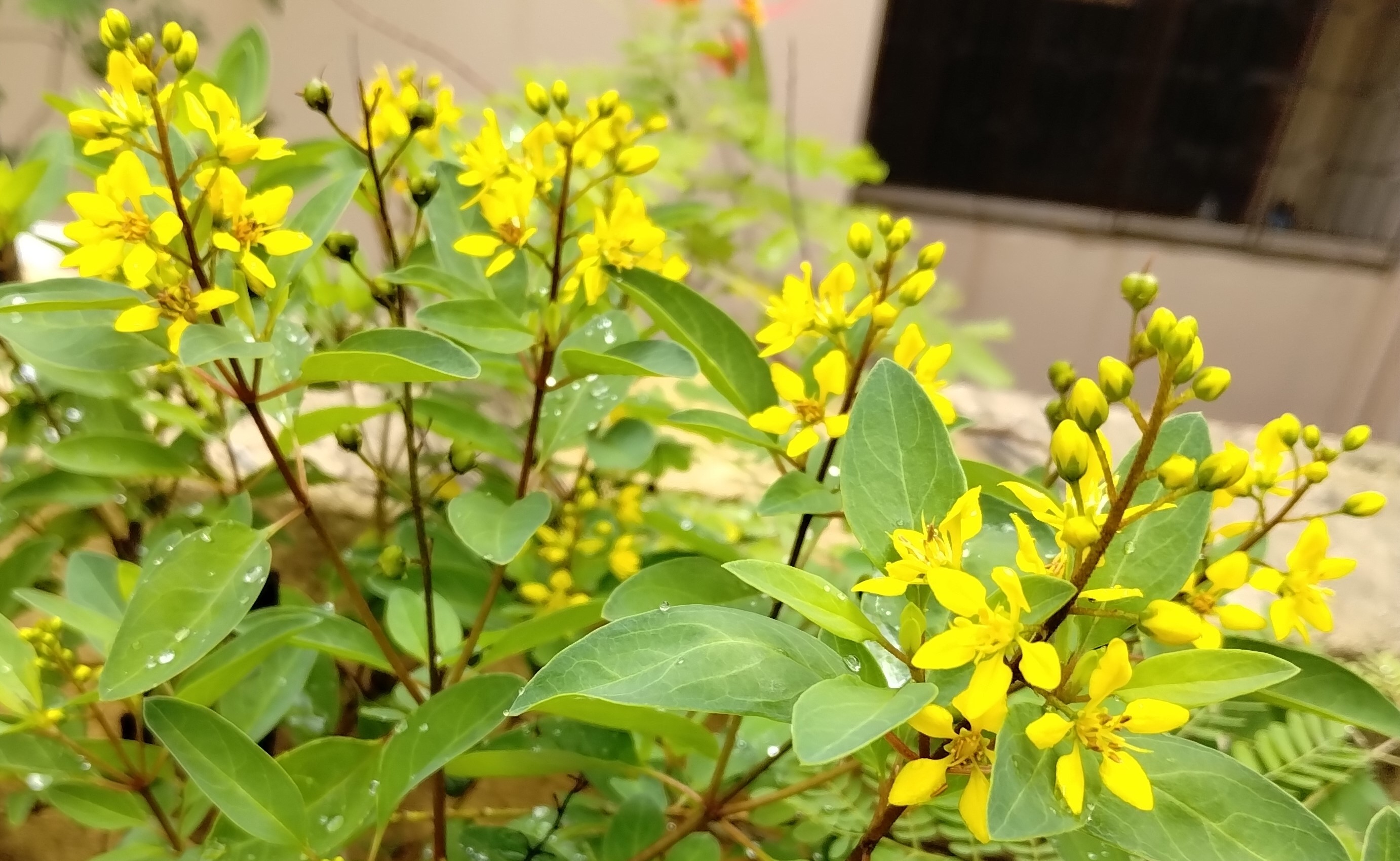
Golden Thryallis
Galphimia gracilis
The Golden Thryallis, botanically designated as *Galphimia gracilis* (previously confused with *Thryallis glauca*, commonly known as Gold Shower, Rain-of-Gold, or Slender Goldshower), is an exceptionally cheerful, fast-growing tropical evergreen shrub. Belonging to the family Malpighiaceae (the a...
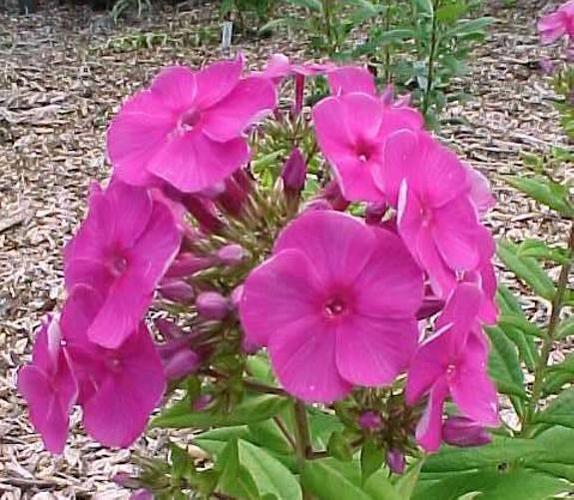
Phlox
Phlox paniculata
The genus Phlox, a cornerstone of the North American garden, encompasses a diverse array of species ranging from low-growing ground covers to towering, stately perennials. Derived from the Greek word for 'flame,' the name perfectly captures the vibrant, fiery intensity of their clustered blossoms...
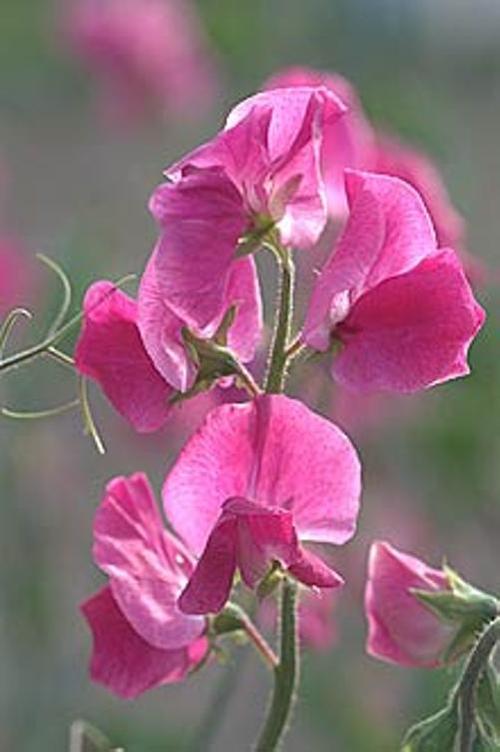
Sweet Pea
Lathyrus odoratus
The Sweet Pea (Lathyrus odoratus) is a highly romanticized, climbing annual vine belonging to the Fabaceae (legume) family. Native to the Mediterranean regions of Sicily, southern Italy, and the Aegean Islands, it became an absolute sensation in Victorian England, where intensive botanical breedi...
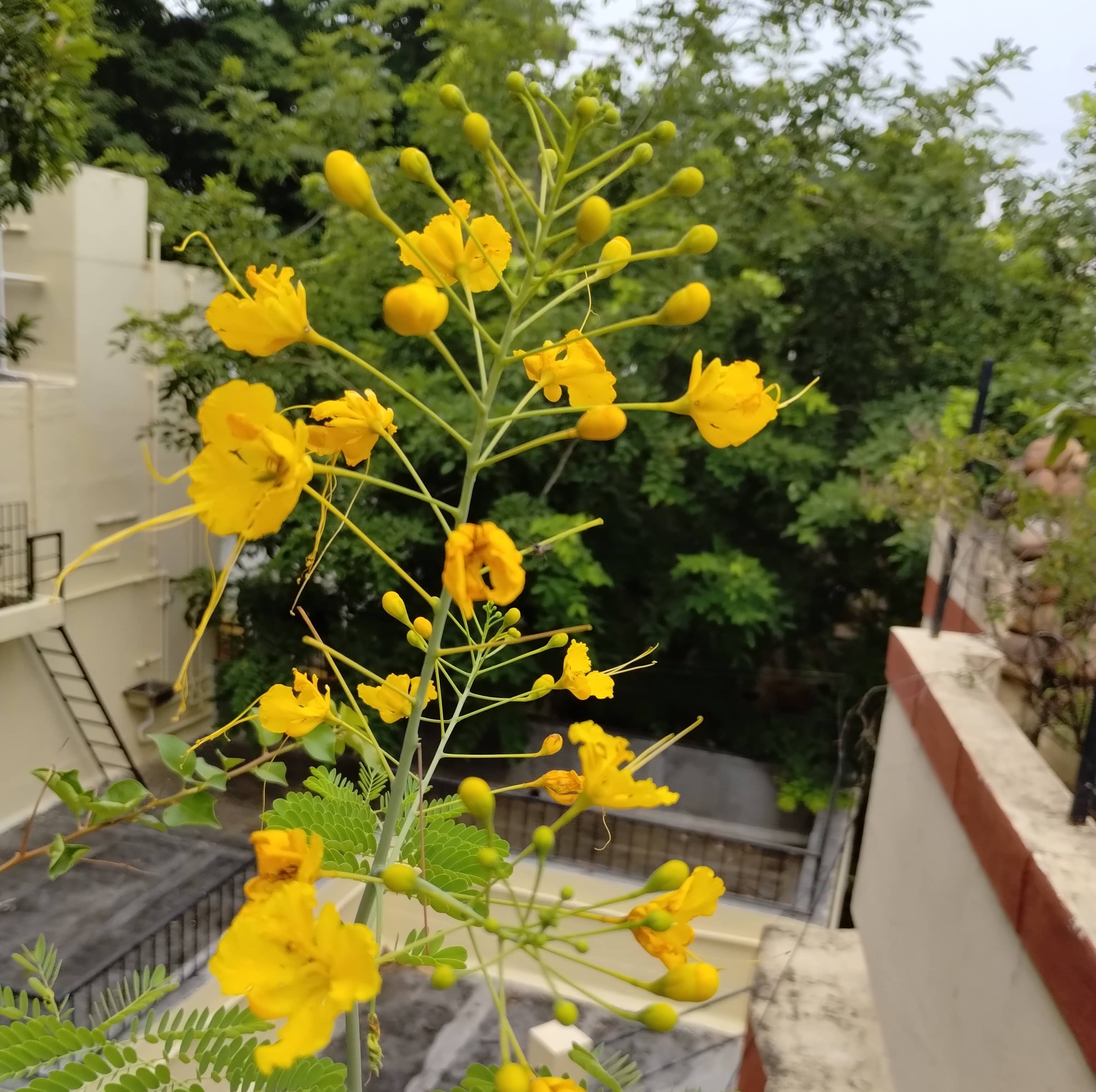
Peacock Flower (Caesalpinia)
Caesalpinia pulcherrima
Caesalpinia pulcherrima, famously known as the "Peacock Flower," "Pride of Barbados," or "Red Bird of Paradise," is a breathtakingly vibrant tropical shrub that embodies the fiery spirit of the Caribbean. A member of the Fabaceae (Legume) family, this species is celebrated for its flamboyant, ter...