
Kalanchoe
Kalanchoe
How to Identify Kalanchoe
Care & Growing Guide
Seasonal Blooming & Hardiness
Seasonal Blooming Calendar:
- Peak Bloom: Spring to early summer (typically April through June).
- Planting Time: Sow seeds directly outdoors in early spring after the last frost, or transplant nursery starts in late spring.
Bloom Timeline
About Kalanchoe
Kalanchoe, belonging to the Crassulaceae (stonecrop) family, is a highly popular and stunning genus of tropical flowering succulent plants. Comprising approximately 125 distinct species, this genus is predominantly native to the dry, arid, sun-baked landscape of Madagascar, with a few species originating from tropical Africa and Asia. Celebrated worldwide as an exceptionally low-maintenance indoor houseplant and warm-climate garden plant, Kalanchoe is prized for its attractive, rubbery leaves and its ability to produce highly dense clusters of long-lasting, vibrant blossoms during the winter and early spring.
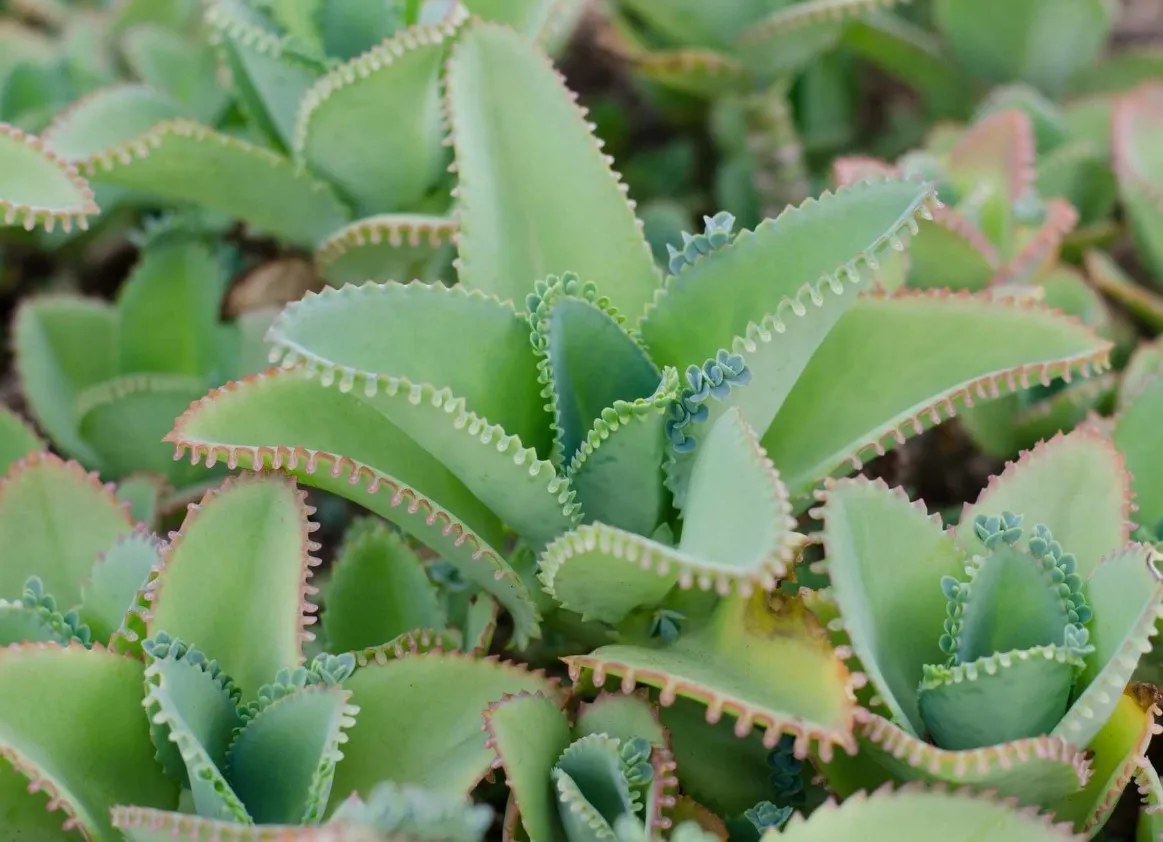
The most famous species in cultivation is Kalanchoe blossfeldiana, also known as 'Flaming Katy' or 'Florist Kalanchoe.' It features thick, glossy, dark green leaves with scalloped margins that store water, giving the plant incredible drought tolerance. Sitting atop this structural foliage are dense, flat-topped clusters of tiny, star-like flowers that can bloom continuously for 6 to 8 weeks. Cultivars shine in a bright rainbow of colors, including luminous reds, glowing oranges, sunny yellows, delicate pinks, and pure whites, often with single or double ruffled petals.
The reproductive morphology of this genus is defined by the floral formula EBr ⊕ ⚿ K(4) C(4) A8 G(4). This indicates that the flower is ebracteate, radially symmetrical (actinomorphic), and bisexual. It features a calyx of 4 fused sepals and a tubular corolla of 4 fused petals. The androecium contains 8 stamens arranged in two whorls of four, attached directly to the corolla tube, while the gynoecium contains 4 free carpels, each with its own superior ovary and small nectar-producing scale at the base—a classic marker of the stonecrop family.
Kalanchoes are exceptionally easy to grow, making them ideal selections for beginner gardeners and dry landscapes in USDA hardiness zones 10 through 12. They require bright, indirect, or partial direct sunlight to maintain compact growth and encourage heavy flower development. They must be potted in porous, exceptionally well-draining cactus or succulent soil mixes. As desert natives, they are highly sensitive to overwatering and soggy soils; the soil must be allowed to dry out completely between waterings to prevent root and stem rot.
The name 'Kalanchoe' is believed to be derived from the Chinese 'Kalan Chauhuy,' which roughly translates to 'that which falls and grows'—a direct reference to the fascinating propagation method of species like 'Mother of Thousands' (Kalanchoe pinnata), which produce tiny plantlets along their leaf margins that drop and root. Known as कलौंचो in Hindi and Iraṇakaḷḷi in Tamil, these succulents have extensive uses in traditional medicine for wound healing and treating skin infections, possessing significant anti-inflammatory and antimicrobial properties.
For pet owners, Kalanchoe presents a serious hazard. All species in the genus are classified as highly TOXIC to dogs, cats, and livestock. The plant contains cardiac glycosides, specifically bufadienolides, which affect the cardiovascular and gastrointestinal systems. If chewed or ingested, it can trigger severe drooling, vomiting, diarrhea, lethargy, dangerous abnormal heart rates (arrhythmia), weakness, and, in severe cases, fatal heart failure. It is critical to keep these houseplants completely out of reach of pets. For safe succulent alternatives, explore our Pet Guard catalog.
Kalanchoes are occasionally confused with Sedums or Cotyledons due to their fleshy leaf structures. However, they are easily distinguished by their distinct 4-merous flower symmetry (4 petals/sepals and 8 stamens) and their scalloped, opposite leaves. They make beautiful container plants; we suggest pairing them with other tropical succulents or shade-tolerant flowering plants like Desert Rose or Firecracker Crossandra. For more details on flowering succulents, visit our Flower Identifier.
Floral Formula & Features
Ebracteate (no bracts), Actinomorphic (radially symmetrical), bisexual, 4 fused sepals, 4 fused petals forming tube, 8 stamens in 2 whorls of 4, 4 free carpels with superior ovaries typical of Crassulaceae
- Scientific Name & Classification: Kalanchoe spp. (Crassulaceae). Known popularly as Flaming Katy, Christmas Kalanchoe, and Mother of Thousands.
- Identification Markers: Thick, rubbery, succulent scalloped leaves. Tiny star-like 4-petaled flowers arranged in dense, long-lasting winter-blooming clusters.
- Floral Formula (EBr ⊕ ⚿ K(4) C(4) A8 G(4)): Radially symmetrical, bisexual flowers with 4 sepals, 4 petals, 8 stamens, and 4 free superior ovaries.
- Growing Requirements: Bright indirect or partial direct light; exceptionally well-draining cactus/succulent soil mix. Drought-tolerant; allow to dry completely (Zones 10-12).
- Cultural Significance: Chinese name refers to falling leaf plantlets that easily root. Traditional medicine favorite for burns and wound healing.
- Safety & Toxicity: TOXIC TO PETS. Contains cardiac bufadienolides causing vomiting, severe drooling, dangerous arrhythmia, and heart failure.
- Common Look-alikes: Confused with Sedums or Cotyledons, but distinguished by 4-merous flower counts and scalloped opposite leaf structures.
- Internal Links: Create beautiful low-water displays paired with Desert Rose or tropical Firecracker Crossandra; find more succulents in our Flower Identifier.
Names in Different Languages
Toxicity & Safety
Always keep toxic plants out of reach of children and pets. Consult a veterinarian or medical professional immediately if ingestion is suspected.
Pet Safety Guide: For detailed toxicity symptoms, first-aid measures, and safe garden alternatives, see our full Pet Guard Profile for Kalanchoe.
Frequently Asked Questions
What is Floral Formula?
A floral formula is a symbolic representation of a flower's structure using letters, numbers, and special symbols. It provides a concise way to describe the arrangement and number of floral parts.
This formula describes the flower's symmetry, sepals, petals, stamens, and carpels in a standardized format.
Formula Sequence
- Bract: Br or Ebr
- Bracteole: Brl or Ebrl
- Symmetry: % (Radial) or ⊕ (Bilateral)
- Sex: ♀ (Female), ♂ (Male), or ⚥ (Bisexual)
- Calyx/Sepal: K<number> (Free or Fused)
- Corolla/Petal: C<number> (Free or Fused)
- Androecium: A<number> (Free or Fused)
- Gynaecium: G<number> (Superior or Inferior Ovary)
Symbol Meanings
- Numbers: Indicate quantity of parts
- Parentheses (): Parts are fused together
- Plus (+): Parts in different whorls
- Underline: Superior ovary position
- Overline: Inferior ovary position
- ∞: Numerous parts (too many to count)
Understanding floral formulas helps botanists quickly identify and classify flowers based on their structural characteristics.
Similar Flowers
Discover flowers that share botanical characteristics
Similar Characteristics
4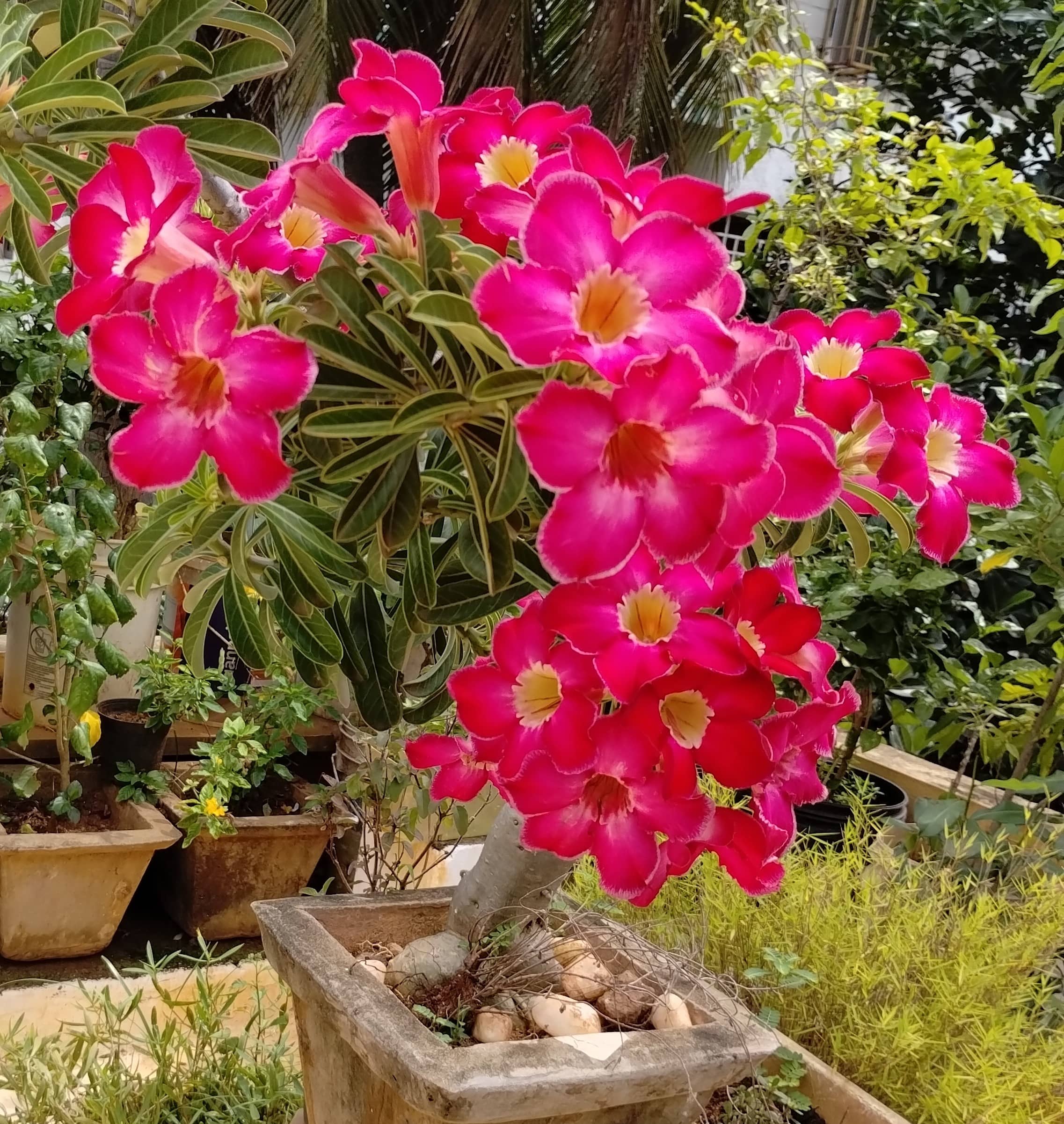
Desert Rose
Adenium obesum
The Desert Rose (Adenium obesum), a member of the Apocynaceae (Dogbane) family, is one of the most sculptural and striking succulent shrubs in the botanical world. Native to the arid regions of sub-Saharan Africa and the Arabian Peninsula, this plant has developed extraordinary adaptations to sur...
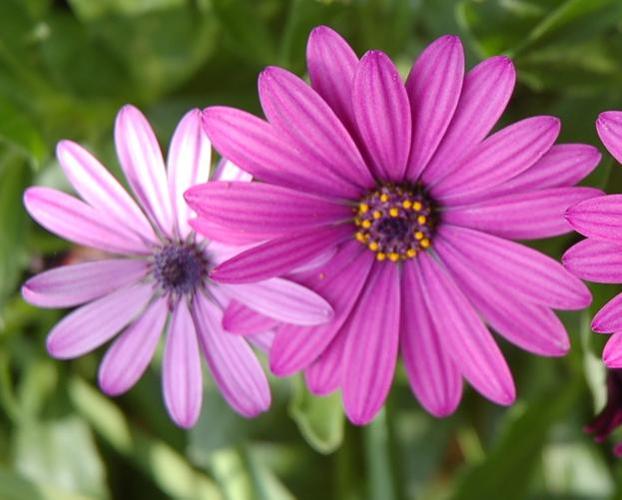
African Daisy (Osteospermum)
Dimorphotheca ecklonis
Osteospermum, commonly known as the African Daisy or Cape Daisy, is a genus of flowering plants that represents the sheer brilliance of the South African floral kingdom. Belonging to the Calenduleae tribe within the massive Asteraceae family, these daisies are celebrated for their sophisticated,...
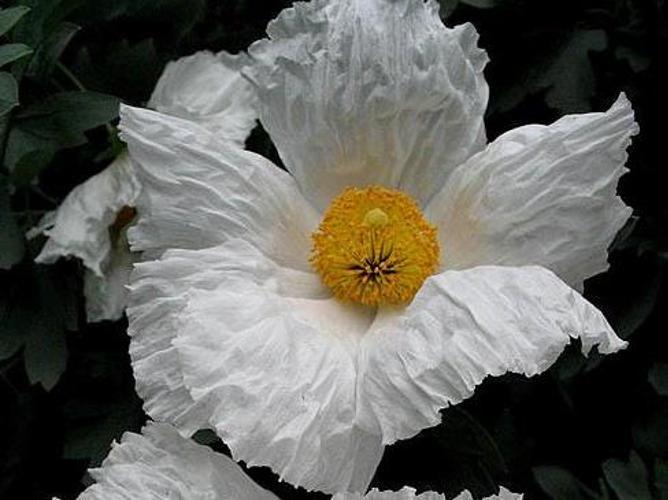
Pincushion
Scabiosa
The Pincushion Flower, botanically designated under the genus *Scabiosa* (particularly *Scabiosa atropurpurea*, known as the Sweet Scabious or Pincushion Flower), is an exceptionally charming, airy herbaceous perennial or annual. Belonging to the family Caprifoliaceae (the honeysuckle family, tri...
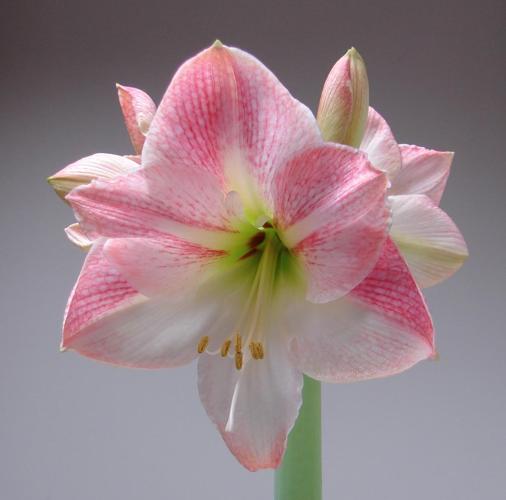
Amaryllis
Hippeastrum
The Amaryllis, botanically classified under the genus Hippeastrum and belonging to the family Amaryllidaceae (the amaryllis family), is an exceptionally spectacular and dramatic bulbous perennial. Native to the warm, tropical and subtropical scrublands, forest margins, and rocky slopes of South A...