
Poinsettia
Euphorbia pulcherrima
How to Identify Poinsettia
Care & Growing Guide
Seasonal Blooming & Hardiness
Seasonal Blooming Calendar:
- Peak Bloom: Late winter to early spring.
- Planting Time: Sow seeds directly outdoors in early spring after the last frost, or transplant nursery starts in late spring.
Bloom Timeline
About Poinsettia
The Poinsettia (Euphorbia pulcherrima) is a commercially monumental, widely recognized shrub belonging to the Euphorbiaceae family. Native to the tropical deciduous forests of western Mexico, it grows wild as a tall, lanky shrub reaching up to 10 feet in height. Today, through intense cultivation, it has become the ultimate global symbol of the winter holiday season, bred into compact, bushy forms that grace millions of homes worldwide every December.
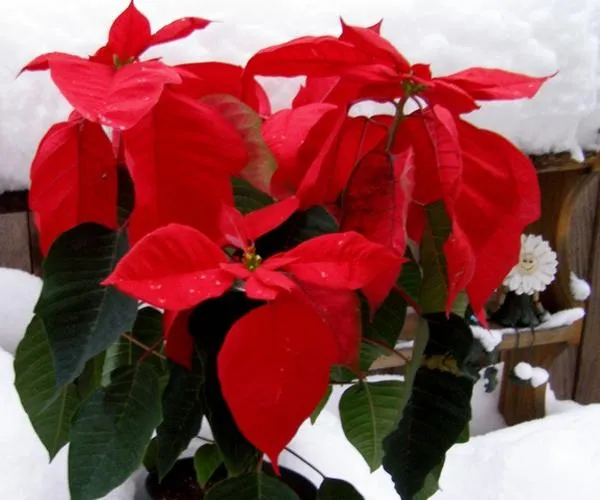
Identification involves a common botanical misconception. The massive, brilliant crimson-red (or white, pink, and marbled) 'petals' that make the plant so famous are not petals at all; they are highly modified leaves known as bracts. The actual flowers are the tiny, yellow, berry-like structures clustered in the very center of the colored bracts, known as cyathia. The lower leaves are standard dark green, large, and sharply toothed.
The floral formula relies on the complex Cyathium inflorescence: ♂ K0 C0 A1 / ♀ K0 C0 G(3). This unique structure, characteristic of the Euphorbia genus, is a false flower containing multiple tiny male flowers (reduced to a single stamen) and one central female flower (reduced to a 3-lobed ovary). They are housed in a cup-like structure equipped with a yellow nectar gland to attract pollinators.
Growing a Poinsettia long-term is notoriously challenging due to its photoperiodic nature. To trigger the green leaves to change color (bract formation), the plant requires exactly 14 hours of absolute, uninterrupted darkness every single night, coupled with bright daylight, for about 6 to 8 weeks in the autumn. As a tropical plant, it hates cold drafts and requires temperatures between 65-70°F and moist but well-draining soil. In USDA zones 10-11, it can be planted outdoors as a perennial shrub.
Culturally, it was utilized by the Aztecs to produce red dye and to treat fevers. It was introduced to the United States in the 1820s by Joel Roberts Poinsett, the first U.S. Ambassador to Mexico, from whom the plant derives its common English name.
Regarding toxicity, the Poinsettia is the victim of a pervasive myth. It is MILDLY TOXIC, not lethal. Like all Euphorbias, breaking a leaf releases a milky white sap. This sap contains diterpenoid esters that can cause mild skin irritation or an upset stomach and drooling if ingested by dogs or cats. However, it is not highly dangerous or deadly as long rumored.
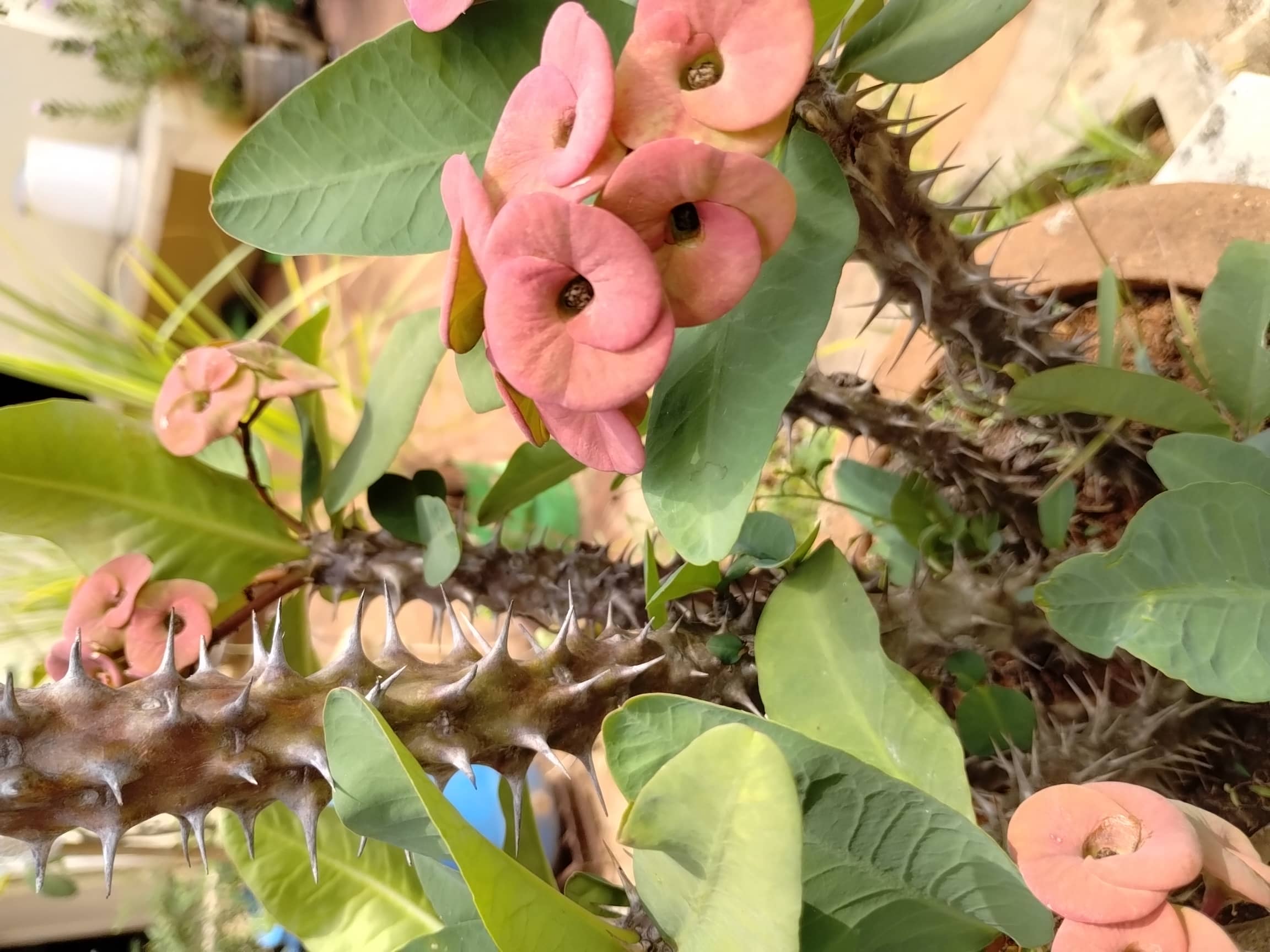
The brilliant red bracts might visually remind some of the Anthurium, but the Anthurium has a glossy, waxy finish and a prominent spadix, unlike the soft matte leaves and central cyathia of the Poinsettia. Compare it with its thorny cousin, the Crown of Thorns, or explore the Flower Identifier.
Floral Formula & Features
Cyathium inflorescence: highly reduced flowers enclosed in a cup-like involucre with a yellow nectar gland. Male flowers have 1 stamen; female flower has 1 superior 3-lobed ovary.
- Scientific Name & Classification: Euphorbia pulcherrima (Euphorbiaceae). Known globally as the Christmas Star.
- Identification Markers: The vibrant red 'petals' are actually modified leaves (bracts). The true flowers are the tiny yellow clusters (cyathia) in the center.
- Floral Formula (Cyathium: ♂ K0 C0 A1 / ♀ K0 C0 G(3)): A specialized false flower enclosing highly reduced male (1 stamen) and female (1 ovary) flowers.
- Growing Requirements: Extremely sensitive to light. Requires strict photoperiods (14 hours of total darkness daily) to trigger color change. Sensitive to cold drafts.
- Cultural Significance: The ultimate symbol of Christmas floral decor globally. Historically used by the Aztecs for dyes and medicinal fever reduction.
- Safety & Toxicity: MILDLY TOXIC. Despite the lethal myths, ingestion only causes mild stomach upset and drooling in pets. The milky sap can cause mild skin irritation.
- Common Look-alikes: Anthuriums also have large red modified leaves (spathes), but they are glossy/waxy with a prominent central spike (spadix).
- Internal Links: Compare the cyathium structure with the Crown of Thorns or the Jatropha.
Names in Different Languages
Cultural Etiquette & Gifting: Planning to gift or decorate with Poinsettia? Discover its symbolic meanings, festival traditions, and crucial cultural faux pas across 20+ countries in our comprehensive Global Flower Etiquette Guide.
Botanical Classification: Poinsettia belongs to the Euphorbiaceae family. Learn how to identify its floral symmetry, stamen arrangement, and structural formulas in our Botanical Family Classification Guide.
Toxicity & Safety
Always keep toxic plants out of reach of children and pets. Consult a veterinarian or medical professional immediately if ingestion is suspected.
Pet Safety Guide: For detailed toxicity symptoms, first-aid measures, and safe garden alternatives, see our full Pet Guard Profile for Poinsettia.
Frequently Asked Questions
What is Floral Formula?
A floral formula is a symbolic representation of a flower's structure using letters, numbers, and special symbols. It provides a concise way to describe the arrangement and number of floral parts.
This formula describes the flower's symmetry, sepals, petals, stamens, and carpels in a standardized format.
Formula Sequence
- Bract: Br or Ebr
- Bracteole: Brl or Ebrl
- Symmetry: % (Radial) or ⊕ (Bilateral)
- Sex: ♀ (Female), ♂ (Male), or ⚥ (Bisexual)
- Calyx/Sepal: K<number> (Free or Fused)
- Corolla/Petal: C<number> (Free or Fused)
- Androecium: A<number> (Free or Fused)
- Gynaecium: G<number> (Superior or Inferior Ovary)
Symbol Meanings
- Numbers: Indicate quantity of parts
- Parentheses (): Parts are fused together
- Plus (+): Parts in different whorls
- Underline: Superior ovary position
- Overline: Inferior ovary position
- ∞: Numerous parts (too many to count)
Understanding floral formulas helps botanists quickly identify and classify flowers based on their structural characteristics.
Similar Flowers
Discover flowers that share botanical characteristics
Same Family
2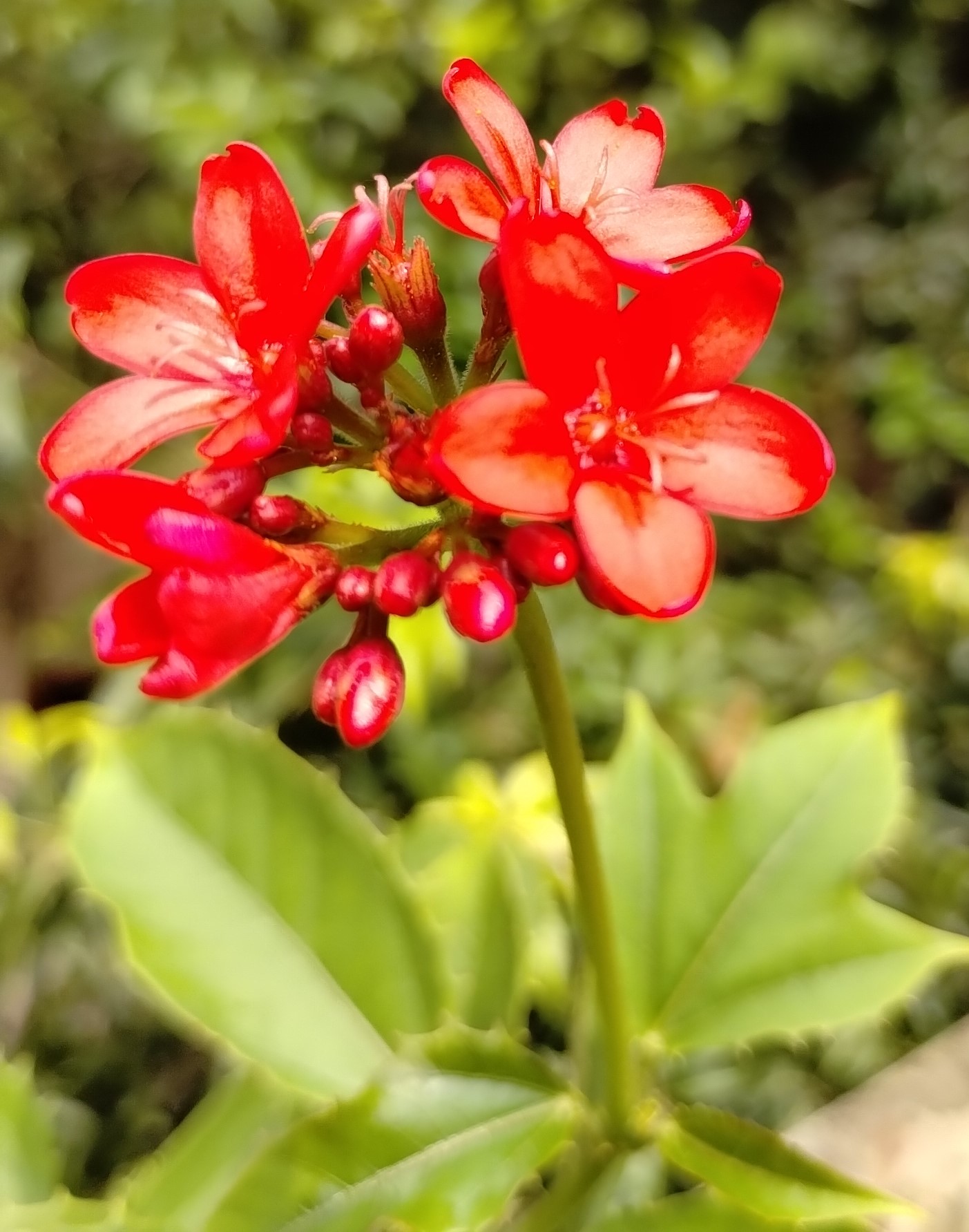
Jatropha (Spicy Jatropha)
Jatropha integerrima
Jatropha, specifically Jatropha integerrima (commonly known as Spicy Jatropha or Peregrina), is a stunning, ever-blooming evergreen shrub or small tree belonging to the Euphorbiaceae family. Native to Cuba and the West Indies, it is widely celebrated in tropical and subtropical landscaping for it...
Plumeria
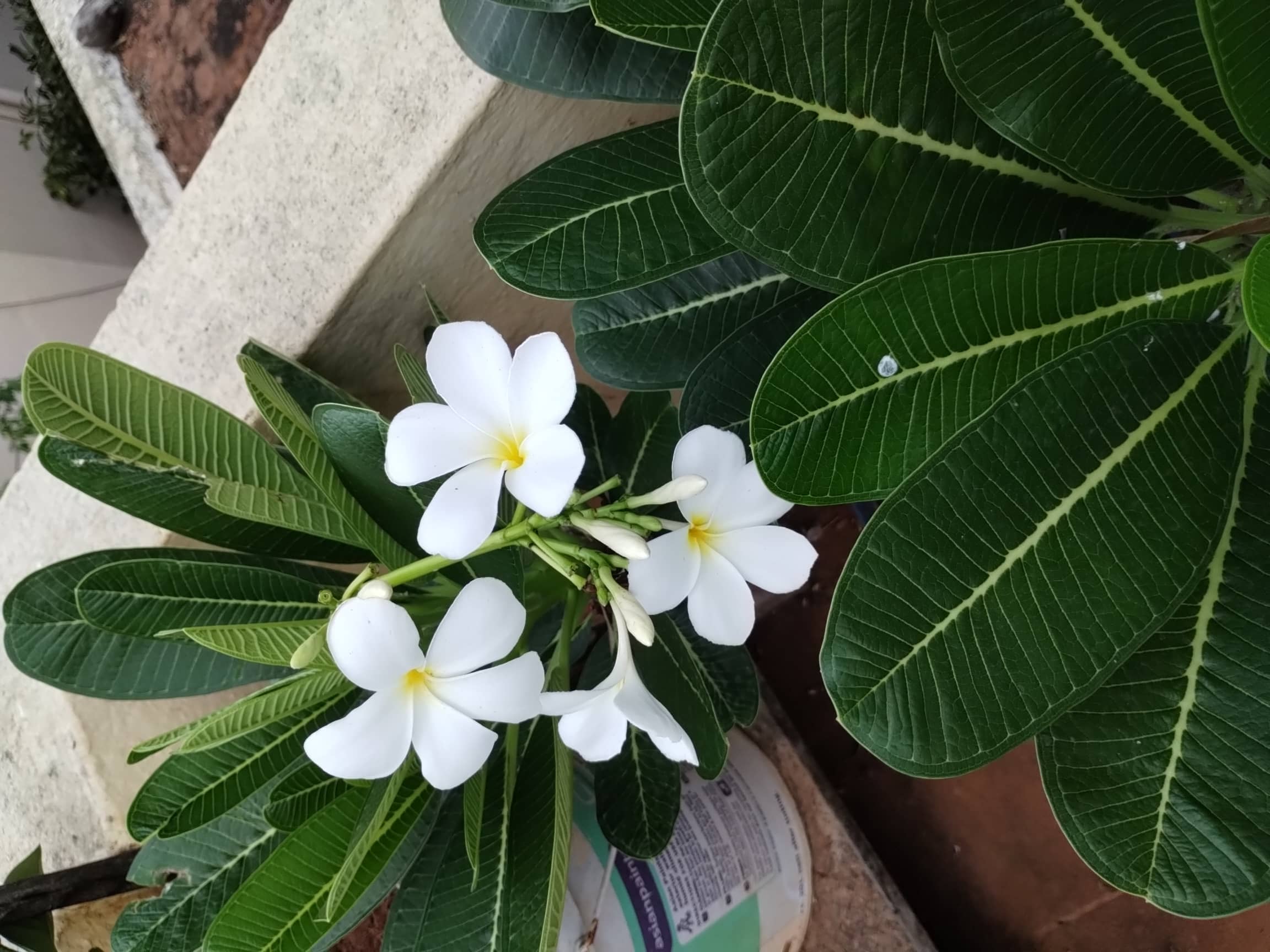
Plumeria Rubra
Plumeria, universally known as the Frangipani, is a genus of deciduous shrubs and small trees that serve as the quintessential symbol of tropical paradise. Belonging to the Apocynaceae (Dogbane) family, these plants are native to Mexico, Central America, and the Caribbean, but they have been embr...