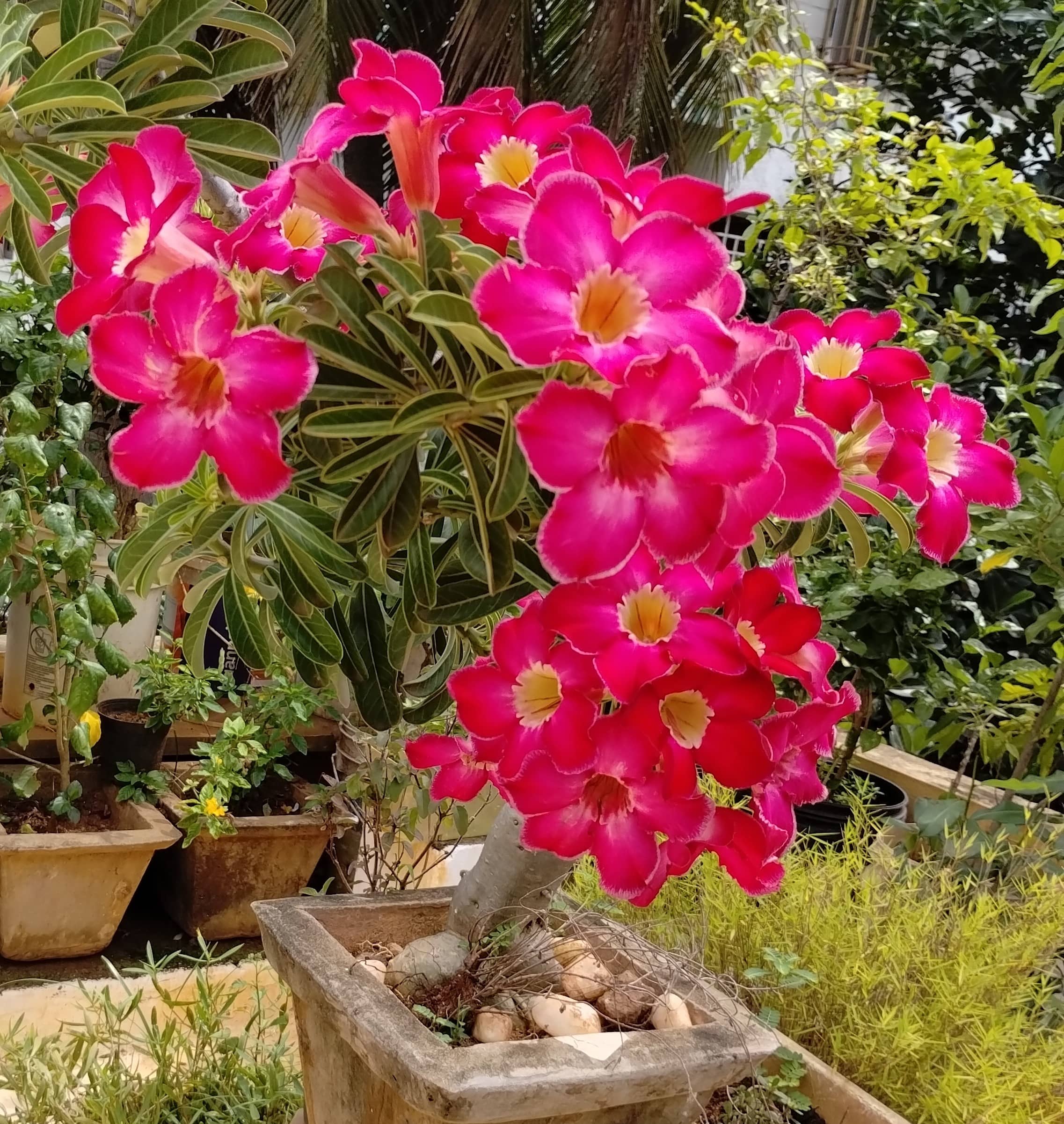
Crown of Thorns
Euphorbia milii
How to Identify Crown of Thorns
Care & Growing Guide
Seasonal Blooming & Hardiness
Seasonal Blooming Calendar:
- Peak Bloom: Summer (typically June through September).
- Planting Time: Sow seeds directly outdoors in early spring after the last frost, or transplant nursery starts in late spring.
Bloom Timeline
About Crown of Thorns
The Crown of Thorns (Euphorbia milii) is an incredibly resilient, woody, succulent shrub native to Madagascar. Belonging to the vast Euphorbiaceae family, it has become a globally popular houseplant and tropical landscape staple. Its common name stems from the deeply entrenched legend that it was the very plant used to weave the crown of thorns worn by Jesus Christ during the crucifixion, though botanical history places its Middle Eastern introduction long after that era.
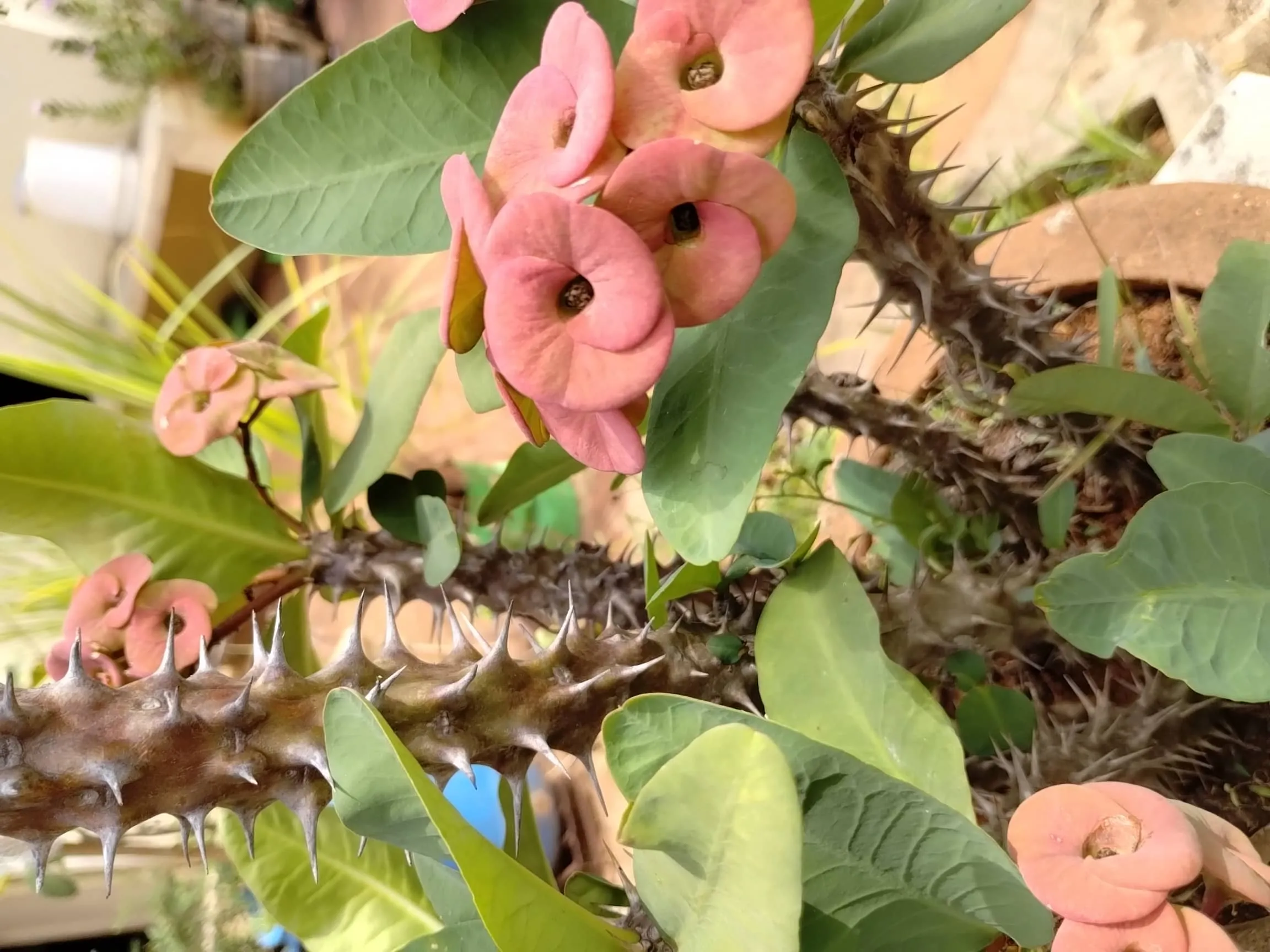
This plant is unmistakable due to its thick, fleshy, grey-brown stems that are heavily armed with formidable, sharp black thorns. The leaves are obovate, bright green, and generally cluster near the growing tips of the stems. What appear to be the 'flowers' are actually highly modified structures called cyathia. The true flowers are minuscule and yellow, but they are subtended by two brilliantly colored, petal-like bracts—most commonly in eye-catching shades of bright red, pink, yellow, or crisp white.
The floral formula relies on the unique Cyathium inflorescence: ♂ K0 C0 A1 / ♀ K0 C0 G(3). This structure is highly reduced and highly specialized. It consists of multiple male flowers (each reduced to just a single stamen) and a single central female flower (reduced to a single 3-lobed ovary). These are enclosed together in a cup-like involucre that mimics a single bisexual flower.
The Crown of Thorns demands full, direct sunlight to produce the most vibrant bracts and the most compact growth. As a true succulent, it requires highly porous, well-draining cactus soil and must be allowed to dry out completely between waterings to prevent root rot. It thrives in dry heat, is highly drought-tolerant, and acts as an evergreen perennial in USDA zones 9-11.
Culturally, beyond its religious associations with endurance and sacrifice, it holds different meanings globally. In Thailand, it is considered a supreme lucky plant; local folklore suggests that the more blooms a plant produces, the more luck the owner will receive.
Caution is heavily advised: this plant is TOXIC. Like all members of the Euphorbia genus, breaking a stem or tearing a leaf releases a copious, sticky white latex sap. This sap contains diterpene esters that are highly irritating, causing severe contact dermatitis on the skin and intense pain or temporary blindness if rubbed in the eyes. Ingestion causes severe gastrointestinal distress in pets and humans.
The thorny stems might initially resemble a standard Rose bush or certain Cacti, but the distinctive cyathia blooms and the milky white sap instantly identify it as a Euphorbia. Contrast its thorny nature with the soft Pelargonium or discover more succulents in the Flower Identifier.
Floral Formula & Features
Cyathium inflorescence: highly reduced flowers enclosed in a cup-like involucre. Male flowers have 1 stamen, female flower has 1 superior 3-lobed ovary.
- Scientific Name & Classification: Euphorbia milii (Euphorbiaceae). Commonly known as Christ Plant or Crown of Thorns.
- Identification Markers: Thick, succulent stems covered in sharp black thorns. Features paired, brightly colored petal-like bracts (usually red or pink) surrounding tiny true flowers.
- Floral Formula (Cyathium: ♂ K0 C0 A1 / ♀ K0 C0 G(3)): A highly specialized false flower containing multiple 1-stamen male flowers and one 3-carpellate female flower inside a cup.
- Growing Requirements: Full direct sun, well-draining cactus soil. Must dry out between waterings. Drought tolerant. Zones 9-11.
- Cultural Significance: Legend states it was used for Christ's crown of thorns. In Asia, it is widely considered a plant that brings good luck and prosperity.
- Safety & Toxicity: TOXIC. Produces a sticky white latex sap that causes severe skin irritation and eye pain. Toxic to pets if ingested.
- Common Look-alikes: Thorny stems resemble Roses or certain Cacti, but the presence of white milky sap uniquely identifies it as a Euphorbia.
- Internal Links: Compare with another toxic Euphorbiaceae member, the Jatropha, or check our Flower Identifier.
Names in Different Languages
Botanical Classification: Crown of Thorns belongs to the Euphorbiaceae family. Learn how to identify its floral symmetry, stamen arrangement, and structural formulas in our Botanical Family Classification Guide.
Toxicity & Safety
Always keep toxic plants out of reach of children and pets. Consult a veterinarian or medical professional immediately if ingestion is suspected.
Frequently Asked Questions
What is Floral Formula?
A floral formula is a symbolic representation of a flower's structure using letters, numbers, and special symbols. It provides a concise way to describe the arrangement and number of floral parts.
This formula describes the flower's symmetry, sepals, petals, stamens, and carpels in a standardized format.
Formula Sequence
- Bract: Br or Ebr
- Bracteole: Brl or Ebrl
- Symmetry: % (Radial) or ⊕ (Bilateral)
- Sex: ♀ (Female), ♂ (Male), or ⚥ (Bisexual)
- Calyx/Sepal: K<number> (Free or Fused)
- Corolla/Petal: C<number> (Free or Fused)
- Androecium: A<number> (Free or Fused)
- Gynaecium: G<number> (Superior or Inferior Ovary)
Symbol Meanings
- Numbers: Indicate quantity of parts
- Parentheses (): Parts are fused together
- Plus (+): Parts in different whorls
- Underline: Superior ovary position
- Overline: Inferior ovary position
- ∞: Numerous parts (too many to count)
Understanding floral formulas helps botanists quickly identify and classify flowers based on their structural characteristics.
Similar Flowers
Discover flowers that share botanical characteristics

Same Family
2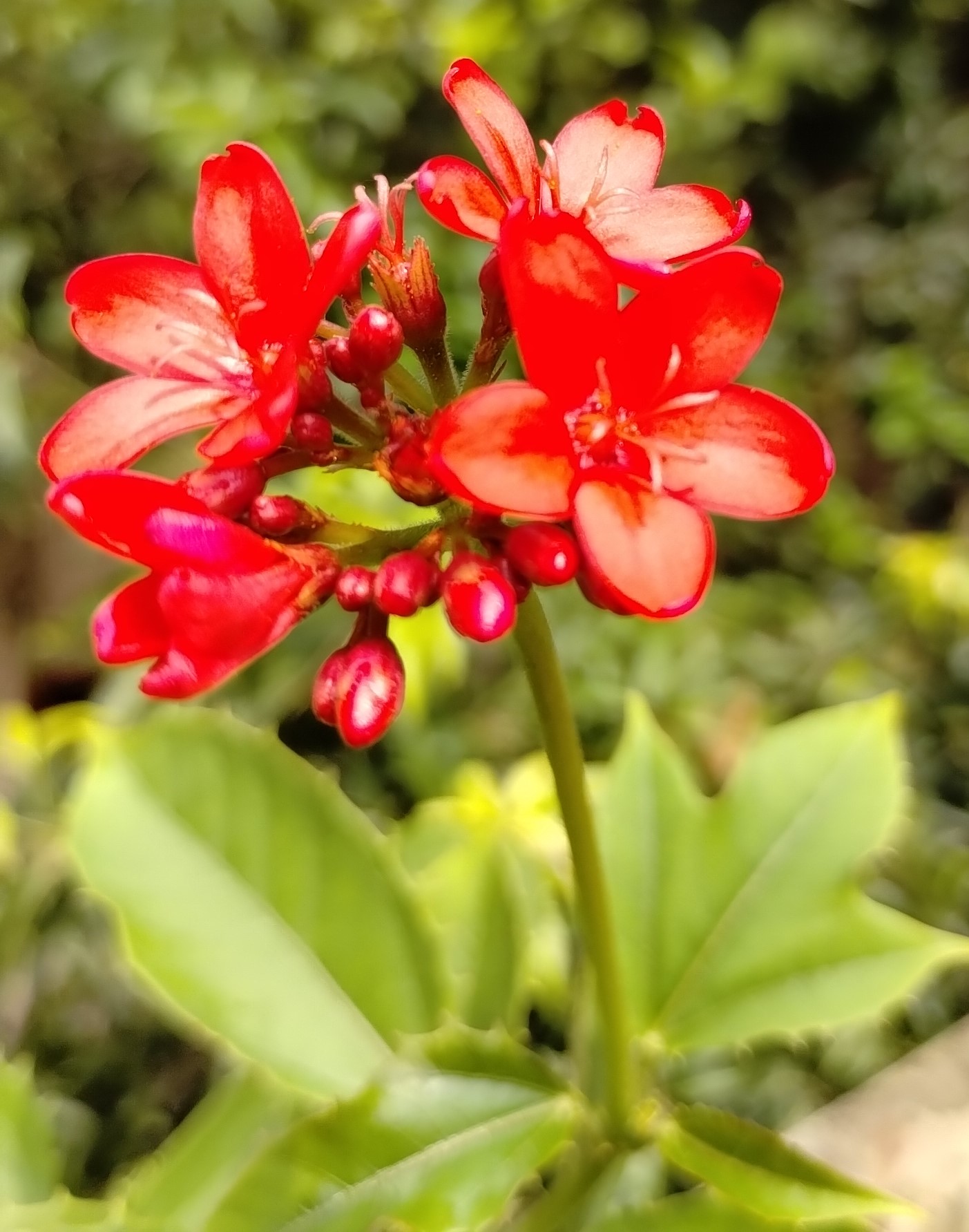
Jatropha (Spicy Jatropha)
Jatropha integerrima
Jatropha, specifically Jatropha integerrima (commonly known as Spicy Jatropha or Peregrina), is a stunning, ever-blooming evergreen shrub or small tree belonging to the Euphorbiaceae family. Native to Cuba and the West Indies, it is widely celebrated in tropical and subtropical landscaping for it...
Plumeria
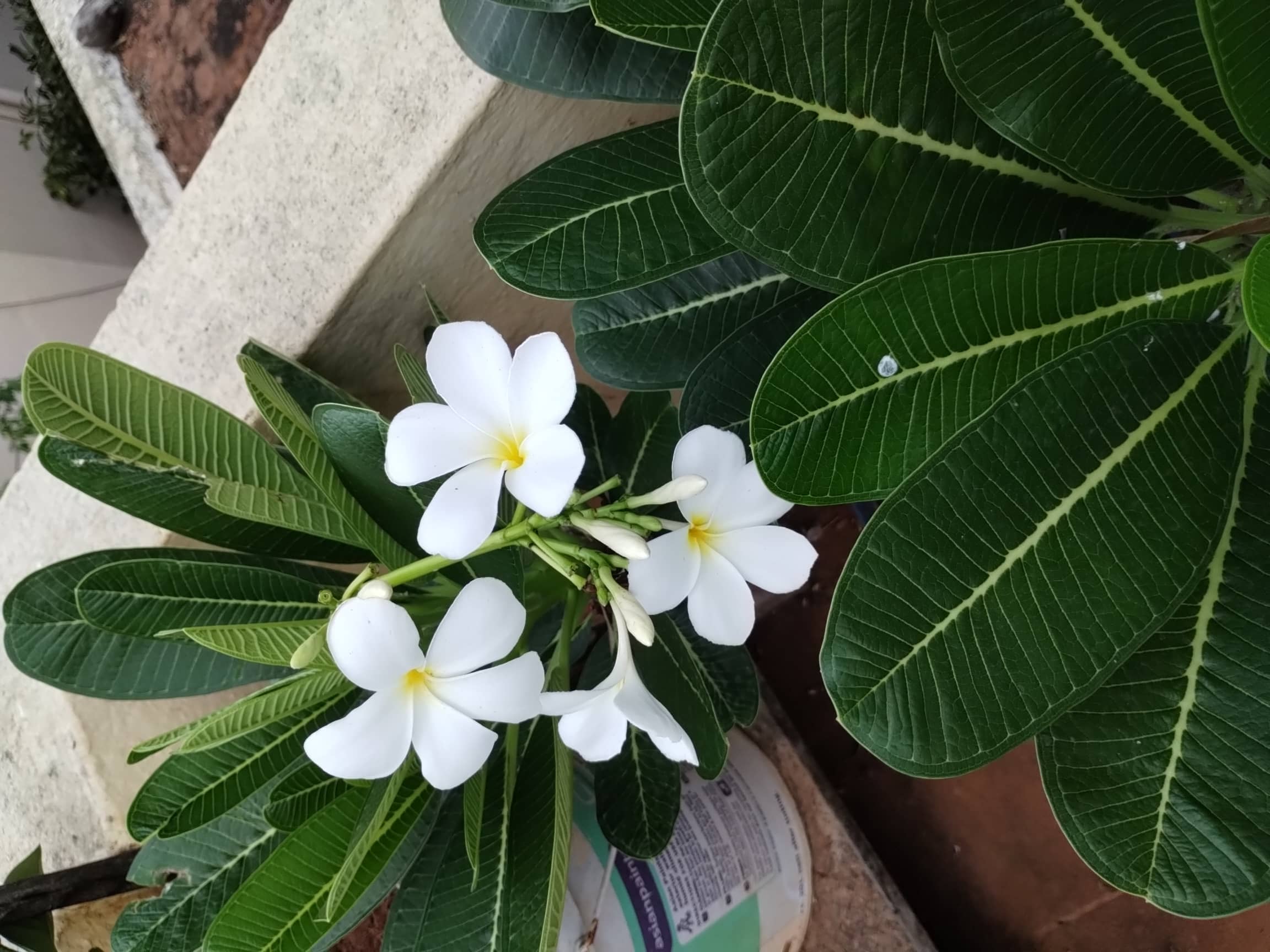
Plumeria Rubra
Plumeria, universally known as the Frangipani, is a genus of deciduous shrubs and small trees that serve as the quintessential symbol of tropical paradise. Belonging to the Apocynaceae (Dogbane) family, these plants are native to Mexico, Central America, and the Caribbean, but they have been embr...