
Gaura
Oenothera lindheimeri
How to Identify Gaura
NON-TOXIC. 100% safe for cats, dogs, and horses. Provides a magnificent, low-maintenance, and pet-safe vertical movement to sunny borders.
Care & Growing Guide
Seasonal Blooming & Hardiness
Seasonal Blooming Calendar:
- Peak Bloom: Late winter to early spring.
- Planting Time: Sow seeds directly outdoors in early spring after the last frost, or transplant nursery starts in late spring.
Bloom Timeline
About Gaura
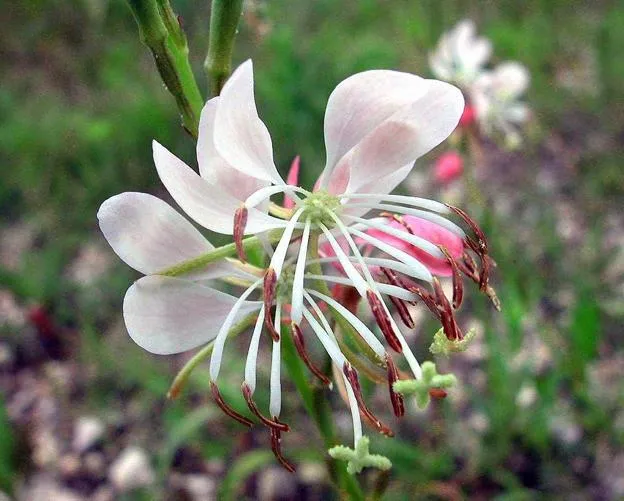
The Gaura, botanically classified as Oenothera lindheimeri (formerly Gaura lindheimeri) and commonly known as the Bee Blossom, Lindheimer's Beeblossom, or Whirling Butterflies, is an exceptionally elegant, airy, and long-blooming herbaceous perennial. Belonging to the family Onagraceae (the evening primrose family), this resilient wildflower is native to the hot, sun-baked prairies, open pine forests, and dry sandy roadsides of southeastern Texas, Louisiana, and northern Mexico.
This clump-forming perennial is celebrated for its highly distinct, light-textured, and dancing growth habit. It sends up thin, wiry, and arching stems measuring 2 to 5 feet tall with a spread of 2 to 3 feet, clothed in small, lance-shaped, grey-green leaves with slightly serrated margins. From early summer until the first hard frost of winter (June through November), it blooms continuously, producing delicate, towering wand-like flower spikes carrying abundant, star-like blossoms.
Individual flowers measure about 1 inch across, featuring a unique, asymmetrical butterfly-like shape with 4 petals arranged in an upward fan. The blossoms open sequentially from the bottom of the wand upward over several months. A beautiful natural transition occurs as deep rosy-pink buds open to reveal pure white or light pink petals, which then fade back to a rich pink as they age. This sequential color shift, combined with long, protruding pink stamens, makes the plant appear as a cloud of hovering butterflies.
The reproductive morphology of Oenothera lindheimeri is summarized by the evening primrose floral formula ⨁ ⚥ K(4) C(4) A8 G(4). This formula states that the flowers are radially symmetrical (actinomorphic) and bisexual. The calyx is composed of 4 fused sepals that form a long, narrow tubular hypanthium (flower tube), and the corolla has 4 free clawed petals. The androecium contains 8 prominent stamens carrying versatile, dangling pollen anthers, and the gynoecium contains 4 fused carpels with a 4-locular inferior ovary.
The former genus name Gaura is derived from the ancient Greek word 'gauros,' which translates to 'superb' or 'grand,' referencing the majestic, airy swaying of its flower wands. The species epithet lindheimeri honors Ferdinand Jacob Lindheimer, a famous 19th-century German-Texan botanist widely celebrated as the father of Texas botany. Famed in Sanskrit as Gauri (गौरी) or Madhumakshika Pushpa (मधुमक्षिका पुष्पा, meaning 'bee flower') and in Hindi as Gaura (गौरा), it symbolizes grace, light-heartedness, and natural elegance.
For pet owners and veterinarians, Gaura is an exceptionally safe, low-risk, and pet-safe perennial selection. Oenothera lindheimeri is classified as completely NON-TOXIC to cats, dogs, and horses by major global animal safety databases, including the ASPCA. If an energetic pet runs through the airy clumps or chews on the slender, wiry stems and sweet petals, there is absolutely no risk of chemical poisoning. To explore more safe, drought-tolerant perennials for active yards, visit our general Pet Guard catalog.
Gaura is occasionally confused with wild evening primroses or fireweeds. It is easily distinguished because true Gaura produces slender, wand-like stems of asymmetrical butterfly-shaped blossoms and long, protruding stamens, whereas true evening primroses have highly symmetrical yellow cup flowers. It is ideal for xeriscaping, gravel gardens, and sunny cottage borders; we recommend pairing it beside other heat-loving favorites like Verbena or Marigold. To explore more long-blooming prairie wildflowers, browse our Flower Identifier.
For more botanical profiles and flower identification features, see our guides on Daisy and Globe Amaranth (Gomphrena).
Floral Formula & Features
This formula indicates that the flowers are radially symmetrical (⨁), bisexual (⚥), have 4 sepals (K(4)), 4 petals (C(4)), 8 stamens (A8), and a 4-locular ovary (G(4))
- Scientific Name & Classification: Oenothera lindheimeri (Onagraceae). Globally famed as Bee Blossom, Whirling Butterflies, and Lindheimer's Beeblossom.
- Identification Markers: Airy clump-forming habit, wiry arching stems, and star-like asymmetrical 4-petaled flowers opening white and aging to rose-pink.
- Floral Formula (⨁ ⚥ K(4) C(4) A8 G(4)): Radially symmetrical, bisexual flowers with 4 fused sepals forming a long tube, 4 free petals, 8 stamens, and inferior ovary.
- Growing Requirements: Full direct sun (6-8 hours daily); poor, sandy, gravelly, well-draining soils. Highly heat and drought-tolerant due to deep taproot (Zones 5-9).
- Cultural Significance: Name comes from Greek 'gauros' (superb). Species honors Texas botanist Ferdinand Lindheimer. Known in Sanskrit as Gauri, representing grace.
- Safety & Toxicity: NON-TOXIC. 100% safe for cats, dogs, and horses. Provides a magnificent, low-maintenance, and pet-safe vertical movement to sunny borders.
- Common Look-alikes: Confused with wild Evening Primroses, but easily distinguished by its asymmetrical butterfly-shaped flowers and long dangling stamens.
- Internal Links: Creates a beautiful soft-textured accent when planted in drifts beside other tough, sun-loving favorites like Verbena or Marigold; find more in our Flower Identifier.
Names in Different Languages
Toxicity & Safety
Frequently Asked Questions
What is Floral Formula?
A floral formula is a symbolic representation of a flower's structure using letters, numbers, and special symbols. It provides a concise way to describe the arrangement and number of floral parts.
This formula describes the flower's symmetry, sepals, petals, stamens, and carpels in a standardized format.
Formula Sequence
- Bract: Br or Ebr
- Bracteole: Brl or Ebrl
- Symmetry: % (Radial) or ⊕ (Bilateral)
- Sex: ♀ (Female), ♂ (Male), or ⚥ (Bisexual)
- Calyx/Sepal: K<number> (Free or Fused)
- Corolla/Petal: C<number> (Free or Fused)
- Androecium: A<number> (Free or Fused)
- Gynaecium: G<number> (Superior or Inferior Ovary)
Symbol Meanings
- Numbers: Indicate quantity of parts
- Parentheses (): Parts are fused together
- Plus (+): Parts in different whorls
- Underline: Superior ovary position
- Overline: Inferior ovary position
- ∞: Numerous parts (too many to count)
Understanding floral formulas helps botanists quickly identify and classify flowers based on their structural characteristics.
Similar Flowers
Discover flowers that share botanical characteristics
Similar Characteristics
4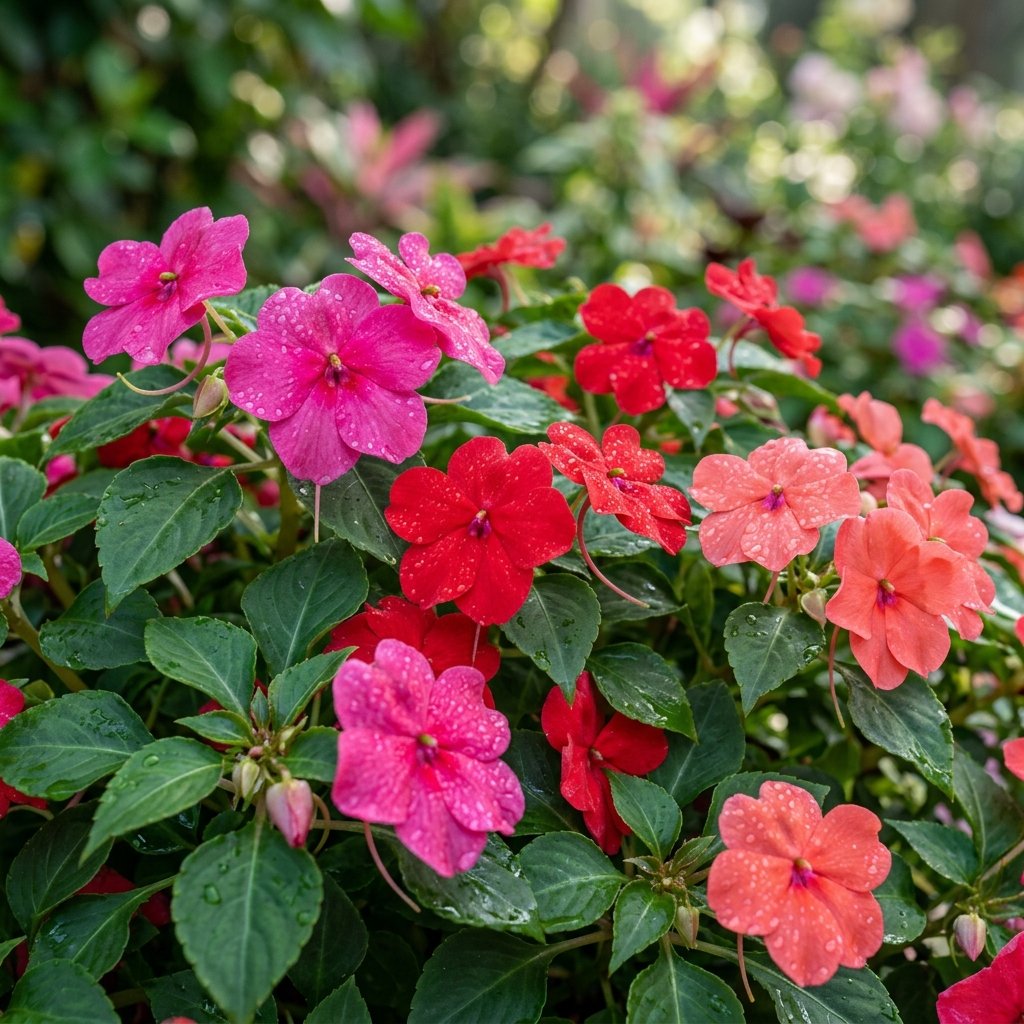
Impatiens Walleriana
Impatiens walleriana
Impatiens Walleriana, botanically classified as *Impatiens walleriana* and universally celebrated across the gardening world as Busy Lizzie, Sultana, or Patient Lucy, is an exceptionally popular, prolific, and shade-tolerant herbaceous perennial commonly cultivated as an annual. Belonging to the...
Russian Sage
Salvia yangii
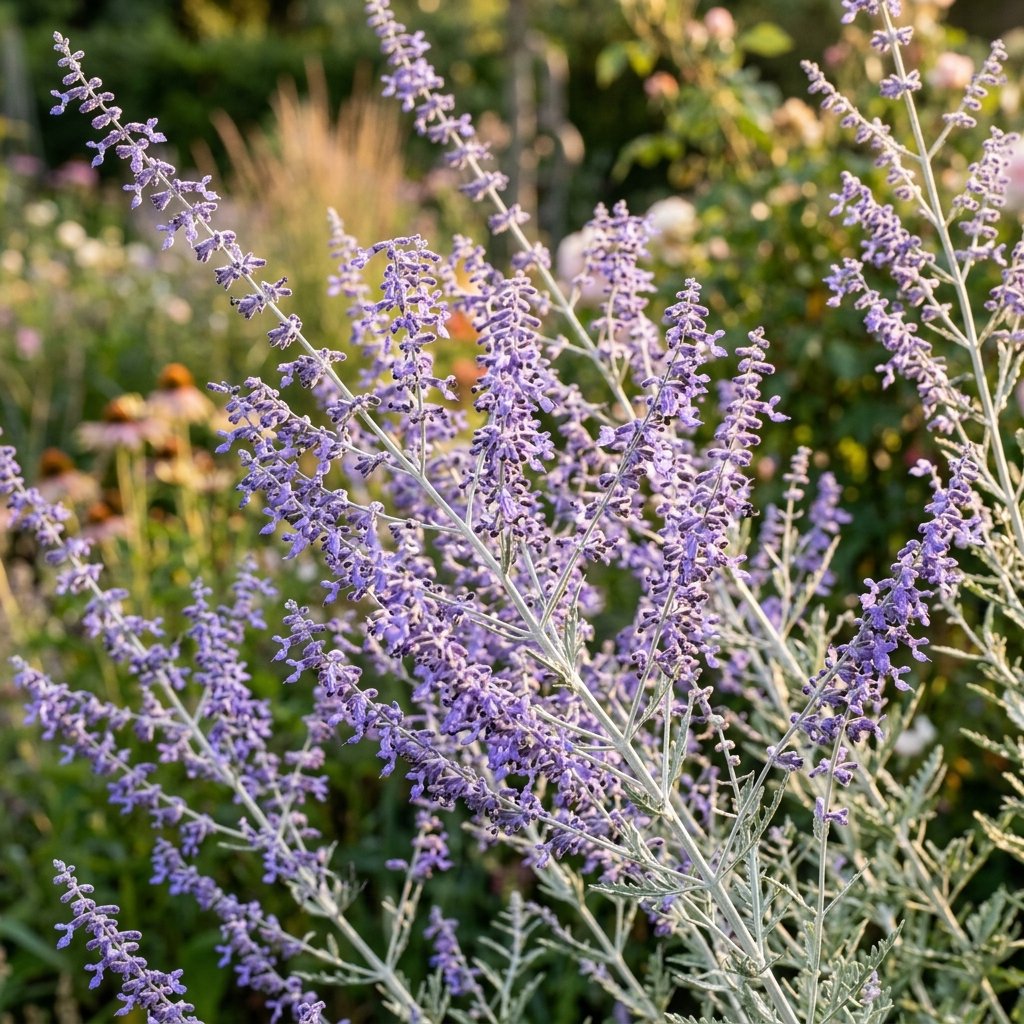
Russian Sage, botanically reclassified as *Salvia yangii* (long celebrated under its classic horticultural synonym *Perovskia atriplicifolia*), is an exceptionally drought-tolerant, graceful, and cloud-like deciduous perennial subshrub. Belonging to the mint family Lamiaceae (tribe Mentheae), thi...
Peacock Flower (Caesalpinia)
Caesalpinia pulcherrima
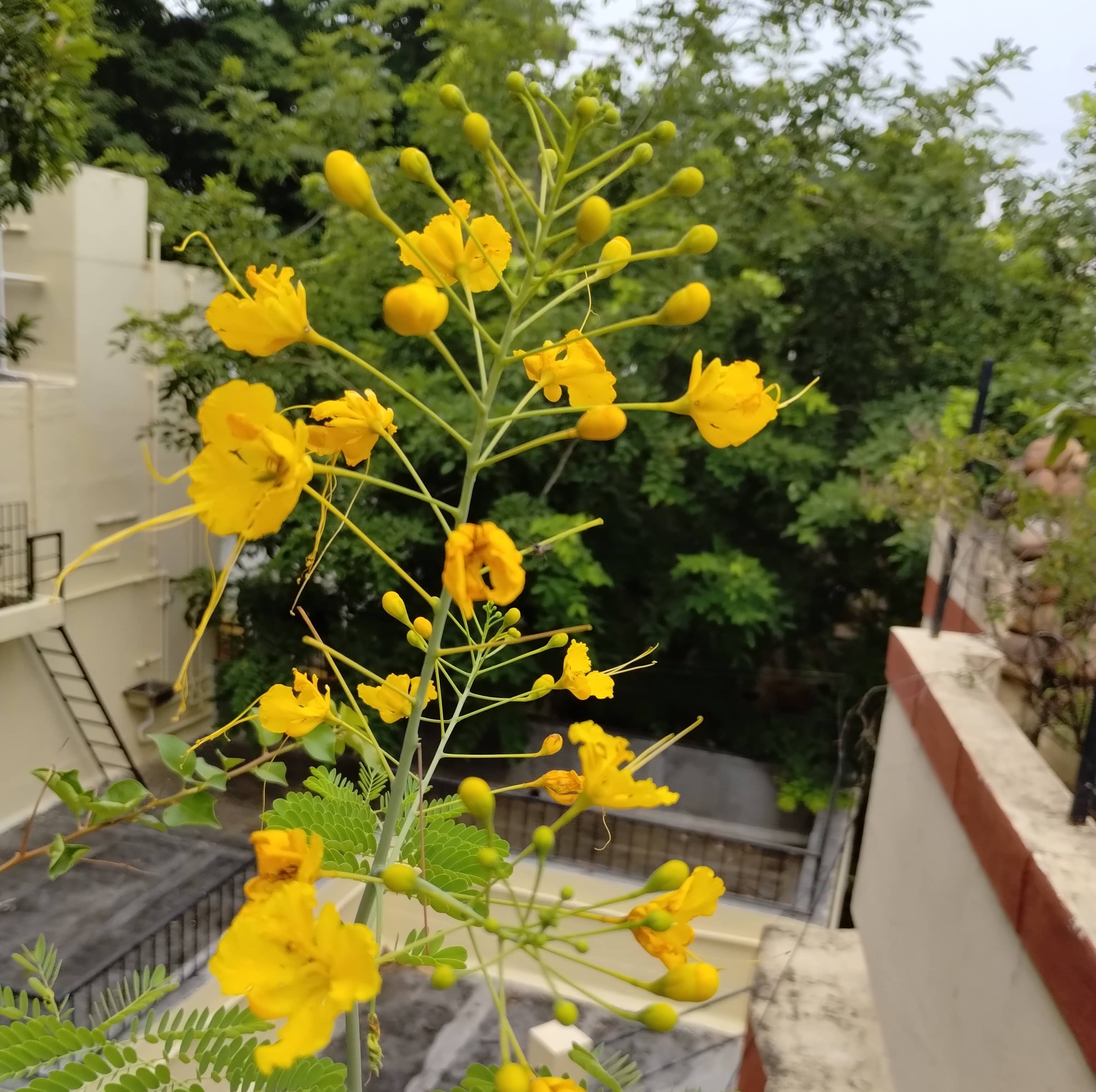
Caesalpinia pulcherrima, famously known as the "Peacock Flower," "Pride of Barbados," or "Red Bird of Paradise," is a breathtakingly vibrant tropical shrub that embodies the fiery spirit of the Caribbean. A member of the Fabaceae (Legume) family, this species is celebrated for its flamboyant, ter...
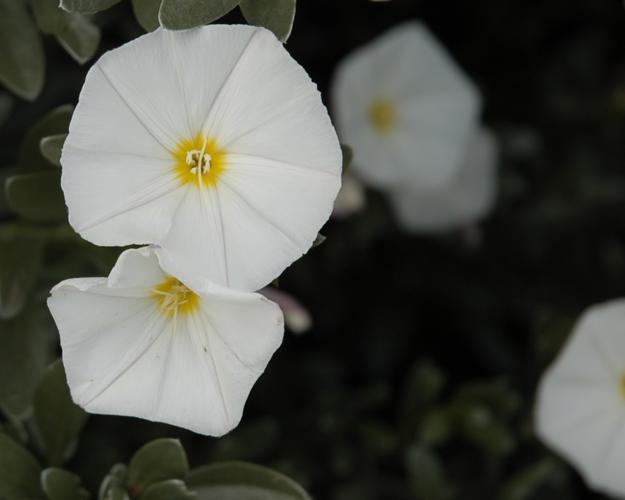
Silverbush
Convolvulus cneorum
The Silverbush, botanically classified as Convolvulus cneorum and widely referred to as the Silvery Bindweed or Bush Morning Glory, is an exceptionally elegant, compact evergreen shrub belonging to the Convolvulaceae (morning glory) family. Unlike its sprawling, climbing vine cousins, this specie...