Pruebas de Calidad y Seguridad de los Frijoles Negros: Detectar Frijoles Teñidos y Destruir Lectinas
Inspeccione los frijoles negros para detectar adulteración de los frijoles teñidos, pruebe si se cocinan adecuadamente para destruir las lectinas tóxicas y verifique la frescura.
Para obtener más información sobre la seguridad de las legumbres y los cereales, lea nuestras guías sobre garbanzos y arroz.
Drop Frijoles Negros photo here to test purity
or click to browse • Supports JPG, PNG, WEBP • Paste with Ctrl+V
Inspection Guide
Click to enlarge
Auditoría de pureza y destrucción de lectinas de los frijoles negros
Los frijoles negros (Phaseolus vulgaris), un alimento básico de las cocinas mexicana, caribeña y latinoamericana, son muy nutritivos. Sin embargo, los frijoles secos en los mercados a granel a veces están adulterados con frijoles blancos o rojos comunes, más baratos, teñidos artificialmente de negro. Más importante aún, los frijoles negros crudos o poco cocidos contienen altas concentraciones de fitohemaglutinina (lectina), una proteína vegetal tóxica que causa intoxicación alimentaria aguda. La preparación y ebullición adecuadas son requisitos de seguridad absolutos.
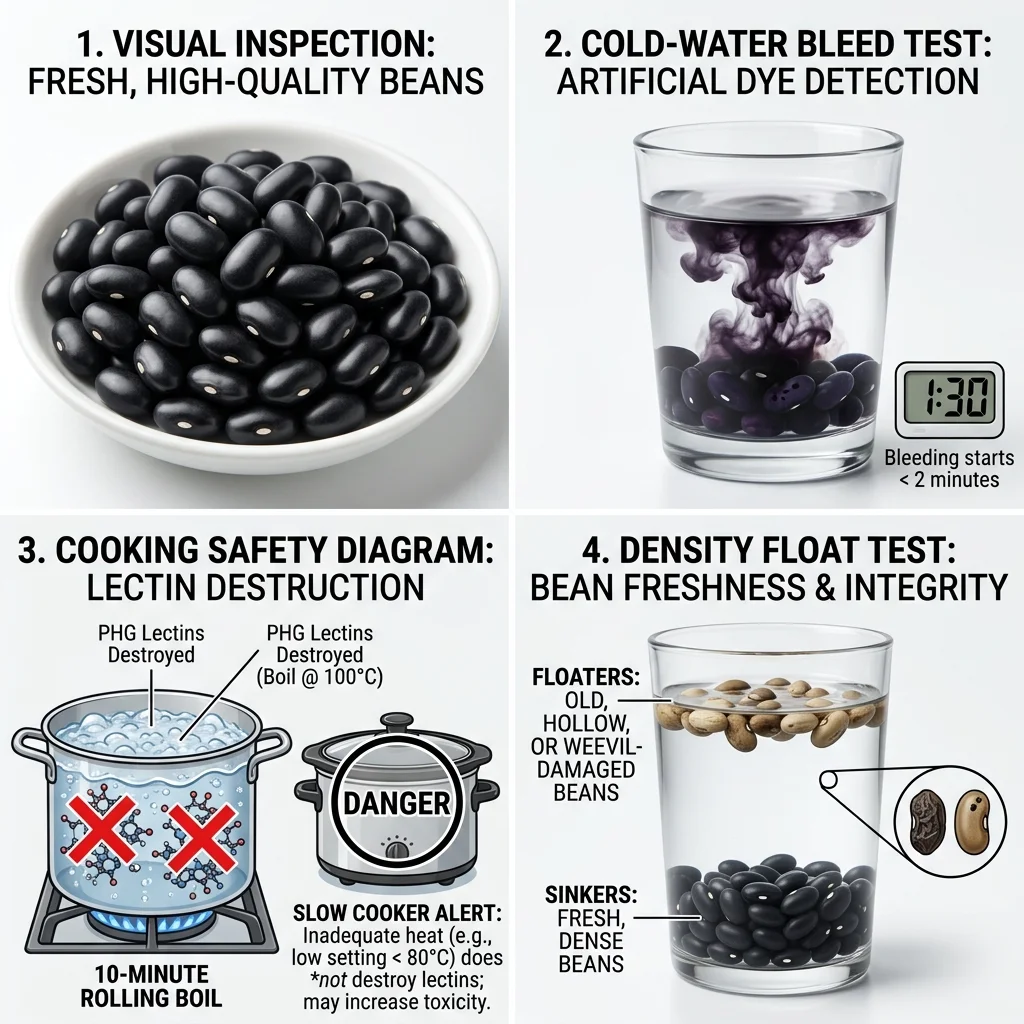
1. Prueba de agitación con agua fría (adulteración del tinte):
Coloca un puñado de frijoles negros secos en un vaso de agua fría y revuelve durante 2 minutos. Naturalmente, los frijoles negros tienen una cubierta de semilla resistente y pigmentada que no pierde color en agua fría, dejando el agua clara o ligeramente gris. Si el agua se vuelve inmediatamente de color púrpura oscuro, azul o negro, los frijoles son variedades más baratas teñidas artificialmente con colorantes químicos para imitar los frijoles negros.
2. El hervor continuo de 10 minutos (seguridad de las lectinas):
La fitohemaglutinina es una poderosa toxina que aglutina los glóbulos rojos. Para neutralizarlo por completo, los frijoles secos deben remojarse en agua durante al menos 5 horas, escurrirse, enjuagarse y luego hervirse a fuego lento (100 °C / 212 °F) durante un mínimo de 10 minutos. ADVERTENCIA: Nunca cocine frijoles secos en una olla de cocción lenta o en una olla de cocción lenta a fuego lento sin hervirlos primero. La cocción a baja temperatura (menos de 80 °C / 176 °F) no destruye la toxina y, de hecho, puede aumentar la toxicidad de las lectinas hasta cinco veces.
3. La prueba del flotador de agua (edad y daños):
Echa un puñado de frijoles en un recipiente con agua. Los frijoles secos frescos y de alta calidad son densos y se hundirán hasta el fondo. Los frijoles viejos, deshidratados, huecos o dañados por insectos flotarán en la superficie. Los frijoles rancios son extremadamente duros y permanecerán duros y secos incluso después de horas de hervir.
4. La auditoría visual de moho e insectos:
Inspecciona los frijoles con cuidado. Los frijoles negros sanos son regordetes, suaves, brillantes y de color negro azabache uniforme. Deseche los frijoles que estén muy arrugados, que tengan moho blanco grisáceo en polvo en la piel o que muestren pequeños orificios de entrada (lo que indica una infestación por el gorgojo del frijol).
Click to enlarge
Auditoría de frescura y textura de los frijoles negros
La frescura garantiza una digestión óptima, una absorción de nutrientes y un ablandamiento adecuado durante la cocción.
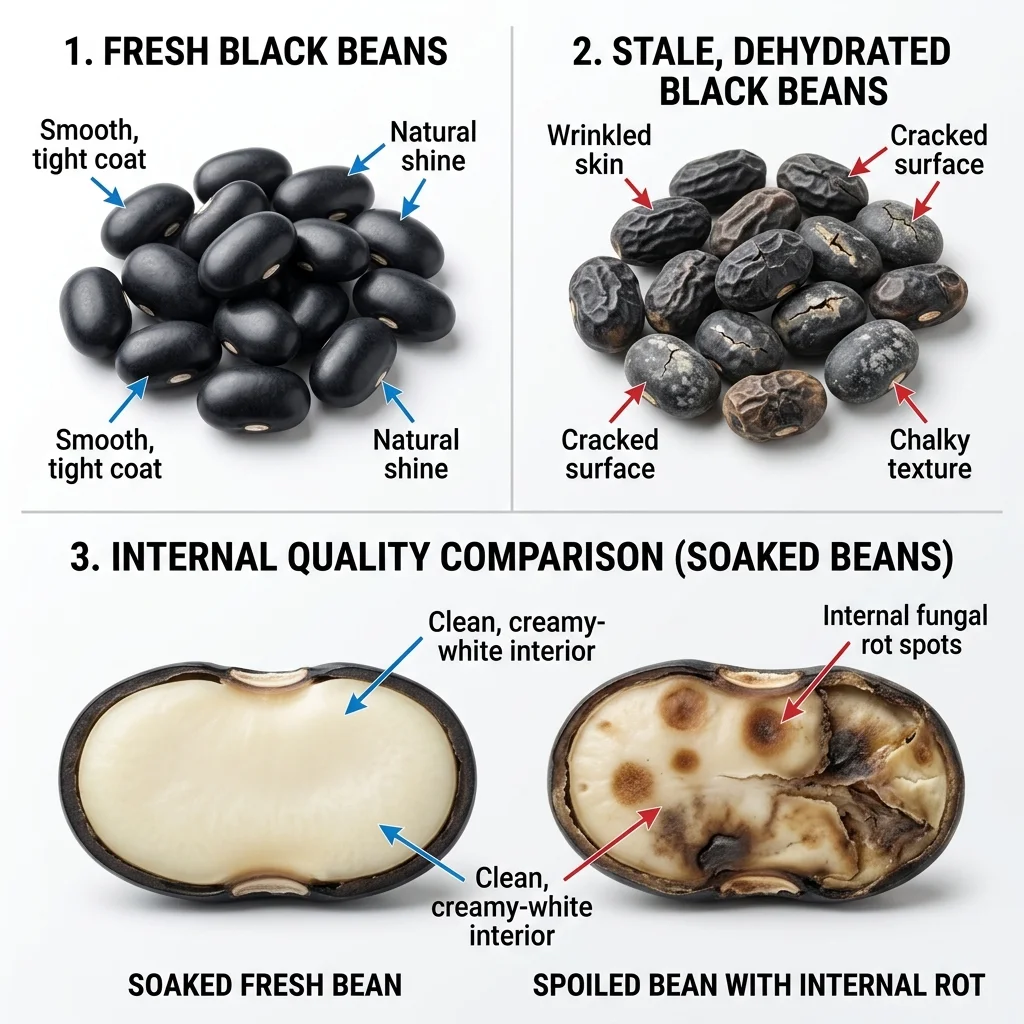
1. Suavidad de la piel:
Los frijoles secos frescos tienen una capa suave, firme y brillante. Las pieles arrugadas, agrietadas o con aspecto polvoriento indican un material viejo que ha perdido su humedad y no se ablanda adecuadamente.
2. Fluidez:
Vierta los frijoles. Deben fluir libremente como guijarros secos. Cualquier grumo pegajoso u olor a tierra y humedad indica exposición a la humedad y crecimiento activo de moho y hongos.
3. Sección transversal interna:
Parte un frijol remojado. El interior debe estar limpio, de color crema y firme. El color marrón interno o las manchas grises indican pudrición por hongos.
Quick Safety Tips
- Realice la prueba de agitación con agua fría para detectar adulteración del tinte químico.
- Siempre hierva los frijoles negros remojados a fuego lento durante 10 minutos antes de cocinarlos a fuego lento o a fuego lento.
- Deseche los frijoles que flotan en el agua, ya que están rancios, huecos o infestados de insectos.
- Busque pieles uniformes, suaves y brillantes y evite lotes arrugados o mohosos.
Primary Chemical Concerns
Health Risks & Impacts
Multilingual Local Names
Regulatory Corner: FSSAI (Food Safety and Standards Authority of India) / US FDA (21 CFR 164.150) / Codex Stan 171-1989
Regulation: Food Safety and Standards (Food Products Standards) Regulations 2011, Clause 2.4.6.15 & Codex Stan 171
Legal Limit:Non-permitted synthetic black/blue dyes (Black PN, Indigo): Zero tolerance (0.0 ppm); Mineral oil / paraffin: Prohibited (0.0%); Lead MRL: Max 0.2 ppm; Moisture: Max 12.0%
Report Adulteration to FSSAI (Food Safety and Standards Authority of India) / US FDA (21 CFR 164.150) / Codex Stan 171-1989