Peony
Paeonia
How to Identify Peony
Care & Growing Guide
Seasonal Blooming & Hardiness
Bloom Timeline
About Peony
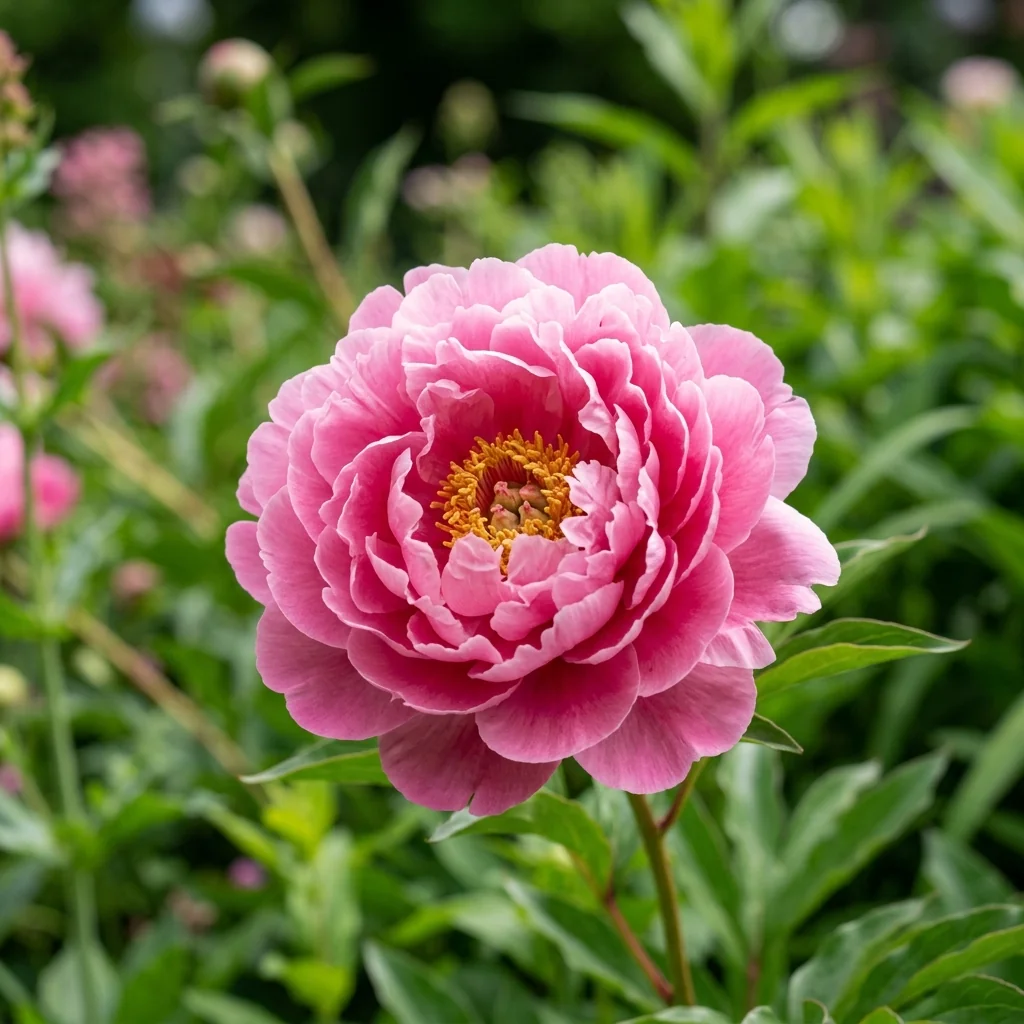
Peonies, belonging to the genus Paeonia and the monogeneric family Paeoniaceae, are highly celebrated herbaceous and woody perennials famous for their large, showy, and deeply ruffled blooms. Native to Asia, Europe, and Western North America, peonies have been cultivated for over 2,000 years, valued both for their beauty and their roots in traditional Eastern medicine. In modern gardens, they are a premier symbol of spring, loved for their luxurious, fragrant flower heads.
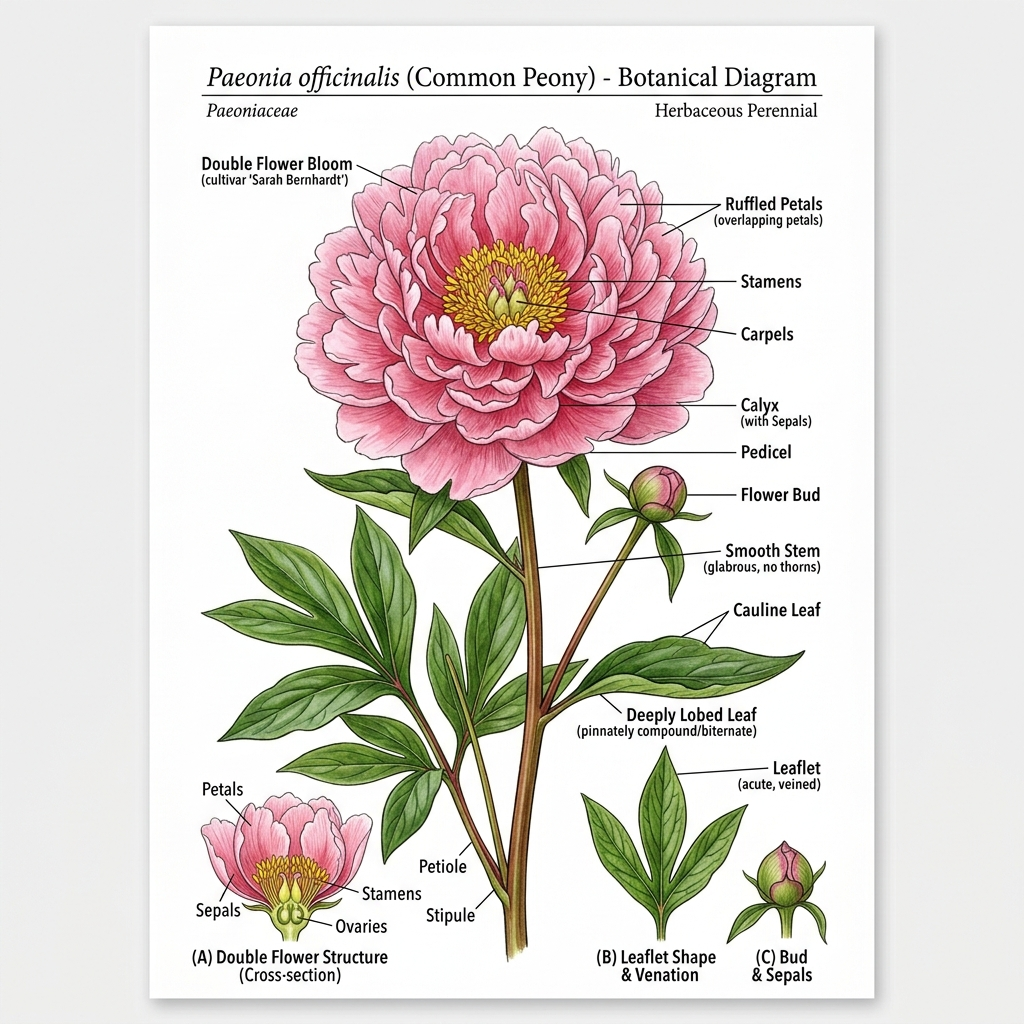
Growing as clumping herbaceous plants or upright deciduous shrubs (tree peonies), peonies feature large, glossy green, deeply lobed compound leaves. The flowers are massive—often measuring 4 to 10 inches across—and come in single, semi-double, anemone-form, and fully double rose-like shapes. The colors range from pure snow-white and delicate blush-pink to deep crimson, coral, and yellow. Unlike roses, their thick herbaceous stems are completely smooth and lack thorns.
The reproductive anatomy of a peony is represented by the formula ⊕ ⚥ K5 C5-10 A∞ G2-5. The flowers are radially symmetrical and bisexual. The calyx has 5 persistent green sepals, and the corolla features 5 to 10 large, waxy petals (which multiply to dozens in cultivated double varieties). The androecium contains numerous free stamens, and the gynoecium contains 2 to 5 fleshy carpels with superior ovaries that form seed pods (follicles) in autumn.
Peonies are long-lived plants that can thrive in the same garden spot for decades. They perform best in full direct sun (at least 6 hours daily) and cool-winter climates, which are necessary to trigger bud dormancy. They require deep, fertile, humus-rich, well-draining loamy soils with a neutral pH. Consistent spring moisture is essential, but good drainage is critical to avoid root rot. Peonies grow successfully in USDA zones 3 through 9.
While highly popular in floral designs and bridal bouquets, peonies are chemically toxic to household pets. The plant tissues contain the phenolic compound paeonol, which is moderately toxic to cats and dogs. Ingestion of the bark, leaves, flowers, or roots can trigger vomiting, diarrhea, lethargy, and a loss of appetite. Homeowners with curious pets should plant peonies in fenced garden beds or opt for safe alternatives like garden roses.
Peonies are easily distinguished from double roses by their complete lack of thorns and their large, compound, deeply lobed leaves. In cottage garden borders, they pair beautifully with spring-blooming iris, catmint, and foxglove. To explore more about spring perennials, search our Flower Identifier.
Revered for millennia as the 'King of Flowers' (*Mudan*) in Chinese botanical culture, peonies embody wealth, honor, and imperial beauty. In Western traditions, they are a beloved centerpiece for milestone celebrations and summer weddings. Explore the cultural etiquette and symbolic meanings of peonies worldwide in our Global Flower Etiquette Guide.
Floral Formula & Features
Radially symmetrical, bisexual, 5 green persistent sepals, 5-10 waxy petals (many more in double forms), numerous stamens, 2-5 distinct carpels forming superior ovaries.
- Scientific Name & Classification: *Paeonia* spp. (Paeoniaceae). Famed as Peony and Paeonia.
- Identification Markers: Huge ruffled flower heads measuring 4-10 inches across in shades of pink, white, and red. Smooth herbaceous stems with glossy lobed leaves and zero thorns.
- Floral Formula (⊕ ⚥ K5 C5-10 A∞ G2-5): Radially symmetrical, bisexual flowers with 5 sepals, 5-10 waxy petals, numerous stamens, and 2-5 carpels with superior ovaries.
- Growing Requirements: Full sun; requires deep, fertile, organic-rich well-drained soil and cold winters to trigger bud break (Zones 3-9).
- Cultural Significance: A symbol of wealth, honor, romance, and beauty in Chinese culture. Harvester of sweet essential oils.
- Safety & Toxicity: TOXIC TO DOGS & CATS. Contains paeonol, which causes gastrointestinal distress, vomiting, and diarrhea if eaten.
- Common Look-alikes: Mistaken for double roses, but easily distinguished by lobed compound leaves and smooth thornless stems.
- Internal Links: Pairs wonderfully with spring bulb favorites like Tulip or iris; search for details in our Flower Identifier.
- Internal Links: Compare key differences in our Rose vs Peony comparison, or try our instant Flower Identifier.
- Internal Links: Compare key differences in our Hydrangea vs Peony comparison, or try our instant Flower Identifier.
Names in Different Languages
Cultural Etiquette & Gifting: Planning to gift or decorate with Peony? Discover its symbolic meanings, festival traditions, and crucial cultural faux pas across 20+ countries in our comprehensive Global Flower Etiquette Guide.
Botanical Classification: Peony belongs to the Paeoniaceae family. Learn how to identify its floral symmetry, stamen arrangement, and structural formulas in our Botanical Family Classification Guide.
Toxicity & Safety
Always keep toxic plants out of reach of children and pets. Consult a veterinarian or medical professional immediately if ingestion is suspected.
Pet Safety Guide: For detailed toxicity symptoms, first-aid measures, and safe garden alternatives, see our full Pet Guard Profile for Peony.
Frequently Asked Questions
What is Floral Formula?
A floral formula is a symbolic representation of a flower's structure using letters, numbers, and special symbols. It provides a concise way to describe the arrangement and number of floral parts.
This formula describes the flower's symmetry, sepals, petals, stamens, and carpels in a standardized format.
Formula Sequence
- Bract: Br or Ebr
- Bracteole: Brl or Ebrl
- Symmetry: % (Radial) or ⊕ (Bilateral)
- Sex: ♀ (Female), ♂ (Male), or ⚥ (Bisexual)
- Calyx/Sepal: K<number> (Free or Fused)
- Corolla/Petal: C<number> (Free or Fused)
- Androecium: A<number> (Free or Fused)
- Gynaecium: G<number> (Superior or Inferior Ovary)
Symbol Meanings
- Numbers: Indicate quantity of parts
- Parentheses (): Parts are fused together
- Plus (+): Parts in different whorls
- Underline: Superior ovary position
- Overline: Inferior ovary position
- ∞: Numerous parts (too many to count)
Understanding floral formulas helps botanists quickly identify and classify flowers based on their structural characteristics.
Companion Plants & Garden Pairings
3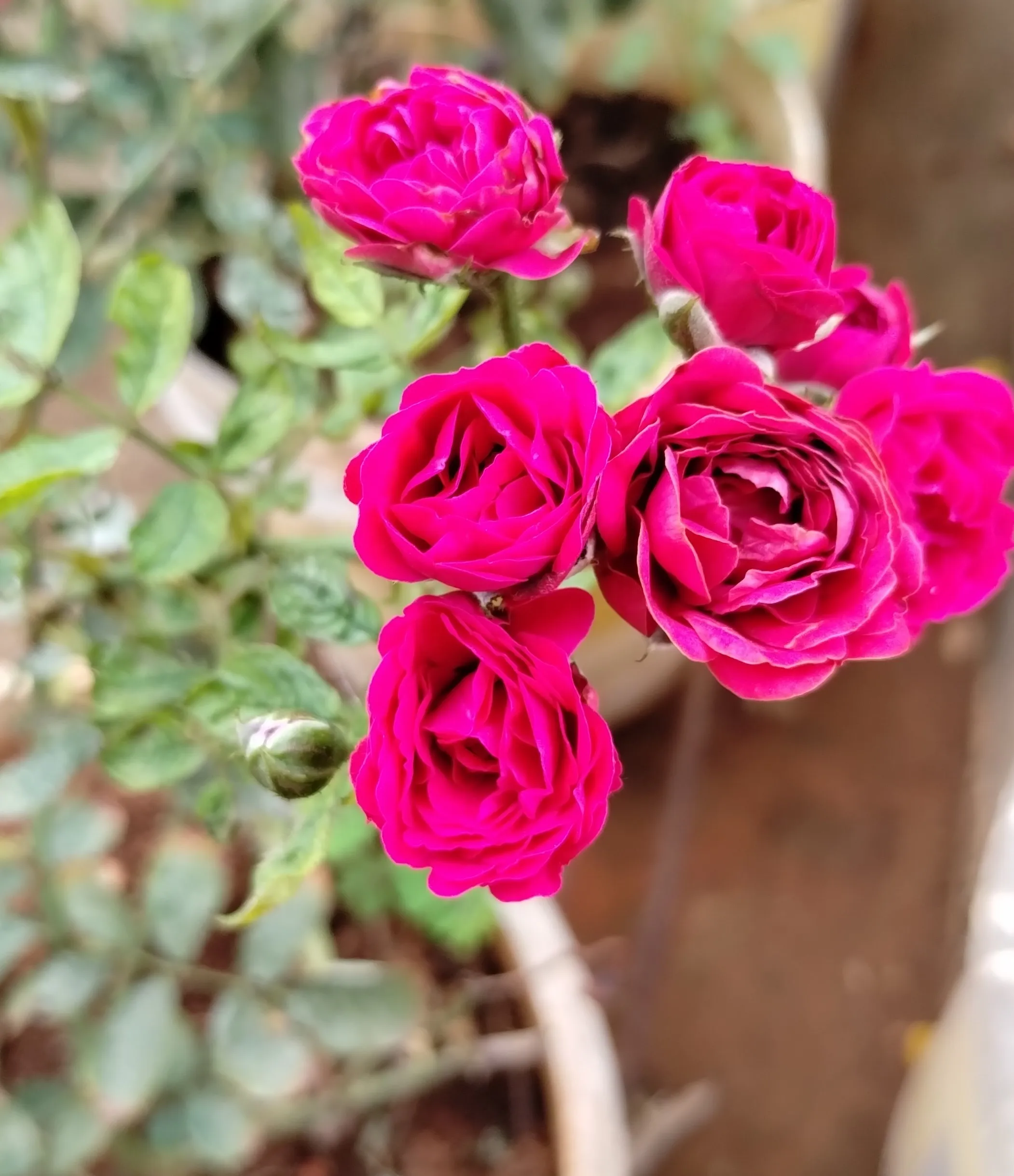
Rose
Rosa spp.
Succeeds peonies in the blooming cycle, ensuring continuous summer flower displays once peony blooms fade.
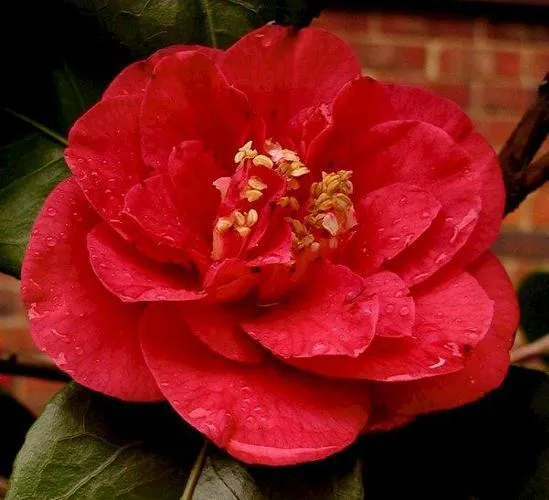
Camellia
Camellia japonica
Provides a similar double-flower aesthetic with glossy evergreen foliage that serves as a backdrop.
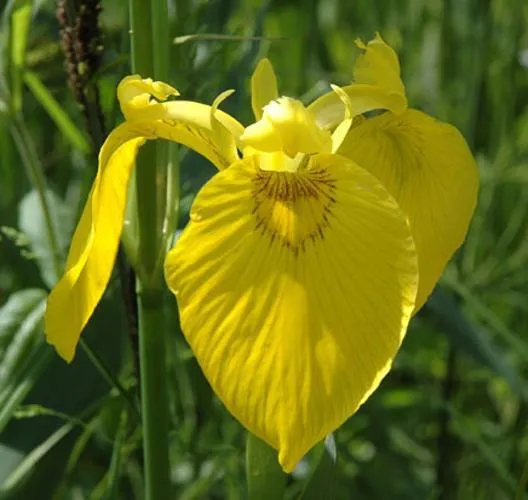
Yellow Iris
Iris pseudacorus
Adds vertical contrast and striking color highlights beside the rounded shape of peonies.
Similar Flowers
Discover flowers that share botanical characteristics