
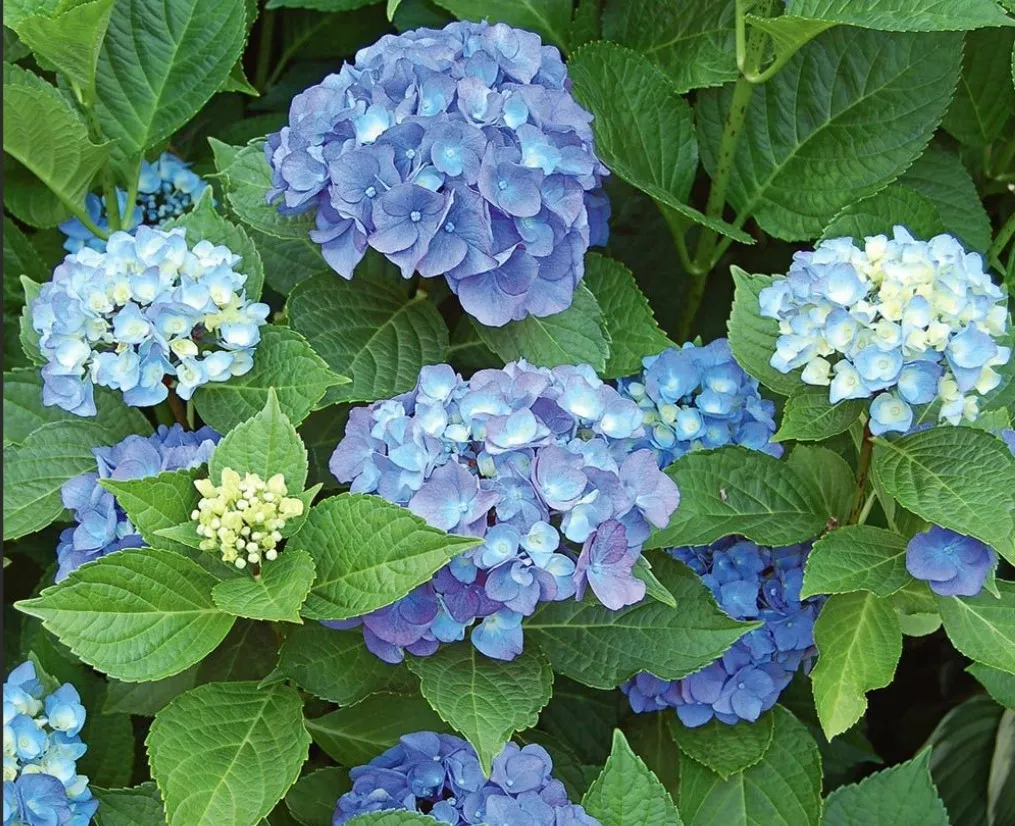
Hydrangea
Hydrangea macrophylla
How to Identify Hydrangea
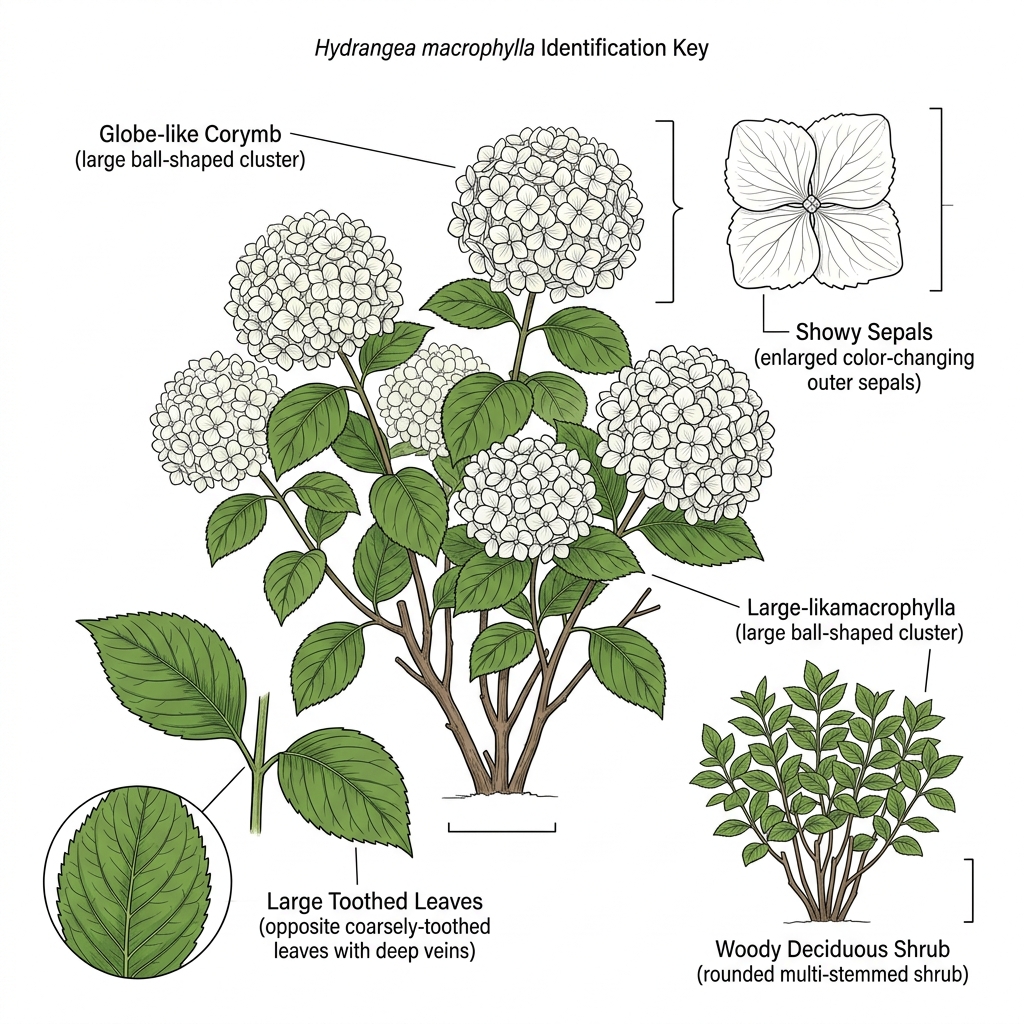
A detailed guide to identifying Hydrangeas (Hydrangea macrophylla) by its key features:
- Globe-like Corymbs: Large, ball-shaped (mophead) or flattened (lacecap) clusters of sterile and fertile flowers.
- Color Changeability: Showy flower head colors that change between blue, pink, and purple based on soil pH.
- Large Toothed Leaves: Opposite, broadly oval, coarsely-toothed leaves with deep, prominent veins.
- Deciduous Shrub Habit: Multi-stemmed, rounded deciduous shrub growing 3 to 6 feet tall.
Care & Growing Guide
Hydrangea Care & Growing Guide:
- Light: Morning sun and afternoon shade is ideal. Avoid harsh, direct afternoon sun which causes severe leaf wilting.
- Soil: Rich, moist, organic soil. pH determines flower color: acidic (pH < 5.5) yields blue; alkaline (pH > 6.5) yields pink.
- Watering: Water deeply and regularly. Hydrangeas have high water needs (the name literally means water vessel) and dry out quickly.
- Pruning: Pruning depends on variety. Bigleaf mopheads bloom on old wood; prune immediately after flowering in summer.
Seasonal Blooming & Hardiness
Seasonal Blooming Calendar (US Hardiness Zones 3-9):
- Blooming Season: Mid-summer to late autumn (typically July through October).
- Planting Time: Plant in spring or autumn when temperatures are mild and soil moisture is plentiful.
- Color Treatment: Apply aluminum sulfate in autumn or early spring to turn flowers blue, or lime to turn them pink.
Bloom Timeline
About Hydrangea
Hydrangeas, prominent members of the Hydrangeaceae family, are beloved deciduous shrubs renowned for their massive, globe-like floral heads. Native to Asia and the Americas, they are a cornerstone of cottage gardens worldwide. Their most fascinating characteristic is the incredible ability of certain species (specifically Hydrangea macrophylla) to dramatically change flower color based on the soil's pH and aluminum availability, effectively acting as a beautiful, living litmus test for your garden.
These shrubs feature large, opposite, coarsely toothed leaves. The spectacular inflorescences, known botanically as corymbs or panicles, consist of two types of flowers: tiny, inconspicuous fertile flowers in the center, which are hidden by large, showy, sterile flowers on the perimeter. Depending on soil chemistry, colors range from vibrant pink in alkaline soils to deep blue in acidic, aluminum-rich soils, along with crisp whites and greens. They typically grow into dense mounds 3 to 6 feet tall and wide.
The floral formula is ⊕ ⚥ K4-5 C4-5 A8-10 G(2-5). They have radially symmetrical, bisexual fertile flowers featuring 4-5 sepals, 4-5 petals, 8-10 stamens, and an inferior ovary with 2-5 fused carpels. The massive, colorful 'petals' that everyone admires are actually enlarged, modified sepals belonging to the sterile outer flowers, designed purely to attract pollinators to the tiny inner flowers.
Hydrangeas are thirsty plants—the prefix 'Hydra' literally means water. They demand consistently moist, rich, well-draining soil. They prefer partial shade, specifically morning sun and afternoon shade, as intense afternoon heat can cause their large leaves to wilt dramatically. They are generally hardy in USDA zones 3-9, though blooming reliability depends heavily on the specific variety and pruning methods.
In Japan, where many species originate, they are closely associated with the rainy season (Tsuyu) and symbolize heartfelt emotion, gratitude, and apology. Conversely, in strict Victorian flower language, they sometimes carried a negative connotation of boastfulness due to their large but completely scentless blooms.
Hydrangeas are TOXIC. All parts of the plant, particularly the flower buds and leaves, contain cyanogenic glycosides. If ingested, they can cause severe stomach upset, lethargy, and vomiting in pets (dogs, cats, horses) and humans.
They are sometimes confused with Viburnum (specifically the Snowball Bush variety). However, Viburnums flower much earlier in the spring, generally have smaller, deeply veined leaves, and their flowers stay strictly white, never changing color based on soil pH. Contrast its lushness with the bold Dahlia or Duranta. Explore more in the Flower Identifier.
Floral Formula & Features
Fertile flowers: radially symmetrical, bisexual, 4-5 sepals, 4-5 petals, 8-10 stamens, inferior ovary. Showy sterile flowers consist mainly of 4 enlarged sepals.
- Scientific Name & Classification: Hydrangea spp. (Hydrangeaceae). Commonly known as Hortensia.
- Identification Markers: Large, globe-like clusters of flowers and large, coarsely toothed leaves. Flowers can be blue, pink, purple, or white.
- Floral Formula (⊕ ⚥ K4-5 C4-5 A8-10 G(2-5)): Radially symmetrical fertile flowers. The showy 'petals' are actually enlarged sepals of sterile outer flowers.
- Growing Requirements: Morning sun and afternoon shade. Requires consistently moist, rich soil. Hardy in USDA zones 3-9.
- Cultural Significance: Acts as a living pH test. In Japan, it is highly celebrated during the rainy season, symbolizing heartfelt emotion.
- Safety & Toxicity: TOXIC. Contains cyanogenic glycosides. Ingestion of leaves or buds causes vomiting and severe distress in pets and humans.
- Common Look-alikes: Often confused with the Snowball Viburnum, but Viburnums bloom early spring, stay white, and do not change color based on soil pH.
- Internal Links: Compare with other lush shrubs like Duranta or browse the Flower Identifier.
- Internal Links: Compare key differences in our Hydrangea vs Peony comparison, or try our instant Flower Identifier.
Names in Different Languages
Toxicity & Safety
Always keep toxic plants out of reach of children and pets. Consult a veterinarian or medical professional immediately if ingestion is suspected.
Pet Safety Guide: For detailed toxicity symptoms, first-aid measures, and safe garden alternatives, see our full Pet Guard Profile for Hydrangea.
Frequently Asked Questions
What is Floral Formula?
A floral formula is a symbolic representation of a flower's structure using letters, numbers, and special symbols. It provides a concise way to describe the arrangement and number of floral parts.
This formula describes the flower's symmetry, sepals, petals, stamens, and carpels in a standardized format.
Formula Sequence
- Bract: Br or Ebr
- Bracteole: Brl or Ebrl
- Symmetry: % (Radial) or ⊕ (Bilateral)
- Sex: ♀ (Female), ♂ (Male), or ⚥ (Bisexual)
- Calyx/Sepal: K<number> (Free or Fused)
- Corolla/Petal: C<number> (Free or Fused)
- Androecium: A<number> (Free or Fused)
- Gynaecium: G<number> (Superior or Inferior Ovary)
Symbol Meanings
- Numbers: Indicate quantity of parts
- Parentheses (): Parts are fused together
- Plus (+): Parts in different whorls
- Underline: Superior ovary position
- Overline: Inferior ovary position
- ∞: Numerous parts (too many to count)
Understanding floral formulas helps botanists quickly identify and classify flowers based on their structural characteristics.
Companion Plants & Garden Pairings
3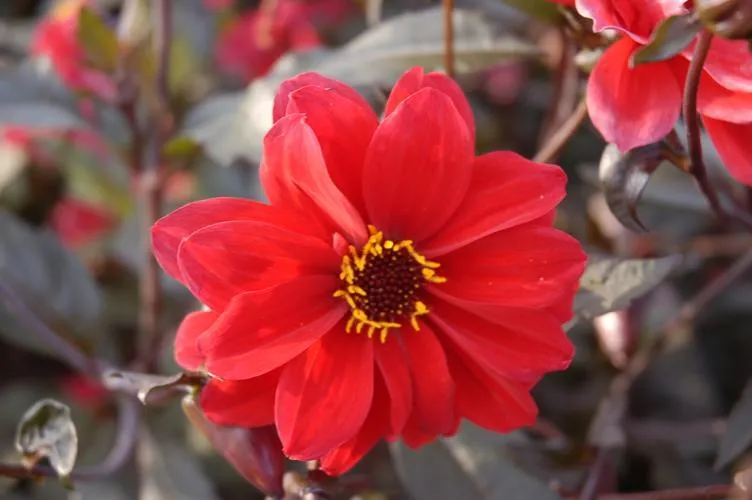
Dahlia
Dahlia
Complements the large dome-shaped flower heads of Hydrangea with complex, layered geometric blossoms in late summer.
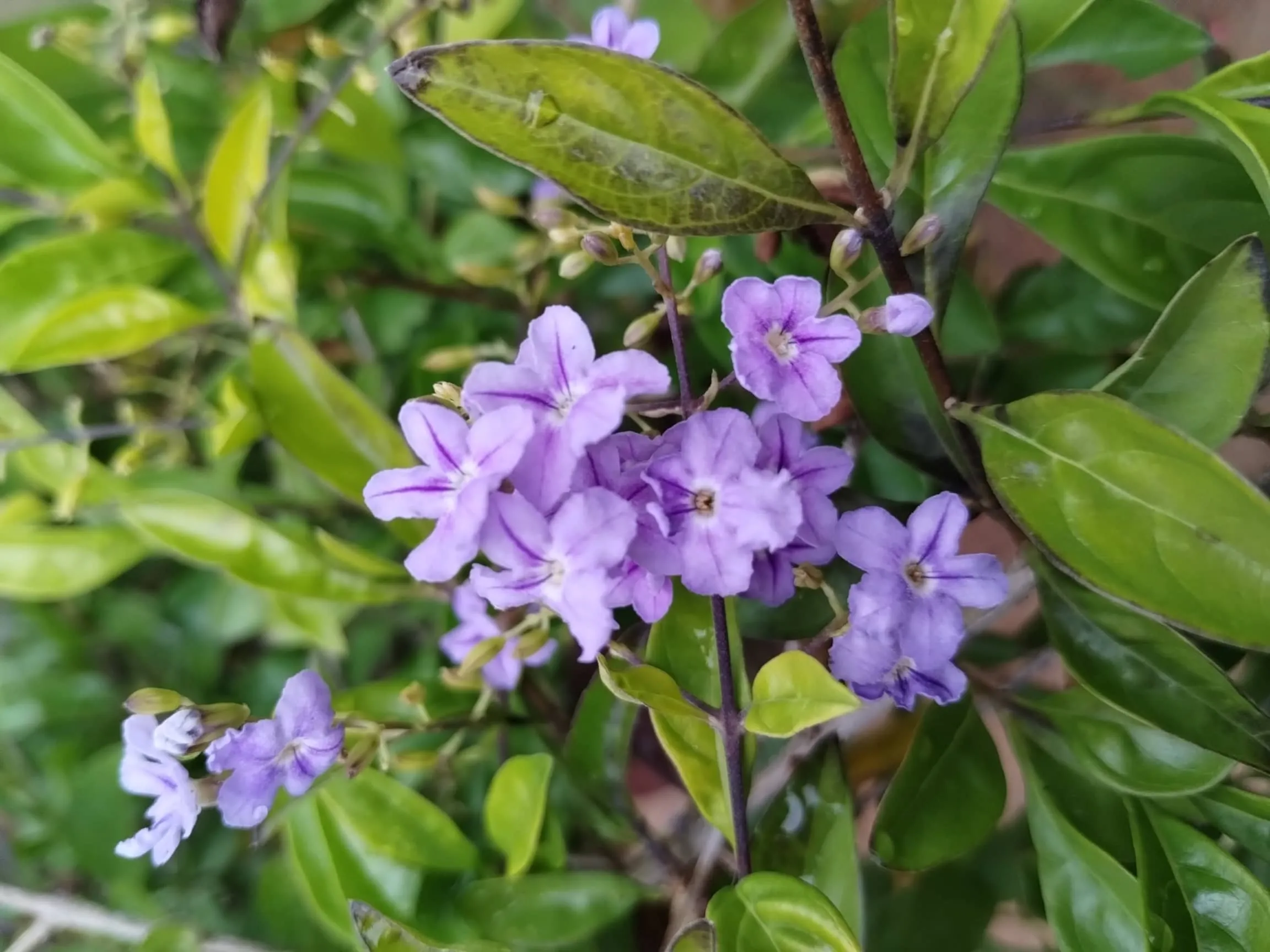
Duranta
Duranta erecta
An elegant tropical shrub companion that adds drooping clusters of blue flowers and contrasting yellow berries.
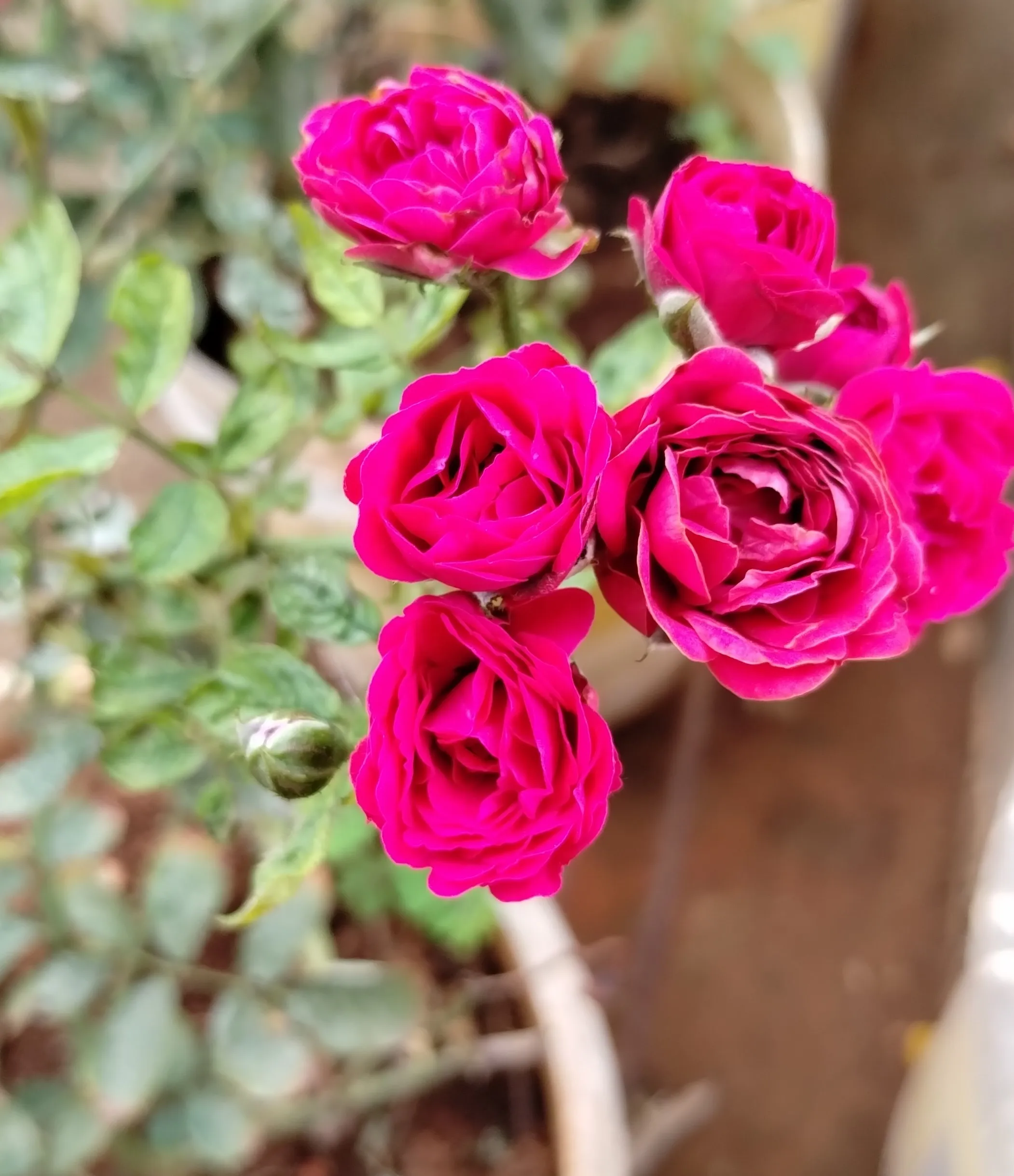
Rose
Rosa
A classic cottage garden pairing, placing smaller, upright rose bushes in front of the broad, lush Hydrangea mounds.