
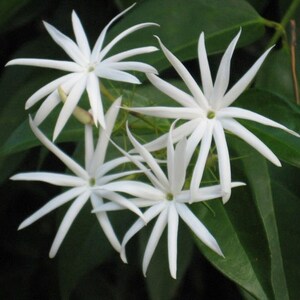
AngelWing Jasmine (Star Jasmine)
Jasminum laurifolium, Jasminum nitidum
Basic Details
Floral Formula & Features
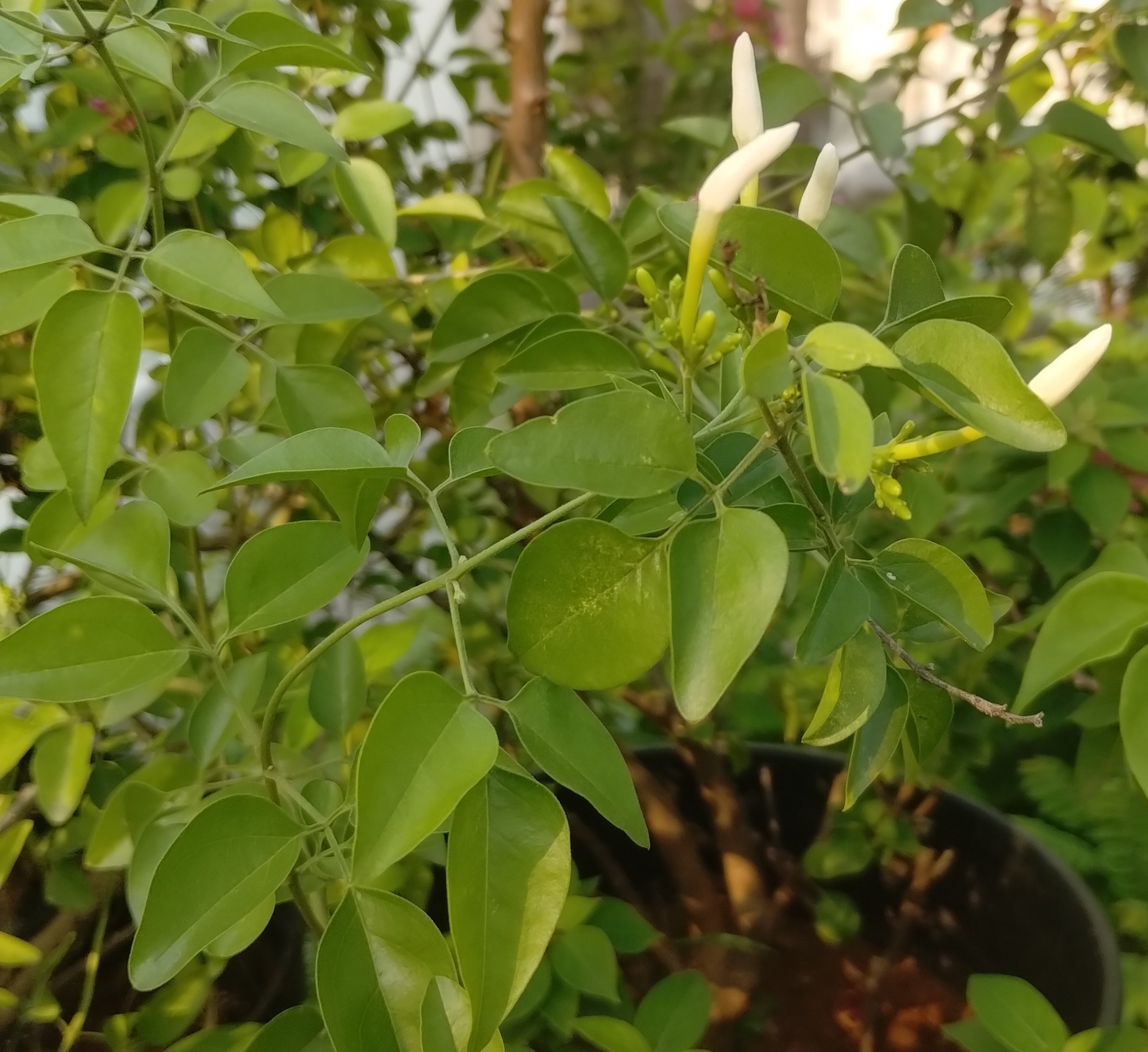
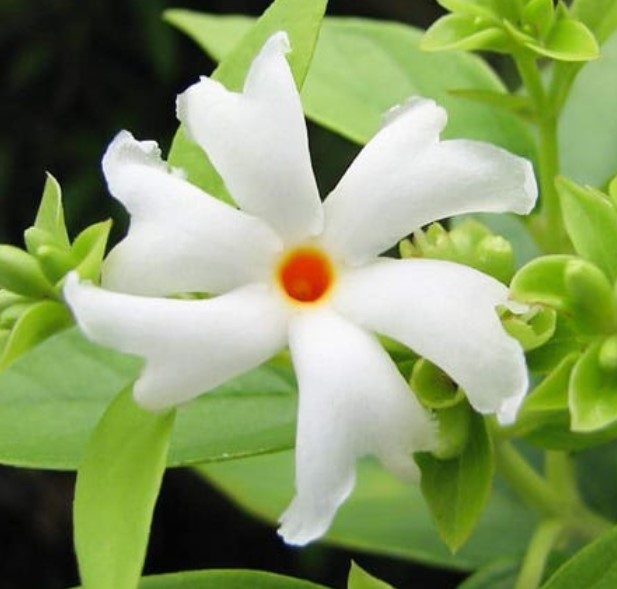
Ebracteate, radially symmetrical (actinomorphic), bisexual, 5 fused sepals forming short tube, 10-12 fused petals forming long tube with narrow spreading lobes (salverform), 2 stamens attached to corolla tube, 2 fused carpels with superior ovary. Unusual petal number for Oleaceae
- Name 'AngelWing' from distinctive pinwheel-shaped flowers with 10-12 narrow petals resembling angel wings or windmill blades. Also called 'Ramar Banam' (Rama's arrow) in Tamil. About 200 Jasmine species. J. nitidum (shining jasmine) and J. laurifolium have this unique flower form. Different from Trachelospermum jasminoides (also called Star Jasmine)
- Flowers 1.5-2 inches (4-5 cm) across, pure white, star or pinwheel-shaped. 10-12 narrow petals (most jasmines have 5-8). Petals arranged in overlapping spiral. Intensely fragrant, sweet scent strongest at night. Blooms spring-summer (March-August), sporadically year-round in tropics. Flowers in clusters
- Evergreen shrub with upright, branching habit. Glossy dark green leaves 2-4 inches long, oval to lance-shaped, opposite. Stems green when young, woody with age. Can be trained as small tree, hedge, or kept compact. Dense foliage provides good screening
- Grows 6-12 feet (2-3.5 m) tall, occasionally to 15 feet. Spread 4-8 feet. Lifespan 15-20+ years. Propagated from semi-hardwood cuttings (summer) or air layering. Cuttings root in 4-6 weeks. Moderate to fast growth rate. Prune to control size and shape
- Native to Indian subcontinent (India, Sri Lanka) and Southeast Asia (Myanmar, Thailand). Grows in tropical and subtropical forests, woodland edges. Now cultivated in warm regions worldwide. Popular in India, Southeast Asia, Florida, California. Hardy zones 9-11
- Requires full sun to partial shade (6-8 hours sun for best blooming). Needs well-drained soil. Regular watering - keep soil moist but not soggy. Fertilize monthly spring-fall. More tender than other jasmines - protect from frost. Hardy zones 9-11. Grow in containers in cold zones, bring indoors in winter
- Excellent for hedges, screens, borders, containers. Fragrance fills garden at night. Attracts butterflies, moths, hummingbirds. Deer resistant. Flowers used in garlands, religious ceremonies in India. Used in traditional medicine. Popular ornamental in tropical gardens. Symbolizes purity, divine love
- Prune after flowering to shape and control size. Can be pruned hard - regrows vigorously. Pinch tips to encourage bushiness. Provide support if training as climber. Remove spent flowers. Feed regularly for continuous blooming. Very easy care in warm climates. Protect from cold - damaged below 30°F
Names in Different Languages
What is Floral Formula?
A floral formula is a symbolic representation of a flower's structure using letters, numbers, and special symbols. It provides a concise way to describe the arrangement and number of floral parts.
This formula describes the flower's symmetry, sepals, petals, stamens, and carpels in a standardized format.
Formula Sequence
- Bract: Br or Ebr
- Bracteole: Brl or Ebrl
- Symmetry: % (Radial) or ⊕ (Bilateral)
- Sex: ♀ (Female), ♂ (Male), or ⚥ (Bisexual)
- Calyx/Sepal: K<number> (Free or Fused)
- Corolla/Petal: C<number> (Free or Fused)
- Androecium: A<number> (Free or Fused)
- Gynaecium: G<number> (Superior or Inferior Ovary)
Symbol Meanings
- Numbers: Indicate quantity of parts
- Parentheses (): Parts are fused together
- Plus (+): Parts in different whorls
- Underline: Superior ovary position
- Overline: Inferior ovary position
- ∞: Numerous parts (too many to count)
Understanding floral formulas helps botanists quickly identify and classify flowers based on their structural characteristics.
Similar Flowers
Discover flowers that share botanical characteristics
Same Genus
4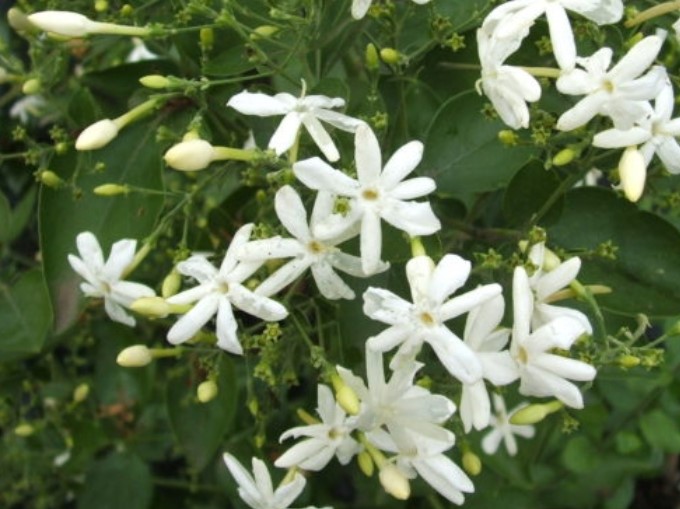
Jasminum Auriculatum
Jasminum
Fragrant evergreen climbing shrub native to Indian subcontinent, beloved for int...
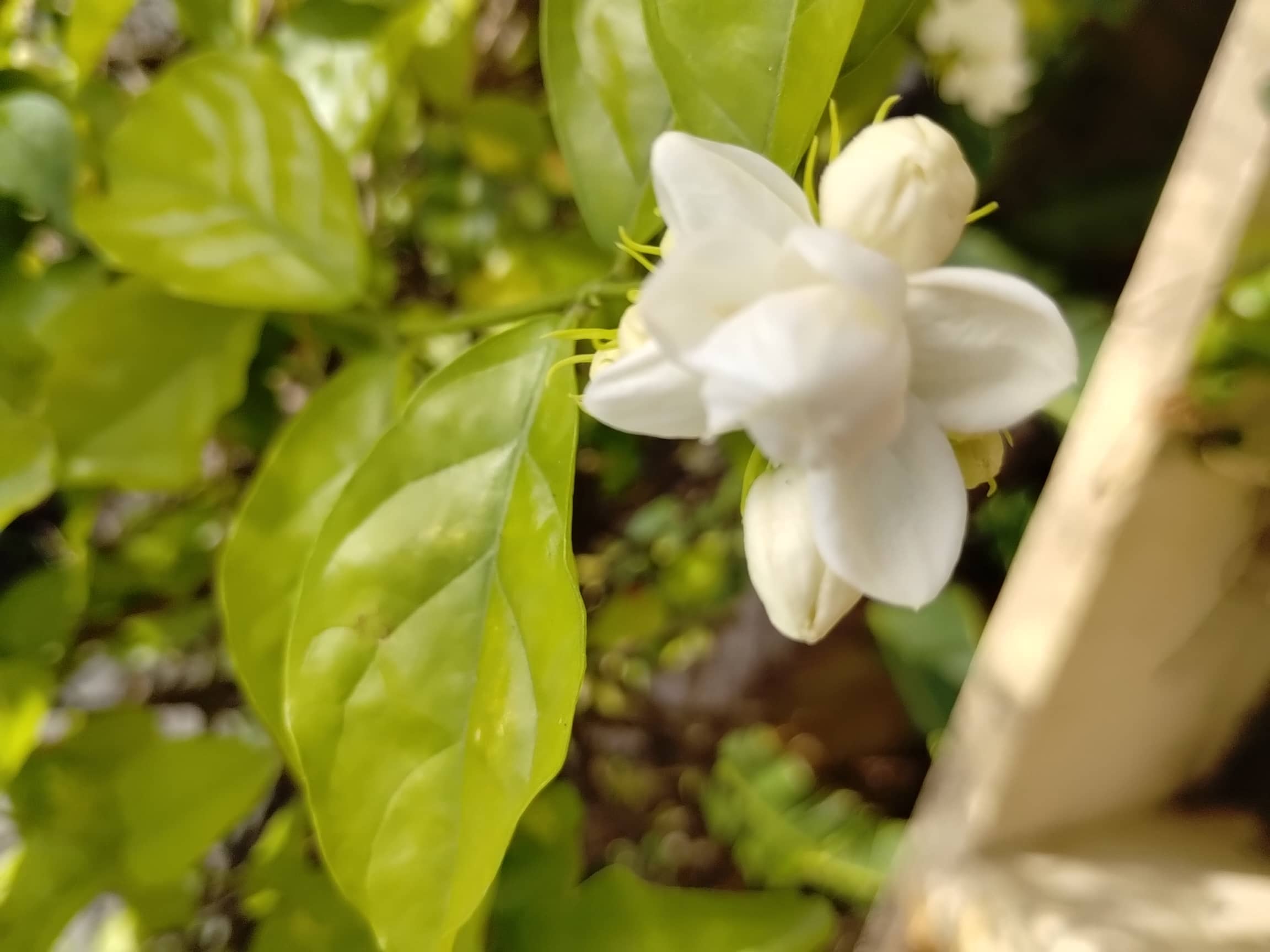
Arabian jasmine
Jasminum sambac
Arabian Jasmine or Mogra or Jasminum Sambac is known for its fragrant white flow...
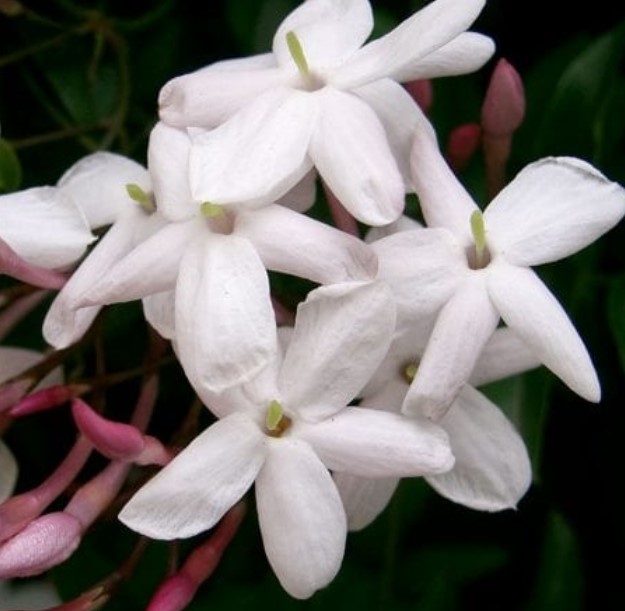
Spanish Jasmine (Royal Jasmine)
Jasminum grandiflorum
Highly fragrant jasmine with pure white star-shaped flowers used in world's fine...
River Jasmine (Fluminense)
Jasminum fluminense
Vigorous evergreen climbing vine producing clusters of small, white, star-shaped...
Similar Characteristics
4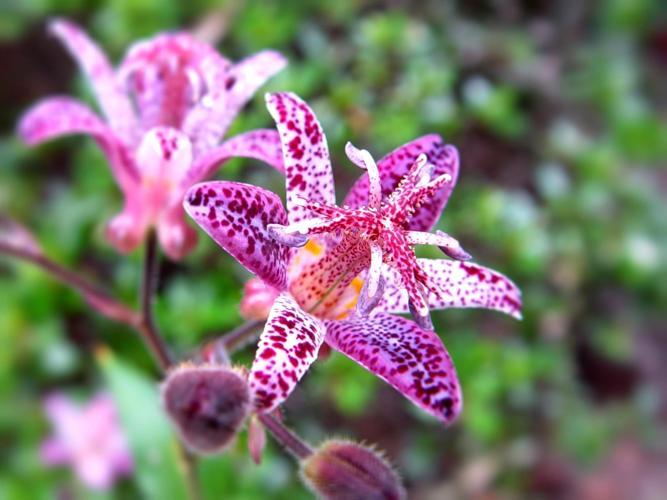
Toad Lily
Tricyrtis
Exotic shade-loving perennial featuring intricate, orchid-like flowers covered i...
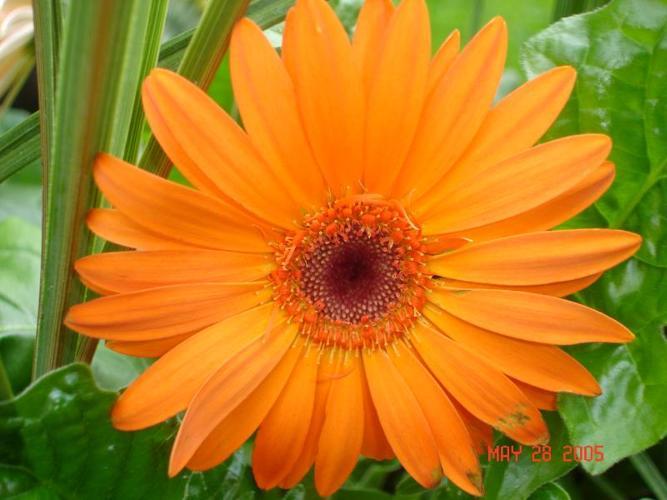
Barberton Daisy
Gerbera jamesonii
Cheerful composite flower featuring large, daisy-like blooms with vibrant ray pe...
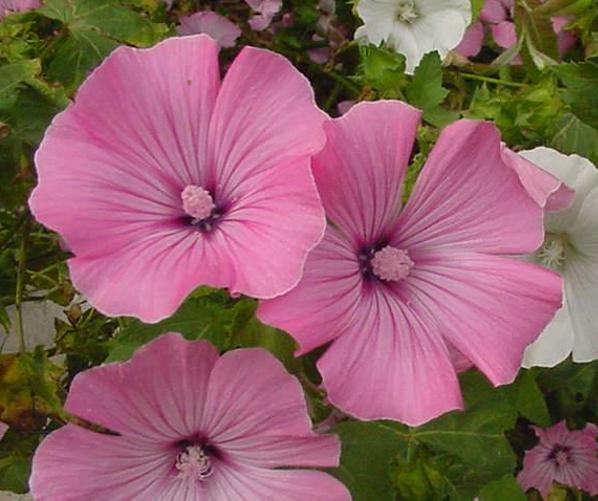
Tree Mallow
Malva arborea
Robust biennial or short-lived perennial forming a woody-based shrub covered in ...
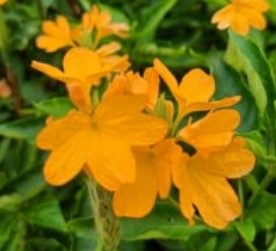
Crossandra Firecracker
Crossandra infundibuliformis
Attractive evergreen shrub featuring distinctive fan-shaped flowers in vibrant s...