
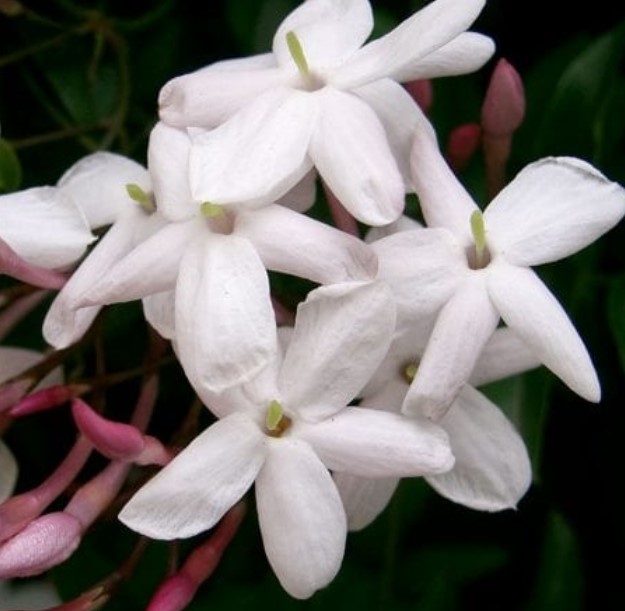
Spanish Jasmine (Royal Jasmine)
Jasminum grandiflorum
Basic Details
Floral Formula & Features
Ebracteate, radially symmetrical (actinomorphic), bisexual, 4-5 fused sepals forming short tube, 4-5 fused petals forming long tube with spreading lobes (salverform), 2 stamens attached to corolla tube, 2 fused carpels with superior ovary. Typical of Oleaceae family
- Name 'Jasmine' from Arabic 'yasmin' (gift from God). 'Grandiflorum' means large-flowered. About 200 Jasmine species. J. grandiflorum called Spanish/Royal Jasmine - associated with Spain though native to Asia. Major source of jasmine absolute for perfumes (Chanel No. 5, Joy). Takes 8 million flowers to make 1 kg oil
- Flowers 1-1.5 inches (2.5-4 cm) across, pure white, star-shaped with 5 petals. Arranged in clusters (cymes) of 3-12 flowers. Intensely fragrant, especially at night. Sweet, exotic, heady scent. Blooms summer-fall (June-October), year-round in tropics. Each flower lasts 1-2 days, replaced continuously
- Semi-evergreen vine or sprawling shrub. Arching branches 6-15 feet long. Compound leaves with 5-9 leaflets, dark green, opposite. Loses some leaves in cold winters. Can be trained as climber, hedge, or kept as shrub. Stems green, slightly angular
- Grows 6-15 feet (2-4.5 m) tall as vine, 3-6 feet as shrub. Spread 4-8 feet. Lifespan 15-20+ years. Propagated from semi-hardwood cuttings (summer) or layering. Cuttings root in 3-4 weeks. Fast-growing once established. Prune to control size
- Native to South Asia (India, Pakistan, Nepal), Arabia, East Africa. Widely cultivated in Mediterranean (Spain, Italy, France, Morocco), Middle East, India. Major production in Grasse, France for perfume. Now grown worldwide in warm climates. Hardy zones 7-11
- Requires full sun to partial shade (6+ hours sun for best blooming). Needs well-drained soil. Regular watering during growth, drought tolerant once established. Fertilize monthly spring-fall. More cold-hardy than other jasmines (to 10°F with protection). Hardy zones 7-11. Grow in containers in cold zones
- Major source of jasmine oil for perfumes, cosmetics, aromatherapy. Flowers used in tea, garlands, religious ceremonies. Excellent for trellises, arbors, fences. Attracts butterflies, moths, hummingbirds. Deer resistant. Fragrance fills garden at night. Used in Ayurvedic medicine
- Prune after flowering to shape and control size. Can be pruned hard - regrows vigorously. Harvest flowers early morning for strongest scent. Provide support for climbing. Pinch tips to encourage bushiness. Very easy care - forgiving and adaptable. Symbolizes love, beauty, sensuality in many cultures
Names in Different Languages
What is Floral Formula?
A floral formula is a symbolic representation of a flower's structure using letters, numbers, and special symbols. It provides a concise way to describe the arrangement and number of floral parts.
This formula describes the flower's symmetry, sepals, petals, stamens, and carpels in a standardized format.
Formula Sequence
- Bract: Br or Ebr
- Bracteole: Brl or Ebrl
- Symmetry: % (Radial) or ⊕ (Bilateral)
- Sex: ♀ (Female), ♂ (Male), or ⚥ (Bisexual)
- Calyx/Sepal: K<number> (Free or Fused)
- Corolla/Petal: C<number> (Free or Fused)
- Androecium: A<number> (Free or Fused)
- Gynaecium: G<number> (Superior or Inferior Ovary)
Symbol Meanings
- Numbers: Indicate quantity of parts
- Parentheses (): Parts are fused together
- Plus (+): Parts in different whorls
- Underline: Superior ovary position
- Overline: Inferior ovary position
- ∞: Numerous parts (too many to count)
Understanding floral formulas helps botanists quickly identify and classify flowers based on their structural characteristics.
Similar Flowers
Discover flowers that share botanical characteristics
Same Genus
4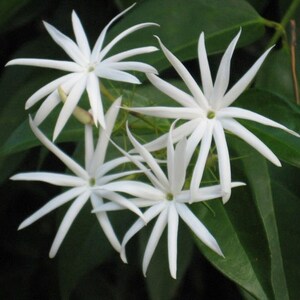
AngelWing Jasmine (Star Jasmine)
Jasminum laurifolium, Jasminum nitidum
Unique jasmine with spectacular star or pinwheel-shaped flowers having 10-12 nar...
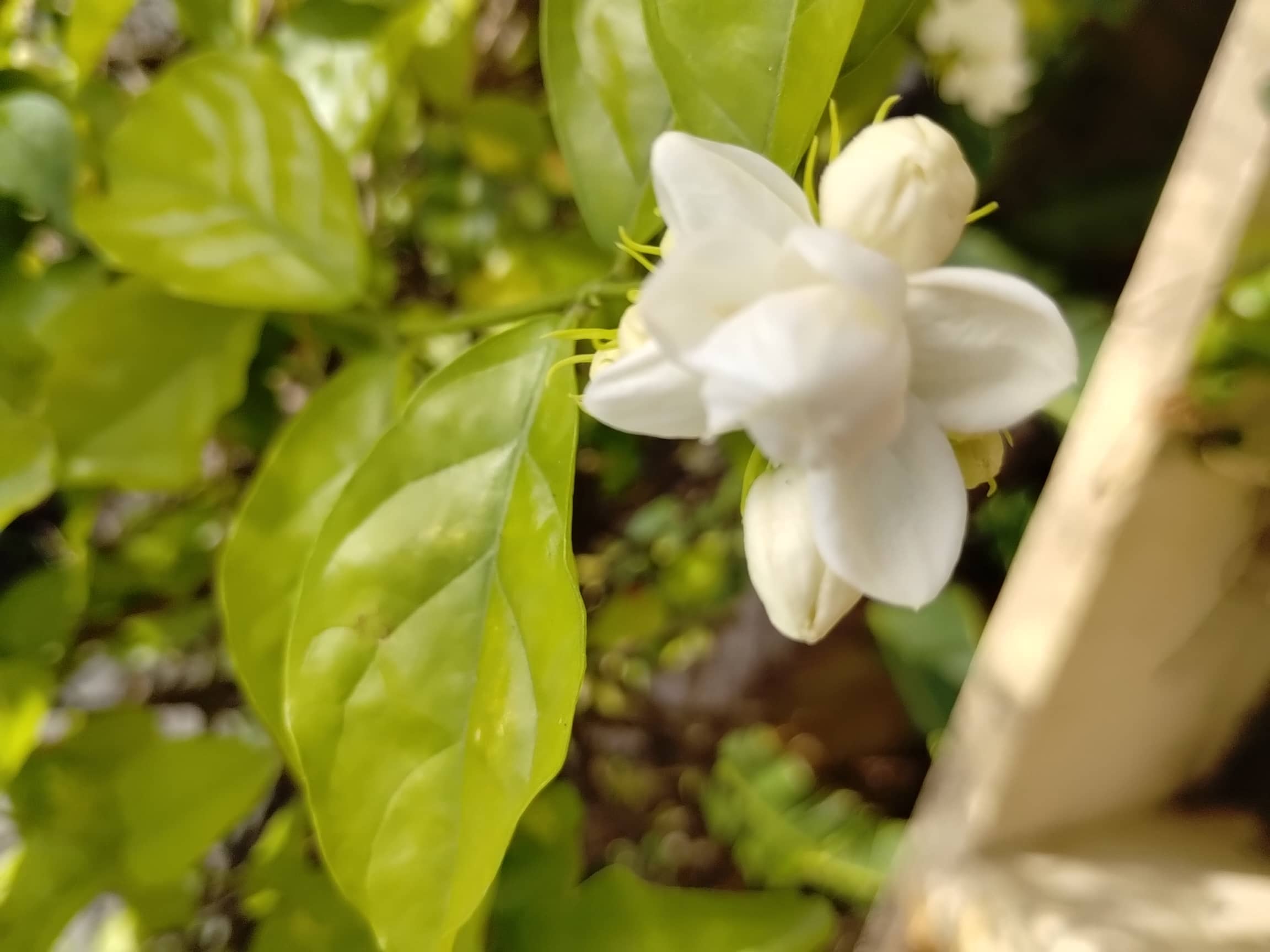
Arabian jasmine
Jasminum sambac
Arabian Jasmine or Mogra or Jasminum Sambac is known for its fragrant white flow...
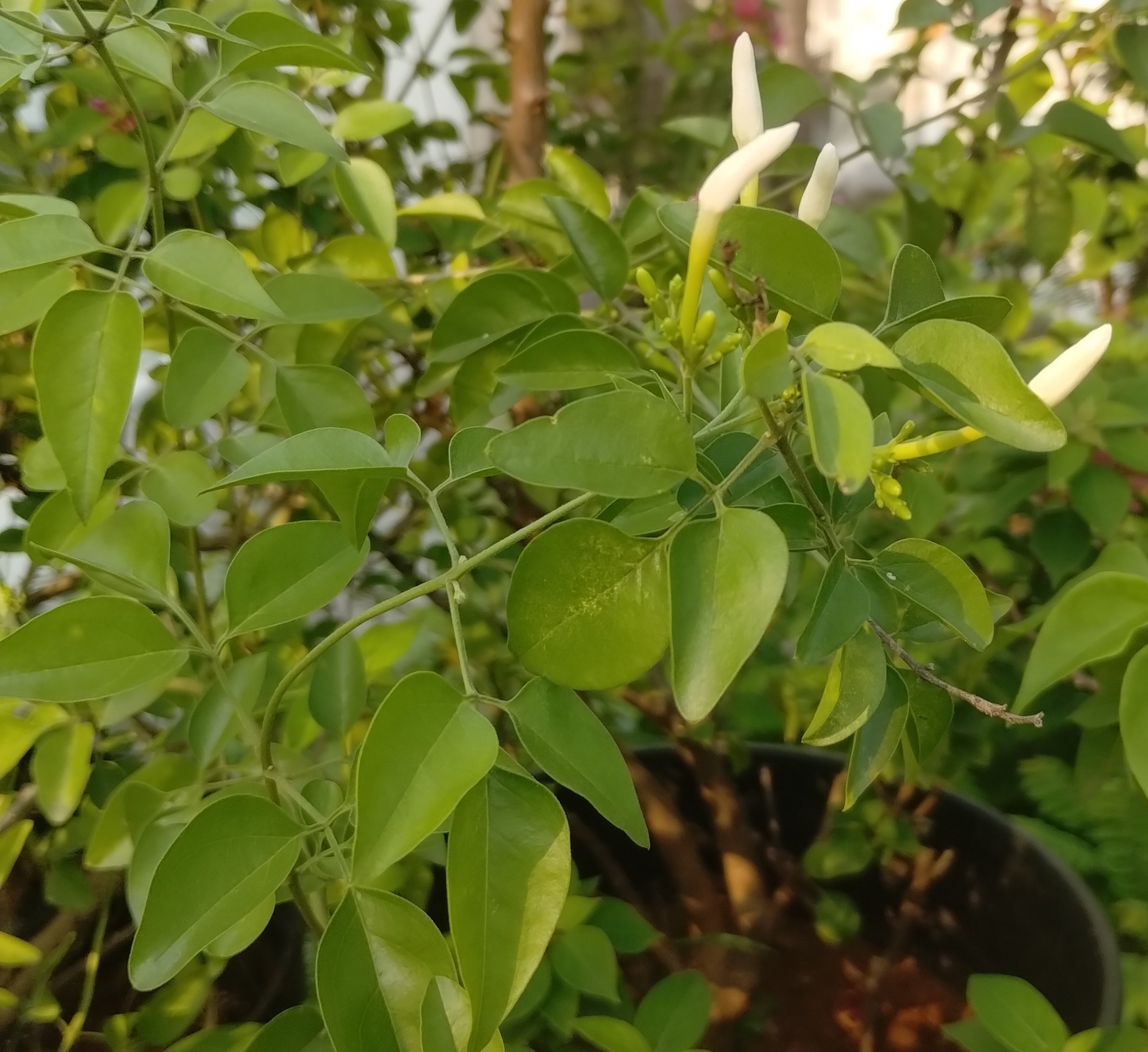
River Jasmine (Fluminense)
Jasminum fluminense
Vigorous evergreen climbing vine producing clusters of small, white, star-shaped...
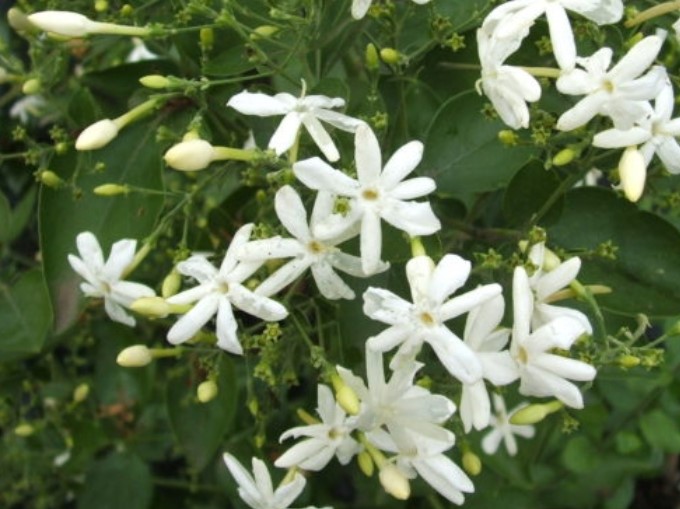
Jasminum Auriculatum
Jasminum
Fragrant evergreen climbing shrub native to Indian subcontinent, beloved for int...
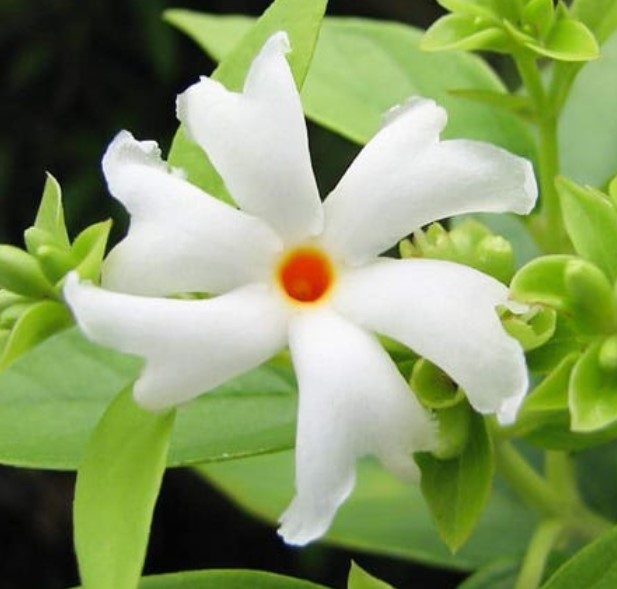
Similar Characteristics
4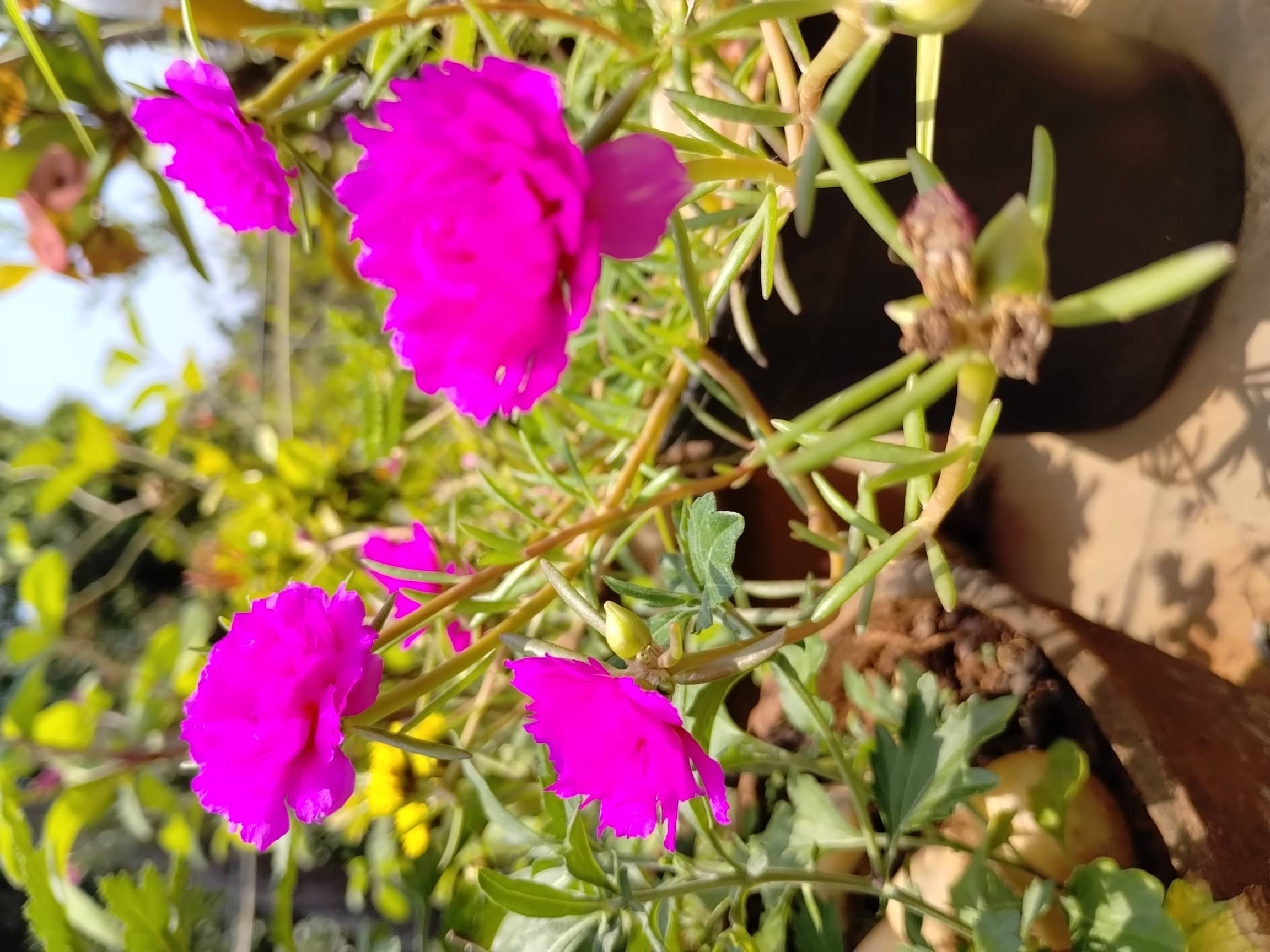
Portulaca
Portulaca
Charming succulent annual celebrated for its vibrant, rose-like flowers in a rai...
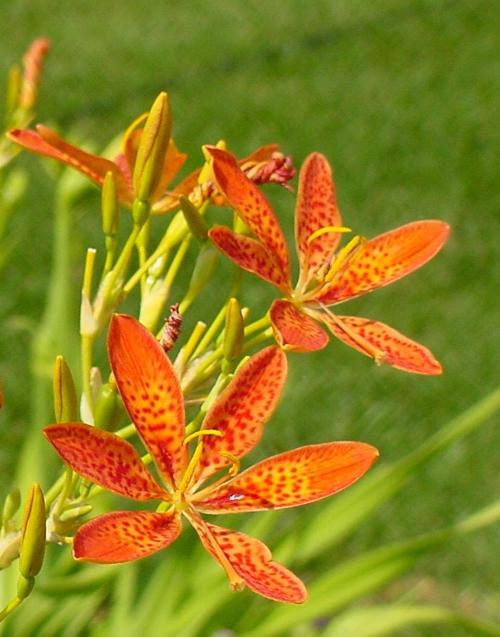
Leopard Lily
Iris domestica (syn. Belamcanda chinensis)
Striking perennial featuring exotic, star-shaped flowers in brilliant orange-red...
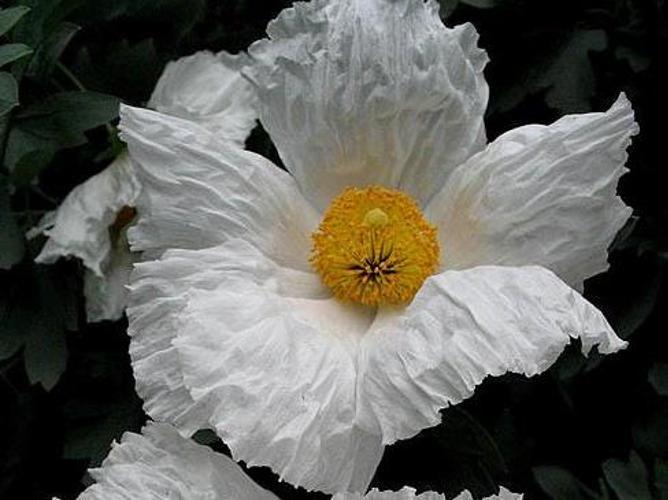
Pincushion
Scabiosa
Charming perennial with distinctive dome-shaped flower heads resembling a pincus...
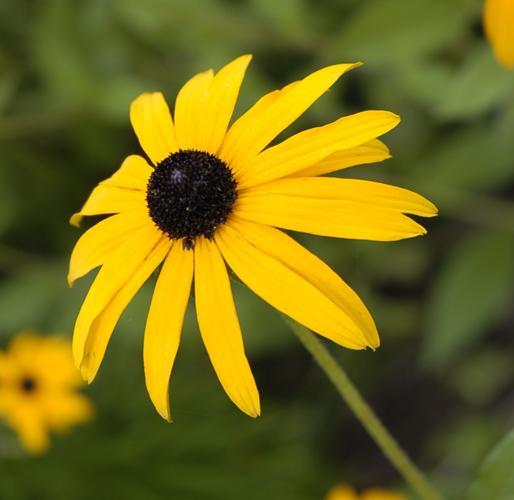
Black eyed Susan
Rudbeckia hirta
Cheerful native wildflower featuring bright golden-yellow ray petals surrounding...