
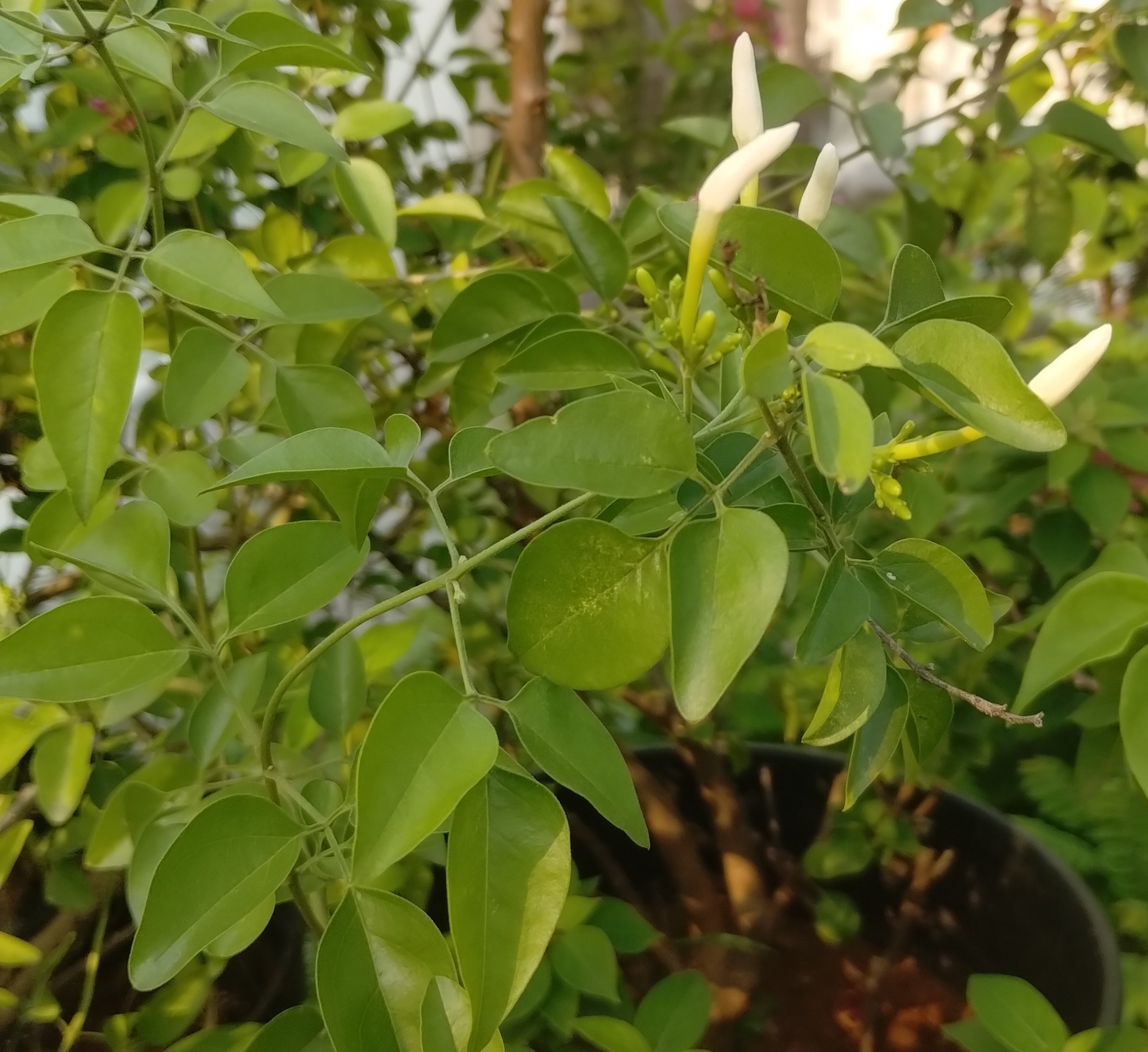
River Jasmine (Fluminense)
Jasminum fluminense
Basic Details
Floral Formula & Features
Radially symmetrical, bisexual, 4-5 fused sepals forming small calyx, 5-7 fused petals forming tubular base with spreading lobes, 2 stamens, 2 fused carpels with superior ovary typical of Oleaceae
- Name 'Jasminum fluminense' refers to Rio de Janeiro state (formerly Fluminense) in Brazil where it was first described. 'Fluminense' means 'of the river,' describing its natural habitat along riverbanks and moist forest edges
- Small white flowers with 5-7 narrow petals arranged in star shape, measuring 0.5-0.75 inches across. Flowers appear in clusters at branch tips and leaf axils. Sweet fragrance intensifies at night to attract moth pollinators. Blooms spring through summer, or year-round in tropical climates
- Evergreen perennial vine with twining, scrambling stems that climb by wrapping around supports. Can also spread as ground cover if no vertical support available. Produces small black berries after flowering that are dispersed by birds
- Climbs 10-20 feet (3-6 m) or more with support. Can spread extensively as ground cover, forming dense mats. Fast-growing, can extend 6-10 feet per year. Lifespan of 10+ years. Propagated easily from stem cuttings or seed
- Native to southeastern Brazil, particularly along rivers and in moist forests of Rio de Janeiro and surrounding states. Now naturalized in many tropical and subtropical regions including Australia, New Zealand, Pacific islands, and parts of Africa
- Tolerates full sun to deep shade, though flowers best with some sun. Prefers moist, well-drained soil but adapts to various conditions. Thrives in warm, humid climates (60-85°F/15-29°C). Frost-sensitive but can resprout from roots after light frost
- Considered invasive weed in Australia, New Zealand, and some Pacific islands where it smothers native vegetation. Attracts moths, butterflies, and bees. Birds spread seeds, aiding dispersal. Control difficult once established due to extensive root system and ability to resprout
Names in Different Languages
What is Floral Formula?
A floral formula is a symbolic representation of a flower's structure using letters, numbers, and special symbols. It provides a concise way to describe the arrangement and number of floral parts.
This formula describes the flower's symmetry, sepals, petals, stamens, and carpels in a standardized format.
Formula Sequence
- Bract: Br or Ebr
- Bracteole: Brl or Ebrl
- Symmetry: % (Radial) or ⊕ (Bilateral)
- Sex: ♀ (Female), ♂ (Male), or ⚥ (Bisexual)
- Calyx/Sepal: K<number> (Free or Fused)
- Corolla/Petal: C<number> (Free or Fused)
- Androecium: A<number> (Free or Fused)
- Gynaecium: G<number> (Superior or Inferior Ovary)
Symbol Meanings
- Numbers: Indicate quantity of parts
- Parentheses (): Parts are fused together
- Plus (+): Parts in different whorls
- Underline: Superior ovary position
- Overline: Inferior ovary position
- ∞: Numerous parts (too many to count)
Understanding floral formulas helps botanists quickly identify and classify flowers based on their structural characteristics.
Similar Flowers
Discover flowers that share botanical characteristics
Same Genus
4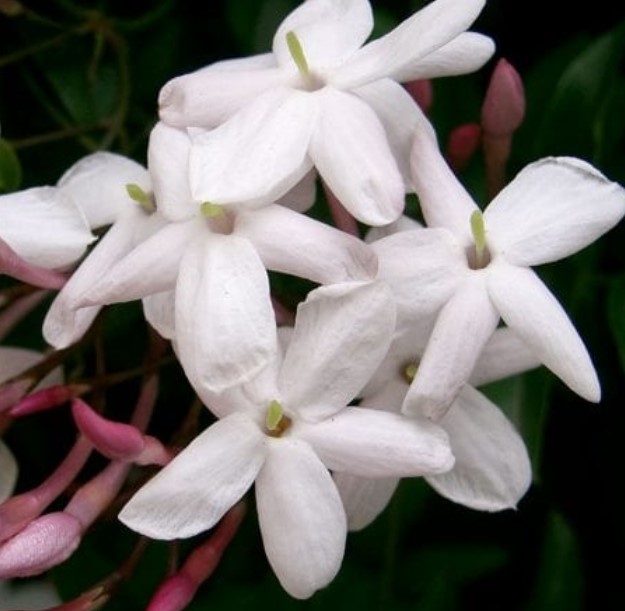
Spanish Jasmine (Royal Jasmine)
Jasminum grandiflorum
Highly fragrant jasmine with pure white star-shaped flowers used in world's fine...
AngelWing Jasmine (Star Jasmine)
Jasminum laurifolium, Jasminum nitidum
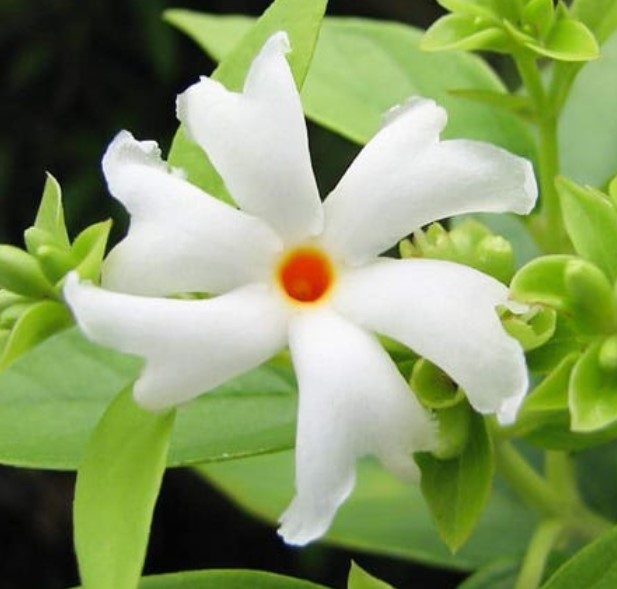
Unique jasmine with spectacular star or pinwheel-shaped flowers having 10-12 nar...
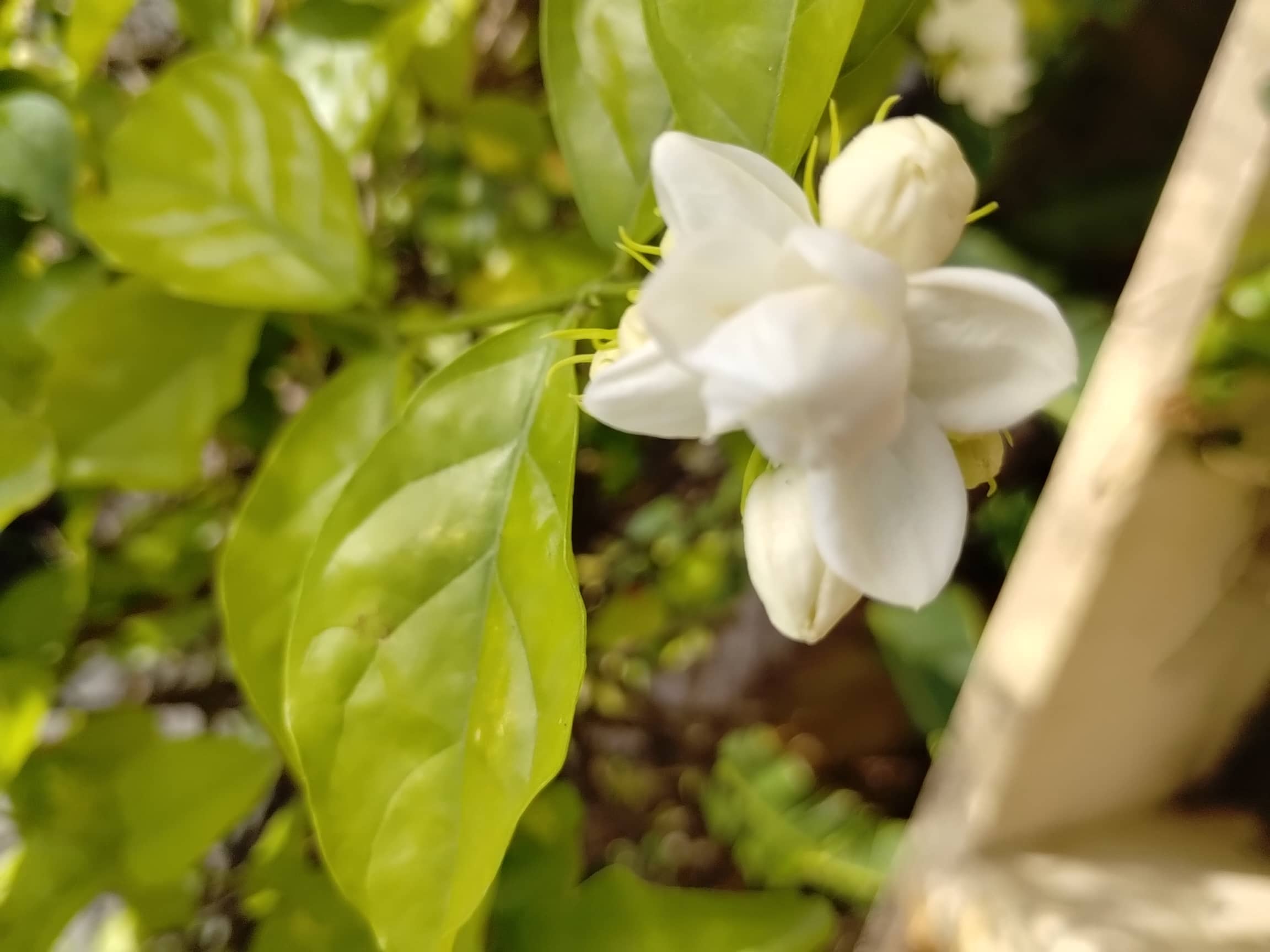
Arabian jasmine
Jasminum sambac
Arabian Jasmine or Mogra or Jasminum Sambac is known for its fragrant white flow...
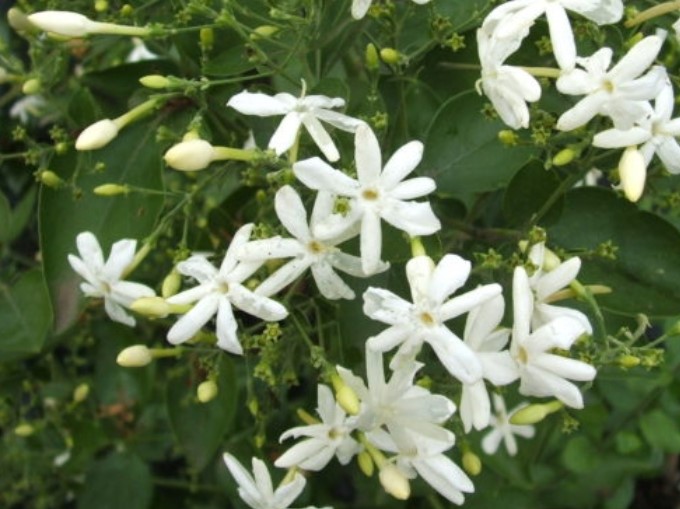
Jasminum Auriculatum
Jasminum
Fragrant evergreen climbing shrub native to Indian subcontinent, beloved for int...
Similar Characteristics
4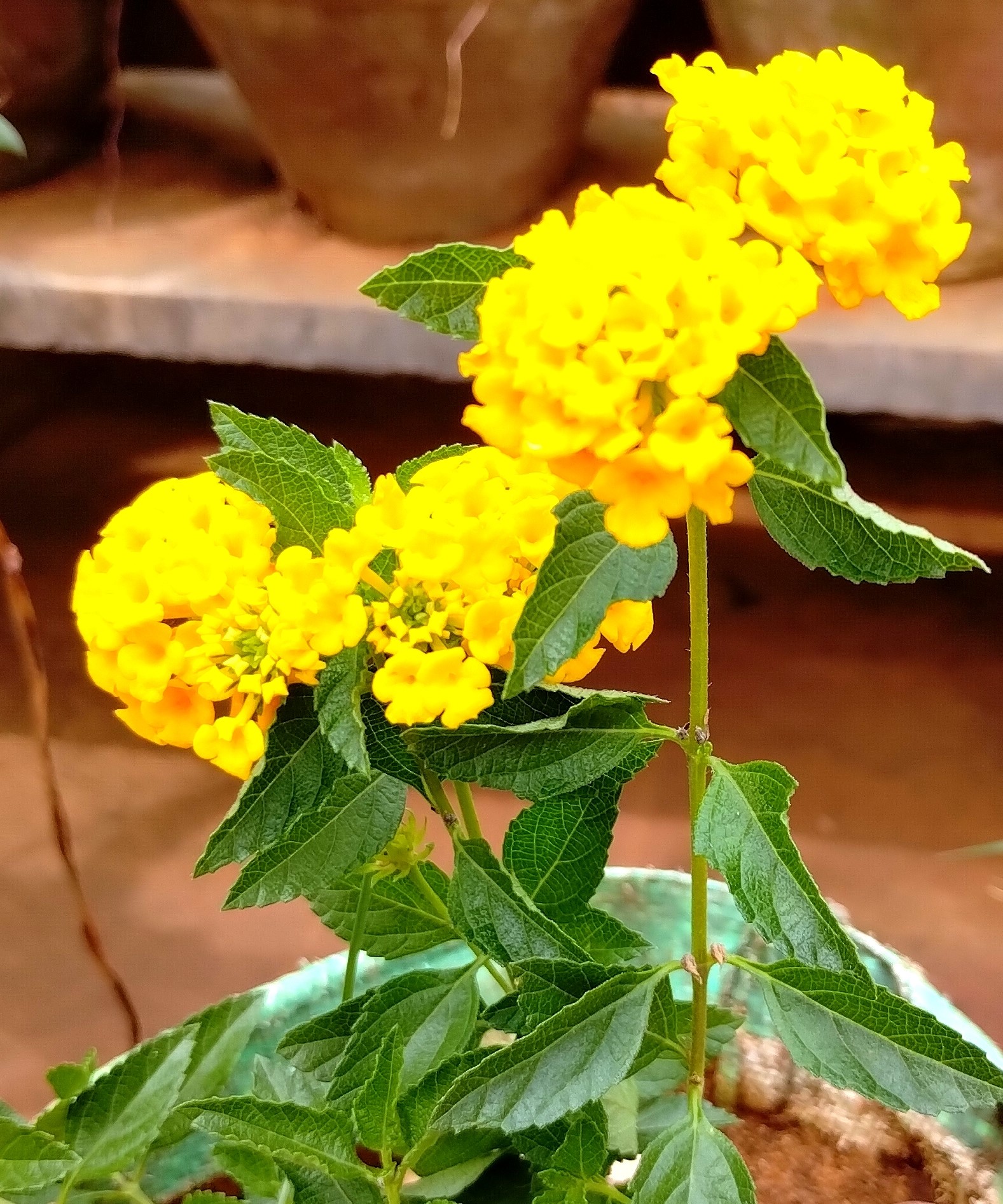
Lantana Camara
Lantana camara
Vigorous tropical shrub renowned for its dense, rounded clusters of tiny tubular...
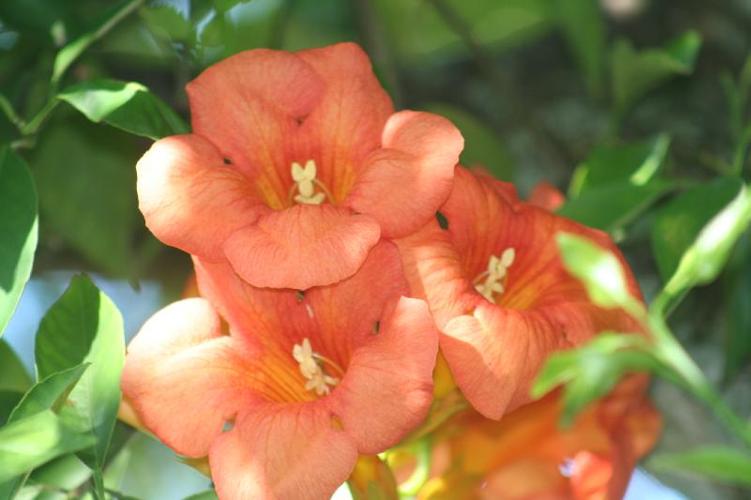
Trumpet Vine
Campsis radicans
Vigorous deciduous woody vine renowned for its spectacular clusters of trumpet-s...
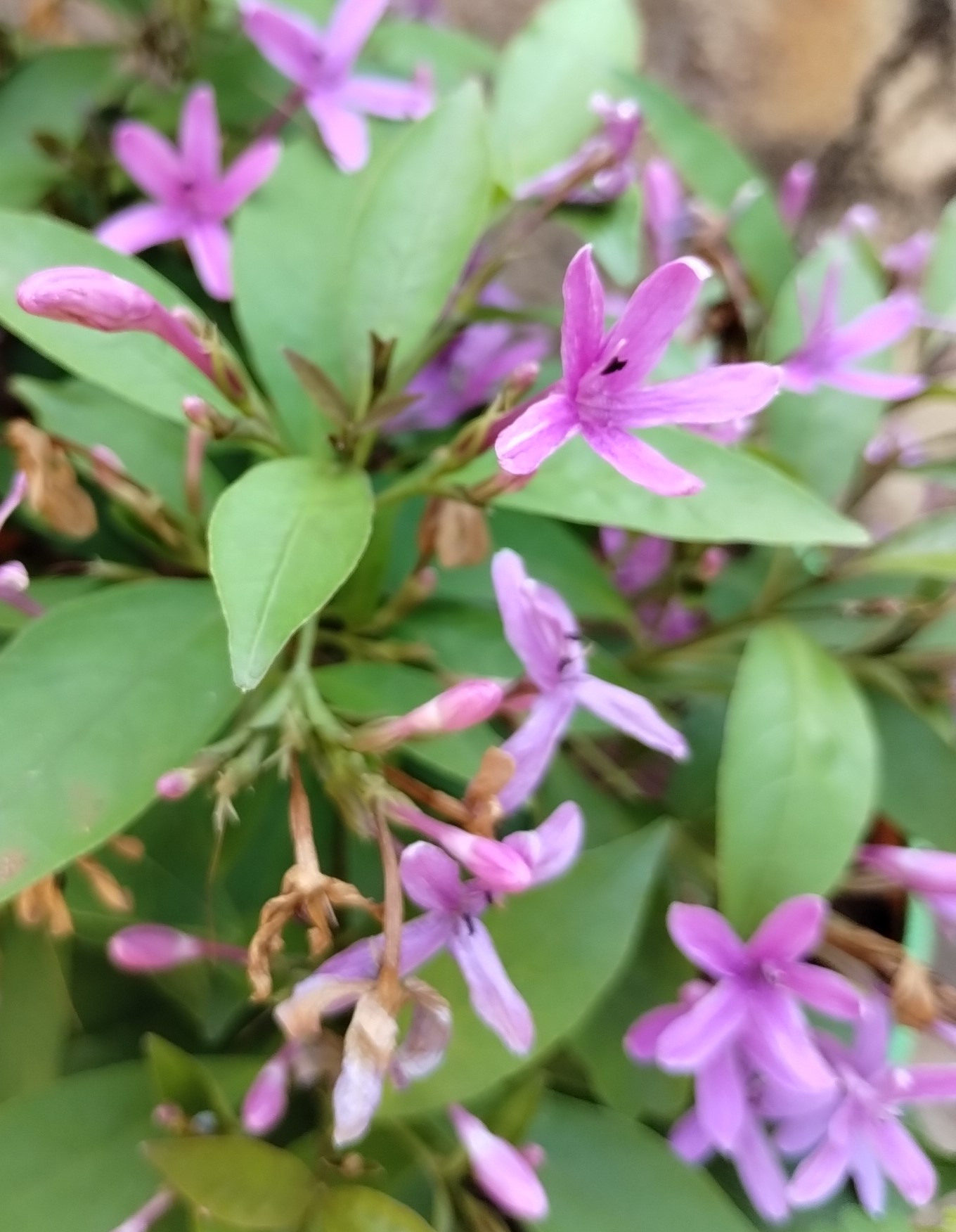
Pseuderanthemum
Pseuderanthemum
Striking tropical perennial shrub prized for its spectacular ornamental foliage ...
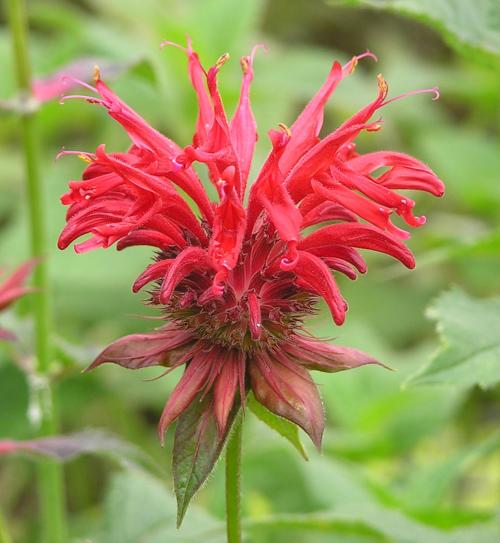
Beebalm
Monarda didyma, Mentha longifolia
Showy perennial herb featuring dense, pom-pom-like clusters of tubular flowers i...