
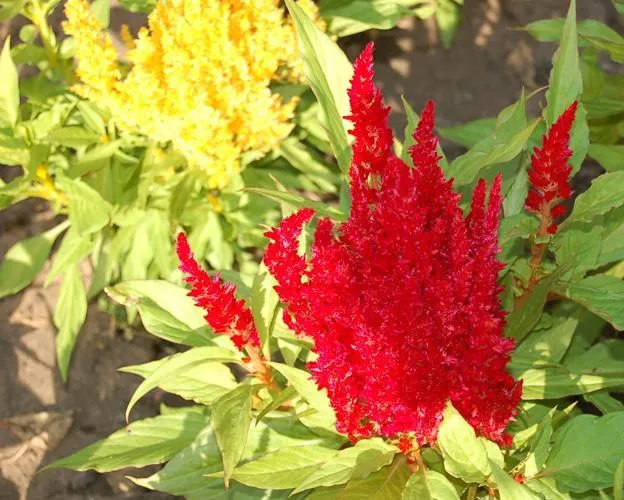
Celosia
Celosia argentea
How to Identify Celosia
NON-TOXIC. 100% safe for cats, dogs, and horses, providing a completely worry-free splash of intense summer color.
Care & Growing Guide
Seasonal Blooming & Hardiness
Seasonal Blooming Calendar:
- Peak Bloom: Late summer to autumn (August through October).
- Planting Time: Sow seeds directly outdoors in early spring after the last frost, or transplant nursery starts in late spring.
Bloom Timeline
About Celosia
The Prince of Wales Feather, botanically classified as Celosia argentea (synonymous with Celosia plumosa and closely allied with the genus Amaranthus), is a highly dramatic and visually spectacular ornamental herbaceous annual belonging to the Amaranthaceae (amaranth) family. Native to the warm, tropical river valleys, grassland plains, and open scrublands of Africa, South Asia, and the Americas, this resilient plant is world-famous for producing intense, feathery plumes that resemble vibrant fire flames.
Growing rapidly from seed to heights of 1 to 4 feet within a single warm season, Celosia argentea features smooth, light green, upright branched stems covered in alternate, lance-shaped leaves measuring 2 to 6 inches in length. From mid-summer until the first heavy autumn frost, the stems are crowned with dense, upright, feathery spikes measuring 6 to 12 inches in length. The velvety, plumose spikes are composed of thousands of tightly packed, tiny blossoms in shades of crimson-red, yellow, and orange.
The reproductive architecture of the plumed Amaranthus is represented by the botanical floral formula Br ⊕ ⚥ K5 C0 A5 G(2-3). This formula indicates that the flower is bracteate, radially symmetrical (actinomorphic), and bisexual. True petals are entirely absent (C0); instead, the striking color of the plumes is provided by 5 free, brightly colored scarious sepals. The androecium contains 5 stamens fused at the base, surrounding a superior ovary composed of 2 to 3 fused carpels.
Horticulturally, Celosia is a heat-loving annual that performs best in full, blazingly intense sun, which brings out the absolute maximum saturation of its color-rich plumes. It is highly drought-tolerant once established, performing beautifully in moderately fertile, sandy, or loamy soils with sharp drainage, as wet soil or poor drainage quickly causes stem and root rot. It is sensitive to frost, thriving during the hot summer months across USDA hardiness zones 2 through 11.
The genus name Celosia is derived from the ancient Greek word 'kelos' (meaning burned), a direct reference to the flame-like, fiery red appearance of the plumed flower heads, while the name Amaranthus comes from 'amarantos' (meaning unfading) because the blooms retain their intense color when dried. Famed on the Indian subcontinent as Murgashikha (मुर्गशिखा) in Hindi and Mayurshikha (मयूरशिखा) in Sanskrit, it is historically revered as a symbol of immortality.
For pet owners seeking a safe, vivid, and highly striking garden display, the Prince of Wales Feather is an exceptionally secure and recommended choice. Celosia argentea is classified as completely NON-TOXIC to cats, dogs, and horses by leading veterinary safety databases, including the ASPCA. Neither its feathered plumes nor its green leaves contain any harmful alkaloids, making it a completely worry-free choice for household landscaping. For more pet-safe annuals, visit our Pet Guard catalog.
Celosia is occasionally confused with wild Amaranthus weeds or Astilbe. It is easily distinguished because Celosia argentea features smooth, succulent stems with intensely colorful papery plumes, whereas Astilbe is a shade-loving herbaceous perennial with compound feathery leaflets. It looks stunning when planted as a bedding accent beside upright Tree Poppy or colorful Balsam. To explore more sun-loving annuals, visit our Flower Identifier.
Floral Formula & Features
Bracteate, actinomorphic, bisexual, 5 free scarious colored sepals, 0 petals (sepals provide the intense color), 5 stamens, 2-3 fused carpels with superior ovary typical of Amanthaceae
- Scientific Name & Classification: Celosia argentea (Amaranthaceae). Famed as Prince of Wales Feather, Plumed Celosia, and Murgashikha.
- Identification Markers: Upright branched stems with lance-shaped green leaves. Capped with dense, velvety, feathery plumes in glowing red, yellow, and orange.
- Floral Formula (Br ⊕ ⚥ K5 C0 A5 G(2-3)): Radially symmetrical, bisexual, bracteate flowers with 5 brightly colored sepals, 0 petals, and a superior ovary.
- Growing Requirements: Full sun (6-8 hours); prefers moderately fertile, well-draining dry soils. Exceptionally heat and drought-tolerant annual (Zones 2-11).
- Cultural Significance: Name derived from Greek 'kelos' (burned), referencing flame-like plumes. Symbolizes immortality, pride, and burning love.
- Safety & Toxicity: NON-TOXIC. 100% safe for cats, dogs, and horses, providing a completely worry-free splash of intense summer color.
- Common Look-alikes: Confused with Astilbe, but easily distinguished by its soft annual habit, smooth simple leaves, and preferences for intense hot sun.
- Internal Links: Creates a dramatic summer bedding display when planted alongside sun-loving Tree Poppy or moisture-loving Balsam; find more in our Flower Identifier.
Names in Different Languages
Toxicity & Safety
Frequently Asked Questions
What is Floral Formula?
A floral formula is a symbolic representation of a flower's structure using letters, numbers, and special symbols. It provides a concise way to describe the arrangement and number of floral parts.
This formula describes the flower's symmetry, sepals, petals, stamens, and carpels in a standardized format.
Formula Sequence
- Bract: Br or Ebr
- Bracteole: Brl or Ebrl
- Symmetry: % (Radial) or ⊕ (Bilateral)
- Sex: ♀ (Female), ♂ (Male), or ⚥ (Bisexual)
- Calyx/Sepal: K<number> (Free or Fused)
- Corolla/Petal: C<number> (Free or Fused)
- Androecium: A<number> (Free or Fused)
- Gynaecium: G<number> (Superior or Inferior Ovary)
Symbol Meanings
- Numbers: Indicate quantity of parts
- Parentheses (): Parts are fused together
- Plus (+): Parts in different whorls
- Underline: Superior ovary position
- Overline: Inferior ovary position
- ∞: Numerous parts (too many to count)
Understanding floral formulas helps botanists quickly identify and classify flowers based on their structural characteristics.
Similar Flowers
Discover flowers that share botanical characteristics
Similar Characteristics
4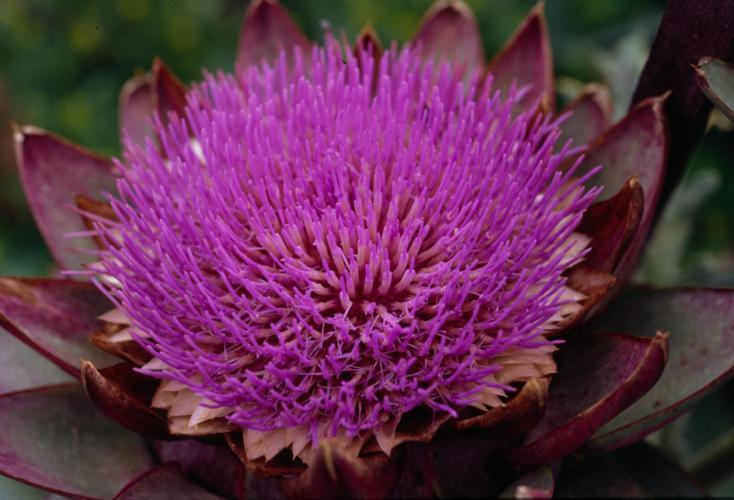
Artichoke
Cynara scolymus
The Artichoke, botanically designated as *Cynara cardunculus* (Scolymus Group) and commonly known as the Globe Artichoke, French Artichoke, or Green Artichoke, is a highly dramatic perennial thistle. Belonging to the family Asteraceae (the daisy or sunflower family, tribe Cynareae), this architec...
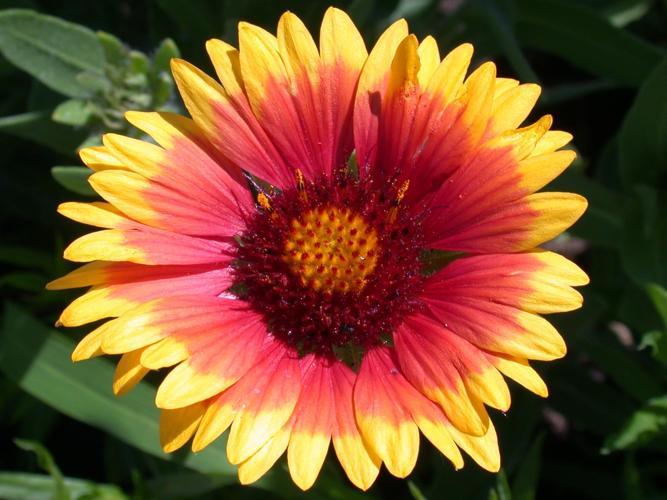
Gaillardia
Gaillardia
Gaillardia, botanically classified within the genus Gaillardia in the Asteraceae (sunflower) family and popularly known as the Blanket Flower or Indian Blanket, is a group of exceptionally cheerful, sun-loving annuals and short-lived perennials. Native to the dry prairies, sandy plains, and pine...
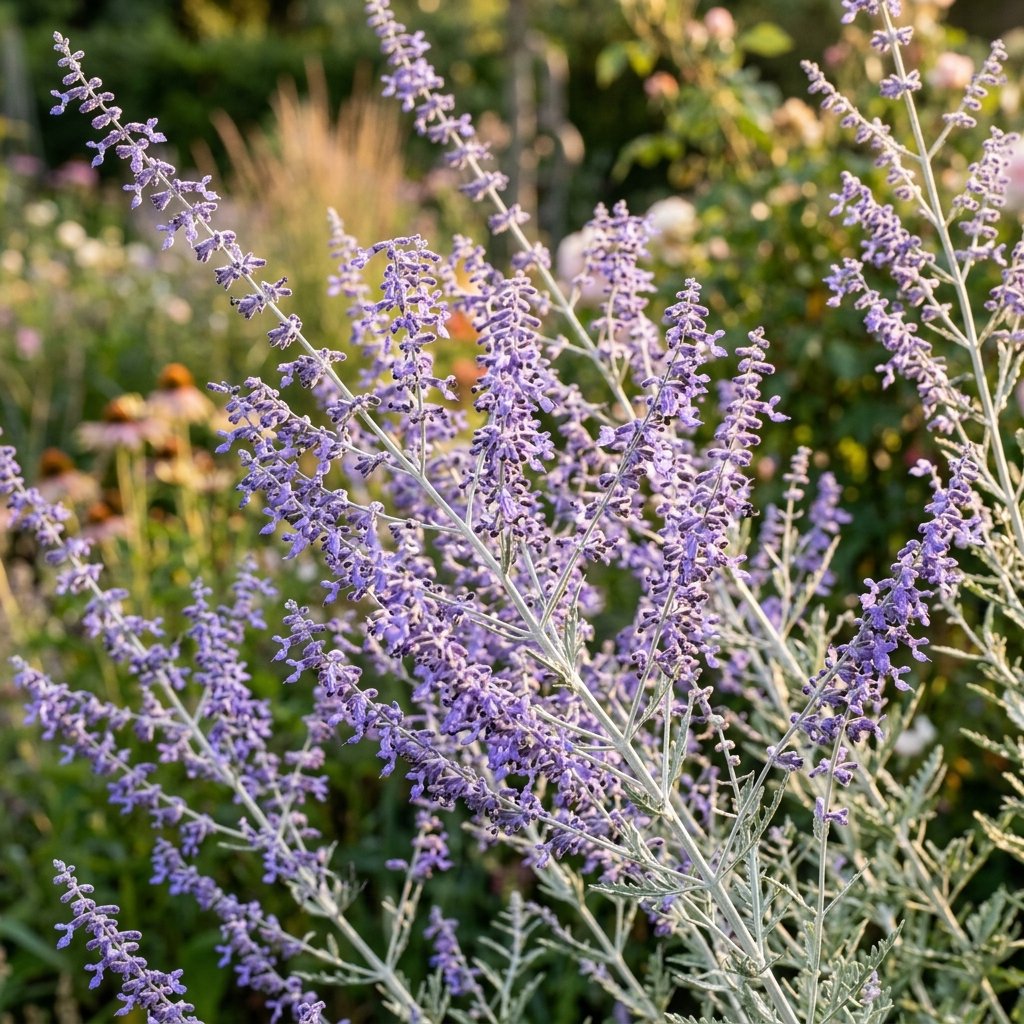
Russian Sage
Salvia yangii
Russian Sage, botanically reclassified as *Salvia yangii* (long celebrated under its classic horticultural synonym *Perovskia atriplicifolia*), is an exceptionally drought-tolerant, graceful, and cloud-like deciduous perennial subshrub. Belonging to the mint family Lamiaceae (tribe Mentheae), thi...
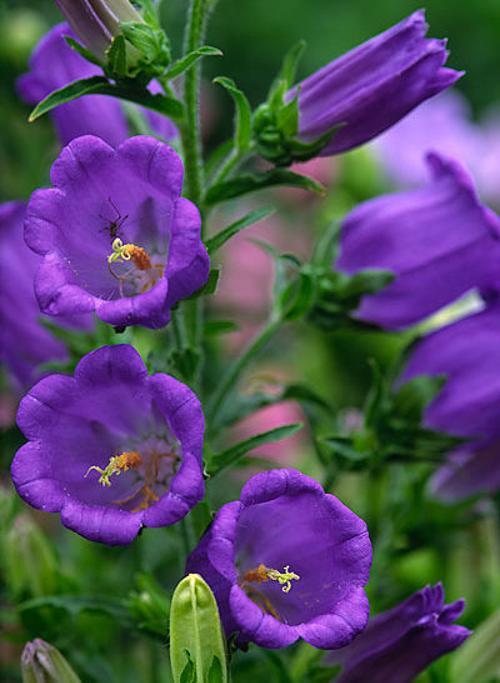
Canterbury bells
Campanula medium
Campanula medium, commonly known as Canterbury Bells, is a quintessential cottage garden biennial that brings a sense of Victorian elegance and whimsical charm to any landscape. Belonging to the Campanulaceae family, this species is native to the sun-drenched hills of Southern Europe, particularl...