
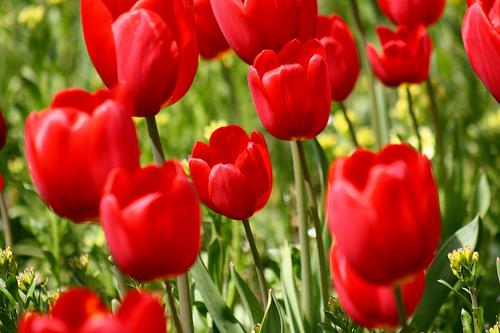
Tulip
Tulipa
Basic Details
Floral Formula & Features
Ebracteate (no bracts), Actinomorphic (radially symmetrical), bisexual, 6 free tepals in 2 whorls of 3 (perianth - no distinction between sepals and petals), 6 free stamens in 2 whorls of 3, 3 fused carpels with superior ovary
- Name 'Tulip' derives from Turkish 'tülbend' meaning turban, referring to the flower's shape resembling a Turkish turban. 'Tulipa' is the Latinized form. The flower was cultivated in Persia and Turkey for centuries before reaching Europe
- Classic cup-shaped flowers with 6 tepals (3 petals + 3 sepals that look identical) in nearly every color except true blue. Blooms measure 2-4 inches (5-10 cm) across. Flower forms range from simple single cups to double, fringed, parrot, and lily-flowered types
- Bulbous perennial typically grown as annual in warm climates. Blooms March-May depending on variety (early, mid, late season). Requires cold period (vernalization) for 12-16 weeks to develop strong roots and blooms. Foliage dies back after flowering
- Grows 6-24 inches (15-60 cm) tall depending on variety. Lifespan of 3-7 years with proper care, though many treat as annuals. Propagated by bulb offsets or division. Bulbs planted in fall, 6-8 weeks before ground freezes, 4-6 inches (10-15 cm) deep
- Native to mountainous regions of Central Asia, particularly Iran, Afghanistan, and Kazakhstan. Greatest diversity in Central Asia. Introduced to Turkey, then Europe in 16th century. Now cultivated worldwide, especially Netherlands (world's largest producer)
- Requires full sun (6+ hours) and well-drained soil. Bulbs rot in wet conditions. Prefers neutral to slightly acidic soil. Cold hardy zones 3-8. In warm climates (zones 8-10), bulbs need pre-chilling in refrigerator for 12-16 weeks before planting
- Netherlands connection: Introduced by botanist Carolus Clusius in 1593. Led to 'Tulip Mania' (1634-1637), first recorded speculative bubble where single bulbs sold for price of houses. Today Netherlands exports billions of bulbs annually, iconic symbol of Dutch culture
- Excellent cut flowers lasting 5-7 days. Remove anthers to prevent pollen staining. Plant in groups of 10+ for impact. Deer and rabbit resistant. After blooming, allow foliage to die naturally to replenish bulb for next year. Divide crowded clumps every 3-4 years
Names in Different Languages
What is Floral Formula?
A floral formula is a symbolic representation of a flower's structure using letters, numbers, and special symbols. It provides a concise way to describe the arrangement and number of floral parts.
This formula describes the flower's symmetry, sepals, petals, stamens, and carpels in a standardized format.
Formula Sequence
- Bract: Br or Ebr
- Bracteole: Brl or Ebrl
- Symmetry: % (Radial) or ⊕ (Bilateral)
- Sex: ♀ (Female), ♂ (Male), or ⚥ (Bisexual)
- Calyx/Sepal: K<number> (Free or Fused)
- Corolla/Petal: C<number> (Free or Fused)
- Androecium: A<number> (Free or Fused)
- Gynaecium: G<number> (Superior or Inferior Ovary)
Symbol Meanings
- Numbers: Indicate quantity of parts
- Parentheses (): Parts are fused together
- Plus (+): Parts in different whorls
- Underline: Superior ovary position
- Overline: Inferior ovary position
- ∞: Numerous parts (too many to count)
Understanding floral formulas helps botanists quickly identify and classify flowers based on their structural characteristics.
Similar Flowers
Discover flowers that share botanical characteristics
Same Family
4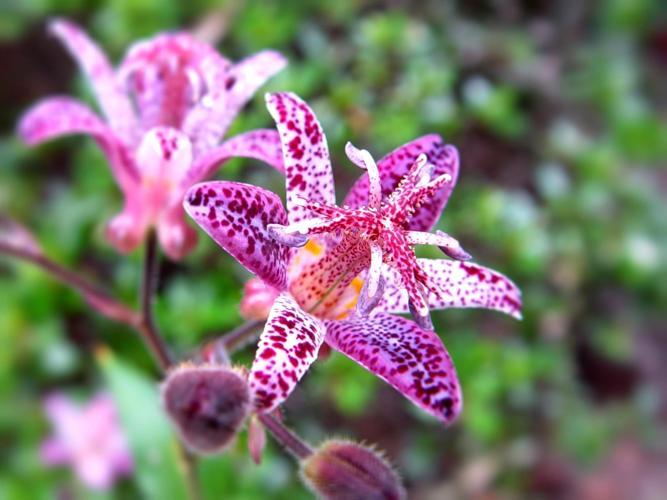
Toad Lily
Tricyrtis
Exotic shade-loving perennial featuring intricate, orchid-like flowers covered i...
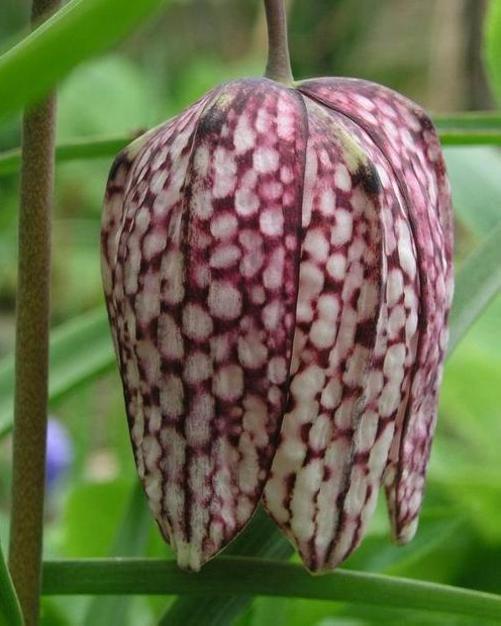
Fritillaria
Fritillaria
Elegant spring bulb featuring distinctive nodding, bell-shaped flowers, many wit...
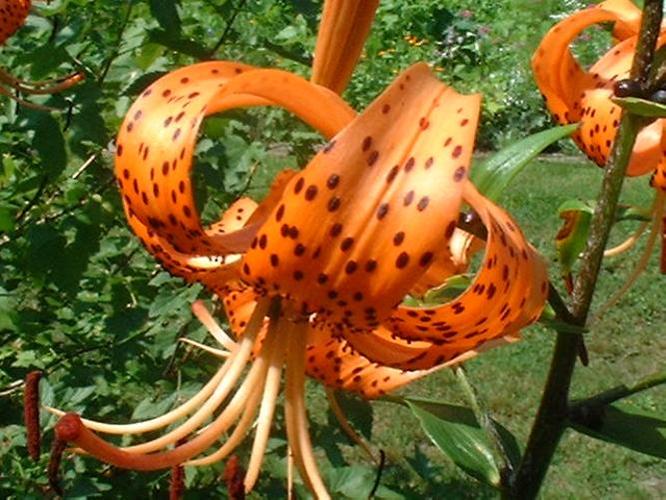
Tiger Lily
Lilium lancifolium
Spectacular summer-blooming bulb featuring vibrant orange flowers adorned with d...
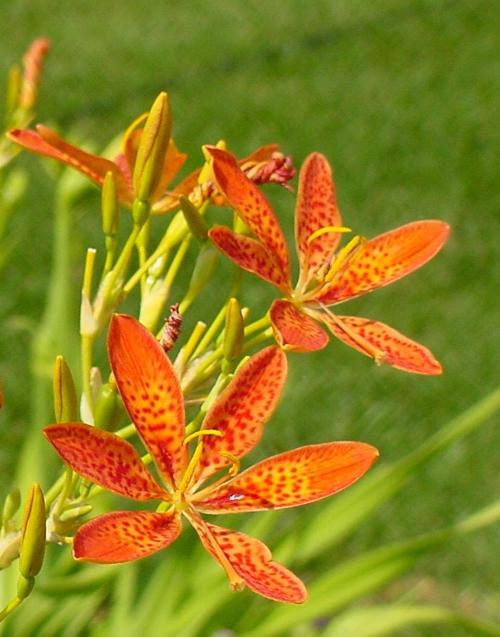
Leopard Lily
Iris domestica (syn. Belamcanda chinensis)
Striking perennial featuring exotic, star-shaped flowers in brilliant orange-red...
Similar Characteristics
4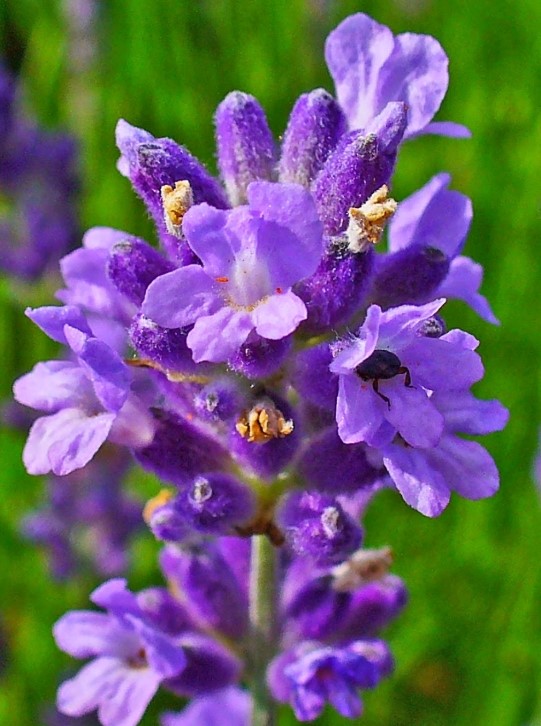
Lavender
Lavandula angustifolia
Iconic aromatic herb featuring slender spikes of small, intensely fragrant flowe...
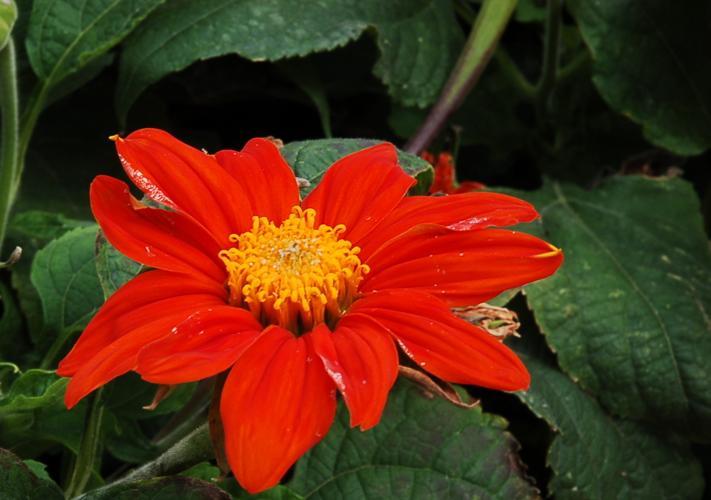
Orange Dahlia
Dahlia × hortensis
Showy tuberous perennial with vibrant orange blooms ranging from bright tangerin...
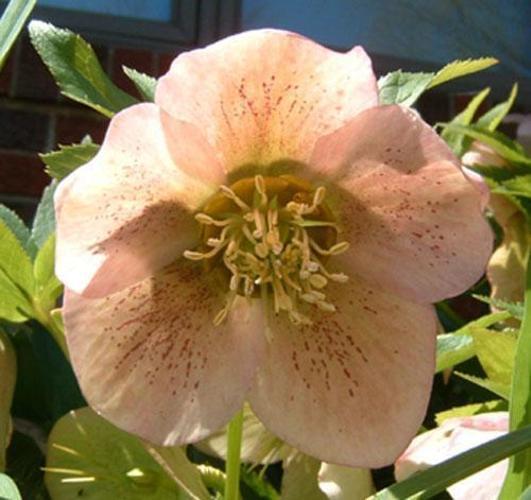
Lenten rose
Helleborus orientalis
Elegant shade-loving perennial featuring nodding, cup or saucer-shaped flowers i...
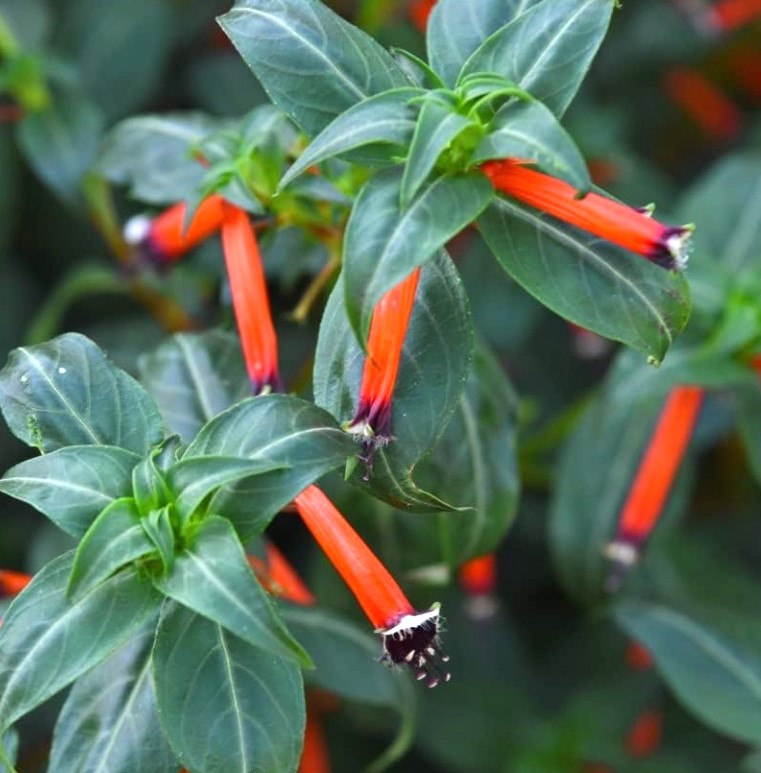
Cuphea Cigar
Cuphea ignea
Charming compact shrub featuring unique tubular flowers that resemble tiny lit c...