
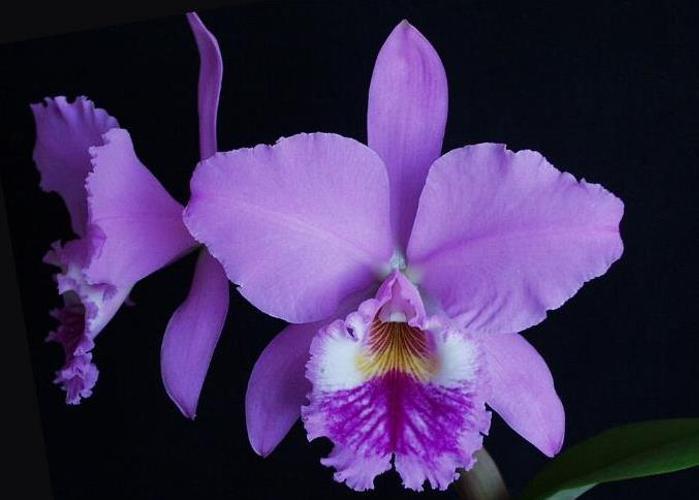
Ruby Lipped Cattleya
Cattleya labiata
Basic Details
Floral Formula & Features
Ebracteate, zygomorphic (bilateral symmetry), bisexual, perianth of 6 tepals in 2 whorls (3 sepals + 3 petals, one petal modified as lip/labellum), 1 stamen fused with style forming column, 3 fused carpels with inferior ovary. Resupinate (lip at bottom). Typical of Orchidaceae
- Named after William Cattley, British horticulturist who first bloomed it in 1824. 'Labiata' means lipped in Latin. About 113 Cattleya species. Called Queen of Orchids for spectacular blooms. National flower of Brazil (C. labiata). Used in corsages since Victorian era. Hybridizes easily - thousands of hybrids
- Flowers 4-7 inches (10-18 cm) across, among largest orchids. 3 sepals, 2 petals, 1 distinctive frilled lip (labellum). Lip ruby-red to crimson with yellow throat, deeply ruffled edges. Petals/sepals pink, purple, lavender, or white. Intensely fragrant, especially in morning. Blooms fall-winter (September-February). Each spike has 2-5 flowers lasting 2-4 weeks
- Epiphytic orchid (grows on trees, not in soil). Sympodial growth - new growths from rhizome. Pseudobulbs (swollen stems) store water and nutrients, 4-8 inches tall. 1-2 thick leathery leaves per pseudobulb, 6-10 inches long. Aerial roots absorb moisture and nutrients. Evergreen
- Grows 12-24 inches (30-60 cm) tall including flower spike. Spread 12-18 inches. Lifespan 20-30+ years with proper care. Propagated by division (separate pseudobulbs with 3-4 growths each). Blooms when mature (3-4 years from division). Divide every 3-4 years or when pot-bound
- Native to northeastern Brazil, particularly Atlantic rainforest. Grows as epiphyte on trees at 1,000-4,000 feet elevation. Also found in Venezuela, Colombia. Now cultivated worldwide. Thrives in warm, humid tropical and subtropical climates. Endangered in wild due to over-collection
- Requires bright indirect light (2,000-3,000 foot-candles) - east or west window. Needs warm days (70-85°F), cool nights (55-65°F) - temperature drop triggers blooming. High humidity (50-70%). Water when potting mix nearly dry. Grow in orchid bark, not soil. Fertilize weakly weekly. Hardy zones 10-12, houseplant elsewhere
- Classic corsage orchid for weddings, proms, Mother's Day. Long-lasting cut flower (2-4 weeks). Popular collector's orchid. Attracts orchid enthusiasts. Fragrance strongest in morning. Symbolizes luxury, beauty, refinement. Used in perfumes. Relatively easy orchid for beginners
- Repot every 2-3 years in spring after blooming. Use orchid bark mix. Provide good air circulation. Mist daily or use humidity tray. Rest period after blooming - reduce water, no fertilizer for 6-8 weeks. Resume care when new growth appears. Stake flower spikes. Remove spent blooms
Names in Different Languages
What is Floral Formula?
A floral formula is a symbolic representation of a flower's structure using letters, numbers, and special symbols. It provides a concise way to describe the arrangement and number of floral parts.
This formula describes the flower's symmetry, sepals, petals, stamens, and carpels in a standardized format.
Formula Sequence
- Bract: Br or Ebr
- Bracteole: Brl or Ebrl
- Symmetry: % (Radial) or ⊕ (Bilateral)
- Sex: ♀ (Female), ♂ (Male), or ⚥ (Bisexual)
- Calyx/Sepal: K<number> (Free or Fused)
- Corolla/Petal: C<number> (Free or Fused)
- Androecium: A<number> (Free or Fused)
- Gynaecium: G<number> (Superior or Inferior Ovary)
Symbol Meanings
- Numbers: Indicate quantity of parts
- Parentheses (): Parts are fused together
- Plus (+): Parts in different whorls
- Underline: Superior ovary position
- Overline: Inferior ovary position
- ∞: Numerous parts (too many to count)
Understanding floral formulas helps botanists quickly identify and classify flowers based on their structural characteristics.
Similar Flowers
Discover flowers that share botanical characteristics
Same Family
4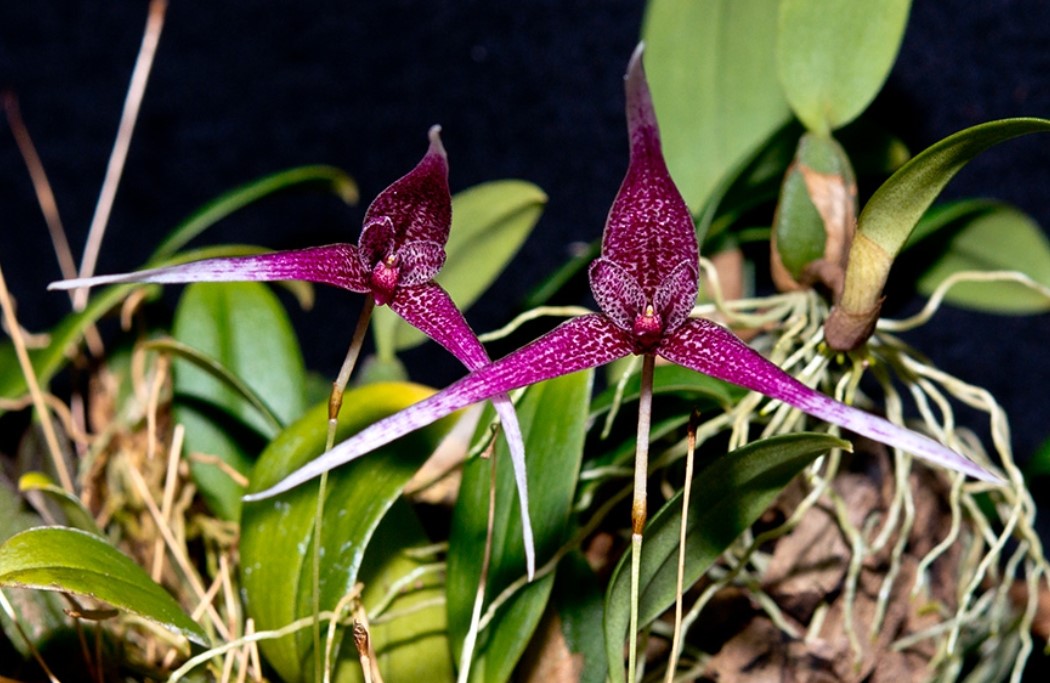
Bulbophyllum Orchid
Bulbophyllum
Fascinating and highly diverse orchid genus featuring some of the most bizarre a...
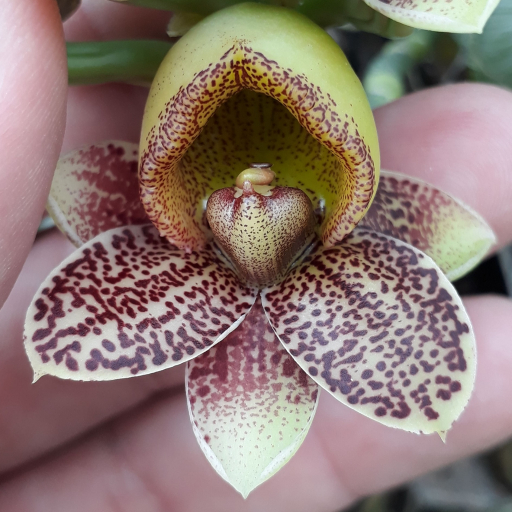
Catasetum Orchid
Catasetum
Remarkable orchid genus famous for extreme sexual dimorphism, producing dramatic...
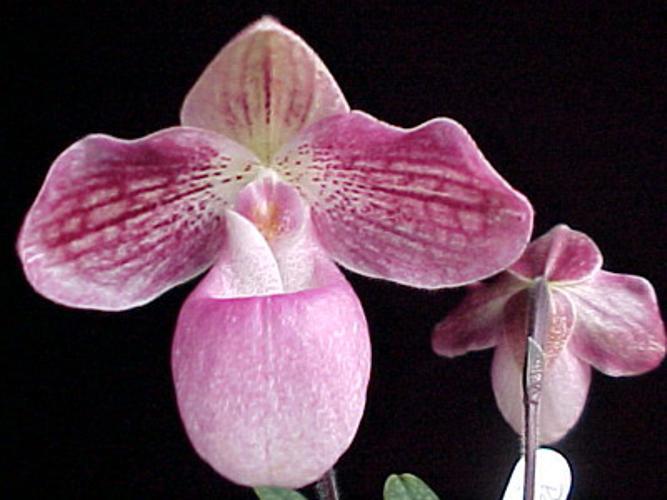
Silver Slipper Orchid
Paphiopedilum micranthum
Rare and critically endangered orchid with distinctive slipper-shaped pink pouch...
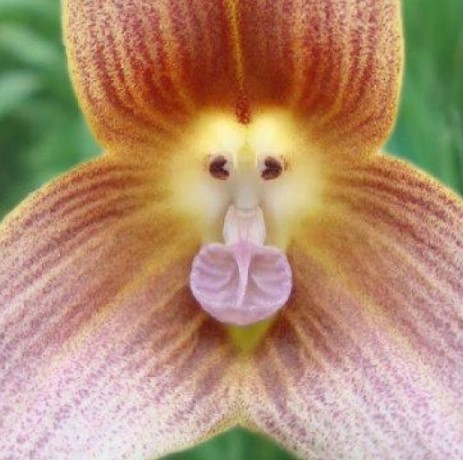
Monkey Orchid
Dracula simia
Extraordinary orchid featuring flowers with an uncanny resemblance to a monkey's...
Similar Characteristics
4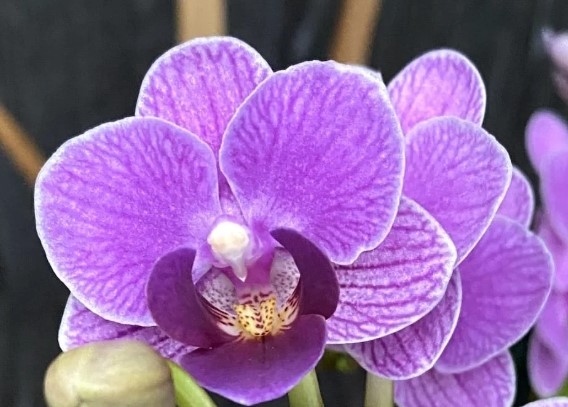
Phalaenopsis Orchid
Phalaenopsis
Popular and easy-to-grow orchid with elegant, moth-like flowers on gracefully ar...
Monkey Orchid
Dracula simia
Extraordinary orchid featuring flowers with an uncanny resemblance to a monkey's...
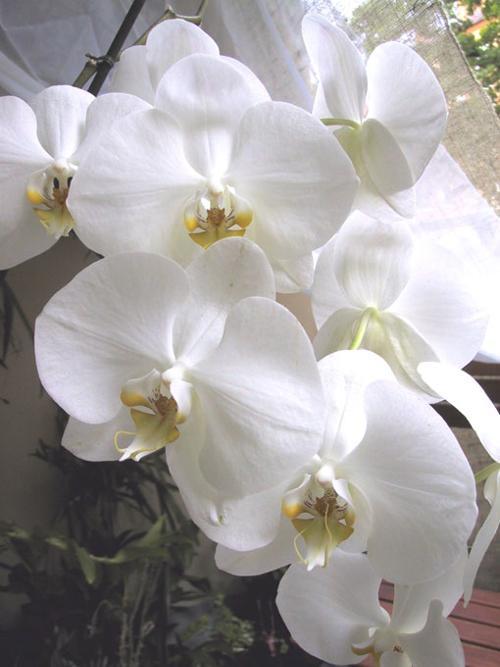
Moon Orchid
Phalaenopsis amabilis
Elegant epiphytic orchid with graceful arching sprays of pristine white moth-lik...
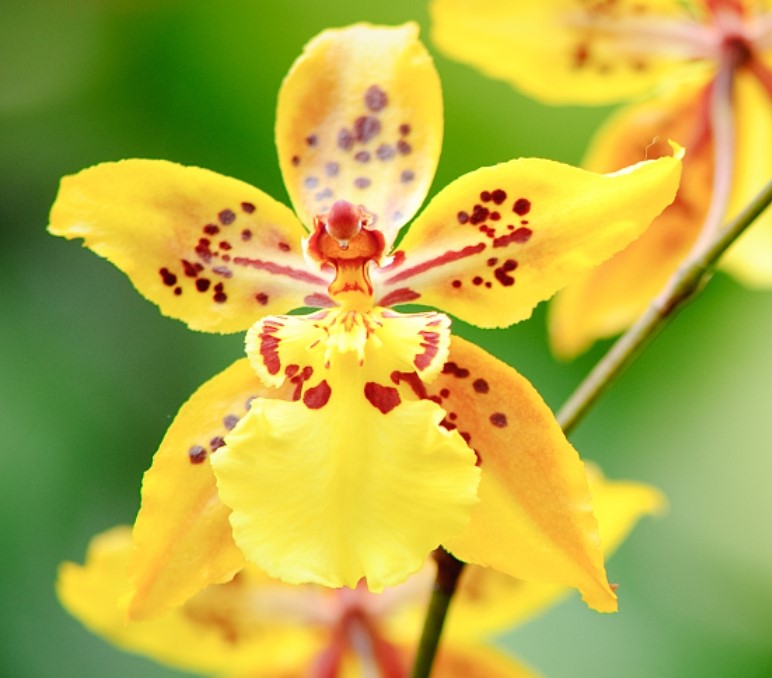
Tolumnia Orchid
Tolumnia
Charming miniature orchid featuring vibrant, intricately patterned flowers that ...