
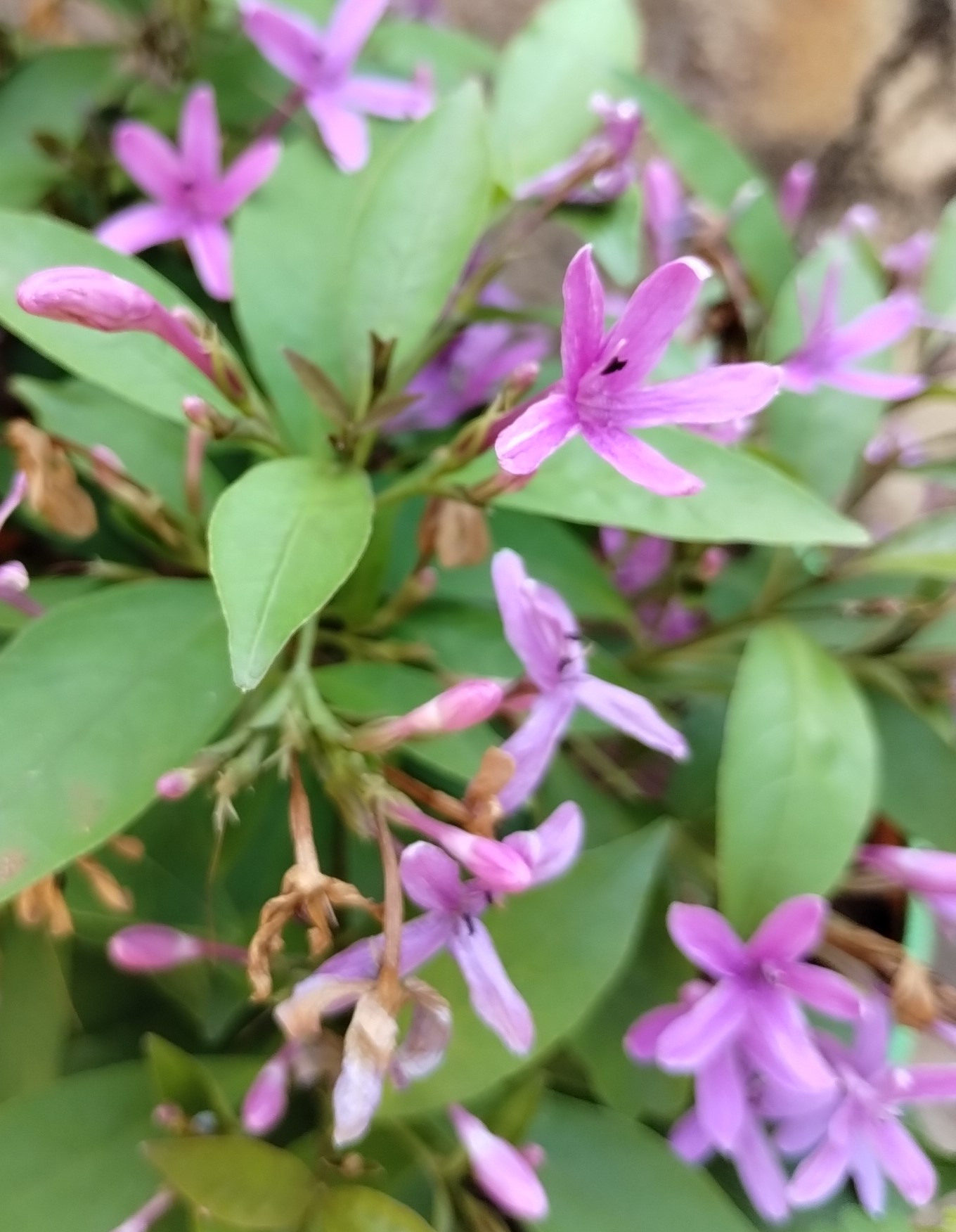
Pseuderanthemum
Pseuderanthemum
Basic Details
Floral Formula & Features
Zygomorphic (bilaterally symmetrical), bisexual, 5 fused sepals, 5 fused petals, 4 stamens (2 fertile + 2 staminodes), 2 fused carpels with superior ovary typical of Acanthaceae
- Name 'Pseuderanthemum' from Greek 'pseudo' (false) and 'Eranthemum' (another genus), meaning 'false Eranthemum' due to resemblance. 'False Eranthemum' highlights this similarity. Specific names like 'reticulatum' refer to net-veined leaves.
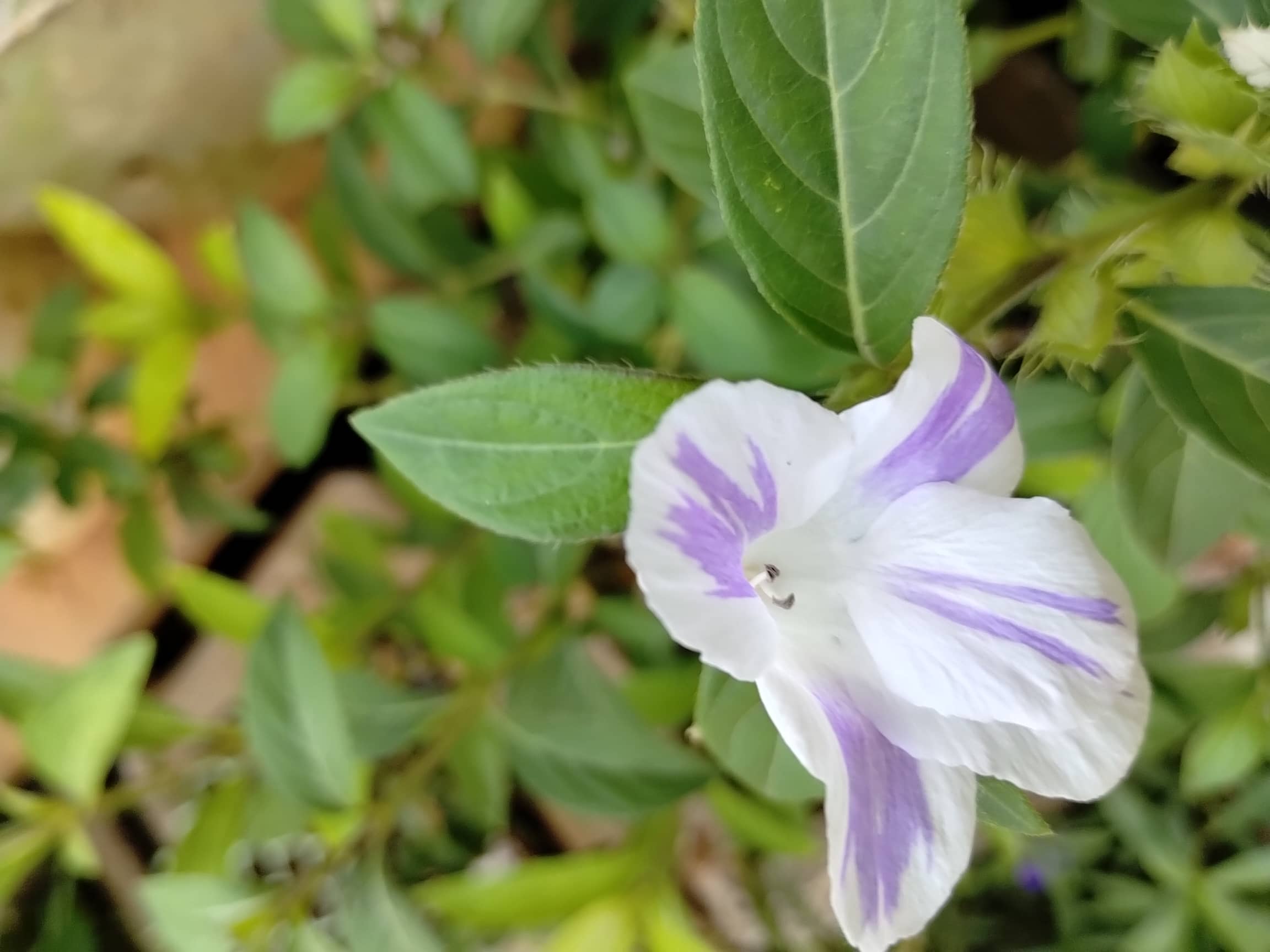
- Flowers orchid-like, 5-petaled, white with magenta-purple spots or reddish-purple center, 0.5-1 inch (1.3-2.5 cm) across. Arranged in dense clusters or spikes at branch tips. Blooms summer to autumn (fall), lasting 2-3 weeks. Delicate appearance.
- Foliage highly ornamental, main attraction. Leaves oval to elliptic, 2-6 inches (5-15 cm) long, opposite arrangement. Colors: dark green with yellow net-veining, purple, silver margins, or variegated patterns. Young leaves often more yellow, maturing to green.
- Size: 2-6 feet (0.6-2 m) tall, 2-4 feet (0.6-1.2 m) wide. Perennial shrub, semi-woody. Lifespan 3-5+ years. Propagated by cuttings, seeds. Fast-growing. Erect or vase-shaped growth habit.
- Native to tropical regions: Southeast Asia, Pacific Islands (Solomon Islands, Vanuatu, Papua New Guinea), parts of South America, Central America, Mexico. Widely cultivated in tropical and subtropical gardens worldwide.
- Prefers partial shade to full sun (foliage color varies with light). Requires organically rich, well-draining, consistently moist soil. High humidity preferred. Warm climate, zones 10-12. Protect from frost and cold drafts.
- Used for mass plantings, hedges, screens, borders, containers, indoor plants. Adds vibrant foliage color to shaded areas. Relatively pest-resistant. Low allergen. Alternative to garden croton. Attracts occasional pollinators.
- Water regularly to keep soil moist (not waterlogged). Fertilize monthly during growing season with balanced fertilizer. Prune to maintain shape and encourage bushiness. Mist indoor plants for humidity. Watch for mealybugs, scale. Easy to grow.
Names in Different Languages
What is Floral Formula?
A floral formula is a symbolic representation of a flower's structure using letters, numbers, and special symbols. It provides a concise way to describe the arrangement and number of floral parts.
This formula describes the flower's symmetry, sepals, petals, stamens, and carpels in a standardized format.
Formula Sequence
- Bract: Br or Ebr
- Bracteole: Brl or Ebrl
- Symmetry: % (Radial) or ⊕ (Bilateral)
- Sex: ♀ (Female), ♂ (Male), or ⚥ (Bisexual)
- Calyx/Sepal: K<number> (Free or Fused)
- Corolla/Petal: C<number> (Free or Fused)
- Androecium: A<number> (Free or Fused)
- Gynaecium: G<number> (Superior or Inferior Ovary)
Symbol Meanings
- Numbers: Indicate quantity of parts
- Parentheses (): Parts are fused together
- Plus (+): Parts in different whorls
- Underline: Superior ovary position
- Overline: Inferior ovary position
- ∞: Numerous parts (too many to count)
Understanding floral formulas helps botanists quickly identify and classify flowers based on their structural characteristics.
Similar Flowers
Discover flowers that share botanical characteristics
Same Family
4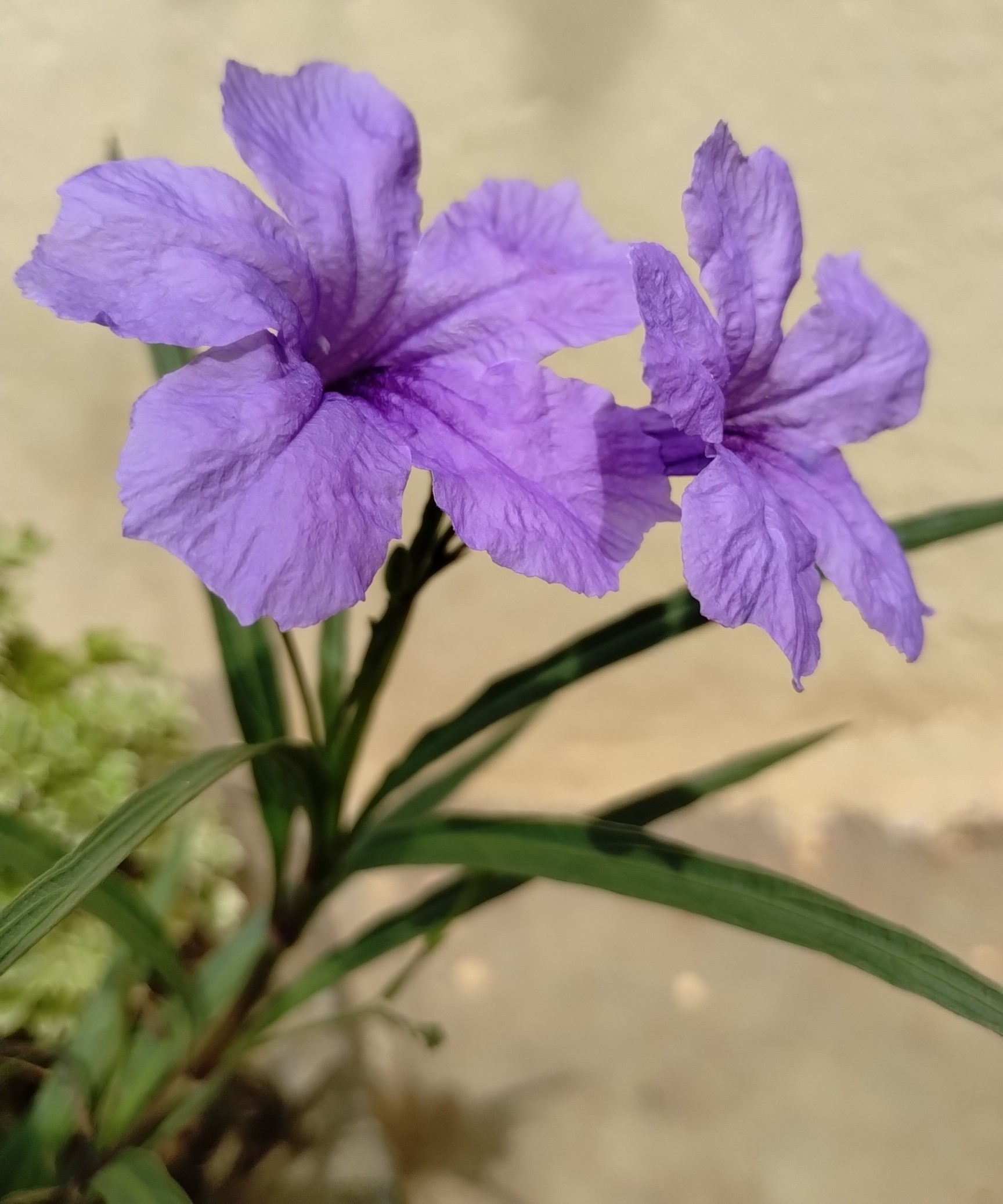
Mexican Petunia
Ruellia simplex
Vigorous perennial producing trumpet-shaped flowers resembling petunias in shade...
Crossandra Firecracker
Crossandra infundibuliformis
Attractive evergreen shrub featuring distinctive fan-shaped flowers in vibrant s...
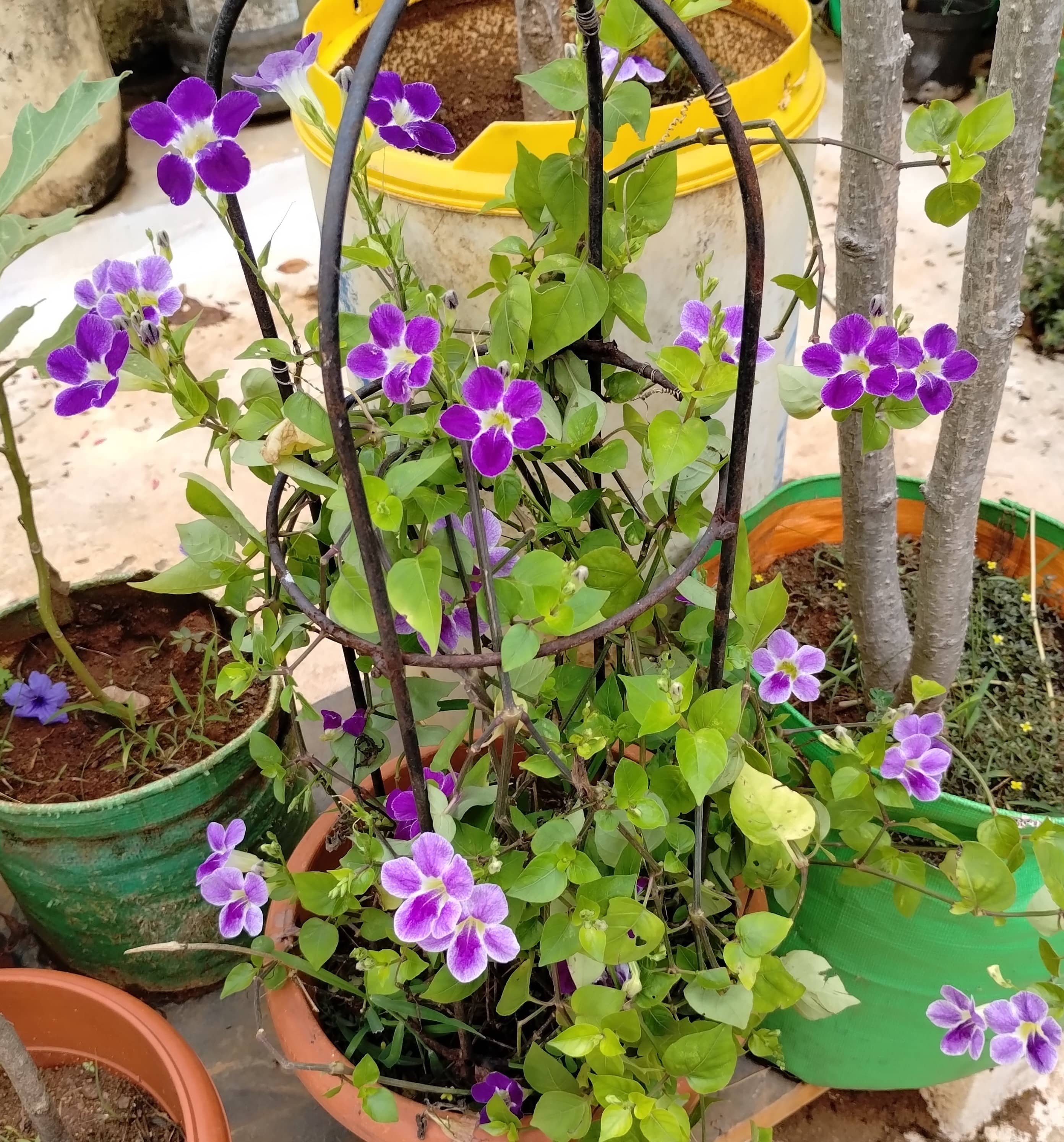
Thunbergia Bush Clock Vine
Thunbergia erecta
Versatile tropical plant producing stunning trumpet-shaped flowers in shades of ...
December
Barleria Cristata,Barleria prioniti
Attractive evergreen shrub featuring tubular flowers with distinctive crested or...
Similar Characteristics
4
Spanish Jasmine (Royal Jasmine)
Jasminum grandiflorum
Highly fragrant jasmine with pure white star-shaped flowers used in world's fine...
Bromelia
Bromelia
Diverse family of tropical plants featuring striking rosettes of stiff, often co...
Azalea
Azalea
Beloved flowering shrub that transforms spring gardens with masses of funnel-sha...
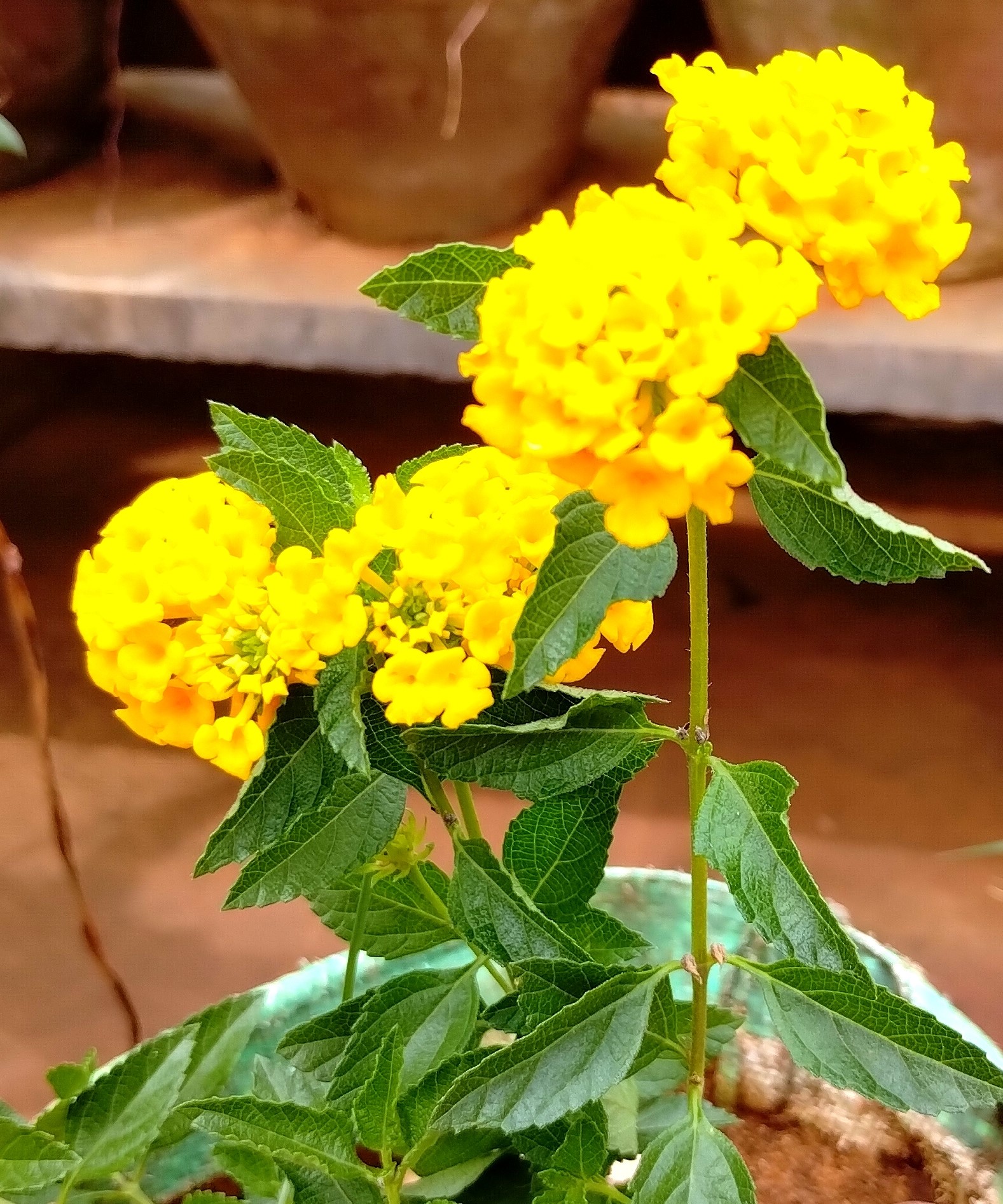
Lantana Camara
Lantana camara
Vigorous tropical shrub renowned for its dense, rounded clusters of tiny tubular...