
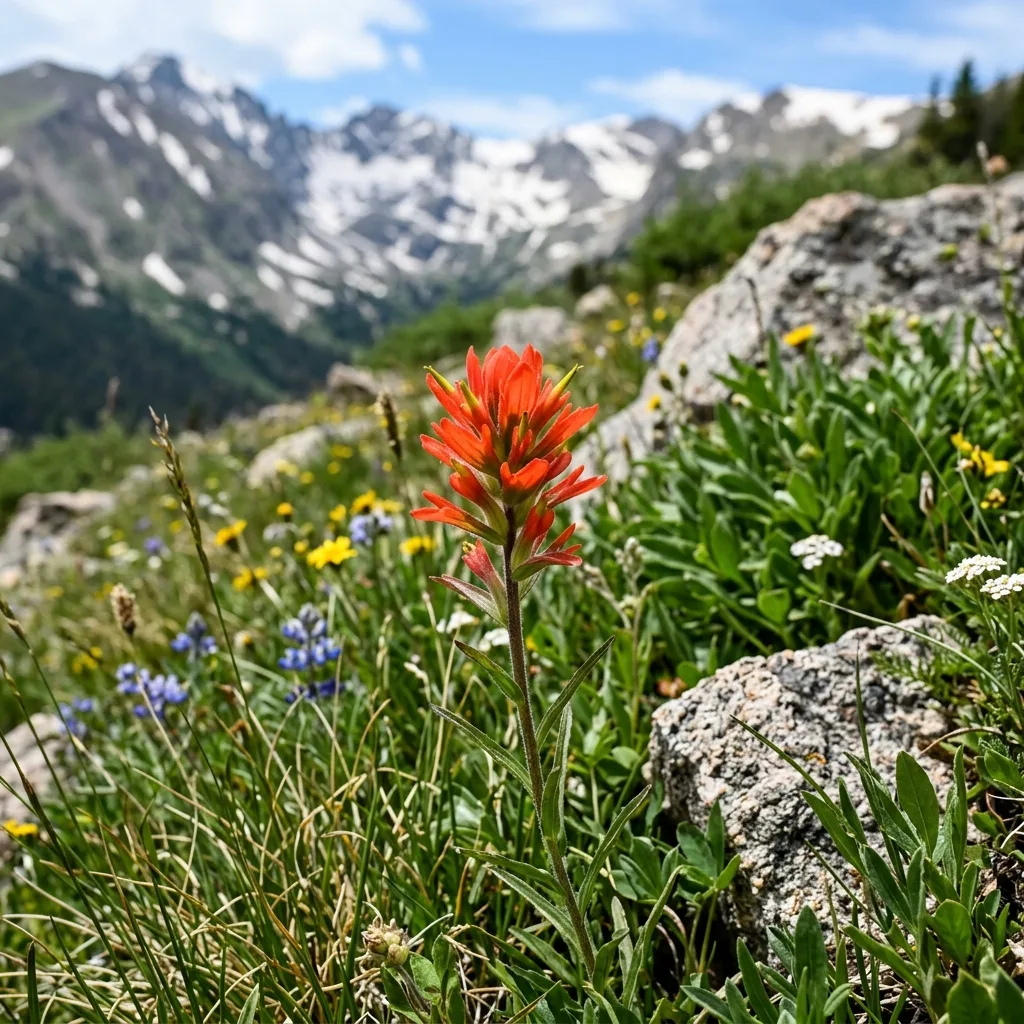
Indian Paintbrush
Castilleja coccinea
How to Identify Indian Paintbrush
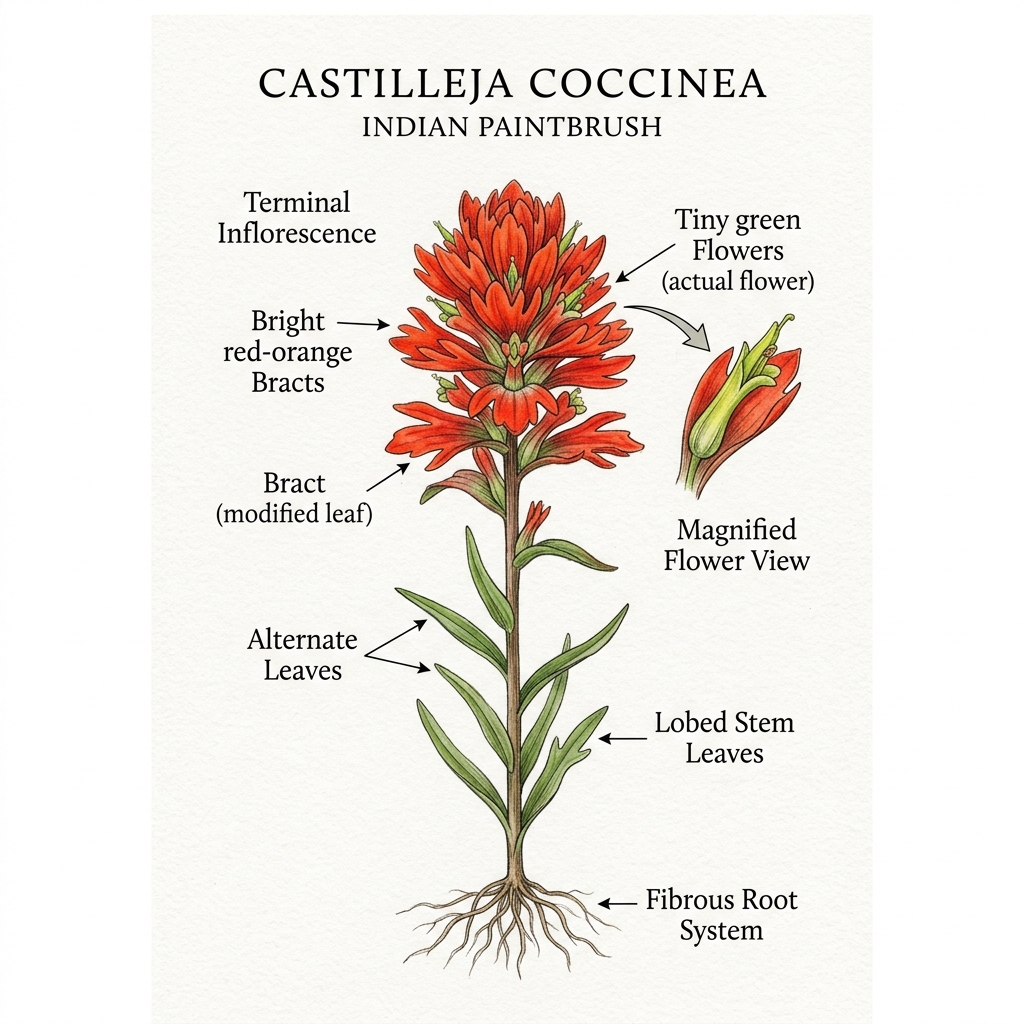
A detailed guide to identifying Indian Paintbrushes (Castilleja indivisa) by its key features:
- Bright Scarlet Bracts: Vibrant, leaf-like bracts at the top of the stem that look like a brush dipped in paint.
- Tubular Green Flowers: Small, inconspicuous greenish-yellow true flowers hidden within the colorful bracts.
- Alternating Narrow Leaves: Slender, lance-shaped leaves with wavy edges clasping the hairy stem.
- Hemiparasitic Root System: Roots that connect to surrounding grasses to extract water and nutrients.
Care & Growing Guide
Indian Paintbrush Care Guide:
- Light: Full sun (6+ hours)
- Soil: Poor, well-draining, sandy or rocky — do NOT fertilize
- Host Plants: Must be sown with native grasses (little bluestem, blue grama, buffalo grass)
- Sowing: Direct sow seeds in fall for spring germination; do not transplant
Seasonal Blooming & Hardiness
Seasonal Blooming Calendar:
- Peak Bloom: April–September depending on species and elevation
- US Range: Native throughout the western US, Rocky Mountains, Great Plains, and eastern meadows (Zone 3–9)
Bloom Timeline
About Indian Paintbrush
Indian Paintbrush (Castilleja spp.) is one of the most dramatically beautiful and ecologically fascinating wildflowers of the American West, producing clusters of brilliant red, orange, or yellow bracts that look as though they were dipped in vivid paint. With approximately 200 species native to North and South America, this genus belongs to the family Orobanchaceae (the broomrape family) and is one of the most diverse and geographically widespread wildflower groups in the United States. It is the official state wildflower of Wyoming.
A crucial biological distinction of Indian Paintbrush is that it is a hemiparasite — a partial parasite. The plant photosynthesizes normally but also sends specialized root structures called haustoria into the roots of neighboring grasses and perennial plants, tapping into their water and nutrient supply. This hemiparasitic relationship is why Indian Paintbrush is notoriously difficult to cultivate in gardens without its host plants present. The most dramatic colors of the plant are not from the true flowers, which are small, tubular, and green-yellow, but from the colorful modified leaves called bracts that surround and dwarf the true flowers.
The brilliant scarlet or red-orange of Castilleja coccinea (Scarlet Indian Paintbrush) is among the most vivid reds found in any North American wildflower, and it serves a critical ecological purpose: attracting hummingbirds, which are the primary pollinators of most Castilleja species. The long, tubular structure of the true flower is perfectly shaped for a hummingbird's bill, ensuring efficient pollen transfer. In the American West, meadows and prairies carpeted with Indian Paintbrush alongside Blue Lupine and Balsam Root are considered among the most spectacular wildflower displays on Earth.
For the home gardener, success with Indian Paintbrush requires planting it alongside compatible host grasses like little bluestem, buffalo grass, or native fescues, and sourcing local-ecotype seed from reputable native plant nurseries rather than transplanting wild plants. It grows best in well-draining, low-fertility soils with full sun — the richer the soil, the more vigorous the host plants become and the harder it is for the Paintbrush to parasitize. Once established, it self-seeds reliably and rewards patience with a stunning spring and early summer display of living 'brushstrokes' of color.
Floral Formula & Features
Zygomorphic, bisexual, 5 fused sepals, 5 fused petals (bilabiate tube), 4 didynamous stamens, 2 fused carpels with superior ovary
- Scientific Name & Classification: Castilleja spp. (Orobanchaceae). ~200 species native to the Americas. C. coccinea (Scarlet Indian Paintbrush) is most widespread in the East; C. lineariloba in the West.
- Identification Markers: Brilliant scarlet, orange, or yellow bracts that look painted. Small, inconspicuous tubular true flowers hidden among bracts. Alternate, often lobed or linear leaves on upright stems 1–2 ft tall.
- Floral Formula (↑ ☿ K(5) [C(5) A4] G(2)): Zygomorphic (bilaterally symmetrical), bisexual, 5 fused sepals, 5 fused petals forming a two-lipped tube, 4 stamens (didynamous), 2 fused carpels with superior ovary.
- Growing Requirements: Full sun; well-draining, low-fertility, sandy or rocky soil. Must be grown with host grass species. USDA Zones 3–9. Hemiparasitic — requires a host plant to thrive.
- Cultural Significance: Official state wildflower of Wyoming. Deeply revered by Native American Plains tribes; used in traditional body paint and decorations. Symbol of the American West.
- Safety & Toxicity: ⚠️ CAUTION. May accumulate selenium from soil, making it potentially toxic if consumed in large quantities by livestock. Keep pets from eating large amounts.
- Common Look-alikes: Sometimes confused with Red Clover or Scarlet Sage (Salvia coccinea), but distinguished by its unique painted-bract appearance and partial-parasitic growth habit.
- Internal Links: Spectacular alongside Wild Bergamot and Butterfly Weed in a native prairie planting. Explore our Flower Identifier.
Names in Different Languages
Toxicity & Safety
Always keep toxic plants out of reach of children and pets. Consult a veterinarian or medical professional immediately if ingestion is suspected.
Frequently Asked Questions
What is Floral Formula?
A floral formula is a symbolic representation of a flower's structure using letters, numbers, and special symbols. It provides a concise way to describe the arrangement and number of floral parts.
This formula describes the flower's symmetry, sepals, petals, stamens, and carpels in a standardized format.
Formula Sequence
- Bract: Br or Ebr
- Bracteole: Brl or Ebrl
- Symmetry: % (Radial) or ⊕ (Bilateral)
- Sex: ♀ (Female), ♂ (Male), or ⚥ (Bisexual)
- Calyx/Sepal: K<number> (Free or Fused)
- Corolla/Petal: C<number> (Free or Fused)
- Androecium: A<number> (Free or Fused)
- Gynaecium: G<number> (Superior or Inferior Ovary)
Symbol Meanings
- Numbers: Indicate quantity of parts
- Parentheses (): Parts are fused together
- Plus (+): Parts in different whorls
- Underline: Superior ovary position
- Overline: Inferior ovary position
- ∞: Numerous parts (too many to count)
Understanding floral formulas helps botanists quickly identify and classify flowers based on their structural characteristics.
Similar Flowers
Discover flowers that share botanical characteristics
Similar Characteristics
4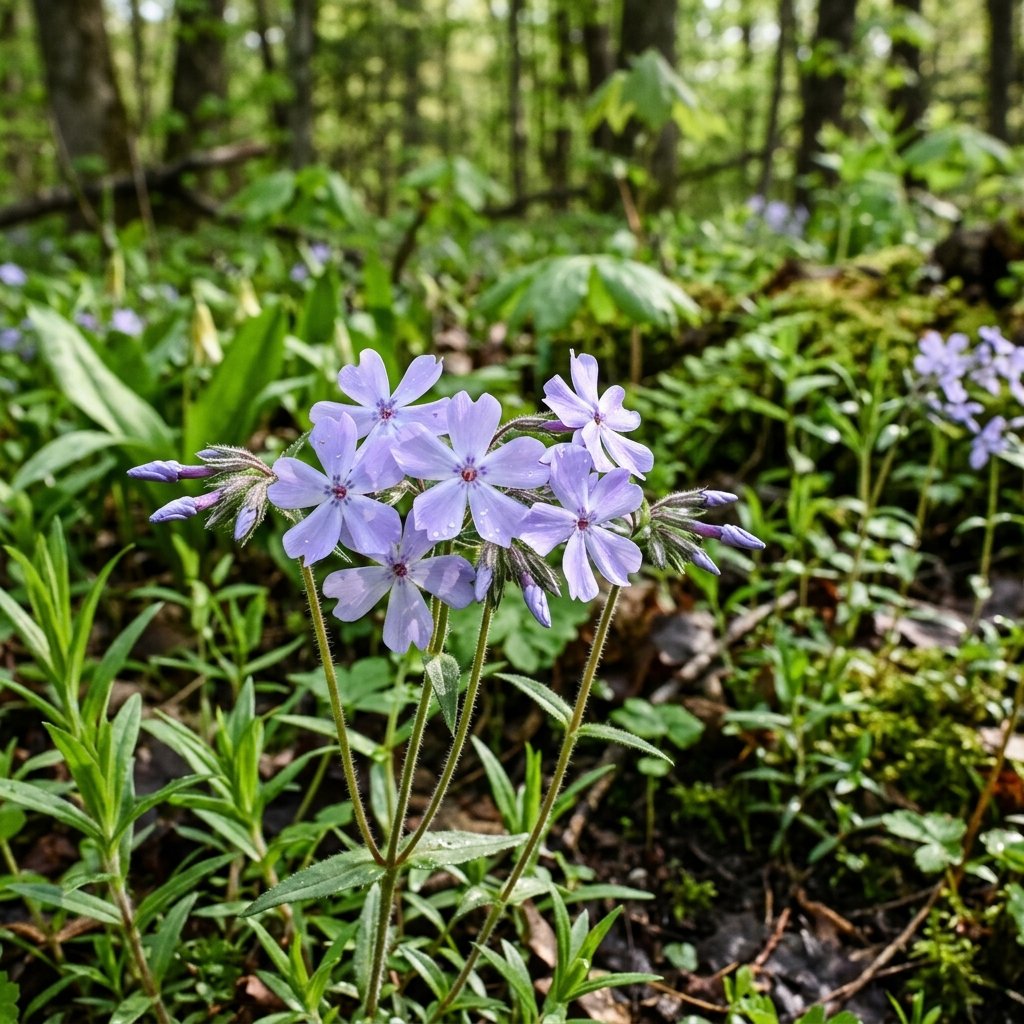
Wild Blue Phlox
Phlox divaricata
Wild Blue Phlox (*Phlox divaricata*), also widely known as Blue Phlox or Woodland Phlox, is one of the most fragrant and visually graceful native wildflowers of eastern North American woodlands, producing loose, open clusters of pale blue to lavender-blue flowers with a sweet, light perfume in Ap...
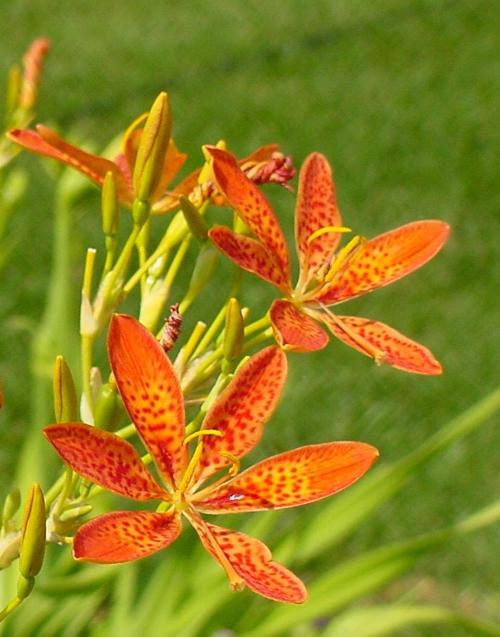
Leopard Lily
Iris domestica (syn. Belamcanda chinensis)
The Leopard Lily, botanically designated as *Iris domestica* (previously classified as *Belamcanda chinensis*, and commonly known as the Blackberry Lily or Leopard Flower), is an exceptionally distinct, highly ornamental perennial. Belonging to the family Iridaceae (the iris family, tribe Irideae...
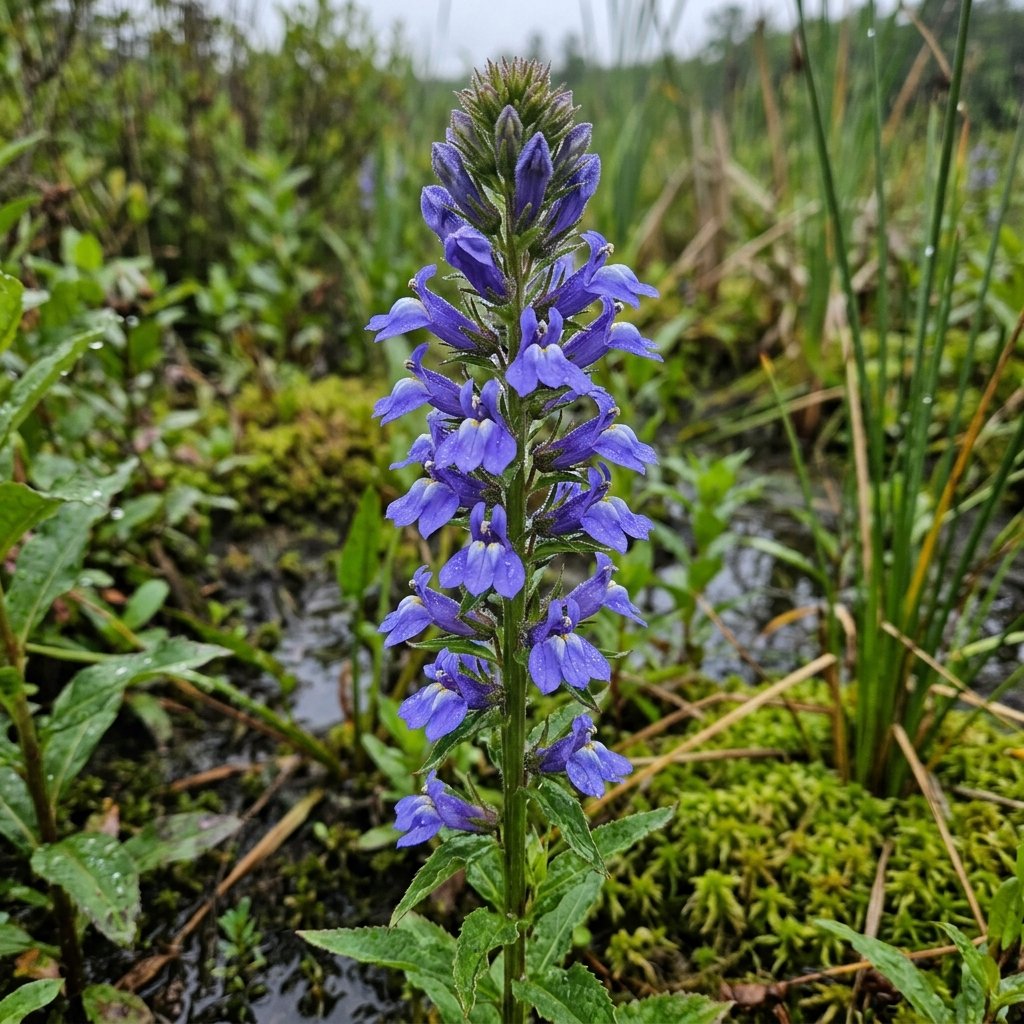
Great Blue Lobelia
Lobelia siphilitica
Great Blue Lobelia (*Lobelia siphilitica*) is a stunning native wildflower of eastern North America, producing tall spikes of vivid blue-violet to true blue flowers from late summer through fall in moist meadows, stream banks, and woodland edges. The blue-flowered counterpart to the scarlet Cardi...
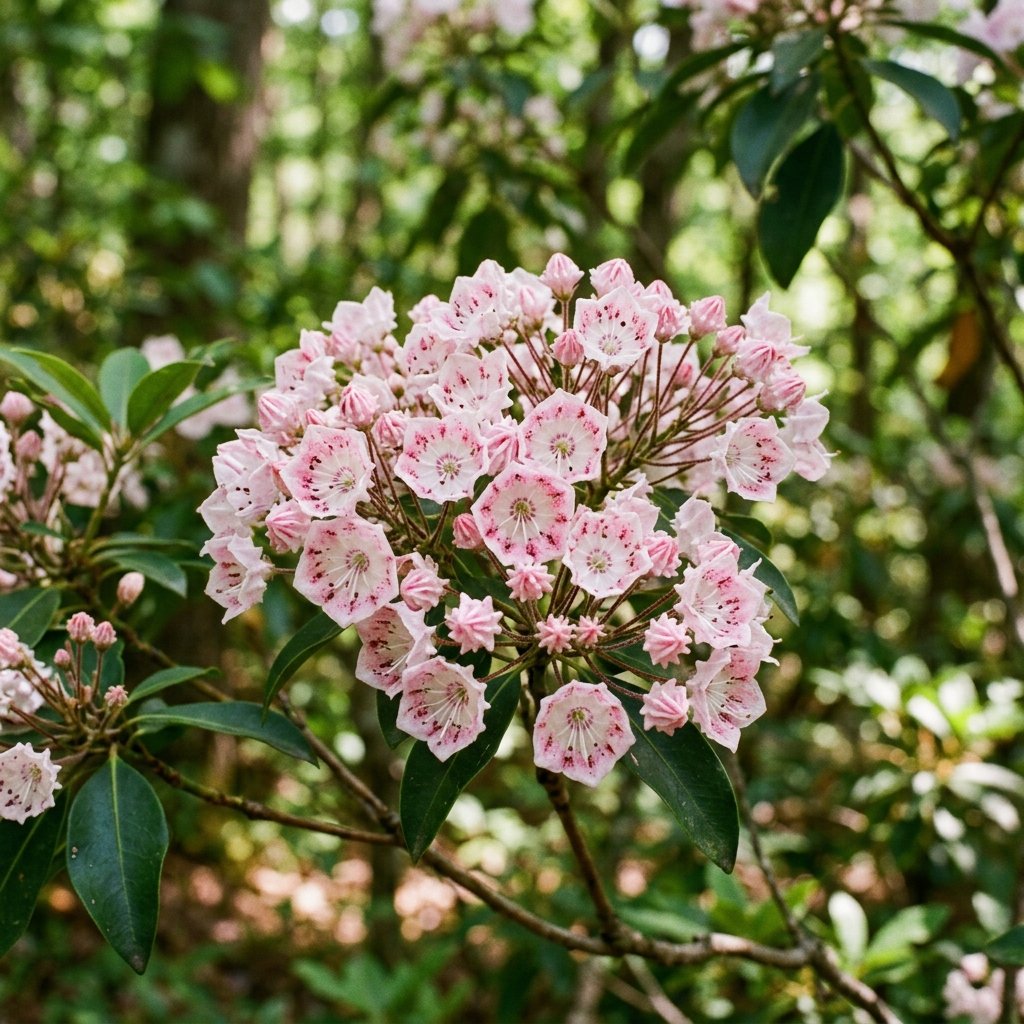
Mountain Laurel
Kalmia latifolia
Mountain Laurel (*Kalmia latifolia*) is one of the most spectacular native flowering shrubs of the eastern United States, producing extraordinary clusters of cup-shaped flowers in shades of white, pink, and deep rose — each blossom decorated with a ring of ten maroon spots and a unique pentagonal...